 Small batches, high standards. Our rapid prototyping service makes validation faster and easier —
  EN
EN


Die Casting Draft Angle Essentials for Perfect Parts

TL;DR
A die casting draft angle is a slight taper or slope engineered into the vertical walls of a mold. This crucial design feature ensures the casted part can be easily and cleanly ejected from the die. Without an adequate draft angle, the part is likely to experience high friction, leading to surface damage, deformation, or becoming stuck in the tool, which increases production costs and cycle times.
What is a Draft Angle in Die Casting?
In the context of die casting, a draft angle is the degree of taper applied to the surfaces of a mold cavity that are parallel to the direction of the die's movement. Think of it as a slight incline on what would otherwise be a perfectly vertical wall. This slope, often subtle, is a fundamental principle of design for manufacturability. Its primary function is to reduce friction and prevent a vacuum from forming when the solidified part is pushed out of the mold, a process known as ejection.
When molten metal is injected into a die, it cools and shrinks, causing it to grip tightly onto the core of the mold. Without a draft angle, the entire surface of the part would drag against the mold wall during ejection. This creates immense friction and stress, which can lead to scratches, drag marks, or even severe damage to both the part and the tool. As explained by manufacturing experts, the draft angle ensures that separation between the part and the mold begins almost immediately upon ejection, minimizing contact and friction. This concept is not exclusive to die casting; it is a critical consideration in most manufacturing processes that involve molds, including injection molding and sand casting.
While the concept is universal, the specific angle varies. For die casting, typical draft angles are often smaller than those used in processes like sand casting. A common guideline is around 1.5° to 2°, though this can change based on the material and part complexity. For instance, investment casting is a unique process where draft angles can be practically zero because the ceramic shell is broken away rather than the part being ejected. In die casting, however, the permanent steel die makes this taper non-negotiable for most designs.
The Critical Role and Benefits of Draft Angles
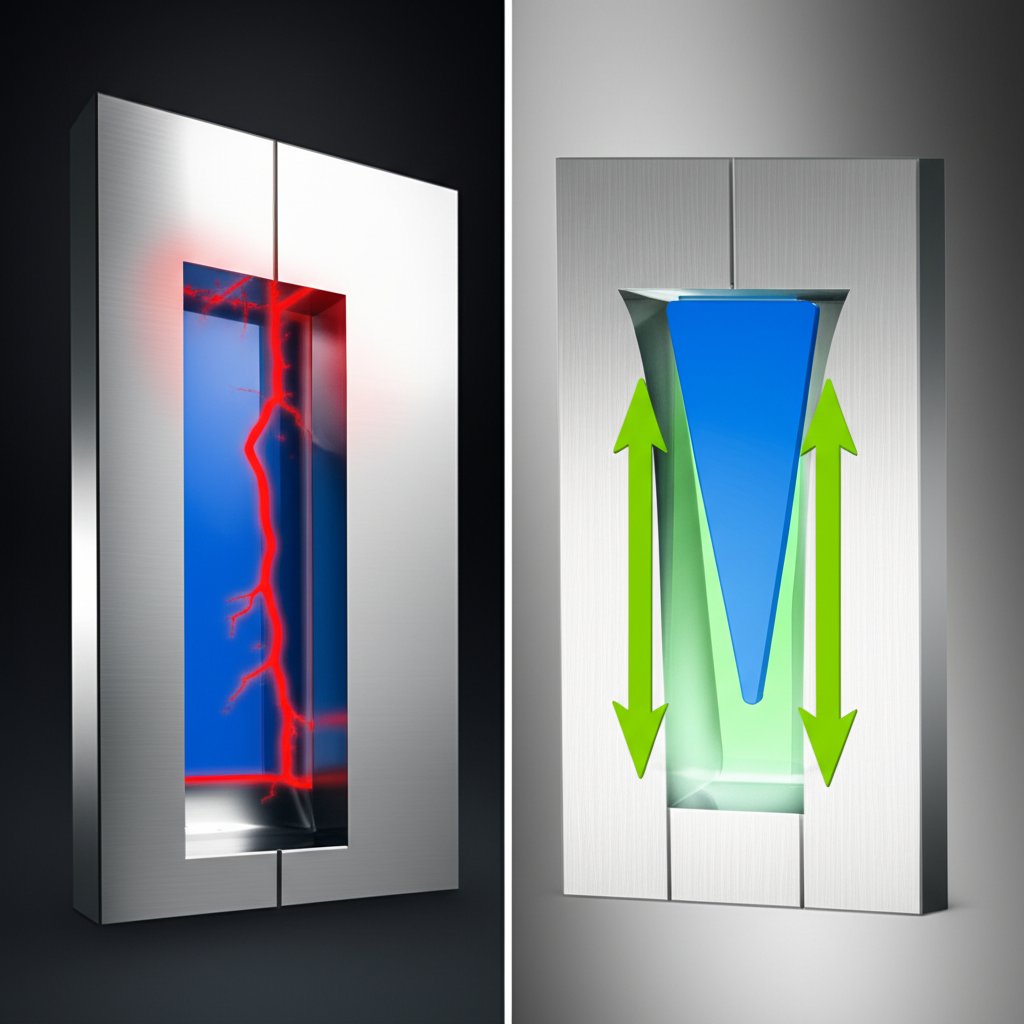
Failing to incorporate a proper die casting draft angle can have significant consequences, turning an efficient production process into a costly and problematic one. As the molten metal cools and solidifies, it shrinks and clamps onto the die. Attempting to eject a part with vertical walls (zero draft) is like trying to pull a perfectly sized plug out of a drain—friction and potential vacuum effects work against you. This leads to parts getting stuck, requiring excessive force for removal, which in turn can cause defects like dents, warping, or stripped surfaces.
The implementation of a draft angle is a strategic compromise in design. While it slightly alters the geometry from a perfect 90-degree angle, the manufacturing benefits are indispensable. It is a core principle for preventing common casting defects and ensuring a smooth, repeatable production cycle. The primary purpose is to ensure the part releases cleanly from the mold without damage, which is especially critical for parts with cosmetic surfaces or tight tolerances.
Properly designed draft angles deliver several key advantages that impact quality, cost, and efficiency:
- Easier Part Ejection: The most immediate benefit is a smooth and damage-free release from the mold. The slight taper breaks the vacuum and minimizes friction along the cavity walls.
- Improved Surface Finish: By preventing the part from dragging against the mold, draft angles eliminate scratches and drag marks, resulting in a higher quality surface finish directly from the tool.
- Extended Tooling Life: Reduced ejection force means less wear and tear on the expensive die casting mold. This prevents premature damage and prolongs the operational life of the tooling.
- Reduced Cycle Times: When parts are ejected easily without issues, the overall cycle time for each part is reduced, leading to higher production efficiency and lower per-part costs.
Determining the Right Draft Angle: Key Factors and Guidelines
There is no single, universal draft angle for all die casting applications. The optimal angle is a calculated decision based on a variety of design and material factors. A general rule of thumb often cited is to apply 1 degree of draft for every inch of cavity depth, but this is merely a starting point. For many applications, a minimum of 0.5 degrees on all vertical faces is strongly advised to ensure reliable part release.
Several critical factors must be considered to determine the appropriate draft angle for a specific component. These design-for-manufacturing principles are crucial across various metal forming industries. For instance, in automotive forging, where component strength is paramount, experts like Shaoyi (Ningbo) Metal Technology apply similar rigorous design and quality control from prototyping to mass production. In die casting, the key variables include:
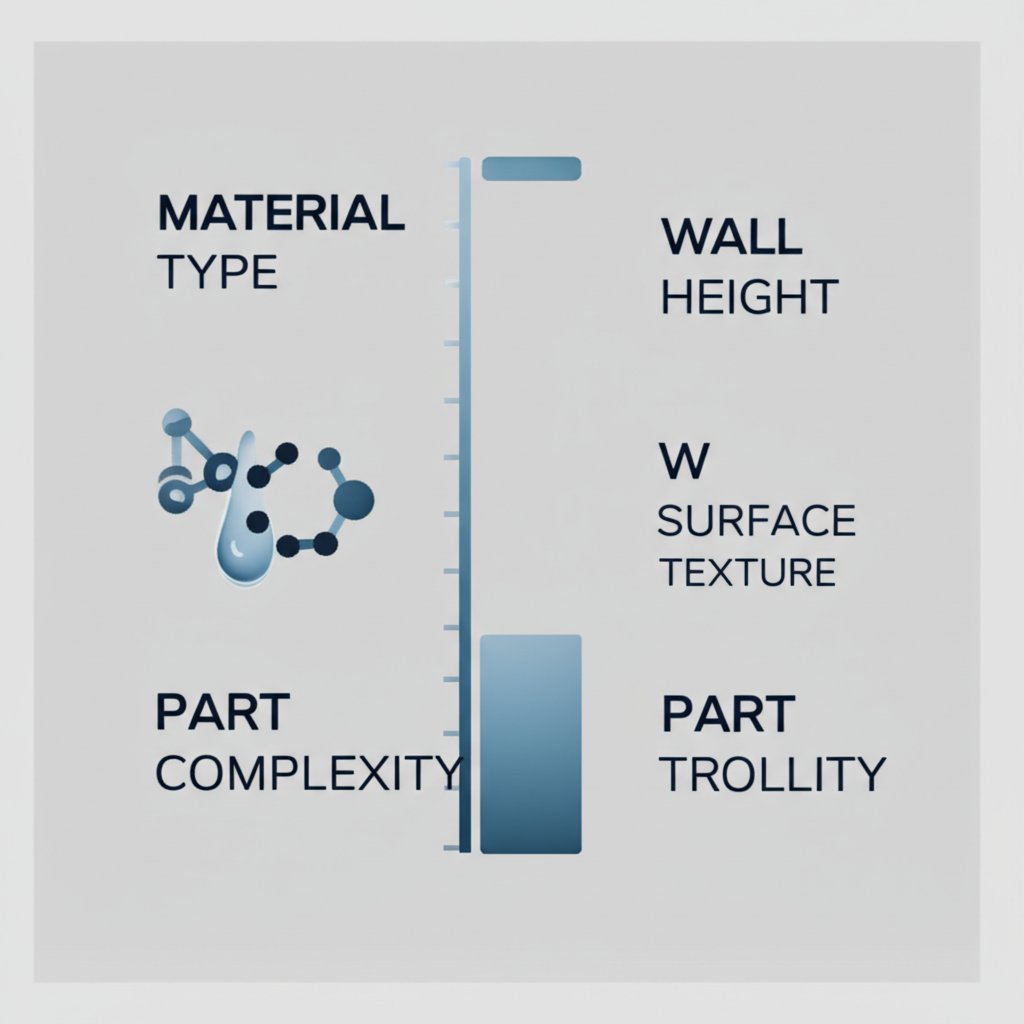
- Material Alloy: Different alloys have different shrinkage rates and properties. For example, aluminum alloys tend to be more abrasive and have a higher shrinkage rate than zinc alloys, often requiring a slightly more generous draft angle, typically between 1 to 2 degrees. Zinc, with a lower shrinkage rate, may sometimes be cast with less than a degree of draft.
- Wall Depth and Thickness: Deeper cavities require larger draft angles to overcome the increased surface area and friction. A tall, thin wall will need more draft than a short, stout one to ensure it can be ejected without bending or breaking.
- Surface Texture: The finish of the part plays a significant role. A smooth, polished surface can get away with a minimal draft angle (e.g., 1-2 degrees). However, a textured or rough surface requires a more substantial draft (often 3 degrees or more) to prevent the texture from being scraped off during ejection.
- Part Complexity: Features like ribs, bosses, holes, and windows add complexity. Each of these elements needs its own draft angle applied correctly relative to the direction of ejection to avoid creating areas where the part can get stuck.
Ultimately, selecting the right draft angle involves balancing the ideal part geometry with the practical requirements of the manufacturing process. As outlined in comprehensive aluminum die casting design guides, features like fillets, radii, and bosses must all be designed with sufficient draft to facilitate smooth metal flow and easy ejection. Consulting these guides or working with an experienced manufacturer is essential to optimize the design for both performance and manufacturability.
A Pillar of Manufacturability
The die casting draft angle is more than just a technical specification; it is a fundamental pillar of successful part design and efficient manufacturing. While it may seem like a minor detail, its impact on part quality, tool longevity, and production cost is immense. Understanding and correctly applying draft angles transforms a theoretical design into a physically producible component, preventing costly defects and ensuring a smooth journey from mold to final product. It represents the critical intersection of design intent and manufacturing reality.
Frequently Asked Questions
1. How is the draft angle in casting calculated?
There isn't a simple, universal formula to calculate the draft angle. Instead, it is determined based on established guidelines, material properties, and part geometry. A common rule of thumb is to add 1 degree of draft for every inch of cavity depth. However, factors like the alloy's shrinkage rate, the desired surface texture, and the depth of the mold wall are all critical inputs in the decision.
2. What is a typical draft angle for a casting pattern?
Typical draft angles vary by casting method. For high-pressure die casting, angles of 1.5° to 2° are common for most surfaces. In contrast, sand casting typically requires draft angles of 1° to 2°, to ensure the pattern can be removed from the sand mold without disturbing it. For die-cast aluminum enclosures, a 2-degree draft for cores and a 0.5-degree draft for the cavity is a recommended starting point. These angles help ensure parts can be removed without damage.
3. Why are draft angles essential in molds?
Draft angles are essential because metals and plastics shrink as they cool and solidify. This shrinkage causes the part to tighten around the core of the mold. Without a draft angle, this tight grip creates massive friction during ejection, making it difficult to remove the part without causing damage like scratches, drag marks, or warping. The slight taper provides clearance, allowing the part to release cleanly and smoothly.