 Small batches, high standards. Our rapid prototyping service makes validation faster and easier —
  EN
EN


Custom Forged Wheels Vs Cast Wheels: Match Your Budget To Your Build
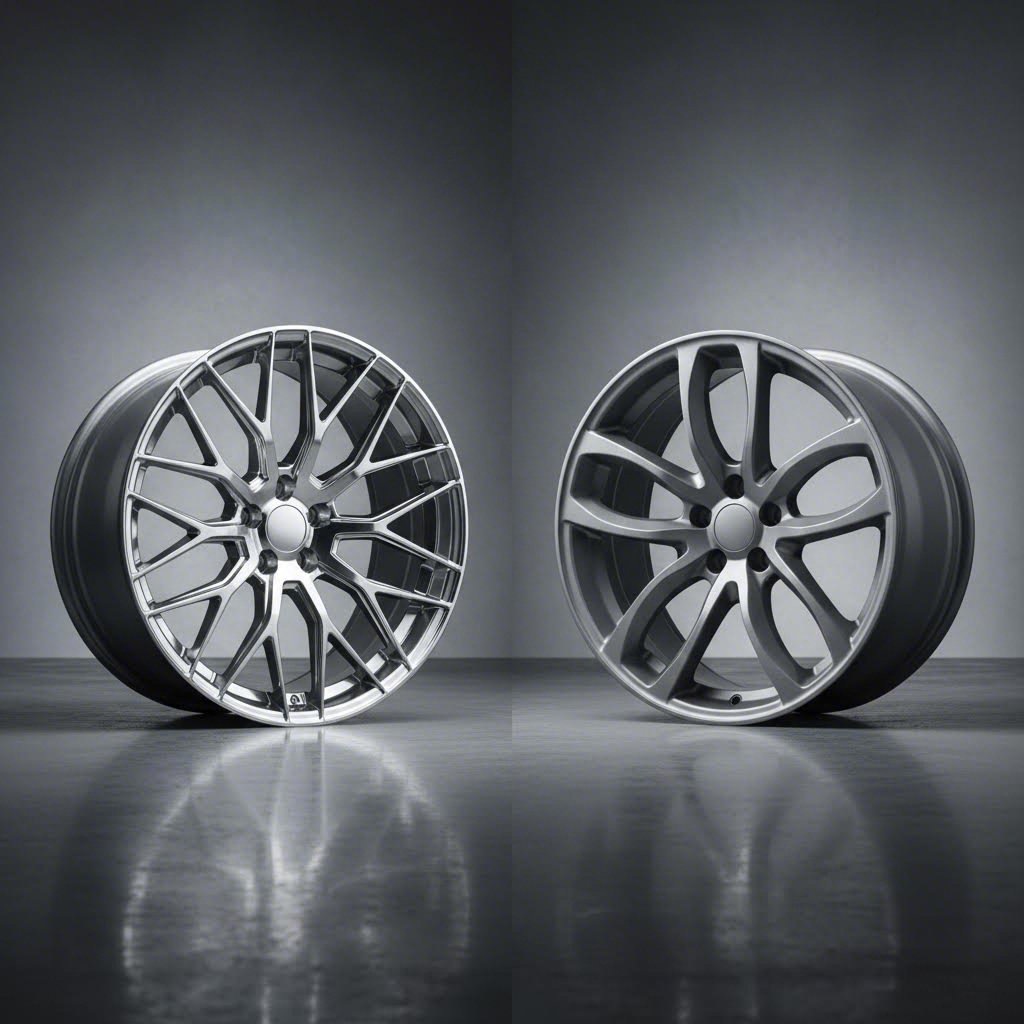
Choosing Between Custom Forged and Cast Wheels
You're standing at a crossroads every performance enthusiast eventually reaches: which wheels deserve a spot on your build? The debate between forged wheels vs cast wheels isn't just about picking something shiny. Your decision directly impacts how your vehicle handles corners, stops under pressure, and holds its value over the years. So what are forged wheels, and why does this choice matter so much?
Why Your Wheel Choice Matters More Than You Think
Think about it this way. Your wheels are the only components connecting your vehicle to the road. They affect everything from acceleration responsiveness to braking performance and fuel efficiency. According to RNR Tires, wheels can make or break your driving experience, influencing not just aesthetics but also safety and overall performance.
When comparing cast vs forged wheels, you're really weighing trade-offs between weight, strength, heat dissipation, and cost. Lighter wheels reduce unsprung mass, which translates to improved handling and better fuel economy. Heavier options might save you money upfront but could compromise your driving dynamics. The stakes are higher than most buyers realize when they start shopping for wheels by vehicle type.
The Performance vs Budget Dilemma
Here's where things get tricky. Marketing materials flood you with claims about superior construction and premium materials. But how do you separate genuine performance benefits from sales hype? The forged vs cast decision ultimately comes down to matching your priorities with your wallet.
Daily drivers have different needs than weekend track warriors. Show car builders prioritize different qualities than off-road adventurers. Understanding where you fall on this spectrum helps you avoid overspending on features you'll never use or underspending on components that could fail when you need them most.
What This Guide Covers
This comprehensive breakdown evaluates every major wheel type available today. You'll learn how manufacturing processes affect real-world performance, discover which options deliver the best value at each price point, and gain the knowledge to confidently match wheels by vehicle application. Whether you're building a track weapon or simply upgrading your daily commuter, you'll walk away with actionable insights to make a smart purchasing decision.
How We Evaluated These Wheel Options
Before diving into specific wheel types, you need to understand how we measured quality and performance across every option. Without a clear evaluation framework, comparing different wheel types becomes guesswork. So what criteria actually matter when assessing forged wheels meaning and value against cast aluminum wheels?
Our methodology examined each wheel category across three critical dimensions: manufacturing standards, real-world performance metrics, and overall value proposition. This approach cuts through marketing noise and reveals which products genuinely deliver on their promises.
Manufacturing Quality Standards We Assessed
Manufacturing quality starts at the molecular level. The materials and processes used to create a wheel determine everything about its performance ceiling and failure thresholds.
We prioritized the following manufacturing indicators:
- Material Composition: 6061-T6 aluminum remains the gold standard for performance wheels. According to Langhe Industry, this alloy delivers tensile strength around 290-310 MPa with a density of just 2.70 g/cm³, offering exceptional specific strength for weight-conscious applications. The T6 heat treatment produces fine Mg₂Si precipitates that optimize strength without sacrificing machinability.
- Manufacturing Process Integrity: Whether examining aluminium alloy wheels produced through casting, flow-forming, or forging, we evaluated grain structure consistency and void-free construction. Pressure casting reduces tiny air pockets compared to gravity casting, while alloy forged components achieve the densest grain alignment.
- Quality Certifications: IATF 16949 certification indicates serious manufacturing commitment. As Quality-One explains, this automotive quality management standard emphasizes defect prevention and reduction of variation throughout the supply chain. Manufacturers holding this certification demonstrate consistent quality control processes rather than occasional batch testing.
- Heat Treatment Protocols: T-6 heat treated wheels significantly outperform T-4 alternatives. The forged wheels definition includes this critical step, which increases tensile and yield strength, making aluminum more resilient before permanent deformation occurs.
Performance Metrics That Matter
Sounds complex? The performance evaluation comes down to measurable factors that affect your driving experience every time you hit the road or track.
- Weight-to-Strength Ratios: According to 949 Racing, given identical spoke design, manufacturing process, and size, heavier wheels generally offer greater strength. The tradeoff becomes choosing between reduced unsprung mass for handling benefits or increased durability for demanding applications.
- Fatigue Life Expectations: JWL/VIA certification provides baseline durability standards, but these 1981-era requirements weren't designed for modern track use. We evaluated whether manufacturers exceed industry minimums, particularly the cornering fatigue test most relevant to performance driving.
- Factor of Safety (FoS): This measures how much stronger a wheel is than minimum requirements. A wheel with FoS of 2 can handle twice the certified load before failure. Different wheel types across our evaluation showed varying safety margins.
- Stiffness Characteristics: All wheels flex under load, reducing effective camber during hard cornering. Stiffer wheels maintain better contact patch geometry, directly improving lap times and handling predictability.
Value Proposition Criteria
Performance means nothing if the price doesn't match your application. We weighed these value factors:
- Price-to-Performance Value: Does a $3,000 wheel set deliver proportionally better performance than a $1,200 option for your specific use case?
- Finish Durability: Coating longevity affects both appearance and resale value. Powder coating, ceramic finishes, and anodizing each offer different protection levels.
- Warranty Coverage: Manufacturer confidence shows through warranty terms. Longer coverage with fewer exclusions indicates quality assurance.
- Rebuildability: Multi-piece designs allow component replacement rather than full wheel disposal after damage.
- Application Matching: The best wheel for a dedicated track car differs vastly from optimal daily driver choices.
Understanding these evaluation criteria transforms you from a casual shopper into an informed buyer. When you know what separates different wheel types at the manufacturing and performance levels, marketing claims become easier to verify. Next, we'll apply this framework to examine precision hot-forged custom wheels and discover why they consistently rank as the premium choice for serious enthusiasts.

Precision Hot-Forged Custom Wheels Top Pick
When performance matters more than compromise, precision hot-forged custom wheels stand alone at the top. These aren't mass-produced afterthoughts. They're engineered solutions built for drivers who demand maximum strength with minimum weight penalty. But what makes a forged rim genuinely superior to alternatives, and who actually benefits from this premium investment?
The answer lies in the manufacturing process itself. According to HTC Forge, hot forging can increase the ultimate tensile strength of aluminum by up to 22%, while elongation improves by over 30%. These gains translate directly to wheels that handle higher loads and impacts without failing. For serious enthusiasts searching for the best forged wheels available, this process creates an unmatched foundation.
Superior Strength-to-Weight Performance
Imagine carving a wheel from a solid block of aerospace-grade aluminum rather than pouring molten metal into a mold. That's essentially what precision hot forging accomplishes. When aluminum heats to approximately 250°C and compresses under intense pressure, the metal's grain structure transforms dramatically.
This transformation produces several measurable advantages:
- Denser Grain Alignment: Hot forging compresses and aligns the aluminum's internal grain structure, eliminating the microscopic voids common in cast wheels. This tighter structure resists crack propagation under stress.
- Enhanced Toughness: The refined grain structure from hot forging helps parts resist both cracks and fatigue, significantly increasing service life under demanding conditions.
- Optimized Material Distribution: Less material achieves the same structural integrity as heavier cast alternatives. This weight reduction directly benefits acceleration, braking, and handling response.
- Superior Fatigue Resistance: Fine, uniform grains distribute stress more evenly throughout the wheel, reducing likelihood of crack initiation during cyclic loading from cornering and braking forces.
The weight savings alone justify consideration for performance applications. Forged wheels for trucks and performance vehicles alike benefit from reduced rotational mass. Every pound removed from your wheels improves suspension response and reduces the energy required for acceleration and deceleration.
Customization Without Compromise
Premium forged wheels brands understand that fitment precision matters as much as raw strength. Unlike off-the-shelf cast options limited to predetermined specifications, custom forged wheels adapt to your exact requirements.
Customization options typically include:
- Precise Offset Selection: Dial in the exact offset needed for your suspension geometry, brake clearance, and desired stance. This eliminates the compromise of choosing the "closest available" option.
- Bolt Pattern Flexibility: Whether you're running a 5x114.3 Japanese pattern or 5x120 European specification, custom forging accommodates your vehicle's requirements.
- Width and Diameter Combinations: Need aggressive sizing like 24x14 forged wheels for your truck build? Custom forging makes specialized dimensions possible without sacrificing structural integrity.
- Finish Variety: From brushed aluminum to custom powder coating, forged construction supports finish options that cast wheels often cannot reliably hold long-term.
The customization extends beyond aesthetics. Brands like Hostile Forged and Lexani Forged Wheels have built reputations specifically on delivering application-specific solutions. Whether you're clearing massive brake calipers or achieving aggressive concave profiles, the forging process provides design freedom that casting simply cannot match.
For those seeking quality assurance throughout the manufacturing process, IATF 16949 certified manufacturers ensure consistent results from prototype through production. This automotive quality standard emphasizes defect prevention and variation reduction, meaning each wheel meets identical specifications rather than varying between batches. Manufacturers like Shaoyi (Ningbo) Metal Technology demonstrate this commitment through rapid prototyping capabilities, often delivering initial samples in as little as 10 days, combined with rigorous quality control for mass production runs.
Who Benefits Most From This Option
Not everyone needs precision hot-forged wheels. Understanding where these products deliver genuine value helps you decide whether the premium investment makes sense for your specific application.
Ideal Candidates for Forged Wheels
- Track Day Enthusiasts: The combination of reduced unsprung weight and superior fatigue resistance makes forged wheels essential for repeated high-stress use. Cornering loads that would fatigue cast wheels become routine for properly engineered forged options.
- Performance Daily Drivers: According to Variant Wheels, forged construction provides peace of mind for daily commuters who also value performance. The durability advantage means fewer worries about pothole damage or curb encounters.
- Show Car Builders: The sharper cuts, deeper concavity, and refined finishes achievable through forging cannot be replicated with cheaper manufacturing methods. The difference becomes immediately apparent up close.
- Heavy-Duty Truck Applications: Forged wheels for trucks handle the additional stress from towing, payload, and larger tire combinations without the failure concerns plaguing inferior alternatives.
- Owners with Expensive Brake Setups: Big brake kits require precise clearance. Custom forged wheels can be engineered specifically around your caliper dimensions rather than hoping a pre-made wheel fits.
When Forged May Not Be Necessary
- Purely Aesthetic Upgrades: If you're simply replacing worn OEM wheels on a commuter vehicle without performance ambitions, the cost premium may not deliver proportional value.
- Tight Budget Priorities: When funds must stretch across multiple vehicle improvements, allocating everything to wheels alone may not optimize your overall build.
- Temporary Vehicles: Planning to sell within a year or two? The long-term durability benefits of forged construction won't fully materialize during your ownership period.
The in-house engineering capability of quality forging partners proves particularly valuable for complex fitment scenarios. Rather than adapting your vehicle to available wheel options, precision forging adapts the wheel to your vehicle's exact specifications. This approach eliminates the trial-and-error frustration common when attempting aggressive fitments with off-the-shelf alternatives.
Lead times vary based on complexity, but established manufacturers with streamlined processes can move from design to delivery surprisingly quickly. Rapid prototyping capabilities mean you can verify fitment before committing to a full production run, reducing risk on custom specifications.
For buyers ready to explore the middle ground between cast affordability and forged excellence, flow-formed wheels offer an intriguing alternative worth examining next.
Flow-Formed Wheels The Performance Value Option
What if you could get closer to forged performance without the forged price tag? That's exactly where flow formed wheels enter the conversation. They occupy the sweet spot between cast affordability and forged excellence, delivering meaningful performance gains for drivers who want more than entry-level options but aren't ready for a full premium investment. But here's the critical question: are flowform wheels truly comparable to forged alternatives, or is that just marketing spin?
The truth lies somewhere in between. According to ASM Tuning, flow-formed wheels start as cast but undergo additional spinning and pressure application that reshapes and strengthens the barrel, improving the strength-to-weight ratio without the full cost of forging. Understanding this hybrid approach helps you determine whether flow form wheels deserve a spot on your build.
The Hybrid Manufacturing Process Explained
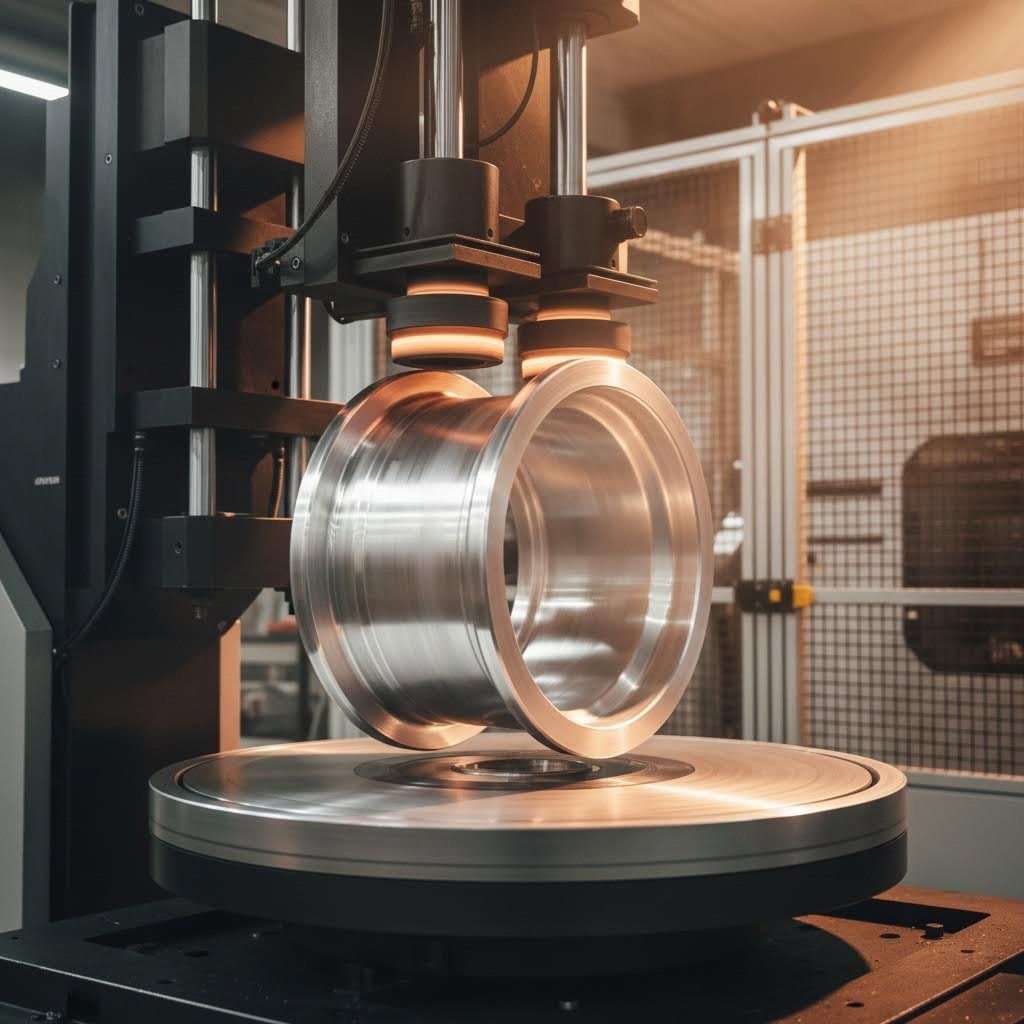
Picture a cast wheel blank spinning at high speed while heated rollers apply tremendous pressure to the barrel section. That's rotary forged wheels manufacturing in action. The process stretches and compresses the aluminum, fundamentally changing its properties in the barrel area where stress concentrations typically occur.
Here's how the process works:
- Initial Casting: The wheel begins life as a standard low-pressure cast blank, with the face and spoke design already formed through traditional methods.
- Heat Application: The barrel section heats to temperatures that make the aluminum malleable without reaching melting point.
- Rotational Spinning: The wheel mounts on a specialized machine that spins it rapidly while precision rollers apply lateral pressure.
- Material Stretching: Under this combination of heat, rotation, and pressure, the barrel walls thin out and elongate, changing the grain structure in the process.
- Grain Refinement: The stretching action aligns and compresses the aluminum's molecular structure in the barrel, creating properties that approach those achieved through forging.
The key distinction in the flow formed vs forged debate? Only the barrel section receives this enhancement. The wheel face and spoke areas retain their original cast characteristics. This partial transformation explains why flow-formed options cost less than fully forged alternatives while still delivering noticeable improvements.
Performance Gains Over Traditional Cast
So what do you actually gain by choosing flow forged wheels over standard cast options? The improvements are measurable and meaningful for performance-oriented drivers.
According to Fitment Industries, Konig flow formed wheels exemplify the technology's benefits: maximum strength while shedding unnecessary weight, delivering sharper response and better handling the moment you install them. This isn't marketing exaggeration. The physics behind weight reduction creates compounding benefits across your vehicle's dynamics.
Pros
- Lighter Than Cast: The stretched barrel section can weigh significantly less than its cast equivalent, reducing unsprung mass where it matters most.
- Improved Strength: Grain alignment in the barrel creates better resistance to bending and fatigue compared to porous cast structures.
- Better Price Point: Typically priced between cast and forged options, flow-formed wheels offer performance gains without devastating your budget.
- Enhanced Handling: Reduced rotational mass translates to quicker acceleration response, shorter braking distances, and more nimble directional changes.
- Wide Availability: Major manufacturers like Konig flow formed lines offer extensive sizing and bolt pattern options for most popular platforms.
Cons
- Still Cast-Based: The wheel face retains cast properties, meaning the spokes don't benefit from the same strengthening process as the barrel.
- Limited High-Load Options: For extreme applications like heavy truck payloads or sustained racing abuse, flow-formed construction may not match true forged durability.
- Less Customization: Most flow-formed wheels come in predetermined specifications rather than the custom offset, width, and concavity options available with forged manufacturing.
- Marketing Confusion: Some brands use terms like "rotary forged" loosely, making it difficult to distinguish genuine flow-formed construction from marketing embellishment.
Best Applications for Flow-Formed Wheels
Flow-formed technology shines brightest in specific use cases. Knowing where these wheels excel helps you determine if they match your driving profile.
Ideal candidates for flow-formed wheels include:
- Hot Hatches and Tuned Dailies: Vehicles with moderate power increases benefit significantly from the weight reduction without requiring full forged construction.
- Occasional Track Day Participants: Drivers who hit the circuit a few times yearly get meaningful performance gains without the investment that dedicated racers justify.
- Street/Track Hybrids: If your car splits duty between daily commuting and spirited weekend drives, flow-formed wheels offer the durability and performance balance you need.
- Budget-Conscious Performance Builds: When every dollar must work harder across multiple modifications, flow-formed allows wheel upgrades while preserving funds for suspension, brakes, or power adders.
Brands like Konig have built strong reputations specifically around flow-formed technology. Their Hypergram and Heliogram models demonstrate how this manufacturing approach delivers serious performance at accessible price points. The Heliogram, in particular, stands out as one of the lightest options available, specifically engineered for drivers demanding maximum weight savings without the forged premium.
When flow-formed may not be enough:
- Dedicated track cars seeing consistent abuse need the full fatigue resistance of forged construction.
- Heavy towing applications where sustained load capacity matters more than weight reduction.
- Builds requiring precise custom specifications that only forged manufacturing can deliver.
The honest assessment? Flow-formed wheels represent genuine engineering advancement, not marketing gimmicks. They're not truly forged in the complete sense, but they offer meaningful, measurable improvements over traditional cast construction. For many enthusiasts, this middle-ground option delivers the best balance between performance aspirations and budget realities.
But what about buyers who prioritize cost above all else? Premium cast aluminum wheels still hold an important place in the market, and understanding their strengths helps complete the picture.
Premium Cast Aluminum Wheels Budget-Friendly Choice
Are cast wheels bad? This question haunts countless buyers scrolling through wheel options online. The short answer: absolutely not. Cast aluminium wheels serve millions of drivers perfectly well every day. The real question isn't whether they're inherently flawed but whether they match your specific needs. Understanding modern casting wheels technology and quality indicators transforms you from a confused shopper into a confident buyer who knows exactly what they're getting.
According to ALT Forged, cast wheels remain the most common type on the market because they're manufactured by pouring molten aluminum into a mold, making them cost-effective and easy to produce. This accessibility explains why wheels cast through these methods dominate dealership lots and aftermarket catalogs alike.
Modern Casting Technology Improvements
Today's casting technology has evolved significantly from earlier production methods. Two primary processes dominate modern cast wheel manufacturing, each with distinct characteristics affecting final product quality.
Gravity Casting: The simplest and most economical approach. Molten aluminum pours into a mold using only gravity's force. While cost-effective, this method can trap microscopic air pockets within the metal structure, potentially creating weak points under stress.
Low-Pressure Casting: The premium casting method that serious manufacturers prefer. According to Alloy Wheels Direct, prototypes are cast using specialist aluminum alloys through low-pressure diecasting, with engineers checking casting quality through X-Ray inspections before the wheels completely cool. This pressure-assisted process forces molten aluminum into molds more uniformly, reducing porosity and creating denser, stronger wheels than gravity casting produces.
The difference between these methods matters more than most buyers realize. Low-pressure cast wheels approach cast aluminum wheels strong enough for demanding daily use, while budget gravity-cast alternatives may disappoint under similar conditions.
When Cast Wheels Make Sense
Cast construction genuinely serves certain applications better than you might expect after reading about forged advantages. Matching wheel choice to actual usage determines whether you're making a smart decision or overspending on unnecessary capabilities.
Pros
- Significantly Lower Cost: Budget stretches further, allowing upgrades to tires, suspension, or other components rather than concentrating spending on wheels alone.
- Wide Style Selection: Casting technology produces intricate designs cost-effectively, offering more aesthetic options at accessible price points.
- Immediate Availability: Popular sizes ship quickly from stock rather than requiring custom manufacturing lead times.
- Adequate Daily Driver Performance: For commuting, grocery runs, and occasional spirited driving, quality cast wheels perform reliably year after year.
- Lower Replacement Costs: Curb damage or winter wheel sets become less financially painful when individual wheel costs remain reasonable.
Cons
- Weight Penalty: Cast wheels typically weigh more than forged or flow-formed alternatives in equivalent sizes. According to ALT Forged, this additional weight can negatively impact acceleration, braking, and handling dynamics.
- Reduced Strength Ceiling: While durable for normal use, cast construction proves more prone to cracking under extreme stress compared to forged alternatives.
- Limited Customization: Pre-determined offsets, widths, and bolt patterns mean compromising on fitment rather than specifying exact requirements.
- Potential Porosity Issues: Lower-quality casting processes leave microscopic voids that can become failure points under sustained stress.
The honest truth? For daily drivers, moderate performance vehicles, and owners prioritizing appearance over track capability, quality cast aluminum wheels deliver genuine value. Are cast aluminum wheels strong enough for your application? If you're not pushing limits on track days or hauling heavy loads consistently, the answer is likely yes.
Quality Indicators in Cast Wheel Shopping
Not all cast wheels deserve your money. The market floods with cheap imports that look acceptable initially but fail prematurely. Knowing what separates quality cast wheel options from disposable alternatives protects your investment and your safety.
Look for these quality markers:
- JWL/VIA Certification: This Japanese standard indicates the wheel passed load and impact testing. While not exhaustive, it represents a baseline quality threshold that budget imports often skip.
- Known Brand Reputation: Established manufacturers stake their reputation on consistent quality. Generic no-name wheels offer no accountability if problems arise.
- Proper Finish Application: According to Alloy Wheels Direct, genuine wheels feature multi-layer paint coatings ensuring complete protection against stone chips and corrosion. Cheap imports typically use low-grade paint and lacquer finishes that deteriorate quickly.
- Warranty Coverage: Manufacturers confident in their products back them with meaningful warranties. Limited or nonexistent coverage signals limited quality control.
- Weight Specifications: Reputable sellers publish actual wheel weights. Suspiciously heavy weights for stated sizes often indicate lower-quality alloys requiring more material for equivalent strength.
Red flags to avoid:
- Prices Too Good to Be True: Extreme discounts usually mean corners were cut somewhere. Material quality, manufacturing standards, and quality control all cost money.
- No Manufacturing Origin: Vague descriptions hiding production location often indicate substandard manufacturing facilities without proper quality oversight.
- Replica Wheel Designs: Alloy Wheels Direct warns that replica wheels use cheaper materials and cheaper manufacturing processes, making them much more susceptible to cracking, buckling, scratching, and vibration.
- Inconsistent Fitment Specifications: Wheels made in small batches from different factories using different molds create replacement nightmares if damage occurs.
Quality cast wheels from reputable manufacturers undergo rigorous testing before reaching consumers. As Alloy Wheels Direct explains, genuine wheels receive X-ray and pressure testing to detect invisible imperfections, quality checks in heat, cold, and humidity chambers, and testing on two-axle wheel test rigs subjecting them to extreme continuous loads highly unlikely to occur in real life.
The bottom line? Cast wheels aren't inherently inferior—they're simply designed for different applications and budgets than forged alternatives. Matching your expectations to what quality cast construction actually delivers prevents disappointment while maximizing value.
For buyers seeking maximum customization and rebuildability beyond what standard cast or even flow-formed wheels offer, multi-piece forged construction opens entirely new possibilities worth exploring.
Multi-Piece Forged Wheels Maximum Customization
What happens when you want forged performance combined with endless customization possibilities? Multi-piece forged wheels answer that question with modular construction that opens doors closed to 1 piece forged wheels. These aren't just wheels—they're platforms for expressing exactly what you envision for your build. But with premium pricing comes premium expectations. Understanding what multi-piece construction actually delivers helps you decide whether this investment matches your goals.
According to Gvichn's buyer's guide, multi-piece forged wheels eliminate porosity and ensure superior structural integrity through the same intensive forging process used in monoblock construction. The difference? Modular assembly transforms how you can configure, customize, and maintain your wheels throughout their lifespan.
Three-Piece Construction Benefits
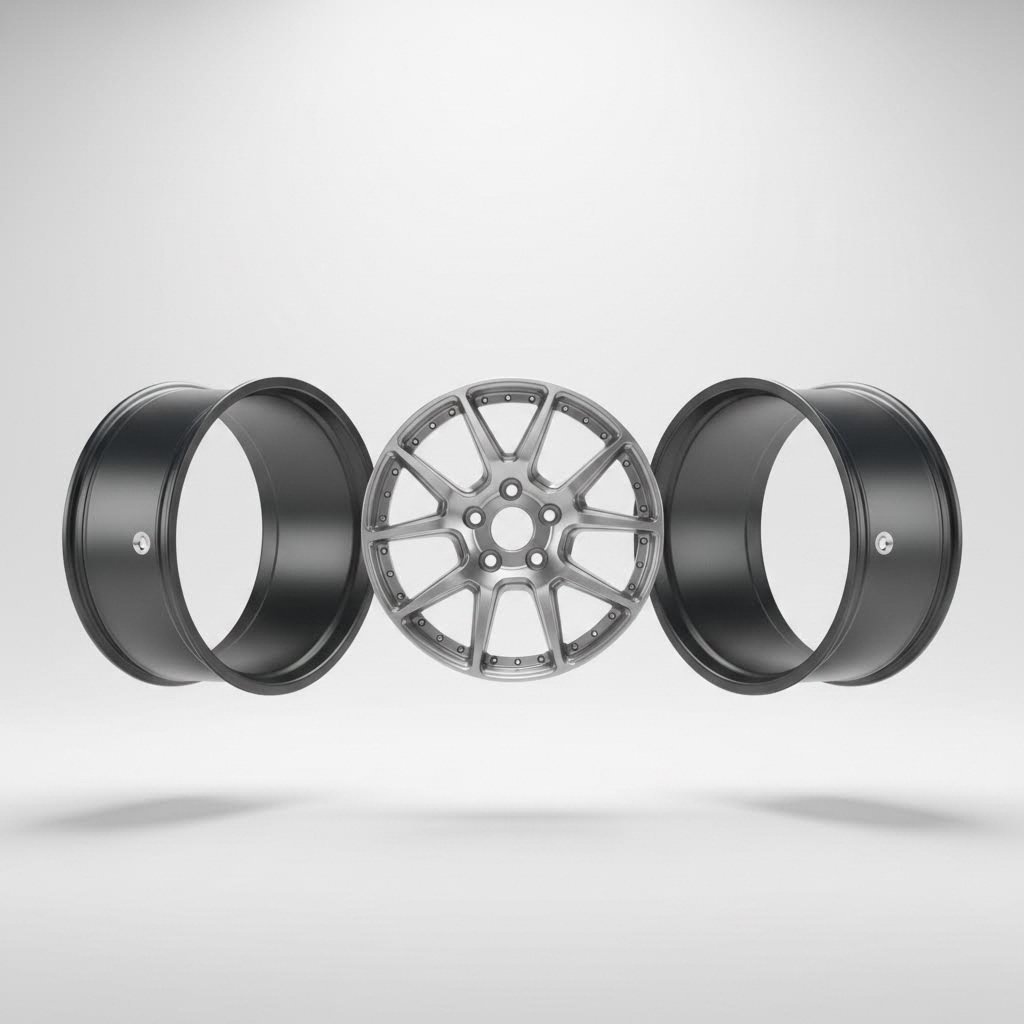
Imagine a wheel built from three distinct components: a forged center section containing the spokes and hub mounting surface, plus inner and outer barrel halves that bolt together. This configuration creates possibilities that single-piece construction simply cannot match.
Three-piece forged wheels offer several distinct advantages:
- Independent Component Selection: Choose different finishes for the center versus the barrel sections. Brushed spokes with polished lips? Matte black centers with chrome barrels? The combinations become virtually limitless.
- Specification Flexibility: According to the Gvichn guide, three-piece designs offer the greatest flexibility in terms of width adjustments, offset changes, and aesthetic modifications. Need a wider rear setup than front? Change barrel widths without purchasing entirely new wheels.
- Damage Repairability: Curb a lip section on a monoblock wheel and you're replacing the entire unit. With three-piece construction, damaged components can be replaced individually—a significant cost advantage for forged rims for trucks and performance vehicles facing real-world hazards.
- Future Adaptability: Planning suspension modifications that change your offset requirements? Swap barrel sections rather than starting over with new wheels entirely.
Quality manufacturers like those producing weld forged rims and VR forged wheels have refined three-piece construction to minimize the weight penalty typically associated with additional hardware. The modular nature adds some mass compared to equivalent monoblock designs, but the functionality gains often justify this tradeoff for serious builders.
Customization Possibilities Unlocked
Three-piece construction transforms wheels from fixed products into configurable platforms. This flexibility explains why show car builders and high-end enthusiasts gravitate toward this construction method despite its premium positioning.
The customization extends across multiple dimensions:
- Width Combinations: Mix different barrel widths across front and rear axles, or reconfigure the same wheel for different track setups without new centers.
- Offset Tuning: Dial in precise stance adjustments by selecting different barrel depths. This precision proves invaluable when clearing aggressive fender modifications or brake upgrades.
- Finish Mixing: Create visual contrast between components. Brushed, polished, painted, powder-coated, or anodized finishes can combine in ways impossible with single-piece manufacturing.
- Barrel Style Variations: Some manufacturers offer stepped lips, reversed lips, or fully polished barrel options that completely change the wheel's character while retaining your existing centers.
For those seeking affordable forged wheels without sacrificing the multi-piece advantage, two-piece construction offers a middle ground. According to the Gvichn guide, two-piece forged wheels strike a balance between customization options and structural simplicity while maintaining excellent strength characteristics.
Pros
- Ultimate Customization: No other wheel construction matches the configuration possibilities available with three-piece assembly.
- Component Replacement: Damage one section without destroying your entire investment. Individual components can be refinished or replaced.
- Specification Changes: Adapt to vehicle modifications without purchasing completely new wheels.
- Premium Aesthetics: Multi-piece hardware visible between sections creates a distinctive high-end appearance that enthusiasts recognize immediately.
Cons
- Higher Initial Cost: Three-piece construction commands premium pricing due to additional manufacturing complexity and assembly requirements.
- Increased Maintenance: Multiple components mean more inspection points and potential failure areas requiring attention.
- Weight Addition: Assembly hardware adds mass compared to equivalent monoblock construction, though quality manufacturers minimize this penalty.
- Seal Vulnerabilities: Joints between sections require proper sealing to prevent air leaks and corrosion between components.
Maintenance and Rebuild Considerations
Multi-piece wheels demand more attention than their single-piece counterparts. Understanding these requirements before purchase prevents surprises and ensures long-term satisfaction.
According to the Gvichn guide, three-piece wheels demand more frequent checking of assembly bolts and seals due to their multiple components. Owners should perform periodic torque checks and inspect for any signs of oxidation between components. Specifically, the guide recommends inspecting hardware every 3-6 months for three-piece designs, while two-piece wheels can typically go 6-12 months between thorough inspections.
Essential maintenance practices include:
- Hardware Torque Verification: Assembly bolts can loosen over time, especially under track stress. Regular torque checks prevent component separation and potential catastrophic failure.
- Seal Inspection: The gaskets between barrel sections and centers prevent air loss and moisture intrusion. Degraded seals require replacement before they cause bigger problems.
- Between-Component Cleaning: Road debris and brake dust accumulate in crevices between components. Regular cleaning prevents corrosion that could compromise structural integrity.
- Professional Annual Inspection: The guide recommends professional inspection annually, regardless of wheel type. This proves especially important for multi-piece construction where hidden issues could develop undetected.
Authenticity Concerns: The market unfortunately includes counterfeit products claiming forged construction while using inferior materials and processes. When shopping for cheap forged wheels or affordable forged wheels, verify authenticity through:
- Manufacturer Verification: Contact the brand directly with serial numbers to confirm genuine production.
- Weight Comparison: Counterfeit wheels often weigh significantly more than authentic forged equivalents due to inferior material density.
- Hardware Quality: Genuine manufacturers use aerospace-grade fasteners, not generic hardware that cheaper counterfeits substitute.
- Price Reality Check: Prices dramatically below market rates typically indicate counterfeit products or inferior construction masquerading as premium forged wheels.
Multi-piece forged wheels represent the pinnacle of customization for those willing to invest in both initial cost and ongoing maintenance. They serve show car builders, high-end enthusiasts, and anyone prioritizing configuration flexibility over simplicity. For drivers focused purely on performance without the customization requirements, monoblock forged wheels offer a compelling alternative worth examining next.
Monoblock Forged Wheels Track-Ready Performance
What are forged rims in their purest form? Monoblock construction answers that question definitively. When a single billet of aluminum transforms under intense pressure into a complete wheel with no seams, joints, or assembly points, you get the ultimate expression of forged or cast wheels superiority. For drivers chasing lap times rather than show trophies, monoblock forged wheels deliver performance that multi-piece alternatives simply cannot match.
According to K7 Forged, monoblock forged wheels, also known as one-piece forged wheels, represent the traditional powerhouse in high-performance wheel applications. The entire wheel—from center barrel to spokes and rim—comes from a single block of aluminum alloy, creating an incredibly robust structure with zero seams.
Single-Piece Strength Advantages
Why does eliminating joints matter so much? Every connection point in a multi-piece wheel represents a potential failure location under stress. Monoblock construction removes this vulnerability entirely, creating a unified structure that handles extreme loads without weak points.
The single-piece design delivers several measurable advantages for track and competition wheels:
- Maximum Structural Rigidity: According to K7 Forged, the single-piece construction gives monoblock wheels ultimate strength and rigidity to handle extreme loads and stresses, making them ideal for high-performance applications like racing and track days.
- Enhanced Fatigue Resistance: Forged aluminum with dense grain structure naturally resists wear and tear. Monoblock wheels endure years of punishment on track without compromising performance.
- Zero Assembly Hardware: No bolts means no hardware that could loosen under repeated heat cycles and stress loading common during spirited driving.
- Optimal Force Distribution: Loads transfer through continuous material rather than across mechanical joints, reducing stress concentration points.
Track Day Performance Benefits
When comparing forged rims vs cast alternatives for track use, the performance gap becomes immediately apparent. According to Triton Motorsports, reducing unsprung and rotational mass yields measurable performance gains: superior strength-to-weight ratio, increased stiffness for precise steering, better heat dissipation from hard braking, and consistent performance over repeated heat cycles.
For competitive drivers, these benefits translate directly to faster lap times, sharper turn-in, and longer component life. Understanding weight on wheels meaning helps explain why serious track enthusiasts prioritize monoblock construction.
Pros
- Unmatched Strength: No construction method delivers higher load capacity per pound of wheel weight.
- Maintenance Simplicity: Nothing to inspect, tighten, or reseal between sessions.
- Heat Management: Continuous material transfers brake heat more efficiently than segmented designs.
- Consistent Performance: No degradation concerns from joint wear or hardware fatigue over time.
Cons
- Limited Customization: Fixed specifications once manufactured—no offset or width changes possible.
- Damage Implications: Any significant damage typically requires complete wheel replacement.
- Premium Pricing: Single-piece forging from solid billet commands higher manufacturing costs.
Weight Savings Quantified
The relationship between unsprung weight and handling proves critical for anyone debating vs forged wheels alternatives. According to Triton Motorsports, dropping 3-5 pounds per corner delivers acceleration gains equivalent to shedding 40-50 pounds of static vehicle weight. Add improved suspension response from reduced unsprung mass, and you have a direct path to lower lap times.
Monoblock construction achieves optimal weight reduction because material only exists where structural requirements demand it. No hardware, no overlapping sections, no redundant material at joint locations. Every gram serves a purpose.
Is the premium justified? For hardcore performance enthusiasts and racers, monoblock wheels suit their needs due to unmatched strength and handling characteristics. K7 Forged notes that both monoblock and multi-piece forged wheels represent significant upgrades over traditional cast wheels. However, drivers seeking a balance of performance, weight reduction, and design freedom might find other options more appropriate at accessible price points.
The decision ultimately depends on your driving profile. Occasional track day participants can achieve meaningful gains with flow-formed or multi-piece options. But for time attack competitors, autocross enthusiasts chasing hundredths of seconds, or anyone prioritizing absolute performance over customization flexibility, monoblock forged construction remains the benchmark that competition wheels are measured against.
With individual wheel types now thoroughly examined, a comprehensive comparison matrix brings all these options together for direct evaluation.
Complete Wheel Type Comparison Matrix
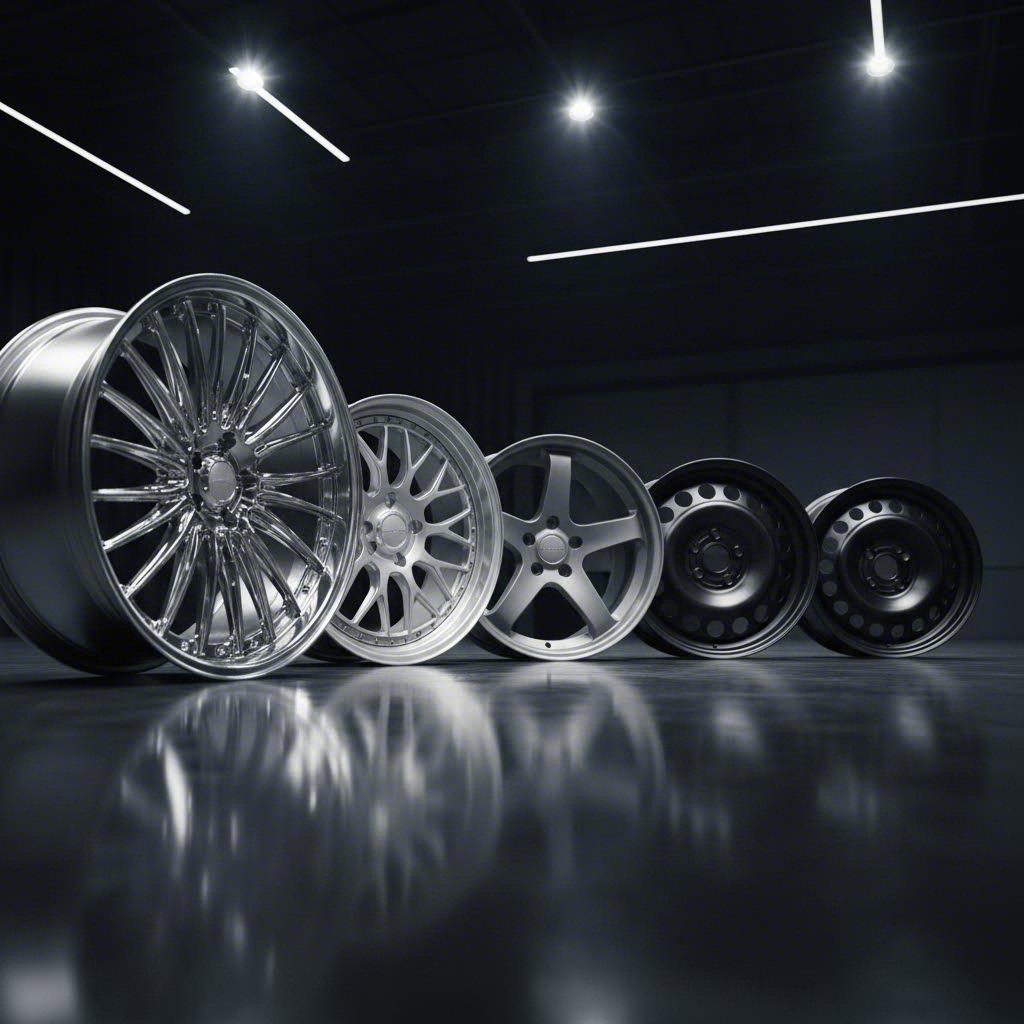
You've explored each wheel type individually. Now comes the moment of truth: how do they stack up against each other in a direct comparison? Understanding the difference between forged and cast options requires seeing all the specifications side by side. This comprehensive breakdown eliminates guesswork and gives you the data needed to match your budget to your build with confidence.
When evaluating forged wheels vs cast alternatives, the comparison extends beyond simple price tags. According to Modern Muscle Wheels, each type of wheels brings unique characteristics that determine suitability for specific applications. Let's break down exactly what you're getting at each price point.
Weight and Strength Comparison
The cast vs forged debate often centers on two critical metrics: how much does the wheel weigh, and how much abuse can it handle? These factors directly impact your vehicle's performance envelope and long-term reliability.
| Wheel Type | Manufacturing Process | Relative Weight | Strength Rating | Price Range (Per Wheel) | Best Applications | Warranty Typical |
|---|---|---|---|---|---|---|
| Precision Hot-Forged Custom | Solid billet compressed under extreme heat and pressure | Lightest | Highest | $900 - $2,500+ | Track cars, performance builds, heavy-duty trucks | Lifetime structural |
| Monoblock Forged | Single-piece forging from aluminum billet | Very Light | Excellent | $800 - $2,000 | Autocross, time attack, spirited street driving | 3-5 years |
| Multi-Piece Forged | Forged centers with assembled barrel sections | Light-Moderate | Excellent | $1,200 - $3,000+ | Show cars, high-end builds, custom fitments | 2-5 years |
| Flow-Formed | Cast blank with spun/stretched barrel | Moderate | Good | $250 - $600 | Hot hatches, tuned dailies, occasional track use | 1-3 years |
| Premium Cast | Low-pressure aluminum casting | Heavier | Adequate | $150 - $400 | Daily drivers, aesthetic upgrades, winter sets | 1-2 years |
| Budget Cast | Gravity casting | Heaviest | Basic | $75 - $200 | Basic replacement, low-stress applications | Limited or none |
The alloy vs forged wheels comparison becomes clear when examining these specifications. Forged construction consistently delivers superior strength-to-weight ratios, while aluminum vs alloy rims distinctions often come down to specific alloy composition and heat treatment rather than fundamental manufacturing differences.
Price Range Analysis
Understanding where your money goes helps justify premium investments or confirms that budget options serve your needs adequately. According to Modern Muscle Wheels, forged wheels represent the most expensive and highest quality option, with prices often exceeding $1,000-$2,000 per wheel. However, their data shows quality forged options starting around $900 per wheel from manufacturers with efficient production processes.
The price gaps reflect genuine manufacturing differences:
- Material Costs: Forging requires higher-grade aluminum billets than casting. The 6061-T6 aerospace alloys used in premium forged wheels cost significantly more than casting alloys.
- Production Time: Cast wheels cool in molds within hours. Forged wheels require multiple pressing stages, heat treatments, and precision machining extending production timelines.
- Tooling Investment: Custom forging dies represent major capital investment, while casting molds cost considerably less to produce and maintain.
- Quality Control: Premium manufacturers invest in extensive testing protocols, X-ray inspection, and certification processes that budget producers skip.
Flow-formed options occupy the value sweet spot for many enthusiasts. You're paying for genuine performance improvements over basic cast construction without the full premium of true forged manufacturing.
Maintenance and Lifespan Expectations
Your wheel investment extends beyond purchase price. Maintenance requirements and expected service life significantly impact total ownership cost.
| Wheel Type | Maintenance Frequency | Key Maintenance Tasks | Expected Lifespan | Rebuildable? |
|---|---|---|---|---|
| Precision Hot-Forged Custom | Annual inspection | Finish care, visual inspection | 15+ years | No (but rarely needed) |
| Monoblock Forged | Annual inspection | Finish care, crack inspection after impacts | 10-15 years | No |
| Multi-Piece Forged | Every 3-6 months | Hardware torque checks, seal inspection, between-component cleaning | 15+ years (with maintenance) | Yes - individual components |
| Flow-Formed | Annual inspection | Finish care, visual inspection | 8-12 years | No |
| Premium Cast | Annual inspection | Finish care, crack monitoring | 5-10 years | No |
| Budget Cast | Frequent monitoring | Crack checks, balance verification | 3-7 years | No |
Multi-piece construction demands the most attention but rewards owners with component-level repairability. A curbed lip on a three-piece wheel means replacing one barrel section rather than discarding the entire unit.
Application Matching Guide
Which wheel type suits your specific vehicle and driving style? Here's vehicle-specific guidance to streamline your decision.
Daily Drivers:
- Best Choice: Premium cast or flow-formed wheels balance cost with adequate performance.
- Why: Commuting doesn't stress wheels enough to justify forged premiums. Save your budget for other upgrades or allocate funds toward quality tires instead.
- Exception: If your daily doubles as a weekend canyon carver, flow-formed construction provides worthwhile weight savings.
Track Cars and Autocross Competitors:
- Best Choice: Monoblock forged or precision hot-forged custom wheels.
- Why: Repeated high-stress loading demands fatigue resistance that only forged construction reliably provides. The weight savings directly translate to faster lap times.
- Consideration: Dedicated track wheels often see curb strikes and off-track excursions. Budget for potential replacement when pushing limits.
Trucks and Heavy-Duty Applications:
- Best Choice: Precision hot-forged custom wheels designed for load capacity.
- Why: Towing, payload, and larger tire combinations create sustained stress that exposes cast wheel weaknesses over time.
- Consideration: Offset specifications become critical when running aggressive tire widths. Custom forging accommodates exact requirements.
Luxury and Show Vehicles:
- Best Choice: Multi-piece forged wheels for maximum customization or monoblock forged for clean aesthetics.
- Why: The sharper machining, deeper concavity, and finish quality achievable through forging creates visual impact that cast wheels cannot replicate.
- Consideration: Multi-piece hardware visibility creates a distinctive high-end appearance that enthusiasts recognize immediately.
Bolt Pattern and Offset Considerations:
Your vehicle's specifications constrain available options regardless of preferred wheel type. Consider these factors when choosing between wheel categories:
- Common Bolt Patterns: Off-the-shelf cast and flow-formed wheels typically cover popular patterns like 5x114.3, 5x120, and 5x112. Unusual patterns often require custom forging.
- Offset Range: Stock-style offsets find ready availability across all wheel types. Aggressive offsets for widebody kits or specific suspension geometry often demand custom specifications only forging provides.
- Hub-Centric Fitment: Quality wheels match your vehicle's exact hub bore diameter. Hub-centric rings can adapt close sizes, but precise manufacturing eliminates this compromise.
- Brake Clearance: Big brake upgrades frequently require custom wheel engineering. Forged manufacturing adapts to specific caliper dimensions rather than hoping pre-made options clear your components.
The aluminum vs alloy wheels question often confuses buyers, but here's the simple answer: all aluminum wheels are alloy wheels, with "alloy" simply describing the mixture of aluminum with other metals like magnesium or silicon. The meaningful distinction remains manufacturing method—cast, flow-formed, or forged—rather than material terminology.
Armed with this comprehensive comparison, you're ready to make an informed decision. The final step involves matching these specifications to your specific priorities and budget constraints.
Final Recommendations for Every Budget
You've absorbed the technical specifications, compared manufacturing methods, and examined performance data. Now comes the practical question: which wheel type actually belongs on your vehicle? The answer depends entirely on how you drive, what you prioritize, and how much you're willing to invest. Let's translate everything you've learned into actionable buying decisions.
Understanding what is a forged wheel and what does forged wheels mean matters less than knowing which option delivers genuine value for your specific situation. Whether you're debating cast or forged wheels for a daily commuter or building a dedicated track weapon, this framework guides you toward the right choice.
Match Your Wheel to Your Driving Style
Your driving habits determine which wheel construction delivers the best return on investment. Overspending on capabilities you'll never use wastes money. Underspending on components that fail under your demands wastes even more.
Daily Driver Priorities:
- Primary Goal: Reliable performance with reasonable cost and easy replacement if damaged.
- Best Options: Premium cast or flow-formed wheels from reputable manufacturers.
- Budget Allocation: $200-$500 per wheel strikes the optimal balance between quality and value.
- Key Considerations: Prioritize finish durability for long-term appearance, warranty coverage for peace of mind, and common sizing for easy tire mounting at any shop.
- Skip: Custom forged options unless your commute doubles as spirited driving through challenging roads.
Weekend Warrior Needs:
- Primary Goal: Noticeable performance improvement without breaking the bank.
- Best Options: Flow-formed wheels deliver meaningful weight reduction at accessible prices. Entry-level monoblock forged wheels provide a step up for serious enthusiasts.
- Budget Allocation: $400-$900 per wheel positions you in the sweet spot for forged vs flow formed decisions.
- Key Considerations: Weight savings matter here. Every pound removed improves your canyon carving and occasional track day performance.
- Skip: Multi-piece forged construction unless customization flexibility outweighs your performance priorities.
Track Enthusiast Requirements:
- Primary Goal: Maximum performance with durability under repeated high-stress use.
- Best Options: Monoblock forged or precision hot-forged custom wheels. No compromises here.
- Budget Allocation: $800-$2,000+ per wheel represents smart investment in components that directly improve lap times.
- Key Considerations: Fatigue resistance becomes critical when wheels see sustained heat cycling from hard braking and aggressive cornering session after session.
- Skip: Cast wheels of any quality. The performance gap under track conditions makes them inappropriate regardless of price savings.
Show Car Considerations:
- Primary Goal: Maximum visual impact with quality that impresses up close.
- Best Options: Multi-piece forged for customization possibilities or precision hot-forged custom for the sharpest machining and deepest concavity profiles.
- Budget Allocation: $1,200-$3,000+ per wheel reflects the premium commanded by show-quality finishes and construction.
- Key Considerations: Finish quality, hardware aesthetics, and unique specifications differentiate winning builds from also-rans.
- Skip: Budget cast options that deteriorate quickly and reveal their lower quality under scrutiny.
What is the difference between forged wheels and alloy wheels in practical terms? Forged construction represents the premium tier of alloy wheel manufacturing, delivering the strength and weight characteristics that justify higher pricing for appropriate applications.
Investment Timing Recommendations
When should you pull the trigger on premium forged wheels versus opting for more affordable alternatives? Timing your investment correctly maximizes the value you extract from your purchase.
Invest in forged now when:
- You're building a dedicated track car or autocross competitor where lap times matter.
- Your vehicle handles towing, heavy payloads, or off-road stress regularly.
- You've already addressed suspension, brakes, and tire upgrades—wheels represent the logical next step.
- You're planning to keep the vehicle long-term and want components that outlast cheaper alternatives.
- Custom fitment requirements exceed what off-the-shelf options can accommodate.
Wait on forged when:
- Other modifications deliver better performance-per-dollar at your current build stage.
- You're planning to sell the vehicle within two years and won't recoup the premium investment.
- Your driving style doesn't stress wheels enough to reveal cast wheel limitations.
- Budget constraints mean choosing between quality tires or premium wheels—tires win that debate every time.
The custom forged wheel ordering process differs significantly from buying off-the-shelf cast options. According to Vorenzo Forged, custom forged wheels are built per order, ensuring perfect fitment and personalized design. Expect the following process:
- Consultation Phase: Provide your vehicle's year, make, and model. Discuss wheel specifications including sizing, offset requirements, and finish preferences.
- Design Confirmation: After payment, manufacturers provide 3D cross-section profile drawings illustrating concavity and lip sizing based on your brake clearance requirements.
- Production Timeline: Standard lead times run approximately 6-8 weeks for production, not including shipping. Some manufacturers with streamlined processes can deliver prototypes in as little as 10 days.
- Shipping Options: Express air freight costs extra while sea freight typically ships free. Plan your build timeline around realistic delivery expectations.
- Included Accessories: Quality manufacturers include center caps matching your wheel finish and valve stems at no additional cost.
For those seeking premium custom forged wheel solutions with guaranteed quality assurance, exploring IATF 16949 certified forging partners ensures consistent manufacturing standards. Manufacturers like Shaoyi (Ningbo) Metal Technology demonstrate this commitment through rigorous quality control from rapid prototyping through high-volume production, with in-house engineering ensuring components meet exact specifications.
Quality Verification Checklist
Before committing your budget to any wheel purchase, verify quality indicators that separate genuine products from inferior alternatives. According to Performance Plus Tire, DOT requires specific markings on wheels so buyers can confirm basic specifications and traceability.
Essential verification steps:
- Check Required Markings: Look for size, load rating, manufacturer mark, part code, date of manufacture, country of origin, and DOT symbol. Markings should be permanent and legible on the wheel's back.
- Verify Load Capacity: Use at least 50% of your heaviest GAWR per wheel. Example: 3,000 lb GAWR means minimum 1,500 lb wheel rating, with extra margin for towing or off-road use.
- Request Testing Documentation: Reputable manufacturers can provide SAE J2530 testing documentation covering cornering fatigue, radial fatigue, and impact resistance.
- Confirm Certification Status: JWL/VIA certification indicates baseline durability standards. IATF 16949 certification demonstrates manufacturing excellence throughout the supply chain.
- Validate Weight Claims: Request actual wheel weights rather than relying on estimates. Suspiciously heavy specifications often indicate lower-quality alloys.
- Inspect Finish Quality: Look for multi-layer coatings providing protection against stone chips and corrosion rather than single-layer paint prone to deterioration.
Red flags requiring caution:
- Prices dramatically below market rates for claimed specifications.
- Vague or missing manufacturing origin information.
- No warranty coverage or extremely limited terms.
- Inability to provide testing documentation or certification verification.
- Inconsistent specifications across supposedly identical products.
When evaluating what is better alloy or forged wheels for your application, remember that the manufacturing process matters more than terminology. Focus on verified specifications, documented testing, and manufacturer reputation rather than marketing claims.
Your wheel choice ultimately reflects your priorities. Daily drivers benefit from premium cast options that balance cost with reliability. Performance enthusiasts gain measurable advantages from flow-formed construction at accessible prices. Track competitors and serious builders justify forged investment through quantifiable performance gains and superior durability. Match your budget to your actual driving demands, verify quality before purchasing, and you'll end up with wheels that serve your build exactly as intended.
Frequently Asked Questions About Forged and Cast Wheels
1. Is cast better than forged?
Forged wheels outperform cast in strength and weight metrics. Forged parts demonstrate approximately 26% higher tensile strength and 37% greater fatigue resistance, resulting in significantly longer service life. However, cast wheels cost substantially less and work perfectly for daily driving applications where extreme stress resistance isn't required. The better choice depends entirely on your driving demands and budget priorities.
2. Can you feel a difference with forged wheels?
Yes, drivers typically notice improved handling, quicker steering response, and better ride quality with forged wheels. The weight reduction of 25-30% compared to equivalent cast wheels decreases unsprung mass, allowing suspension components to respond faster to road imperfections. This translates to sharper turn-in, improved braking feel, and enhanced overall vehicle dynamics that become apparent during spirited driving.
3. What are the main differences between forged and cast wheels?
The fundamental difference lies in manufacturing. Cast wheels form when molten aluminum pours into molds, creating a less dense grain structure with potential microscopic voids. Forged wheels compress solid aluminum under extreme pressure and heat, producing denser grain alignment that's approximately 25-30% lighter while achieving superior strength. Forged options command premium pricing but deliver measurable performance advantages for demanding applications.
4. Are flow formed wheels as good as forged wheels?
Flow formed wheels bridge the gap between cast and forged but don't match true forged performance. The process only strengthens the barrel section while the wheel face retains cast properties. They offer meaningful weight savings and improved strength over standard cast at lower prices than forged alternatives, making them ideal for enthusiasts seeking better performance without the full forged investment.
5. How long do forged wheels last compared to cast wheels?
Quality forged wheels typically last 15+ years with proper maintenance, while premium cast wheels average 5-10 years. The denser grain structure in forged construction resists fatigue and crack propagation far better than cast alternatives. IATF 16949 certified manufacturers like Shaoyi Metal Technology ensure consistent quality control that maximizes wheel longevity through rigorous testing and precision manufacturing processes.