 Small batches, high standards. Our rapid prototyping service makes validation faster and easier —
  EN
EN


Clunking Noise Over Bumps? Your Control Arm Is Talking

TL;DR
A persistent clunking, popping, or groaning noise from your front suspension, especially when driving over bumps, is a classic sign of a failing stamped steel control arm. This sound is typically caused by worn-out rubber bushings or a faulty ball joint, which allows for unwanted metal-on-metal contact. You might also notice wandering steering or uneven tire wear, which are also key symptoms.
Decoding the Sounds: Identifying Noises from a Failing Control Arm
When your car's suspension starts making new and unusual noises, it's understandably concerning. These sounds are your vehicle's way of telling you something is wrong, and learning to interpret them is the first step toward a diagnosis. For a failing control arm, the auditory clues are quite distinct. The most common complaint is a sharp "clunking" or "popping" sound. According to experts at MOOG Parts, this noise is often heard when going over bumps, potholes, or other uneven road surfaces. It's the sound of the metal control arm hitting the vehicle's frame because the protective bushing has worn away.
This clunking isn't limited to just rough roads. You might also hear it when braking, accelerating, or turning sharply. The forces exerted on the suspension during these maneuvers can cause a loose or worn control arm assembly to shift and make contact. Another common sound is a low-pitched "groaning," which often points to a control arm bushing that has become dry or is binding. This can happen as the arm struggles to pivot smoothly during suspension travel.
To help you distinguish between these sounds, consider the likely cause behind each. A clear, consistent diagnosis can prevent further damage and ensure a safe repair. Here’s a simple breakdown:
| Sound | Likely Cause | When You'll Hear It |
|---|---|---|
| Clunking or Popping | Severely worn bushings or a failing ball joint allowing metal-on-metal contact. | Going over bumps, braking, accelerating, or making sharp turns. |
| Groaning or Creaking | Dry, cracked, or binding rubber bushings that can no longer pivot smoothly. | During suspension travel, like going over speed bumps or up driveways. |
| Squeaking | Friction from worn components, often a precursor to more severe groaning or clunking. | Can be intermittent and may worsen with temperature changes. |
If you suspect a control arm issue, you can perform a simple test. Find a safe, quiet area and, with your windows down, drive slowly over a speed bump. The change in suspension height will often replicate the noise, helping you confirm its location. Listening carefully to the specific sound and when it occurs will give you valuable information when you inspect the vehicle or speak with a technician.
The Root Causes: Why Stamped Steel Control Arms Become Noisy
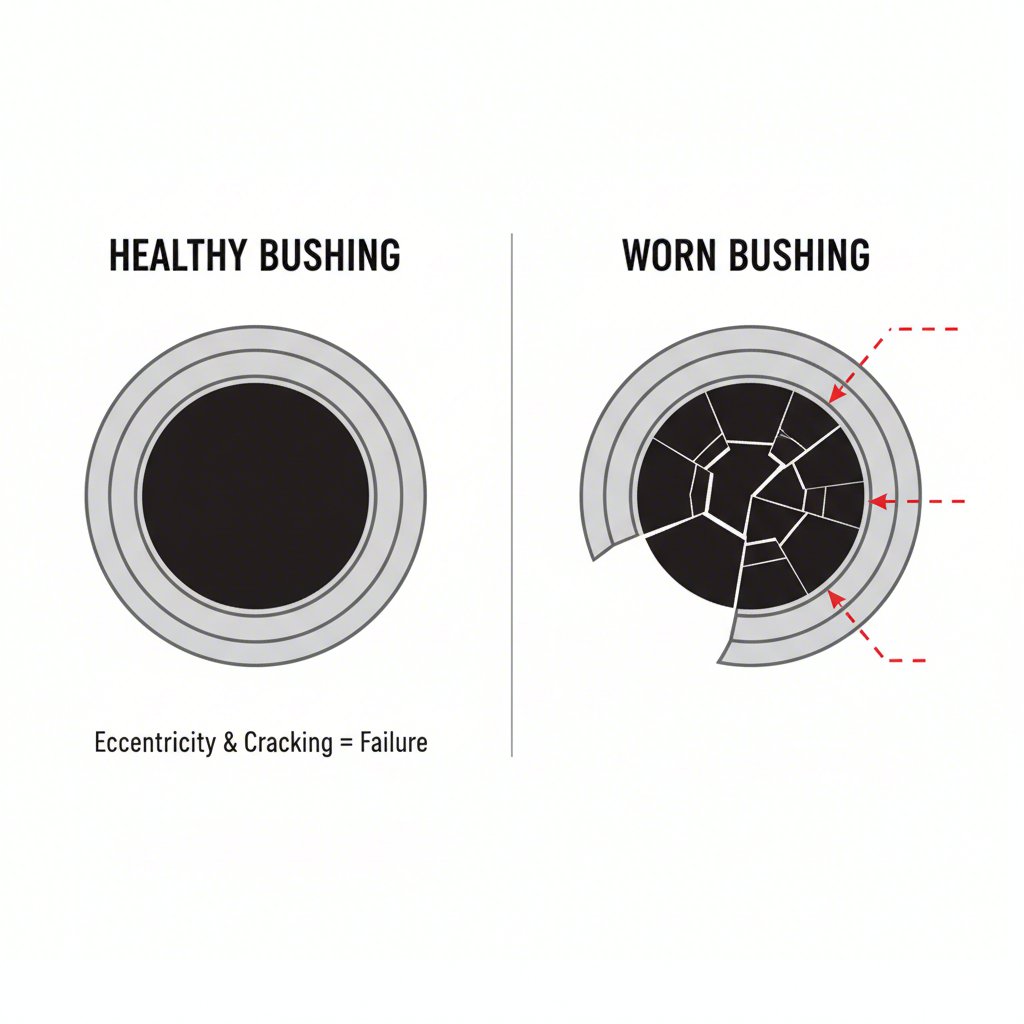
The control arm itself is a robust component, typically made of stamped steel, cast iron, or aluminum. As noted by GSW Autoparts, the arm itself rarely fails; the problem almost always lies with its "wear items": the bushings and the ball joint. These parts are designed to absorb vibrations and allow for movement, but they have a finite lifespan. The most common cause of failure is the degradation of the rubber bushings. Over thousands of miles, these bushings are exposed to heat, moisture, road salt, and constant flexing, causing the rubber to dry out, crack, and eventually fall apart.
Once a bushing fails, it can no longer hold the control arm securely in place. This allows for excessive movement, which is the source of the clunking noise as the metal arm bangs against its mounting points on the vehicle's frame. Similarly, the ball joint—a pivoting socket that connects the control arm to the steering knuckle—can wear out. When its internal components loosen, it creates play in the suspension, leading to noise and steering instability. The quality and precision of the initial manufacturing are critical for the longevity of these components. For automotive manufacturers, sourcing high-quality parts is essential, and specialists like Shaoyi (Ningbo) Metal Technology Co., Ltd. provide the expert metal stamping required to produce reliable and durable automotive components.
Interestingly, sometimes the noise appears shortly after the control arms have been replaced. This is often due to improper installation. A common mistake is tightening the control arm's pivot bolts while the vehicle is on a lift with the suspension hanging at "full droop." This preloads the rubber bushings in an unnatural position. When the car is lowered back to the ground, the bushings are immediately twisted and under extreme stress, causing them to fail prematurely. To avoid this, the final torque should always be applied with the vehicle's full weight on its wheels, settling the suspension into its normal ride height.
A visual inspection can often confirm a failing control arm. Here’s a simple checklist of what to look for:
- Inspect the Bushings: Look at the rubber bushings where the control arm connects to the frame. Look for deep cracks, chunks of missing rubber, or signs that the inner metal sleeve has shifted off-center.
- Check the Ball Joint: Safely jack up the front of the vehicle so the tire is off the ground. Try to wiggle the wheel from top to bottom. If you feel any looseness, clunking, or play, it's a strong indicator of a worn ball joint.
- Look for Corrosion or Damage: While you're under the vehicle, check the control arm itself for any signs of heavy rust, corrosion, or physical damage from impacts with road debris or curbs.
Beyond Noise: Other Telltale Symptoms of a Bad Control Arm
While noise is the most common complaint, a failing control arm can cause a variety of other symptoms that affect your vehicle's handling and safety. These signs often develop gradually, but they all point to a loss of stability in your front suspension. Paying attention to how your car feels on the road is just as important as listening for sounds. A worn control arm allows the wheel to move in ways it shouldn't, which directly impacts steering geometry and tire contact with the road.
One of the most significant symptoms is a change in steering feel. Because a worn control arm can no longer hold the wheel assembly securely, your vehicle's alignment is compromised. This can lead to a feeling of "wandering" or vague steering, where you have to constantly make small corrections to the steering wheel to keep the car driving in a straight line. You may also feel vibrations through the steering wheel, which can change in intensity with your speed.
This loss of alignment also has a direct and costly impact on your tires. When the wheel is no longer held at the correct angle, it can cause the tire to lean inward or outward, resulting in rapid and uneven tire wear. If you notice that the inside or outside edges of your front tires are wearing down much faster than the center, a bad control arm is a likely culprit. It’s crucial to address the root suspension issue before simply replacing the tires, or the new set will suffer the same fate.
Here are the key symptoms to watch for beyond just noise:
- Vague or Wandering Steering: The car seems to drift on its own, requiring constant small steering adjustments to stay in its lane.
- Steering Wheel Vibration: A shimmy or vibration that you can feel in the steering wheel, which may worsen as you accelerate.
- Vehicle Pulling to One Side: When you brake or drive on a flat road, the car consistently pulls to the left or right.
- Uneven Tire Wear: The inner or outer shoulder of one or both front tires shows significantly more wear than the rest of the tread.
Frequently Asked Questions About Control Arm Noise
1. What does a bad control arm bushing sound like?
A bad control arm bushing typically makes a distinct "clunking" or "popping" noise when you drive over bumps or uneven surfaces. This is the sound of metal-on-metal contact as the control arm shifts in its mounting. You might also hear a lower-pitched "groaning" or creaking sound, especially at low speeds, which is caused by the rubber bushing binding as the suspension moves.
2. Can I drive with a noisy control arm?
While you may be able to drive the vehicle for a short time, it is not recommended. A noisy control arm is a sign of a critical suspension component failure. If the ball joint separates or a bushing fails completely, it can lead to a sudden loss of steering control, making it a serious safety hazard. It's best to have the vehicle inspected and repaired by a qualified technician as soon as possible.
3. Why is my car making noise after replacing the control arms?
If a clunking noise appears shortly after replacing control arms, the most common cause is improper installation. Specifically, if the pivot bolts for the new bushings were tightened while the car was on a lift with the suspension hanging down, the bushings can get permanently twisted and damaged. The final tightening of these bolts must be done with the vehicle's full weight on the ground to prevent this issue.