 Small batches, high standards. Our rapid prototyping service makes validation faster and easier —
  EN
EN


Cleaning Custom Forged Wheels Without Destroying The Finish
Understanding Why Custom Forged Wheels Need Specialized Care
You've invested thousands of dollars in custom forged wheels that transform your vehicle's appearance and performance. But here's the thing—cleaning custom forged wheels isn't the same as washing standard factory rims. Use the wrong product or technique, and you could permanently damage that stunning finish you paid premium prices to achieve.
What makes forged wheels so special? Unlike cast wheels, manufacturers create forged wheels by subjecting a solid block of aluminum to extreme pressure. This process aligns the metal's grain structure, producing a denser, stronger wheel that's significantly lighter yet more durable. According to RNR Tires, this high-pressure manufacturing enhances structural integrity while reducing unnecessary mass—benefits that translate directly to improved acceleration, handling, and fuel efficiency.
However, these unique manufacturing characteristics also create distinct surface properties that react differently to cleaning chemicals and techniques. Clear coated wheels, polished aluminum, and brushed finishes each have specific vulnerabilities that generic wheel cleaners simply ignore.
Why Your Forged Wheels Demand Special Attention
Think about it this way: forged wheels represent premium engineering at its finest. The aligned grain structure that makes them incredibly strong also means their surfaces can be more sensitive to harsh chemicals and abrasive cleaning tools. When you're researching wheel care—perhaps while reading airmoto reviews or exploring other automotive maintenance topics—you'll quickly discover that forged aluminum requires a gentler approach than standard cast alternatives.
The dense composition that resists deformation under heavy loads doesn't automatically protect against chemical damage or oxidation on wheels. In fact, improper cleaning methods can accelerate finish deterioration, leaving you with a wheel that looks years older than it actually is.
The Hidden Risks of Generic Wheel Cleaning Methods
Using the wrong forged wheel cleaner or technique creates problems that extend far beyond cosmetic concerns. Harsh acidic formulas can eat through protective coatings. Stiff brushes scratch polished surfaces. And those water spots from air drying? They can permanently etch into certain finishes.
The cost of improper wheel care often exceeds the cost of proper cleaning products—damaged finishes can void manufacturer warranties, diminish resale value by hundreds of dollars, and require expensive professional restoration.
Throughout this guide, you'll learn finish-specific protocols that protect your investment while keeping your wheels looking showroom-fresh. Whether you own polished, brushed, powder-coated, or chrome forged wheels, we'll cover exactly what products and techniques work best for your specific finish type.
Identifying Your Forged Wheel Finish Type
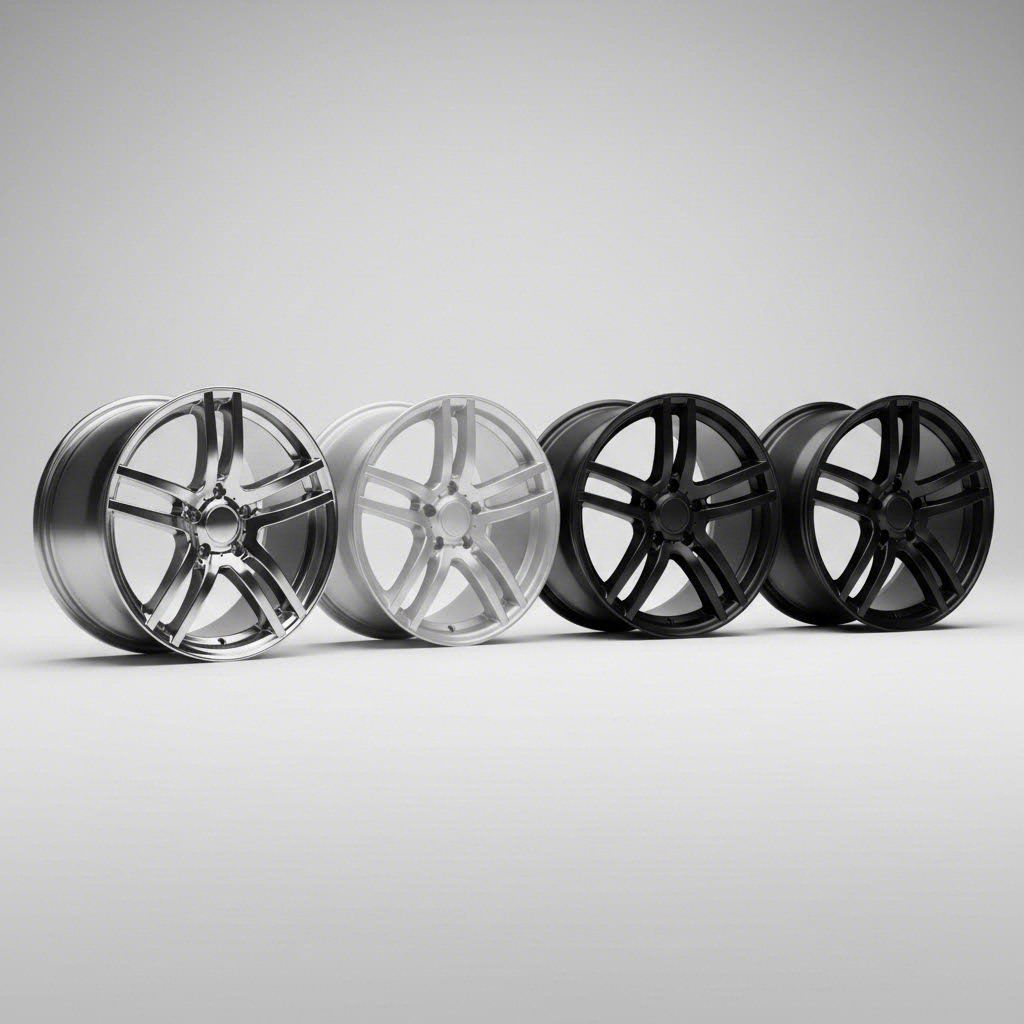
Before you grab any cleaning product, you need to answer one critical question: what finish type are your forged wheels? This matters because a cleaning method that makes polished aluminum sparkle could permanently damage chrome fuel wheels or leave oxidized rims looking even worse. Each finish reacts differently to chemicals, abrasives, and even environmental exposure.
Let's break down the most common forged wheel finishes and their unique vulnerabilities so you can clean with confidence.
Polished and Brushed Aluminum Finish Vulnerabilities
Polished aluminum wheels deliver that mirror-reflective appearance many enthusiasts crave. According to Les Schwab, these wheels can be hand-polished with a buffer for a completely smooth surface or machine-polished to achieve a near-mirror shine—sometimes with no protective top coat applied at all.
Here's where things get tricky. If your polished wheels lack a protective clear coat, they're extremely vulnerable to:
- Oxidation from environmental exposure
- Pitting caused by brake dust contamination
- Chemical damage from acidic or alkaline cleaners
- Water spot etching from improper drying
Brushed aluminum finishes feature intentional linear patterns that create visual texture. While stunning, these grooves can trap brake dust and contaminants more easily than smooth surfaces. The brushed pattern also means any scratches from improper cleaning become immediately visible—they'll run against the grain and stand out dramatically.
Raw machined finishes present similar challenges. A thin layer of metal is shaved off the wheel face, leaving small lines resembling a CD's surface. Without proper protection, these oxidized wheels can quickly lose their luster and develop unsightly staining.
Protective Coatings and Their Cleaning Implications
Many forged wheels come with protective coatings that change everything about how you should clean them. Understanding these coatings prevents accidental damage.
Clear Coated Wheels: A transparent sealant protects the underlying metal from corrosion. As The Ultimate Finish explains, diamond cut wheels are first painted, baked, CNC-machined, and then sprayed with acrylic lacquer. If water penetrates under this lacquer, it stains the bare metal a milky color—damage that's nearly impossible to fix without complete stripping.
Powder Coated Wheels: This dry powder application creates an electrostatically bonded finish that's cured under heat. The result? A hard finish tougher than conventional paint. However, extreme pH cleaners can still compromise this coating over time, causing eventual blistering and peeling.
Chrome Plated Wheels: Multiple layers of copper, nickel, and chromium create that brilliant showroom shine. But chrome is surprisingly delicate—any alkaline-based cleaning solution will stain the metal. The staining can be polished out, but prevention through proper product selection is far easier.
Painted Wheels: Wet paint with a clear topcoat offers endless color options but requires gentle treatment. Acidic wheel cleaners that promise quick brake dust removal can etch through the lacquer, causing irreversible damage.
PVD (Physical Vapor Deposition) Finishes: PVD wheels mimic chrome's shine but weigh significantly less. A thin metallic coating applied in a vacuum chamber is sealed with clear acrylic powder coating. The catch? Drive-through car washes, high-pressure washing, and harsh chrome cleaners can damage the topcoat and void your warranty.
Forged Wheel Finish Comparison Guide
Use this reference table to quickly identify your finish type's specific care requirements:
| Finish Type | Chemical Sensitivity | Recommended pH Range | Common Damage Risks | Maintenance Frequency |
|---|---|---|---|---|
| Polished Aluminum (Uncoated) | High - avoid acids and alkalis | pH 6.5-7.5 (neutral) | Oxidation, pitting, water spots | Weekly cleaning, monthly polish and wax |
| Brushed Aluminum | High - scratches easily | pH 6.5-7.5 (neutral) | Groove contamination, visible scratches | Weekly cleaning with soft brushes only |
| Clear Coated/Lacquered | Moderate - pH extremes cause etching | pH 6-8 | Lacquer peeling, water intrusion, blistering | Bi-weekly cleaning, seasonal sealant |
| Powder Coated | Moderate - tough but not invincible | pH 6-8 | Chipping at edges, chemical etching over time | Bi-weekly cleaning, annual inspection |
| Chrome Plated | High - alkaline solutions cause staining | pH 6.5-7.5 (neutral) | Pitting, corrosion, staining from deicers | Weekly in winter, bi-weekly otherwise |
| Painted with Clear Coat | Moderate - similar to body paint | pH 6-8 | UV fade, clear coat failure, brake dust embedding | Bi-weekly cleaning, ceramic protection |
| PVD Chrome | High - harsh acids damage topcoat | pH 7 (strictly neutral) | Topcoat scratching, warranty voiding | Hand wash only, avoid pressure washing |
| Raw Machined | Critical - no protective layer | pH 7 (strictly neutral) | Rapid oxidation, permanent staining | After every drive, immediate drying required |
Notice a pattern? Nearly every finish performs best with pH-neutral cleaning products. Those aggressive wheel cleaners promising instant brake dust removal? They're often highly acidic—and that's exactly what causes long-term damage to your investment.
Now that you understand your wheel's specific vulnerabilities, you're ready to select the right cleaning products and tools that protect rather than damage your forged wheels.
Essential Cleaning Products and Tools for Forged Wheels
You've identified your wheel's finish type—now comes the critical decision that separates successful cleaning from costly damage. Choosing the right products and tools isn't about grabbing whatever's on sale at the auto parts store. It's about matching specific formulations and materials to your wheel's unique vulnerabilities.
Think of it this way: would you use dish soap on a leather jacket? The same logic applies to your forged wheels. Premium finishes demand premium care, and understanding exactly what goes into your cleaning arsenal makes all the difference.
pH-Balanced Cleaners vs. Acidic Formulas
Here's where chemistry meets your wallet. The pH scale runs from 0 (highly acidic) to 14 (highly alkaline), with 7 being perfectly neutral. Why does this matter? Because your wheel's finish reacts dramatically differently based on where a cleaner falls on this scale.
Acidic wheel cleaners (pH 0-6) work aggressively. They dissolve brake dust and iron contamination quickly—but that same aggressive chemistry attacks sensitive finishes like polished aluminum, chrome plating, and PVD coatings. According to Chemical Guys, harsh acid-based cleaners can permanently damage wheels, which is why their top-rated Diablo formula uses pH-balanced oxygen technology instead.
pH-neutral cleaners (pH 6.5-7.5) offer the safest approach for virtually every forged wheel finish. These formulations lift contamination through surfactants and oxygen-infused technology rather than chemical aggression. You might need slightly more contact time or a bit more agitation, but your finish remains protected.
Alkaline cleaners (pH 8-14) present their own risks. While less common in wheel care, these formulas cause staining on chrome and can damage certain protective coatings. Many all-purpose cleaners fall into this category—another reason to invest in dedicated wheel-specific products.
The best way to shine chrome wheels? Skip the harsh chemicals entirely. Neutral pH formulas combined with proper technique deliver brilliant results without the risk of permanent staining or pitting.
Brushes and Applicators That Protect Your Investment
Even the gentlest cleaner becomes destructive when paired with the wrong applicator. Stiff bristles, abrasive pads, and rough materials create micro-scratches that accumulate over time, dulling finishes and trapping contaminants in newly created grooves.
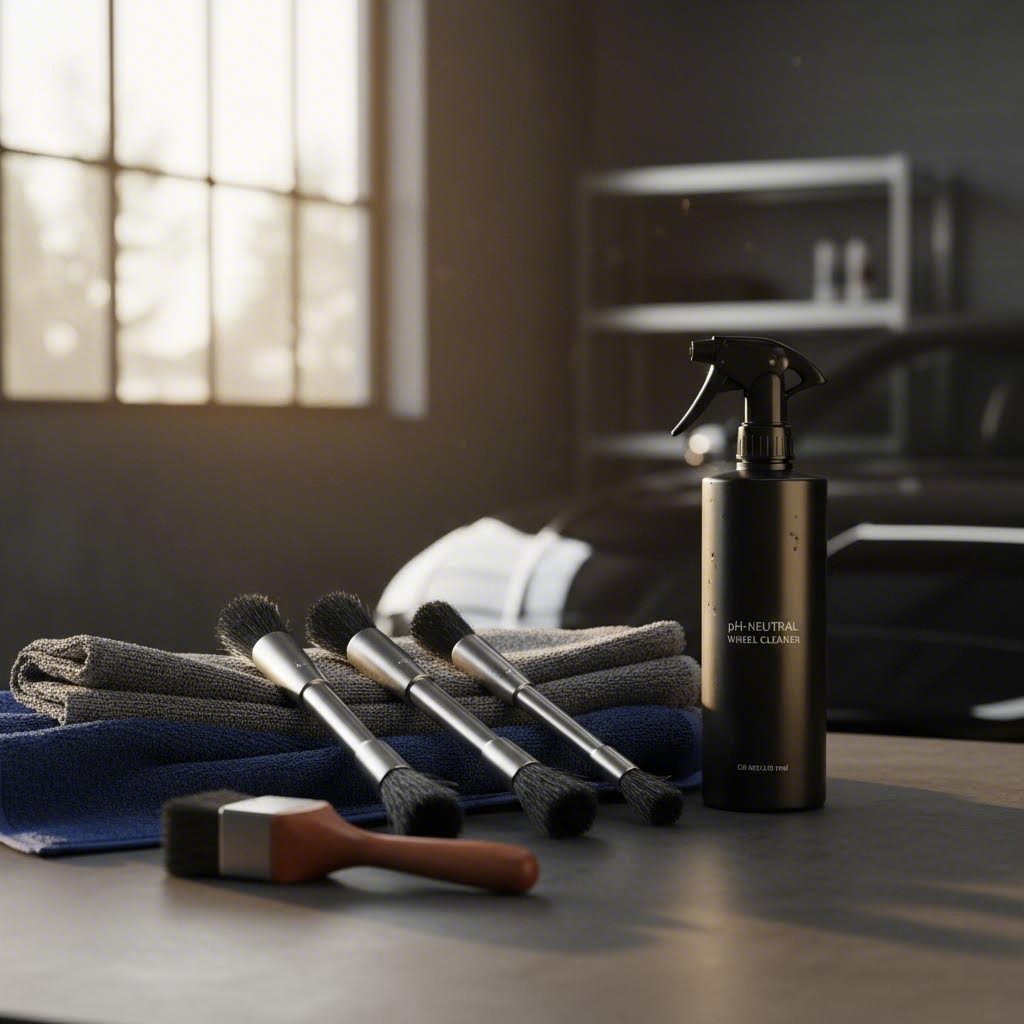
Your brush selection should match your wheel's finish sensitivity. Polished and brushed aluminum require the softest options available—think lambswool or ultra-fine synthetic fibers. Powder-coated and painted wheels can tolerate slightly firmer brushes, but nothing approaching the stiff bristle brushes designed for tires.
Wheel woolies deserve special mention. These long, flexible brushes with dense synthetic fibers reach deep into wheel barrels and between spokes where brake dust accumulates most heavily. Quality versions feature soft cores that won't scratch if they contact the wheel face during cleaning.
Organized Product Categories for Every Finish
Stop piecing together scattered recommendations from random forum posts. Here's your consolidated guide to building a complete forged wheel cleaning kit:
Wheel Cleaners by pH Level:
- pH-Neutral (Safest for All Finishes): Oxygen-infused formulas like Chemical Guys Diablo, dedicated forged wheel cleaners, spray wax-based cleaners for light maintenance
- Mildly Acidic (Use with Caution): Iron fallout removers for decontamination—only on clear-coated or painted wheels, never polished aluminum
- Citrus-Based Natural Options: Products using d-limonene provide effective cleaning without synthetic chemical aggression—excellent for enthusiasts preferring natural formulations
Brushes and Applicators:
- Wheel woolies (various sizes for barrels, spokes, and lug nut wells)
- Ultra-soft synthetic or boar's hair brushes for wheel faces
- Dedicated lug nut brushes with non-scratch bristles
- Microfiber wash mitts (separate from body wash mitts to prevent cross-contamination)
- Detailing brushes for intricate spoke designs and tight crevices
Drying and Finishing Tools:
- Plush microfiber drying towels (minimum 400 GSM for scratch-free absorption)
- Waffle-weave towels for textured finishes that trap water in grooves
- Compressed air or electric blowers for removing water from hard-to-reach areas
- Quick detail sprays for lubricated drying on sensitive polished surfaces
Protective Sealants and Coatings:
- Ceramic wheel coatings for long-term protection (apply after thorough decontamination)
- Carnauba or synthetic spray waxes for polished aluminum
- Dedicated wheel sealants that withstand brake heat
- Metal polish for uncoated aluminum (restoration, not routine maintenance)
When assembling your kit, quality matters more than quantity. A single pH-neutral cleaner, one set of dedicated wheel brushes, and proper drying materials handle 90% of maintenance situations. The specialty products—iron removers, metal polish, ceramic coatings—come into play for decontamination sessions and seasonal protection.
Just as automotive enthusiasts carefully select products like amsoil full synthetic interceptor 2-cycle oil 1 quart for their engines, your wheels deserve the same thoughtful product matching. Specific engineering solutions like Loctite 243 and Loctite 242 threadlockers demonstrate how specific formulations serve specific purposes—and wheel care follows the same principle.
With your cleaning arsenal properly assembled, you're ready to learn the step-by-step techniques that put these products to work without risking your wheel's finish.
Step-by-Step Cleaning Protocols by Finish Type
You've assembled the right products and tools. Now comes the moment of truth—actually cleaning your forged wheels without damaging that pristine finish. The difference between professional-quality results and costly mistakes often comes down to technique, timing, and temperature awareness.
Here's something manufacturers rarely emphasize in their marketing materials: the actual application method matters as much as the product you're using. A premium pH-neutral cleaner becomes problematic when allowed to dry on the surface. The gentlest brush causes scratches when used on hot wheels. Let's bridge that gap between product promises and real-world execution.
The Cool-Down Rule and Pre-Rinse Technique
Ever notice how your brakes feel after a spirited drive? That heat transfers directly into your wheels. According to Adam's Polishes, powder coated wheels and calipers must be cool to the touch before any cleaning product is applied. The same applies to virtually every forged wheel finish.
Why does temperature matter so much? Hot wheels cause cleaning chemicals to flash-dry almost instantly. This concentrated chemical residue etches into finishes, creates drip stains, and can leave even pH-neutral products looking like they've caused damage. Black wheels are particularly vulnerable—improper cleaning on warm surfaces creates a chalky appearance that's difficult to reverse.
The Practical Cool-Down Approach:
- Wait at least 30 minutes after driving before beginning any wheel cleaning
- Park in shade when possible—direct sunlight accelerates surface drying
- Touch-test multiple areas of the wheel (face, barrel, and near brake caliper)
- If wheels still feel warm, extend cooling time or gently cool with low-pressure water
Once your wheels are cool, the pre-rinse sets up success. This isn't a quick spray—it's a thorough saturation that loosens surface contamination and prepares the finish for chemical contact.
Start from the top of the wheel and work downward, allowing gravity to carry debris away from clean surfaces. Focus extra attention on the inner barrel where brake dust accumulates most heavily. A pressure washer works excellently here, but a strong hose nozzle achieves similar results. The goal? Remove every loose particle before any brush touches the surface.
Dilution Ratios and Contact Time Limits
Sounds complex? It doesn't have to be. Most quality wheel cleaners come ready-to-use at optimal concentration. However, concentrated formulas require careful attention to manufacturer specifications—and sometimes finishing weaker than recommended actually produces better results on sensitive finishes.
For polished aluminum and raw machined wheels, consider diluting even ready-to-use products 1:1 with water. You'll need slightly more product overall, but the reduced chemical concentration provides an extra safety margin against finish damage.
Contact time represents your critical control variable. Most pH-neutral wheel cleaners work effectively within 2-5 minutes of dwell time. Iron fallout removers that turn purple as they react with brake dust typically need 3-5 minutes maximum. Exceeding these windows—especially on warm surfaces or in direct sunlight—risks the very damage you're trying to prevent.
Here's the practical technique: work one wheel at a time, start to finish. Never spray all four wheels simultaneously unless you have multiple people rinsing. A cleaner sitting on wheel three while you're still scrubbing wheel one has already exceeded safe contact time.
Agitation Methods That Clean Without Scratching
Now we're at the hands-on phase where technique truly separates careful enthusiasts from those who inadvertently damage their wheels. Agitation—the physical action of loosening contamination—requires the right pressure, motion, and tool selection for each wheel zone.
The Wheel Face: Use your softest brush or microfiber wash mitt. Apply minimal pressure—let the cleaning product do the chemical work while your tool provides gentle mechanical assistance. Work in straight lines following any grain pattern on brushed finishes. Circular motions on polished aluminum can create swirl marks visible in direct light.
Between Spokes: Wheel woolies excel here. Insert the brush fully to reach the inner barrel, then use a gentle twisting motion while pulling outward. Avoid jamming brushes forcefully into tight spaces—this bends bristles and can cause scratches when they spring back against wheel faces.
The Inner Barrel: This area accumulates the heaviest brake dust contamination. A longer wheel woolie or dedicated barrel brush reaches these surfaces effectively. Expect the most resistance here, but resist the urge to scrub aggressively. Multiple light passes with fresh cleaner outperform one heavy-handed attempt.
Lug Nut Wells: These small recesses trap contamination that affects overall wheel appearance. Dedicated lug nut brushes with soft, dense bristles clean these areas without risking the surrounding finish. Some enthusiasts find that detailing brushes designed for interior work provide the gentleness these tight spots require.
The Complete Cleaning Sequence
Ready to put everything together? Follow this step-by-step protocol for consistently excellent results:
- Confirm wheel temperature is cool to the touch—wait additional time if any warmth is detected near the brake caliper area
- Perform thorough pre-rinse—saturate entire wheel from top to bottom, including inner barrel and behind spokes, for at least 30 seconds per wheel
- Apply wheel cleaner to one wheel only—spray evenly across face, between spokes, and into the barrel; avoid oversaturation that causes product to pool and dry
- Allow appropriate dwell time—2-3 minutes for pH-neutral cleaners on sensitive finishes, up to 5 minutes for iron removers on clear-coated wheels
- Agitate wheel face first—use softest brush with minimal pressure, working methodically across the entire surface
- Clean between spokes—insert wheel woolie fully, twist gently, and pull outward; repeat with fresh sections of the brush
- Address inner barrel—multiple light passes with a barrel brush, re-applying cleaner if contamination remains after initial agitation
- Clean lug nut wells—soft detailing brush with gentle circular motion in each recess
- Rinse thoroughly from top down—continue rinsing until no cleaner residue, foam, or loosened contamination remains; pay special attention to crevices where product hides
- Inspect while wet—remaining contamination is visible before drying; repeat steps 3-9 on problem areas before moving to next wheel
- Dry immediately—use plush microfiber towel with blotting motion rather than dragging; compressed air removes water from tight spaces where towels can't reach
Finish-Specific Protocol Adjustments
While the core sequence remains consistent, certain finishes demand specific modifications:
Polished Aluminum (Uncoated): Skip iron fallout removers entirely—these products can cloud raw aluminum surfaces. Use only pH-neutral car shampoo or dedicated aluminum-safe wheel cleaners. Dry immediately and completely; water spots etch into unprotected polished surfaces within minutes.
Chrome Plated: Avoid all alkaline products—even some "mild" all-purpose cleaners fall into this category. Stick strictly to pH-neutral formulas. Chrome tolerates longer dwell times than polished aluminum but still requires immediate drying to prevent water spotting.
Matte and Satin Finishes: These textured surfaces hide contamination visually but still suffer from improper cleaning. Use only products specifically labeled safe for matte finishes. Traditional waxes and sealants create unwanted shine—opt for matte-specific protectants after cleaning.
Anodized Surfaces: As Adam's Polishes notes, strong wheel cleaners can work their way into porous anodized finishes and cause permanent staining. Eco-friendly, ultra-gentle cleaners or simple car shampoo represent the safest options for these specialized surfaces.
The spark plug torque spec matters for engine performance; your cleaning technique matters equally for wheel preservation. Just as you'd never exceed torque specifications when installing components, never exceed safe contact times or appropriate pressure levels when cleaning your forged wheels.
With proper technique mastered, you're well-equipped to maintain your wheel's finish indefinitely. However, knowing what to avoid proves equally important—and some common mistakes cause damage that no amount of careful future cleaning can reverse.
Critical Cleaning Mistakes That Destroy Forged Wheels
You've learned the right techniques—but avoiding the wrong ones matters just as much. According to AUS Detailing Pros, most wheel damage isn't from neglect at all. It comes from overzealous chemicals and rushed technique. That's a sobering reality when you've invested heavily in premium forged wheels.
The mistakes outlined below range from subtle errors that accumulate over time to single-use disasters that cause immediate, visible damage. Recognizing these pitfalls before they happen protects both your wheel's appearance and your wallet.
Chemical Disasters and How to Avoid Them
Imagine grabbing that aggressive wheel cleaner promising instant brake dust removal. The bottle shows sparkling chrome results. What it doesn't show? The oxidation on chrome rims that develops weeks later from repeated exposure to acidic formulas. Or the permanent clouding that appears on polished aluminum after just one application.
Chemical mistakes represent the fastest path to irreversible wheel damage. Here's what goes wrong:
- Acidic cleaners on polished aluminum: Hydrofluoric and strong acid-based formulas dissolve contamination quickly—but they simultaneously undercut clear coats on diamond-cut faces and stain bare aluminum permanently. One application can cause damage that requires professional restoration.
- Alkaline products on chrome plating: Many all-purpose cleaners and degreasers fall into the alkaline category. On chrome surfaces, these formulas cause staining that penetrates the nickel and copper layers beneath the chromium. The damage appears as dull spots that polish out only with significant effort.
- "Set and forget" dwell times: Letting any wheel cleaner dry on the surface—even pH-neutral formulas—creates concentrated chemical residue that etches finishes, leaves streaks, and causes cloudy patches that won't wash away.
- Iron removers on raw surfaces: Iron fallout removers work wonders on contaminated clear coats. On uncoated polished or machined aluminum? They can permanently cloud and discolor the metal within minutes.
The symptoms of coil going bad in your ignition system appear gradually then fail suddenly. Chemical damage to wheels follows a similar pattern—repeated exposure creates cumulative degradation that suddenly becomes visible when it's too late to reverse.
The Abrasive Tool Trap
Even with perfect chemical selection, the wrong applicator transforms a careful cleaning session into a scratch-inducing disaster. Enthusiasts often underestimate how easily premium finishes mark—and how visible those marks become under direct sunlight.
- Stiff-bristle brushes: Brushes designed for tires and wheel wells tear into polished aluminum, brushed finishes, and even clear coats. Those scratches accumulate with every wash, progressively dulling what was once a mirror-quality surface.
- Steel wool and abrasive pads: It sounds obvious, but desperation to remove stubborn brake dust leads some enthusiasts to reach for whatever's available. Steel wool creates deep scratches instantly while also depositing iron particles that cause future rust spots.
- Cross-contaminated tools: Using the same brush for wheels and body panels guarantees swirl marks on your paint. Using the same mitt after cleaning brake-dust-covered barrels transfers abrasive iron particles to wheel faces. Dedicated tools prevent this contamination loop.
- Pressure washer misuse: Excessive pressure at close range forces water under protective clear coats, causing adhesion failure and eventual peeling. Maintain at least 12 inches of distance and use wider spray patterns.
Temperature and Timing Failures
Some of the most damaging mistakes have nothing to do with products or tools—they're about when and where you clean.
- Cleaning hot wheels: Heat accelerates chemical reactions dramatically. Products flash-dry before they can be rinsed, concentrating on the surface and etching into finishes. Water spotting becomes almost inevitable. As detailing experts confirm, this single mistake causes more preventable damage than any other.
- Air drying instead of towel drying: Allowing wheels to air dry leaves mineral deposits from water evaporation. On polished aluminum and chrome, these spots etch into the surface within minutes under sunlight. The fix requires polishing—damage that proper drying prevents entirely.
- Cleaning in direct sunlight: Even cool wheels suffer when products dry rapidly in sun exposure. Work in shade whenever possible, or choose early morning and evening hours for wheel maintenance.
The Automatic Car Wash Gamble
After a long week, the convenience of a drive-through wash seems irresistible. But for forged wheel owners, automatic car washes present serious risks that extend beyond simple inconvenience.
According to First Aid Collision, automatic car washes cause scratches on wheels that many drivers don't notice until seeing their vehicle later in direct sunlight. The problem? Those spinning brushes accumulate dirt and grit from thousands of previous vehicles. Every pass drags that contamination across your premium finish.
Are fuel wheels good quality? Absolutely—but even top-tier forged wheels can't resist the mechanical abuse of contaminated brushes spinning at high speed. The damage appears as fine swirl marks initially, progressing to visible scratches with repeated visits.
- Brush contamination: Grit from previous vehicles becomes embedded in automatic wash brushes, turning every cleaning cycle into an abrasive assault on your finish
- Chemical exposure: Automatic washes use aggressive, high-pH detergents designed for efficiency over finish protection—exactly the opposite of what forged wheels require
- High-pressure damage: Brushless automatic washes avoid contact damage but often use extreme water pressure that can force moisture under protective coatings
- Inadequate rinsing: The timed rinse cycles in automatic washes rarely remove all chemical residue from intricate spoke designs and wheel barrels
The few minutes saved at an automatic wash simply aren't worth the cumulative damage to wheels that cost thousands of dollars. Hand washing with proper technique remains the only truly safe approach for cleaning custom forged wheels.
Understanding these critical mistakes prepares you to avoid them—but what happens when contamination has already taken hold? Stubborn brake dust embedding and oxidation present unique challenges that require targeted solutions beyond routine cleaning.
Troubleshooting Stubborn Contamination and Oxidation
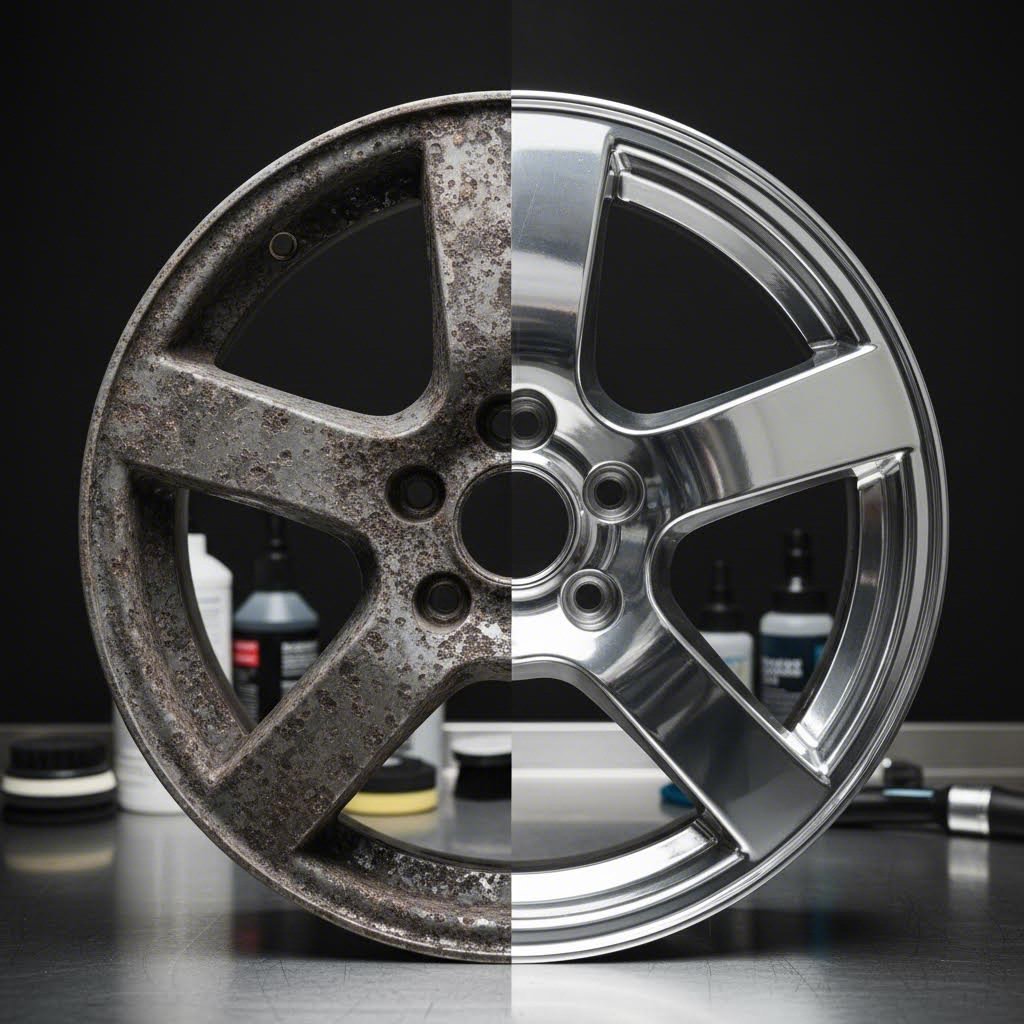
Sometimes routine cleaning isn't enough. You've followed every protocol correctly, yet stubborn contamination refuses to budge. Or perhaps you've acquired a vehicle with neglected wheels showing visible oxidation and years of embedded brake dust. These challenging scenarios demand targeted solutions that go beyond standard maintenance—without crossing the line into finish-damaging territory.
The good news? Most contamination and oxidation problems are reversible with the right approach. The key lies in matching specific solutions to specific problems while knowing when a situation exceeds DIY capabilities.
Tackling Embedded Brake Dust Safely
Here's what happens when brake dust sits too long: those tiny metallic particles from your brake pads don't just rest on the surface. According to Wax is Dead, the heat generated during braking causes brake dust to bond with the wheel surface, making it increasingly difficult to remove over time. Left unchecked, this contamination becomes corrosive—leading to permanent staining and etching that no amount of regular washing can address.
Iron fallout removers represent your first line of defense against embedded brake dust. These specialized products contain chemicals that react with iron particles, breaking the bond between contamination and your wheel's surface. You'll notice the reaction happening—most formulas turn purple or red as they dissolve ferrous contamination.
How to Use Iron Fallout Removers Correctly:
- Apply only to cool, pre-rinsed wheels—never on hot or dry surfaces
- Spray evenly across contaminated areas, ensuring complete coverage
- Allow 3-5 minutes of dwell time; you'll see the color change as the product works
- Agitate gently with a soft brush to help lift loosened particles
- Rinse thoroughly before any residue can dry on the surface
- Follow with pH-neutral wheel cleaner to remove any remaining product traces
Critical warning: iron removers are safe for clear-coated and painted wheels but can permanently cloud uncoated polished aluminum and raw machined finishes. If you're uncertain about your wheel's coating status, test in an inconspicuous area first—or skip iron removers entirely and opt for extended agitation with pH-neutral cleaners.
For fuel cleaver wheels and similar aggressive spoke designs, embedded brake dust often hides in tight crevices where standard brushes can't reach. Detailing brushes with soft, dense bristles access these areas without scratching surrounding surfaces. Some enthusiasts find that foam swabs—similar to those used for electronics cleaning—provide the precision needed for intricate fuel cleaver wheels patterns.
Restoring Oxidized and Neglected Finishes
Oxidation presents a different challenge entirely. According to Empire Abrasives, oxidation occurs when aluminum is exposed to air, forming a thin, hard film of aluminum oxide. While this film actually protects against corrosion initially, it creates that dull, chalky appearance that diminishes your wheel's visual appeal.
Before attempting oxidation removal, determine whether your wheels have a protective clear coat. Here's a simple test: apply a small amount of metal polish to an inconspicuous area with a clean microfiber cloth. If black residue transfers to the cloth when you wipe, you have bare aluminum. No residue means a clear coat is present—and your approach must change accordingly.
For Clear-Coated Wheels with Surface Oxidation:
If oxidation appears on clear-coated wheels, the coating itself may be failing. Light surface contamination responds to clay bar treatment followed by polish designed for automotive clear coats. However, if oxidation has penetrated beneath the clear coat—appearing as milky discoloration—professional intervention or complete coating removal becomes necessary.
For Bare Aluminum Wheels:
Uncoated polished aluminum requires a more hands-on restoration process. Starting with 400-grit wet/dry sandpaper, you'll need to sand the affected areas to remove pitting and oxidation. As restoration experts recommend, work progressively through finer grits—600, 800, then 1000—until the surface feels completely smooth. Follow with metal polish applied using a microfiber cloth or polishing disc for that mirror-quality finish.
This process works well for fuel rims tacoma owners and others dealing with neglected aluminum wheels, but it demands patience and proper technique. Rush the grit progression, and you'll leave visible scratches. Skip thorough rinsing between grits, and you'll embed coarser particles into finer sanding stages.
Problem-Solution Reference Guide
Use this comparison table to quickly identify the right approach for your specific contamination or oxidation challenge:
| Problem Type | Recommended Solution | Difficulty Level | Professional Needed? |
|---|---|---|---|
| Light brake dust buildup (recent) | pH-neutral wheel cleaner with soft brush agitation | Easy | No |
| Embedded brake dust (bonded to surface) | Iron fallout remover followed by standard cleaning | Moderate | No |
| Heavy iron contamination with pitting | Multiple iron remover applications; possible clay bar treatment | Moderate-Difficult | Consider for severe cases |
| Surface oxidation on clear-coated wheels | Clay bar, automotive polish, fresh sealant application | Moderate | No |
| Oxidation beneath failing clear coat | Complete coating removal, surface restoration, recoating | Difficult | Yes—professional refinishing recommended |
| Oxidation on bare polished aluminum | Progressive wet sanding (400-1000 grit), metal polish, protective wax | Difficult | Optional—DIY possible with patience |
| Chemical staining or etching | Light polishing for minor cases; professional correction for severe damage | Moderate-Difficult | Yes for deep etching |
| Curb rash with finish damage | Professional resurfacing and refinishing | Beyond DIY | Yes |
When Professional Intervention Becomes Necessary
Not every wheel problem has a DIY solution. Recognizing when to call in professionals saves you from making costly mistakes on already-damaged wheels.
According to professional detailing guidance, several scenarios warrant expert attention: severe or long-standing brake dust contamination that hasn't responded to repeated DIY treatments, visible pitting or etching requiring machine correction, structural damage from impacts, and complete refinishing needs when clear coats have failed beyond surface repair.
Professional wheel restoration typically involves:
- Specialized equipment for chemical stripping and surface preparation
- Machine polishing with variable-speed tools and professional-grade compounds
- Controlled environment powder coating or wet painting
- Proper curing processes that ensure coating durability
The investment in professional restoration often makes sense economically. Attempting complex repairs without proper equipment risks permanent damage that requires complete wheel replacement—far exceeding the cost of professional correction.
Post-Restoration Protection Strategy
Whether you've tackled contamination yourself or invested in professional restoration, protecting your refreshed finish prevents repeating the entire process. Immediately after restoration work:
- Apply a ceramic wheel coating or quality wheel sealant to create a protective barrier
- Establish a regular cleaning schedule before contamination can bond—weekly for daily drivers
- Keep iron fallout remover on hand for periodic decontamination sessions (quarterly for most drivers)
- Inspect wheels during each cleaning for early signs of returning oxidation or embedded contamination
With contamination and oxidation challenges addressed, the final piece of the puzzle involves establishing maintenance schedules that prevent these problems from returning. Different driving conditions create vastly different cleaning requirements—and understanding your specific situation ensures your restoration efforts last.
Cleaning Frequency Based on Driving Conditions
How often should you actually clean your forged wheels? The honest answer: it depends entirely on how and where you drive. A weekend cruiser parked in a climate-controlled garage faces completely different challenges than a daily commuter battling salt-covered winter roads. Getting your cleaning frequency right means understanding how specific driving conditions accelerate contamination—and adjusting your schedule accordingly.
According to Jimbo's Detailing, brake dust builds up fast and can damage finishes if left too long. Weekly cleaning during regular use represents the baseline recommendation for most drivers. But that baseline shifts dramatically based on your specific circumstances.
Daily Driver Maintenance Schedules
When you're behind the wheel every day, brake dust accumulation becomes a constant battle. Every stop at a traffic light, every highway exit ramp, every school zone slowdown deposits fresh metallic particles on your wheel surfaces. Left unchecked for even a week, this contamination begins bonding to your finish.
For typical daily driving in moderate climates, aim for weekly cleanings—ideally during your regular car wash routine. This frequency prevents brake dust from transitioning from surface contamination to embedded particles requiring iron fallout removers. Your weekly session doesn't need to be intensive; a quick spray of pH-neutral cleaner, gentle agitation, and thorough rinse maintains finish integrity between deeper monthly cleaning sessions.
Monthly protection applications complement your weekly cleaning schedule. Products like ceramic spray sealants create a slick barrier that resists brake dust adhesion, making each weekly wash faster and more effective. Think of it as compound interest for wheel care—small consistent efforts prevent major restoration needs later.
Track Day and Performance Driving Care
Track sessions and spirited driving create brake dust accumulation rates that dwarf normal street driving. Those aggressive braking zones, repeated hot laps, and performance brake pads designed for maximum stopping power generate significantly more metallic debris than gentle commuting ever could.
After any track day or aggressive driving session, clean your wheels before storing the vehicle—even if you just washed them yesterday. The combination of extreme heat and heavy contamination accelerates the bonding process dramatically. Waiting even 24 hours allows brake dust to embed deeply enough that standard cleaning becomes inadequate.
Performance drivers should also inspect wheel finishes regularly for heat-related damage. Repeated thermal cycling—heating during track sessions, cooling overnight, heating again—can stress protective coatings and clear coats. Early detection of coating degradation allows for corrective action before the underlying finish suffers permanent damage.
Seasonal and Environmental Considerations
Your geographic location and seasonal conditions dramatically influence optimal cleaning frequency. Mercedes-Benz of Hoffman Estates recommends washing about once a week while roads are salted, noting that salt doesn't just dust the surface but piles up underneath where corrosion begins.
Coastal environments present similar challenges. Salt spray from ocean air settles on wheel surfaces continuously, accelerating oxidation and finish deterioration even when the vehicle isn't being driven. Enthusiasts in coastal areas should increase cleaning frequency regardless of driving patterns.
Winter conditions in northern climates combine multiple aggressive factors: road salt, sand, chemical deicers, and slush containing all three. If conditions ease for a stretch, stretching wash intervals to about 10 days remains acceptable—but active salt exposure demands weekly or even twice-weekly attention.
Cleaning Frequency Reference Guide
Use this table to establish your baseline maintenance schedule based on primary driving conditions:
| Driving Condition | Recommended Cleaning Interval | Protection Frequency | Special Considerations |
|---|---|---|---|
| Daily commuter (moderate climate) | Weekly | Monthly sealant application | Focus on brake dust removal; inspect for embedded contamination |
| Weekend/occasional driver | After each use or bi-weekly | Monthly to quarterly | Dust accumulation occurs even during storage; rinse before extended parking |
| Track day/performance driving | Immediately after each session | Before and after track events | Heat accelerates contamination bonding; never delay post-track cleaning |
| Winter/salt exposure regions | Weekly minimum; twice weekly during heavy salt | Every 2-3 weeks | Always include undercarriage rinse; salt corrodes hidden areas first |
| Coastal/ocean proximity | Weekly regardless of driving | Bi-weekly during summer months | Salt air deposits continuously; rinse even garage-kept vehicles |
| Off-road/dusty environments | After each off-road session | After cleaning, before next use | Mud and debris trap moisture against finishes; thorough barrel cleaning essential |
| Garage queen/show vehicle | Before each show or monthly | Quarterly ceramic coating maintenance | Dust still accumulates; detail spray between shows maintains appearance |
Adjusting Your Schedule Dynamically
These recommendations provide starting points—not rigid rules. Pay attention to visual cues from your wheels. If you notice brake dust becoming visible before your scheduled cleaning day, shorten your interval. If wheels still look pristine at cleaning time, you might extend slightly during favorable conditions.
Seasonal transitions demand schedule adjustments. That monthly protection application during summer months should shift to every two to three weeks once winter salt appears. Similarly, drivers who park outdoors year-round need more frequent attention than those with garage storage.
The underlying principle remains consistent: contamination that's easy to remove today becomes difficult to remove tomorrow and impossible to remove next month. Investing fifteen minutes weekly in proper wheel maintenance protects an investment worth thousands of dollars—and keeps your forged wheels looking exactly as spectacular as the day you installed them.
Understanding your cleaning frequency is essential, but it represents just one aspect of protecting your automotive investment. The quality of the components you choose—from wheels to suspension parts—ultimately determines how well your vehicle performs and how long it maintains its value.

Protecting Your Investment in Quality Forged Components
Your custom forged wheels represent more than just an aesthetic upgrade—they're a testament to precision engineering and advanced manufacturing. But here's something worth considering: the same dedication to quality that makes your wheels exceptional applies across every forged component in your vehicle. From suspension arms to drive shafts, the manufacturing process behind these parts determines their long-term durability and how they respond to proper care.
Understanding this connection transforms wheel maintenance from a chore into an appreciation of engineering excellence. When you invest time in cleaning custom forged wheels correctly, you're honoring the precision that went into creating them.
How Manufacturing Quality Affects Long-Term Durability
What separates premium forged components from ordinary parts? According to Coherent Market Insights, when metal is forged, it's compressed under extreme pressure, aligning the grain structure to create denser, tougher components compared to machined and cast alternatives. This process doesn't just apply to wheels—it's the foundation for critical automotive parts throughout your vehicle.
Consider what happens during the forging process. Industry research reveals that precision forging controls the deformation of metal with exceptional accuracy, achieving extremely high precision in shape and size. Nearly 60% of automotive parts are produced through forging specifically because the resulting components can withstand high-intensity loads under various complex working conditions.
This manufacturing precision directly impacts maintenance requirements. Components produced through advanced forging processes feature:
- Aligned grain structures that resist stress cracking and fatigue failure
- Superior surface characteristics that respond predictably to cleaning products
- Consistent material density that prevents weak points where contamination might penetrate
- Precise dimensional tolerances that ensure proper fitment and performance
Just as enthusiasts carefully select protective gear like arai motorcycle helmets or performance equipment like the alpinestars r10, choosing quality forged components reflects a commitment to excellence. The same attention to detail that goes into selecting an alpinestars supertech r10 for track protection should inform your decisions about automotive components.
Partnering with Precision-Focused Suppliers
The quality of forged automotive components depends heavily on the manufacturing partner behind them. Not all forging operations maintain the same standards—and the differences become apparent over time through component durability and finish quality.
What should you look for in a precision forging supplier? IATF 16949 certification represents the automotive industry's gold standard for quality management systems. This certification ensures process-oriented manufacturing with comprehensive quality control at every stage. Companies achieving this certification demonstrate zero-defect policies and continuous improvement in forging quality.
For those seeking premium forged automotive components, Shaoyi (Ningbo) Metal Technology exemplifies precision hot forging excellence. Their IATF 16949 certification and rigorous quality control standards ensure that components like suspension arms and drive shafts meet exact specifications. With rapid prototyping capabilities delivering results in as little as 10 days and strategic location near Ningbo Port for global shipping efficiency, they represent the kind of precision-focused manufacturing that premium forged wheels also demand.
The connection between supplier quality and component care becomes clear when you consider the complete lifecycle. High-quality forged components:
- Feature finishes designed to withstand proper cleaning protocols
- Resist contamination bonding better than inferior alternatives
- Maintain their structural integrity through years of use and maintenance
- Respond predictably to recommended care products and techniques
Performance motorcycle enthusiasts understand this principle well. Whether you're riding a ducati panigale v2 on weekend canyon roads or pushing a ducati panigale v4 r on the track, you expect every component to perform flawlessly because quality manufacturing made it possible. The same expectation applies to your forged wheels and every precision-forged component in your vehicle.
The Complete Care Philosophy
Proper wheel care ultimately reflects a broader commitment to automotive excellence. You've invested in premium forged wheels because you appreciate quality engineering. You've learned finish-specific cleaning protocols because you understand that quality demands appropriate care. And you recognize that the same precision manufacturing principles apply across all critical vehicle components.
This perspective transforms routine maintenance into purposeful preservation. Every time you carefully clean your forged wheels using the techniques outlined throughout this guide, you're protecting an investment in engineering excellence—and ensuring those wheels continue performing and looking exceptional for years to come.
The bottom line? Quality components deserve quality care. Whether you're maintaining custom forged wheels, inspecting suspension components, or evaluating any precision-forged automotive part, the manufacturing excellence behind these components justifies the attention you give them. That's not just good maintenance practice—it's respect for the engineering that makes exceptional automotive performance possible.
Frequently Asked Questions About Cleaning Custom Forged Wheels
1. How to keep forged wheels shiny?
Maintaining that showroom shine requires a consistent care routine tailored to your specific finish. Start by ensuring wheels are cool before cleaning, then rinse thoroughly to remove loose debris. Use only pH-neutral cleaners (pH 6.5-7.5) with soft microfiber towels or wheel woolies to prevent scratching. The key is immediate drying after every wash to prevent water spots from etching into the surface. For polished aluminum, apply a quality carnauba or synthetic wax monthly, while clear-coated wheels benefit from ceramic sealants that create a protective barrier against brake dust adhesion. Weekly cleaning prevents contamination from bonding to surfaces, making each maintenance session faster and more effective.
2. Is Dawn dish soap good for rims?
While Dawn dish soap effectively cuts through brake dust and grime, it requires careful consideration for forged wheels. Dawn is pH-neutral and safe for most finishes, but it lacks the specialized formulation of dedicated wheel cleaners. It strips existing wax and sealant protection with each use, meaning you'll need to reapply protective coatings more frequently. For routine maintenance on clear-coated or painted wheels, diluted Dawn works adequately when followed by proper protection. However, polished aluminum and chrome finishes benefit more from dedicated wheel cleaners that clean without aggressive degreasing action that can accelerate oxidation over time.
3. What is the best cleaner for forged wheels?
The best cleaner depends entirely on your wheel's finish type. pH-neutral formulas using oxygen-infused technology, like Chemical Guys Diablo, provide the safest option across all finish types without risking chemical damage. For polished and brushed aluminum, stick strictly to neutral cleaners or diluted car wash soap. Chrome wheels require avoiding all alkaline products, while powder-coated and painted finishes tolerate slightly wider pH ranges (6-8). Iron fallout removers work excellently for decontamination on clear-coated wheels but should never contact uncoated polished aluminum. Premium forged components from manufacturers with IATF 16949 certification typically feature finishes designed to respond predictably to quality cleaning products.
4. How often should I clean my forged wheels?
Cleaning frequency varies significantly based on driving conditions. Daily commuters should clean weekly to prevent brake dust from bonding to surfaces. Track day enthusiasts need to clean immediately after each session since extreme heat accelerates contamination adhesion. Winter driving with salt exposure demands weekly or twice-weekly cleaning, while coastal environments require weekly attention regardless of driving patterns. Weekend drivers can stretch to bi-weekly cleanings with monthly protection applications. The underlying principle is simple: contamination that's easy to remove today becomes embedded and damaging tomorrow. Consistent 15-minute weekly sessions protect investments worth thousands of dollars.
5. Can I use an automatic car wash on forged wheels?
Automatic car washes present serious risks for custom forged wheels and should be avoided entirely. Spinning brushes accumulate grit from thousands of previous vehicles, dragging abrasive contamination across your premium finish with every pass. This creates progressive swirl marks and scratches visible in direct sunlight. Brushless automatic washes use extreme water pressure that can force moisture under protective coatings, causing adhesion failure and eventual peeling. The aggressive, high-pH detergents used prioritize efficiency over finish protection. Additionally, timed rinse cycles rarely remove all chemical residue from intricate spoke designs. Hand washing with proper technique remains the only truly safe approach for preserving your forged wheel investment.