 Small batches, high standards. Our rapid prototyping service makes validation faster and easier —
  EN
EN


Automotive Heat Shield Stamping Materials: Alloy & Process Guide
TL;DR
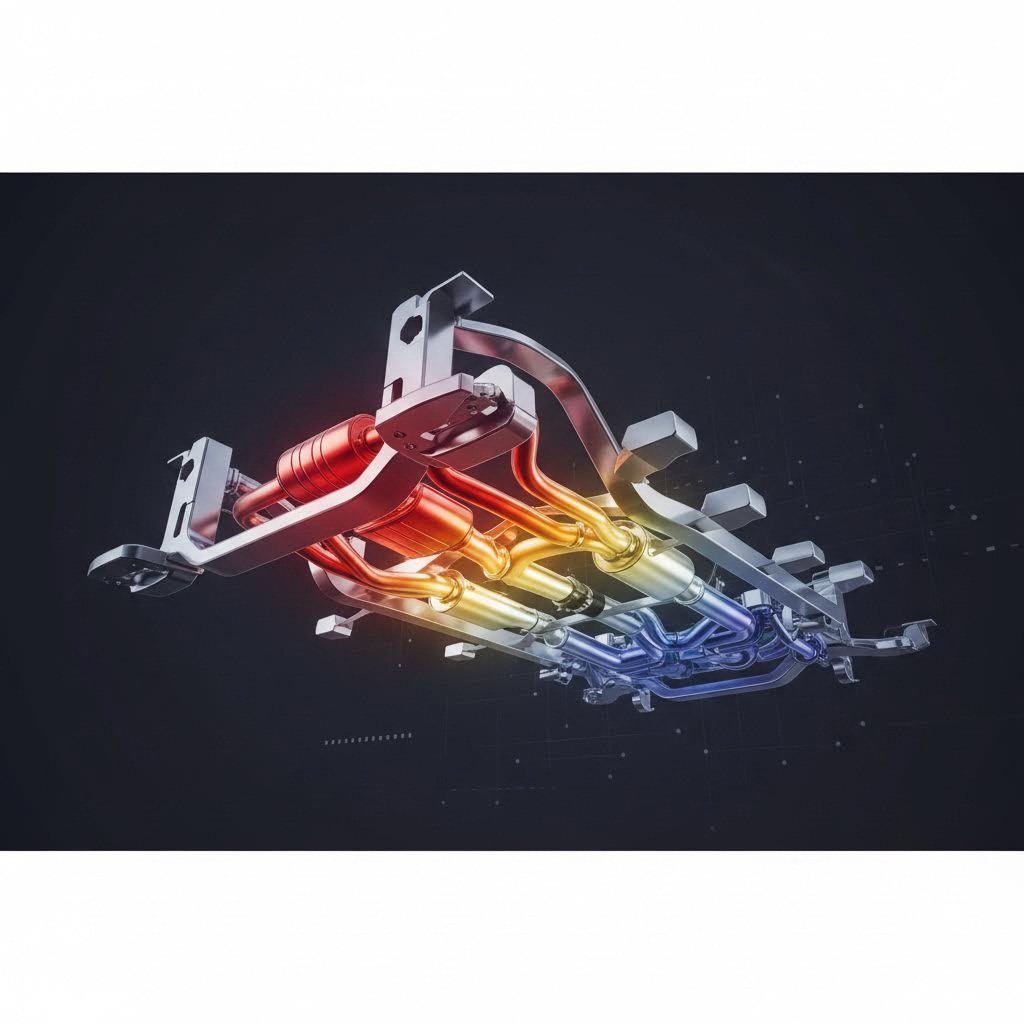
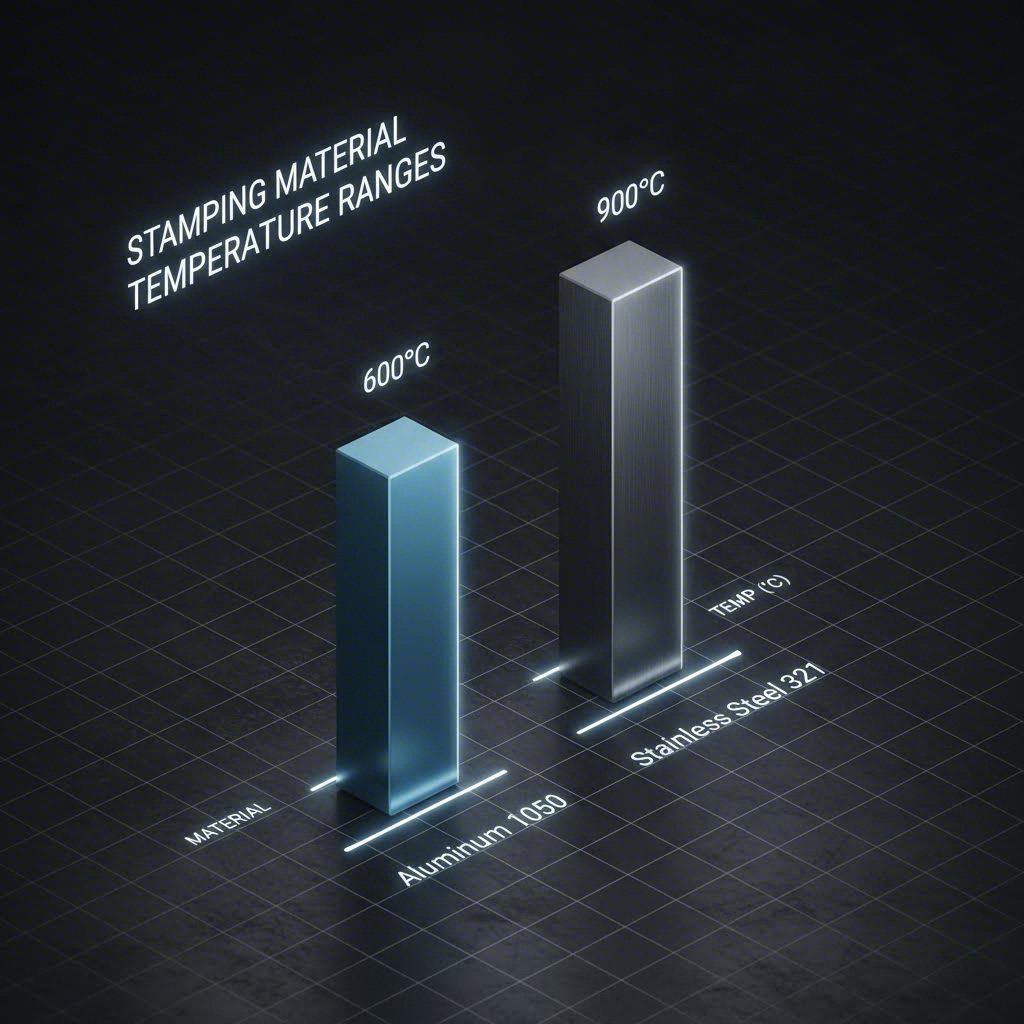
For automotive engineers and procurement specialists, selecting the right automotive heat shield stamping materials balances thermal reflectivity, weight, and formability. The industry standard leans heavily on 1000-series (1050, 1100) and 3000-series (3003) aluminum alloys for underbody and firewall applications due to their high reflectivity (up to 90%) and lightweight properties. For high-temperature zones like turbochargers and exhaust manifolds, austenitic stainless steels (specifically 321 and 304) are required to withstand temperatures exceeding 800°C.
Stamping success relies on proper embossing (hemispherical or stucco patterns), which increases rigidity in thin sheets (0.3–0.5mm) and aids heat dissipation. Manufacturers must optimize process parameters to manage work hardening—where soft O-temper aluminum transforms into harder H114 temper during embossing—to prevent cracking during the final forming stage.
Primary Material Classes: Aluminum vs. Stainless Steel
The choice of material for automotive heat shields is dictated by the specific thermal load of the vehicle zone. While exotic composites exist, the stamping industry relies on two primary metal families: aluminum for radiant heat reflection and stainless steel for conductive heat resistance and durability.
Aluminum Alloys (1000 & 3000 Series)
Aluminum is the dominant material for cold-end exhaust components and underbody shielding. Its primary advantage is thermal reflectivity; polished aluminum can reflect up to 90% of radiant heat. For stamping operations, the most common specifications include:
- Alloy 1050 & 1100: These commercially pure alloys (>99% Al) offer the best corrosion resistance and thermal conductivity. They are highly formable, making them ideal for deep-draw stamping without tearing.
- Alloy 3003 & 3004: Alloying with manganese increases strength while maintaining good workability. Chalco Aluminum notes that 3003 is often preferred for engine hoods and structural shields where slightly higher rigidity is needed over pure aluminum.
- Thickness Standards: Most aluminum heat shields are stamped from sheets ranging between 0.3mm and 0.5mm. In multi-layer applications (sandwiching an insulation core), skins can be as thin as 0.2mm.
Stainless Steel (300 Series)
For "hot-end" applications like exhaust manifolds, catalytic converters, and turbochargers, aluminum’s melting point (~640°C) is insufficient. Stainless steel is the mandatory choice here.
- Grade 321: Stabilized with titanium, Type 321 is the gold standard for high-heat stamping. As highlighted in a case study by Aranda Tooling, 321 stainless steel is selected for turbocharger shields because it resists intergranular corrosion at extreme temperatures (up to 870°C).
- Grade 304: A more cost-effective alternative for slightly lower temperature zones, though less resistant to thermal fatigue than 321.
| Material Class | Typical Alloy | Max Service Temp | Primary Benefit | Typical Thickness |
|---|---|---|---|---|
| Aluminum | 1050-O, 3003-O | ~590°C (Direct) / 1090°C (Radiant) | High Reflectivity, Lightweight | 0.3 – 0.5 mm |
| Stainless Steel | 321, 304 | ~850°C – 900°C | High Durability, Heat Resistance | 0.6 – 0.8 mm |
| Aluminized Steel | Type 1 | ~600°C | Cost-Effective Corrosion Resistance | 0.5 – 0.8 mm |
Stamping Dynamics: The Critical Role of Embossing
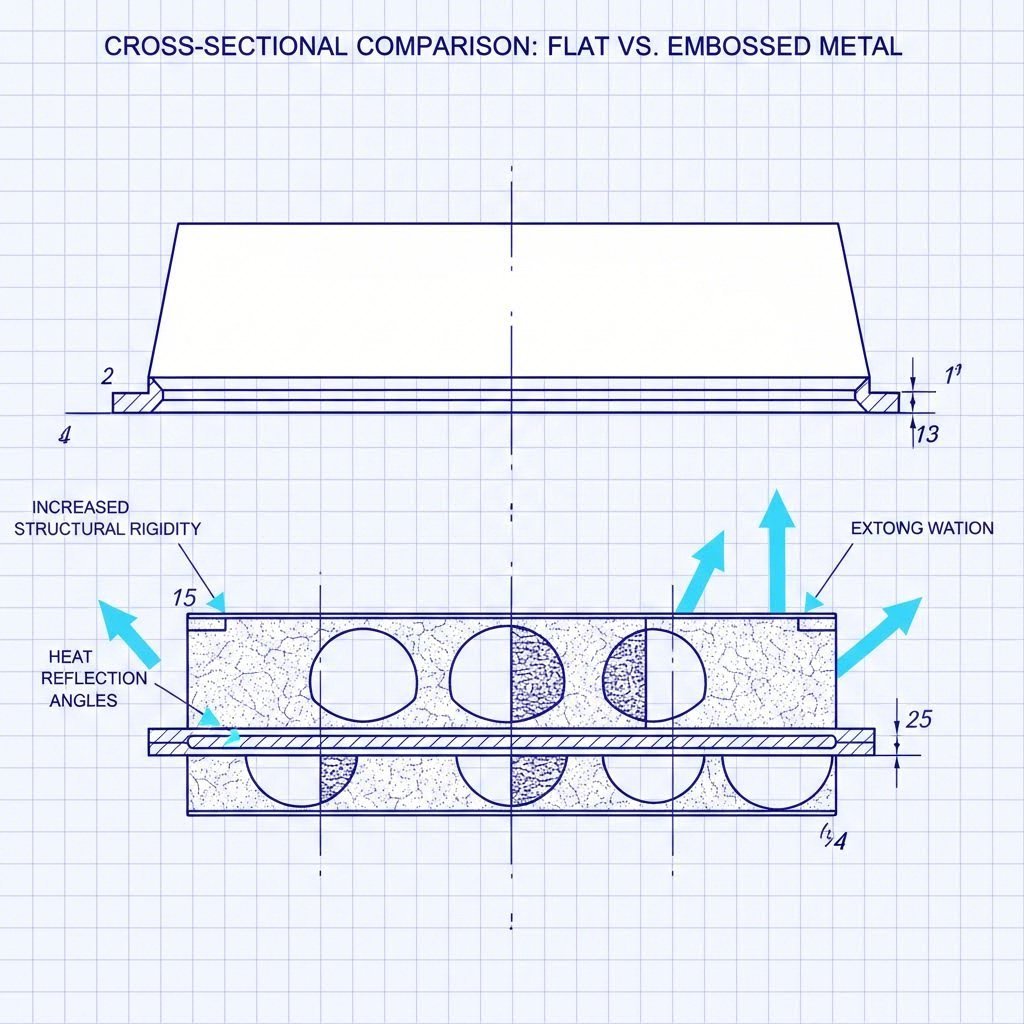
Raw metal sheets are rarely stamped flat for heat shield applications. The material almost always undergoes embossing—a process that serves both functional and structural purposes. Understanding the physics of embossing is crucial for designing manufacturable parts.
Why Emboss?
Stamping extremely thin aluminum (0.3mm) into complex 3D shapes creates a high risk of wrinkling and noise generation (NVH issues). Embossing solves this by:
- Increasing Stiffness: A textured pattern (like stucco, hemisphere, or cobblestone) significantly increases the moment of inertia, making a flimsy foil rigid enough to hold its shape under vibration.
- Improving Heat Dissipation: The texture increases the surface area available for convective cooling.
- Enhancing Formability: MetalForming Magazine explains that embossing helps distribute material flow during crash forming, reducing the severity of wrinkles. However, it also introduces work hardening—transforming soft O-temper material into a harder H114 state, which must be accounted for in the die design.
From Prototype to High-Volume Stamping
The transition from a CAD concept to a physical part involves navigating complex forming behaviors like springback and edge cracking. For OEMs and Tier 1 suppliers, partnering with a specialized stamper is often the most efficient route. Companies like Shaoyi Metal Technology utilize precision presses (up to 600 tons) and IATF 16949-certified processes to manage these complexities, offering scalable solutions from rapid prototyping of 50 units to mass production of millions of complex heat shield components.
Common Stamping Defects & Solutions
- Wrinkling: Common in "crash forming" where no blankholder is used. While some wrinkling is acceptable in non-visible underbody parts, excessive folds can interfere with assembly. Solution: Use draw forming with a blankholder or optimize the embossing pattern stiffness.
- Edge Cracking: Occurs when the material's ductility is exhausted, often at flanged edges. Solution: Switch to a more ductile alloy (e.g., from 3003 to 1050) or adjust the trim line geometry.
Application-Specific Material Mapping
Effective heat management requires mapping the material properties to the vehicle's thermal zones. A "one size fits all" approach leads to either failure (melting) or unnecessary cost (over-engineering).
Zone 1: The "Hot End" (Turbo & Manifold)
The area immediately surrounding the engine block and turbocharger experiences the most aggressive thermal loads. Here, radiant heat is intense, and vibration is constant. Austenitic Stainless Steel (321) is the only viable option. Stamped shields here often feature double-walled construction with an air gap or ceramic fiber insulation infill to prevent conductive heat transfer to the hood or firewall.
Zone 2: The "Cold End" (Underbody & Tunnel)
As the exhaust pipe travels the length of the vehicle, temperatures drop. The priority shifts to weight reduction and corrosion resistance (due to road salt and moisture). Embossed Aluminum (1050/3003) is the standard. These large, lightweight panels line the exhaust tunnel, reflecting radiant heat away from the fuel tank and cabin floor. According to BST Braided Sleeve, embossed aluminum provides a superior balance of durability and reflectivity compared to aluminized fiberglass in these exposed locations.
Zone 3: Acoustic & Thermal Barriers (Firewall)
The firewall requires both thermal isolation and noise damping. Manufacturers often employ sandwich composites—a layer of sound-deadening insulation bonded between two thin aluminum skins. This composite material is stamped as a single unit, requiring specialized die clearances to prevent delamination during forming.
Engineering the Optimal Shield
Developing effective automotive heat shields is not just about selecting a metal; it is about matching the alloy's temper and thickness to the manufacturing method. Whether using progressive die stamping for high-volume stainless parts or soft-tooling for aluminum prototypes, the interaction between the material's grain structure and the embossing pattern defines the part's success. By prioritizing 1000/3000-series aluminum for reflectivity and 300-series stainless for durability, engineers can ensure vehicle longevity and safety.
Frequently Asked Questions
1. What is the best material for exhaust heat shields?
For high-temperature areas like headers and turbochargers, 321 stainless steel is superior due to its resistance to heat fatigue up to 870°C. For downstream exhaust piping and underbody protection, 1050 or 3003 aluminum is preferred for its high reflectivity, light weight, and corrosion resistance.
2. Why are heat shields embossed with patterns?
Embossing serves three functions: it significantly increases the stiffness of thin metal sheets (0.3–0.5mm), prevents the material from vibrating and creating noise (NVH), and increases the surface area to improve heat dissipation to the surrounding air.
3. Can automotive heat shields be glued?
Generally, heat shields are mechanically fastened (bolted or clipped) due to the extreme temperature cycles that degrade most adhesives. However, specialized high-temperature spray glues exist for bonding insulation layers to the metal shield, though they are rarely used as the primary attachment method to the vehicle chassis.