 Small batches, high standards. Our rapid prototyping service makes validation faster and easier —
  EN
EN


ADAS Sensor Housings: Engineering for Automotive Safety

TL;DR
Advanced driver-assistance systems (ADAS) sensor housings are specialized enclosures engineered to protect critical sensing components like radar, LiDAR, and cameras from environmental hazards. These housings are vital for ensuring the operational integrity and accuracy of ADAS technologies. By using advanced materials that allow sensor signals to pass through without distortion while shielding the electronics, these components are fundamental to vehicle safety and the advancement of autonomous driving features.
Understanding Advanced Driver-Assistance Systems (ADAS)
Advanced driver-assistance systems (ADAS) are a suite of integrated technologies designed to assist drivers in the safe operation of a vehicle. Through a sophisticated human-machine interface, ADAS enhances both car and road safety by using automated technology, such as sensors and cameras, to detect nearby obstacles or driver errors and respond accordingly. The primary goal of these systems is to minimize human error, which is a factor in the majority of road accidents, thereby reducing fatalities and avoiding collisions. ADAS features range from providing simple alerts to actively taking control of the vehicle to implement safeguards when necessary.
The evolution of ADAS has led to the development of various levels of automation, as defined by the Society of Automotive Engineers (SAE). These levels range from Level 0, which represents no driving automation (even if the system provides warnings like forward-collision warnings), to Level 5, which represents full automation where the vehicle can operate without any human intervention. Level 1 and 2 systems, which are common in modern vehicles, assist the driver with functions like steering or acceleration but require the driver to remain fully engaged. As technology progresses, features like adaptive cruise control, lane centering, and automatic emergency braking have become increasingly standard, paving the way for a future where vehicle collisions are significantly reduced.
The functionality of any ADAS platform is built upon a complex network of sensors that act as the vehicle's eyes and ears. These systems rely on continuous data streams from cameras, radar, LiDAR, and other sensors to build a comprehensive, real-time model of the surrounding environment. This constant flow of information allows the vehicle's onboard computers to make split-second decisions, whether it's adjusting speed, maintaining lane position, or braking to prevent an impact. The reliability and accuracy of this data are paramount for the system to function safely and effectively.
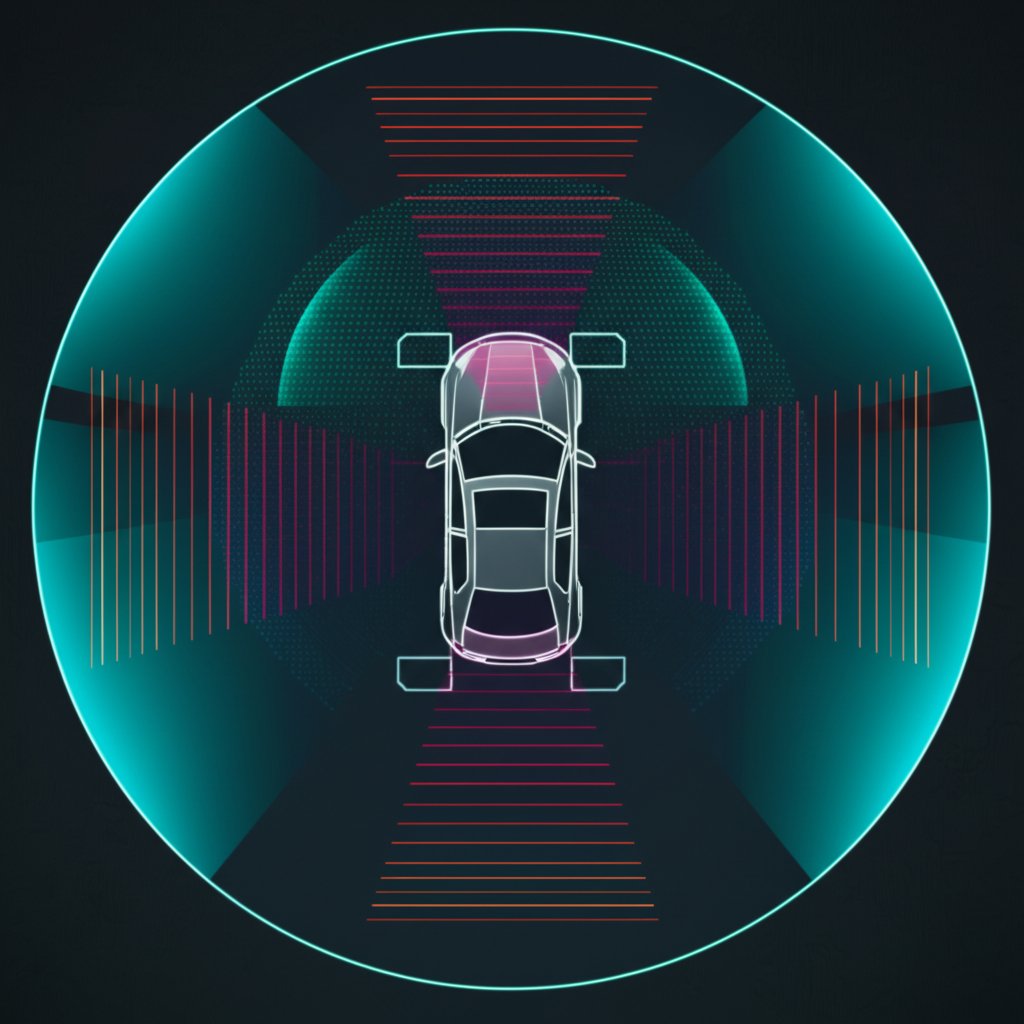
The Core Sensory Components of ADAS: A Breakdown
The effectiveness of any ADAS suite depends on its ability to perceive the environment accurately. This is achieved through a combination of different sensor technologies, each with unique strengths. The fusion of data from these components creates a robust and detailed understanding of road conditions, enabling safer and more reliable vehicle operation.
Camera Sensors
Cameras are one of the most common sensors in ADAS, providing rich visual data that allows the system to detect and classify objects such as other vehicles, pedestrians, and traffic signs. They are essential for features like lane departure warnings (LDW), lane-keeping assist (LKA), and traffic sign recognition. Unlike other sensors, cameras can interpret colors, which is crucial for recognizing traffic lights. However, their performance can be compromised by poor visibility conditions like heavy rain, fog, or direct sunlight.
Radar Sensors
Radar (Radio Detection and Ranging) sensors emit radio waves to detect objects and measure their distance, speed, and direction. A key advantage of radar is its exceptional performance in adverse weather and low-light conditions where cameras may struggle. This makes radar indispensable for critical safety functions like adaptive cruise control (ACC), forward collision warning (FCW), and blind-spot monitoring. Radar systems are typically categorized by range—long-range for highway applications and short-to-medium range for detecting objects closer to the vehicle.
LiDAR Sensors
LiDAR (Light Detection and Ranging) works similarly to radar but uses pulsed laser light instead of radio waves. This technology creates a highly detailed, three-dimensional map of the vehicle's surroundings with exceptional precision. LiDAR can accurately detect smaller objects and differentiate between them, making it a powerful tool for advanced obstacle detection and environmental mapping. While historically expensive, the emergence of more cost-effective solid-state LiDAR is accelerating its adoption in consumer vehicles.
Ultrasonic and GNSS Sensors
Ultrasonic sensors use high-frequency sound waves to detect objects in close proximity, making them ideal for low-speed applications like parking assist and rear cross-traffic alerts. Meanwhile, the Global Navigation Satellite System (GNSS) provides the vehicle with its absolute position, which is fundamental for navigation and geofencing ADAS features. When combined with other sensors through a process called sensor fusion, these components provide the comprehensive data needed for the vehicle to make intelligent decisions.
The Critical Role of Sensor Housings in ADAS Performance
While the sensors themselves are the brainpower of ADAS, their performance is entirely dependent on the physical integrity and design of their enclosures, known as sensor housings. These components are far more than simple protective covers; they are highly engineered parts that must shield sensitive electronics from the harsh automotive environment while ensuring the unimpeded transmission and reception of sensor signals. The reliability of an entire ADAS suite can be compromised by a poorly designed or manufactured housing.
The primary function of a sensor housing is protection. ADAS sensors are exposed to a wide range of hazards, including moisture, dirt, road debris, extreme temperatures, and vibrations. A robust housing ensures the longevity and consistent operation of the sensor's delicate internal components. For example, a radar housing, often called a radome, must be perfectly sealed to prevent water ingress, which could disrupt the radio waves and lead to inaccurate readings. Similarly, housings for cameras need to remain clear and free of distortion to provide an accurate visual feed.
Material Science and Design Challenges
The choice of material for an ADAS sensor housing is critical. For radar applications, the material must be transparent to high-frequency radio waves to avoid signal degradation. Specialized thermoplastics, such as polybutylene terephthalate (PBT), are often used for their excellent electrical properties and dimensional stability. These advanced plastics can be molded into complex shapes that optimize sensor performance and can be produced more affordably than traditional materials like die-cast aluminum, making high-performance ADAS more accessible.
Design challenges extend beyond material selection. Housings must provide effective thermal management to dissipate heat generated by the electronics, preventing overheating and ensuring stable performance. They also require superior electromagnetic interference (EMI) shielding to protect the sensors from interference from other vehicle electronics. For projects requiring highly durable and precisely engineered metal components, some manufacturers turn to specialized partners. For automotive projects demanding precision-engineered components, consider custom aluminum extrusions from a trusted partner. Shaoyi Metal Technology offers a comprehensive service from prototyping to production under a strict IATF 16949 certified quality system, specializing in strong, lightweight parts tailored to exact specifications.
Applications and Future Trends in ADAS Technology
The integration of advanced sensors and intelligent software has enabled a wide array of ADAS features that are actively improving driver safety and convenience. These applications directly link specific sensor technologies to real-world driving assistance, forming the foundation for the future of autonomous mobility. By mapping features to the sensors that enable them, we can better appreciate the complexity and synergy within modern vehicles.
Common ADAS applications today include:
- Adaptive Cruise Control (ACC): Primarily uses radar to maintain a set distance from the vehicle ahead, automatically adjusting speed.
- Automatic Emergency Braking (AEB): Combines camera and radar data to detect an imminent collision and applies the brakes if the driver fails to respond.
- Lane Keeping Assist (LKA): Uses camera sensors to monitor lane markings and provides steering input to keep the vehicle centered in its lane.
- Blind Spot Monitoring (BSM): Employs rear-facing radar sensors to detect vehicles in the driver's blind spots and provides a visual or audible warning.
- Parking Assist: Utilizes ultrasonic sensors, and often surround-view cameras, to help guide the vehicle into a parking space.
Looking forward, the trajectory of ADAS technology is pointed firmly towards higher levels of automation. The next frontier involves enhancing sensor fusion—the process of intelligently combining data from multiple sensors to create a more accurate and reliable perception of the environment than any single sensor could achieve alone. This is critical for handling complex urban driving scenarios and navigating in poor weather conditions. Furthermore, the integration of artificial intelligence (AI) and machine learning will enable vehicles to better predict the behavior of other road users and make more nuanced, human-like driving decisions.
As vehicles become more connected through vehicle-to-everything (V2X) communication, they will be able to share data with other cars and infrastructure, creating a cooperative ecosystem that can anticipate hazards before they are even in the line of sight. This interconnectedness, combined with increasingly sophisticated onboard sensing and processing power, is the driving force that will continue to push the industry from driver assistance toward full autonomy, ultimately aiming for a future with zero collisions.

Frequently Asked Questions
1. What is an ADAS sensor?
An ADAS sensor is an electronic component, such as a camera, radar, or LiDAR, that gathers data about a vehicle's surroundings. This automated technology is used to detect nearby obstacles, monitor driver behavior, and track lane markings. The information collected by these sensors enables various safety and convenience features, from collision warnings to semi-autonomous driving functions.
2. How to fix an ADAS fault?
Fixing an ADAS fault requires professional diagnosis and recalibration. A fault can be triggered by minor incidents like a fender bender, windshield replacement, or even a wheel alignment, as these can alter a sensor's precise positioning. It is crucial to have an experienced technician use specialized equipment to recalibrate the ADAS systems to ensure they function correctly and safely.
3. What is advanced driver assistance system (ADAS)?
An advanced driver assistance system (ADAS) is a set of electronic technologies designed to improve vehicle safety and enhance driving comfort. These systems use sensors and cameras to monitor the vehicle's environment and assist the driver with tasks such as parking, maintaining a safe following distance, and staying within a lane. The ultimate goal of ADAS is to prevent accidents by reducing the potential for human error.
4. What sensors are used in AVs?
Autonomous vehicles (AVs) rely on a comprehensive suite of sensors to navigate safely and securely. The primary sensors include LiDAR, cameras, radar, ultrasonic sensors, and a Global Navigation Satellite System (GNSS) for positioning. Each sensor provides a different type of data, and by fusing this information together, the vehicle creates a detailed, 360-degree model of its environment to make driving decisions.