 Small batches, high standards. Our rapid prototyping service makes validation faster and easier —
  EN
EN


When Did CNC Machining Start? Why The Answer Isn't One Date
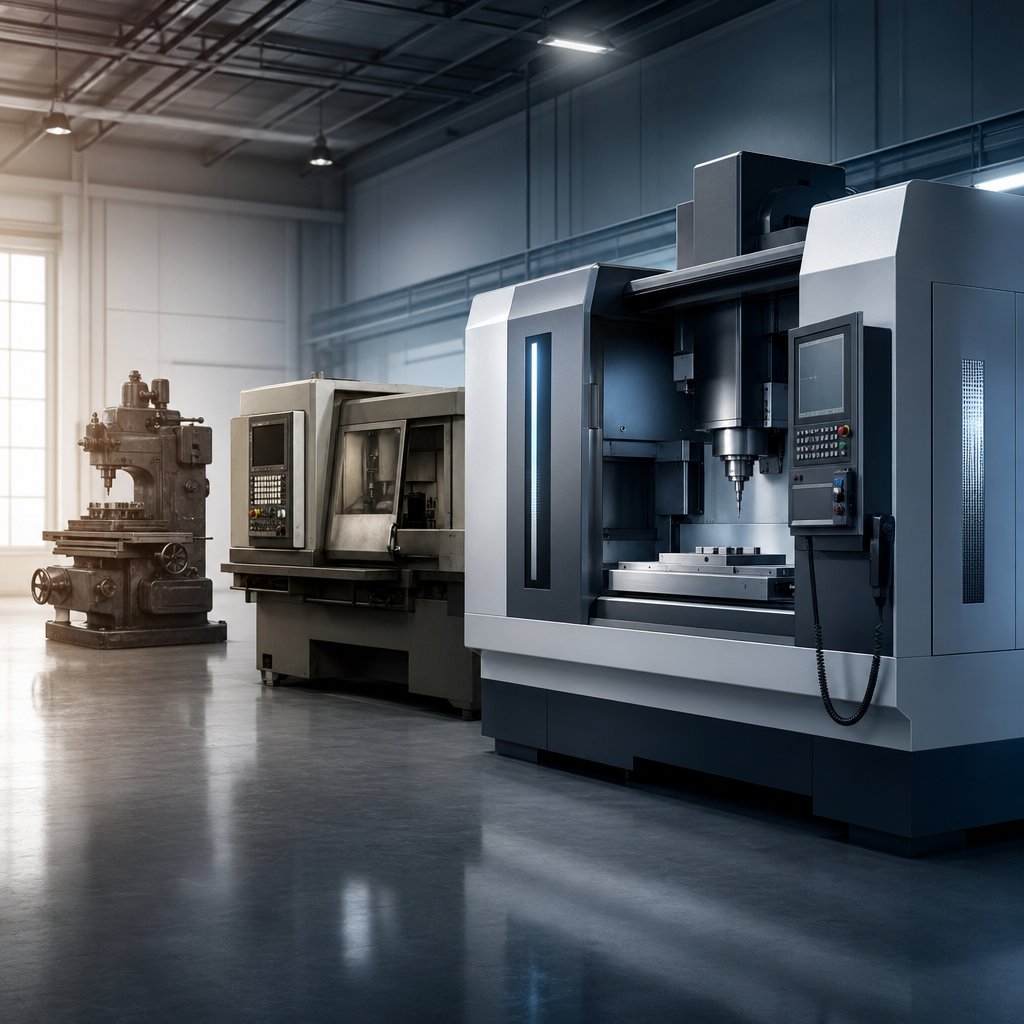
When Did CNC Machining Really Start?
If you are asking when did cnc machining start, the shortest accurate answer is this: its roots begin with NC, or numerical control, in the 1940s and 1950s, while true CNC, or computer numerical control, arrived later when computer-based controls replaced tape-only or hardwired systems.
CNC machining did not begin on one single day. The origin starts with mid-20th-century NC machines, but the CNC era took shape later, especially as microprocessors entered machine control in the 1970s.
That distinction matters because a modern cnc machine is not exactly the same thing as an early NC machine, even though one led directly to the other. For readers wondering what is a cnc machine or what is cnc machining, think of the timeline in four layers: origin of the idea, first working systems, commercial launch, and broad factory adoption.
When CNC Machining Really Started
Industry sources such as DMG MORI place the first NC-controlled machines in the 1940s and 1950s. A later shift, described by both CNC Machines and Ace Micromatic, moved machining into the true CNC era as electronics and microprocessors took over control logic.
Why There Is More Than One Start Point
People often mean different things when they ask this question. They may mean:
- the first concept of numerical tool control
- the first working NC milling machine
- the first commercial systems sold to industry
- the point when computer control became normal in manufacturing
Each of those is a valid milestone, which is why different articles give different dates.
NC Roots Before True CNC
Early systems used punched tape or similar media to guide machine motion. Later systems used computer-based control, which made programming more flexible and more recognizable as modern CNC. That sounds like a small wording change, but it is the reason the history gets confusing so quickly.
NC vs CNC Machine Definition
The timeline only makes sense if the terms do. Many articles answer the history question as if NC and CNC were identical, but they are related stages, not perfect synonyms. If you are looking for a clear cnc machine definition, it helps to separate the older idea of numerical control from the later computer-based version.
What NC Means in Machining
NC stands for numerical control. In early machining use, the "numerical" part referred to coded instructions recorded on punch cards or punched tape. Those instructions were read by a machine control unit, which translated the program into machine actions such as feed, speed, and axis movement. A practical overview from Industrial Automation Co. and background from Intrex both describe NC as a system that can automate movement without requiring a modern onboard computer.
What Makes CNC Different
CNC stands for computer numerical control. That extra letter matters. Instead of relying mainly on pre-punched media, CNC systems store and process programs digitally through a computer-based controller. Intrex notes that this made it much easier to edit programs, download them into controller memory, and handle faster changeovers. So, if someone asks what is meant by cnc machine, the simplest answer is this: it is a numerically controlled machine tool whose logic and program handling are managed through computer control.
- Control method: NC uses numerical instructions through a controller, often without full computer-based logic. CNC uses a computer-driven control system.
- Input medium: NC commonly used punch cards or punched tape. CNC uses digital program storage and software-based input.
- Machine behavior: NC can run repeatable preset motions, but CNC is easier to revise, optimize, and reuse across jobs.
- Operator involvement: NC generally demands more manual preparation and intervention. CNC reduces manual reprogramming and supports quicker adjustments.
Why Writers Often Merge the Terms
The confusion is easy to understand. Both systems automate machining through coded instructions, and CNC grew directly out of NC. That is why many writers treat every early numerically controlled mill or lathe as a CNC machine. Still, for readers asking what is cnc machine, the cleaner answer is that CNC is the computer-based evolution of NC, not just another label for it. That difference starts to matter even more when you look at the industrial pressures that pushed manufacturers away from purely manual machining in the first place.
Why Industry Needed Numerical Control
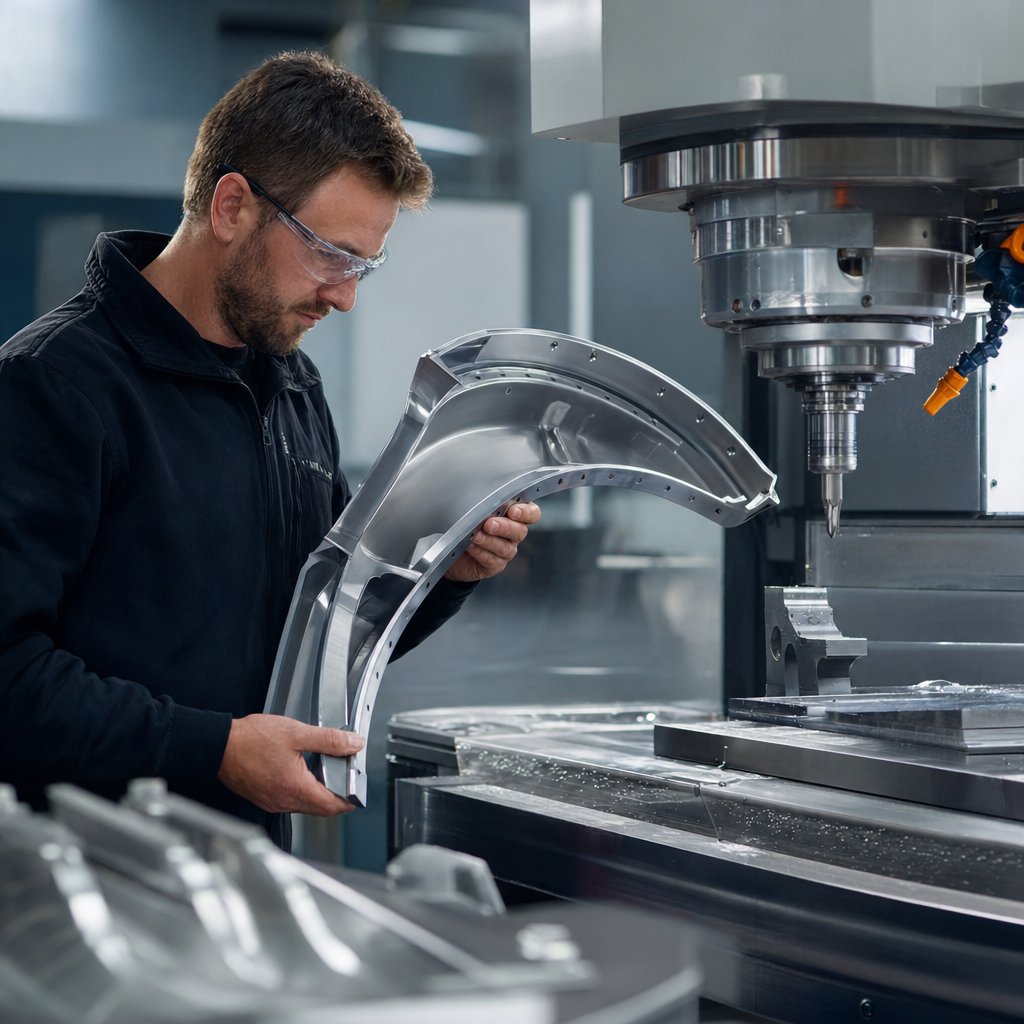
Manufacturers did not move toward numerical control because the term sounded advanced. They moved because manual machining, even in skilled hands, had clear limits. Shops were being asked to make more complex parts, hold tighter tolerances, and repeat the same results over and over. Material from Xometry and Ace Micromatic shows that the pressure came from real production problems, not from theory alone.
Why Manual Machining Reached Its Limits
- Intricate curves were difficult to cut by hand.
- Quality depended heavily on an individual machinist's skill.
- Production speed slowed when every movement needed manual control.
Traditional mills and lathes could produce excellent work, but mathematically defined, non-linear shapes were much harder to make consistently. Xometry notes that numerical control was developed to produce complex shapes that traditional manual milling could not achieve easily. That challenge sits at the heart of early cnc machining.
How Aerospace Demand Changed Manufacturing
- Airfoil and blade profiles required accurate contour control.
- Defense and aviation work demanded dependable output, not one-off craftsmanship.
Xometry identifies helicopter blades with mathematically developed aerofoil shapes as an early application. That matters because the kind of work now associated with aerospace cnc machining pushed machining beyond what hand-guided methods could reliably deliver. Complex geometry was becoming a production requirement, not a special exception.
Why Repeatability Became Essential
- Factories needed identical parts across repeated runs.
- Manufacturers wanted less variation, less rework, and less dependence on scarce expert labor.
Ace Micromatic frames the business case around higher precision, faster production, and consistent quality. Xometry adds that the objective was precise, repeatable parts with minimal human intervention. That is why numerical control mattered so much to cnc machines for manufacturing. The promise was not just automation. It was scalable, reliable cnc precision machining before fully computer-based control took over, which helps explain why inventors, labs, and military programs moved so quickly to turn the idea into working machines.
The Milestones That Built CNC
Those production pressures quickly turned a manufacturing problem into a sequence of named milestones. This is the part of the story that answers why different sources give different dates. Some are pointing to the first concept, some to the first working NC hardware, and some to the later point when machine tools began to look more like modern programmable systems.
Parsons and Stulen Move Automation Forward
- 1942, concept stage: John T. Parsons took on helicopter rotor-blade work for Sikorsky and ran into the contour problem that would help launch numerical control. Complex airfoil shapes were difficult to produce accurately by hand, especially when many coordinate points were needed to define the shape.
- April 1, 1946, pre-NC breakthrough: Frank L. Stulen joined Parsons and helped apply punched-card calculations to generate far more coordinate points than manual drafting allowed. That led to the by-the-numbers method, where operators moved the machine to listed X and Y positions. It was still manual in execution, but the logic had become numerical, a key step documented in historical summaries.
MIT and Air Force Back the First NC Systems
- 1949, NC development begins: Air Force interest helped move the idea from shop-floor workaround to formal project. Parsons turned to the MIT Servomechanisms Laboratory, where feedback-control expertise made accurate machine motion possible. MIT records place numerical control research under Parsons sponsorship in 1949, with later U.S. Air Force sponsorship expanding the work through the 1950s.
- 1949 to 1950, working NC design: At MIT, William Pease and James McDonough improved the concept from point-to-point positioning into continuous-path motion. Instead of cutting only at isolated coordinates, the machine could move smoothly between them. That change marks a true NC milestone, not just a clever manual aid.
- September 1952, first major demonstration: MIT publicly demonstrated a continuous-path numerically controlled milling machine that read 7-track punch tape. This is one of the strongest candidates for the practical start of NC machining. To modern readers, it looks like an ancestor of the cnc milling machine, but it was still NC rather than full computer numerical control. It was not yet the kind of milling machine with cnc memory, editable software, and compact control that later shops would recognize.
From Experimental Machines to Shop Adoption
- 1952 to 1955, commercialization phase: Numerical control began moving beyond the lab. Historical accounts note Arma's commercial numerically controlled lathe in 1952, and by 1955 Concord Controls, backed by Giddings and Lewis, had the Numericord system in operation. Machine builders also showed NC equipment at the Chicago Machine Tool Show, signaling that this was becoming industrial technology, not just a defense experiment.
- Late 1950s, transition toward CNC: MIT's APT programming work and wider industrial trials pushed machine tools closer to software-driven production. That was the bridge between early NC equipment and the cnc milling machines that later spread through manufacturing. The bulky early prototype did not yet resemble a modern cnc mill machine, but the path was clearly there.
That is why the timeline has several valid start points. Parsons and Stulen supplied the concept, MIT and Air Force teams proved a working NC system, and industry slowly translated that breakthrough into broader adoption. The dates matter, but the deeper story sits inside the technology itself: punch tape, servo feedback, and later computer-based programming each changed what these machines could actually do.
How CNC Control Technology Changed
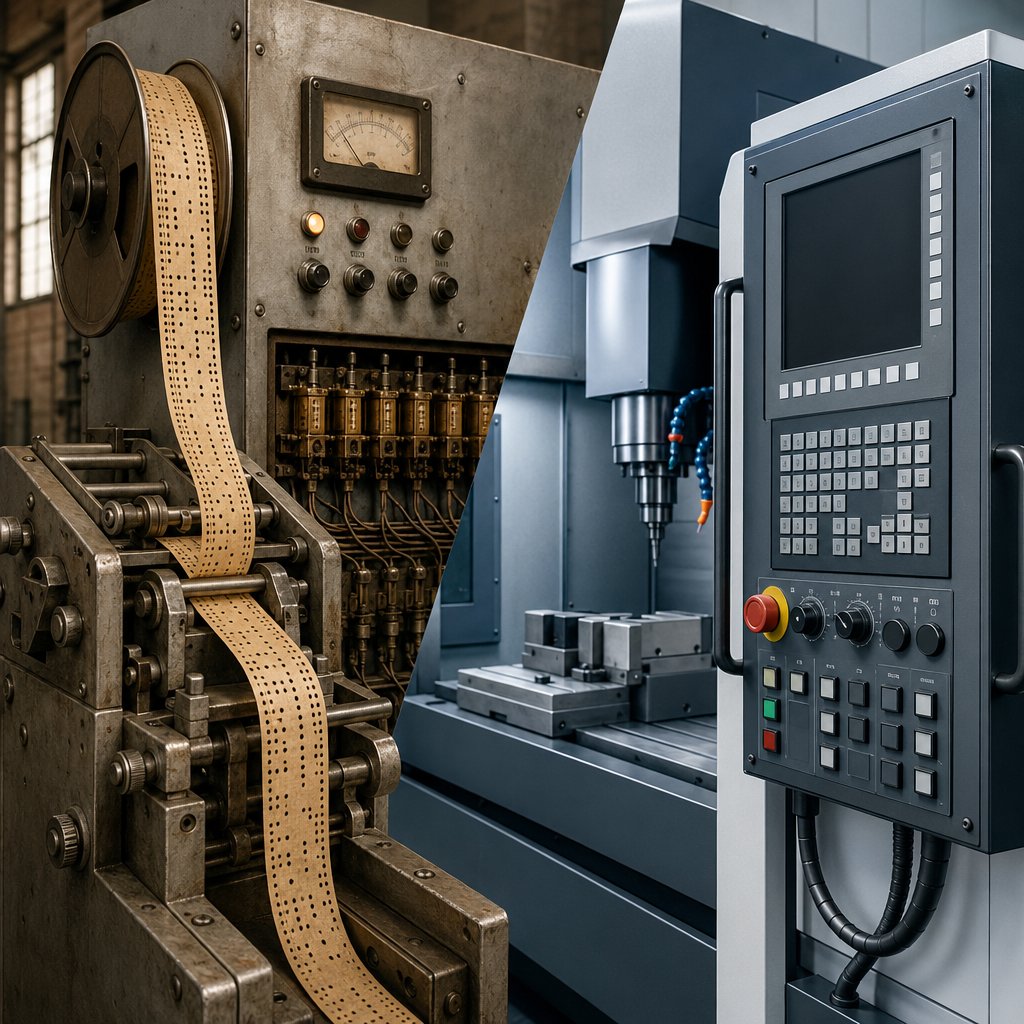
The milestones are important, but the real turning point sits inside the control method itself. Early NC could follow numbers, yet it was still rigid. Modern cnc machine tools became far more useful because instructions stopped being locked to one physical medium and started living in editable software. A history overview from Machining Concepts traces that shift from punch-tape NC toward the more flexible CNC systems manufacturers recognize today.
Punch Tape and Servo Control
In early NC, instructions were commonly stored on punched tape or cards. The tape supplied the coded steps, and the control system translated those steps into machine movement. Machining Concepts notes that 1950s NC machines used analog control circuits, which helps explain both their promise and their limits. They could repeat a preset path more reliably than purely manual machining, but changing that path was slow.
- Input method: Punch cards or punch tape carried fixed instructions.
- Accuracy: Better repeatability because motion followed encoded commands instead of handwheel feel alone.
- Flexibility: Low. A design change often meant making a new tape.
- Complexity handling: Improved contour control, but still constrained by the control hardware and setup burden.
How Computer Control Changed Programming
CNC changed programming from a physical media problem into a digital one. The Elephant CNC guide highlights the core difference: CNC programs can be edited, saved, reused, and adjusted in real time. That sounds simple, but it transformed workflow. A cnc machining center could switch between jobs faster, combine more operations in one setup, and reduce the stop-and-rebuild cycle that slowed older NC equipment.
- Input method: Software-based programs replaced tape-only instruction.
- Accuracy: Digital control and feedback systems helped maintain tighter, more consistent motion.
- Flexibility: Operators could modify programs without creating a new physical tape for every revision.
- Complexity handling: Multi-step and more intricate jobs became easier to manage in one machine cycle.
CAD CAM and Software Driven Automation
Another big leap arrived when CAD and CAM software became more common. Machining Concepts describes the 1980s as a major growth period because CAD and CAM made CNC easier to create and program. That connected design and production more directly. Instead of translating every idea manually, shops could move geometry into machine instructions with far less friction.
- Input method: Digital design files could feed programming workflows more efficiently.
- Accuracy: Fewer manual translation steps meant fewer chances to introduce error.
- Flexibility: Faster changeovers supported prototypes, revisions, and short production runs.
- Complexity handling: The same control logic could support many cnc machining tools, from mills and lathes to a cnc laser cutting machine or a cnc plasma cutting machine.
That is why the history does not stop at the first tape-driven machine. NC introduced numerical motion, but computer control turned it into a scalable manufacturing system. Seen side by side, the operational gap between manual machining, early NC, and true CNC becomes much easier to read.
Manual, NC, and CNC Machines Compared
The easiest way to understand the timeline is to compare how each stage actually worked on the shop floor. A manual mill, an early NC system, and later CNC machines may all cut metal, but they do not depend on the same kind of control. That is exactly why the start date feels different depending on which technology a writer is describing.
Manual Machining Before Numerical Control
Before numerical control, machine motion came directly from the machinist. The operator read prints, adjusted handwheels, and relied on personal skill to hold dimensions. In that environment, the cnc machine operator role did not yet exist in the modern sense because programming was not part of the workflow.
Early NC Machines and Their Limits
NC changed that by letting machines follow coded instructions, often from punched tape. It improved repeatability, but setup was still heavy, edits were slower, and flexibility was limited compared with later digital systems.
How CNC Expanded Capability
CNC kept the numerical logic but added computer-based control. That made programs easier to store, edit, reuse, and optimize across many jobs, whether the machine was a large production system, a desktop cnc milling machine, or another small cnc machine.
| Category | Manual machining | Early NC | CNC |
|---|---|---|---|
| Control method | Hand-guided | Numerical instructions, non-computer or limited logic | Computer-based program control |
| Input medium | Prints and manual settings | Punch tape or cards | Digital files and stored programs |
| Setup burden | High manual adjustment | High preparation and tape handling | High initial setup, easier program reuse |
| Repeatability | Skill-dependent | Better than manual | High and consistent |
| Geometry complexity | Limited for difficult contours | Improved contouring | Strong for complex and multi-axis work |
| Operator dependence | Very high | Still significant | Lower during execution, higher in programming and setup |
| Typical applications | Simple parts, repair work | Early contour milling | Production cells, a modern cnc lathe machine, and even a desktop cnc milling machine |
That side-by-side view explains the naming problem. Some writers treat early NC as the true birth of CNC because it introduced machine motion by numbers. Others reserve the term for later computer-controlled systems, including today’s cnc machines, from a compact small cnc machine to full industrial platforms. The closer you look, the more obvious it becomes why historical labels so often get blended together.
Why CNC History Gets Blended Together
Look at a few timelines and the confusion shows up fast. One date points to 1949, another to 1952, and another to the late 1960s or early 1970s. Those answers are not always contradictory. Very often, they are measuring different stages of the same evolution. That is why even basic terms like cnc machine meaning and simple questions such as what are cnc machines can get muddled in history articles.
Why NC and CNC Get Blended Together
Xometry distinguishes the first NC machine in 1949 from the first CNC prototype in 1952. CNC Exchange adds another layer by noting that the more recognizable computer-driven form took shape later, especially in the late 1960s and early 1970s. Writers often compress that whole progression into one label because both NC and CNC rely on coded instructions to direct machine motion.
There is no single magic start moment for CNC machining. A source may be referring to the original NC concept, the first working NC machine, the first computer-controlled prototype, or the point when factories adopted CNC widely.
The Difference Between Invention and Adoption
Invention asks who proved the idea. Adoption asks when industry could actually use it at scale. Xometry notes that CNC machining gained popularity in the late 1960s and became the standard for large-volume manufacturing by 1989. So a short history blurb can be technically true while still leaving out the bigger timeline.
How to Read Historical Claims More Carefully
- Check whether the date refers to NC or true CNC.
- Look for named inventors, labs, or machine builders.
- Separate prototype, commercialization, and broad factory use.
- Treat broad summaries, including some cnc machining news and cnc machining news today coverage, with caution if they skip attribution.
That habit makes cnc machining news today easier to read without inheriting old terminology mistakes. More importantly, it reveals what the history really changed: not just names and dates, but the level of control, repeatability, and production capability manufacturers now expect.
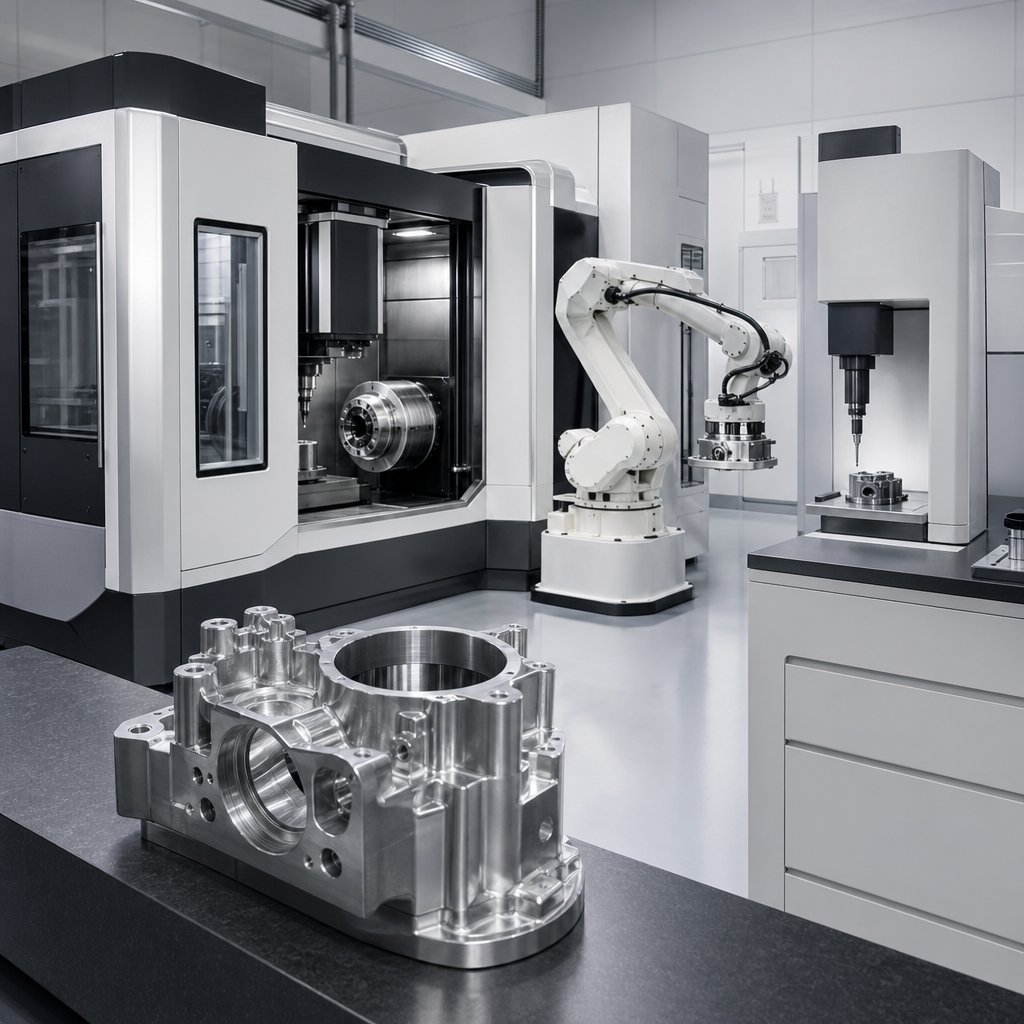
How CNC History Shapes Modern Precision Machining
What began as numerical motion control became the production model modern factories depend on. When computers, CAD/CAM, and feedback systems entered the picture, machining changed from a rigid programmed path into a flexible digital workflow. That is why today's precision cnc machining can support one-off parts, controlled repeat runs, and complex surfaces on a 5 axis cnc machine that early NC could not manage efficiently.
How Historical Advances Shaped Modern Production
Radonix notes that early systems in the 1950s were limited to two axes, while later platforms expanded to 3, 4, 5, or even 6 axes. That expansion matters because 5 axis cnc machining reduces repositioning, shortens setup time, and helps maintain accuracy on difficult geometries. The same source highlights CAD/CAM integration as a major milestone, linking digital design directly to executable toolpaths. In practical terms, that is what lets modern shops turn design files into repeatable cnc machining parts with less manual translation and less room for error.
What Manufacturers Should Look For Today
- Process capability: The supplier should match your tolerances, materials, and part geometry, not just list generic equipment.
- Certification: For automotive work, recognized systems such as IATF 16949 show that quality control is built into the process.
- Prototype support: Good custom cnc machining partners can move from first samples to stable production without changing the whole workflow.
- Automation readiness: Multi-axis programming, digital feedback, and integrated software help scale output while keeping variation in check.
- Documentation discipline: Inspection records, traceability, and revision control matter as much as cutting speed.
Why Quality Systems Matter in Precision Machining
The hardware story alone is not enough. The KSD CNC overview describes IATF 16949 as a quality framework for the automotive sector, with SPC and defect prevention supporting consistent output. A useful present-day example is Shaoyi Metal Technology, which presents IATF 16949-certified automotive machining supported by Statistical Process Control and a rapid-prototyping-to-production workflow. That is the clearest modern meaning of this history: the move from NC to CNC did not just create smarter machines. It created manufacturing systems capable of repeatable, scalable, and tightly controlled production.
FAQs About When CNC Machining Started
1. Did CNC machining start in the 1940s or the 1970s?
Both timeframes are used for a reason. The 1940s point to the earliest numerical-control ideas, while the 1970s better match the period when computer-based controllers and microprocessors made CNC machining look and function much more like the systems used today.
2. Who is usually credited with starting CNC machining?
John T. Parsons is commonly named as the leading figure behind the origin of numerical control, and Frank L. Stulen was an important collaborator in applying coordinate-based methods to manufacturing. MIT researchers and U.S. Air Force support also matter in the story because they helped turn the concept into working machine control rather than leaving it as a planning method.
3. What is the difference between NC and CNC machines?
NC means numerical control, which can automate machine motion through coded instructions without requiring a modern computer-driven controller. CNC means computer numerical control, where programs are stored and managed digitally, making editing, reuse, faster setup changes, and more complex machining much easier.
4. Why was numerical control developed in the first place?
It was created to solve real production problems, not just to automate for its own sake. Manufacturers needed a dependable way to make complex shapes, especially in aerospace and defense work, while improving repeatability and reducing how much final accuracy depended on one machinist's hand skills.
5. How does CNC history affect what manufacturers should look for today?
The move from early NC to modern CNC explains why buyers now expect digital programming, process consistency, traceability, and multi-axis capability instead of simple automated motion. In automotive production, that evolution shows up in requirements such as IATF 16949 quality systems, SPC-based control, and prototype-to-production support, which is why suppliers like Shaoyi Metal Technology position those capabilities as part of modern precision machining.