 Small batches, high standards. Our rapid prototyping service makes validation faster and easier —
  EN
EN


What Is CNC Turning Machine: How It Works And When It Wins
What Is CNC Turning Machine?
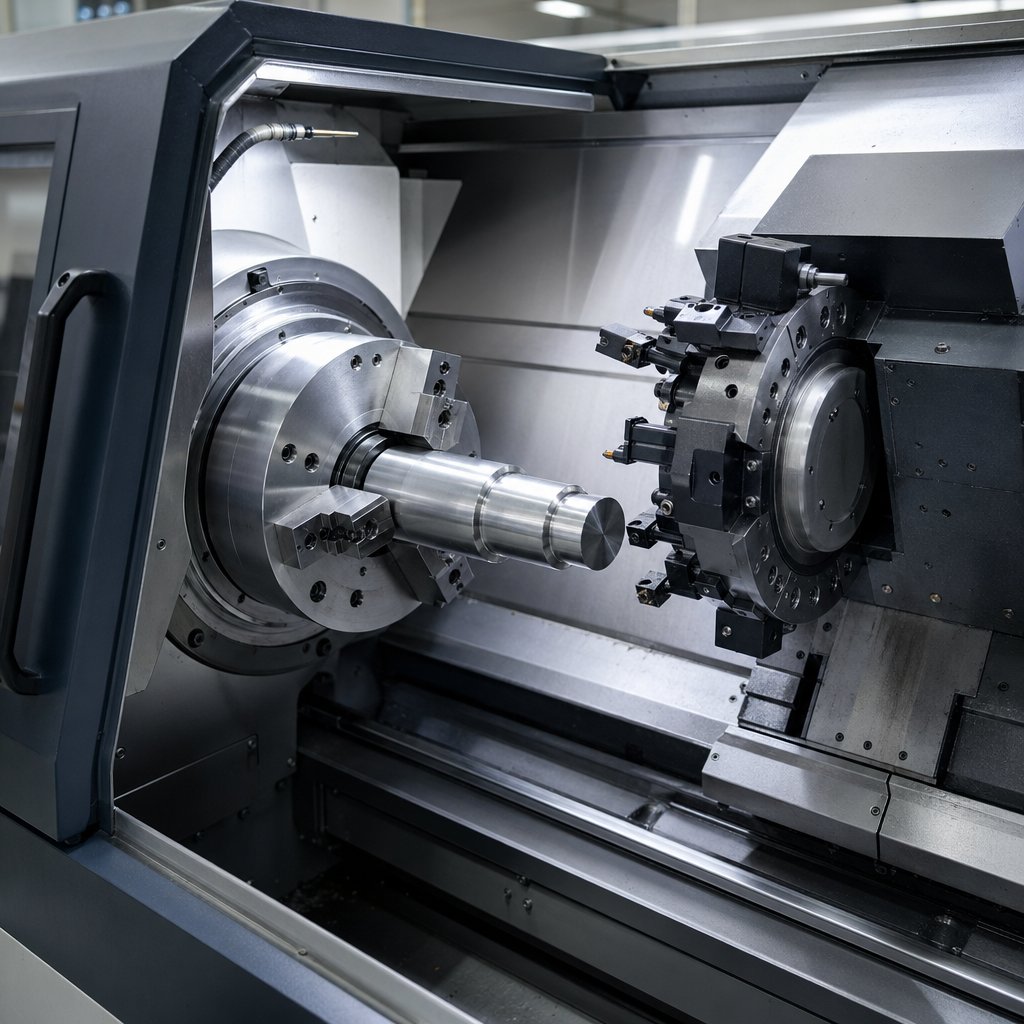
If you want the shortest useful answer to what is cnc turning machine, picture a lathe-style machine guided by software instead of handwheels. It is built to hold a round workpiece, spin it on a spindle, and let a cutting tool remove material with controlled, repeatable motion.
What a CNC Turning Machine Is
A CNC turning machine is a computer-controlled lathe that rotates the workpiece while a cutting tool shapes it into round or cylindrical features.
That basic definition matches how Hubs and CNC World describe turning equipment. For readers starting with the broader question what is cnc machine, this is one specific kind of computer numerically controlled machine, designed mainly for shafts, pins, bushings, threads, and other rotational parts.
- It rotates the workpiece rather than keeping it still.
- It uses programmable axis motion for precise cuts.
- It delivers strong repeatability from part to part.
- It is best suited to round, concentric, or tapered geometry.
CNC Turning Machine vs CNC Turning Process
The cnc turning machine is the physical equipment. CNC turning is the machining process that machine performs. The terms get mixed together because shops often say "turning" for both. A lathe is the machine style, turning is the cutting action, and CNC is the control method. Put together, the phrase means a lathe-type machine that follows programmed instructions instead of manual input.
How It Differs From a General CNC Machine
If you have searched cnc stand for or what does cnc machine stand for, the answer is Computer Numerical Control. That broad category includes mills, routers, lasers, and lathes. A computer numerically controlled machine becomes a turning machine when the part spins and the tool cuts against that rotation. In milling, by contrast, the tool usually rotates while the workpiece stays fixed, as shown by Autodesk. That difference sounds simple, but it shapes everything about the machine itself, from the spindle and chuck to the turret and control layout.
Computer Numerical Control Lathe Parts Explained
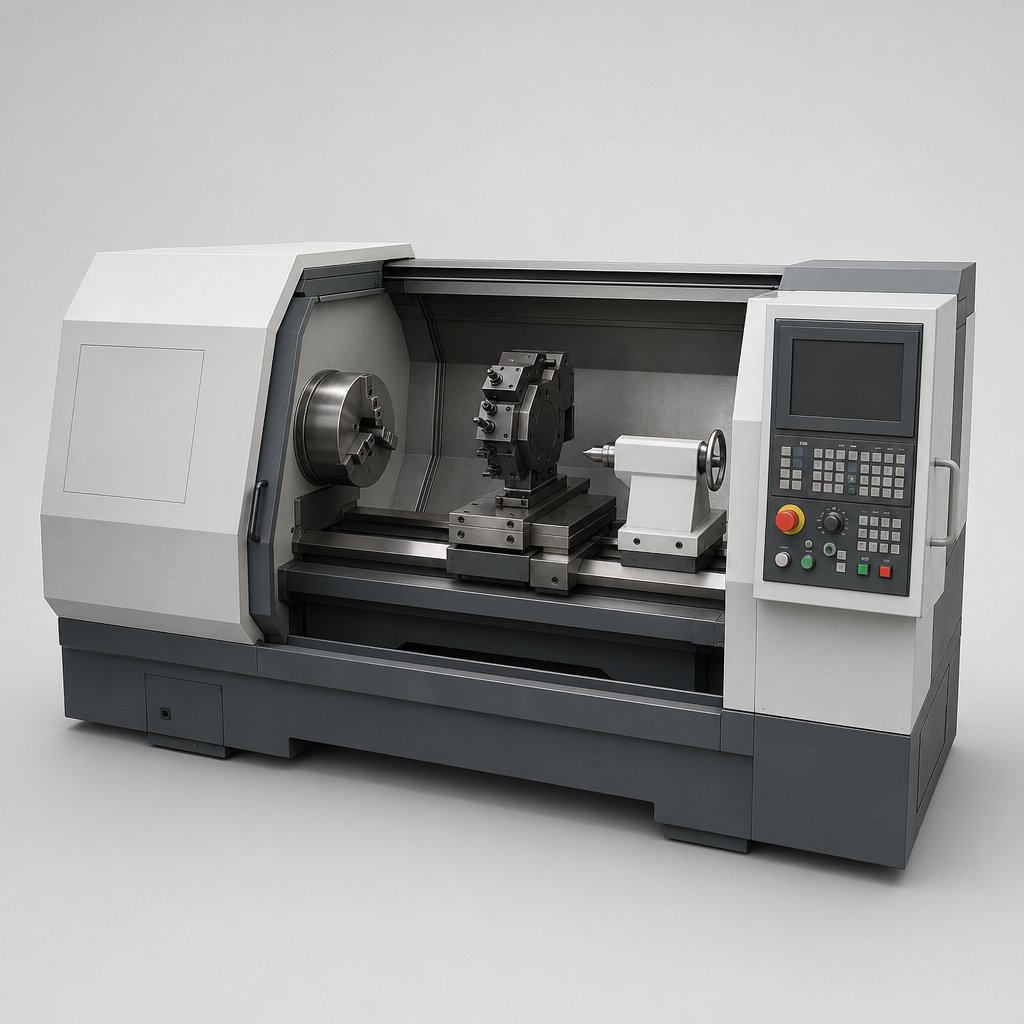
On the shop floor, the difference between a turning machine and a general CNC machine becomes visible fast. A computer numerical control lathe is arranged around one core task: hold a part on its axis, rotate it with control, and move cutting tools against that rotation. Descriptions from Prototek and Xometry line up closely on the core hardware, even though exact layouts vary by builder.
Main Components of a CNC Turning Machine
Think of the machine as a rigid base, a rotating drive unit, and a tool-moving system working together.
- Bed: the main structure of the machine, built to support the assembly and damp vibration.
- Headstock: the housing that contains the spindle drive and major bearings.
- Spindle: the rotating element that turns the workpiece.
- Chuck or collet: the workholding device that grips the part. Chucks suit a wider range of shapes, while collets are especially precise for round stock.
- Tailstock: supports long or slender parts and can hold drills on center.
- Turret: carries multiple tools and indexes the selected one into cutting position.
- Guideways: precision tracks, often called ways, that guide carriage and tailstock movement along the bed.
- Coolant system: sends fluid to the cutting zone to control heat, flush chips, and help tool life.
- Enclosure: contains chips and coolant splash while improving operator protection.
- Operator interface: the panel and screen used to jog axes, load programs, edit settings, and monitor the cycle.
How the Control System Directs Motion
The computer numerical control system is the coordinating layer. It reads the program, commands spindle speed, moves the machine axes, tracks tool offsets, and tells the turret when to change tools. Xometry describes this split clearly: operators use the machine panel for manual positioning and the control panel for program entry and editing. When a computer numerical control lathe machine adds live tooling, extra axes, or broader automation, many shops call it a turning center, or more casually a cnc turning center machine. Jiankemach notes that these expanded machines may also handle drilling, tapping, and some milling in one setup.
Toolholding Workholding and Rigidity
Software alone does not make good parts. The cutting tool must be clamped solidly, the workpiece must stay secure in the chuck or collet, and the machine must resist flex under load. Weak workholding can let a part slip. Poor toolholding can invite chatter. Limited rigidity can hurt finish and size control. That is why the bed, guideways, spindle bearings, turret, and support from the tailstock matter so much. Even a more advanced cnc turning center machine still depends on the same basics: stable toolholding, reliable workholding, and a rigid structure. With those pieces in mind, the machine starts to make practical sense, because each component has a specific role in the cutting sequence itself.
How Does a CNC Turning Machine Work?
A turning machine starts to feel much less mysterious when you follow the cycle in order. If you have ever wondered how does cnc work on a lathe, the short answer is this: the control reads programmed instructions, matches them to tool and part positions, spins the workpiece, and moves the cutting tool along a defined path. That is the basic logic behind cnc lathe machine working.
From Program to Spindle Motion
The machine does not improvise. It follows instructions written in G-code, with related machine functions handled through M-code. 3ERP explains that G-code controls movement, while M-code handles functions such as pauses and coolant. If you are asking what is cnc system, this is the practical answer: it is the control layer that interprets the code and coordinates spindle speed, axis travel, offsets, and auxiliary functions so the machine cuts where it is supposed to cut.
- Part loading: Raw stock or a pre-cut blank is placed in the machine.
- Workholding: The operator secures it in a chuck or collet so it can rotate safely and concentrically.
- Program selection: The correct machining program is loaded at the control.
- Tool offset setting: Tool geometry and wear values are entered so the control knows where each tool tip actually is. Work zero, often using G54, aligns the program origin with the part.
- Spindle rotation: The spindle begins turning the part at the programmed speed.
- Toolpath execution: The turret indexes the required tool, and the machine moves that tool along X and Z paths to remove material.
- Coolant use: Coolant may flow during cutting to help manage heat and clear chips.
- In-process checks: Operators may pause to measure features, confirm offsets, or adjust wear values if needed.
- Unloading: After the cycle ends, the finished part is removed and the next one can be loaded.
How Tools Move During Turning
In simple terms, the part spins and the tool advances into it. On most turning jobs, the tool moves along the Z axis for length and along the X axis for diameter. The resulting cut might reduce outside diameter, clean up a face, cut a groove, or generate a taper. That is why people searching how does a cnc machine work in turning need to think in two motions at once: controlled rotation of the workpiece and precise linear motion of the tool.
What the Operator Sets Up Before Cutting
Good results begin before the first chip forms. The operator confirms the correct tool number, checks whether offsets match the physical setup, verifies the part zero, and makes sure the workholding is secure. Reference material from Jiankemach also notes common setup risks such as confusing diameter and radius values, or failing to enter the proper tool nose data. In real shops, that preparation matters as much as the code itself, because even accurate programming cannot rescue a bad setup.
That is the practical rhythm of cnc lathe machine working: locate the part, locate the tool, run the programmed path, and control the cut. Once that rhythm is clear, the operation names used on shop drawings, such as facing, grooving, threading, and boring, start to map cleanly to the shapes the machine actually produces.
CNC Turning Operations and Typical Parts
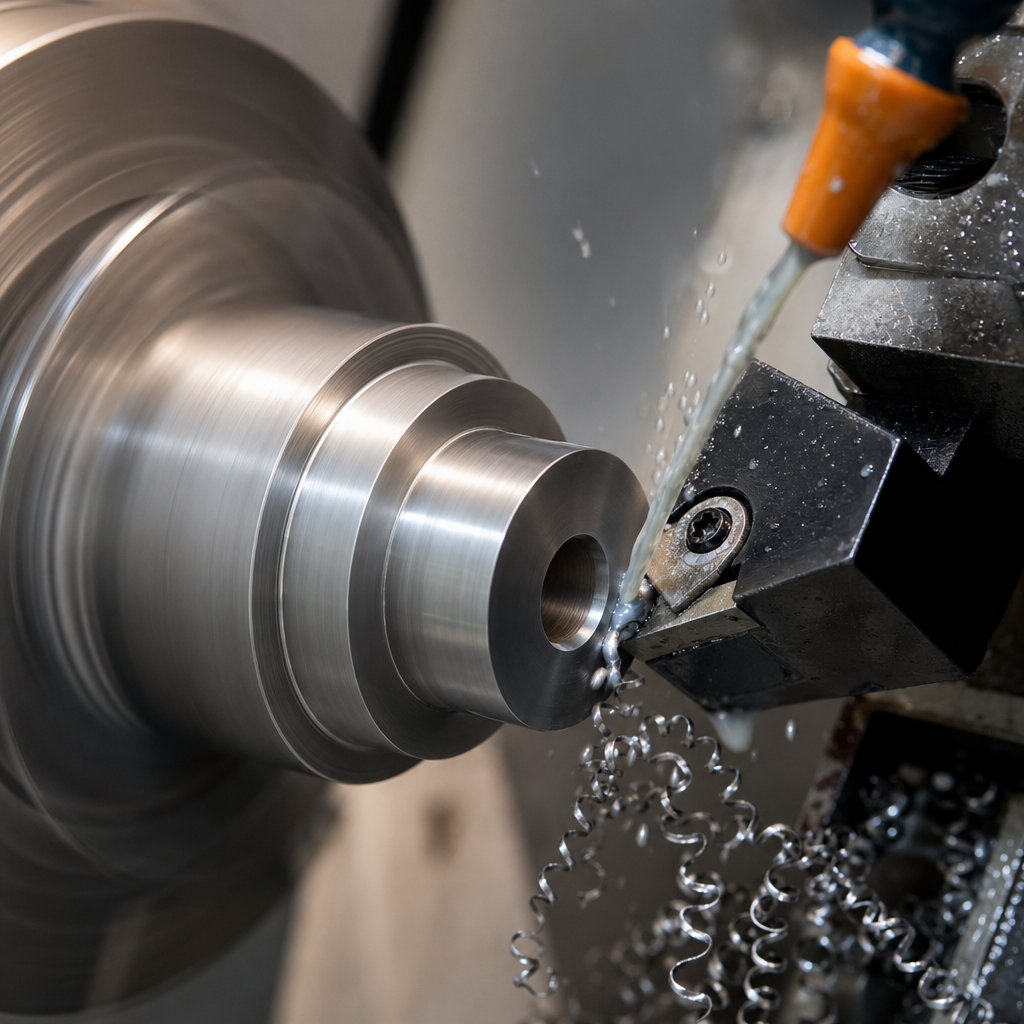
If you are wondering what is cnc turning in practical terms, this is where the machine’s motion turns into recognizable part features. Common references from Xometry and OnlyIndustries describe a core group of cuts used to shape round, stepped, tapered, threaded, and bored parts. In short, cnc turning is most efficient when the design is built around a centerline.
Basic Turning Operations Explained
In simple language, what is turning comes down to removing material from a rotating workpiece to create a needed feature. A turning operation may cut the outside, refine the inside, or separate the finished part from the bar. Straight turning reduces outside diameter. Taper turning creates a conical section. Facing, often called face turning, machines the end of the part flat and controls length. Grooving cuts a narrow recess. Threading forms screw threads. Drilling creates an axial hole, while boring enlarges or corrects an existing one. Parting cuts the finished component off. You may also see the phrase process turning used for this broader family of rotational cutting methods.
| Operation | Resulting geometry | Best-use note |
|---|---|---|
| Straight turning | Cylindrical outside diameter, steps | Best for shafts, pins, sleeves, and spacers |
| Taper turning | Conical or angled diameter transition | Useful for mating tapers and alignment features |
| Facing or face turning | Flat end surface | Controls overall length and creates a clean datum face |
| Grooving | Narrow OD or face recess | Helpful for reliefs and ring-style channels |
| Threading | External or internal threads | Used for fittings, fasteners, and connectors |
| Drilling | Axial hole | Starts internal features on center |
| Boring | Larger or truer existing hole | Improves internal diameter after drilling |
| Parting | Cutoff at the end of the cycle | Separates the finished part from bar stock |
What Shapes and Features the Machine Produces
These operations create the features people usually associate with turned parts: diameters, shoulders, tapers, flat faces, grooves, threads, bores, and cutoff ends. That is why CNC turned components are often shafts, bushings, sleeves, spacers, valve-style parts, and threaded connectors. One turning operation can make a single feature, but real parts usually stack several along the same axis.
How One Setup Can Combine Multiple Operations
A single setup can often combine straight turning, face turning, grooving, drilling, boring, threading, and parting. That reduces re-clamping and helps keep features concentric. Even so, the strength of process turning remains rotational geometry first. Flats, cross-holes, and other off-axis details may need live tooling, secondary machining, or a more capable machine style. That is where machine categories start to matter, because a basic lathe and an advanced turning center do not solve the same level of part complexity.
CNC Lathe, Turning Center, Swiss, or Mill-Turn?
Machines in this group can look similar at a glance, but their best use cases are very different. A basic lathe cnc machine may be exactly right for a simple pin, sleeve, or bushing. A more capable cnc turning center usually makes more sense when the job needs faster cycles, more tooling, or fewer handoffs. That distinction matters because machine category affects setup time, automation options, and how much of the part can be finished in one chucking.
CNC Lathe vs CNC Turning Center
A CNC lathe and a turning center both cut a rotating workpiece, but the turning center is generally the more production-focused platform. Southern Fabricating highlights the main differences: turning centers commonly add a full enclosure, slant-bed construction, automated tool changing, better chip removal, and optional live tooling. In plain shop language, a simpler cnc turning lathe is often enough for straightforward turned parts, repair work, and shorter runs. A cnc turning center is usually the stronger pick when parts repeat often, when several tools must index quickly, or when drilling and light milling need to happen in the same machine.
Where Swiss Type and Mill Turn Machines Fit
Some machines push further into specialized work. Swiss-type machines are typically chosen for small, slender parts made from bar stock, where support close to the cut helps control long, thin features. Mill-turn platforms solve a different problem. Mastercam explains that mill-turn combines the workpiece rotation of turning with the cutter rotation of milling, which makes it useful for parts that need both in one setup. If your earlier question was what is cnc milling machine, this is the clearest contrast: milling usually spins the tool, turning spins the part, and cnc milling and turning platforms are built to do both.
Best For by Part Shape Size and Complexity
The simplest way to choose is to match the machine to the part profile and the amount of secondary work you want to avoid.
| Machine type | Core motion | Typical part profile | Complexity level | Bar work suitability | Secondary machining capability | Best-for applications |
|---|---|---|---|---|---|---|
| CNC lathe | Rotating workpiece, basic turning axes | Simple cylindrical or stepped parts | Low to moderate | Moderate | Limited | Best for pins, bushings, sleeves, repair parts, and short runs where simplicity matters more than automation |
| CNC turning center | Rotating workpiece with automated turret, often live tools | Round parts with grooves, threads, holes, and moderate added features | Moderate to high | High | Moderate to strong | Best for production shafts, fittings, and turned components that benefit from fewer setups and faster repeat cycles |
| Swiss-type machine | Bar-fed turning with support close to the cut zone | Very small, long, slender precision parts | High within a small-part range | Excellent | Moderate on equipped machines | Best for miniature shafts, pins, connectors, and other small diameter parts that are hard to control on standard machines |
| Mill-turn machine | Turning plus milling and drilling in one platform | Rotational parts with flats, cross holes, and off-axis details | High to very high | Good, machine dependent | Extensive | Best for complex components that would otherwise move between separate turning and milling setups |
The real dividing line is not whether a machine can technically make the part, but how many setups, tool changes, and extra operations it takes to get there. A machine choice can narrow the field quickly. The smarter question is whether the part itself truly belongs on a turning platform, or whether another process fits the geometry better.
When CNC Turning Is the Right Fit
Machine category matters, but part geometry decides the first yes or no. Both Facturee and Penta Precision draw the same basic line: turning is strongest for rotationally symmetrical parts, while milling is better for prismatic, flat, or free-form designs. People often ask what does a cnc machine do, or what is a cnc machine used for. In practical terms, it removes material accurately, but the right machine is the one whose motion matches the part.
When CNC Turning Is the Best Choice
CNC turning is the best fit when the part is mainly round and the most important features share a centerline. Shafts, pins, bushings, threaded fittings, rings, and flanges are classic examples in both references. If the critical work is outside diameter, inside diameter, facing, grooves, threads, or centerline holes, turning is usually efficient and repeatable.
Size matters too. A cnc horizontal turning center can handle many production parts very efficiently, especially bar-fed or chuck-held cylindrical work. Large diameter cnc turning still belongs in the turning family when the geometry is rotational, but machine orientation starts to matter as size and weight increase. Penta notes that very large or heavy parts often move to vertical lathes, while horizontal machines remain common for round and tubular parts.
When Another Machine Process Makes More Sense
Turning is not the automatic answer for every machined component. Milling, or a hybrid turn-mill platform, usually makes more sense when the design is dominated by non-round geometry or off-axis detail. Warning signs include:
- Highly prismatic parts, such as brackets or block-like housings
- Parts dominated by broad flat surfaces rather than diameters
- Features far from the spindle axis, such as side holes, wrench flats, or multiple pockets
- Designs that would need too many secondary operations after the turning cycle
There is also a material reality check. If a hard turning lathe is under consideration, material condition and surface finish expectations still need a careful review before choosing turning as the main route. A part can be round and still be a poor turning candidate if the downstream finishing burden becomes too high.
A Practical Selection Checklist
- Part shape: Is the part fundamentally cylindrical or rotationally symmetrical? If yes, turning is a strong candidate.
- Part size: Can the diameter, length, and weight be held safely and rigidly on the chosen machine?
- Material behavior: Will the material machine cleanly, or will it create tool wear, chatter, or finish issues?
- Tolerance demands: Are the most critical dimensions concentric and axis-based, or are they mostly flat and positional?
- Production volume: Will repeat runs benefit from turning's fast cycles and repeatability, or will frequent changeovers reduce that advantage?
That is the real filter behind what is a cnc machine used for in this context. A part may clearly belong on a turning platform, yet material choice, finish targets, and inspection requirements can still change the quality risk and the true cost of the job.
CNC Turning Materials, Quality, and Cost Drivers
A part can be a strong match for turning and still vary a lot in quality and total cost. If you have ever asked what is cnc machining in the broad sense, this is where the answer gets practical: the machine matters, but material behavior and process control decide how cleanly a job runs. In the cnc turning process, small changes in setup, tooling, and inspection can separate a smooth production run from a pile of rework.
Common Materials Used in CNC Turning
Common turned materials include both metals and plastics. A materials guide from Dadesin lists aluminum 6061, brass, stainless steel 304, titanium, ABS, and nylon among the standard options. In simple terms, easier-cutting choices such as aluminum 6061 and brass often support faster cnc cutting and smoother finishes, while tougher materials like stainless steel and titanium usually place higher demands on tooling and process stability. Plastics can also be turned successfully, but heat response and material behavior still shape the plan.
What Affects Accuracy Surface Finish and Repeatability
In cnc turning machining, quality is created by the whole system, not by the program alone. The biggest practical influences include:
- Machine rigidity and spindle stability: a more stable platform resists vibration and deflection.
- Tooling choice and tool wear: insert selection and wear control directly affect size and finish.
- Workholding stability: poor clamping can lead to slip, runout, and chatter during cnc machine cutting.
- Program strategy: efficient toolpaths and fewer unnecessary setups reduce variation.
- Thermal control: inconsistent heat can make repeatability harder across a batch.
- Inspection discipline and setup quality: early checks help catch drift before it spreads.
The LS Manufacturing cost guide ties better outcomes to validated machine capability, controlled tooling use, standardized setups, and rigorous quality control. That is a useful reminder for anyone asking what is cnc machining: it is a controlled production system, not just material removal.
Main Cost Drivers in Turning Work
- Setup complexity: more tools, offsets, and fixturing raise front-end effort.
- Material type: machinability affects cycle time, tool use, and scrap risk.
- Batch size: shorter runs carry more setup cost per part.
- Secondary operations: extra drilling, milling, deburring, or finishing add handling.
- Tolerances and finish requirements: tighter specs often require slower, more controlled cuts.
- Inspection requirements: more measurement adds time, but it can prevent expensive escapes.
The cheapest-looking route is not always the most efficient if it creates extra handling, rework, or scrap.
That is why two parts with similar geometry can demand very different effort in cnc turning machining. Once cost and quality start to depend on execution as much as equipment, the real question becomes who should run the work in the first place.
When to Outsource CNC Turning Work
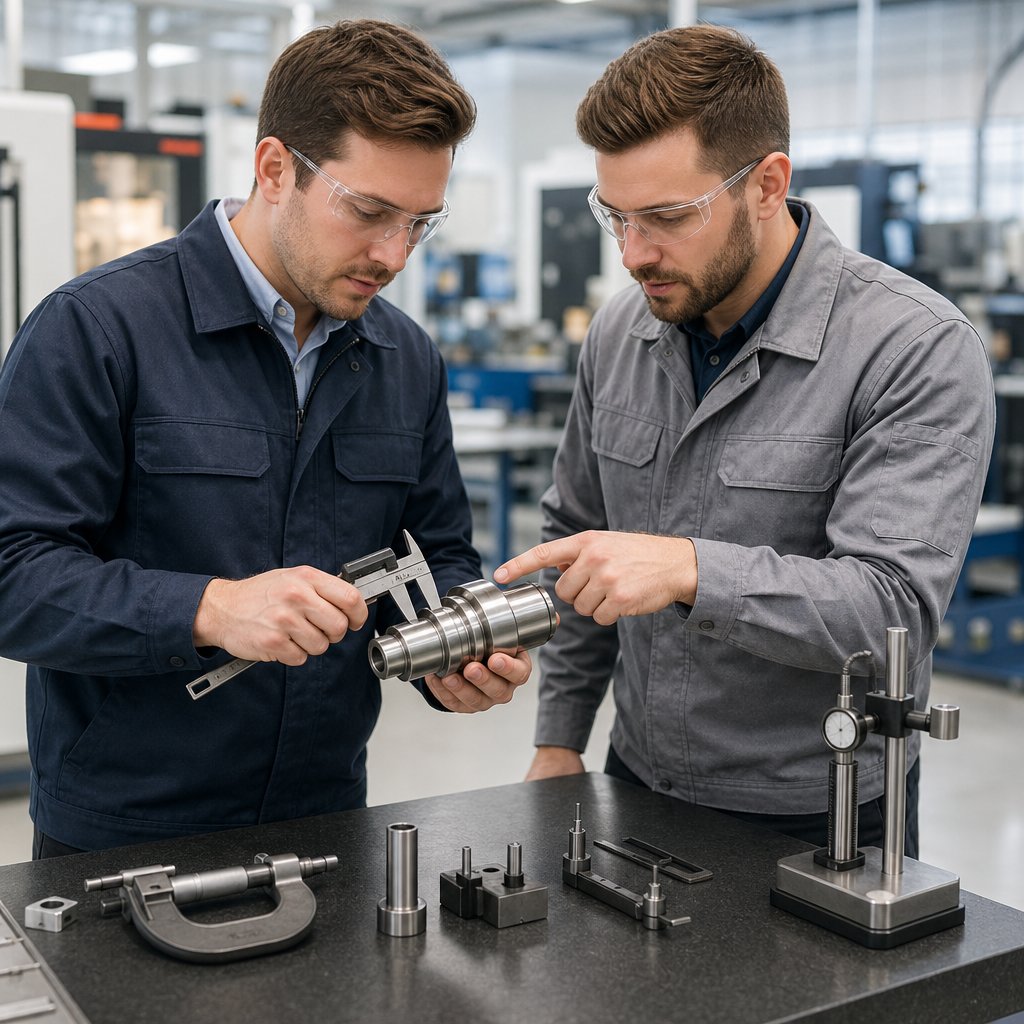
For many teams, the harder decision is not how a turned part gets made, but who should run it. A component can be a strong fit for a cnc machine and still be a weak fit for buying equipment in-house. When demand is uneven, internal staffing is thin, or quality resources are limited, outsourcing often makes more sense than ownership. A practical make-or-buy analysis helps here because machine price is only one layer of the real cost. Utilization, labor, tooling, maintenance, and floor space all affect the result.
When Buying a Machine Is Not the Best Move
This matters most when buyers are comparing cnc turning center technical specifications on paper without a stable production plan behind them. If your team is still early in the learning curve, still asking whats a cnc machine, or still reducing the question to what do cnc machines do, tying up capital too soon can be risky. Outsourcing is also a smart option when you need launch support, overflow capacity, or access to multiple cnc turning centers and other cnc machines without building that capability from scratch.
How to Vet a CNC Turning Supplier
- Process capability: Ask what part families they run best and whether their cnc turning centers fit your diameter, length, and tolerance needs.
- Quality systems: Look for documented controls, traceability, and certifications that match your industry.
- Prototyping support: Confirm they can handle first articles, revisions, and engineering changes smoothly.
- Production scalability: Make sure they can grow from pilot runs to repeat production without a process reset.
- Inspection methods: Ask how they verify critical dimensions, concentricity, and surface-related requirements.
- Communication: Fast quotes help, but clear drawing review and responsive problem solving matter more over time.
What Automotive Buyers Should Look For
Automotive sourcing raises the standard. Buyers often need one partner that can support a prototype today and controlled volume production later. One relevant example is Shaoyi Metal Technology, which presents its automotive machining service around IATF 16949 certification, Statistical Process Control, and support from rapid prototyping to automated mass production. That kind of structure is often more useful than broad claims about what do cnc machines do. In automotive work, the best supplier is rarely the shop with the longest equipment list. It is the one with the right process control, inspection discipline, and communication for your part risk.
CNC Turning Machine FAQs
1. What is the difference between a CNC turning machine and a CNC lathe?
In most cases, they describe the same core equipment: a computer-controlled lathe that spins the workpiece while a cutting tool removes material. "CNC turning machine" is the broader term, while "CNC lathe" is often used for the classic machine format. In modern shops, a more advanced version with added tooling, enclosure, and automation is often called a turning center.
2. How does a CNC turning machine work step by step?
A typical cycle starts with loading raw stock or a blank into a chuck or collet. The operator then selects the program, sets tool offsets and part zero, and confirms the setup. After that, the control coordinates spindle rotation, axis movement, tool changes, and coolant so the machine can cut features such as diameters, faces, grooves, bores, and threads in a repeatable order.
3. What parts are best suited for a CNC turning machine?
CNC turning is strongest when the part is built around a centerline. Good candidates include shafts, pins, bushings, sleeves, spacers, rings, and threaded fittings. If the important features are mostly outside diameters, inside diameters, tapers, grooves, or concentric holes, turning is usually an efficient choice.
4. When should you choose a turning center instead of a milling machine?
Choose a turning center when the part is mainly round and several key features can be made while the workpiece rotates on its axis. Milling is usually the better option for block-like parts, broad flat surfaces, pockets, and off-axis details. If a component needs both rotational and milled features, a mill-turn platform may reduce extra setups and handling.
5. Is it better to buy a CNC turning machine or outsource the work?
Buying makes sense when you have stable production volume, trained operators, inspection resources, and enough work to keep the machine productive. Outsourcing is often better for prototypes, changing demand, or industries that need mature quality systems without heavy upfront investment. For automotive programs, a supplier such as Shaoyi Metal Technology can be a relevant example because it offers IATF 16949 certified custom machining, SPC-based process control, and support from prototype through automated mass production.