 Small batches, high standards. Our rapid prototyping service makes validation faster and easier —
  EN
EN


How Does Laser Welding Work? From Beam Physics To Bead Quality
How Does Laser Welding Work?
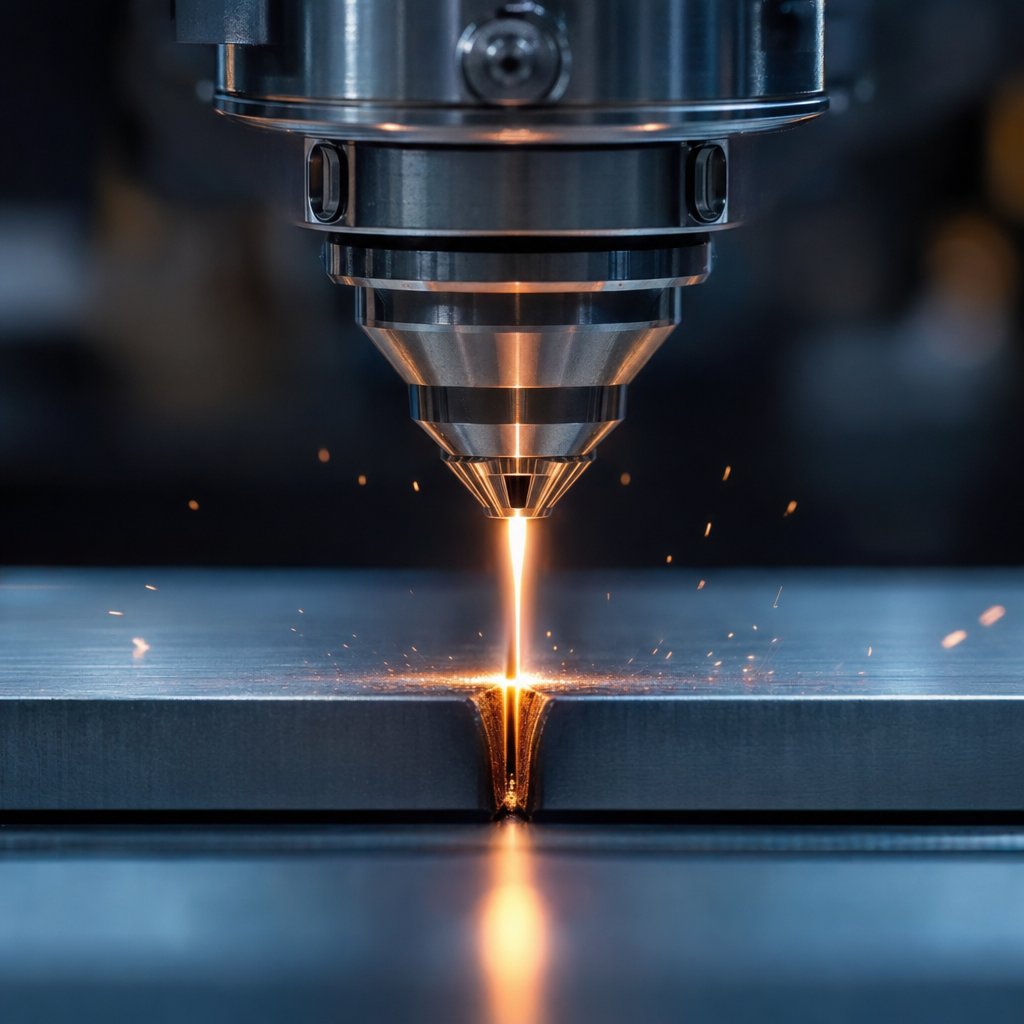
How does laser welding work? It joins metal by focusing a high-energy beam onto the joint so the surface absorbs that energy, melts, and then solidifies into a fused seam. If you have asked, what is laser welding and how does it work, think of heat placed exactly where two parts meet. Some searchers even type laser welding how does it work, but the core idea stays simple: a tiny molten pool forms at the joint and freezes into one bond as the beam moves along.
Laser welding fuses parts by concentrating a high-energy laser beam on the joint. The metal absorbs the beam, melts in a localized pool, and resolidifies into a welded seam.
How laser welding joins metal
Laser welding is a non-contact fusion process. At the focal point, the beam heats a very small area to the melting point, allowing the base metals to flow together and cool as one. Filler metal can be added in some setups, especially when a gap must be bridged or bead shape needs support, but many laser welds rely mainly on the base materials themselves. That localized heating is a big reason the process is known for clean, precise seams.
Why a focused beam creates a weld
The technical idea behind it is energy density. A laser can deliver a large amount of power into an extremely small spot, creating the high energy density that gives laser welding its narrow weld profile and relatively small heat-affected zone. Guidance from Xometry and Laserax highlights why manufacturers value that control: less unnecessary heating, lower distortion, and strong precision on small or sensitive parts.
Where laser welding fits among fusion processes
Like TIG or MIG, this method joins by melting material. The difference is the heat source: a focused light beam instead of an electric arc. In conduction mode, heat spreads from the surface and produces a shallower, smoother weld. In keyhole mode, higher intensity can vaporize metal and form a tiny cavity that supports deeper penetration. Those two behaviors sit underneath almost every practical discussion about bead shape, penetration, and quality.
- The beam must be absorbed at the surface to start melting.
- High focus means more precision and a smaller heat-affected zone.
- Filler wire is optional, not always required.
- Most laser welds fall into conduction or keyhole behavior.
What looks instant at the torch is really a chain of tightly controlled events. Joint fit-up, beam delivery, melt-pool behavior, shielding, and cooling all leave their mark on the final seam.
Laser welding process step by step
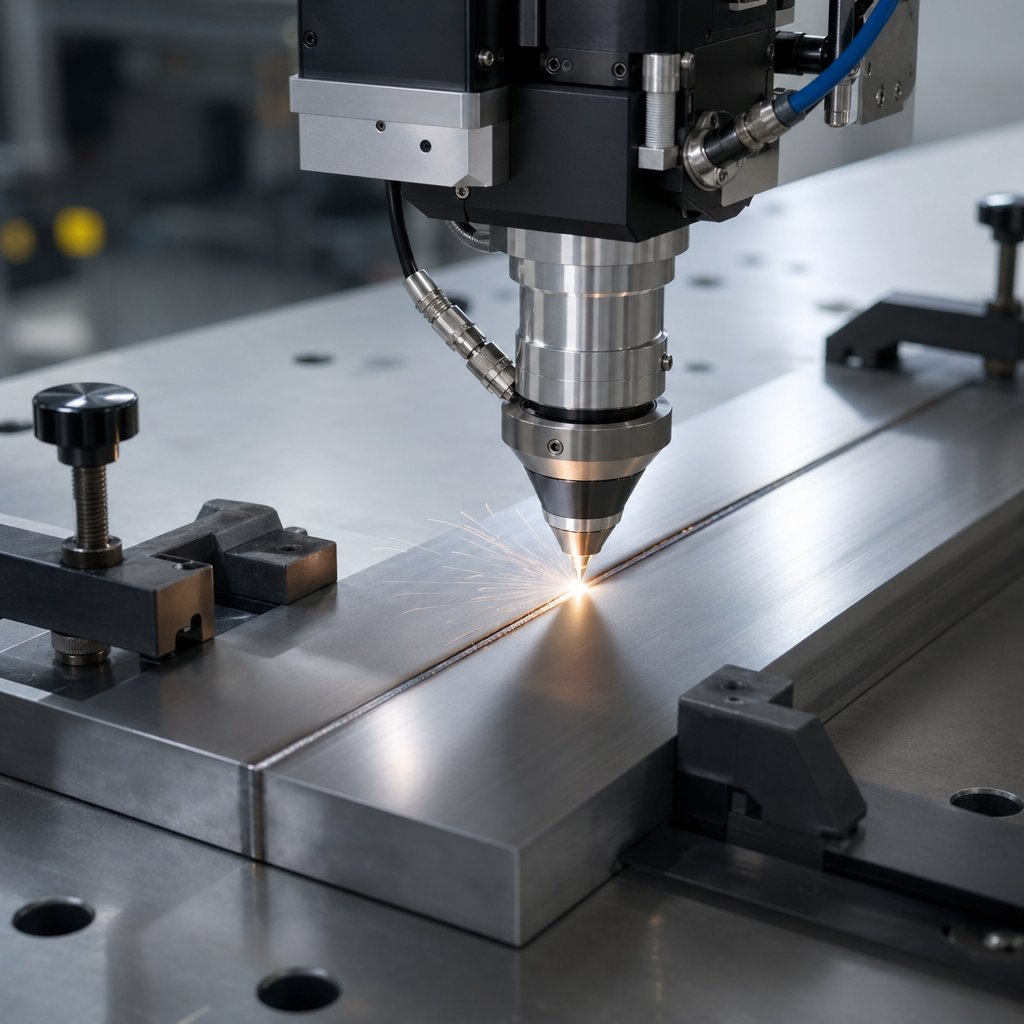
A finished bead looks simple. The path to that bead is not. If you are asking how does laser beam welding work, or how does a laser welder work in real production, think of it as a tightly controlled sequence rather than a single burst of heat. Before the beam ever touches metal, the joint has to be clean, aligned, and held still. During welding, the system manages variables like laser power, travel speed, focal position, and shielding gas flow to keep the seam consistent, a process overview described by Xometry.
Laser generation and beam delivery
- Prepare the parts. Workpieces are cleaned to remove oil, oxide, and debris. Joint design, fit-up, and edge alignment are checked first because contamination or poor contact can disrupt fusion.
- Clamp and fixture the assembly. Fixtures hold the parts in position and limit movement as heat is applied. Precise positioning supports more uniform heat input and better seam tracking, a point also emphasized by MacksMATEC.
- Generate and route the beam. The laser source produces a coherent, high-energy beam. That beam is then delivered through mirrors, optics, or fiber to the welding head, depending on the system design.
- Focus the beam on the joint. Collimating and focusing optics shrink the beam into a small spot. This step is critical because spot size and focal position determine intensity, which strongly affects weld width and depth.
Absorption melting and penetration
- Absorb energy at the surface. When the beam hits the metal, some light is reflected and some is absorbed. The absorbed portion becomes heat at a very localized area.
- Form the melt pool. The joint reaches melting temperature and a small molten pool develops. If both sides of the joint melt properly, the liquid metal flows together and creates fusion.
- Build penetration. At modest intensity, heat spreads mainly from the surface into the part. At higher power density, metal can vaporize and form a vapor cavity, often called a keyhole, which helps drive energy deeper into the workpiece.
- Move along the seam. The beam, part, or robot travels so the molten pool progresses down the joint line. Shielding gas can support process stability and protect the weld area from the surrounding atmosphere. Industrial setups commonly use argon or helium for this role.
Cooling solidification and inspection
- Solidify the seam. As the beam moves on, the molten pool cools rapidly and freezes into a metallurgical bond. Cooling rate influences microstructure, residual stress, and final bead shape.
- Inspect the result. Shops may use visual checks, dimensional checks, or sensor-based monitoring during and after welding. A MDPI review describes real-time thermal, optical, acoustic, and pyrometer-based methods used to catch issues such as lack of penetration or porosity before they become larger quality problems.
| Stage | What happens physically | Why it affects weld quality |
|---|---|---|
| Preparation | Surfaces are cleaned and parts are aligned and clamped. | Reduces contamination, mismatch, and instability at the joint. |
| Beam focusing | Optics concentrate the beam into a small spot. | Controls energy density, penetration, and bead width. |
| Melting | Absorbed energy creates a localized molten pool. | Determines whether true fusion forms across the joint. |
| Penetration and travel | The pool advances and may form a keyhole at higher intensity. | Shapes seam depth, aspect ratio, and process efficiency. |
| Cooling and inspection | The pool resolidifies and the weld is checked. | Affects microstructure, distortion, and defect detection. |
That is the laser welding process step by step. The same sequence can leave two very different-looking welds, though. In one case, heat stays near the surface. In another, a stable vapor cavity pulls energy deep into the joint, and the beam source itself can influence how easily that happens.
Conduction vs keyhole laser welding and source types
Two laser welds can follow the same joint line and still look completely different in cross-section. That difference usually comes down to weld mode and beam source. If someone asks how does a laser welding machine work, this is the part that explains why one seam stays shallow while another drives deep into the joint. The machine always concentrates energy at the weld, but that energy can either spread from the surface or open a vapor channel that pulls heat downward.
Conduction welding explained
In conduction mode, the beam has enough power density to melt the metal surface, but not enough to create a stable vapor cavity. Heat moves into the workpiece mainly by thermal conduction from the top surface. As EWI describes it, penetration comes from heat conducting down into the metal, so the weld is typically wider than it is deep. That makes conduction welding useful when you want a smoother, more surface-oriented seam and do not need deep penetration.
Keyhole welding explained
Keyhole mode starts at a higher power density. Here, the metal does not just melt. Part of it vaporizes. That vapor pushes outward and forms a narrow cavity, or keyhole, beneath the beam. Because energy is then absorbed along the depth of that channel, the weld becomes deeper and narrower. The result is the classic high-aspect-ratio laser weld. It is efficient, but it is also less forgiving. A stable keyhole depends on enough power, controlled travel speed, and tight joint conditions.
| Mode | What happens physically | Penetration | Bead shape | Fit-up sensitivity | Typical use |
|---|---|---|---|---|---|
| Conduction | Surface melts and heat flows inward by conduction | Shallow to moderate | Wider than deep, often smoother at the surface | Lower than keyhole, though alignment still matters | Thin sections, appearance-critical seams, limited penetration work |
| Keyhole | Metal vapor creates a cavity that carries energy deeper | Deep | Narrow, deep weld with high aspect ratio | Higher, especially for gap control and stability | Deep penetration, high-speed welding, many structural butt joints |
How laser source type changes performance
If you are wondering how does fiber laser welding work, the joining physics at the joint stay the same. What changes is the source that generates and delivers the beam. A broad review notes that solid-state lasers such as fiber, disk, diode, and Nd:YAG types operate in roughly the 450 to 1080 nm range, while CO2 lasers operate around 10.6 micrometers. That shorter wavelength generally improves absorption on many metals and allows beam delivery through flexible optical fiber, something CO2 systems do not handle in the same way.
Beam quality matters just as much. A tighter, cleaner focus creates higher power density at the joint, which makes keyhole formation easier and improves energy use. Laser Focus World highlights that focusability has a large effect on welding energy utilization. In plain terms, a better-focused beam puts more of the machine's power exactly where the weld needs it.
| Source type | Delivery and wavelength | Practical effect on welding |
|---|---|---|
| Fiber and disk lasers | Short-wavelength solid-state beam, commonly fiber-delivered | Good absorption, easy robotic routing, strong support for tight focus and deep penetration |
| Nd:YAG | Legacy solid-state source with shorter wavelength than CO2 | Useful historical benchmark for precision welding and tighter focusing than older gas systems |
| Diode lasers | Solid-state source that can produce broader or shaped spots | Can suit broader surface heating or customized beam shapes |
| CO2 lasers | Longer wavelength gas laser, usually mirror-delivered | Lower absorption on many metals, especially reflective ones, and less flexible beam routing |
This is why conduction vs keyhole laser welding is more than a textbook distinction. It is the visible result of source choice, focus quality, wavelength, and absorbed energy working together. A small change in power density can turn a broad surface bead into a deep narrow seam, and that shift is exactly where power, speed, focus, shielding gas, and joint gap start to take control of bead quality.
Laser welding parameters explained
This is where the question shifts from how does a laser welding machine work in theory to why one setup gives a clean, narrow seam and another produces spatter, underfill, or shallow fusion. In practice, bead quality comes from a balance of energy, motion, gas coverage, fit-up, and surface condition. Change one variable too far, and penetration, bead width, porosity risk, and distortion can all move with it.
How power speed and focus affect penetration
Power matters, but power density matters more. Raising power or tightening the spot increases intensity at the joint, which usually pushes penetration deeper and makes the weld more concentrated. A smaller spot can improve precision, but it also makes the process less forgiving if tracking or part position drifts. A larger spot spreads heat over a wider area, so the bead tends to widen while penetration becomes shallower.
Travel speed has to match that energy. This is the heart of how power and speed affect laser welds. If speed is too high for the selected power, the top surface may look acceptable while fusion underneath stays incomplete. If speed is too low, heat input climbs, the bead gets wider, and the risk of burn-through, underfill, spatter, and distortion increases. Focus position matters too. Laserax notes that many applications focus at the surface, while slight shifts above or below can sometimes reduce spatter or porosity, though the weld shape will change.
Output mode adds another lever. Continuous wave welding provides steady heat input and is commonly used for deeper penetration and faster production. Pulsed welding delivers short bursts that reduce total heat input, which helps on thin sections and heat-sensitive parts, as outlined by Varibend and Laserax.
Why shielding gas fit-up and cleanliness matter
Shielding gas does more than protect appearance. Laserax explains that gases such as argon or nitrogen help limit oxidation and manage plasma behavior above the molten pool. Too little gas allows atmospheric contamination. Too much, or the wrong nozzle direction, can create turbulence and destabilize the weld zone. Fit-up is just as critical. Lasers do not bridge air gaps well, and poor clamping lets the gap vary along the seam. In demanding applications, assembly gaps are often controlled to below 0.1 mm.
Surface condition also changes results fast. Oil, paint, rust, oxides, and dirty optics can interfere with absorption and trap gas in the molten pool. The quality issues collected by Dynalaser repeatedly point back to the same root causes: contamination, poor gas coverage, bad focus, and mismatched heat input.
When filler wire improves a laser weld
Many laser welds rely mainly on the base metals, but filler wire can help when the joint has a small gap, the bead needs reinforcement, or the alloy is more crack-sensitive. It can improve edge tie-in and add material where underfill would otherwise develop. The tradeoff is control. If wire feed is not synchronized with the molten pool, it can disturb penetration, create excess buildup, or leave incomplete fusion at the toes.
- Clean oxides, oil, paint, and rust from the joint area.
- Verify fixture rigidity so the gap stays stable along the seam.
- Check focal position and working distance before welding.
- Match power, spot size, and speed to the joint and thickness.
- Confirm nozzle angle and shielding gas coverage at the weld zone.
- Use filler wire only when the joint or material actually needs it.
| Parameter | Main influence on the weld | Common setup mistake |
|---|---|---|
| Laser power | Higher power usually increases penetration and total heat input | Using too much power and causing spatter, burn-through, or distortion |
| Power density and spot size | Smaller spots raise intensity, deepen penetration, and narrow the bead | Choosing a spot too small for unstable tracking or poor fit-up |
| Travel speed | Changes fusion time, bead width, and heat buildup | Moving too fast and leaving lack of fusion, or too slow and overheating the joint |
| Focal position | Alters coupling, penetration shape, and spatter behavior | Running out of focus and losing consistency across the seam |
| CW vs pulsed output | CW favors deeper, faster welding, while pulsed reduces heat input | Using CW on heat-sensitive thin parts or pulsed where deeper penetration is needed |
| Shielding gas | Reduces oxidation and helps stabilize the weld zone | Poor gas direction, weak coverage, or excessive flow turbulence |
| Joint gap | Affects fusion, underfill, and penetration uniformity | Expecting the beam to bridge a visible air gap |
| Fixture rigidity | Keeps alignment and gap control stable during heating | Allowing part movement as the weld progresses |
| Surface condition | Influences absorption, porosity risk, and seam appearance | Welding over oxides, oil, paint, or rust |
| Filler wire | Helps bridge small gaps and support bead shape | Unsynchronized feed that chills or disturbs the molten pool |
The same settings still will not behave the same way on every metal. Stainless steel, carbon steel, aluminum, copper, and titanium each absorb, conduct, and solidify heat differently, which is why material choice becomes the next big factor in weld quality.
What metals can be laser welded?
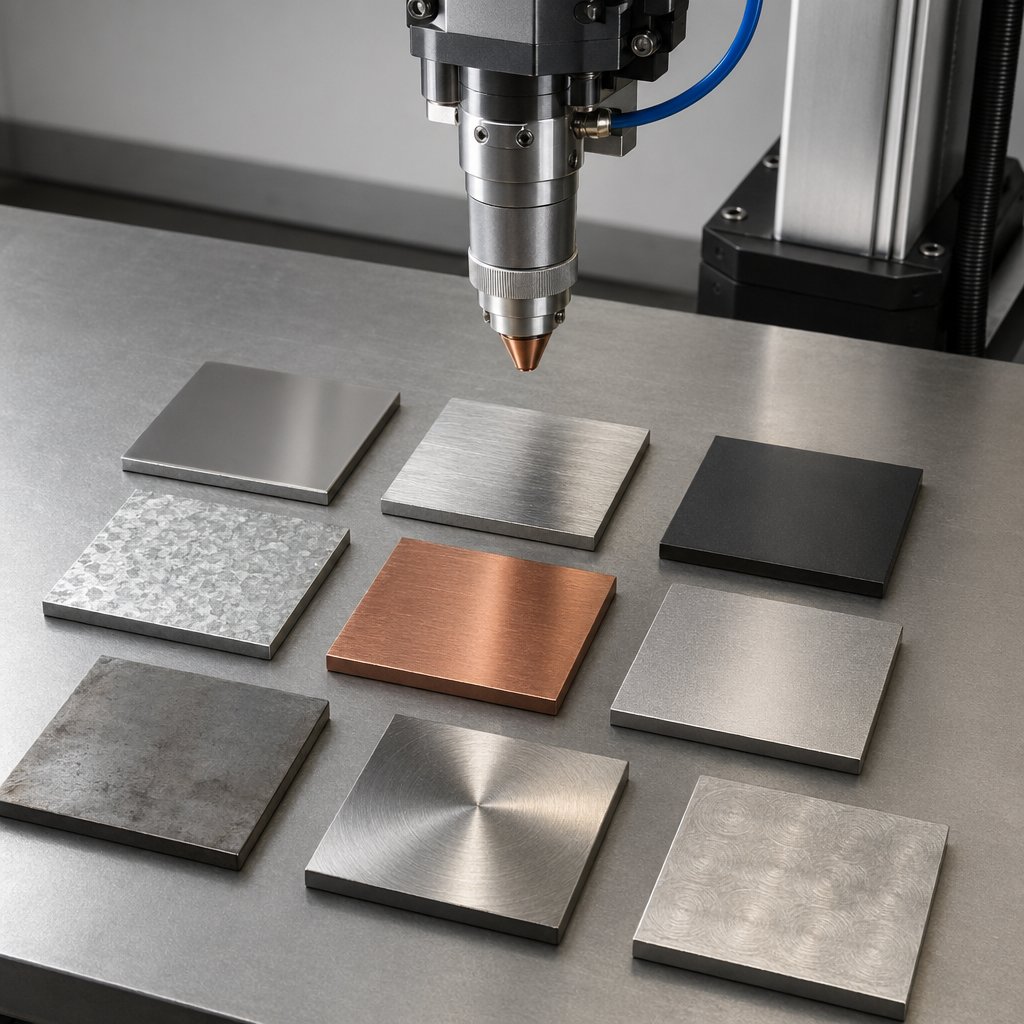
A stable setup on stainless can struggle immediately on copper. That is why material choice matters so much in laser welding. The beam may be the same, but each metal absorbs, conducts, and reacts to heat in its own way. If you are wondering what metals can be laser welded, the short answer is many of the metals used in fabrication can be joined this way, including stainless steel, carbon steel, aluminum, copper, titanium, and some mixed-metal combinations. The real question is not only whether a metal can be welded, but how much process control it needs.
Metals that are generally straightforward to laser weld
Stainless steel and carbon steel are usually the most forgiving starting points. Both are widely used in laser systems because they absorb energy more readily than highly reflective metals and can produce clean, narrow welds with limited distortion when fit-up and shielding are controlled. In the material overview from MAVWELD, steel-family metals are described as especially laser-friendly compared with aluminum or copper.
Stainless still needs care. Excess heat or weak shielding can cause oxidation, backside sugaring, or changes that hurt corrosion resistance. Carbon steel is broadly weldable too, but higher-carbon grades can become more crack-sensitive and may demand tighter thermal control than mild steel.
Why aluminum copper and titanium need extra control
Laser welding aluminum and stainless steel are often discussed together, but they behave very differently. Aluminum is lightweight and useful, yet it reflects a large share of incoming laser energy at room temperature and conducts heat away quickly. Copper is even more demanding. A reflectivity table in the same source lists approximate infrared reflectivity values of 0.91 for aluminum and 0.99 for copper, versus 0.64 for iron and 0.63 for titanium. In plain terms, copper and aluminum are harder to start and stabilize because so much energy is reflected or rapidly dissipated.
Titanium has a different problem. It is actually a good absorber relative to many metals, but it becomes highly reactive when hot. Poor shielding can let oxygen, nitrogen, or hydrogen contaminate the weld and make it brittle. That makes gas coverage and a clean setup essential.
Dissimilar metals and mixed-material joints
Laser welding dissimilar metals is possible, but this is where metallurgy starts to push back. Guidance from Megmeet highlights the main reasons: different melting points, different thermal expansion rates, and the risk of brittle intermetallic compounds. Aluminum to steel and aluminum to copper are common examples. Laser welding helps because the heat-affected zone is narrow and the melt volume can be kept small, but tight fit-up, beam offset, oscillation, and sometimes interlayers or filler are used to limit harmful mixing.
| Material | Relative ease | Common challenges | Special considerations |
|---|---|---|---|
| Stainless steel | Generally easy | Oxidation, discoloration, corrosion-loss risk if overheated | Control heat input and maintain good shielding gas coverage |
| Carbon steel | Easy to moderate | Oxidation, burn-through on thin parts, cracking risk rises with carbon content | Mild steel is more forgiving; higher-carbon grades need tighter cooling control |
| Aluminum | Moderate to difficult | High reflectivity, high thermal conductivity, oxide layer, porosity risk | Very clean prep, stable fit-up, and often pulsed or tightly controlled energy input help |
| Copper | Difficult | Very high reflectivity, very high thermal conductivity, unstable weld initiation | Precise focus, strong peak power, and careful shielding improve stability |
| Titanium | Moderate | Hot-metal contamination from air, embrittlement, discoloration | Excellent shielding and cleanliness are critical before, during, and after welding |
| Dissimilar metals | Case dependent | Intermetallic formation, thermal mismatch, dilution, cracking, galvanic concerns | Use tight gap control, tailored beam placement, and sometimes filler or interlayers |
That is the big pattern: some metals mainly challenge beam absorption, others challenge thermal control, and mixed joints challenge chemistry at the fusion line. Those differences show up later as very specific defects, which is why troubleshooting laser welds works best when you read the flaw through the material first, not just the machine settings.
Laser welding defects and causes
If you want to know how to troubleshoot laser welding problems, do not start by guessing at settings. Start by reading the weld. Most failed beads trace back to a small group of interacting variables: energy input, focus, travel speed, shielding gas, fit-up, and cleanliness. Practical defect guides from GWEIKE and HGSTAR show the same pattern again and again. The question of how does laser welder work becomes very real here, because every defect is a clue about what the beam, melt pool, and joint were doing at that moment.
Most laser weld defects come from the interaction of setup, material, and energy input, not one bad setting by itself.
Why porosity and underfill happen
Porosity usually means gas was trapped before the pool could solidify. Oil, paint, moisture, oxide layers, unstable shielding, or inconsistent wire feed can all create that problem. Aluminum is especially sensitive because its oxide layer can release gas during melting if it is not removed shortly before welding. Underfill is different on the surface, but the logic is similar. The joint loses metal because heat is too concentrated, travel is too fast for edge wetting, the gap is too large, or the weld pool drains out of the joint. A bead may look neat from above and still be undersized where strength matters.
How lack of fusion cracking and burn-through develop
Lack of fusion often hides behind a decent-looking seam. Common causes include low power, excessive speed, focus set too high above the surface, or a scan width so wide that energy spreads without enough depth. Cracking usually points to material response and stress. Rapid cooling, crack-sensitive alloys, rigid clamping, and shrinkage during solidification all raise the risk. Burn-through sits at the other extreme. Here, energy density is too high for the thickness, speed is too low, or the joint gap gives molten metal nowhere to stay. Excessive spatter often rides with unstable keyhole behavior, dirty surfaces, or gas blowing directly into the pool. Distortion shows up later, during cooling, when total heat input or poor fixture balance pulls the part out of shape.
| Defect | Common causes | Visual clues | Corrective actions |
|---|---|---|---|
| Porosity | Contamination, weak shielding, unstable wire feed, oxide on aluminum | Pores in section, scattered pinholes, failed X-ray or macro-etch | Clean mechanically and with solvent, improve gas coverage, stabilize wire feed, remove oxide just before welding |
| Underfill | Large gap, excessive heat concentration, poor wetting, molten metal loss | Sunken bead, low crown, reduced section thickness | Tighten fit-up, reduce heat concentration, slow slightly if needed, add filler wire when the joint needs support |
| Lack of fusion | Low power, high speed, poor focus, wide scan, bad fit-up | Acceptable surface but weak bend test, unfused root or sidewall in section | Increase power gradually, reduce speed, move focus closer to the joint, narrow scan width, improve clamping |
| Cracking | Rapid cooling, shrinkage stress, crack-sensitive alloy, rigid restraint | Centerline or heat-affected cracks, delayed cracking in severe cases | Use filler if appropriate, consider preheat for susceptible materials, reduce thermal shock, avoid excessive restraint |
| Burn-through | Too much energy density, slow travel, narrow heat distribution, excessive gap | Holes, edge collapse, severe thinning | Lower power in small steps, raise speed, spread heat, improve support and gap control |
| Excessive spatter | Unstable keyhole, dirty surface, gas misalignment, too much power for speed | Metal droplets around seam, dirty optics or fixtures | Clean the part, reduce power slightly or increase speed, realign nozzle so gas shields instead of pushing the pool |
| Distortion | Too much total heat, long continuous runs, one-sided heating, weak fixturing | Warp, twist, bow, parts out of tolerance after cooling | Shorten or stagger welds where allowed, reduce heat input, improve fixtures and support during cooling |
Systematic troubleshooting before changing equipment
When people search for laser welding defects and causes, they often expect a single answer. Real troubleshooting is more disciplined than that. The GWEIKE checklist makes one rule especially useful on the shop floor: change one variable at a time and verify the result with sections or mechanical testing.
- Check the joint first. Gap and alignment problems can mimic parameter problems.
- Clean the weld zone, filler, and nozzle before touching power settings.
- Confirm focus position and gas direction at the actual weld location.
- Adjust only one variable at a time, then inspect the bead and cross-section.
- Question the weld mode itself if a keyhole process stays unstable on thin material.
Sometimes the defect is not asking for a better setting. It is asking for a different joining process, a filler-assisted approach, or a joint design with more tolerance. That tradeoff becomes clearer when laser welding is placed beside TIG, MIG, resistance welding, and electron beam welding.
Laser welding vs TIG, MIG, resistance, and EB
A stubborn defect does not always mean the laser settings are wrong. Sometimes the joint itself is asking for a different process. In broad terms, laser welding stands out for localized heat, strong process control, and easy automation. The tradeoff is stricter fit-up. The Fabricator notes that laser welding offers low heat input relative to other fusion processes, high controllability, and strong repeatability, but it also brings high weld joint fit-up requirements.
Laser welding versus TIG and MIG
In laser welding vs TIG welding, the biggest difference is how forgiving the process is. Laser concentrates energy into a very small spot, so distortion can stay low and welds can run fast and clean. TIG is slower and more operator-dependent, but EB Industries points out that TIG handles large structures, works in any position, and can fill larger weld gaps. That makes TIG a better fit when joint variation, field work, or tricky access matter more than speed.
Laser welding vs MIG welding usually comes down to precision versus tolerance. A SMACNA overview describes laser as less flexible than MIG because it needs relatively precise fit-up. The same source also notes that thicker materials generally push the decision toward MIG. In practice, MIG is often the more forgiving choice when sections are heavier or gap control is less consistent, while laser is stronger when the goal is a narrow, repeatable seam with limited heat spread.
Laser welding versus resistance and electron beam welding
Compared with resistance welding, laser is more flexible in seam path and does not need electrodes pressing both sides of the joint. Resistance welding is usually the simpler fit for repetitive overlap joints where electrode access is easy and the weld location stays the same from part to part. Laser becomes more attractive when joint geometry is less simple or when a noncontact heat source helps protect surrounding features.
Laser welding vs electron beam welding is a closer contest because both are precision processes with narrow heat-affected zones. The real dividing line is the environment. EB welding takes place in a vacuum chamber, which helps produce very clean welds with minimal contamination and exceptional depth control, but it also limits workpiece size and requires specialized fixturing. Laser keeps much of the precision without the vacuum, which makes it easier to integrate into general production lines.
| Process | Process characteristics | Heat input | Precision | Gap tolerance | Automation fit | Typical applications |
|---|---|---|---|---|---|---|
| Laser welding | Focused light beam, noncontact, single-pass capability on many joints | Low relative heat input, small HAZ | Very high | Low, fit-up sensitive | Excellent | Automotive, electronics, medical parts, thin and precision assemblies |
| TIG welding | Arc process with tungsten electrode and shielding gas, often filler-assisted | Higher and broader than laser | High, but operator-dependent | Good, especially for larger gaps | Moderate | Pipes, vessels, large structures, appearance-critical welds, field work |
| MIG welding | Wire-fed arc process suited to general fabrication | Broader than laser | Moderate | Better than laser | Good | Heavier sections, fabrication work, joints with less precise fit-up |
| Resistance welding | Electrical resistance plus electrode force, usually for overlap joints | Localized at the interface | High on repeat parts | Moderate within designed joint geometry | Excellent in repetitive production | Sheet metal spot and seam joining |
| Electron beam welding | Focused electrons in vacuum, very deep and precise fusion | Very low overall thermal impact, narrow HAZ | Exceptional | Low, precision setup required | High in specialized cells | Aerospace, electronics, medical, deep precision welds |
How to choose the right process for the joint
- Choose laser when the joint is tight, distortion must stay low, and robotic repeatability matters.
- Choose TIG when access, positional flexibility, or gap filling matters more than cycle time.
- Choose MIG when the section is thicker or the fit-up is less controlled.
- Choose resistance welding for repetitive sheet overlap joints with easy electrode access.
- Choose electron beam when deep precision and vacuum cleanliness justify the chamber constraints.
The best answer is rarely the most advanced process on paper. It is the one that matches the joint, the material, the tolerance stack, and the production environment. That is exactly why laser welding shows up so often in tightly controlled manufacturing lines, especially where repeatability and automation have to work together shift after shift.
Laser welding in automotive manufacturing
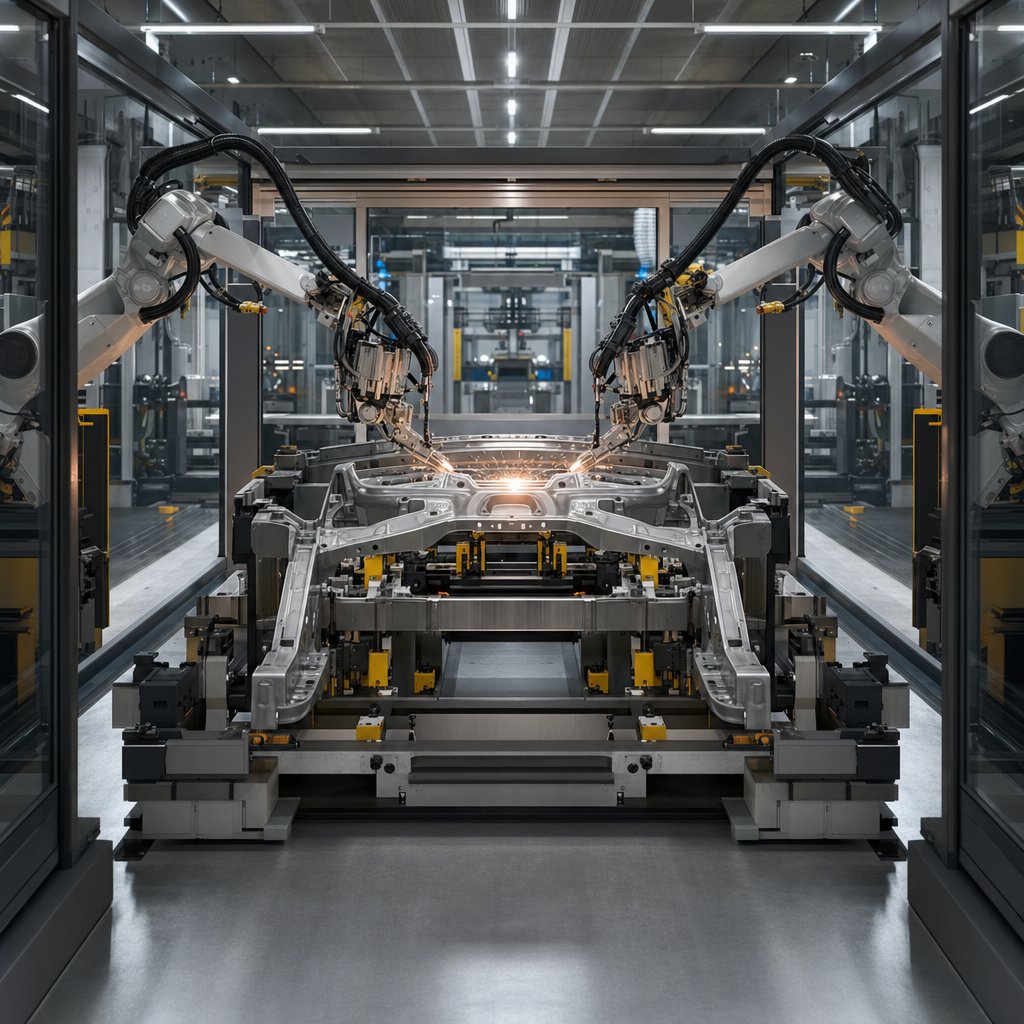
A sound weld on a test coupon proves the physics. Automotive production asks for more. The process has to repeat the same bead shape, penetration, and fit across large volumes of parts. That is why laser welding in automotive manufacturing is most useful where robotic motion, rigid fixturing, tight joint control, and documented inspection all work together. Robotic laser welding is widely used in automotive applications such as body panels, chassis, and exhaust systems because it combines precise beam control with speed, automation, and localized heat input that helps reduce distortion.
Where laser welding fits in automotive production
In real plants, the best fit is a repeatable joint with stable part positioning and clear quality requirements. Laser welding is especially attractive when manufacturers want narrow heat-affected zones, consistent seam placement, and strong compatibility with automated cells. Quality discipline matters just as much as the beam itself. In automotive supply chains, CQI-15 includes laser welding in its job audit process tables, and the same framework is linked to customer-specific requirements under IATF 16949. That is a useful reminder that repeatability is measured by records, audits, and inspection evidence, not by appearance alone.
How to evaluate a welding partner
- Review process development. Ask how the supplier validates power, speed, focus, fixturing, and joint design for your exact part family.
- Check material experience. A capable shop should show real familiarity with the metals in your program, whether that means steel, aluminum, or mixed-material assemblies.
- Examine inspection discipline. Visual checks are only the start. Shaoyi's manufacturing process lists UT, RT, MT, PT, and ET among its inspection methods, which is the kind of process depth buyers should verify with any supplier.
- Confirm automation capability. Robotic laser welding for chassis parts depends on stable fixtures, controlled part handling, and repeatable seam positioning.
- Assess the quality system. Traceability, corrective action, operator qualification, and audit readiness often separate a reliable production partner from a capable prototype shop.
A practical resource for custom welded chassis parts
If you are weighing how to choose a laser welding supplier, one practical resource to review is Shaoyi Metal Technology. For custom welded chassis parts, the company presents capabilities around advanced robotic welding lines, an IATF 16949 certified quality system, efficient turnaround, and custom welding for steel, aluminum, and other metals. Treat that kind of supplier page as a starting point, then confirm the process controls, inspection plan, and production fit against your own program requirements.
- Choose laser welding when precision, repeatability, and low distortion matter more than gap tolerance.
- Look for suppliers that can explain fixturing, validation, and inspection as clearly as the welding cell itself.
- In automotive production, documented quality control is part of weld performance.
- The strongest supplier choice is the one that can turn beam physics into repeatable parts, shift after shift.
That is where the full answer becomes practical: the beam makes the weld, but production success comes from the system wrapped around it.
How Laser Welding Works: FAQs
1. What is laser welding and how does it work?
Laser welding joins parts by concentrating light energy into a very small spot at the joint. The surface converts that energy into heat, a molten pool forms, and the metal solidifies into one seam as the beam or workpiece moves. At lower intensity, the weld stays more surface-based, while higher intensity can produce a deeper keyhole effect. Some applications use filler wire, but many laser welds rely mainly on the parent metals.
2. What is the difference between conduction and keyhole laser welding?
Conduction welding melts the surface first and lets heat spread inward, so the weld is usually wider and shallower. Keyhole welding uses higher power density, which creates a narrow vapor cavity that helps energy travel deeper into the joint. That makes keyhole mode better for deeper penetration and faster structural seams, but it also demands tighter fit-up and more stable process control.
3. What metals can be laser welded successfully?
Stainless steel and many carbon steels are often the most straightforward choices because they are easier to control in typical laser welding setups. Aluminum and copper can also be welded, but they need closer control because they reflect more energy and pull heat away quickly. Titanium is workable too, though it requires excellent shielding when hot. Dissimilar-metal joints are possible, but they usually need more careful joint design, beam placement, and sometimes filler or interlayers.
4. What causes common laser welding defects like porosity or lack of fusion?
Porosity usually means gas became trapped in the molten pool, often because of contamination, oxide layers, moisture, weak shielding, or unstable filler addition. Lack of fusion is more often tied to poor energy delivery at the joint, such as excessive travel speed, incorrect focus, low effective power density, or a gap the process cannot bridge. A practical troubleshooting path is to check cleanliness, clamping, fit-up, focus, and gas coverage first, then change one parameter at a time and inspect the result.
5. How should manufacturers evaluate a laser welding supplier for automotive parts?
Look beyond machine type and ask how the supplier controls the whole welding system. Strong candidates should be able to explain process development, material experience, fixturing, inspection methods, automation capability, and quality documentation. For automotive work, suppliers such as Shaoyi Metal Technology present robotic welding capabilities and IATF 16949 alignment for custom chassis parts, but buyers should still confirm validation methods, inspection plans, and repeatability for their specific components.