 Small batches, high standards. Our rapid prototyping service makes validation faster and easier —
  EN
EN


Can Galvanised Steel Be Welded Safely? Start Here Before You Strike
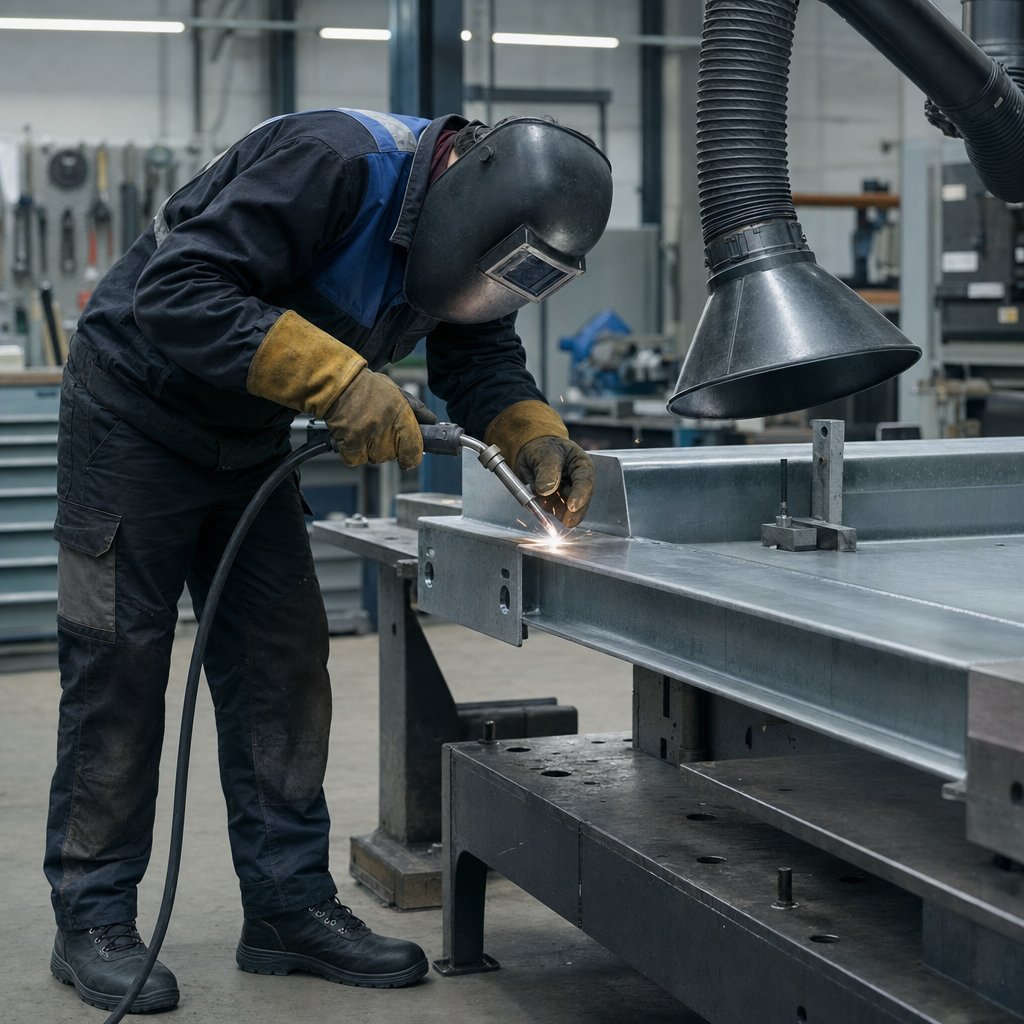
Can Galvanised Steel Be Welded?
Yes, galvanized steel can be welded. That is the short answer people want when they search can galvanised steel be welded or can galvanized steel be welded. The fuller answer is yes, but the zinc coating changes the job in three important ways. It affects safety, it can interfere with weld behavior and appearance, and it removes corrosion protection at and near the weld area.
Direct Answer on Whether Galvanised Steel Can Be Welded
If you are asking can you weld galvanized steel or can you weld galvanised steel, the practical answer is still yes. Fabricators do it on sheet, tubing, and pipe. But galvanized steel does not behave like bare steel. In simple terms, galvanizing means the steel has a zinc coating added to its surface to help resist corrosion. So when a beginner asks what is galvanized metal, that zinc layer is the main difference that matters during welding.
Yes, you can weld galvanized steel, but the zinc coating changes safety, weld quality, and post-weld protection needs.
What the Zinc Coating Changes During Welding
Heat from welding can burn off or damage the zinc around the joint. AWS-based guidance summarized by the AGA notes that welding destroys the coating at the weld site, damages nearby coating, and can generate fumes when the zinc is heated. That is why questions like can you weld galvanized and can i weld galvanized steel are bigger than they first sound.
The Three Issues Readers Must Separate
- Making the weld: The joint can be welded, but the coating can affect arc stability, spatter, and cleanliness.
- Managing fumes: Welding coated steel is not the same as welding bare steel because heating zinc changes the safety setup.
- Restoring protection: Once the bead is finished, the original corrosion-resistant coating at the joint is no longer intact.
That split matters on thin sheet, square tubing, and galvanized pipe alike, because the real question is not only whether it can be welded, but whether welding is the right approach for the part in front of you.
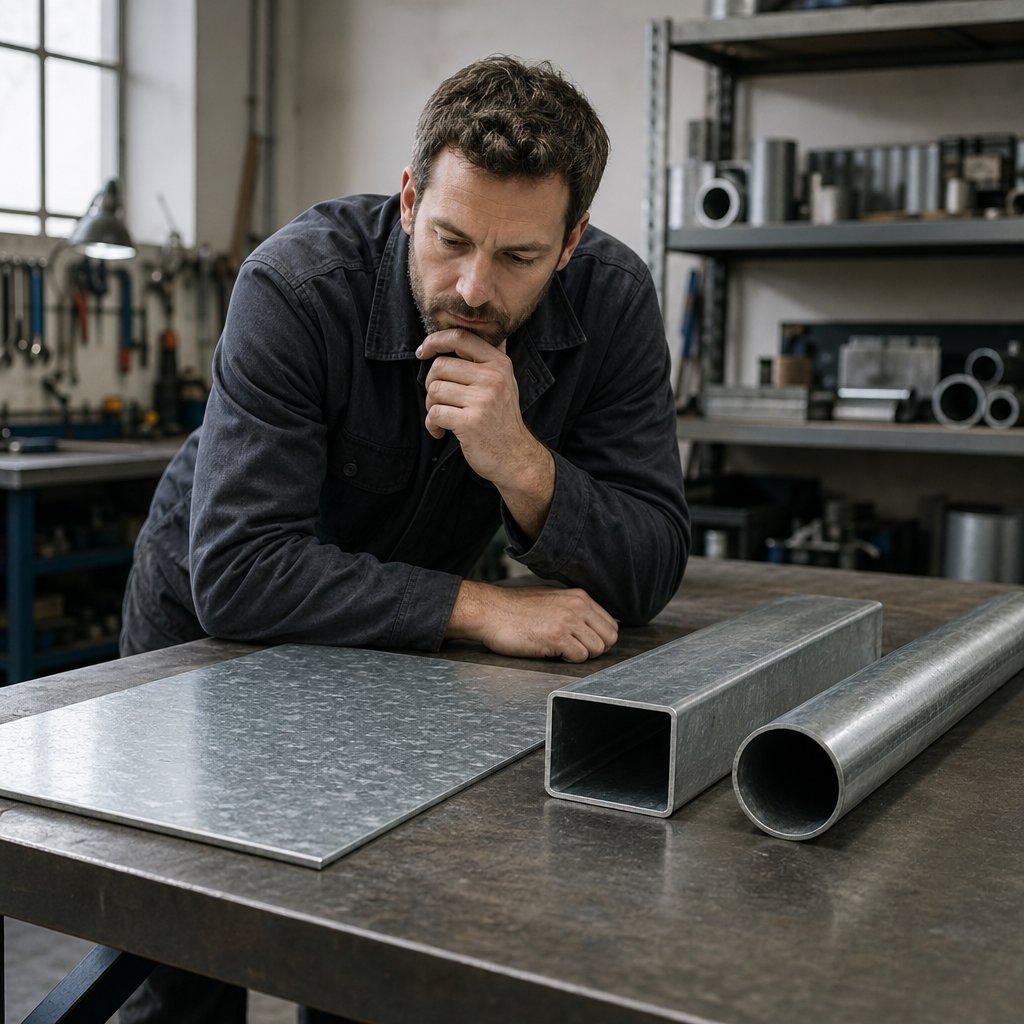
Can You Weld Galvanized Steel to Steel Safely?
If the first question is settled, the practical one shows up fast: should this part actually be welded? On galvanized sheet, square tubing, and mixed steel-to-steel joints, the answer depends on conditions more than confidence. In most cases, you are choosing between three paths: weld with controls, remove zinc around the joint first, or skip welding and use another joining method.
When Welding Galvanized Steel Makes Sense
Welding makes sense when the joint needs the strength and continuity that a weld provides, the area is open enough for ventilation, and the damaged coating can be repaired afterward. That is common in shop fabrication, bracket work, tubing frames, and repairs where appearance matters less than a sound joint. If you are asking can you weld galvanized to steel, or can you weld galvanized steel to steel, the practical answer is yes when the weld area is properly prepared and the post-weld protection is part of the plan.
- Start with the part thickness. Thin sheet is easier to overheat and distort, while heavier sections usually tolerate controlled welding better.
- Check the joint location. Flat, open joints are easier to ventilate than corners, enclosed tubing, or tight pipe connections.
- Decide how clean the finish must look. Visible work often needs better prep and more cleanup.
- Ask whether the part must leave the job with corrosion resistance restored near the weld.
- Choose the simplest safe path, not just the fastest one.
When the Coating Should Be Removed First
In many real-world jobs, removing zinc near the joint is the better choice. Zinc contamination can make the weld less predictable, and heating it increases fume concerns. Guidance summarized by Okon Recycling notes that AWS standards call for removing the coating 1 to 4 inches from the weld zone on both sides. That matters whether you can weld galvanized steel to regular steel on a small repair or can you weld galvanized metal to steel in a larger fabrication. The same logic applies when people ask can you weld zinc plated steel, because zinc at the joint still changes weld behavior and exposure risk.
When Another Joining Method May Be Better
Some parts are technically weldable but still poor candidates for welding. Very thin visible sheet, awkward assemblies with poor ventilation access, or parts that cannot be easily recoated may point you toward another joining method. People also ask can you solder galvanized steel. That belongs in this decision bucket. Soldering galvanized is a separate, lower-heat joining choice, and it should be judged by what the finished part must actually do, not just by whether a weld is possible.
| Condition | Recommended action | Why |
|---|---|---|
| Open joint on tubing or heavier steel | Weld with controls | Ventilation and cleanup are easier to manage |
| Galvanized-to-bare steel joint that must be strong | Remove zinc first, then weld | Improves weld quality and lowers zinc-related fumes |
| Thin sheet or hard-to-recoat assembly | Consider another joining method | Reduces distortion and avoids extra repair work |
A joint can be weldable on paper and still be a bad welding choice in practice. Zinc changes that calculation quickly, especially when the air around the work is harder to control than the arc itself.
Is Welding Galvanized Steel Dangerous?
A joint may be weldable and still be unsafe to weld casually. If you are asking is welding galvanized steel dangerous, the practical answer is yes when the zinc coating is heated without proper controls. OSHA lists zinc oxides from galvanized steel among the hazardous fumes and particles produced during welding. That is the core issue behind welding galvanized steel fumes, and it is why coated steel should never be treated like bare steel at the bench or in the field.
Why Galvanized Welding Fumes Are a Real Hazard
When zinc gets hot enough, it can vaporize and form fine oxide fumes in the plume above the weld. Those fumes are one of the main hazards of welding galvanized steel. The illness people often mean by galvanized steel poisoning is usually metal fume fever linked to zinc oxide exposure. Clinical guidance in NCBI describes a flu-like pattern that can appear hours after exposure, which helps explain why even short tack welds on sheet, tubing, or pipe should be respected.
Keep your head out of the plume. If you cannot move fumes away from your breathing zone, stop and improve controls before welding.
How Ventilation and PPE Reduce Exposure
- Work in a well-ventilated area whenever possible. OSHA requires mechanical ventilation in smaller work areas and adds stricter requirements where confined spaces are involved.
- Use local fume extraction when it is available. Guidance from Atkore also stresses setting airflow across the work, not toward your face, and keeping your head out of the plume.
- Stand to one side of the rising smoke instead of directly over the joint. Body position matters more than many beginners expect.
- Wear proper eye and face protection. A welding helmet for galvanized steel protects against arc radiation and spatter, but it does not filter fumes.
- Use gloves, sleeves, and standard welding PPE so you can adjust the part and extraction safely.
- Choose respiratory protection based on the actual task. A welding respirator for galvanized steel, or a respirator for welding galvanized steel, may be needed when ventilation alone cannot keep exposure under control.
- NCBI notes that common N95 masks are generally less effective than well-fitted elastomeric half-face respirators, full-face respirators, and PAPRs for metal fume exposure. Do not guess at a welding galvanized steel respirator setup.
Warning Signs That Mean Stop and Reassess
Pause the job if smoke lingers in the air, extraction is weak, the weld position forces your face into the plume, or the work area is tighter than expected. Pay attention to your body too. NCBI notes that zinc fume exposure can be followed by fever, chills, cough, wheezing, headache, thirst, or a metallic taste several hours later. If symptoms are severe, breathing becomes difficult, or exposure happened in a confined space, get professional medical advice rather than trying to push through it. People may casually call that galvanized steel poisoning, but it is a warning sign, not a normal part of welding.
The cleanest safety gains often happen before the arc starts. A better-inspected part, less coating at the joint, and a cleaner fit-up can reduce both fume load and weld trouble at the same time.
How to Remove Galvanized Coating Before Welding
Preparation is where a galvanized job usually goes right or wrong. When welding on galvanized steel, the goal is not to strip the whole part. It is to create a clean, stable weld zone, reduce zinc-related fume problems, and keep as much surrounding corrosion protection as practical.
Inspecting the Part Before Any Grinding or Welding
Start by looking at the actual joint, not just the surface color. On sheet, tubing, and pipe, check where the bead will run, what sits behind the joint, and whether zinc is present on both sides or inside the section. Overlaps, corners, and nearby coated edges matter because heat can reach farther than the bead itself.
- Mark the weld path. Identify the exact joint line and any nearby coated edges that will be heated.
- Choose the prep width. Guidance tied to AWS D-19.0 calls for removing galvanized coating about 1 to 4 inches from the intended weld zone on both sides of the joint, depending on thickness and process.
- Remove zinc with control. Grinding is widely used because it is precise and practical for local weld prep. Grinding or sanding is commonly used, while chemical stripping may be used in some situations.
- Clean the bare steel. Wipe away dust, white residue, oil, and loose particles before striking an arc.
- Check fit-up and clamping. Tight, stable parts help arc starts, reduce extra heat, and make welding on galvanized metal more predictable.
How to Remove Zinc Near the Weld Area
If you need to weld galvanized metal, remove only the coating the weld and heat will disturb. That principle also applies when welding zinc plated steel. Zinc at the joint can contribute to porosity, spatter, and contamination, so localized removal is usually the practical move. If the job also involves cutting galvanized steel before fit-up, treat that prep stage seriously too. Grinding and cutting coated steel can release zinc dust, fumes, and sparks, so sensible ventilation and dust control still matter.
Cleaning and Fit Up for Better Arc Stability
Clean prep changes how the weld behaves. A joint with bare steel at the weld line, solid clamping, and no residue is less likely to spit, wander, or leave stubborn deposits around the bead. Good preparation is what separates controlled welding on galvanized metal from a smoky, unstable start.
- Leaving patches of zinc in the immediate weld zone
- Poor clamping that lets thin parts move or gap open
- Welding over oil, paint, dirt, or grinding debris
- Ignoring coated edges just outside the bead path
Small prep choices affect everything that follows. Some processes tolerate remaining coating better than others, and that difference becomes obvious the moment the arc starts.
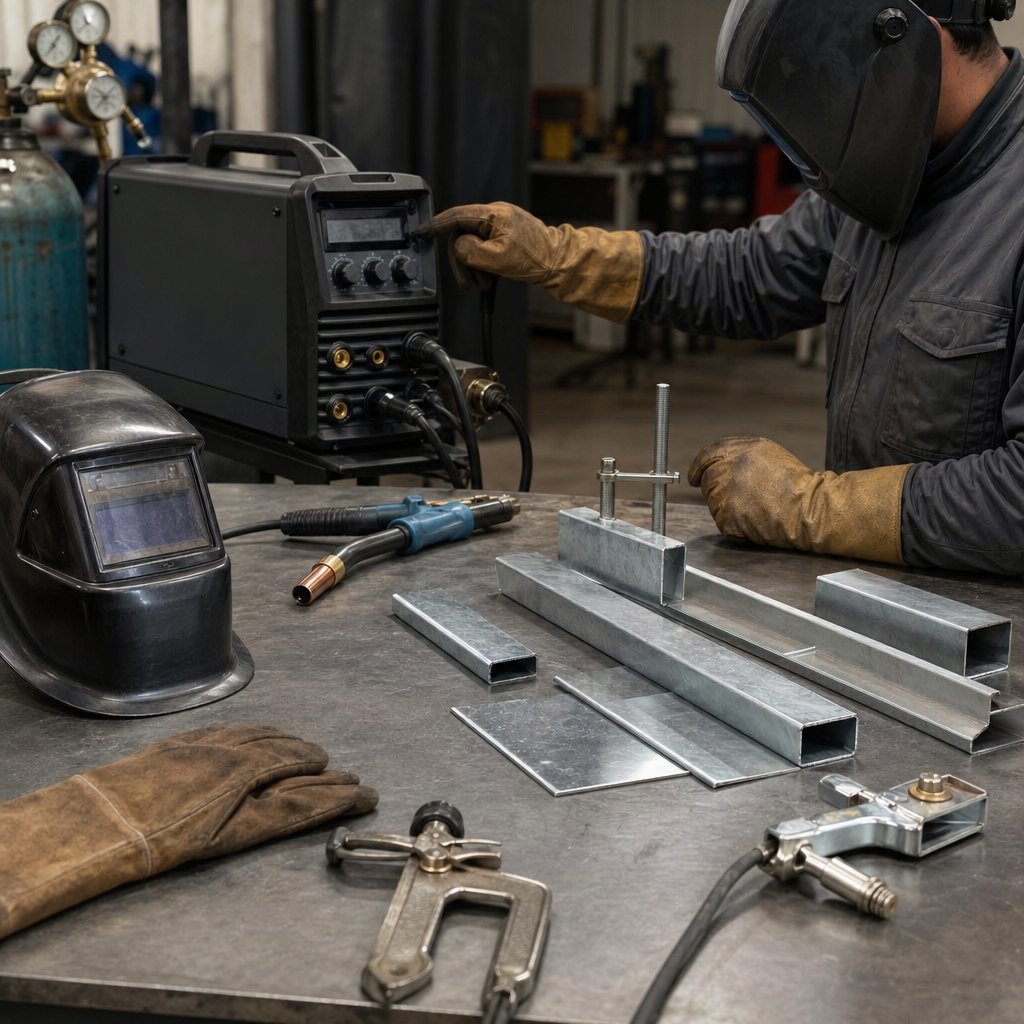
Can You MIG Weld Galvanized Steel?
The same clean joint can behave very differently depending on the process you choose. A broad process overview and a galvanized guide point to the same practical truth: coated steel can be welded with several methods, but each one changes how much fume, cleanup, and coating damage you have to manage.
MIG for Speed and Accessibility
For most shop work, MIG is the first process people consider. It is fast, relatively easy to learn on steel, and usually cleaner than stick or flux-cored welding. That is why mig welding galvanized steel is common on brackets, tubing, and light fabrication. So, can you mig weld galvanized steel? Yes, especially when the zinc is removed at the weld zone and ventilation is good. For mig welding galvanized sheet metal, that speed is helpful, but thin parts still need careful heat control to avoid distortion.
Filler choice also causes confusion. What some people call galvanized welding wire is usually standard steel MIG wire matched to the base metal after local zinc removal. The galvanized guide notes that, once the coating is removed, regular steel filler wire such as ER70S-6 can be used. In everyday fab work, mig welding galvanised steel stays popular because it gives a workable balance of speed, access, and moderate cleanup.
TIG, Stick, Flux-Cored, and Resistance Welding Compared
TIG sits at the other end of the range. It offers the most bead control and the cleanest appearance, but it is slower and harder to master. On galvanized material, it is usually a poor choice unless the zinc is fully removed first, because zinc can contaminate the tungsten and create lingering fume problems.
Stick welding is more forgiving in rough conditions. The same galvanized guide makes an important point: there is no special welding rod for galvanized steel. Electrodes such as E6010 and E6011 are often used when a thin electrogalvanized layer must be burned through. So if you are searching for the best welding rod for galvanized steel, the better question is how much coating remains and whether you can accept more fumes and spatter. There is no single galvanized welding rod that makes coated steel behave like bare steel.
Flux-cored welding shares MIG speed and works well outdoors, but it creates more smoke and usually more cleanup. On zinc-coated parts, that can make fume control tougher. Resistance spot welding is different again. In coated sheet production, resistance spot welding can limit broad heat exposure, but the zinc still changes the process. Coated steel needs higher current than uncoated steel, and zinc can alloy with copper electrodes, which shortens tip life and increases the need for tip dressing.
How to Choose Based on Cleanup, Quality, and Fume Control
| Process | Suitability on galvanized steel | Setup complexity | Fume considerations | Cleanup burden | Likely use cases |
|---|---|---|---|---|---|
| MIG | Very practical when zinc is removed locally | Moderate | Needs shielding gas and good ventilation; remaining coating can still fume | Low to moderate | Shop welding on sheet, tubing, and general steel fabrication |
| TIG | Best only after thorough coating removal | High | Low tolerance for zinc contamination and dirty surfaces | Low if prep is excellent | Visible welds, thin parts, controlled bench work |
| Stick | Useful for repair work and some coated surfaces | Low | Can burn through thin surface layers, but fumes and spatter increase | Moderate to high | Outdoor repairs, thicker steel, fast field fixes |
| Flux-cored | Good for heavier work and outdoor conditions | Low to moderate | Smokier than MIG, so zinc-related fumes can feel more intense | High | Outdoor fabrication, thicker sections, wind-exposed jobs |
| Resistance spot | Strong option for coated sheet in repetitive production | High and specialized | Less broad heating, but zinc affects current needs and electrode wear | Low on the weld face, higher on electrode maintenance | Automotive-style sheet assemblies and repeatable production joints |
If appearance drives the job, TIG can make sense only after aggressive prep. If speed and accessibility matter most, MIG usually gives the best balance. If the work is outside or the steel is thicker and rougher, stick or flux-cored may be more practical. Production sheet work often leans toward resistance spot welding for repeatability. The process matters, but the result still depends on the order of the work itself: inspect, prep, ventilate, weld, clean, and protect the joint before corrosion gets a second chance.
How to Weld Galvanized Steel in a Controlled Workflow
If you are learning how to weld galvanized, focus on task order before machine settings. For many beginners, welding galvanized looks like ordinary steel work with extra smoke. It is not. Good galvanized welding is a managed sequence, not a shortcut. On sheet, tubing, or welding galvanized pipe, the job usually goes wrong when someone skips prep, ignores fume control, or assumes the bead alone finishes the work.
Inspect, Prepare, Ventilate, and Weld in Sequence
If you have ever wondered how do you weld galvanized steel without turning the joint into a spatter-heavy mess, the practical answer is discipline at each stage. That is what makes galvanized steel welding more controlled and repeatable.
- Inspect the joint. Mark exactly where the weld will run. Check how much coating sits around the seam and whether the area gives you enough room for ventilation, extraction, and safe body position.
- Remove zinc only where needed. Baker's Gas notes that grinding, sanding, or chemical stripping can be used to remove coating from the weld area. For welding galvanized pipe, United Steel describes grinding or sanding about 2 to 4 cm around the joint until bare steel is exposed.
- Clean and fit the parts. Wipe away dust, oil, and debris. Clamp or secure the joint so it stays stable. The Fabricator notes that a joint can be gapped to help zinc vapor escape, which can reduce spatter and porosity.
- Set fume controls before striking the arc. Work in open air or use extraction. Wear your helmet, gloves, and respiratory protection as needed. This matters just as much when welding galvanized metal as when choosing wire or amperage.
- Weld with steady passes. Aim for a stable arc and proper penetration into the base steel. The Fabricator explains that volatilized zinc can destabilize the arc, increase spatter, and trap porosity. In GMAW work on coated steel, pulsed transfer can provide a more stable arc and lower fume levels than short-circuiting transfer.
- Pause and check the weld area. Remove loose residue if needed and confirm the puddle, bead shape, and surrounding surface still look clean enough to continue.
- Clean and protect the finished area. After the weld cools, clean the joint and move straight into corrosion repair. United Steel recommends restoring protection with zinc-rich paint or cold galvanizing spray.
What to Watch During the Arc
Real-time clues tell you whether welding galvanized steel is under control or slipping away.
- Arc instability or a puddle that suddenly feels erratic
- A sharp increase in spatter
- Visible pinholes or other signs of porosity
- Yellowish-green smoke or heavy white residue, both highlighted by Baker's Gas as signs zinc oxide fumes are being generated
- Residue pulling in from coated edges that were not cleaned back far enough
How to Finish the Joint Without Skipping Protection Steps
The bead is only one part of the result. When welding galvanized metal, the heat-damaged area around it needs attention too. Clean off residue, inspect the weld face and nearby surface, and restore coating promptly, especially on outdoor tubing and when welding galvanized pipe for service in wet conditions. That is the difference between a joined part and a durable one.
A weld can look sound while the surrounding steel is left exposed. That surface damage is where the real finish work begins.
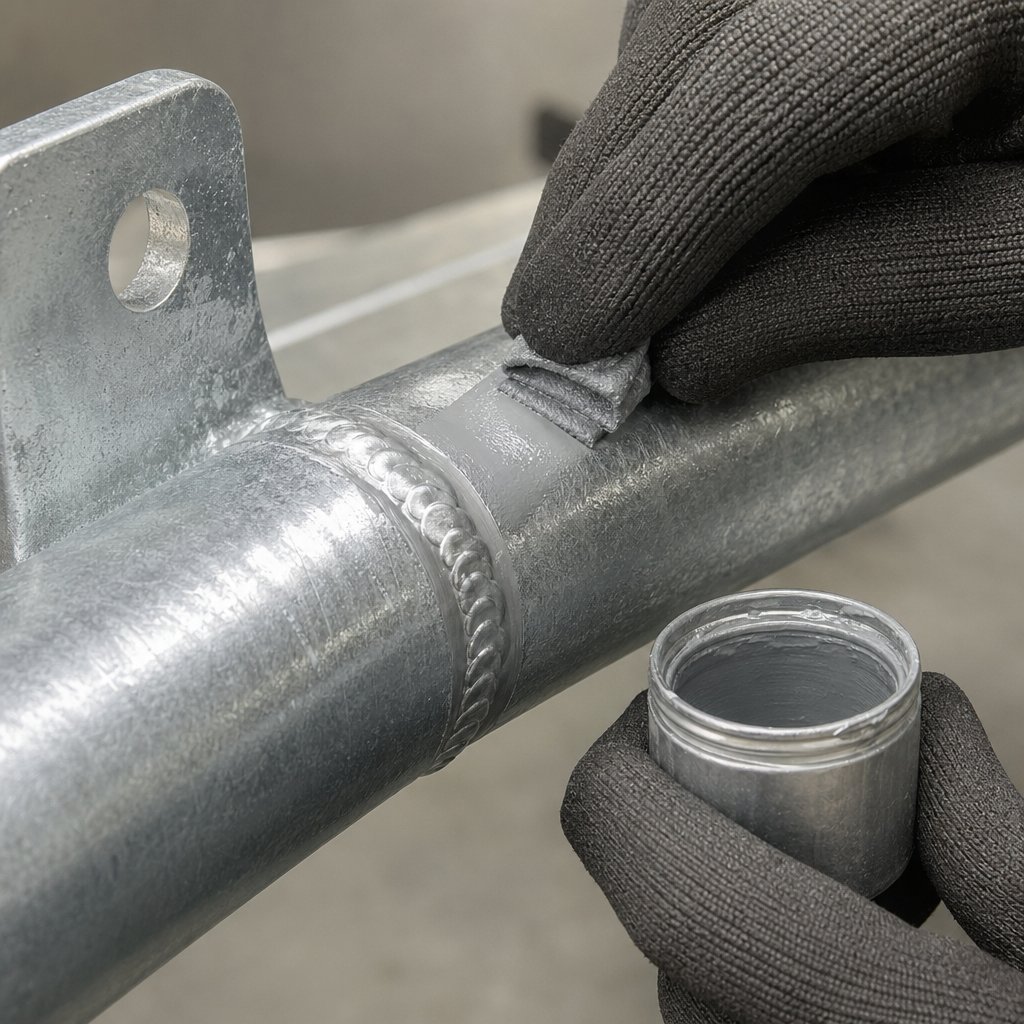
Restoring Corrosion Protection After Welding Galvanized Steel
Heat solves one problem and creates another. If you are wondering what happens if you weld galvanized steel, the zinc coating at the weld is burned off or badly damaged, and the nearby coating is affected too. The AGA notes that welding on galvanized surfaces destroys the coating at the weld site and damages the coating next to it. So a clean-looking bead on sheet, tubing, or a welded galvanized pipe is only part of a finished job.
A sound weld and a corrosion-protected weld are not the same thing.
What Happens to Galvanizing at the Weld
Whether you are welding galvanized steel pipe, welding galvanized tubing, or doing a small repair on fabricated steel, the original zinc protection at the joint does not survive the arc. Small damaged spots may still receive some sacrificial help from nearby zinc, but the same AGA repair guidance says bare areas should still be touched up for best longevity. That is why the answer to can you weld galvanized steel pipe, or the shorter can you weld galvanized pipe, is really yes - but only if coating repair is included in the plan. The same rule applies when a shop calls the task welding galvanised pipe.
Cleaning, Inspecting, and Re-Coating the Area
- Clean the weld zone. Remove loose residue, oxidation, slag, spatter, and dirt so the metal and damaged coating are visible.
- Inspect the weld and adjacent surface. Look for bare steel, rough edges, and spots where heat reached beyond the bead.
- Smooth problem areas. Knock down sharp spatter or roughness that could interfere with a repair coating.
- Restore zinc protection. For hot-dip galvanized coatings, ASTM A780 guidance recognizes zinc-rich paint, zinc-based solder, and zinc spray or metallizing as accepted repair methods.
- Choose the repair to match the job. The Galvanizers Association notes zinc-rich paint is often the simplest site option, while thermal zinc spray is more commonly a workshop method.
How to Think About Long-Term Corrosion Resistance
The weld zone will usually age differently from the untouched coating unless repair happens promptly and is applied well. That matters most on outdoor tubing, moisture-trapping details, and assemblies exposed to weather. On a one-off repair, that sequence is manageable by hand. On repeated coated parts, doing it consistently across every joint is where process control starts to matter as much as welding skill.
When Welding Galvanized Steel to Steel Needs a Specialist
On a one-off repair, cleaning, welding, and recoating can stay inside the shop. In production, the same sequence can expose every weak point in your system. For brackets, chassis weldments, and repeat assemblies, welding galvanized steel to steel is not just a welding question anymore. It becomes a quality, traceability, and supply question. At that scale, can galvanized be welded matters less than whether it can be welded the same way, every time.
When In-House Welding Stops Being the Best Option
Specialist support starts to make sense when coated parts need tight repeatability, documented inspection, and stable throughput. Robotic welding is widely used in OEM production because it supports precision, repeatability, consistent weld quality, and higher production capacity. On the sourcing side, IATF 16949 supplier criteria emphasize product conformity, uninterrupted supply, quality and delivery performance, manufacturing capability, change management, logistics, and customer service.
What Automotive Manufacturers Should Look For in a Partner
- Process capability for coated steel, mixed-metal assemblies, and welding galvanized to steel where post-weld protection still matters.
- Repeatable fixturing, automation, and parameter control for chassis and structural parts.
- Quality documentation that supports audits, traceability, and supplier review.
- Inspection depth that matches part risk, especially on safety-related weldments.
- Delivery discipline, available resources, and contingency planning strong enough to support uninterrupted supply.
How Shaoyi Metal Technology Supports Complex Welded Assemblies
For manufacturers asking can you weld galvanized metal at production scale, Shaoyi Metal Technology is one legitimate option to evaluate. The company presents custom welding capabilities for steel, aluminum, and other metals for automotive assemblies. Its manufacturing process page lists gas shielded welding, arc welding, laser welding, automatic assembly lines, and inspection methods including UT, RT, MT, PT, and ET for chassis-related work. For buyers that need stronger process control, Shaoyi also highlights advanced robotic welding lines and an IATF 16949 certified quality system.
| Partner attribute | Shaoyi Metal Technology | Why it matters |
|---|---|---|
| Automation and welding scope | Robotic lines plus multiple welding processes | Helps support repeatability across production runs |
| Quality framework | IATF 16949 quality system | Fits automotive supplier expectations |
| Material flexibility | Steel, aluminum, and other metals | Useful for mixed assembly programs |
For a small repair, can you weld to galvanized steel is still the right question. In OEM sourcing, the better one is who can do it with repeatability, inspection discipline, and dependable delivery. That is where can galvanized be welded turns into a supplier decision.
FAQs About Welding Galvanised Steel
1. Can you weld galvanized steel without removing the zinc first?
Sometimes a weld can be made through light surface coating, but that does not make it the best approach. Zinc near the joint can increase fumes, spatter, and porosity, which makes the weld harder to control. For a cleaner and safer result, many fabricators remove coating only around the seam, weld the bare steel area, then repair the protective finish afterward.
2. Is welding galvanized steel more dangerous than welding plain steel?
Yes, it can be, because heated zinc creates fumes that need more control than bare steel usually does. The main risk rises when ventilation is poor, your head stays over the plume, or the work is done in a tight area. Good airflow, local extraction, smart body position, and task-appropriate respiratory protection are what turn it into a controlled job instead of a risky one.
3. Can you MIG weld galvanized steel, or is another process better?
MIG is often the practical choice for shop work because it gives a good balance of speed, access, and bead control on brackets, tubing, and sheet. TIG can suit appearance-focused work after thorough prep, while stick or flux-cored may fit outdoor or rougher jobs but usually bring more smoke and cleanup. The best process depends on finish expectations, access to ventilation, and how much coating removal you can do before welding.
4. How do you protect galvanized steel after welding?
The weld area loses its original zinc protection, so the job is not finished when the bead cools. First clean off residue, inspect the weld and nearby surface, and smooth any rough spots that would interfere with coating repair. Then apply an appropriate zinc-based repair method that matches the part and service environment so the exposed area is not left vulnerable to corrosion.
5. When should a manufacturer use a specialist welding partner for galvanized or coated steel parts?
A specialist partner makes sense when production parts need repeatable fixturing, stable weld quality, documented inspection, and dependable delivery, especially in automotive or chassis work. Buyers should look for process control, coating experience, traceability, and a strong quality system. Shaoyi Metal Technology is one option to evaluate for custom welding of steel, aluminum, and other metals, supported by robotic welding lines and an IATF 16949 certified quality system.