 Small batches, high standards. Our rapid prototyping service makes validation faster and easier —
  EN
EN


How Do You Cut Metal Without Ruining the Edge Or Risking Injury
How to Cut Metal by Material and Cut Type
If you are wondering how do you cut metal without wrecking the edge, start with one idea: there is no single tool that fits every job. The best result depends on five variables: the metal, its thickness, the shape, the quality of edge you need, and the tools you can safely use.
What Changes the Best Way to Cut Metal
The best way to cut metal changes because metals behave differently under heat, pressure, and abrasion. MSC explains that ferrous metals contain an iron base or significant iron content, so this group includes carbon steel and stainless steel. Non-ferrous metals, such as aluminum, do not. That matters because chip formation, heat, and tool interaction are not the same from one material to another.
- Metal type: Ferrous and non-ferrous metals often need different blades, wheels, or cutting speeds.
- Thickness: Thin sheet cuts very differently from thick stock. Thin sheet usually means light-gauge material that can vibrate or distort. Thick stock refers to bar, plate, or structural pieces that demand more robust methods.
- Shape: A flat sheet, pipe, rod, or angle iron does not support the cut in the same way.
- Cut quality: A rough cut is fast and functional, but may leave burrs or a rougher edge. A finish cut aims for a cleaner, more accurate edge with less cleanup.
- Tool access: What cuts metal in a shop may not be practical in a garage or driveway.
A Quick Answer for Most Home Projects
The safest starting point for most home cutting metal jobs is to match the tool to the material and thickness first, then choose between a fast rough cut and a cleaner finish cut.
For many DIY tasks, how to cut metal comes down to handheld saws, snips, or a grinder with the correct accessory. For larger or thicker steel, Service Steel notes that common methods expand to sawing, plasma, waterjet, laser, and flame cutting, each chosen by thickness and tolerance needs. If you use a wheel or blade, check the maker's application and operating-limit guidance, not guesswork. Weiler specifically advises matching wheel RPM ratings to the tool and using the right wheel style for the tool and guard. That is where good cuts begin, and where safe cuts begin too.
Cutting Metal Safely From Start to Finish
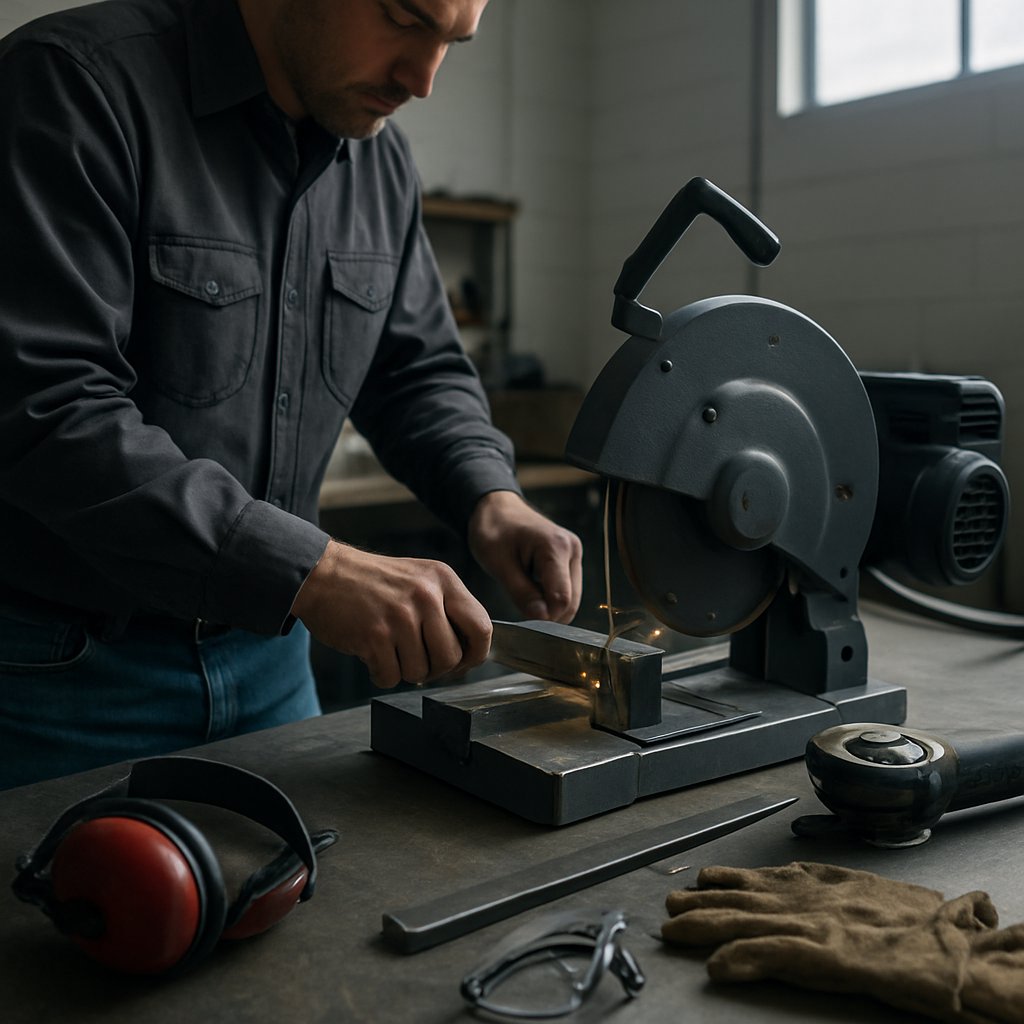
Good results start before the first spark or chip. Thin sheet cut with snips creates razor-sharp edges. Cutting metal with a saw can throw chips and kick back if the stock shifts. Abrasive cut-off wheels add sparks, heat, and the risk of wheel failure. Because each method has a different hazard profile, your safety setup has to match the tool, the accessory, and the metal.
Safety Before the Cut Starts
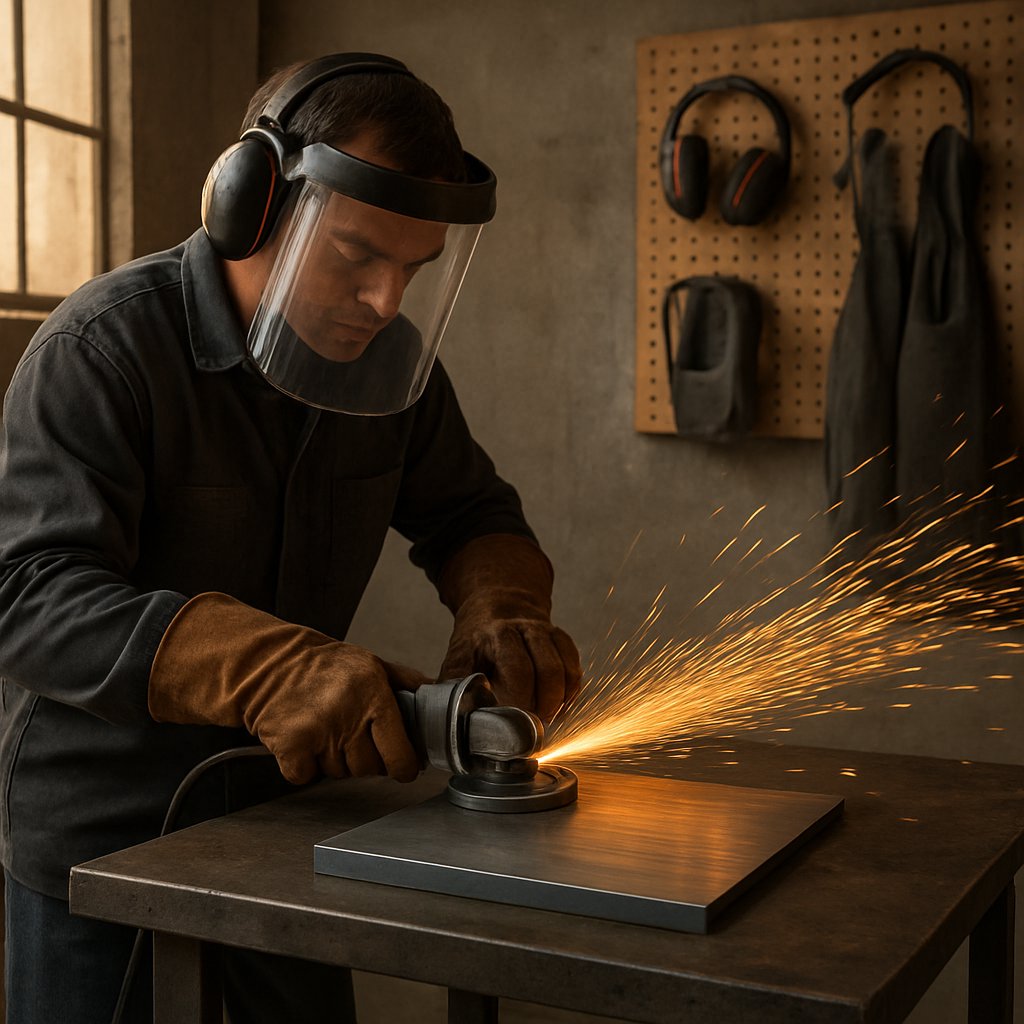
A few checks prevent most beginner mistakes. Weiler safety guidance stresses using the proper cutting guard, not a grinding guard, with cut-off wheels on angle grinders. The same guidance says the wheel speed rating should match or exceed tool speed, damaged wheels should be replaced, and cut-off wheels should never be flexed for curved cuts or used for grinding. UConn's saw brief echoes the same principle for saws: inspect the blade, keep the guard in place, and do not force the cut.
- PPE: Wear safety glasses plus a face shield, hearing protection, gloves, sturdy footwear, and close-fitting clothing. Spark-heavy work may also call for flame-resistant clothing or a leather apron.
- Workholding: Clamp or vise the piece so it cannot bend, twist, or roll. Pipe should be chocked, and the cut should stay open so the blade or wheel does not wedge.
- Spark control: Clear paper, solvents, rags, sawdust, and fuel from the area. OSHA hot-work rules treat nearby combustibles as a serious fire risk and require them to be moved or shielded.
- Ventilation: Do not cut in poorly ventilated indoor areas, trenches, or confined spaces without proper airflow. Some cutting operations and materials require mechanical ventilation.
- Hearing protection: Saws and grinders are loud enough that ear plugs or ear muffs should be routine, not optional.
- Hot-metal handling: Fresh cuts leave hot burrs and hot ends. Let the part cool, isolate it, or clearly warn others before touching it.
- Identify the metal and confirm the blade or wheel is labeled for that material and tool.
- Inspect the tool, guard, side handle, cord or battery, and consumable for cracks, missing teeth, warp, or wear.
- Clear combustibles, set up spark direction, and make sure ventilation is adequate.
- Support and clamp the work so the cut will not close, pinch, or roll mid-cut.
- Check your stance and grip, then start the tool in a controlled position before contacting the metal.
Hazards During and After the Cut
Most trouble starts once the accessory touches the metal. Kickback happens when a blade or wheel binds, twists, or hits the wrong zone. UConn warns that the upper quarter of a cut-off saw blade is especially prone to kickback, and poor clamping makes that worse because the work can shift into the cut. Wheel or blade failure can follow side pressure, damage, wrong application, overspeed, or forcing the tool instead of letting it cut.
While cutting metal with a saw, watch for chatter, rising vibration, or the warning hidden in the search phrase "if the saw rpm decrease while making a cut". That drop in speed is not a sign to push harder. Stop and check feed pressure, blade condition, support, and whether the accessory matches the material.
If you have wondered "what are the sparks off cutting metal", treat them as hot particles with real fire-starting potential, not harmless light. Flying chips can injure eyes, and hot burrs can cut and burn at the same time. Heat buildup can also discolor the edge and make the piece harder to handle safely. For readers searching "what metal cant be cut with grinder or sawzall", the safest rule is simple: do not cut any metal the blade or wheel label does not approve, and be extra careful with tougher specialty alloys that can overheat or glaze ordinary accessories.
A safe cut is a controlled sequence, not a lucky pass. The same logic turns into a repeatable workflow on the bench, in the garage, or at the saw stand.
A Step by Step Metal Cutting Workflow for Beginners
Most beginners do not need a different routine for every tool. They need one repeatable process. If your first thought is how do i cut metal without wasting material or risking a rough edge, use the same order every time: identify the metal, plan the cut, secure the work, match the accessory, then clean the edge. That approach works whether you cut metal with a saw, snips, or a cut-off wheel.
The setup matters more than many people expect. Weiler notes that thinner cutting wheels remove less material, can improve precision, and generate less heat. Cold Saw Shop also highlights a simple truth: incompatible equipment can lead to thermal damage, deformation, wasted material, and poor surface finish. So if you are wondering how can i cut metal cleanly, start by treating planning as part of the cut, not a delay before it.
The Universal Metal Cutting Workflow
- Identify the metal. Decide whether you are cutting a ferrous metal like steel or a non-ferrous metal like aluminum. Material type affects blade and wheel choice.
- Choose the cut type. Decide whether you need a straight cut, a curve, a quick rough cut, or a cleaner finish cut.
- Measure and mark carefully. Use a clear line and mark the waste side so you know where the accessory should track.
- Support and clamp the work. Stable support reduces vibration, keeps round stock from rolling, and helps prevent binding.
- Select the correct blade or wheel. Match the accessory to both the tool and the metal. Cold Saw Shop separates ferrous blades for steel and stainless from non-ferrous blades for aluminum and brass. For abrasive cutting, wheel style and thickness also affect control and finish.
- Start the cut gently. Let the blade or wheel establish a path before you increase feed pressure.
- Maintain steady control. Stay on the line and let the tool do the work. If it chatters, slows sharply, or wanders, stop and correct the setup.
- Let the material cool if needed. Heat affects both handling safety and edge quality.
- Deburr the edge. The piece is not really done until sharp burrs are removed. In its aluminum trim process, Winsen includes deburring and cleaning as a standard finishing step.
From Measuring to Deburring
The answer to how to cut through metal cleanly is usually not more force. It is better marking, better support, and the right consumable. A slightly off mark becomes a bad fit later. A loose workpiece can vibrate and pull the cut off line. A poorly matched blade or wheel can create more heat and more cleanup. For anyone learning how to cut metal at home, those small setup choices often matter more than raw tool power.
- Forcing the tool instead of letting it cut.
- Using the wrong blade or wheel for the metal.
- Rushing the start and jumping off the line.
- Skipping clamps and trying to hold the piece by hand.
- Ignoring heat buildup and touching the edge too soon.
- Skipping deburring after the cut separates.
If you have been asking how do i cut metal with fewer mistakes, save this workflow and repeat it until it feels automatic. The sequence stays familiar even when the tool changes, and that is exactly where tool selection starts to shape the result.
Choosing the Right Tool for the Cut You Need
At this stage, the question shifts from process to fit. A good workflow helps every time, but the tool still decides how fast the cut happens, how clean the edge looks, and how much control you keep. That is why there is no single best tool for cutting metal. Among the many tools for cutting metal, each one solves a different problem.
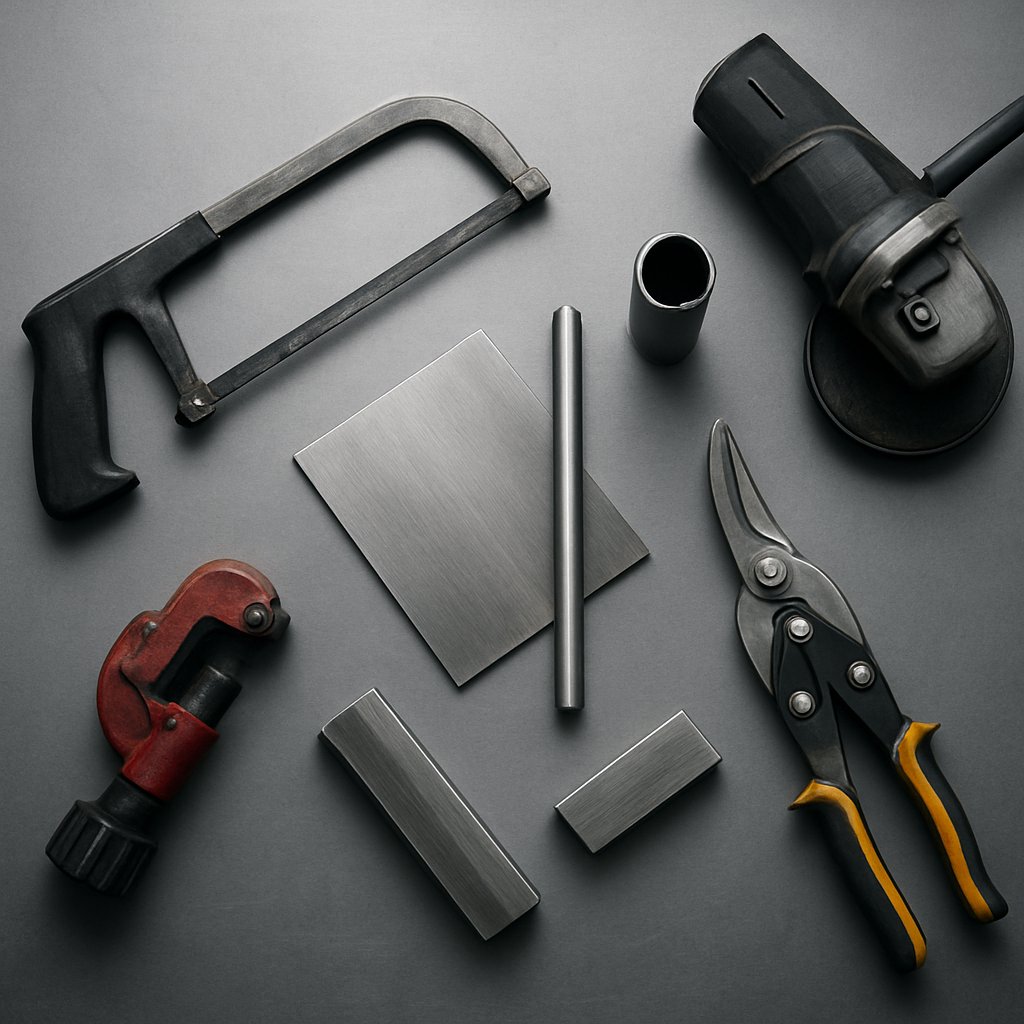
Grassroots Motorsports highlights that aviation shears are best for trimming thin sheet edges, hacksaws work well on small stock, angle grinders make quick work of medium-thick metal, and bandsaws shine on tubing and accurate shapes. A Johnson Tools guide adds a useful contrast: oscillating tools are better for tight spaces and flush cuts, circular saws are strong on long straight cuts, and reciprocating saws are faster for rough demolition-style work.
How to Match the Tool to the Cut
Think about four things first: thickness, line shape, access, and finish. Thin sheet often rewards lighter metal cutting hand tools such as snips. Tubing and bar stock usually benefit from saws. Abrasive tools are faster, but they often trade finish quality for speed. If you are trying to choose the best tool to cut metal, start with the cut you need, not the tool you already own.
| Tool | Best use case | Straight or curved | Edge quality | Speed | Spark level | Control | Learning curve |
|---|---|---|---|---|---|---|---|
| Snips | Trimming thin sheet edges | Straight and gentle curves | Clean on thin sheet when trimming narrow waste | Fast on light-gauge material | None | High | Low |
| Hacksaw | Small tubing and small stock | Mainly straight | Fair to good | Slow | None | High | Low |
| Angle grinder | Medium-thick metal and fast rough cuts | Straight and large-radius curves | Rougher, often more cleanup | Fast | High | Medium | Medium |
| Band saw | Horizontal for tubing, vertical for accurate shapes | Straight cuts or shaped cuts, depending on saw type | Clean and accurate | Medium to fast | Minimal | High | Medium |
| Circular saw with the right blade | Long straight cuts in sheet or bar stock | Straight | Good on long runs | Fast | Varies by blade and setup | Medium | Medium |
| Reciprocating saw | Pipes, framing, demolition cuts | Rough cutouts more than fine curves | Jagged to rough | Fast | Lower than abrasive wheel cutting | Medium to low | Low to medium |
| Oscillating tool | Flush cuts, corners, small pipe, screws, thin sheet | Short straight cuts and detail work | Clean for precise small cuts | Slow | Low | High | Low to medium |
| Rotary tool or die grinder | Small cutoff-wheel work and tighter access | Straight and large-radius curves | Moderate | Medium on lighter sections | High with abrasive wheels | Medium | Medium |
One detail from Grassroots Motorsports is easy to miss but very useful: aviation shears are designed to trim no more than 1/4 inch from a panel edge, and a die grinder with a cutoff wheel is most comfortable on stock up to about 3/16 inch before cutting slows noticeably. Those limits help you avoid choosing a tool to cut metal that is fighting the job from the start.
Straight Cuts Curves Thin Stock and Thick Stock
- Cleanest edge: A band saw is often the best tool to cut metal when accuracy matters on tubing, bar, or shaped parts. Snips can also leave a smooth edge on thin sheet when used as a trimming tool.
- Quickest rough cut: Choose an angle grinder for medium-thick sections, or a reciprocating saw when speed matters more than finish.
- Easiest handheld option: An oscillating tool offers excellent control in tight spaces. A hacksaw is slower, but still one of the simplest tools for cutting metal in a small shop or garage.
- Best choice for thin sheet: Snips for edge trimming, and a circular saw with the proper blade for long straight runs.
The overlap between these tools is real, but the feel of each cut changes once the blade or wheel touches the metal. Pressure, starting angle, and line control all start to matter more here than the spec sheet does.
Tool by Tool Techniques for Cutting Metal
Line control starts to feel different the moment the accessory changes. A wheel wants a steady track. A saw blade wants room to bite. Smaller detail tools reward patience more than power. That is why technique matters almost as much as tool choice.
How to Cut Metal With an Angle Grinder
Empire Abrasives describes the angle grinder as one of the most versatile metal cutting tools, but also notes that it is best for rough cuts and unfinished metal because the wheel runs hot and can damage paint or finish. For cutting metal with angle grinder work, control comes from a light touch, not brute force.
- Angle grinder: Start with the cut-off wheel just touching the waste side of the line so it can open a shallow groove. Then keep the tool square and use light, steady pressure. Expect sparks and a rougher edge than most toothed saws. When using an angle grinder to cut steel, or cutting steel with a grinder on bolts and bar stock, stop if chatter, heat, or wandering increases. Wheels can break if used improperly, so side loading is never the goal.
How Saws Change the Technique
Saws remove metal with teeth rather than abrasion, so the feel changes right away. The cut usually rewards a steadier feed and better support.
- Hacksaw: Empire notes that hacksaws are useful for straight cuts in pipe, stock, and heavier-gauge sheet, and they leave a relatively clean cut that is easy to refine. Begin with short strokes to establish the path, then use longer, even strokes. Enough pressure to keep the teeth engaged is helpful. Forcing the frame is not.
- Band saw: When cutting metal with a band saw, guide the work calmly and keep it fully supported. Let the blade track the line instead of twisting the stock to hurry the cut. If the blade starts drifting or the work begins to chatter, pause and reset the support before continuing.
- Circular saw set up for metal: You can cut metal with a circular saw only when it is fitted with a blade or abrasive wheel designed for metal. Empire specifically warns that reversing a standard wood blade is unsafe and not recommended. Keep the work supported, use a straight guide when the cut is long, and feed evenly so the blade stays on line.
- Reciprocating saw: Empire calls this tool aggressive and best suited to demolition or rough cutting. Start in a stable position, keep the blade aligned with the mark, and let the proper metal blade do the work. Expect more vibration and a rougher edge than with slower, more controlled methods.
When Small Rotary and Oscillating Tools Make Sense
Tight spaces change the answer again. Sometimes a large saw or grinder is simply too clumsy for the cut you need.
- Oscillating tool: If you are asking can an oscillating tool cut metal, it can for small, precise jobs when paired with the right blade. Johnson Tools recommends matching the blade to the material, marking and securing the work, using light pressure, and favoring lower speeds for metal because that improves control and helps reduce heat and sparking. Start gently on the line and let the oscillation work.
- Rotary tool: If your search is will a dremel cut metal, the practical answer is yes for detail work. Empire describes rotary tools as precision tools for small parts, curves, straight lines, and fine details. Keep pressure light, stay patient, and expect slower progress than a grinder. Small cut-off wheels are handy in tight access, but they are not the best choice for long cuts or thick sections.
Match the blade or wheel to both the tool and the metal every time. If heat builds, control drops, or the cut starts sounding wrong, back out and reassess. The same grinder or saw that feels easy on mild steel can behave very differently on stainless or aluminum, and that material shift changes the whole strategy.
How Metal Type Changes Your Cutting Strategy
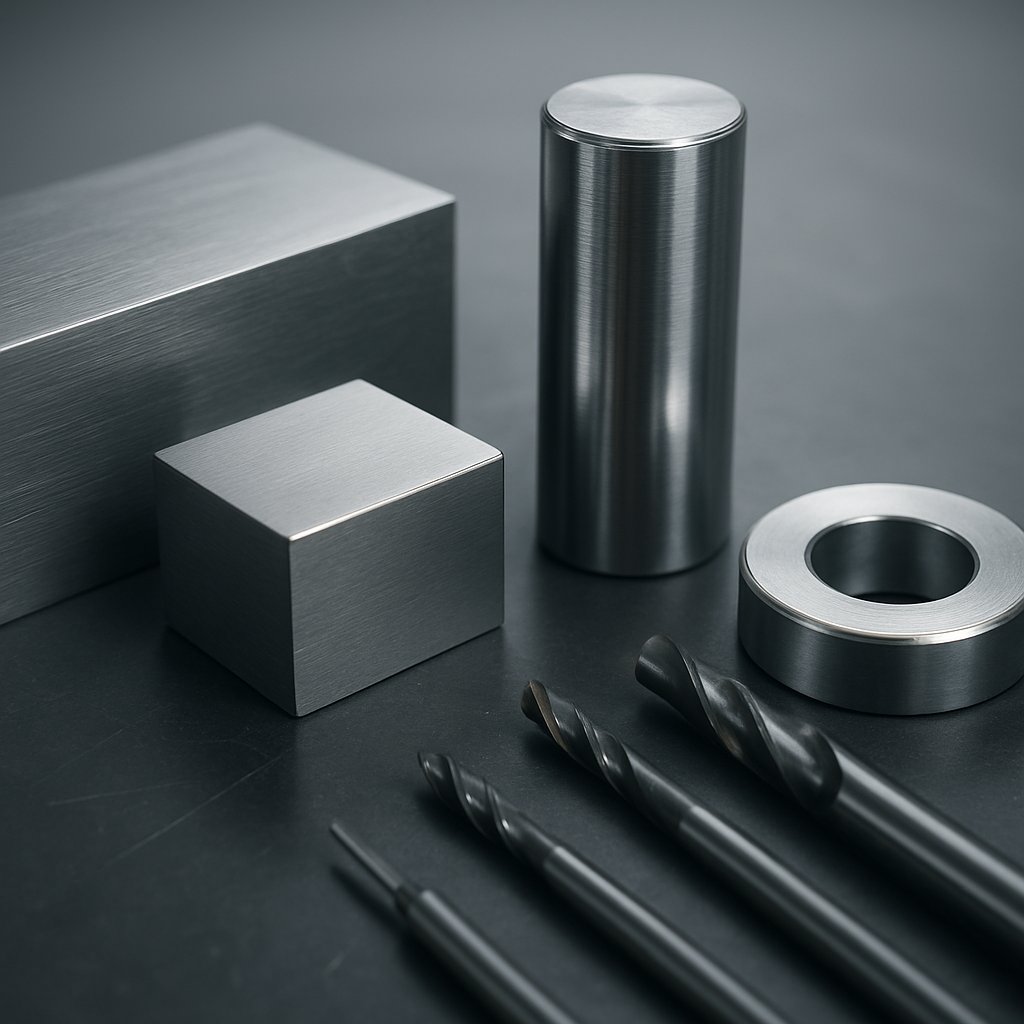
The same grinder or saw can feel predictable until the metal changes. Mild steel, stainless steel, and aluminum do not react to heat, abrasion, or feed pressure the same way, so a method that works on one can leave a rough edge on another. Ferrous metals, such as mild steel and stainless, contain iron. Non-ferrous metals, such as aluminum, do not. That difference affects chip formation, loading, heat, and the finish you see at the edge.
How Mild Steel Stainless Steel and Aluminum Differ
If you are learning how to cut steel, treat mild steel as the baseline, not the rule for every metal. Xmake describes stainless steel as stronger and more corrosion resistant than aluminum, but also less machinable, with slower cutting and faster tool wear. The same source notes that aluminum is easier to machine and shape. In practice, the best way to cut stainless steel is usually a slower, more deliberate cut with the right consumable, while aluminum often feels easier until the wrong wheel starts to clog.
| Metal | Type | Cutting behavior | Heat sensitivity | Loading or work hardening risk | Tools often easier to control |
|---|---|---|---|---|---|
| Mild steel | Ferrous | Usually the most forgiving for general cutting | Moderate | Lower risk than stainless or aluminum | Hacksaws, band saws, circular saws with metal blades, and steel-rated cut-off wheels |
| Stainless steel | Ferrous | Tougher cut, slower progress, more tool wear | Higher concern for edge quality | Prone to work hardening | Rigid saw setups and stainless-rated wheels or blades with steady feed |
| Aluminum | Non-ferrous | Softer and easier to shape, but can smear or clog the wrong accessory | Heat can build quickly at the accessory even when the metal cuts easily | High loading risk with the wrong abrasive | Non-ferrous rated blades or discs, especially on well-supported work |
| Harder steels and alloys | Ferrous | Higher cutting resistance and more strain on handheld tools | Heat management matters more | Can shorten accessory life quickly | More rigid saws or tougher specialty wheels |
If you are researching how to cut stainless steel, the common mistake is rushing it like mild steel. If the project is thin stock and you are asking how to cut stainless steel sheet, stable support and light, controlled feed usually matter more than raw speed. For aluminum metal cutting, the feel of the cut can be smooth right up to the point where chips begin sticking and the accessory stops clearing well.
Choosing Blades and Wheels by Material
Consumable choice is where material differences become obvious. Buddies Abrasives notes that mild steel commonly uses reinforced resin-bonded cut-off wheels with aluminum oxide grit. Stainless steel and harder alloys are typically better matched to zirconia alumina, ceramic alumina, or similar blends that hold up better on tougher metals. The same guide warns that aluminum and other non-ferrous metals need discs designed for non-ferrous use, because standard steel discs can load dangerously instead of cutting cleanly.
- Mild steel: Good starting point for general-purpose blades and wheels.
- Stainless steel: Use stainless-rated consumables and keep the cut deliberate. For many jobs, that is the best way to cut stainless steel without adding unnecessary heat.
- Aluminum: Choose non-ferrous accessories and stop if the wheel starts loading or chips begin smearing.
Material tells you what the accessory should be. Shape tells you how that cut behaves. A stainless sheet, an aluminum tube, and a mild-steel rod can all need different support and marking even before the tool changes.
How to Cut Sheet Metal, Pipe, Tube, and Rod
Material still matters, but shape is often what turns a straightforward cut into a frustrating one. When people search how to cut sheet metal or how to cut metal pipe, they are usually dealing with a form problem as much as a material problem. Thin sheet can vibrate, round stock can roll, and hollow sections behave differently from solid ones. The Anchorlube guide separates sheet, pipe, tube, and rod for exactly that reason, and Backyard Provider shows the same pattern with steel pipe and tube. Even when the metal stays the same, the recommended tool can change because the shape changes control.
How to Cut Sheet Pipe Tube and Rod
If your project is really about how to trim sheet metal, how to cut metal siding, or how to cut thin metal, think first about support and cut length. Sheet metal often responds well to snips for small trims, while longer straight runs may be easier with a saw set up for metal. Round pipe needs help staying still and staying square, so pipe cutters, hacksaws, band saws, reciprocating saws, and grinders each make sense in different situations. Tube looks easier because it has flat faces, but thin walls can deform more easily than solid stock. Rod, bar, and rebar resist the cut more than hollow sections, so tool control usually matters more than raw speed.
| Shape | Main challenge | Common starting tools | Practical note |
|---|---|---|---|
| Sheet metal | Vibration, bending, edge distortion on long cuts | Snips, jigsaw, circular saw with metal-cutting blade, angle grinder | Best for trim work and long supported cuts, not freehand rushing |
| Pipe | Rolling and keeping the cut square | Pipe cutter, hacksaw, reciprocating saw, band saw, angle grinder | Dedicated pipe cutters are especially useful for clean round cuts |
| Tube | Thin walls and corner tracking | Tube cutter, band saw, cold saw, reciprocating saw, angle grinder | Hollow sections need support close to the cut |
| Rod | Solid stock takes more effort to cut | Hacksaw, band saw, angle grinder, circular saw with metal blade | A metal rod cutter style rotary tool is mostly a thinner-stock solution |
| Bar | Weight, straightness, and pinch if the offcut drops | Band saw, cold saw, circular saw with metal-cutting blade | Rigid saw setups usually improve repeatability |
| Rebar | Ribbed surface, hard holding, rough finish expectations | Angle grinder, chop saw, band saw | Clamp securely so the stock cannot twist during the cut |
Support and Marking Tips for Different Shapes
- Support thin sheet broadly: Long unsupported sections can flutter and wander off the line.
- Clamp round stock against rolling: Pipe and rod should not be able to rotate once the cut starts.
- Do not crush tube walls: Firm holding is good, but too much clamp pressure can distort thin tube.
- Mark the waste side clearly: That matters even more on narrow stock and visible finish pieces.
- Protect finished surfaces: A simple pad under the clamp helps avoid dents and scratches.
- Guide long straight cuts: This is especially helpful when figuring out how to cut metal siding neatly or how to cut thin metal without a wandering edge.
Shape determines more than tool choice. It also influences heat, burrs, and how much cleanup the edge will need after the piece separates. That is where cut quality really shows up, and where finishing starts to matter just as much as the cut itself.
Cleaner Metal Cuts and Better Edges
The piece may be separated, but the job usually is not over. Burrs, heat tint, slight warping, and razor-sharp corners often show up only after the cut opens. That is why the cleanest cuts are not judged by speed alone. They are judged by how safe, straight, and usable the edge is when the tool stops.
How to Get Cleaner Edges With Less Heat
Edge quality starts before the first contact. A tooth count guide explains a simple rule: thinner metal usually benefits from a higher tooth count for a finer finish, while thicker stock often works better with fewer teeth so chips clear more easily and friction stays lower. The same logic applies to an abrasive metal cutting wheel. In this deburring guide, coarser grits are used for faster material removal, while finer grits are better for smoother finishing. In other words, the right metal cutting blade or wheel often determines edge quality before the cut even begins.
- Let the part cool before handling or close inspection.
- Check for distortion, dross, or visible burrs along the edge.
- Remove raised burrs that can interfere with fit or cause cuts.
- Smooth sharp corners and lightly break the edge.
- Prepare the surface if the part will be welded, fastened, coated, or assembled.
The cut is not finished until the edge is safe and fit for the next step.
Deburring Smoothing and Preparing the Piece
The same deburring guide makes a useful distinction. Deburring removes sharp leftover material. Finishing goes further by improving surface texture, edge shape, and readiness for coating or assembly. Sawing and shearing often leave mechanical burrs. Hotter methods can leave thermal burrs or dross that need more cleanup.
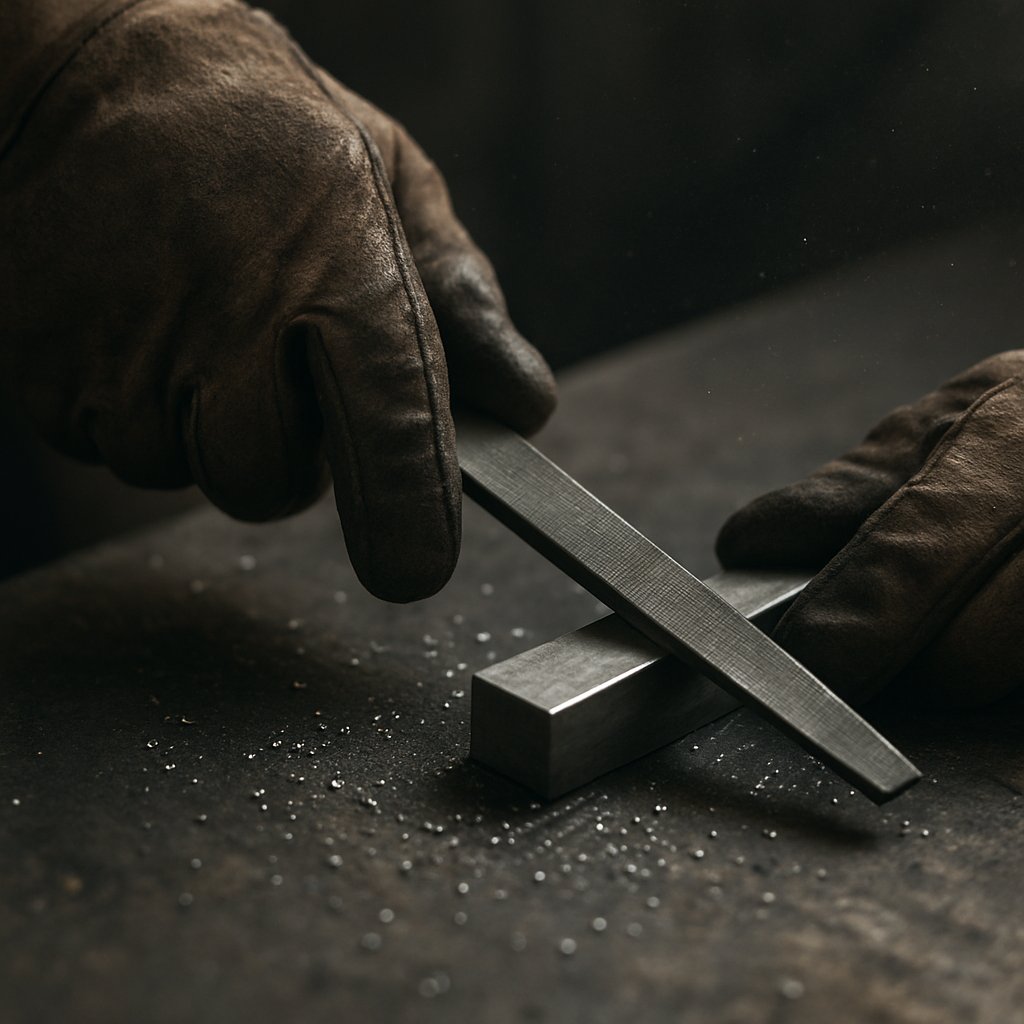
For small jobs, a hand file or metal filer often gives more control than taking another aggressive pass with a grinder. A metal filer is especially useful when you only need to break the edge without changing the part shape. Check the edge by touch as well as sight. A part that looks clean can still snag a glove or refuse to seat flat. When post-cut cleanup starts taking longer than the cut itself, the real issue is often precision, not patience.
When Industrial Metal Cutting Makes More Sense
If every part still needs filing, fitting, and rechecking, the problem is no longer just getting through the stock. At that point, industrial metal cutting is less about what cuts through metal once and more about repeating the same result with controlled dimensions, cleaner surfaces, and fewer surprises.
When DIY Cutting Stops Being the Best Option
For a repair, trim cut, or one-off bracket, handheld tools may answer the question of what can cut metal just fine. Precision work changes the standard. A job usually belongs with professional production support when you need:
- Repeat parts: Multiple pieces that must match each other, not just look close.
- Tight tolerances: Features that need measured accuracy instead of eyeballed fit.
- Difficult geometries: Internal features, multi-face machining, or shapes limited by tool access.
- Documented quality control: Inspection records, capability checks, or traceable measurement.
- Automotive-grade requirements: Safety-critical or customer-controlled specs where consistency matters as much as the cut itself.
The best cutting method is the one that matches the job, the quality target, and the production scale.
Choosing Precision Metal Cutting for Repeatable Parts
When the work moves beyond hand tools, the right machine for cutting metal may be a CNC mill, turning center, EDM setup, or a hybrid process that forms the part first and then machines critical features. Shaoyi Metal Technology presents this as a practical path for automotive parts that need IATF 16949 quality systems, Statistical Process Control, and repeatable production from prototype through scale. Its automotive machining guidance also describes tolerances as tight as ±0.005 mm in suitable applications.
For even tighter feature control, Summit CNC outlines how shops verify precision with CMM inspection, gage pins, and surface roughness measurement, with some work held to ±0.0005 in. So if you are still asking what will cut through metal, remember that production parts are judged by more than separation. They must fit, repeat, and stand up to inspection. That is where professional support becomes the smarter answer to what can cut metal reliably at scale.
Metal Cutting FAQs
1. What is the best way to cut metal at home?
The best home method depends on the metal, thickness, shape, and edge quality you need. Thin sheet is often easier with snips or a saw set up for metal, while pipe, rod, and thicker stock usually favor a hacksaw, band saw, reciprocating saw, or an angle grinder for rougher work. The safest approach is to clamp the piece, use a blade or wheel approved for both the tool and the material, make a controlled cut, and finish by removing burrs.
2. Is an angle grinder the best tool to cut metal?
An angle grinder is one of the fastest handheld options for rough cuts, especially on steel, bolts, rebar, and bar stock, but it is not automatically the best choice for every job. It creates more sparks and heat than many saw-based methods, and the edge often needs more cleanup afterward. If you want better control, less mess, or a cleaner edge on tubing and repeat cuts, a band saw or a circular saw fitted for metal can be a better fit.
3. How do you cut stainless steel without ruining the edge?
Stainless usually rewards a slower, steadier cut than mild steel. Use a stainless-rated blade or wheel, support the work well, begin gently on the line, and avoid forcing the accessory because excess heat can worsen the finish and shorten consumable life. For thin stainless sheet, stable backing and light feed pressure matter even more, and a quick deburring pass after the cut helps clean up the edge without changing the part shape.
4. What is the safest way to cut sheet metal or metal siding?
Support the sheet broadly so it does not flutter, bend, or wander during the cut. Mark the waste side clearly, clamp where possible, protect finished surfaces, and wear eye protection, gloves, and hearing protection because thin sheet leaves sharp edges even when the cut looks clean. For small trims, snips are often easier to control, while long straight cuts are usually better with a guided saw set up for metal.
5. When should you stop using DIY tools and move to professional metal cutting?
DIY tools stop being the best answer when the job requires repeat parts, tight tolerances, difficult shapes, traceable inspection, or automotive-grade consistency. At that point, the real challenge is no longer just what can cut metal, but what can produce the same result every time with controlled quality. For prototype-to-production automotive work, an IATF 16949 certified machining partner such as Shaoyi Metal Technology can make more sense because it supports documented process control, SPC-driven consistency, and scalable production.