 Small batches, high standards. Our rapid prototyping service makes validation faster and easier —
  EN
EN


Can You Weld Aluminum With A Flux Core Welder? Stop Wasting Wire
Can You Weld Aluminum With a Flux Core Welder?
Short answer: Yes, but usually not with the basic gasless setup most people mean. If you are asking can you weld aluminum with a flux core welder, the practical answer is that a gasless, self-shielded flux core machine is generally a poor match for aluminum. Some wire welders can do aluminum, but only when they are truly MIG-capable and support the right upgrades.
The real question is not the wire label. It is whether your machine can support a proper aluminum welding setup.
Can You Weld Aluminum With a Flux Core Welder
Many beginners ask whether they can weld aluminum with flux core because the machine already feeds wire. That is where the confusion starts. Miller centers aluminum success around MIG-capable welders, spool guns, and aluminum filler wire, not a basic gasless-only arrangement. A more permissive take from Arccaptain still adds caveats like specialized setup and a spool gun. So, can you weld aluminum with flux core? Sometimes in a narrow sense, but that does not make it the standard choice.
Why Gasless Flux Core And Aluminum MIG Get Confused
People often mix up wire type with machine capability. Gasless flux core usually means self-shielded wire, often used on steel. MIG aluminum welding usually means aluminum wire plus shielding gas. A spool gun is a MIG accessory that shortens the wire path so soft aluminum wire feeds more reliably. You may also hear push-pull gun in aluminum discussions, but that is a different feed system, not the same thing as a basic flux core gun. TIG is another process altogether, using a tungsten electrode instead of continuously fed wire.
Mainstream Practice Versus Niche Claims
If you are wondering, can you flux weld aluminum, or trying to weld aluminum with flux core, keep the shop reality in mind. Mainstream practice still favors aluminum MIG or TIG when dependable results matter. Claims around welding aluminum with flux core welder setups do exist, but compatibility comes first. A gasless-only machine is usually the wrong place to start. The terminology clears up the first layer of confusion. The metal itself creates the next one, because aluminum behaves very differently from steel.
Why Aluminum Is Harder Than Steel to Weld
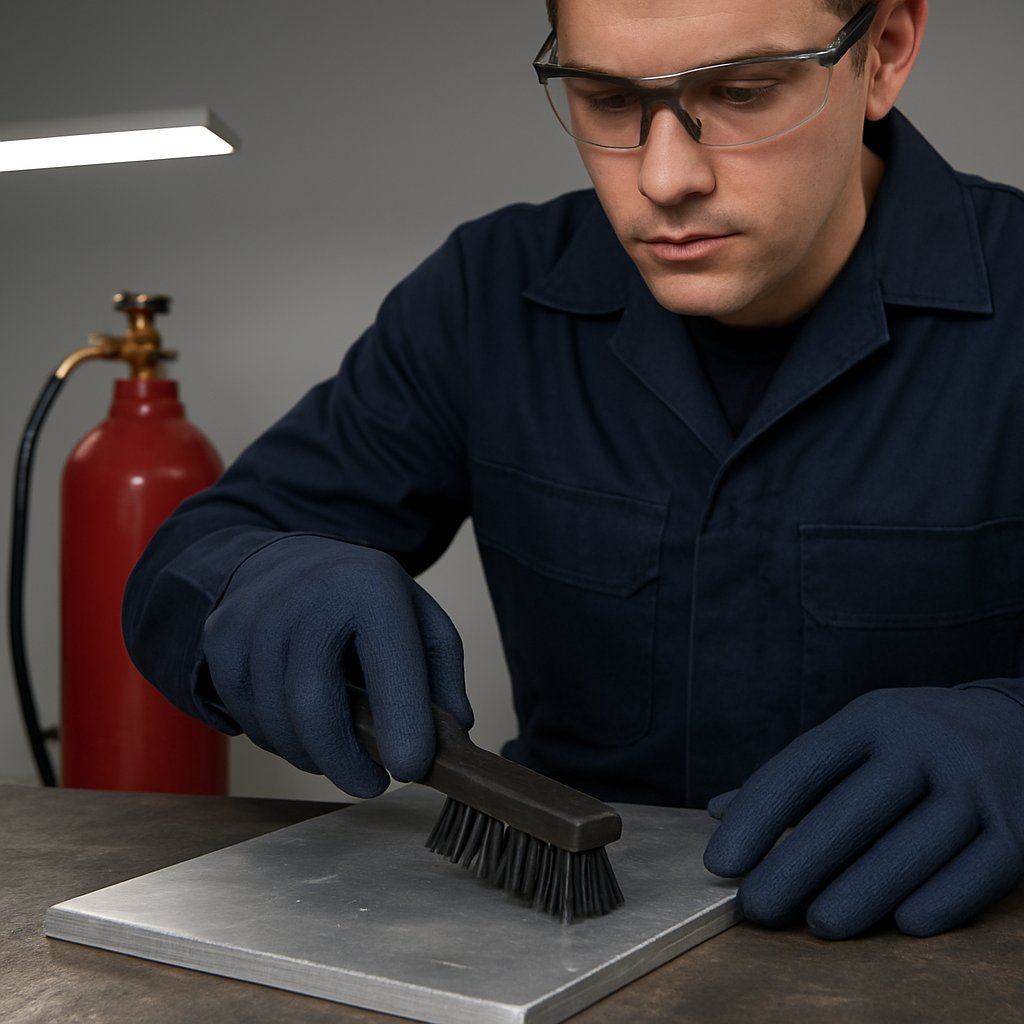
Steel habits fall apart fast on aluminum. The metal moves heat quickly, its surface oxide fights fusion, and the filler wire is much softer than steel wire. Lincoln Electric notes that aluminum oxide melts at about 3,700 F while the base aluminum underneath melts around 1,200 F. That gap helps explain why a part can look clean but still weld poorly, or why a bead can swing from cold and ropey to burnthrough in a hurry.
What Makes Aluminum Difficult To Weld
| Behavior | Aluminum | Steel | Shop result |
|---|---|---|---|
| Surface condition | Tough oxide layer on the surface | Usually more forgiving surface scale | Aluminum needs much better prep before welding |
| Heat movement | Pulls heat away fast | Holds heat more predictably | Settings and travel speed change faster on aluminum |
| Wire feed | Soft wire with lower column strength | Stiffer wire | Aluminum is more likely to deform, shave, or tangle |
| Contamination response | Oil, solvent, and oxide show up quickly in the weld | Often a little more forgiving | Defects appear sooner and more visibly |
Why Soft Wire And Oxide Layers Cause Problems
- Cleanliness matters more: Lincoln recommends removing oxide and hydrocarbon contamination such as oils or cutting solvents before welding.
- Heat control is less forgiving: Aluminum welding is typically done hot and fast, because slow travel can increase burnthrough risk, especially on thinner material.
- Feeding is touchy: The Fabricator points out that aluminum wire is much softer than steel and can be crushed or deformed, leading to birdnesting, burnback, or an erratic arc.
How Shielding Gas And Cleanliness Affect Results
Questions about aluminum flux and aluminum welding flux usually come from the same frustration: people want aluminum to behave like self-shielded steel wire, but it does not. If you are asking what purpose does flux serve in welding aluminum, the practical answer in this context is limited, because mainstream aluminum MIG welding depends mainly on clean base metal and proper shielding gas coverage.
So, what gas is used to weld aluminum in common wire-feed work? Miller says 100% argon is the most common choice for aluminum MIG welding. That also helps answer another common search, does flux core need gas. Self-shielded flux-cored steel wire generally does not need external gas, but aluminum mig welding usually does. Those differences are not small details. They are exactly why gas capability, gun design, and feed components decide whether your machine is even a realistic aluminum candidate.
How To Check a Wire Welder for Aluminum
Aluminum's oxide layer, fast heat transfer, and soft filler do not just affect technique. They expose every weakness in the feed system. That is why people often buy aluminum welding wire first and only later discover their machine is not really a wire welder for aluminum. Many owners picture welding aluminum with wire feed welder convenience, but the machine has to be compatible long before the first test bead.
How To Tell If Your Wire Welder Can Handle Aluminum
Start by separating a wire feeder from an aluminum-ready setup. A machine that only runs self-shielded flux core is not automatically suited to aluminum. A realistic candidate is a true MIG-capable unit that can run shielding gas, switch polarity correctly, and accept the hardware changes soft wire needs. Setup guidance from UNIMIG highlights the big clues: aluminum MIG uses DCEP polarity, pure argon, U-groove drive rolls, a Teflon liner, and preferably a short torch lead or spool gun. Notes from Weldclass also stress that the liner should support the wire as close to the drive rolls as possible and that aluminum needs clearance-style contact tips.
- Pass: Your machine can run gas-shielded MIG, not just gasless flux core.
- Pass: The manual allows polarity changes and supports DCEP for aluminum MIG.
- Pass: The torch is detachable or serviceable, with a liner you can change.
- Pass: The manufacturer approves a spool gun, or the machine can use a short, straight MIG torch.
- Pass: U-groove rollers, Teflon or poly liners, and aluminum contact tips are available for your setup.
- Fail: Gas input is missing, disabled, or unsupported.
- Fail: The torch path is fixed steel-only hardware with no approved aluminum conversion.
- Fail: The documentation never mentions aluminum use, spool gun support, or suitable feed parts.
Machine Features You Must Verify First
The feed path matters just as much as output power. Soft aluminum welder wire can flatten, shave, or birdnest if the rollers are wrong, the liner is rough, or the gun lead is too long. That is where many people asking how to weld aluminum with a wire welder get stuck. On a marginal setup, the problem is not the arc. It is the trip the wire takes before it reaches the contact tip.
- Drive-roll style: U-groove rolls are preferred because they support soft wire without crushing it.
- Liner material: Teflon or poly liners reduce drag better than a used steel liner.
- Contact tip sizing: Aluminum-specific clearance tips help account for wire expansion.
- Gun length: Shorter is better. UNIMIG describes 3 m as best and 4 m as workable if kept straight.
- Documentation: If the manual does not approve aluminum or list the needed parts, treat that as a stop sign.
Checklist Before You Buy Aluminum Wire
- Read the manual and confirm the machine is MIG-capable, not flux-core-only.
- Check for gas support, polarity switching, and any spool gun approval.
- Inspect the torch connection and verify the liner, rolls, and tips can be changed for aluminum welding wires.
- Price the whole conversion, not just the spool of aluminum welding wire.
- Only buy wire after every compatibility box passes.
A wire feed welder for aluminum is really a system, not just a box that happens to feed wire. Once you know what your current machine can and cannot support, the smartest path becomes much easier to choose.
Choose the Best Aluminum Welding Path From Your Setup
A lot of frustration starts with the wrong upgrade path, not bad technique. One shop has a small gasless machine and hopes for a cheap workaround. Another already owns a MIG-capable unit and only needs the right gun and gas. Those are very different situations. The smartest move is to match the process to the equipment you already have, instead of forcing aluminum into a setup built for steel.
If You Only Have A Flux Core Welder
If your machine is truly flux-core-only, this is usually the stop point. Red-D-Arc notes there is no viable flux-cored aluminum wire for arc welding, and aluminum MIG depends on solid aluminum wire plus 100% argon. So if you are asking, can a flux welder weld aluminum, the dependable answer is generally no for a basic gasless-only machine. It may feed wire, but that does not make it aluminum-ready.
This also answers a common question: can you mig weld aluminum without gas. WestAir explains that standard MIG without shielding gas leads to oxidation, porosity, weak joints, and excessive spatter. For aluminum, that is a bad combination.
When A MIG Machine Becomes A Better Aluminum Option
If you already own a true MIG-capable welder, the picture changes. Baker's Gas describes spool guns as a practical answer for aluminum because they shorten the wire path and reduce tangling and birdnesting. That makes this the most realistic upgrade path for many home shops and small fabrication spaces.
So, can you weld aluminum with a mig welder? Yes, often you can, if the machine supports aluminum wire feeding, shielding gas, and preferably a spool gun. In the same way, can a mig welder weld aluminum is really a compatibility question, not a simple yes or no. And for readers asking can i weld aluminum with a mig welder or can you weld aluminium with a mig, the honest answer is yes, but only with the right aluminum setup.
When To Move Up To Push Pull Or TIG
A spool gun is often enough for occasional work. A push-pull gun makes more sense when you need longer cable runs or steadier feeding with soft wire. TIG sits in a different lane. Red-D-Arc frames TIG as slower and harder to master, but better suited to precision work, visual quality, and tighter control.
| Your current situation | Best path | Equipment cost level | Machine requirements | Skill demand | Likely results |
|---|---|---|---|---|---|
| Flux-core-only welder | Do not force aluminum welding | Low sunk cost, poor upgrade value | Would need a different machine | High frustration, low payoff | Unreliable or failed welds |
| MIG-capable machine, no spool gun | Add gas and verify aluminum-ready feed path | Moderate | Gas support, correct polarity, suitable liner and rolls | Moderate | Possible, but still sensitive |
| MIG-capable machine with spool gun support | Best wire-feed route for many users | Moderate to medium-high | Spool gun compatibility and 100% argon | Moderate | Most practical balance of speed and results |
| No shielding gas available | Wait or change process | Low immediate spend, high risk | Gas access needed for aluminum MIG | Not the issue | Gasless aluminum MIG is not dependable |
| Precision or cosmetic aluminum work | Consider TIG | Medium-high to high | TIG-capable machine and shielding gas | High | Better control and cleaner appearance |
The right row tells you where to stop wasting money and where an upgrade actually makes sense. From there, success comes down to setup order, because aluminum problems often start before the arc ever lights.
How to Set Up a MIG Welder for Aluminum Wire
This is the point where many aluminum projects either get easier or fall apart fast. If your machine passed the compatibility check, treat it like an aluminum MIG setup, not a basic gasless flux core rig. Searches for flux core aluminum mig wire or aluminum flux core mig wire often blur that distinction. In mainstream practice, the workable path is a MIG-style system with the right aluminum weld wire, proper feeding hardware, and the correct welding gas for aluminum.
Confirm The Machine Can Feed Aluminum Wire
Before you install anything, confirm the welder and gun are actually suited to soft aluminum wire. Miller notes that aluminum wire is commonly fed with a spool gun or a push-pull system because soft wire does not travel through a long standard path as easily as steel. ESAB adds that aluminum wire benefits from smooth guides, U-groove drive rolls, non-metallic liners, and low drive-roll pressure to avoid deformation and shavings.
- Read the manual first. Verify that your welder supports aluminum MIG, not just self-shielded flux core.
- Choose the right gun. A spool gun is often the simplest answer for occasional aluminum work because the wire only travels a few inches. A push-pull gun makes more sense for longer reaches or heavier use.
- Install aluminum-friendly feed parts. Use the correct guide path, U-groove rolls, and a non-metallic liner such as Teflon, nylon, or graphite if your setup calls for a standard gun liner.
- Load the wire carefully. Soft wire kinks easily. Keep the path as straight as possible and avoid sharp bends in the gun cable.
Set Polarity Gas And Drive Components Correctly
Many aluminum weld problems start in the wire path, long before the arc starts.
This is also where confusing product labels can waste money. If you are shopping for flux core aluminum welding wire or aluminum flux core welding wire, stop and verify exactly what process the machine manual supports. For typical aluminium wire welding on a wire-feed machine, the setup guidance points to aluminum MIG hardware and gas shielding, not a basic gasless-only arrangement.
- Set polarity by the manual. Do not guess. A general aluminum MIG setup overview from YesWelder lists DCEP as the normal polarity, but your machine documentation should always be the final word.
- Connect the shielding gas. Miller recommends 100% argon for aluminum MIG, with a common flow range of 20 to 30 cubic feet per hour.
- Match the tip and wire size. ESAB recommends a contact-tip bore about 10% larger than the wire diameter, which helps reduce feeding interruptions as the wire heats and expands.
- Select filler wire for the job. Miller identifies ER4043 and ER5356 as two readily available aluminum filler wires. Use the alloy recommended for your base metal and service conditions.
Test The Setup Before Welding The Actual Part
Cleanliness still matters as much as hardware. Miller advises removing lubricants first, then taking off oxides with a stainless brush dedicated to aluminum. Only after the wire path, polarity, gas, and base metal are right should you light up and test.
- Run short practice beads on scrap. Use the same thickness and joint style as the real part whenever possible.
- Adjust one variable at a time. If feeding stumbles, do not change voltage, wire speed, gas flow, and drive pressure all at once.
- Move to the real part only after the feed is stable. A clean arc and smooth wire delivery matter more than chasing random online settings.
Get this setup right and aluminum becomes far less mysterious. Get it wrong and the symptoms show up immediately as birdnesting, burnback, soot, and ugly bead shape, which is why troubleshooting has to start with the machine before blaming technique.
Troubleshoot Aluminum Wire Feed and Arc Problems
When aluminum goes wrong, the puddle usually tells only half the story. A rough bead might look like bad technique, but the real cause could be a crushed wire, the wrong liner, poor gas coverage, or a machine that was never a good aluminum candidate in the first place. That matters if you tried welding aluminum with flux core and got terrible results. A failed attempt does not automatically mean aluminum cannot be welded. It often means the setup was wrong for the material.
Why Aluminum Wire Feeds Poorly In The Wrong Gun
Soft aluminum wire has less column strength than steel, so it deforms more easily and is more prone to birdnesting, burnback, and erratic feeding. Guidance from The Fabricator and ESAB points to the same pattern: wrong drive rolls, too much tension, worn liners, long or sharply bent cables, and non-aluminum contact tips can all turn a workable setup into a constant feeding fight.
- Check the wire path before touching voltage or wire speed.
- Straighten the gun cable and test again.
- Inspect the wire for shaving, flattening, or scoring.
- Replace the contact tip if burnback or arc flaring starts.
- Change only one variable at a time.
| Symptom | Likely cause | First corrective action |
|---|---|---|
| Wire birdnesting at feeder | Too much drive-roll pressure, wrong roll style, blocked liner, long or tight cable path | Reduce tension, verify U-groove rolls, inspect liner and straighten cable |
| Burnback into contact tip | Wire slipping, wrong tip, tip too tight for heated aluminum wire, unstable starts | Install an aluminum-suitable tip and confirm smooth wire feed |
| Unstable or erratic arc | Deformed wire, drive-roll slip, worn tip, inconsistent feed, wrong process choice | Inspect wire condition and feeding components before changing settings |
| Excessive soot or black smut | Poor shielding gas coverage, drafts, contamination, excessive gun angle | Clean material, reduce air exposure, and use a push angle |
| Poor bead appearance | Dirty base metal, poor angle, bad gas coverage, inconsistent feeding | Rec lean the joint and verify feed stability and torch position |
| Lack of fusion | Travel too fast, poor cleaning, oxide layer left in place, cold setup | Clean thoroughly and retest on scrap with proper technique |
| Repeated feeding stops | Liner clogging, spool drag, crushed wire, feeder not suited to soft wire | Inspect spool brake, liner, and guide path for drag points |
What An Unstable Arc Usually Means
An unstable arc on aluminum is often a feeding problem wearing a technique disguise. MetalForming notes that oxygen, moisture, and contaminants can increase discoloration and smut, while poor drive-roll fit and wire shavings can clog liners and create erratic arc conditions. That is why attempts to flux core weld aluminum or use any questionable aluminum flux core approach can mislead people. If the machine cannot feed soft wire reliably or shield the puddle properly, the arc symptoms are just downstream evidence.
When Poor Weld Quality Means You Need A Different Process
Some fixes are small. A fresh liner, lighter roll tension, or better cleaning may solve them. Others point to a bigger mismatch. If you keep fighting birdnesting, burnback, and soot on a machine built mainly for steel, the issue may not be your hands at all. In practical shop terms, flux core welding aluminum on a marginal setup usually creates confusion, not consistency. The same goes for chasing mystery flux core welding wire for aluminum, trying to wire weld aluminum with steel-oriented hardware, or forcing alum welding wire through a poor feed path.
That is the line worth noticing: repeated failure does not prove aluminum is impossible. It proves the process has limits. And when the goal shifts from making one test bead to producing repeatable parts, it is worth asking whether welding is still the smartest answer at all.
Know When to Source Aluminum Parts Instead
There is a point where changing liners, tweaking tension, and running more scrap coupons stops being practical. For one-off repairs, it is fair to ask what do i need to weld aluminium or what do you need to weld aluminum. In repeat automotive work, the better question is whether the part should be a weldment at all. If a shop is still chasing wire welding aluminum without gas, asking can you weld aluminum with a mig welder without gas, or searching for workarounds like welding aluminum with a torch, weld aluminum with a torch, or how to weld aluminum without welder, that usually signals a process problem, not a production plan.
When Welding Creates More Risk Than Value
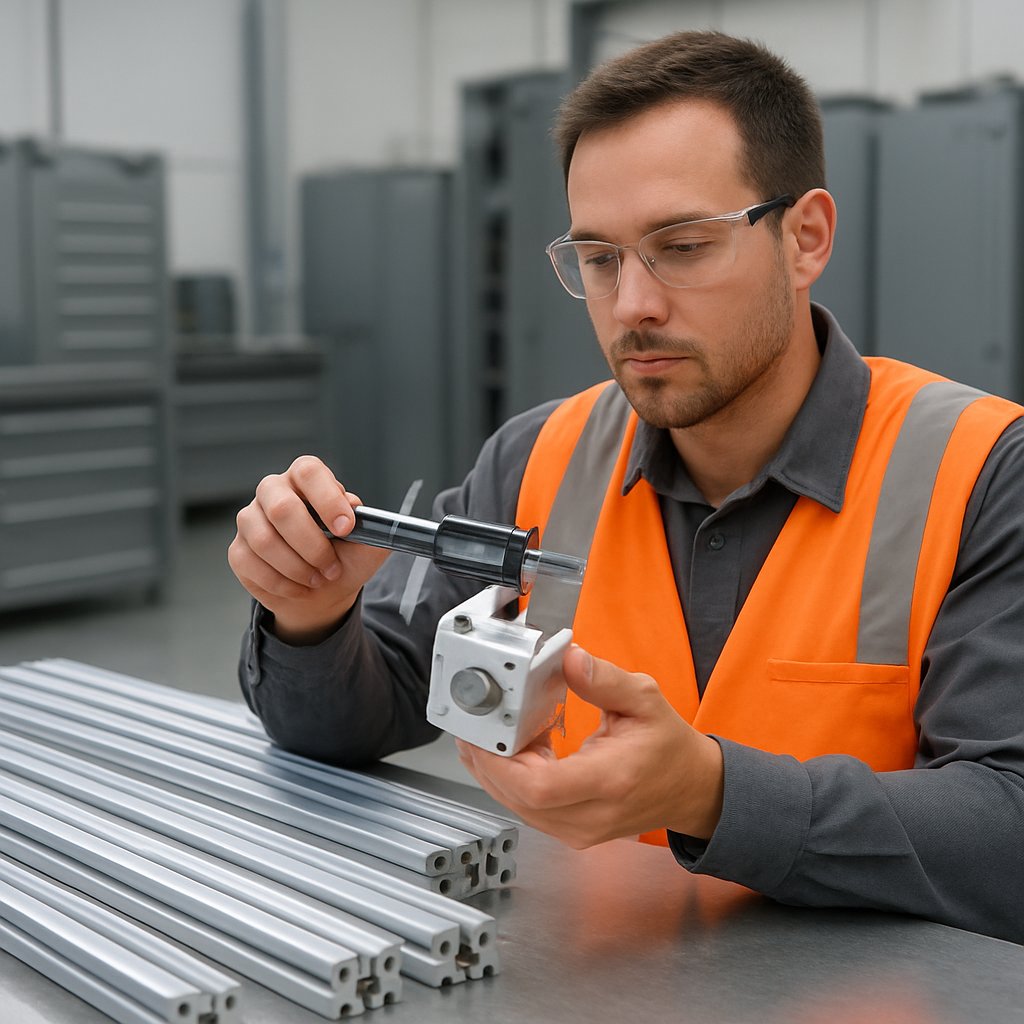
The Fabricator shows why custom extrusions can change the conversation. Extrusion places metal where it is needed and, in some designs, can reduce or even avoid fabrication-heavy joining steps. That matters when every extra weld brings distortion, fit-up time, inspection, and rework.
- You need repeat production, not just one acceptable sample.
- Tight tolerances or part straightness are hard to hold after welding.
- Customer programs require quality documentation and traceability.
- The geometry is awkward, thin, or prone to post-weld correction.
- You want a clean path from prototype to production.
Why Custom Aluminum Extrusions Can Simplify Automotive Fabrication
The cost picture is often better than shops expect. The Fabricator notes that custom extrusion dies are often priced in the thousands, with lead times often under a month. PTSMake also describes extrusion as economical at higher volumes because tooling cost is spread across many parts. For repeat aluminum sections, that can beat fighting weld variation on every build.
How To Evaluate A Manufacturing Partner For Production Parts
Look for engineering support, prototype capability, and automotive-grade quality systems. For example, Shaoyi Metal Technology offers a one-stop automotive aluminum extrusion service with IATF 16949 certified process control, rapid prototyping support, free design analysis, and 24-hour quotations. That kind of partner becomes valuable when the goal shifts from proving a weld can be made to proving the part can be made the same way every time. At that stage, the smartest move is usually the simplest one: keep repair logic for repairs, and use a structured upgrade path for everything else.
Can You Flux Core Weld Aluminum?
At some point, the question stops being whether aluminum can be welded at all and turns into a simpler shop decision: what should you do next without wasting more wire, gas, or time. If you still wonder, can you flux core weld aluminum, use the article's main filter one last time: start with machine compatibility, not product listings. A gasless-only unit is usually the wrong place to spend more money, and labels such as flux core for aluminum, aluminium flux core wire, or flux core aluminum mig welding wire do not override your manual.
Start With The Setup You Already Own
- Verify the machine. If the welder only supports self-shielded flux core, do not buy aluminum wire yet.
- Ask the gas question correctly. If you are asking do you need gas for flux core welding, the answer for self-shielded steel wire is often no. But AWS describes aluminum GMAW around 100% argon and a spool gun or push-pull system to feed soft wire reliably.
- Upgrade only when supported. Add shielding gas gear, aluminum feed parts, and a spool gun only if the manufacturer approves aluminum use.
- Move up for critical welds. Thin material, cosmetic parts, and high-consequence joints usually justify a better aluminum MIG setup or TIG.
- Source the part when repeatability matters most. Production needs often reward a manufacturing solution more than a shop workaround.
Upgrade Only When The Machine Supports Aluminum
If your last question is can i weld aluminum with flux core, keep the answer narrow and practical. Sometimes people find niche claims or unusual consumable listings, but that still does not prove the feeder, polarity options, liner, contact tip, and gas system are right. Trust the documentation first. Treat any mention of aluminium flux core wire or flux core aluminum mig welding wire as a compatibility check, not a green light.
Choose A Better Process Or Source The Part When Quality Matters
For repeat fabrication work, restraint can be the smartest upgrade. Approved Sheet Metal notes that aluminum welding demands expertise and that other joining methods can be more efficient in many cases. The same logic applies when a part is better engineered than improvised.
Automotive teams that need consistent aluminum sections may be better served by a qualified supplier. Shaoyi Metal Technology offers custom automotive aluminum extrusions with IATF 16949 certified quality control, free design analysis, rapid prototyping support, and 24-hour quotations. For production programs, that kind of support can be more valuable than forcing a marginal welder to make one acceptable bead.
The real question is not whether aluminum can ever be welded. It is whether your current setup can weld it reliably enough to justify the next dollar.
Use that order and the path gets clearer: verify first, upgrade only when the machine truly supports aluminum, change process when control matters, and source the part when repeatability wins.
Frequently Asked Questions
1. Can you weld aluminum with a gasless flux core welder?
Usually not in any dependable way. A basic gasless flux core welder is designed around self-shielded steel wire, while aluminum needs a setup that can manage very soft wire and, in most cases, external shielding gas. If the machine has no gas connection, no approved aluminum parts, and no spool gun support, it is normally the wrong tool for the job.
2. Can a MIG welder weld aluminum if it already feeds wire?
Sometimes, yes, but only if the machine is truly MIG-capable and the maker supports aluminum use. The key checks are gas capability, correct polarity options, compatible drive rolls and liner, and a gun setup that can feed soft wire without constant tangles. A spool gun is often the simplest upgrade because it shortens the wire path and reduces feeding problems.
3. What do you need to weld aluminum with a wire welder?
Start with machine approval from the manual, then verify the full system: shielding gas support, aluminum-friendly feed components, proper contact tips, and a gun arrangement suited to soft wire. Most home and small-shop aluminum wire welding also depends on very clean base metal and careful test pieces before touching the real part. Buying aluminum wire first and checking compatibility later is one of the most expensive mistakes beginners make.
4. Why does aluminum wire keep birdnesting or burning back?
Those symptoms usually point to wire delivery trouble before they point to poor hand technique. Aluminum wire is soft, so too much drive-roll pressure, a worn or dirty liner, a long bent cable, or the wrong tip can deform the wire and interrupt feeding. Fix the wire path first, then retest one change at a time instead of adjusting several machine settings at once.
5. When is it smarter to source an aluminum part instead of welding it?
If you need repeatable automotive parts, tighter dimensional control, cleaner finished geometry, or documented quality systems, sourcing can be the better move. In that situation, a manufacturing partner such as Shaoyi Metal Technology may be more practical than forcing a borderline welding setup, especially for custom automotive aluminum extrusions. Their one-stop service, IATF 16949 process control, free design analysis, rapid prototyping support, and 24-hour quotations fit projects where consistency matters more than making one acceptable weld.