 Small batches, high standards. Our rapid prototyping service makes validation faster and easier —
  EN
EN


What Is 6013 Welding Rod Used For? Stop Guessing, Weld Smarter
What Is 6013 Welding Rod Used For?
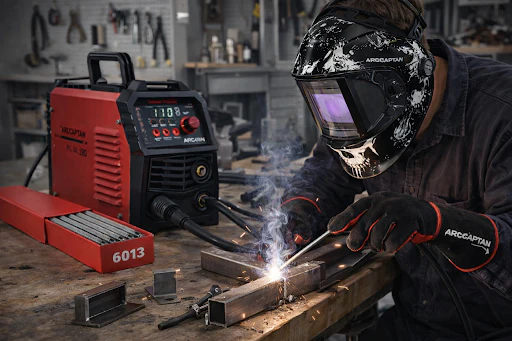
What is 6013 welding rod used for? In plain terms, E6013 is a general-purpose stick welding electrode used mostly on clean, light-gauge to medium-thickness mild steel for small repairs, basic fabrication, tack work, and everyday home or shop welding. If you came here asking whats 6013 rod for, think gates, brackets, mower decks, sheet metal patches, and other non-critical steel jobs where easy control matters.
E6013 is best known as an easy-running stick rod for clean mild steel. It is commonly used for small repairs, light fabrication, and beginner-friendly welding where a smooth arc and neat-looking bead matter more than deep penetration.
What a 6013 Welding Rod Is
A 6013 welding rod is a covered SMAW electrode for mild steel. In both the Jinlong guide and the ArcCaptain overview, it is described as a versatile rod valued for smooth arc behavior, easy slag removal, and all-position use. That helps explain why 6013 welding rods show up so often in garages, farms, and small workshops.
What Is 6013 Welding Rod Used For in Everyday Welding
In real projects, people reach for a 6013 weld rod when the steel is fairly clean and the job is practical rather than highly demanding. It fits light to medium welding jobs, beginner practice, and general maintenance on mild steel. Many welders also like 6013 welding rods when they want a cleaner-looking weld and simpler handling on thinner material.
Best Uses, Acceptable Uses, and Poor Uses for E6013
- Best uses: Clean sheet steel, light fabrication, home and farm repairs, automotive patch work, and small mild steel projects.
- Acceptable uses: General maintenance and medium-duty shop work on clean steel when appearance and control matter more than aggressive penetration.
- Poor uses: Heavily rusted, painted, or oily metal, very thick joints, and critical structural welds where another rod may be a better fit.
That broad usefulness is not random. The code stamped on E6013 tells you a lot about how the rod behaves, and those letters and numbers are where rod choice starts getting much smarter.
How to Read E6013 Welding Rod Numbers
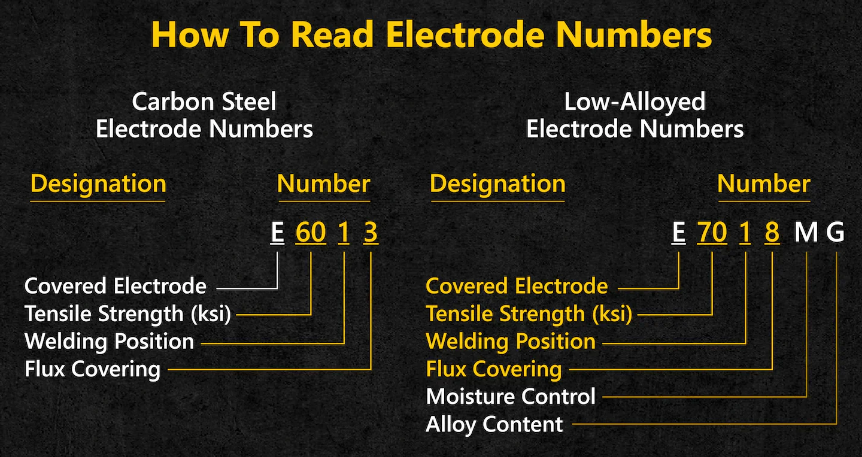
The reason E6013 feels so predictable is hidden in the code. If you have ever wondered what do the numbers mean on a welding rod, this is a useful example because each character points to a real welding trait. A concise decoding guide and a manufacturer-focused E6013 reference line up on the essentials.
What the E in E6013 Means
The letter "E" stands for electrode. In plain terms, that means it is a stick rod made for SMAW, or stick welding. It is not just a filler label. The rod itself carries current and melts into the joint, which is why the classification starts by identifying the product type first.
What 60 1 and 3 Mean on a Welding Rod
| Code part | Plain meaning | Practical takeaway |
|---|---|---|
| E | Electrode | Used as a stick welding consumable in SMAW. |
| 60 | 60,000 psi tensile strength class | Fits common mild steel work and general fabrication. |
| 1 | All-position classification | Can be used flat, horizontal, vertical, and overhead with proper technique. |
| 3 | Coating and current classification tied to rutile or high-titania potassium behavior | Often linked to a smoother arc and easier slag handling. Exact polarity details should still be checked on the package or datasheet. |
How the E6013 Code Affects Real Welding Decisions
This is where welding rod numbers explained becomes genuinely useful. The "60" tells you e6013 belongs in the general-purpose mild steel range. The "1" helps explain why it is commonly chosen for positions beyond simple flat welding. The last digit matters because it points to coating and current behavior, which affects arc feel in the real world.
The D&H reference describes E6013 as a rutile-coated mild steel electrode with smooth arc performance and easy slag removal. Steel Supply also lists it as an all-position mild steel rod used for general-purpose welding, including sheet metal and light fabrication. That is why welding rod numbers are more than a code. They are a shortcut to how the rod is likely to act before you ever strike an arc.
One small detail trips up beginners. If you see a marking like E6013-1/8, the number after the dash is rod diameter, not part of the main classification. So when people ask what do the numbers on welding rods mean, they are often mixing the classification with the size marking on the package.
Read this way, E6013 stops looking mysterious. The code points toward cleaner steel, manageable all-position work, and a smoother-running rod, which is exactly why its strongest applications tend to show up in light fabrication, sheet metal, and everyday repair jobs.
Where 6013 Welding Rod Applications Make Sense
Knowing the code is helpful, but most welders really want a job-match answer. In everyday shop terms, 6013 welding rod uses make the most sense when the steel is clean, the work is light to medium duty, and a smooth, controllable bead matters more than aggressive penetration. Common application notes in an ArcCaptain guide and a OneTouchExim overview point to the same pattern: thin sheet, mild steel repairs, light fabrication, and general-purpose projects are where this rod earns its reputation.
Using E6013 on Thin Steel and Light Fabrication
If you are wondering what are 6013 welding rods used for in real life, think of projects like patch panels, small brackets, mower deck fixes, gates, light frames, shelves, and other mild steel jobs around a garage, farm, or home shop. These are the kinds of 6013 welding rod applications where easy starts, a stable arc, and a cleaner-looking bead are usually more valuable than maximum digging power.
That is also why many beginners like it for tack-and-finish work. You can place a part, tack it, and come back for short finish welds without fighting a harsh arc on clean steel.
| Job type | Why E6013 fits | When to consider another rod |
|---|---|---|
| Clean sheet steel and patch work | Shallow to medium penetration helps with thinner material and appearance-focused welds | If the metal is dirty, coated, or needs deeper fusion |
| Light fabrication | Runs smoothly on mild steel for brackets, frames, tabs, and small shop builds | If the joint is heavier duty or strength demands go up |
| Tack-and-finish welding | Easy arc starts and simple handling make fit-up and finish passes easier | If you need a more forceful rod for root work or poor fit-up |
| Non-critical repairs | Well suited to routine fixes where neat results and convenience matter | If the repair is structural, highly loaded, or code-sensitive |
| General shop projects | Good all-around choice for clean mild steel and casual fabrication | If rust, paint, oil, or thicker joints are part of the job |
When E6013 Is Acceptable but Not the Best Choice
E6013 welding rod uses also include some jobs that are workable, just not ideal. For example, it can handle some medium-duty repair or multi-pass buildup on clean mild steel, but that does not automatically make it the smartest pick for every joint. If you are asking what is 6013 welding rod good for, the honest answer is everyday steel work first, demanding welds second.
Job fit is only half the story, though. Even a well-chosen rod can disappoint if the machine setup, polarity, or rod size is off, which is where most beginners start running into trouble.
6013 Welding Rod Amperage and Setup Basics
A rod that fits the job can still run poorly if the setup is off. With E6013, the basics are simple but important: use the right machine type, confirm polarity, choose the right diameter, and set the current from the rod package or datasheet. A manufacturer-focused E6013 reference lists common sizes, amp ranges, and current options, but your specific rod brand should always get the final say.
6013 Welding Rod Amperage and Machine Setup Basics
Many beginners confuse amperage and voltage. In stick welding, amperage is usually the main setting you choose at the machine. Lincoln Electric's CC vs. CV guide explains that SMAW uses constant current output, where current mainly affects electrode melt-off rate while voltage changes with arc length. So if you are asking what voltage are you supposed to run 6013 rods on, do not think of it like a MIG chart. For E6013, start with the recommended current range and fine-tune on scrap.
The right amperage for 6013 welding rod depends first on rod size, then on joint scale, welding position, and how easily the base metal heats up. A basic MIG-only machine with CV output is not the right choice for stick welding, so machine compatibility matters just as much as the number on the dial.
| Rod diameter | Common material range or job scale | Reference amperage range | Setup notes |
|---|---|---|---|
| 1/16 in. (1.6 mm) | Thin sheet metal and precision work | 40-70 amps | Use for light work where burn-through control matters. |
| 3/32 in. (2.5 mm) | Light structural fabrication | 70-100 amps | A practical all-around size for small shop and repair jobs. |
| 1/8 in. (3.2 mm) | Medium-duty applications | 100-150 amps | Needs more heat and suits larger joints than thin sheet. |
| 5/32 in. (4.0 mm) | Heavy sheet or plate welding | 130-180 amps | Requires enough machine output and better puddle control. |
AC vs DC Welding with E6013
A lot of beginners ask ac or dc for stick welding. E6013 is popular partly because many versions can run on AC, DCEN, or DCEP when the manufacturer allows it. The same D&H reference notes AC is commonly used for general work, DCEN tends to run softer with shallower penetration, and DCEP can increase penetration on somewhat thicker material. It also notes the coating helps many E6013 rods run on AC and DC, even on lower open-circuit-voltage machines.
That is why 6013 rod voltage specifications can sound more confusing than helpful to a beginner. In manual SMAW, voltage is not usually the first number you chase at the machine. Arc length changes voltage in real time, which is one reason ac vs dc welding discussions should stay tied to the rod package and your machine manual, not guesswork.
How Welding Rod Sizes Affect 6013 Performance
Among all welding rod sizes, bigger is not automatically better. Smaller diameters give you more control on thin steel and short welds. Larger diameters need more current and enough machine capacity to keep the arc stable. A good rule for 6013 welding rod amperage is to size the rod to the joint first, then adjust within the listed range.
- Match rod diameter to the joint and material, not just what is in the rod can.
- Check polarity and the amperage for 6013 welding rod on the box before welding.
- Run a short test bead on scrap and adjust before touching the real part.
Get those setup choices right and E6013 becomes much easier to control, which is where its real personality shows up at the arc.
How Welding With 6013 Feels in Practice
Machine setup gets E6013 ready, but the arc is what really explains its reputation. In a D&H guide, E6013 is described as having a smooth, stable arc with easy slag removal and low spatter. That lines up with why many people find welding with 6013 approachable on clean mild steel. It usually feels less forceful than deeper-digging rods, which helps beginners focus on bead control instead of fighting the rod.
What Welding With 6013 Feels Like
In everyday 6013 welding, the puddle is often manageable and the bead can look neat when the metal is clean and the settings are in range. Still, this rod is not magic. Clean prep matters. The Fabricator notes that dirty base metal and poor arc length control can lead to spatter, porosity, and fusion issues. If you want a good weld, surface prep and technique still do a lot of the heavy lifting.
How to Get Good Stick Welds with E6013
Most beginners do better with short, simple stringer beads than with wide weaving. A consistent rod angle helps keep the bead shape even. Travel speed matters just as much. Too slow, and the weld piles up with extra heat in the part. Too fast, and the bead can turn narrow and uneven with less penetration. Examples shown by Welding Tips and Tricks make that tradeoff easy to see. Arc length matters too. A short arc usually keeps the bead calmer, while a long arc tends to create more spatter and a rougher look.
Simple Welding Patterns Stick Beginners Can Control
- Running too cold: The bead can sit high and fusion may suffer. Bump the current within the rod maker's range.
- Holding too long an arc: This can increase spatter and reduce shielding. Keep the arc short and steady.
- Moving too slowly: Excess buildup and heat can follow. Watch the puddle and keep it progressing.
- Moving too fast: The bead may look thin and uneven. Slow down enough to tie into both sides.
- Welding over contamination: Rust, oil, and mill scale can spoil a good weld. Clean the joint before striking up.
- Trying complex weaves too early: Start with straight stringers. They are easier to control and teach better bead discipline.
That easy-running feel is a real strength, but it can also fool people into using the rod everywhere. The smarter choice shows up when E6013 is set beside 6011, 6010, and the 7018 family for the same job.
Choosing 6013 vs 6011, 6010, and 7018
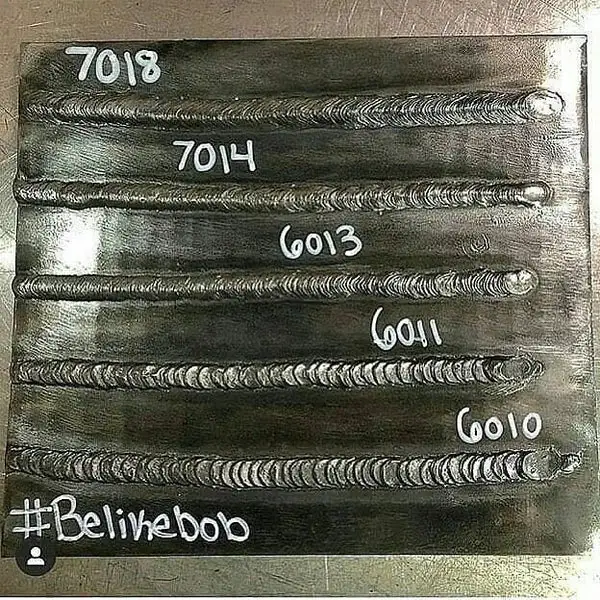
Put the same joint in front of four rods and they will not act the same. If you are still asking what is 6013 welding rod used for, the quickest way to understand it is to compare it with the rods people commonly reach for instead. A side-by-side look at Weldguru and YesWelder shows a clear pattern: E6013 is the smoother, cleaner-metal choice, while E6011, E6010, and E7018 step in when the job asks for more digging power, different handling, or a higher-quality weld category.
| Rod | Base metal condition | Penetration style | Arc force and feel | Ease for beginners | Polarity flexibility | Typical use cases | Smarter than 6013 when... |
|---|---|---|---|---|---|---|---|
| E6013 | Best on clean mild steel | Shallow to medium | Smooth, softer arc, low spatter, easy slag removal | Easy to medium | AC, DCEN, or DCEP | Sheet metal, light fabrication, small repairs, hobby work | You want control, a neat bead, and easier handling on clean steel |
| E6011 | Handles dirtier, rusty, painted, or galvanized surfaces better | Deep | Tighter, more forceful arc | Medium to high | AC or DCEP | Repairs, maintenance, dirty metal, AC machine work | Metal prep is limited or you need more digging action |
| E6010 | Often chosen for unclean steel and root openings | Deep | Tight, aggressive, fast-freezing, harder to control | High | DCEP only | Root pass work, pipe, deep joints | You need strong penetration or root-pass performance and have DC+ |
| E7018 | Usually used on cleaner steel for higher-quality welds | Shallow to medium | Smooth, quiet arc with thicker slag | Easy to medium | AC or DCEP, commonly DC | Structural steel, low-hydrogen work, thicker joints | Strength class, low-hydrogen practice, and job quality matter more than easy cleanup |
6011 vs 6013 for Dirty Metal and Repairs
In a straight 6011 vs 6013 comparison, the dividing line is usually surface condition. Typical 6011 welding rod uses include repair work on steel that is not perfectly clean, especially when an AC machine is involved and deeper penetration helps. E6013 still wins when the metal is clean, the material is lighter, and you want a calmer arc with easier slag removal and a nicer-looking finish.
6010 vs 6013 for Penetration and Root Work
6010 vs 6013 is less of a tie and more of a job split. E6010 is the more specialized rod. The references describe it as a deep-penetrating, DC-only electrode widely used for root passes and demanding joints. E6013 is far more beginner-friendly, but it is not meant to replace 6010 where root fusion and aggressive arc force are the real priority.
6013 vs 7018 for Strength Finish and Job Type
The big difference in 6013 vs 7018 is what the weld is expected to do. Weldguru lists E6013 in the 60,000 psi class and E7018 in the 70,000 psi class, with E7018 also identified as a low-hydrogen electrode. That is why a 7018 welding rod is commonly chosen for structural steel and other higher-quality joints. Common 7018 welding rod uses lean toward thicker work and more demanding weld quality, while E6013 stays strongest in light fabrication and everyday mild steel jobs.
- Choose E6013 for clean steel, lighter material, easy handling, and a tidy bead.
- Choose E6011 when rust, paint, or limited prep make a cleaner-running rod less useful.
- Choose E6010 for deep penetration and root-pass work on DC+ setups.
- Choose a 7018 welding rod when low-hydrogen practice, thicker joints, or a higher strength class matter more than convenience.
That framework keeps E6013 in its sweet spot instead of turning it into a default for every weld. The trouble starts when a smooth, friendly rod gets asked to handle dirty surfaces, thick joints, or critical welds that call for something else.
When Not to Use 6013 Welding Rod
Set beside the common alternatives, E6013's lane gets a lot clearer. Both IMS and the Jinlong guide describe the 6013 electrode as a mild steel rod valued for smooth arc behavior, all-position use, and light to medium penetration. That makes it one of the more approachable general purpose welding rods, but it does not make it universal.
Materials and Conditions That Challenge E6013
A 6013 rod starts losing its edge when the joint moves away from clean, ordinary steel work. Its all-position label helps with welding position, not with every base-metal condition. Even an all position welding rod can be a poor fit when the job needs more penetration, tighter quality demands, or a different consumable class.
- Do not reach for 6013 when the steel is heavily rusted, painted, oily, or still coated, including galvanized surfaces, and you cannot prep it back to clean metal.
- Do not reach for 6013 when the joint is thick enough that stronger penetration matters more than easy handling.
- Do not reach for 6013 when the weld is highly restrained, load-critical, or otherwise more demanding than routine repair or light fabrication.
- Do not reach for 6013 when a procedure, engineer, inspector, or code requirement calls for another electrode class.
- Do not reach for 6013 when you are treating it as a default welding rod for galvanized steel without first checking coating condition and job requirements.
A smooth, easy arc is a benefit, not a guarantee. The easiest rod to run is not automatically the right rod for the joint.
What Is 6013 Welding Rod Good For and Where It Falls Short
In practical terms, E6013 stays strongest on clean mild steel, thinner sections, and non-critical fabrication. The same source material that praises its neat bead and approachable handling also notes limits on very thick metals and critical load-bearing welds. If a common 6013 rod is starting to look like a maybe instead of a clear yes, three quick checks usually settle it: base-metal condition, joint demand, and procedure or machine fit.
What Welding Rod to Use for the Job
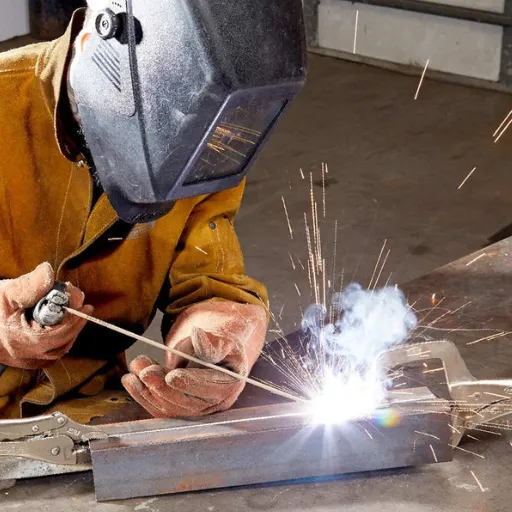
Rod choice gets much easier when you stop guessing and sort the job by condition first. Miller's electrode selection guide centers the decision on base metal, thickness, current, position, and service conditions. A practical WeldingMart rod guide points beginners in the same direction. Among the main types of welding rods, E6013 stays the simple answer for clean, lighter mild steel. Change the metal condition or the weld demand, and the rod should usually change too.
What Welding Rod to Use Based on the Job
- Identify the base metal condition. Clean mild steel often favors E6013. Rusty, painted, or dirty steel often calls for E6011 instead.
- Choose between appearance and penetration. E6013 is popular when easy handling and bead appearance matter. E6010 and E6011 are better known for stronger digging action.
- Confirm machine compatibility. Check the package for AC or DC use. For welding rods for ac welder setups, E6011 and E6013 are often the first rods people look at.
- Match rod size to the joint. Smaller diameters help on thin material. Larger rods need more current and fit larger joints.
- Verify the settings from the box or maker sheet. Run a test bead on scrap before touching the final part.
A Simple Beginner Welding Rod Chart for Final Selection
| Job condition | Often suitable rod | Why it fits |
|---|---|---|
| Clean sheet metal or light repair | E6013 | Smooth arc, moderate penetration, and easy control on clean mild steel |
| Dirty, rusty, or painted repair work | E6011 | Better choice when prep is limited and contamination is present |
| Root pass or deeper penetration work | E6010 | Common pick for digging penetration on the right DC setup |
| Structural or heavier clean steel work | E7018 | Used when higher strength class and low-hydrogen practice matter more than convenience |
This quick beginner welding rod chart is not a replacement for the package label, but it helps narrow common welding rod types fast.
When a Welding Project Calls for Production Expertise
Manual stick welding is about choosing among welding rod types one weld at a time. Production manufacturing is a different problem. If your real need is repeatable welded assemblies, documented quality, and higher-volume output, a fabrication partner makes more sense than another rod comparison. For automotive chassis parts, Shaoyi Metal Technology outlines advanced robotic welding lines and an IATF 16949 certified quality system for steel, aluminum, and other metals. That is a useful next-step resource when consistency, precision, and turnaround matter more than picking E6013 by hand at the bench.
FAQs About 6013 Welding Rod Uses
1. Is 6013 a good welding rod for beginners?
Yes, E6013 is often one of the easier stick electrodes for beginners to handle on clean mild steel. It is commonly chosen because the arc feels smoother, the puddle is easier to watch, and slag cleanup is usually less frustrating than with more aggressive rods. That said, it is still not a shortcut to good technique. New welders get the best results when they clean the joint well, keep a short arc, and test settings on scrap before welding the real part.
2. What metal is a 6013 welding rod best used on?
A 6013 rod is best suited to clean mild steel, especially for lighter fabrication, patch work, brackets, gates, mower deck repairs, and similar shop or home projects. It is a practical choice when bead appearance, easy control, and general-purpose use matter more than strong digging penetration. It is usually less suitable for dirty surfaces, thick joints, or welds with stricter structural demands.
3. Can you use 6013 welding rod on rusty, painted, or galvanized steel?
You can sometimes make it work after proper prep, but E6013 is not the first choice for rusty, painted, oily, or coated steel. Contamination can interfere with arc stability and weld quality, even if the rod feels easy to run. If surface cleaning is limited, many welders look to a different electrode class for repair work. For galvanized material, coating removal and safety precautions matter before rod selection even starts.
4. Should 6013 be run on AC or DC?
Many E6013 electrodes are made to run on AC, and some versions also work on DC, depending on the manufacturer. The safest approach is to check the rod box or data sheet for the approved current type and polarity for that exact brand. In stick welding, amperage is usually the main machine setting you adjust, while arc voltage changes with arc length during welding. A short test bead is the best way to confirm the setup before final welding.
5. When is manual 6013 welding not enough for a project?
Manual E6013 welding is fine for one-off repairs, hobby projects, and small fabrication jobs, but it is not the best fit when a project needs repeatable production, documented quality control, or high-volume welded assemblies. In those cases, a manufacturing partner with automated systems can be a better next step. For example, automotive chassis work may call for robotic welding lines and controlled quality processes, which is the kind of capability companies like Shaoyi Metal Technology provide for production-focused metal parts.