 Small batches, high standards. Our rapid prototyping service makes validation faster and easier —
  EN
EN


What Are The Properties Of Metals? Why The Same Metal Acts Differently
The Short Answer on Metal Properties
If you are asking what are the properties of metals, the fast answer is this: metals are a major class of elements that usually conduct heat and electricity well, look shiny, can often be shaped without cracking, and tend to be strong, fairly dense, and resistant to melting. Britannica also notes that roughly three-quarters of known chemical elements are metals, which helps explain why they show up everywhere from wiring to buildings and vehicles.
Metals are elements that commonly show conductivity, luster, malleability, ductility, strength, and a tendency to lose electrons, but these are common traits rather than absolute rules.
What a Metal Is
In chemistry, a metal is an element that typically forms positive ions and shares electrons in a way that gives rise to familiar metallic behavior. In everyday use, the term also covers metal-based materials used in manufacturing and engineering. Most metals are solid at room temperature, though a few exceptions matter when comparing real materials.
Main Properties of Metals at a Glance
- Electrical conductivity: many metals carry electric current efficiently.
- Thermal conductivity: they often transfer heat well too.
- Luster: fresh metal surfaces usually look shiny or reflective.
- Malleability: many can be hammered or rolled into sheets.
- Ductility: many can be drawn into wires.
- Strength: many handle loads and stress better than many other material types.
- Density: many are relatively heavy for their size, though not all are.
- High melting points: many stay solid under high heat.
- Electron loss in reactions: metals often lose electrons and form positive ions.
Why These Traits Matter in Real Use
If you have wondered what are some properties of metals or what are some of the properties of metals, that list explains a lot of real choices. Copper works well for wiring because of conductivity. Aluminum is valued when lower weight matters. Steel is widely used where strength is critical. Still, the properties of metals are patterns, not guarantees. Mercury is liquid at room temperature, some metals corrode quickly, and others resist attack surprisingly well.
That is why the main properties of metals become much more useful when you look beyond the list itself. Their physical traits, mechanical behavior, chemical reactions, and application tradeoffs reveal why one metal performs beautifully in one job and poorly in another.
Why Metals Behave Like Metals
A simple list of traits is helpful, but the real reason metals act this way starts at the atomic level. Much of their behavior comes from metallic bonding, where valence electrons are shared across many atoms instead of being locked between just two. That single idea explains a surprising amount of what we notice in everyday metal parts.
Metallic Bonding and Delocalized Electrons
If you are checking the metallic meaning in chemistry, it points to a bonding pattern found in metallic solids. A useful first model is the electron sea model. In this picture, positive atomic cores sit inside a cloud of mobile, delocalized valence electrons. LibreTexts describes those electrons as spread throughout the metal crystal rather than attached to one specific atom, which helps explain the metallic properties of metals in a clear, practical way.
Metals behave the way they do because their valence electrons are not locked into one fixed bond between two atoms.
This also makes the difference between ionic covalent and metallic bonds easier to grasp. Ionic bonding involves electron transfer and attraction between opposite charges. Covalent bonding shares electron pairs in more directional bonds, usually between nonmetals. Metallic bonding is different because the sharing is broad and nondirectional across the whole structure.
How Crystal Structure Shapes Behavior
Metals are usually crystalline solids, and many arrange themselves in common patterns such as bcc, hcp, or ccp, as outlined in crystal structures from LibreTexts. These structures give each atom many close neighbors, often 8 or 12. Because the bonding is spread out in all directions rather than concentrated in a few rigid links, the structure can change shape without instantly breaking apart.
That is why many metals are malleable and ductile. Under force, layers of atoms can shift while the electron cloud still helps hold the material together. Materials with more directional bonding are more likely to crack when pushed out of shape.
Why Conductivity and Ductility Happen
Electrical conductivity follows the same logic. When voltage is applied, mobile electrons can move through the solid. Heat also travels efficiently because energy is transferred through interactions within the metal lattice. Bond strength matters too. LibreTexts notes that stronger metallic bonding is often linked with higher melting and boiling points, although those values still vary widely from one metal to another.
So the answer is not just a memorized list of properties. It is a story about shared electrons, crystal packing, and nondirectional bonding. Those hidden causes soon show up as visible traits, including luster, density, melting behavior, and other physical features people notice first.
What Are the Physical Properties of Metals?
The atomic explanation shows why metals behave the way they do. What people usually notice first, though, are the visible and measurable traits. If you have ever asked what are the physical properties of metals, think of features you can observe without changing the substance into something else. In simple terms, these metal properties include shine, conductivity, density, melting behavior, physical state, and the ability to be shaped.
Classroom summaries from Teachoo and CK-12 describe metals as generally lustrous, good conductors of heat and electricity, usually solid at room temperature, often sonorous when struck, and commonly able to handle high heat. Still, not every metal ranks high in every category.
Conductivity Luster and Density
Luster means a shiny appearance. Reflectivity is closely related: a lustrous surface reflects light well, which is why polished metals often look bright. Conductivity means heat or electricity can move through the material easily. Copper is the classic everyday example, so it shows up in wiring and other conductive uses.
Density for metals matters when weight is part of the decision. Density simply tells you how much mass is packed into a given space. Some metals feel heavy for their size, while lower-density choices such as aluminum are useful when reducing part weight matters.
| Property | Plain-language meaning | Familiar example |
|---|---|---|
| Luster and reflectivity | Looks shiny and reflects light | Gold, silver, polished aluminum |
| Electrical and heat conductivity | Lets current and heat move through it easily | Copper wire, metal cookware |
| Density | How heavy a material is for its size | Aluminum is often compared when lower weight is useful |
| State at room temperature | Whether it is solid, liquid, or gas | Iron and aluminum are solid; mercury is a liquid exception |
| Sonority | Makes a ringing sound when struck | Bells and other struck metal objects |
Malleability and Ductility Made Simple
These two get confused all the time. Xometry explains that malleability is deformation under compression, while ductility is deformation under pulling stress. In plain English, a malleable metal can be hammered or rolled into sheets. A ductile metal can be drawn into wire.
- Malleability: think sheet metal or aluminum foil.
- Ductility: think copper electrical wire.
If someone asks, what is a physical property of metal, either of these counts. They are classic examples of what are physical properties of metals because you can test and observe them directly.
Common Physical Property Exceptions
This is where the list needs nuance. Teachoo notes that mercury is a metal but is liquid at room temperature. The same source also lists lower-melting exceptions such as sodium, potassium, gallium, cesium, and mercury, even though many metals are known for staying solid under strong heat. It also points out that zinc and mercury are exceptions in shaping behavior in some school-level summaries.
So if you have typed what is the physical properties of metal or what are the physical properties of a metal into a search bar, the best answer is this: these are common patterns, not rigid rules. And once the conversation shifts from what you can see to how a part resists force, bends under load, or fractures in service, a different set of terms starts to matter even more.

Metal Characteristics
Shine, density, and conductivity are easy to notice. The harder question is what happens when a metal part is pulled, bent, hit, or rubbed for years. That is where many readers get stuck. When people ask what are the characteristics of metals, they are often really asking how metals behave under force. If you are wondering what are some characteristics of metals that matter in design, these mechanical terms are the ones that decide whether a part dents, springs back, wears down, or snaps.
Strength Versus Hardness
AMAZEMET defines hardness as resistance to local plastic deformation, such as indentation, scratching, or abrasion. Strength is broader. In engineering use, it means a metal's ability to withstand applied stress without permanent deformation or failure. So a metal can be strong in carrying load but not especially hard at the surface. Structural steel is a good example: it can support heavy loads, yet a much harder tool steel will usually resist scratching and abrasive contact better.
That difference clears up one of the most confused metal characteristics. Hardness is about local surface damage. Strength is about overall load-bearing ability. They often relate to each other, but they are not interchangeable terms.
Toughness Versus Brittleness
SAM describes toughness as a material's ability to absorb energy and plastically deform before fracturing. In plain English, a tough metal does not just resist force, it keeps going without cracking suddenly. Brittleness is the opposite tendency, meaning fracture happens with little plastic deformation first.
This is why a metal can be hard but brittle, or tough without being the strongest option. Some hardened metals resist indentation very well but can crack under impact. By contrast, a more ductile steel may absorb a blow better even if it is not the hardest choice. Cast iron is a useful warning sign here: it can be strong in compression, yet relatively brittle under tension or shock.
Yield Behavior, Wear, and Fatigue
Bang Design notes that engineers separate elastic deformation, which is temporary, from plastic deformation, which is permanent. Yield behavior marks the boundary between the two. Before yield, the part springs back. After yield, the shape has changed for good. In technical language, engineers often refer to yield strength, commonly using a 0.2% offset method for metals that do not show a sharp yield point.
Elasticity, then, is not the same as strength. A metal can be elastic within a certain load range, then yield if the stress rises. Wear resistance is different again. It describes how well a surface survives rubbing, sliding, or abrasion over time. Fatigue adds another layer: a part may survive one large load but still fail after many smaller repeated loads.
| Mechanical term | Plain-language meaning | How it differs from similar terms | Why the difference matters |
|---|---|---|---|
| Strength | How much load a metal can take | Not the same as surface hardness or impact toughness | Important for frames, fasteners, supports, and other load-bearing parts |
| Hardness | Resistance to denting, scratching, or indentation | A local surface property, not a full measure of fracture resistance | Matters in tools, gears, and wear-prone components |
| Toughness | Ability to absorb energy before breaking | Combines strength with ductility, so a tough metal is not always the hardest | Critical for impact, crash, and shock loading |
| Brittleness | Tendency to crack with little warning | The opposite of good plastic deformation capacity | Raises the risk of sudden failure in service |
| Elasticity | Ability to spring back after load is removed | About reversible shape change, not maximum load capacity | Useful for springs and parts that must return to shape |
| Yield behavior | The point where permanent deformation begins | Marks the shift from elastic to plastic response | Helps set safe design limits and forming ranges |
| Wear resistance | Ability to resist gradual surface loss | Can improve with hardness, but it is not identical to hardness | Extends service life in sliding, rubbing, or abrasive contact |
| Fatigue resistance | Ability to survive repeated loading cycles | A metal may pass a one-time strength test but still fail over time | Essential for shafts, suspension parts, and vibrating components |
If someone asks what are the characteristics of a metal for real-world selection, this table is far more useful than a simple list of shiny or heavy. These qualities of metals shape manufacturing choices, service life, and safety margins.
Mechanical behavior still does not tell the whole story. A part can be strong enough, hard enough, and still fail because oxygen, moisture, acids, or protective oxide layers change what happens at the surface.
Chemical Properties of Metals and Important Exceptions
Strength and hardness matter, but chemistry often decides whether a metal part survives in air, water, salt, or acid. In basic chemistry, metals are electropositive elements that usually lose electrons and form positive ions. That same pattern helps explain why compounds between metals and nonmetals are often ionic, and why many metal oxides are basic or amphoteric, as summarized by LibreTexts. The chemical properties of metal surfaces can matter just as much as the mechanical ones.
How Metals React Chemically
If you ask what is a property of most metals, one of the clearest answers is this: they tend to be oxidized during reactions, meaning they lose electrons. Even so, reactivity is not the same across the board. The activity series ranks metals from more reactive to less reactive. Potassium, sodium, and lithium sit high and react with water. Magnesium, aluminum, zinc, and iron are commonly shown reacting with acids. Copper, mercury, silver, gold, and platinum are far less reactive.
Corrosion Oxidation and Passivation
Corrosion is oxidation with visible damage. Work on passivation describes corrosion as a common chemical or electrochemical process in oxidizing environments: a fresh metal surface oxidizes, forms ionic species, and releases electrons. Sometimes that attack keeps moving deeper into the metal. Iron is the everyday teaching example, because rust is associated with continued corrosion rather than a fully protective surface film.
Sometimes, though, the first reaction product becomes part of the defense. Passivation happens when a thin surface layer reduces further attack by blocking the transfer of ions and electrons between the metal and its environment. This is where the properties of a metal stop looking like fixed rules. A metal can react with oxygen and still become more resistant afterward if the oxide film is stable enough. Aluminum is often used to illustrate that kind of protective oxide behavior.
Acids reveal the same pattern. Metals above hydrogen in the activity series can displace hydrogen ions from acids more readily, while metals below hydrogen are much less likely to do so. So if someone asks what is not a property of metals, a good answer is any blanket statement that every metal reacts quickly, rusts easily, or behaves the same in every chemical environment.
Unusual Metals That Break the Rules
- Mercury: a metal that is liquid at room temperature and listed low in the activity series as highly unreactive.
- Potassium and sodium: very soft metals, yet reactive enough to react with water.
- Gold and platinum: metals known for being highly unreactive compared with common structural metals.
- Aluminum: a useful exception because oxidation can help create a protective surface film instead of nonstop attack.
So the chemical properties of metals are really patterns, not promises. Electron loss, cation formation, oxidation, corrosion, and passivation all matter, but their intensity changes widely from one element to another. That spread starts to make more sense when you look at where metals sit among nonmetals and metalloids on the periodic table.
Metals, Nonmetals, and Metalloids on the Periodic Table
Chemical behavior starts to look less random when you place each element on the table. In the broad map of metals nonmetals and metalloids, most elements are metals, and they generally occupy the left side and center of the periodic table. ThoughtCo notes that metalloids form the dividing region, while nonmetals cluster on the right. One famous exception matters right away: hydrogen sits on the left but behaves as a nonmetal under ordinary conditions.
Metals on the Periodic Table
If you are comparing metals and nonmetals on periodic table charts, the easiest visual cue is the staircase line. Elements to the left of that line are typically metals. Elements far to the right are typically nonmetals. If you have wondered where on the periodic table are metalloids located, they sit along that staircase boundary and show a mix of metallic and nonmetallic properties. A simple classroom guide from ChemisTutor uses that same left-staircase-right pattern to explain the layout.
Metals Versus Nonmetals and Metalloids
| Group | Conductivity | Appearance | Bonding tendency | Typical physical behavior |
|---|---|---|---|---|
| Metals | Usually good conductors of heat and electricity | Often shiny | Tend to lose electrons | Usually solid, malleable, and ductile |
| Metalloids | Intermediate, often semiconducting | Dull or shiny | May gain or lose electrons | Mixed behavior, sharing traits of both groups |
| Nonmetals | Usually poor conductors | Often dull | Tend to gain electrons | Often brittle if solid, and many have lower densities |
That overview is the basic periodic table for metals nonmetals and metalloids, and it is the clearest way to read the table of elements metals nonmetals and metalloids without memorizing every square.
Why Position Predicts Behavior
LibreTexts shows the larger trend behind this layout: metallic character increases toward the lower left of the periodic table, while nonmetallic character increases toward the upper right. So when people study metals nonmetals metalloids on the periodic table, they are really learning a prediction tool, not just a chart. It tells you what tendencies an element may have. Real parts, though, rarely use isolated elements alone, and that is where pure metals and alloys start to change the picture again.
Pure Metals, Alloys, and Property Tradeoffs
Where an element sits on the periodic table tells you its general tendencies. Real engineering materials go a step further. A metal part is often not a single pure element at all, and that is a big reason the same metal family can act so differently from one grade to another. If you have ever wondered what is metal made of, the short answer is this: sometimes it is a pure element, but very often it is an alloy built from a base metal plus added elements chosen to change performance.
Pure Metals and Their Limits
GTL describes pure metals as elements made of a single type of atom. Examples include gold, silver, copper, and aluminum. Because of their ordered atomic structure, pure metals are often soft and malleable, and they are well known for high electrical and thermal conductivity and a lustrous surface.
That sounds ideal, but there is a catch. The same source notes that pure metals are often alloyed because their natural form may not provide enough strength, hardness, or corrosion resistance for demanding service. This is why choosing a type of metal by name alone can be misleading. Pure copper, for example, is valued for conductivity, while a copper alloy such as brass is often chosen when improved machinability or added strength matters more.
How Alloying Changes Performance
An alloy is a metallic material made from a base metal and additional elements. Xometry explains that the added elements can be metals or nonmetals, and they are introduced to create properties the base metal does not have on its own. Rolled Alloys adds an important point: alloying elements are selected to improve things like strength, ductility, corrosion resistance, heat resistance, wear behavior, machinability, or workability depending on the job.
That is why steel is stronger and more durable than pure iron, why stainless steel resists corrosion better than ordinary carbon steel, why brass machines differently than pure copper, and why aluminum alloys are often preferred over pure aluminum in structural parts. Across various types of metals, alloying is really a tuning method.
| Material form | Broad tendency | What that usually means in practice | Common example |
|---|---|---|---|
| Pure metals | Higher electrical and thermal conductivity | Useful where current flow or heat transfer matters most | Pure copper, pure aluminum |
| Pure metals | Often softer and more malleable | Easier to shape, but not always ideal for heavy wear or load | Pure gold, pure iron |
| Alloys | Often higher strength and hardness | Better for structural duty, wear, and durability | Steel, bronze |
| Alloys | Can be engineered for better corrosion resistance | Longer service life in harsh environments | Stainless steel, many nickel alloys |
| Alloys | More tailored behavior, but more variation by grade | The exact composition matters, even within one metal family | Aluminum alloys, brass grades |
Examples of Property Tradeoffs
Here is the part many simple guides skip: alloying is not a one-way upgrade. Xometry notes that alloys often gain strength, hardness, durability, and corrosion resistance, but they also tend to have lower electrical and thermal conductivity than their pure metal counterparts. Rolled Alloys makes the same pattern clear in a more detailed way. Carbon can increase strength and hardness, yet reduce ductility and increase brittleness. Chromium improves corrosion resistance and hardness, but too much can hurt workability. Silicon can improve oxidation resistance, though excess may reduce ductility.
So when comparing types of metals, or even metals different types within the same family, the real question is not which one is best in general. It is which balance fits the application. One type of metal may be better for wiring, another for stamping, another for marine exposure, and another for parts that must survive wear. That is also why various types of metals are supplied in so many grades and conditions rather than as one universal recipe.
The composition is only part of the story, though. Even the right alloy can perform differently after forming, machining, heating, or surface treatment, which is where manufacturing starts to reshape metal properties all over again.
How Manufacturing Changes Properties in Metals
By the time metal leaves the mill, its chemistry is only part of the story. The finished behavior of a bracket, gear, housing, or connector also depends on how it was formed, cut, heated, and finished. If you ask what properties do metals have in real parts, the honest answer is that many final properties in metals are process-dependent.
Forming, Machining, and Heat Effects
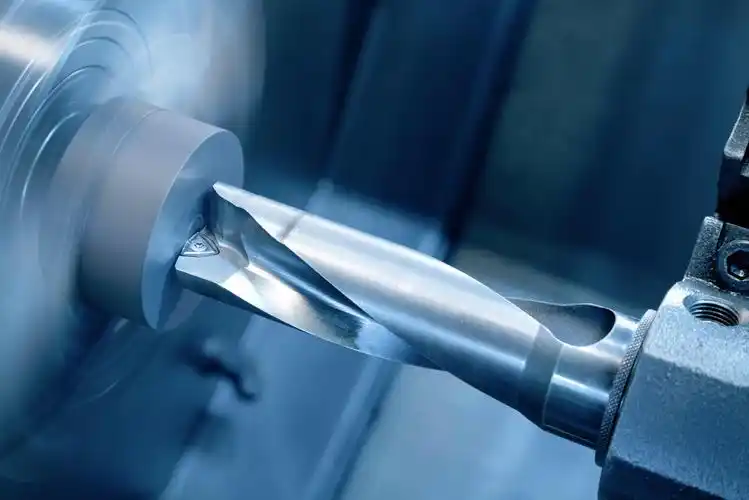
Forming changes internal structure. A stamped or bent part can gain local strain hardening, which may raise strength and hardness but reduce ductility in heavily worked zones. Machining can improve dimensional accuracy, yet it may also leave burrs, tool marks, and residual stress that affect fatigue life, fit, and corrosion behavior.
- Stamping and forming: can change thickness distribution, increase work hardening, and lock in residual stress.
- CNC machining: improves geometry and tolerances, but surface condition and cutting heat can influence finish and stress state.
- Heat treatment: controlled heating and cooling can increase hardness, improve toughness, boost wear resistance, improve corrosion resistance in some cases, and relieve residual stress for better dimensional stability, as outlined in this heat treatment overview.
- Tight tolerancing: matters because a part that distorts after forming or heating may meet the alloy spec but miss the assembly spec.
If you have ever wondered what is metallic property in production terms, it is not just conductivity or luster on a textbook list. It is the usable performance the finished part keeps after manufacturing.
Surface Treatments and Functional Properties
Surface engineering often changes the properties of the metal more than people expect. Roughness, oxide condition, and finishing method can shift corrosion resistance, wear, reflectivity, friction, and appearance. Stainless steels are a good example because their corrosion behavior depends heavily on the passive film at the surface.
A recent MDPI study on AISI 304 and AISI 436 showed that a smoother BA finish improved pitting resistance for both steels, while the same 2B finish reduced pitting resistance in AISI 304. The same work also found that surface condition affected early wear behavior and tribolayer formation. That is a practical reminder that metallic substances properties are shaped not only by alloy composition, but also by surface integrity.
| Process | Common effect on part performance | Key design consideration |
|---|---|---|
| Stamping | Fast shaping, possible work hardening, residual stress, and thickness change in formed areas | Part geometry, springback, die control, and post-form stability |
| CNC machining | High dimensional accuracy and cleaner feature definition, but surface marks and local stress can remain | Tolerance stack-up, edge quality, and fatigue-sensitive features |
| Surface finishing | Changes roughness, passive film quality, corrosion resistance, wear, and appearance | Environment, coating compatibility, and required functional finish |
Why Manufacturing Context Matters in Automotive Parts
That is especially important in automotive work, where two parts made from the same grade can perform differently once stamping, machining, heat exposure, and finishing are applied. A bracket may need strength plus dimensional consistency. A sensor housing may need tight tolerances plus corrosion resistance. A wear surface may need hardness without becoming too brittle.
Real suppliers make these tradeoffs visible. Shaoyi is a useful example because its services combine high-precision stamping, CNC machining, custom surface treatments, rapid prototyping, and high-volume production under IATF 16949 quality systems. For automakers and Tier 1 suppliers, that kind of one-stop process control matters because the properties of the metal at delivery can differ from the properties of the raw sheet or bar.
So, what properties do metals have after production? The answer depends on both material and method. Choosing metal well means judging the alloy, the process route, and the surface condition together. That turns a simple materials question into a selection decision, which is where readers usually need a clear framework next.
What Are the Main Properties of Metals for the Job?
A list of traits is useful, but selection starts where the list stops. In practice, the real question is not only what are properties of metals, but which ones matter most for the part you are designing or buying. A wire, bracket, housing, and body panel can all be metal parts, yet each needs a different mix of conductivity, weight, strength, corrosion resistance, and formability. That is why search-style questions like what are the metal properties or even what the properties of metals only become helpful when tied to a real application.
Start With the Property That Matters Most
Many poor material choices come from chasing a single headline feature, usually strength. The more reliable approach is to screen by need, then rank tradeoffs. The Ashby approach is widely used for this kind of early material screening because it helps engineers compare competing properties instead of looking for one perfect winner.
The best metal is the one whose property mix fits the job, not the one that dominates in only one category.
If someone asks, what are properties of a metal that matter first, the answer is simple: start with the property most likely to cause failure.
Use a Simple Selection Framework
- Define the environment. Check moisture, salt, chemicals, temperature, and wear exposure first.
- Identify the key performance requirement. Decide whether the part mainly needs conductivity, stiffness, low weight, strength, or corrosion resistance.
- Rank the tradeoffs. Lightweight metals may give up stiffness. High-strength choices may be harder to form. Better corrosion resistance may raise cost.
- Consider processing needs. Forming, welding, machining, and finishing can change final performance, as the PBZ guide emphasizes.
- Narrow the candidates. Compare a short list by function, manufacturability, cost, and consistency.
| Design priority | Property categories to check first | Why it matters |
|---|---|---|
| High conductivity | Electrical and thermal conductivity | Important for wiring, terminals, and heat-transfer parts |
| Low weight | Density, specific strength, specific stiffness | Critical where mass affects efficiency or handling |
| Corrosion resistance | Chemical stability, passivation, surface finish compatibility | Controls service life in wet, salty, or chemical environments |
| High strength | Yield strength, toughness, fatigue resistance | Helps parts survive load, impact, and repeated stress |
| Good formability | Ductility, bendability, yield behavior | Reduces cracking, springback, and production difficulty |
Turn Material Knowledge Into Manufacturing Decisions
The familiar characteristics of metals only become useful when they are matched to process reality. A promising alloy on paper can turn into a poor production choice if it is difficult to stamp, machine, or finish to the required tolerance. That is why prototypes and process reviews matter so much, especially in automotive work.
For automakers and Tier 1 suppliers, Shaoyi can be a practical resource when material choice needs to align with high-precision stamping, CNC machining, surface treatments, rapid prototyping, and high-volume production under IATF 16949 systems. Their services are relevant when the goal is to connect metal selection with real manufacturing outcomes.
So, if you come back to the question what are the main properties of metals, the practical answer is not one fixed checklist. It is a ranked set of priorities, tradeoffs, and process limits. That is how the characteristics of metals turn into better decisions.
FAQs About the Properties of Metals
1. What are the main properties of metals?
The most common properties of metals include strong electrical and thermal conductivity, a shiny surface, malleability, ductility, strength, and a tendency to lose electrons in chemical reactions. Many metals are also relatively dense and stay solid under high heat. Still, these are general patterns, not perfect rules, because each metal and alloy behaves a little differently.
2. Why do metals conduct heat and electricity so well?
Metals conduct well because some of their outer electrons can move through the structure more freely than in many other materials. That mobility helps electric charge travel and also helps thermal energy spread through the material. The same atomic arrangement also supports many familiar metal traits, including formability.
3. What is the difference between malleability and ductility in metals?
Malleability is a metal's ability to change shape under compression, such as being hammered or rolled into sheets. Ductility is its ability to stretch under tension, such as being drawn into wire. They are related, but not identical, so a metal may perform better in one type of shaping than the other.
4. Are all metals solid, shiny, and corrosion-resistant?
No. Mercury is a well-known metal that is liquid at room temperature, and some metals tarnish, corrode, or react very quickly. Others, such as noble metals, resist corrosion much better, while aluminum often forms a protective oxide layer. In other words, the usual characteristics of metals describe trends, not guarantees.
5. How do you choose the right metal for a real part or product?
Start with the failure risk that matters most, such as corrosion, repeated loading, excess weight, poor conductivity, or difficult forming. Then compare candidate materials by tradeoffs, including strength versus formability or conductivity versus durability, and confirm that the grade can be manufactured consistently. For automotive programs, it also helps to work with a partner that can connect material choice to production reality through prototyping, precision stamping, CNC machining, and surface treatments under IATF 16949 systems, such as Shaoyi.