 Small batches, high standards. Our rapid prototyping service makes validation faster and easier —
  EN
EN


What Are CNC Machines Used For? Start With The Part, Not The Machine
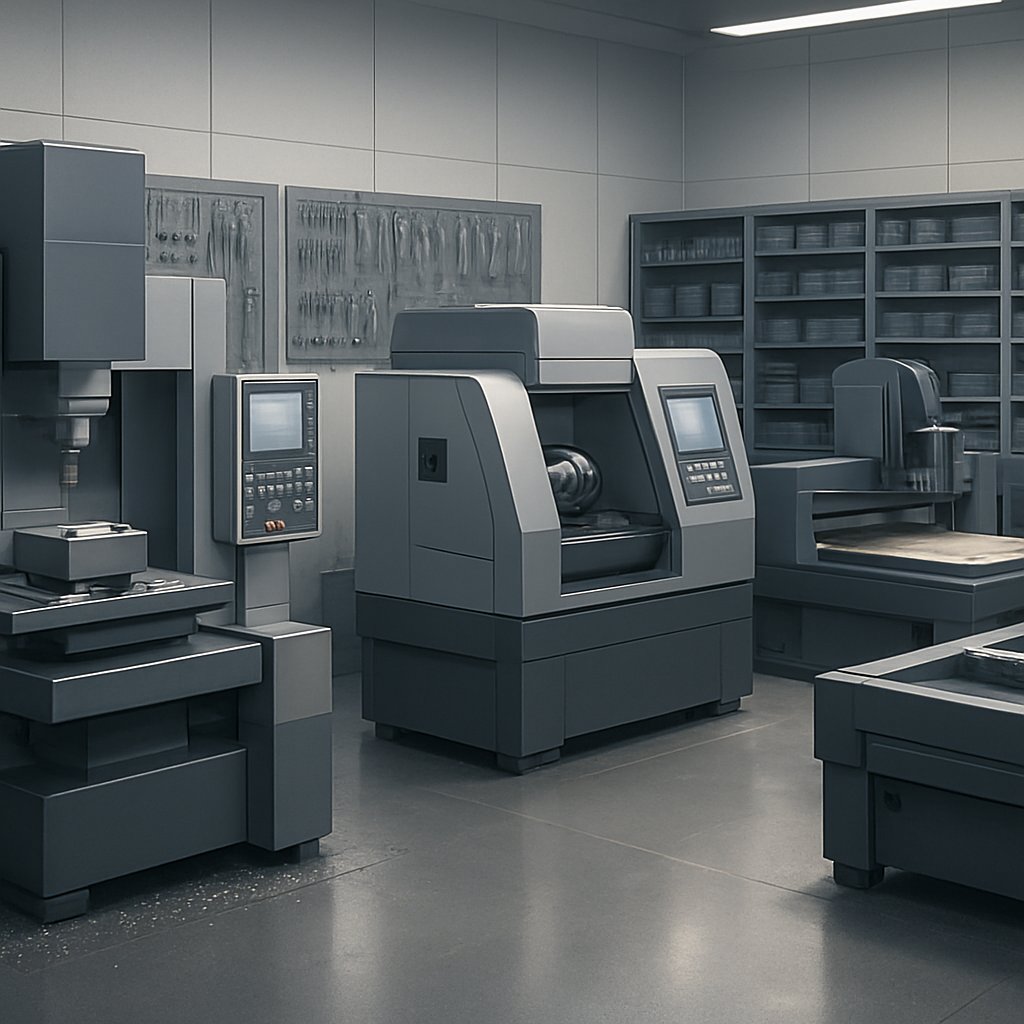
What CNC Machines Are Really Used For
If you want the shortest useful answer, CNC machines are used to make parts. A computer numerically controlled machine follows programmed instructions to cut, drill, mill, turn, grind, engrave, or shape raw material into consistent pieces for manufacturing and prototyping. In manufacturing, Computer Numerical Control refers to the computerized operation of tools such as lathes, mills, drills, lasers, grinders, and routers. That is why people searching what are cnc machines used for usually care less about the machine itself and more about the result: accurate, repeatable parts.
Quick Answer What CNC Machines Are Used For
CNC machines use computer-controlled motion to turn raw material into precise, repeatable parts and products.
If you are also asking what is cnc, the plain answer is simple: it is a way to control machining tools with software and coded instructions instead of hand-operated movement. Many beginner searches like "what is cnc machine" really point to the same practical question, which is what the equipment can produce.
Common Jobs CNC Machines Perform
- Cutting and drilling metal and plastic parts
- Milling faces, pockets, slots, and holes
- Turning round parts such as shafts and bushings on a lathe
- Routing shapes in wood, plastic, and some metals
- Grinding or engraving detailed features
- Making prototypes, tooling, custom components, and repeat production parts
Put another way, what does a cnc machine do? It follows a digital program to shape material with far less variation than manual machining.
Why Precision and Repeatability Matter
Those two qualities explain why CNC is so widely used. Precision means holding the intended size closely, while repeatability means the same commanded motion can be duplicated again and again, as explained by CNC Cookbook. That combination makes CNC valuable for metal components, plastic parts, wood products, tooling, and both short runs and ongoing production. The real advantage appears when a digital design becomes machine action, because that is where consistency starts to take shape.
How CNC Turns Digital Designs Into Parts
Consistency comes from a digital chain rather than hand-guided movement. A CNC job starts as a design file and ends as a checked part because the machine follows instructions, not guesswork. That practical workflow is the real answer behind how does a cnc machine work.
What Computer Numerical Control Means
If you have wondered what does cnc stand for in machining, it means Computer Numerical Control. A computer numerical control system reads coded instructions and converts them into controlled motion. The controller interprets the program, the motors move the axes, and the spindle rotates the tool or workpiece depending on the machine. In simple terms, computerized numerical control is what lets a shop make the same part again without depending on hand-guided movement alone. If you are asking what is cnc system, picture the software, controller, and machine working together as one process.
From CAD and CAM to Machine Instructions
Most projects begin in CAD/CAM. CAD creates the 2D or 3D model. CAM then selects tools, defines toolpaths, and generates machine instructions, often G-code and M-code. Those instructions tell the machine where to move, how fast to feed, and when to control functions such as spindle rotation or coolant. The part file is digital, but the output is physical.
Setup Machining Inspection and Finishing
- Design the part. Build the shape and dimensions in CAD.
- Program the job. Use CAM to choose tools and cutting paths for the material and features.
- Prepare the stock. Raw material is cut to size, deburred, cleaned, and clamped securely.
- Set up the machine. Load the program, install tools, and verify alignment or offsets.
- Run the operation. The machine cuts, drills, mills, or turns the part by following the code.
- Inspect the result. Shops commonly check dimensions with calipers, micrometers, and gauges, with visual checks during and after machining. Some also use SPC to watch for process drift.
- Finish the part. Deburring, smoothing, coating, or protective packaging may come last.
That repeatable flow explains why one programmed job can support a single prototype or a longer production run. The steps stay similar across shops. What changes most is the kind of machine used, because part geometry decides whether a mill, lathe, router, laser, grinder, or EDM system is the better fit.
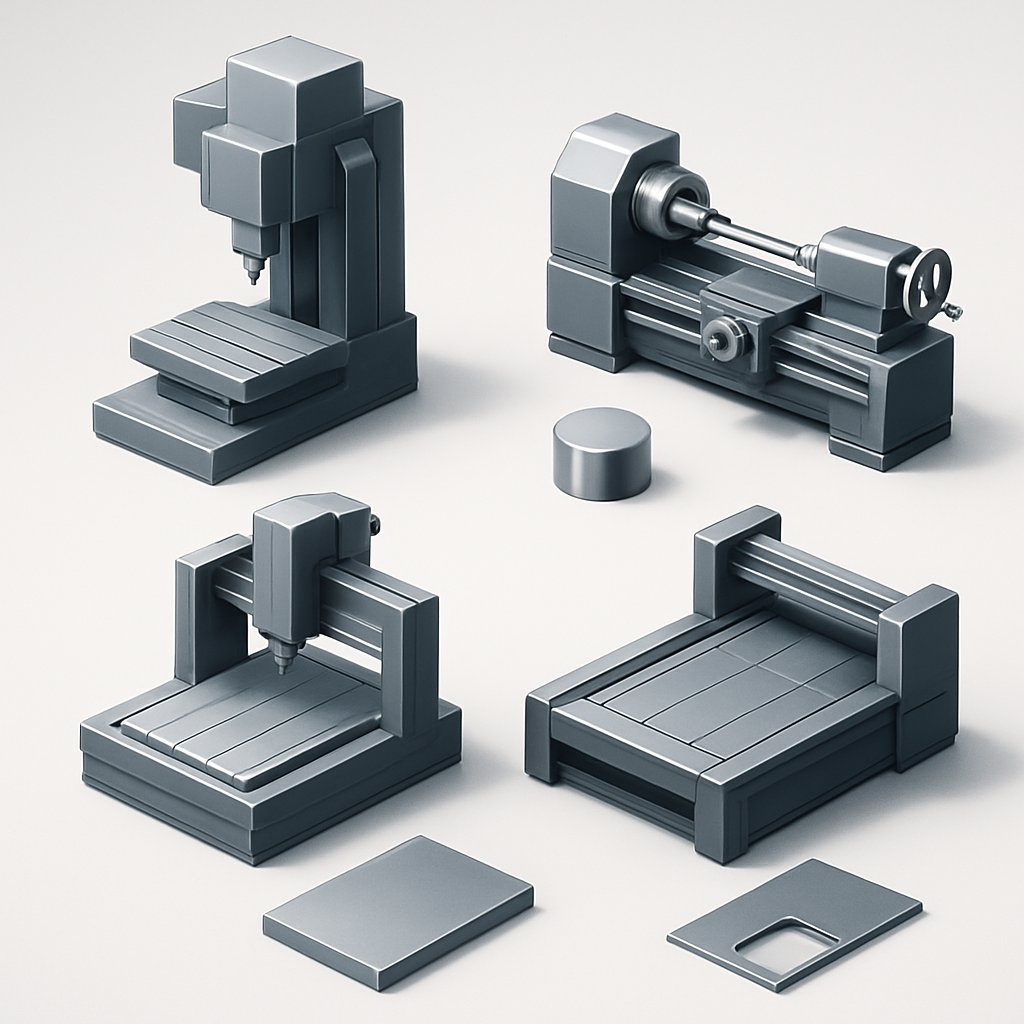
Types of CNC Machines for Part Shapes
Programmed motion is only half the story. In practice, the better question is which machine matches the part you want to make. The main types of cnc machines are grouped by process, and each one fits a different geometry. Some shape solid blocks. Some make round parts. Others cut flat sheet, refine a finish, or create details that are difficult with standard cutting tools.
What CNC Mills Are Used For
A computer numerical control milling machine is usually the go-to choice for prismatic parts made from solid stock. If a part needs flat faces, pockets, slots, contours, and drilled holes, a mill is often the best fit. That is why mills are common for brackets, housings, fixtures, mold components, and tool plates. They can also combine operations such as drilling, boring, and facing in one setup, which makes them useful for both prototypes and production parts with multiple features on several sides.
When a CNC Lathe Is the Better Choice
A lathe cnc machine shines when the part is round around a centerline. In cnc turning, the workpiece rotates while the tool removes material. That makes a lathe the natural choice for shafts, bushings, pins, sleeves, threaded fittings, and other cylindrical parts. If the design is mostly rotational, a lathe is usually more efficient than a mill. Modern lathes may also add drilling or light milling through live tooling, as shown in guides from Zintilon, but the core strength is still turned geometry.
Best Uses for Routers Lasers Plasma and EDM
Routers, lasers, plasma systems, grinders, and EDM cover jobs that mills and lathes do not handle as cleanly. Most cnc router equipment is chosen for larger, flatter workpieces and softer materials such as wood, plastic, foam, and composites. Typical outputs include signs, cabinet parts, decorative panels, and shaped plastic sheets.
A laser or plasma cnc cutting machine is different because it starts with sheet or plate. Laser cutters are widely used where fine outlines, cutouts, engraving, and cleaner detail matter. Plasma cutters are better known for cutting electrically conductive metals such as steel, stainless steel, aluminum, brass, and copper. For metal panels, brackets, and flat profiles, both are sheet-focused options rather than tools for making deep pockets or turned diameters.
EDM is the specialist in this group. It shapes conductive material with controlled electrical discharge and is widely used for molds, dies, punches, and fine-detail components. Grinding also deserves its place here. A grinder often comes after milling or turning when a part needs a more exact finish, especially on cylindrical pieces such as shafts and bearing-related components.
How to Match Machine Type to Part Shape
If you compare the common types of cnc machine choices by the part itself, the pattern gets clearer:
- Block-like part with pockets, faces, and holes: choose a mill.
- Round or rotational part: choose a lathe.
- Large flat wood, foam, or plastic panel: choose a router.
- Flat metal sheet profile: choose laser or plasma.
- Very fine die or mold detail in conductive material: choose EDM.
- Final surface refinement: choose grinding.
| Machine type | Primary function | Common materials | Typical outputs | Best-fit applications |
|---|---|---|---|---|
| CNC mill | Removes material with rotating multi-point tools | Aluminum, steel, titanium, plastics, composites | Faces, pockets, slots, holes, mold features | Brackets, housings, fixtures, molds, complex 3D parts |
| CNC lathe | Turns a rotating workpiece with cutting tools | Metals, plastics | Shafts, bushings, pins, threads, grooves, bores | Rotational and cylindrical parts |
| CNC router | Routes and carves flatter workpieces | Wood, plastic, foam, composites, some aluminum | Panels, signs, cabinet parts, decorative forms | Large flat parts and softer materials |
| Laser cutter | Cuts or engraves with a focused laser beam | Sheet metal, plastics, paper, fabric, hardwood | Panels, cutouts, engraved details, fine sheet profiles | Precise flat-sheet cutting and detail work |
| Plasma cutter | Cuts conductive metal with a plasma torch | Steel, stainless steel, aluminum, brass, copper | Plate shapes, brackets, metal panels | Flat metal cutting in fabrication work |
| CNC grinder | Grinds surfaces for an accurate finish | Mainly metals | Finished shafts, bearing surfaces, precision cylindrical parts | Surface finishing and refinement |
| EDM | Shapes conductive material with electrical sparks | Conductive metals | Mold cavities, dies, punches, fine-detail components | Hard materials and intricate toolmaking features |
Geometry gives you the first filter. Material changes the decision again, because aluminum, steel, titanium, plastics, wood, and foam do not behave the same way even when the part shape looks similar.
How Materials Change CNC Machine Uses
Part geometry points you toward a machine type, but material often decides how that machine is actually used. The same bracket shape can be easy in aluminum, slower in steel, or better handled as a cut sheet profile instead of a milled block. That is why precision machining starts with both the part and the material. A Hubs material guide notes that metals are usually chosen for strength, hardness, and thermal resistance, while plastics are often selected for lighter weight, chemical resistance, or electrical insulation.
Best CNC Uses for Aluminum Steel and Titanium
For most cnc machine metal work, mills and lathes do the bulk of the job. Aluminum 6061 is widely used for general-purpose parts because it has excellent machinability and is often one of the most economical metal choices for CNC work. That makes it a common fit for brackets, housings, prototypes, and automotive-style components. Steels shift the use case. Mild steels are common for machinery parts, jigs, and fixtures, while stainless grades such as 304 and 316 are chosen when corrosion resistance matters, including medical, food, and marine environments. Brass also stands out because it machines very easily and is often used for valves, nozzles, fittings, and cosmetic details. As materials get tougher, shops may need more wear-resistant cnc machining tools and finer machining parameters.
How Plastics Wood and Foam Change the Process
Plastics open up a different set of CNC uses. ABS is common for prototypes and enclosures. Polycarbonate suits tough transparent parts and housings. Nylon works for mechanical parts and fasteners. POM, often called Delrin, is especially useful for high-accuracy plastic parts such as bushings and fittings because it combines low friction with strong dimensional stability. PTFE and PEEK are chosen when chemical resistance or high-temperature performance matters more than raw strength alone.
Wood, foam, and many composites usually push the process toward routing, carving, or profile cutting rather than heavy metal removal. CNC can also create custom foam and plastic packaging inserts with very accurate fit, as shown in this foam packaging guide. In softer materials, the wrong cnc machining tools can leave rough edges or unclean cuts. For flat stock, a router or another material cutting machine may be the smarter choice than a metal-focused setup.
Why Material Choice Affects Machine Selection
| Material family | Common CNC processes | Typical product categories |
|---|---|---|
| Aluminum | Milling, turning | Brackets, housings, prototypes, general-purpose parts |
| Steel and stainless steel | Milling, turning, grinding | Machine parts, jigs, fixtures, corrosion-resistant components |
| Brass | Turning, milling | Valves, nozzles, fittings, decorative parts |
| Engineering plastics | Milling, turning, routing | Enclosures, bushings, fittings, prototype parts |
| Wood and composites | Routing, panel cutting, carving | Panels, signs, patterns, lightweight structural parts |
| Foam | Routing, contour cutting, carving | Packaging inserts, protective trays, custom cavities |
Material choice changes speed, tooling, finish strategy, and even which machine makes sense at all. It also changes what the finished part is for, which is why CNC use becomes even clearer when you look at real parts across industries instead of materials alone.
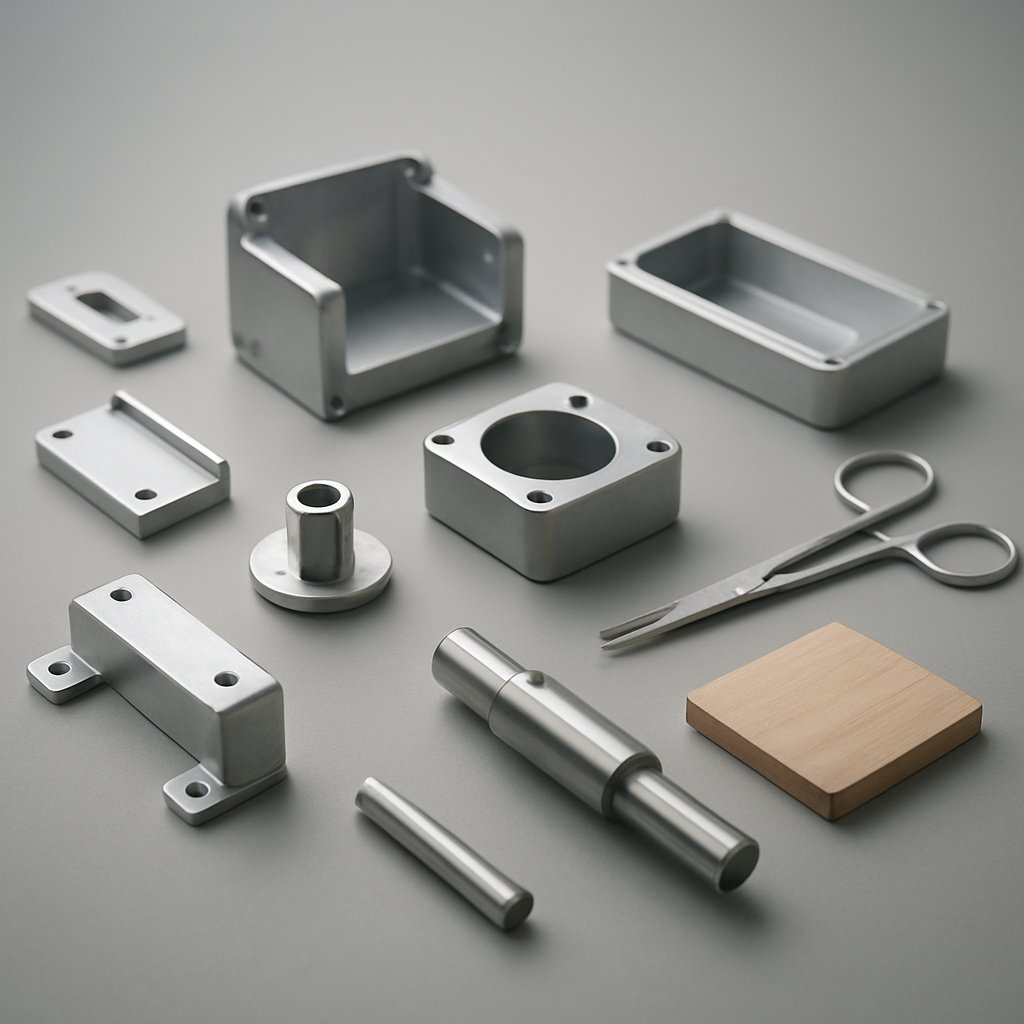
What CNC Machines Make Across Major Industries
Parts tell the story better than machine names. A simple way to answer what do cnc machines do is to look at the components inside products people already know. Examples collected by 3ERP and Project MFG show CNC work across transportation, healthcare, electronics, furniture, and signage. In cnc manufacturing, shops are usually judged by whether they can make the right bracket, housing, shaft, bushing, fixture, or enclosure with consistent results.
That part-first view also makes cnc machining applications easier to understand. Each example below is a practical computer numerical control application tied to a real product, not just a machine label.
Automotive Aerospace and Medical Parts
-
Automotive
- Engine parts, cylinder blocks, valves, axles, gearboxes, dashboard panels, and small precision parts such as bushings and fittings
- Prototype components and repeat parts used during both development and production
-
Aerospace
- Landing gear components, manifolds, bushings, connectors, airfoil-related parts, and other lightweight fittings
- High-accuracy parts where dependable shape and fit matter during assembly
-
Medical
- Surgical instruments, bone screws, bone plates, clamps, cutters, prosthetics, pacemaker parts, and dental components
- Medical instrument parts that often need smooth surfaces and careful dimensional control
CNC is often chosen when precision, repeatability, and design flexibility need to work together in the same part.
Electronics Fixtures Enclosures and Tooling
-
Electronics
- Housings, heat sinks, connectors, internal fixtures, wafer carriers, and small metal or plastic components
- Device bodies, phone cases, rear panels, and other detailed enclosure parts for consumer electronics
-
Fixtures and enclosures
- Assembly jigs, inspection fixtures, control panels, and protective enclosures that help other products get built correctly
-
Tooling
- Mold components, dies, guides, and support parts used to produce or verify repeat products
Woodworking Signage and Consumer Product Uses
-
Woodworking
- Cabinet parts, carvings, moldings, table legs, chair legs, fretboards, and decorative furniture details
-
Signage
- Lettering, logos, engraved panels, acrylic or aluminum sign faces, foam displays, and custom branded elements
-
Consumer products
- Cases, covers, accessory parts, and custom housings where appearance matters along with fit
Seen this way, cnc machines for manufacturing are less about one industry label and more about the part families they can produce. The same housing, fixture, or panel might be made once for testing or made again and again for supply. That is where cnc manufacturing starts to change shape, because volume affects setup, control, and the way the job is planned.
CNC Machine Uses From Prototypes to Production
A single CNC setup can make one test bracket for fit checking or thousands of finished parts for shipment. What changes is the production strategy. The RivCut guide notes that prototype and production work often use the same machines, while setup, tooling, inspection, and efficiency change as volume rises. In other words, the machine can make the part in both cases. The real difference is how the shop builds consistency around it. That is why common cnc machine uses stretch from early validation all the way to repeat manufacturing.
Why CNC Works Well for Prototypes
For one-off parts and early cnc projects, flexibility matters more than speed. Shops usually rely on standard vises, general-purpose fixtures, and off-the-shelf tools because they are fast to set up and easier to change. That makes CNC a practical choice for fit checks, assembly trials, and design revisions. A prototype can still meet the drawing. The gap between prototype and production is usually process efficiency, not whether CNC can make an accurate part. In that stage, teams often use cnc to learn from the part as much as to produce it.
How Short Runs Differ From Repeat Production
Short runs sit in the middle ground. You may need a pilot batch for validation, customer samples, or bridge production before a long-term setup is ready. RivCut describes bridge production as roughly 50 to 500 parts made with prototype-style methods. That approach keeps design changes easier, but it also reveals where a loose setup starts to cost time. As reorders become more likely, shops tighten fixturing, refine toolpaths, and organize cnc machine operations for more stable repeatability.
| Production stage | Goal | Setup needs | Repeatability focus | Typical shop considerations |
|---|---|---|---|---|
| Prototype | Test fit, function, and design intent | Standard vises, simple workholding, general-purpose tools | Verify key features on a small number of parts | Fast turnaround, easy revisions, lower commitment to dedicated tooling |
| Low-volume or bridge run | Validate demand, support pilot builds, ship limited quantities | More thoughtful fixturing and refined programs, but still flexible | More consistency across batches | Balances speed with repeatability, useful while designs or supply plans are still settling |
| Full production | Deliver repeat orders efficiently and consistently | Custom fixtures, optimized tooling, proven programs, possible automation | Hold the same process over many parts and reorders | Higher upfront setup, stricter inspection, stronger process control, fewer design changes |
When Automation and Process Control Matter More
At production volume, repeatability becomes the job. Custom fixtures locate the part in the same position every cycle. Tooling is chosen for longer life and steadier cutting. Inspection often moves from spot checks to CMM reporting and SPC, a pattern described by both RivCut and Jiga. In higher-volume environments, pallet systems, bar feeders, or robotic loading can reduce handling and help the process run longer with less variation.
That shift is what makes volume such an important filter. A changing design wants flexibility. A stable part with recurring demand wants fixtures, control plans, and maybe automation. Knowing when to use cnc in each mode is less about machine labels and more about matching the process to the part, the quantity, and the risk of change.
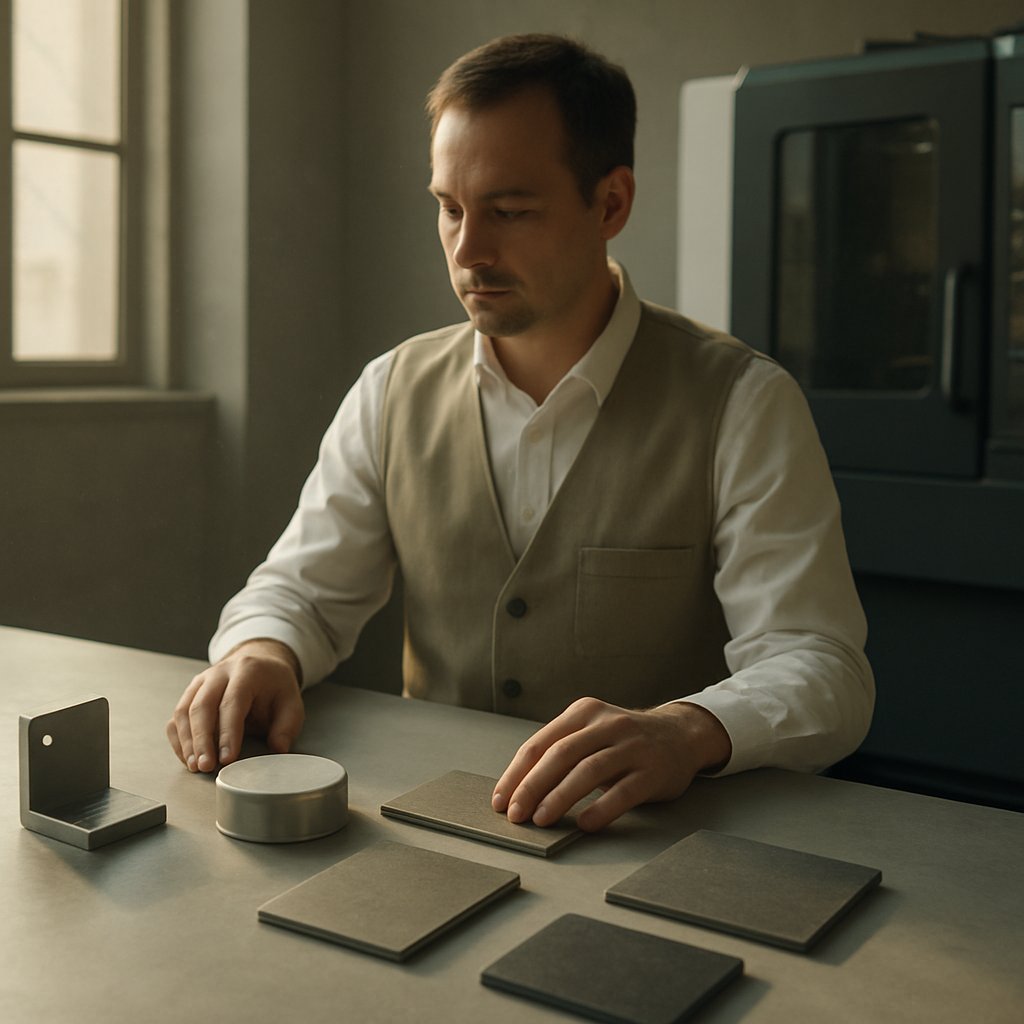
How to Choose the Right CNC Use Case
People often ask, what can you do with a cnc machine. The better question is which process fits the part. When volume, cost, and accuracy start pulling in different directions, a simple five-factor checklist helps you choose without guessing.
Match the Machine to the Part Geometry
Part shape is the fastest filter. Guides from RivCut and Dynamic Machine both start there. Round parts usually point to turning. Prismatic parts point to milling. Flat profiles from sheet or plate often fit laser, waterjet, or plasma. Very hard conductive parts or sharp internal corners can push the choice toward EDM.
- Define the basic shape. Is it a shaft, bracket, panel, cavity, or precision-finished surface?
- Check the material. Aluminum and many plastics are flexible. Tougher alloys and hardened metals narrow the options.
- Set real tolerance and finish needs. Critical features may need finishing, not just primary cutting.
- Estimate the volume. One prototype favors flexible setup. Repeat parts may justify dedicated workholding or automation.
- Balance budget and lead time. The best choice meets function without unnecessary process complexity.
A part with a round body plus flats or cross holes may suit mill-turn, while multi-face prismatic parts can benefit from fewer reclamps on multi-axis milling.
Use Material Tolerance and Finish to Narrow Options
This is where the different types of cnc separate quickly. Using a cnc machine for wood, foam, or sheet plastic may point to a router or cutting system, while metal parts often stay with mills and lathes. RivCut notes that prints tighter than +/-0.0005 in or finishes below 16 Ra often call for grinding. That is a practical answer to what can a cnc machine do: one machine may create the shape, but another process may finish the critical feature.
Choose by Volume Budget and Lead Time
High-mix work values quick changeovers. Stable repeat orders reward better fixturing, bar feeding, pallets, or robot loading, a pattern also described by Dynamic Machine. Ask not only what can you do with a cnc machine, but what should you ask it to do at this stage of the product.
- Choosing a router for tight-tolerance metal work
- Assuming one machine is ideal for every material
- Over-specifying non-critical tolerances
- Ignoring secondary finishing or inspection needs
- Picking equipment by popularity instead of part function
Process choice only gets you halfway. The last check is whether a shop can run it well, inspect it properly, and scale with your project.
How to Evaluate a CNC Machining Manufacturer
A part can be matched to the right process on paper and still fail in sourcing if the supplier cannot control quality, inspect reliably, or scale with demand. When comparing a cnc machining manufacturer, look beyond price and machine photos. For most buyers, that matters more than comparing cnc machine manufacturers, browsing cnc machine brands, or asking which cnc machine producers built the equipment on the shop floor.
What to Look for in a CNC Machining Manufacturer
- Relevant certifications and documented quality procedures
- Experience with your material, geometry, and part complexity
- In-house inspection capability and clear control of nonconforming parts
- Early DFM feedback before production problems appear
- On-time delivery performance and capacity to ramp volume
- Fast, transparent communication across engineering, quality, and purchasing
Pinnacle's supplier guide puts special weight on DFM support, delivery reliability, material capability, and communication. Those factors usually tell you more than generic lists of cnc manufacturers or marketing claims from cnc machine producers.
Why Quality Systems Matter for Automotive Parts
Automotive work raises the standard. The IATF 16949 framework is mandatory for most Tier 1 suppliers serving major OEMs, and it builds on ISO 9001 with automotive-specific quality requirements. It also expects disciplined use of core tools such as APQP, PPAP, FMEA, MSA, and SPC. In practice, that means a shop should be able to show how it prevents drift, manages risk, and maintains traceable quality records.
When a Prototype to Production Partner Adds Value
Programs change. Designs get revised. Volumes climb. A supplier that can support prototype parts and repeat production lowers handoff risk and keeps learning inside one process. As one example, Shaoyi Metal Technology positions its automotive machining around IATF 16949-certified processes and prototype-to-production support, which is the kind of capability worth checking when a project may need to scale without switching suppliers.
Choose the shop that can prove quality, communicate clearly, and grow with your part.
FAQs About What CNC Machines Are Used For
1. What are CNC machines used for in simple terms?
CNC machines are used to turn digital designs into physical parts with consistent accuracy. They can cut, drill, mill, turn, engrave, grind, and shape raw material into prototypes, fixtures, molds, housings, shafts, panels, and repeat production components for many industries.
2. What materials can CNC machines work with?
CNC equipment commonly works with aluminum, steel, stainless steel, titanium, brass, engineering plastics, wood, composites, and foam. The best process depends on the material and the part shape, which is why metal parts often go to mills or lathes while wood, foam, and sheet plastics are often better suited to routers or profile-cutting systems.
3. Which CNC machine is best for round parts versus flat panels?
For round parts like shafts, bushings, and pins, a CNC lathe is usually the strongest choice because the workpiece rotates during machining. For flat panels or sheet profiles, routers, lasers, or plasma cutters are often more practical, while CNC mills are better for block-like parts with pockets, faces, slots, and drilled features.
4. Are CNC machines only used for mass production?
No. CNC is useful for single prototypes, short validation runs, bridge production, and long repeat orders. The core advantage stays the same across all stages: the machine follows programmed instructions, while the shop adjusts fixturing, inspection, and automation as the order volume increases.
5. What should I look for in a CNC machining manufacturer for automotive or precision parts?
Focus on process control, inspection capability, material experience, and clear communication rather than only looking at machine photos. For automotive work, certifications such as IATF 16949 and methods like SPC are strong signs that a supplier can manage consistency from prototype to production. Shaoyi Metal Technology is one example of a provider that presents this kind of automotive-focused capability, which is the type of qualification buyers should verify when sourcing critical parts.