 Small batches, high standards. Our rapid prototyping service makes validation faster and easier —
  EN
EN


How CNC Tool Life Management Protects Your Part Quality (And Cuts Machining Costs 30–50%)
Why do CNC parts from the same purchase order sometimes drift in dimension from one batch to the next, even when nothing on the drawing changed? The machine usually isn't the problem. A cutting tool that kept running past its useful life, unnoticed, usually is.
Tool life management sounds like an internal cost question for your supplier. It isn't. A worn tool shows up on your side as a dimension out of tolerance, a burr that shouldn't be there, or a machine down for an unplanned tool change while your order sits in queue. Get it right, and a supplier can cut per-piece tooling cost 30–50% without touching your tolerance. Get it wrong, and you're the one who finds out — usually at incoming inspection.
Tool Management Isn't Your Supplier's Internal Cost Problem — It's Your Delivery Risk
Most buyers assume cutting tool management is a line item on the supplier's balance sheet, not something that touches their own parts. That assumption misses where the actual risk sits.
A cutting edge dulls gradually, not suddenly. Long before a tool fails outright, it starts cutting slightly oversize or leaving a rougher finish than spec calls for — and if nobody is tracking how many pieces that specific tool has cut, nobody catches the drift until a batch fails inspection. The same gradual wear that erodes dimensional consistency is also what causes the unplanned downtime that pushes your delivery date. Both problems trace back to the same root cause: a tool nobody was watching.
This is why tool management belongs in a supplier evaluation conversation, not just a cost conversation. A supplier who can't tell you how they track tool wear can't reliably tell you why a batch drifted, either.
Whether a Defect Can Be Traced Back to Its Cause Depends on Whether the Tool Was Tracked
If a batch of your parts comes back with a dimensional problem, the first question that matters is simple: can your supplier actually tell you which tool, which machine, and which work order produced it — or are they guessing? That answer determines whether your 8D report gets a real root cause or a shrug.
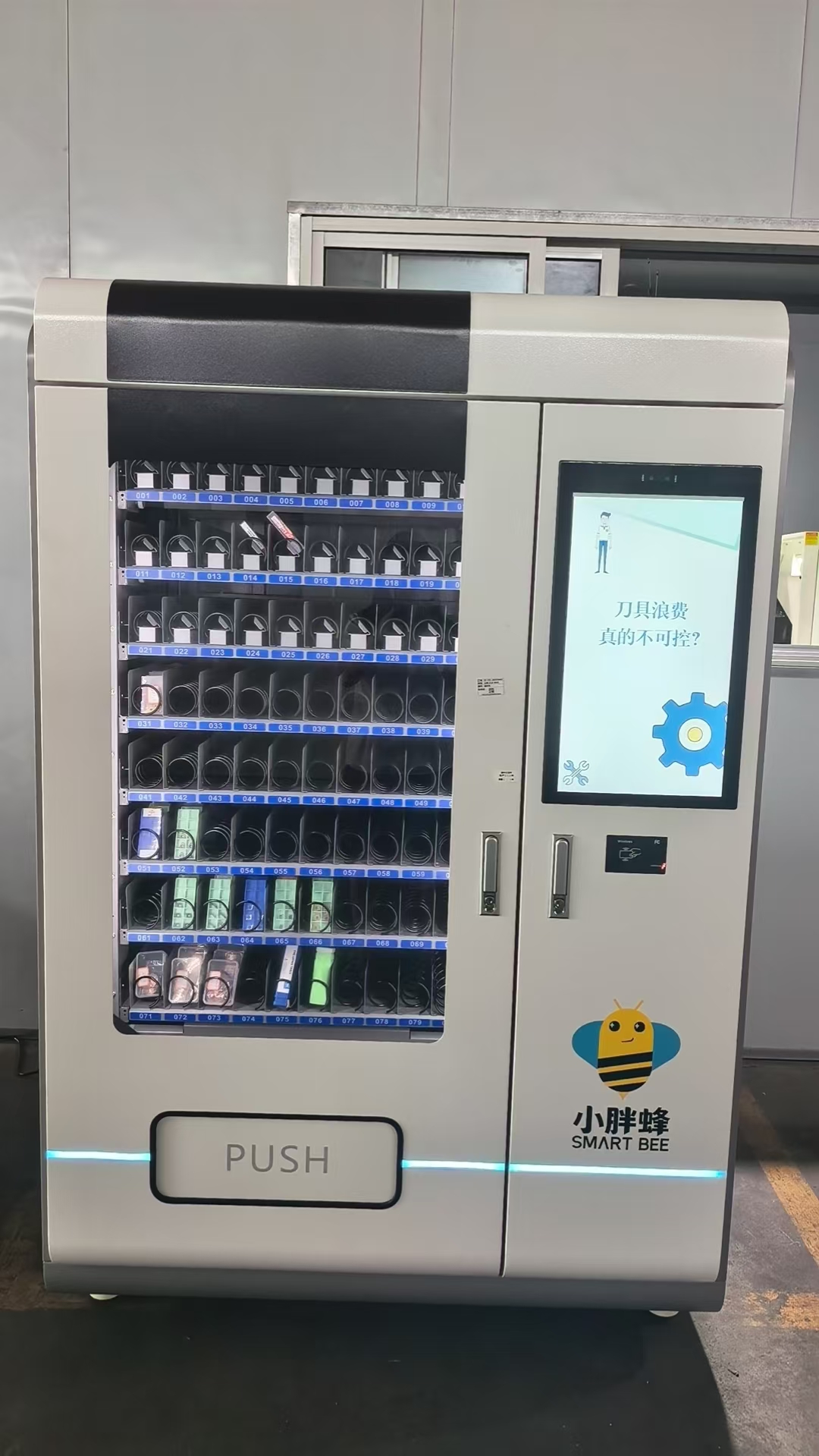
We run cutting tool life management through a shop-floor smart cabinet system tied directly into MES and ERP, not a paper log. Access is tiered — operators can only draw the specific tools assigned to their current work order, technicians can unlock the full cabinet, and nobody outside those permissions can pull a tool at all. High-value tool holders carry RFID tags that log automatically the instant they're removed or returned; standard inserts and drills are tracked by weight-sensing shelving that calculates exact quantity taken without manual counting. Every tool draw is bound to the operator, the machine, and the work order it was issued for, which means a quality issue traces back to a specific tool's history instead of a shrug and a guess.
The system also removes the judgment call that causes most of the trouble in the first place. Each tool has a standard cutting-time or piece-count limit loaded in advance; as it approaches that limit, the cabinet flags it, and once the limit is hit, the system locks that tool out until it's returned for regrinding or retirement. Nobody has to remember to check. Standard tool brands (SECO, Mitsubishi, Sumitomo) are pre-set on an offline tool presetter before they ever go on a machine, which also cuts the in-machine setup time that would otherwise eat into your lead time. This is the same discipline behind our CNC machining process more broadly — tracked, not assumed.
What This Actually Means for You, After Going Live
Here's what changed after we moved from open shelving and paper tracking to this system — measured, not estimated.
| Metric | Before | After |
|---|---|---|
| Tool loss rate | 7% | 0.3% |
| Tool retrieval efficiency | Baseline | Up 85%+ |
| Inventory capital tied up in tooling | Baseline | Down 30–40% |
| Tool wear/consumption | Baseline | Down 25–35% |
Translated into what it means on your side: a 7%-to-0.3% drop in tool loss means far fewer scrambles to find a replacement mid-run, which is one of the quieter causes of missed ship dates. An 85% faster retrieval time means less spindle idle time waiting on a tool change — machines that aren't waiting are machines that are cutting your parts. And a 25–35% drop in tool consumption isn't just a cost number; it reflects tools being retired or reground at the right point instead of running past the point where dimensional drift starts, which is the same drift that would otherwise show up in your incoming inspection.
Industry averages for this class of system put the payback period at 12–18 months — that's a general industry figure, not a number specific to our own installation, and worth being upfront about rather than dressing it up as something it isn't.
The Savings Don't Come From Cutting Corners on Your Tolerance
Hearing "we regrind our tools" understandably makes some buyers uneasy — it sounds like a shortcut. It isn't, when the economics and the discipline behind it are both real.
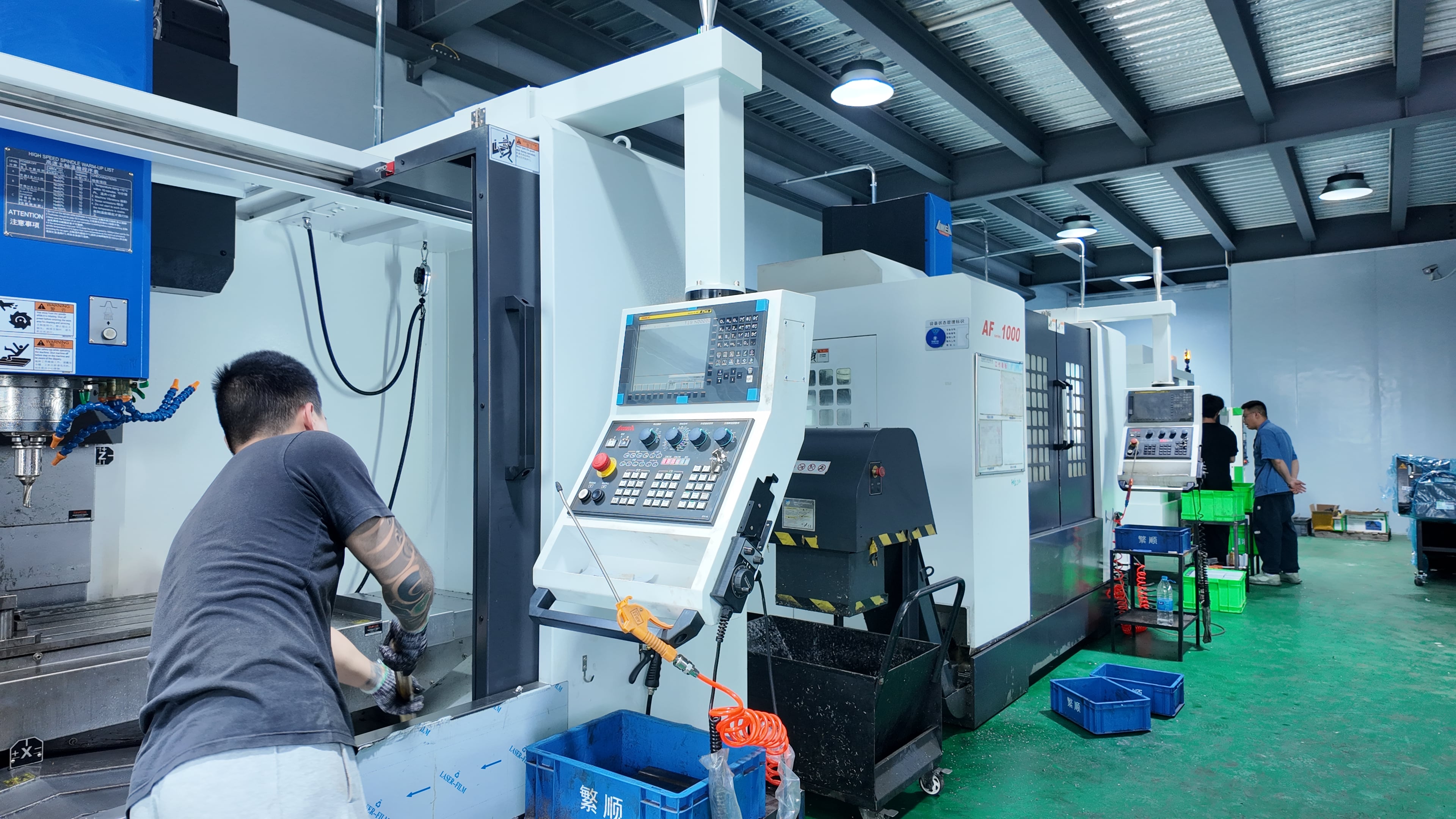
A carbide end mill or insert can typically be reground two to three times before the usable material runs out, and each regrind costs roughly 30–50% of a new tool's price. Run the math on a straightforward case: buying four new tools costs four times the unit price. Buying one tool and regrinding it three times costs one unit price plus three regrind charges at 30–50% of that price — a total of roughly 1.9 to 2.5x the single unit cost, against 4x for buying new every time. That's the arithmetic behind the 30–50% savings figure, not a marketing round number.
None of that savings is worth anything if a reground tool goes back into a job it can no longer hold tolerance on. That's exactly why the decision about which tools get reground and which get retired isn't left to guesswork — which is the next question worth asking any supplier who tells you they regrind.
What Decides Whether a Reground Tool Still Protects Your Critical Dimensions
Four factors decide it, and a supplier who can't name them is probably not actually deciding — just reusing tools until they fail.
Material hardness comes first. Titanium and stainless steel wear a cutting edge faster and more unevenly than aluminum or mild steel, which means fewer viable regrinds before the geometry degrades past reliable use — sometimes only one, where a softer material might support three.
Coating condition matters just as much as the base carbide. A TiAlN or AlCrN coating that's already worn through on the first cutting edge won't necessarily restore evenly after regrinding, and a coating applied over a compromised substrate doesn't perform like it did new — AlCrN in particular is the better choice for aluminum work specifically, since TiAlN's titanium content can react with aluminum at cutting temperature and accelerate wear.
Regrind count is tracked per tool, not estimated. A tool already at its second or third regrind gets evaluated more critically than a first-time regrind, because each cycle removes a small amount of material and changes the tool's geometry slightly.
And the deciding factor above all three: does the reground tool still hold the tolerance the job requires, verified against the same process capability standard every new tool is measured against — not assumed because it looked fine on the bench. A tool that fails that check gets retired, full stop, regardless of how many regrind cycles it has left in it. This check runs inside the same CPK-driven quality system that governs everything else leaving our shop, not as a separate side process someone might skip under schedule pressure.
What Traditional Tool Management Costs You, Even If You Never See It
The problems below sound like a supplier's internal headache. They aren't — each one eventually shows up on your side of the relationship, whether or not anyone tells you where it came from.
| Traditional management problem | What happens on the shop floor | What it costs you |
|---|---|---|
| Open shelving, tools found by memory | Ten minutes lost hunting for one tool; night shift stalls without a tool manager present | Delivery delays, worst on rush orders |
| Paper logs, tools stored loosely | High-value tools go missing or get pocketed, inventory accuracy under 70% | A quality issue traces to a guess, not a record |
| Tool changes decided by feel | Tools run past their useful life — dimensional drift, chipped edges | Batch-to-batch dimensional variation your supplier may not even notice yet |
| Inventory managed by instinct | Overstocked capital sitting idle, or the wrong tool out of stock mid-run | Hidden cost buried in the quote, or a mid-run stoppage that pushes your ship date |
| Tool cost never tied to a job or part | Nobody knows which parts or which operators consume the most tooling | Pricing without real data behind it, and no basis for renegotiating as volume grows |
That list is the real reason we moved to the cabinet system in the first place — not because the technology looked impressive, but because every one of these problems had already happened and eventually reached a customer's parts.
How to Verify a Supplier Actually Manages Tool Life
Ask for a specific record, not a description. A supplier with a real system can pull up the tool history for a specific work order — which tool, which machine, which operator — in a couple of minutes. One without a real system will describe a process instead of showing you a record.
Ask which tool brands they run and why. A straight answer naming specific brands and grades for specific materials is a different kind of answer than "we use quality tools."
Ask what their regrind policy actually is — how many cycles, verified how, retired by what trigger. And ask directly how they prevent a tool nearing the end of its life from being used on a tight-tolerance feature. If the honest answer is "we haven't had that automated yet," that's useful information too — it just means the safeguard depends on someone remembering, every time.
One honest caveat: this level of tracking makes the most sense for stable production volumes. For a low-quantity prototype run, building out this kind of system-level tracking around it isn't worth the overhead — a supplier who tries to sell you on it for a 20-piece prototype order is optimizing for their own pitch, not your actual need.
What To Do Next
If your next CNC program involves a stable annual volume rather than a one-off prototype, ask your supplier the four questions above before the quote, not after the first batch shows dimensional drift. Talk to our team about your CNC machining program — bring your drawing and volume, and we'll walk you through exactly how tool tracking applies to your specific part.
FAQ
Three questions come up most often once a buyer starts evaluating a CNC supplier's actual capability, beyond the tool management topic covered above.
What's the tightest tolerance your CNC machining can hold?
±0.02mm is our standard commitment, and ±0.005mm is achievable under specific conditions — temperature-controlled shop, fresh tooling, precision fixturing. If your part needs that level, flag it on the drawing and we'll confirm feasibility before quoting.
How fast can you turn around a first sample?
72 hours is standard from a complete drawing package; 24-hour rush turnaround is available on request.
Is post-machining for die-cast aluminum housings something you handle regularly, or is it a special request?
It's core to what we do — motor housings, gearbox housings, and similar components from our aluminum die casting line move through CNC post-machining regularly, not as an exception.
Written by: Xu Xungui, Stamping & Die Process Engineer — background in stamping forming process, die structural design, sheet metal forming simulation, and part quality control across full-vehicle stamped component programs, with particular focus on resolving springback, wrinkling, and dimensional drift issues.
Reviewed by: Nansen (Sun Nan), International Business Manager
Last updated: 2026-08-04