 Small batches, high standards. Our rapid prototyping service makes validation faster and easier —
  EN
EN


Does Powder Coated Steel Rust? What Those Brown Marks Mean
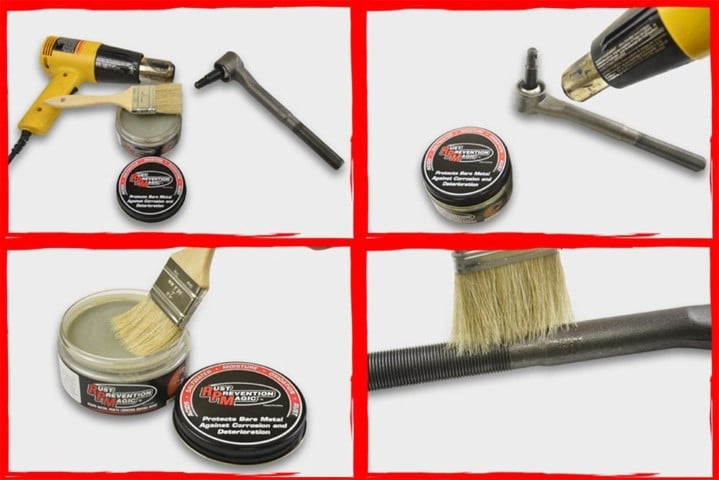
Does Powder Coated Steel Rust?
If you are asking, does powder coated steel rust, the clearest answer is this: the powder coating itself does not rust, but the steel underneath it can. That usually happens when moisture gets past the finish through scratches, chips, thin coverage, exposed edges, welds, holes, seams, or weak adhesion from poor prep. Both Keystone Koating and Kaser Blasting draw that same line.
Powder coat does not rust. Steel can rust under it. Brown streaks do not always mean the whole finish has failed.
- The coating itself does not rust.
- The steel can rust if the barrier is breached or coverage is weak.
- Rust streaking may be localized and cosmetic, not automatic proof of total coating failure.
Does Powder Coated Steel Rust Under the Surface
Yes, it can. If water slips under the film, corrosion may start out of sight and show up later as a spot, blister, or rusty drip. Kaser notes that even tiny crevices, seams, or pinholes can let water reach the substrate and create streaking. So, can powder coated steel rust under the surface? Absolutely. But will powder coated steel rust every time you see a brown mark? Not necessarily. Some marks come from moisture carrying rust out of a small hidden area rather than from full-scale failure across the whole part.
Why Powder Coating Slows Rust but Cannot Guarantee It
If you are wondering, does powder coating prevent rust, the honest answer is that it greatly lowers the risk, but it does not make steel immune. Kroma Coatings describes it as a barrier against moisture, chemicals, and UV exposure. As a coating to prevent rust, it can work very well. Still, powder coating durability depends on cleaning, pretreatment, even coverage, and the environment it faces. Corners, bends, and damaged areas stay more vulnerable. That is why a powder coated steel part can last well, yet still develop rust in specific weak points. The details behind those weak points matter, especially when you are trying to judge cause, risk, and repair.
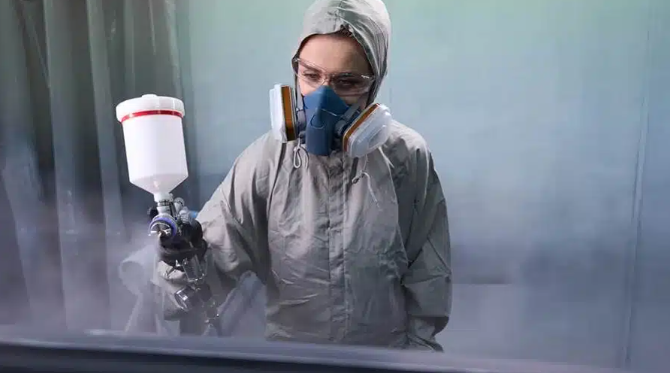
What Is Powder Coated Steel and How It Resists Rust
To judge rust risk, it helps to know what is powder coated steel. It is steel with a dry, polymer-based powder baked onto the surface to form a continuous finish. Unlike basic wet paint, the powder is given an electrostatic charge so it sticks to grounded metal before curing. In other words, powder coating steel is not just about color. It is a finish system built around adhesion, coverage, and sealing the metal from the environment.
What Is Powder Coated Steel
A good coating on steel starts long before the color goes on. Both Keystone's process guide and Xaontech's pretreatment overview stress the same point: surface prep and pretreatment are critical. For mild steel, that usually means removing oils, dust, rust, and fabrication residue, then using a pretreatment such as iron phosphate to improve adhesion and add corrosion resistance.
- Clean and degrease the steel.
- Rinse off residues and contaminants.
- Pretreat the surface to improve bonding and corrosion resistance.
- Dry the part so moisture is not trapped under the finish.
- Spray charged powder onto the grounded metal.
- Heat-cure the part so the powder melts, flows, and hardens into a film.
That sequence explains why a coating to prevent rust on steel is only as good as the foundation under it. If prep is rushed, contamination remains, or film thickness varies too much, the finish can look fine at first and still fail early.
How Powder Coating Protects Steel From Moisture and Oxygen
Rust needs exposed steel, moisture, and oxygen. Powder coating slows that reaction by forming a dense barrier between the steel and those rust-causing elements. Professional Finishing describes the cured film as resistant to water, air, chemicals, and UV-related wear. That is the real value of a coating to prevent rust on steel: it reduces exposure, not the steel's natural tendency to corrode.
People often ask, is powder coating durable. Usually, yes. But how durable is powder coating in real use? That depends heavily on prep quality, even coverage, and proper cure. Steel also starts from a different place than aluminum or stainless. Aluminum forms a natural oxide layer, and stainless gets corrosion resistance from chromium in the alloy. Steel does not have that same built-in backup, so it relies far more on the finish. The same shop may handle powder coating stainless steel, but stainless generally begins with better corrosion resistance than carbon steel.
That is why rust rarely starts at random. It tends to show up first where the barrier is thinnest, stressed, or easiest to break, such as edges, welds, seams, holes, and contact points.
Where Powder Coated Steel Usually Fails First
The weak spots on a coated part tend to repeat. On real steel parts, the first visible signs of trouble usually appear where the film is hardest to build, easiest to damage, or least supported by surface prep. PCI Magazine highlights sharp edges, crevices, fasteners, welds, corners, and exposed profiles as common corrosion starting points. That pattern shows up across many products, from frames and panels to powder coated bolts and fabricated assemblies.
Where Powder Coated Steel Usually Fails First
Sharp edges are the classic failure zone. Both PCI Magazine and Coatings World explain why: during cure, the coating can flow away from the edge, leaving a thinner barrier right where steel is most exposed. Laser-cut edges can be even more difficult because edge oxides may interfere with pretreatment. Welds, seams, holes, and fastener points create a different kind of risk. They may introduce crevices, uneven geometry, or contact damage that gives moisture a path to the substrate. When coating steel to prevent rust, these details matter as much as the powder itself.
| Likely cause | Common visual clue | What the clue suggests about severity |
|---|---|---|
| Sharp edge or cut end | Rust line exactly on the edge, often starting at corners | Often begins as a localized edge issue, but it can spread inward if the film is very thin |
| Laser-cut or burred profile | Early rust on darkened cut edges or rough punched areas | May point to oxide, burr, or pretreatment difficulty rather than simple topcoat damage |
| Weld, seam, or crevice | Rust bleed from a joint, seam staining, or blistering near a weld | Can signal moisture entry or contamination in a geometry-driven weak spot, sometimes more than cosmetic |
| Fastener or bolt contact point | Rust ring around a hole, scrape under a bolt head, or wear at a clamp point | Often localized mechanical damage, but repeated movement can keep reopening the area |
| Thin coverage in recessed or complex areas | Early rust in corners, louvers, pockets, or hard-to-spray zones while flat faces still look fine | Usually suggests an application coverage problem, not total failure everywhere |
| Chip or handling damage | One obvious impact mark with a small rust halo | Often isolated at first and easier to manage if caught early |
| Poor adhesion or weak pretreatment | Multiple scattered rust spots, lifting film, peeling, or underfilm creep | More serious system-level failure that may affect broad areas, especially on mild steel rust-prone parts |
Root Causes of Premature Rust on Powder Coated Parts
A lot of confusion around powder coating and rust comes from blaming only the visible top layer. Early corrosion is usually a system problem. Pretreatment is a major factor because oil, grease, dirt, oxides, and fabrication residue can weaken adhesion and open the door to underfilm corrosion. That is especially important on carbon steel, where mild steel rust can move quickly once moisture reaches exposed metal. Real powder coating corrosion resistance depends on clean metal, effective conversion coating, even application, and proper cure.
- Contamination left on the part. Oils, dust, and residues can create local defects or weak bonding.
- Incomplete pretreatment. Iron phosphate, zinc phosphate, or zirconium systems help support adhesion and corrosion resistance.
- Insufficient film build. Edges, corners, and complex shapes often get less coverage than broad flat areas.
- Cure-related flow away from edges. The coating can shrink or pull back during baking, leaving thin protection.
- Mechanical damage. Chips, scrapes, and worn contact points expose steel directly.
- Harsh service conditions. Water, salts, and chemicals make small defects much more active.
The pattern of rust tells you a lot. A single chip is one story. Rust tracing along seams, corners, or several contact points suggests something broader in design, prep, or coverage. Exposure changes that story again, because an indoor frame and a salt-exposed outdoor part do not challenge the finish in the same way.
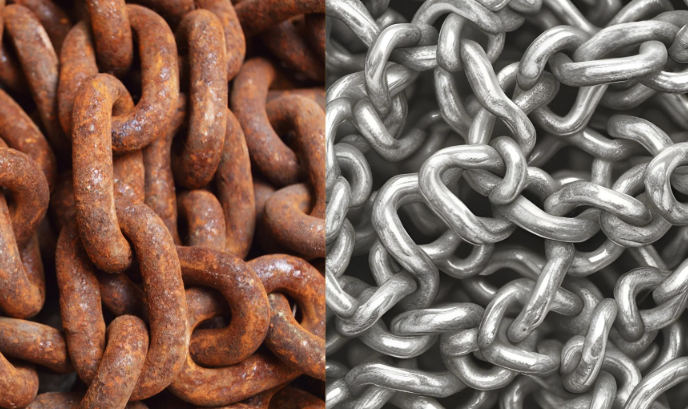
How Exposure Changes Rust Risk for Powder Coated Steel
The same weak spot behaves very differently depending on where the part lives. A scratch on an indoor rack may stay quiet for a long time. That same scratch on a coastal railing, a road-salt-exposed bracket, or powder coated steel outdoor furniture can turn active much faster. Guidance from KGE Coatings and Powder Coated Tough points to the same pattern: moisture, salts, pollutants, UV, and repeated wet-dry cycling drive corrosion risk far more than appearance alone suggests.
How Different Environments Change Rust Risk
Indoor dry service is usually the easiest setting for coated steel. Typical outdoor exposure is more demanding because rain, sun, dust, and temperature swings keep stressing the film. Salt air and road brine are tougher still because chlorides attack damaged spots and can creep under the coating. High humidity keeps surfaces damp longer. Freeze-thaw conditions can trap water in seams and joints, then keep reopening those areas. Industrial and chemical settings add another problem: fallout, pH exposure, and regular wet service can challenge the finish even when the part is not sitting by the ocean.
That is why a covered powder coated frame on a porch is not facing the same risk as powder coating metal gates near the coast, or powder coated steel patio furniture parked where sprinklers, fertilizer, and humidity keep it wet. The same logic applies to powder coated metal outdoor furniture, powder coated steel garden furniture, and powder coated metal patio furniture: exposure details matter as much as the finish name.
| Environment | Relative rust risk | Common failure points | Maintenance attention needed |
|---|---|---|---|
| Indoor, dry | Low | Chips, poor prep spots, fastener wear | Light cleaning and occasional inspection |
| Outdoor, covered | Low to moderate | Edges, lower legs, trapped dirt, furniture contact points | Routine washing and touch-up of damage |
| Outdoor, fully exposed | Moderate | Horizontal surfaces, seams, welds, drain points | Regular washing and closer inspection after storms |
| Coastal or salt-air service | High | Scratches, sharp edges, cut ends, hardware contact | Frequent rinsing and fast repair of any breach |
| High humidity or persistently wet areas | High | Seams, overlaps, underside pockets, water traps | More frequent inspection for hidden moisture hold |
| Freeze-thaw and road-salt exposure | High | Crevices, lower edges, impact damage, joints | Wash off salt and monitor damaged areas closely |
| Industrial or chemical settings | Moderate to high | Areas hit by fallout, splashes, condensation, regular wetting | Condition-specific cleaning and careful product selection |
When Powder Coated Steel Performs Well and When It Struggles
It performs well in moderate service when the part is well prepped, evenly coated, properly cured, and kept reasonably clean. It struggles when chlorides, standing moisture, chemical exposure, or constant abrasion keep opening paths to bare steel. Products Finishing notes that outdoor steel furniture is especially vulnerable at sharp edges and overlapping seams, and that a single coat over blasted steel is often less robust outdoors than a more protective system.
So when you spot brown marks, the setting matters. A stain on a sheltered chair may be very different from rust bleed on a salt-exposed gate or frame, and that difference shows up in the clues on the surface.
Rust Streaking or True Powder Coat Failure
Brown marks make people assume the worst. On coated steel, that is not always the right read. Kaser Blasting shows that rust-colored streaks can appear when water slips into a tiny seam, crevice, weld gap, or pinhole, touches the steel, then runs back down over the finish. In other words, a dramatic-looking rust powder coating complaint may be showing the path of water, not total finish collapse.
A rust streak often tells you where moisture traveled, not how much coating has failed.
Rust Streaking vs Surface Contamination
Start with the simplest clue: does the mark sit on top of the coating, or is it pushing from underneath? Kaser notes that early rust streaking may wipe off with a rag. If it does, the issue may be surface staining from rusty runoff or oxidized debris carried over the coating from a nearby crevice or damaged spot. Left sitting too long, that stain can discolor light colors even when the film itself is still intact. You may also notice a little rust powder or rusting powder collecting below the source point.
How to Tell Cosmetic Marks From Underfilm Corrosion
More serious damage usually has a different pattern. Corrosionpedia describes filiform, or underfilm, corrosion as thread-like tracks that grow under thin organic coatings from scratches, cut edges, holes, and other weak points. Intech also notes that moisture and oxygen are the main rust causing agents once the barrier is breached, and true substrate corrosion can show up as spots that eventually break through the finish.
| Symptom | Likely source | What to inspect next | Mostly cosmetic or structural |
|---|---|---|---|
| Rust-colored drip below a seam, weld, or crevice | Water reached steel at one tiny opening and carried staining over the surface | Trace the streak upward and inspect the seam, pinhole, or weld gap | Usually cosmetic at first |
| Orange mark that wipes off cleanly | Surface staining or transferred oxidized residue on top of the coating | Clean it, then watch whether it returns from the same spot | Mostly cosmetic |
| Thread-like tracks under the film | Underfilm, or filiform, corrosion starting at a defect | Check scratches, cut edges, holes, and spreading beneath the coating | More than cosmetic |
| Chip with loose rust powder at the center | Direct steel exposure from impact or abrasion | See whether corrosion stays inside the chip or creeps under surrounding film | Can become structural if ignored |
| Rust spots breaking through, with lifting or flaking coating | Established substrate corrosion and loss of adhesion | Probe the edge of the damaged area and look for wider underfilm spread | Potentially structural |
That surface evidence matters more than the color alone. A wipe-off streak and a spreading underfilm track do not call for the same response, and a careless touch-up on the wrong one can hide the real problem instead of stopping it.
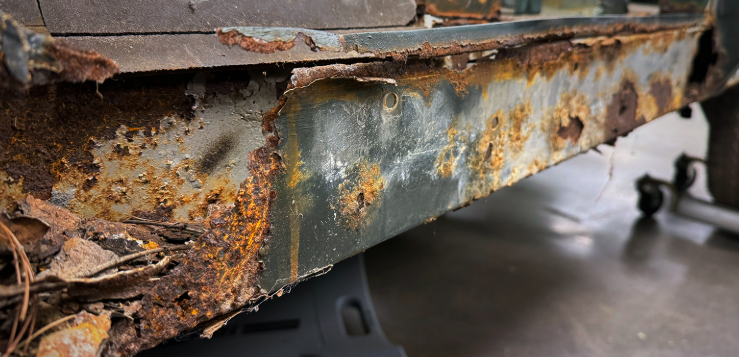
What to Do When Rust Appears on Powder Coated Steel
A brown mark only becomes useful when you know what sits underneath it. Good repair work starts with evidence, not guesswork. Guidance from Metal Fusion Pro treats touch-up as a practical fix for localized chips, scratches, and heat damage. But G&S Industries makes an equally important point: if the old finish is cracked, bubbling, or delaminating, simply covering it will not solve the problem.
What to Inspect Before You Repair Rust on Powder Coated Steel
If you are figuring out how to avoid rust, start by tracing the stain back to its source. Look closely at seams, edges, welds, bolt holes, corners, and impact marks. Clean off dirt and oxidation first so you can tell the difference between a dirty surface and real coating failure. A localized repair can restore a coating to prevent rust on metal, but only if the surrounding film is still attached and stable.
- Clean the area. Wash with mild detergent and water, then remove remaining grease, salt, or residue with a suitable cleaner. Both repair and repaint guidance stress that contamination ruins adhesion.
- Inspect the surface closely. Check whether the mark wipes off, whether bare metal is visible, and whether the coating is chipped, blistered, or loose.
- Define the damaged area. Sand only enough to feather the defect and dull the surrounding gloss. For repainting over a sound finish, G&S notes that fine sanding to a matte surface helps new coatings grip.
- Check for underfilm spread. If rust has crept beyond the visible chip, or the coating lifts when lightly probed, corrosion is moving under the film.
- Choose the repair level. If damage is small and contained, touch-up paint or a compatible repair coating may be reasonable. If the finish is broadly failing, strip and recoat is the safer path.
- Monitor the spot. Reinspect after cleaning cycles, rain exposure, or regular use. A repair that stains again quickly usually points to deeper failure.
People often ask, can you paint powder coated steel or can you paint powder coated metal. Yes, but only when the existing finish is still sound enough to act as a base. If you plan to put paint on powder coated metal, proper cleaning, sanding, and an adhesion-promoting primer matter more than the paint brand.
When Spot Repair Works and When Recoating Is Better
Spot repair makes the most sense on isolated chips, scratches, or small worn areas where the damage is clearly limited. Metal Fusion Pro notes that once bare steel is exposed, prompt repair helps restore protection and appearance. On bare steel, a primer may be used before the color coat to rebuild a steel coating to prevent rust. That said, a field touch-up is maintenance, not a factory reset. It may not recreate the original electrostatic coverage, cure profile, or edge protection, and it is not a permanent rust proof coating if corrosion is already spreading underneath.
Full stripping and recoating becomes the better long-term choice when damage is widespread. Metal Fusion Pro suggests that if roughly 10 to 20 percent of the surface is affected, or corrosion has reached the substrate, full rework is usually smarter than repeated patching. G&S adds that painting over a failing finish does not fix cracking, bubbling, or delamination.
- Blistering around the rust spot
- Lifting edges when you lightly probe the defect
- Recurring rust soon after cleanup or touch-up
- Multiple new spots appearing away from the original chip
- Large areas of peeling or flaking instead of one isolated mark
For anyone asking how to keep iron from rusting inside steel parts, the real answer is not just covering orange color. It is stopping moisture from staying on exposed metal and refusing to trap active corrosion under a fresh patch. When repairs keep repeating at the same edges, seams, or handling points, the finish problem usually started long before the rust became visible.
How Manufacturers Prevent Rust Before Powder Coated Parts Ship
When the same corners or cut ends keep rusting after touch-up, the real problem often started long before the part was installed. In metal powder coating, corrosion resistance is built in early or lost early. The most important details are usually geometric, not cosmetic. A detailed edge coverage guide shows why sharp edges, cut ends, welds, and tight right-angle features are harder to protect. Electrostatic spray can load an edge unevenly, and cure flow can pull material away from the apex, leaving thinner film right where rust likes to begin.
How Manufacturers Reduce Rust Risk Before Production Parts Ship
For specifiers and buyers, the practical checklist starts before spray. Ask whether the part has deburred cut ends, smoother radii instead of knife edges, and welded areas finished in a way that does not create trapped, hard-to-coat geometry. The same reference also stresses pretreatment as a second line of defense, especially on steel. If your team is asking how do you powder coat metal for real corrosion control, the answer is not just color selection. It is design, pretreatment, application strategy, and cure control working together.
That is also why buyers should look beyond the spray booth. Good metal powder coaters should be able to explain how they handle edge coverage, how they protect finished parts during handling and packaging, and whether the chosen substrate still makes sense for the exposure. The same logic applies whether you powdercoat steel or decide to powder coat stainless steel for appearance or added surface protection. For teams asking how to do powder coating on metal parts consistently, integrated fabrication plus finishing usually makes problem spots easier to catch early.
What to Ask a Metal Finishing Partner About Corrosion Control
| Supplier or review lens | Fabrication capability | Surface-treatment range | Quality system strength | Prototyping support | Production scalability |
|---|---|---|---|---|---|
| Shaoyi | Stamping and CNC machining in one workflow, useful when part geometry affects edge coverage and finishing results | Custom surface treatments paired with part manufacturing, which can help align fabrication, pretreatment planning, and finish selection | IATF 16949 for automotive process control and quality assurance | Rapid prototyping for checking design details before launch | Supports both development runs and high-volume production |
| Any supplier under review | Can they modify radii, deburr edges, and address weld placement before coating metals? | Can they explain pretreatment, edge strategy, and cure control in plain language? | What system verifies prep, coating consistency, and release inspection? | Can they sample early parts and inspect failure-prone features? | Can the same controls hold when volumes increase? |
The right partner can lower risk, but not every application should rely on the same base metal or finish. Sometimes the better answer is a different material choice altogether.
Galvanized vs Powder Coated
Sometimes the best fix for rust risk is not a better touch-up. It is a better material and finish choice from the start. As surface treatment logic makes clear, the right system depends on the metal, the environment, the durability target, and how much maintenance you can tolerate. Powder coated steel remains a strong option, but it is not automatically the best one for every job.
When Powder Coated Steel Is a Smart Choice
Choose it when you want good strength, broad color options, and a cleaner decorative look at a practical cost, especially for indoor use or moderate outdoor exposure. In a powder coated vs stainless steel comparison, powder coated steel often wins on appearance flexibility and budget. For many frames, enclosures, furniture pieces, and fabricated parts, that balance makes sense.
| Material or finish | Best use-case fit | Corrosion tradeoffs | Maintenance demands | Appearance flexibility |
|---|---|---|---|---|
| Powder coated steel | Indoor parts, moderate outdoor service, strength-focused fabricated products | Good barrier protection, but exposed steel can rust if the film is damaged | Moderate | High |
| Galvanized steel | Utility parts, exposed outdoor hardware, rough-service structures | Zinc protection is useful when scratches or edges are likely, but the look is more industrial | Low to moderate | Low |
| Stainless steel | Corrosion-sensitive, wet, sanitary, or low-maintenance applications | Better built-in corrosion resistance, though harsh exposure can still mark or attack it | Low | Medium unless coated |
| Powder coated aluminum | Outdoor products where lower weight matters | Aluminum naturally resists corrosion better than carbon steel, and the coating adds another barrier | Low to moderate | High |
When Stainless Aluminum or Galvanized Steel May Be Better
The stainless steel vs powder coated choice shifts when the environment is wetter, saltier, or less forgiving. If you are asking, can stainless steel be powder coated, yes, it can. That can be useful when you want stainless underneath with a custom exterior finish. A Wintoly comparison also highlights why powder coated aluminum is attractive outdoors: aluminum is lighter than steel and naturally more corrosion resistant. People also ask, does cast aluminum rust. Not like steel does, although it can still corrode, so finish choice still matters. In a galvanized vs powder coated decision, galvanized steel usually makes more sense when exterior abuse, exposed edges, and utilitarian service matter more than refined looks. That is the real split in many powder coating vs galvanized steel decisions.
- Pick powder coated steel when strength, color choice, and cost balance matter most.
- Pick galvanized steel for rugged exterior service where scratches and cut edges are expected.
- Pick stainless when you want corrosion resistance to come from the metal itself.
- Pick powder coated aluminum when lower weight and outdoor durability matter.
- For corrosion-sensitive automotive parts, teams can also review integrated partners such as Shaoyi when they need help aligning substrate choice, fabrication, and surface treatment before production begins.
FAQs About Powder Coated Steel and Rust
1. Is powder coated steel rust-proof?
No. Powder coating is a protective barrier, not a lifetime guarantee against corrosion. The finish itself does not rust, but the steel beneath it can if moisture gets through a chip, scratch, seam, thin edge, or weakly prepared surface. In dry indoor use, rust risk is usually low. In coastal, wet, or salt-heavy settings, the same damage can become active much faster.
2. Why are there brown streaks on powder coated steel if the surface still looks mostly fine?
Brown streaks often start at a tiny opening such as a weld gap, fastener point, pinhole, or hidden edge. Water reaches a small rust source and then carries the stain over the coating. That is why a streak can look dramatic even when failure is still localized. The key is to check whether the mark wipes off, returns from the same spot, or is paired with blistering, lifting film, or spreading corrosion under the coating.
3. Can rust spread under powder coating without obvious damage on top?
Yes. Once moisture gets under the film, corrosion can travel below the visible surface before it becomes easy to see. Early clues may include bubbling, thread-like marks, lifted edges, or rust reappearing after cleaning. This hidden spread is one reason a small-looking defect near a seam, edge, or chip should be inspected carefully instead of just painted over right away.
4. Can you repair rust on powder coated steel without stripping the whole part?
Sometimes. If the issue is limited to one chip or a small worn spot, you can often clean the area, remove loose corrosion, prepare the surface, and use a compatible primer and touch-up coating. That approach is usually maintenance, not a full restoration of factory-level coverage. If the finish is blistering, peeling, or showing repeat rust in several places, stripping and recoating is typically the better long-term fix.
5. What should manufacturers ask a powder coating supplier to reduce rust problems?
Ask about surface cleaning, pretreatment, edge coverage strategy, weld finishing, drainage design, handling protection, packaging, and final inspection. It is especially helpful when fabrication and finishing are coordinated, because part geometry affects how well the coating protects steel. For automotive and other corrosion-sensitive parts, integrated partners such as Shaoyi can be relevant to evaluate because they combine stamping, CNC machining, custom surface treatments, rapid prototyping, and IATF 16949 quality systems in one workflow.