 Small batches, high standards. Our rapid prototyping service makes validation faster and easier —
  EN
EN


What Metal Is Inside Catalytic Converter? Decode The Hidden Value
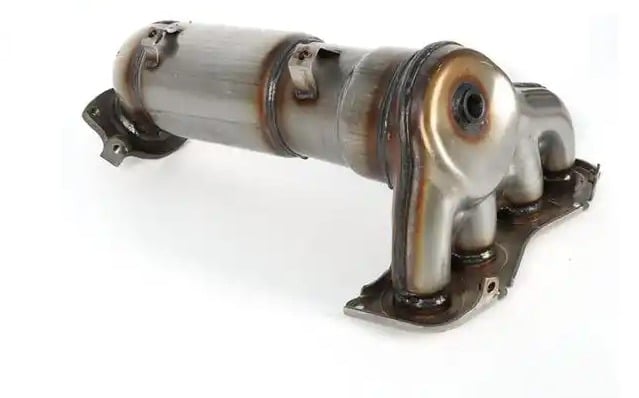
What Is Inside a Catalytic Converter?
If you are asking what metal is inside catalytic converter units, the short answer is platinum, palladium, and rhodium. Those are the main precious metals used in most modern catalytic converters. But they are not stored inside as solid chunks, bars, or nuggets. Instead, they are dispersed in a thin catalytic layer over the converter's internal surface.
Most catalytic converters contain platinum, palladium, and rhodium spread across a coated honeycomb, not hidden as visible pieces of metal.
What Metal Is Inside Catalytic Converter
At a basic level, what is in a catalytic converter includes platinum-group metals, often called PGMs. In common automotive use, that usually means platinum, palladium, and rhodium. A structural overview from PMR describes these as the active catalyst metals that help convert harmful exhaust pollutants into less harmful gases. So when people search what is inside a catalytic converter, they are usually referring to these three metals.
That said, composition is not the same as price. A converter may contain valuable metals, but scrap value depends on far more than simply knowing the names of the materials inside.
What Else Is Inside a Catalytic Converter
What's inside of a catalytic converter includes more than precious metal. There is also a stainless steel shell, a ceramic or metallic substrate, and a washcoat. The substrate is usually honeycomb-shaped to create a large reaction area. The washcoat is a porous, high-surface-area layer, typically aluminum oxide, that helps disperse tiny particles of platinum, palladium, and rhodium. That is the real answer to what's inside a cat converter. A lot of confusion about what inside of catalytic converters matters most comes from assuming the precious metals are easy to see. They usually are not.
For general definitions, reputable structure explainers are useful. For model-specific details, OEM service literature and emissions references remain the better checkpoint.
Key Terms That Make the Topic Easier
- Substrate: The internal ceramic or metallic core, usually shaped like a honeycomb.
- Washcoat: A porous coating that increases surface area and carries the catalyst particles.
- Precious metals: High-value metals used for catalytic reactions, mainly platinum, palladium, and rhodium.
- Platinum-group metals: A family of related metals, often shortened to PGMs.
- Decanning: A recycling term for opening the steel shell and removing the internal core.
Picture the shell, core, and coating as separate layers, and the cutaway view starts to make a lot more sense.
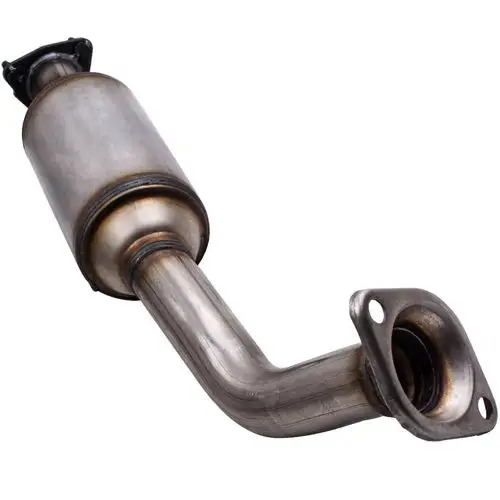
Inside a Catalytic Converter Layer by Layer
In a cutaway view, the Jendamark breakdown makes the assembly look less mysterious. The catalytic converter inside is really a stack of engineered layers working together under heat, vibration, and constant exhaust flow. That matters because the cat converter inside is not a hollow can full of loose valuable metal. It is a protected housing around a fragile, coated core.
If you have ever wondered what does the catalytic converter look like inside, picture a stainless steel shell wrapped around a dense honeycomb block. Around that block sits a support mat. On the block itself sits a washcoat. And on that washcoat sit the precious metals in microscopic form.
The Steel Shell and Protective Housing
The outside layer is the can, or housing, usually made from stainless steel. Its job is simple but critical: protect the core, resist corrosion, and survive very high temperatures. Jendamark also notes that inlet and outlet cones are welded to the housing so exhaust can enter and leave smoothly.
Between the shell and the core is a support mat, sometimes treated like insulation in cutaway diagrams. This fibrous layer holds the substrate tightly in place, cushions vibration, helps seal against exhaust gas bypass, and allows for thermal expansion. Without that buffer, the brittle internal core would be far more likely to crack.
The Honeycomb Substrate and Washcoat
Inside a catalytic converter, the most recognizable part is the substrate, often called the monolith. DieselNet describes modern substrates as flow-through honeycombs with many small parallel channels. These can be ceramic extrusions or metallic foil assemblies. Ceramic versions are common. Metallic versions are less common but still widely used in some designs.
The honeycomb shape is the reason the converter works so efficiently. It creates a lot of surface area in a compact space while still letting exhaust move through with relatively low restriction. The channel walls are then coated with a porous washcoat, typically made from high-surface-area inorganic oxides such as alumina. DieselNet notes this layer provides the high surface area required for catalysis, far beyond what the bare substrate could offer on its own.
Where the Precious Metals Actually Sit
Here is the detail many people miss when they search inside of catalytic converter photos: the valuable metals are not visible chunks hidden in the shell. Inside of a catalytic converter, platinum, palladium, and rhodium are dispersed on the washcoat surface and within its pores along the channel walls. In other words, the metal value is spread thinly over a very large internal area.
That is why the inside of catalytic converter material looks like coated honeycomb, not shiny lumps. The structure tells you where the metals are. The next question is what each of those metals actually does once exhaust reaches that coated surface.
| Layer | Typical material | Main function | Contains precious metal? |
|---|---|---|---|
| Outer shell and cones | Stainless steel | Protects the unit, resists corrosion, and routes exhaust through the converter | No |
| Support mat | Inorganic fibers, often polycrystalline alumina with binder | Holds the core in place, seals against gas bypass, cushions vibration, handles thermal expansion | No |
| Substrate or monolith | Ceramic honeycomb or metallic foil honeycomb | Creates many flow channels and large geometric surface area with low restriction | No |
| Washcoat | Porous inorganic oxides, commonly alumina-based | Adds very high surface area and gives catalyst particles a place to anchor | Not by itself |
| Catalyst layer | Platinum, palladium, and rhodium dispersed over the washcoat | Performs the emissions-cleaning reactions | Yes |
How Platinum, Palladium, and Rhodium Work
That coated honeycomb only becomes an emissions device because three platinum-group metals handle different reactions on the surface. A technical explainer from Johnson Matthey describes catalytic converter metals as nanoparticles coated on the substrate, and it makes an important point: gasoline and diesel systems do not rely on exactly the same catalyst chemistry. So when people ask which metal matters most, the honest answer is that the converter works as a team, not as a one-metal trick.
What Platinum Contributes to Emissions Control
Platinum is best known for oxidation work. In simple terms, a platinum catalyst helps convert carbon monoxide and unburned hydrocarbons into less harmful outputs such as carbon dioxide and water. That role is especially useful in oxygen-rich exhaust, which is why platinum has long been strongly associated with many diesel applications. A comparison from Phoenix Refining also highlights platinum's stronger resistance to sulfur poisoning in typical diesel-related use cases.
Searches for catalytic converter platinum often assume platinum does everything inside the unit. It does not. If you are wondering how much platinum is in a catalytic converter, there is no single universal figure to quote for every vehicle here. The available sources discuss system chemistry and global usage trends, not one standard loading for every converter.
How Palladium and Rhodium Do Different Jobs
Palladium also performs oxidation, especially for carbon monoxide and hydrocarbons, and it is widely used in gasoline catalyst systems. Among major palladium metal uses, autocatalysts are one of the most important. Phoenix Refining notes that palladium is well suited to the hotter conditions often found in gasoline exhaust, which helps explain why a palladium catalytic converter formula is common in modern gasoline vehicles, even though it usually still includes other PGMs.
Rhodium fills a different gap. In three-way catalyst systems, its standout job is reducing nitrogen oxides, or NOx, into nitrogen. If you have ever asked what is rhodium used for in a converter, this is the clearest answer. A rhodium catalytic converter is not a converter made only of rhodium. It is a converter that depends on rhodium's reduction ability alongside platinum and or palladium.
The most important difference between platinum, palladium, and rhodium is function, not simply rarity.
Why Converters Use a Blend Instead of One Metal
No single metal covers every exhaust condition equally well. Platinum and palladium overlap in oxidation, but they respond differently to temperature, sulfur exposure, engine type, and cost pressure. Rhodium brings a reduction function that the other two do not replace well in three-way systems. The same reference set also shows why formulations move around: engine application, emissions targets, and manufacturer strategy all influence the final mix.
That is why labels like catalytic converter platinum or palladium catalytic converter can oversimplify what is actually inside. The metals sit together in the washcoat over the substrate channels, each chosen for a specific chemical task. Their roles become even clearer when you look at the gas flow itself, because the chemistry only works when exhaust repeatedly contacts that active coated surface.
| Metal | Chemical role | Common application tendencies | Where it sits in the coated structure | Why it affects value |
|---|---|---|---|---|
| Platinum | Mainly oxidation of carbon monoxide and hydrocarbons | Commonly associated with oxygen-rich diesel-related catalyst duty, but also used in blended automotive formulations | Dispersed as very fine particles on the washcoat across the substrate channel walls | Part of the recoverable PGM mix and valued for strong catalytic performance in demanding exhaust conditions |
| Palladium | Mainly oxidation of carbon monoxide and hydrocarbons | Widely used in gasoline catalyst systems and often blended with platinum depending on design goals | Also dispersed through the washcoat on the honeycomb surface, not stored as visible pieces | Its share in the PGM blend can materially influence recoverable value and market interest |
| Rhodium | Especially important for NOx reduction in three-way catalytic systems | Most closely tied to gasoline three-way catalysts, where NOx control is critical | Distributed in the same coated washcoat system, usually working alongside platinum and or palladium | Even without visible bulk, its distinct function makes it an important part of the recoverable metal mix |
What Does a Catalytic Converter Do in a Car?
Those catalyst metals only become useful when exhaust actually reaches them. At the simplest level, what is a catalytic converter and what does it do? It is an emissions-control device in the exhaust system that gives harmful gases a reactive surface where they can be changed into less harmful ones. Structural basics from LibreTexts, flow design details from Mid-West, and three-way catalyst operation notes from Nett all point to the same idea: the converter works because exhaust is forced across a huge coated surface, not because it hides large visible pieces of precious metal.
How Exhaust Moves Through the Honeycomb
Picture the substrate as a block filled with many tiny parallel tunnels. Exhaust enters one end, spreads through those narrow channels, and stays in contact with the coated walls as it moves forward.
- Hot exhaust leaves the engine carrying carbon monoxide, hydrocarbons, and nitrogen oxides.
- The gas enters the converter and is divided into thousands of small honeycomb passages.
- Each passage wall is covered with a porous washcoat that holds the catalyst metals.
- As the gas flows through, pollutants repeatedly touch that active surface.
- In gasoline three-way systems, an upstream oxygen sensor and air-fuel control help keep the mixture near the catalyst window so all three major pollutants can be treated efficiently.
That is the plain-English answer to what does a catalytic converter do in a car. It creates the right path, temperature, and surface contact for fast exhaust-cleaning reactions.
Why Surface Area Matters More Than Visible Metal
The honeycomb shape is the real engineering trick. Mid-West explains that this layout provides very high surface area while keeping flow resistance low and helping the gas move evenly through the converter. LibreTexts adds that the thin-wall channels are coated with a porous aluminum-oxide washcoat, which increases usable reaction area even more. So the job is not done by big lumps of platinum, palladium, or rhodium. It is done by tiny catalyst particles spread across a vast internal surface.
The honeycomb is essential because it gives exhaust maximum contact with a thin catalyst coating while keeping pressure drop low.
When people ask what do catalytic converters do, this is the missing detail. The unit turns a compact metal can into a large active reaction zone.
How the Reactions Clean the Gas Stream
Once pollutants reach that coated surface, two kinds of chemistry happen in simple terms. Oxidation helps convert carbon monoxide and unburned hydrocarbons into less harmful carbon dioxide and water vapor. Reduction helps remove oxygen from nitrogen oxides so they can leave mainly as nitrogen. Nett describes a three-way catalyst as handling these three major exhaust pollutants at the same time when the air-fuel mixture is properly controlled near stoichiometric conditions.
If you are still wondering what is a catalytic converter, think of it as a heat-resistant reaction chamber in the exhaust. It does not clean gas by trapping chunks of metal inside. It cleans gas by exposing moving exhaust to a carefully coated surface. That also explains why two converters that look similar on the outside can behave very differently once fuel type, engine design, and emissions rules enter the picture.
Why Catalytic Converters Vary by Vehicle Type
That outside similarity is exactly where confusion starts. When people ask what are catalytic converters made of, the basic stack stays familiar: a steel shell, a substrate, a washcoat, and catalyst materials. The part that changes is the formula. A gasoline sedan, a diesel pickup, a hybrid crossover, and an aftermarket catalytic converter can all look similar from the outside while using different internal strategies. In practical terms, what are cat converters? They are emissions devices tailored to a specific exhaust stream, not one universal recipe.
Gasoline Diesel Hybrid and Aftermarket Differences
PMR highlights the biggest split first. Gasoline engines typically use three-way catalytic converters because they run near stoichiometric conditions and must control carbon monoxide, hydrocarbons, and NOx together. Diesel exhaust is oxygen-rich and soot-heavy, so diesel vehicles often use a more modular aftertreatment layout, such as a diesel oxidation catalyst, diesel particulate filter, and SCR system instead of one simple three-way design. Hybrid vehicles complicate things again. Their engines cycle on and off more often, which creates frequent cold starts and unstable heat patterns, so catalyst placement and washcoat design are often tuned for faster light-off and better thermal durability.
The better question is not only what are cat converters made of, but which engine and duty cycle they were built to serve. In the replacement market, an aftermarket catalytic converter may also differ by fit style. MagnaFlow notes that direct-fit units are shaped for a specific application, while universal units are broader-fit parts that usually require fabrication.
| Vehicle type | Likely catalyst tendencies | Construction differences | Identification limits |
|---|---|---|---|
| Gasoline | Usually three-way catalyst chemistry for CO, HC, and NOx control | Often close-coupled and or underfloor units with oxygen-storage-focused washcoat strategy | Shell size does not reveal the exact platinum, palladium, and rhodium balance |
| Diesel | Often modular systems using DOC, DPF, and SCR or LNT functions | May involve multiple canisters, filtration elements, and different catalyst roles across the system | One diesel canister may not represent the whole emissions package or the main PGM-bearing component |
| Hybrid | Gasoline-based catalyst strategy tuned for repeated cold starts and thermal cycling | Closer placement to the engine is common, with durability and light-off response emphasized | Can look similar to standard gasoline units while using a different washcoat and placement strategy |
| Aftermarket | Formula varies by application, emissions certification, and replacement target | Direct-fit and universal designs differ in geometry, installation method, and compliance matching | Correct identification depends on application data, not appearance alone |
Why Emissions Standards Change Catalyst Formulas
Regulations shape the internals as much as engine design does. PMR ties catalyst materials, oxygen storage strategy, and system complexity to exhaust composition, temperature, and operating conditions. On the replacement side, MagnaFlow shows that U.S. applications can also hinge on whether a vehicle needs Federal EPA or CARB-compliant hardware. For newer vehicles, the VECI label and EFN or Test Group help determine the correct replacement path. So when people ask what is a catalytic converter made of, the honest answer includes compliance rules, not just metal names.
Why Similar Vehicles Can Have Different Metal Mixes
Even two vehicles that seem closely matched can hide meaningful internal differences. Turbocharging changes heat load. Packaging affects whether the catalyst sits closer to the engine for faster light-off. Hybrid operation changes temperature behavior. Manufacturer calibration can also shift oxygen storage needs and washcoat design. That is why what is a cat converter made of cannot be answered from shell size alone, and why what are cat converters made of often has more than one valid answer.
For anyone trying to infer the likely metals inside, fuel type, emissions label, converter position, and OEM-versus-replacement status are better clues than outward appearance. The can may look ordinary. The useful evidence lives in the application details.
How to Estimate What Metals Are in a Catalytic Converter
If you are trying to estimate what metals are in catalytic converters, think like a recycler, not a treasure hunter. The best clues are the vehicle, the fuel, the converter category, and the code stamped on the shell. Guidance from PMR shows why this matters: OEM units usually carry higher platinum-group-metal loadings than aftermarket replacements, diesel systems may include DPFs that are large but not especially metal-rich, and even matching codes do not guarantee identical recoverable content. Visual inspection can narrow the possibilities, but it cannot confirm exact chemistry.
Start with Vehicle Type and Fuel
The question what precious metal is in a catalytic converter is slightly misleading because most units use a blend, not one isolated metal. For readers asking what precious metals are in a catalytic converter, the usual trio is platinum, palladium, and rhodium, but the likely balance changes by application.
- Identify the vehicle type and fuel. Gasoline, diesel, and hybrid vehicles do not use the same catalyst strategy, so your starting assumptions should change with the powertrain.
- Decide whether the unit looks OEM or aftermarket. PMR notes that OEM converters often have stamped serial numbers, heat shields, and more application-specific shapes. Aftermarket units may lack codes, use lighter construction, or include welded adapters.
- Check the converter category, not just the shell size. On diesel vehicles, a diesel oxidation catalyst and a diesel particulate filter do different jobs. A large filter can still have limited precious metal content depending on design.
- Record every serial number or OEM code. Match the code with a reliable recycler catalog or database. Treat that result as an estimate, not proof.
- Use assay for exact identification. If you need to know what is the precious metal inside a catalytic converter with confidence, laboratory testing is the dependable route.
Check Converter Category Before Guessing Value
Two units that look alike can hide different precious metals inside a catalytic converter. PMR explains that vehicle type, emissions requirements, supplier variation, and the converter's service life all affect how much metal remains recoverable. Hybrid vehicles can preserve PGM structures better because the engine runs less often, while aftermarket replacements generally contain far lower loadings than OEM material. PMR also notes that even two converters with the same serial number may not yield the same PGM result after different mileage, climate exposure, or engine condition.
That is why the safest answer to what metals are in a catalytic converter starts with probability, not certainty. Serial numbers, price lists, and recycler databases help sort categories. Exact composition belongs to the lab.
Common Myths About Visible Metal Inside
- Myth: You can look into the core and spot platinum, palladium, or rhodium. Fact: An assay overview explains that true measurement requires the ceramic material to be de-canned, processed, sampled, and analyzed.
- Myth: Bigger always means richer. Fact: PMR warns that some large diesel DPF units may contain minimal precious metals unless they are combined with an oxidation catalyst or built for heavy-duty use.
- Myth: A serial number tells you the exact metal content. Fact: PMR says identical serial numbers can still lead to different recoverable PGM results.
- Myth: A quick shop trick can replace real testing. Fact: The lab methods highlighted in the assay literature are XRF and ICP-OES on prepared samples, not casual visual checks.
- Myth: Brand reputation alone answers what metals are in catalytic converters. Fact: OEM status improves the odds of higher PGM content, but exact loading still varies by batch, destination, and lifespan.
Good identification helps you estimate composition. It still does not settle value, because recoverable metal, condition, contamination, and market swings are separate questions.
Why Catalytic Converter Scrap Value Varies
Metal identification only gets you part of the way. When people ask how much are catalytic converters worth, they often expect a fixed number based on size, brand, or what the shell looks like. In reality, the steel case is not where the real value sits. The main driver is the recoverable platinum, palladium, and rhodium held in the coated substrate, and that recoverable content can vary a lot from one unit to another.
Metal Content Versus Scrap Value
Guidance from PMR makes the distinction clear: platinum-group metals create the baseline value, but composition is not the same as payout. Catalytic converter scrap value depends on how much of those metals can actually be recovered once the unit enters the recycling stream. That helps answer why are catalytic converters so expensive. They combine emissions-control engineering with scarce metals whose market prices can move quickly.
The recovery side is specialized too. A PMR refining guide explains that processors remove the shell during decanning, then crush, mill, and homogenize the core before laboratory assay with XRF and ICP. So the value of catalytic converter scrap is determined through industrial processing and measurement, not by simply opening the can and looking inside.
What Recyclers Look for Before Pricing
Before you try to sell catalytic converter scrap or compare catalytic converter scrap prices, recyclers usually sort the unit by identity and condition first. Materials from IndexBox and PMR highlight the same problem: two converters can look similar yet contain very different recoverable metal loads, especially when OEM and aftermarket parts get mixed together.
- Part number or serial code: useful for category matching, but not a guarantee of exact yield.
- OEM versus aftermarket: aftermarket replacements typically carry lower PGM content than OEM units.
- Vehicle and fuel type: gasoline, diesel, and hybrid systems can use different catalyst designs.
- Condition: contamination, damage, rust, or missing substrate can reduce recoverable value.
- Lifecycle history: mileage, engine condition, climate, and maintenance affect what remains recoverable.
- Current PGM markets: platinum, palladium, and rhodium price swings change settlement values.
Online averages and serial-number matches can guide estimates, but verified identification and assay are what settle real value.
Why One Converter Can Be Worth More Than Another
So, how much is a catalytic converter worth in scrap? The honest answer is that an outside glance cannot settle it. PMR notes that even matching serial numbers may not return identical results because production variation, emissions requirements, wear, and contamination can change recoverable content over time. That is why one converter can be worth far more than another, even when both look ordinary from the outside.
Seen this way, converter value is not just a recycling story. It starts much earlier, with material choice, coating consistency, and process control inside the automotive supply chain.
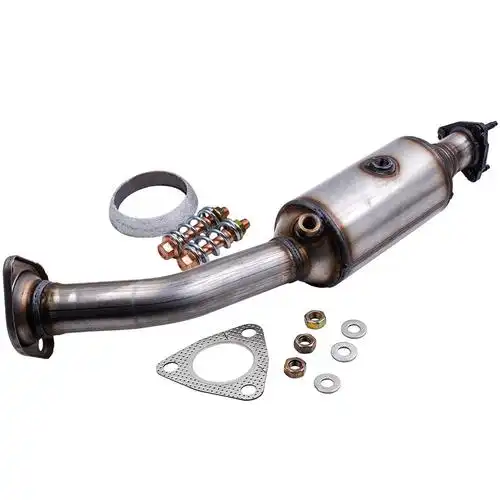
Why Catalytic Converter Metals Depend on Precision Manufacturing
The metals in catalytic converter discussions usually get the spotlight first. Yet real emissions performance also depends on how well the surrounding parts are made. Shells, brackets, flanges, heat shields, and nearby exhaust components all have to handle heat, vibration, and flow without drifting out of spec. That is why a question about catalytic converter metal naturally opens into a bigger manufacturing issue.
Why Precision Manufacturing Supports Emissions Performance
TiRapid describes automotive CNC machining as a repeatable process built for tight tolerances, broad material compatibility, and stable production, with key automotive parts often controlled around plus or minus 0.01 mm. Fireblast also shows how under-hood and exhaust-related parts such as heat shields, exhaust systems, brackets, and mounts rely on precise fabrication so they can resist heat, wear, and corrosion. In simple terms, the catalytic converter metals handle the reactions, but precise manufacturing helps protect the environment where those reactions can keep happening. That matters whether someone is studying metal in catalytic converters for engineering reasons or simply asking what metal is in a catalytic converter.
What Automotive Buyers Should Look for in a Metal Fabrication Partner
For manufacturers sourcing emissions-adjacent parts, a practical checklist says more than any sales slogan. The quality points highlighted in TiRapid's automotive machining overview are a solid baseline:
- Automotive quality systems such as IATF 16949
- SPC-based process control and traceable inspection routines
- CMM or optical inspection capability for critical geometries
- Experience with multiple materials, including steel, aluminum, and other production metals
- Support from prototype work to repeatable mass production
- Fabrication depth for housings, brackets, shields, and other parts that work near cat converter metals
That is the better way to think about what is the metal in catalytic converters. The answer is not only platinum-group chemistry. It is also disciplined process control around every supporting part.
A Practical Resource for Custom Auto Machining Parts
For automotive manufacturers rather than scrap buyers, Shaoyi Metal Technology is a practical resource to review. The company presents itself as an IATF 16949 certified custom machining partner with SPC-based quality control, support from rapid prototyping to automated mass production, and experience serving more than 30 global automotive brands. That makes it relevant when the conversation shifts from what metal is inside catalytic converter units to the broader precision needed across exhaust-adjacent and vehicle metal parts. Put another way, cat converter metals may drive the chemistry, but manufacturing discipline is what helps that chemistry survive real heat, real vibration, and real production volume.
FAQ: What Metal Is Inside a Catalytic Converter?
1. What metals are usually inside a catalytic converter?
Most modern catalytic converters use platinum, palladium, and rhodium. These are platinum-group metals chosen for different emissions reactions. They are not packed inside as solid pieces. Instead, they are distributed in a very thin active layer over the internal honeycomb so exhaust gas can contact a large reactive surface.
2. Can you see platinum, palladium, or rhodium inside a catalytic converter?
In most cases, no. If a converter is opened, you will usually see a ceramic or metallic honeycomb core rather than visible precious metal. The valuable material is bonded to the washcoat on the channel walls in microscopic form, which is why appearance alone cannot confirm exactly what metals are present.
3. Do gasoline, diesel, hybrid, and aftermarket converters use the same metal mix?
No. The internal formula can change a lot by engine type, fuel, emissions standard, converter position, and manufacturer design. Gasoline three-way systems, diesel aftertreatment components, hybrid layouts, and aftermarket replacements may all use different catalyst strategies, even when the outer shell looks similar.
4. How can you estimate what metals may be inside a converter?
A practical estimate starts with the vehicle type, fuel, and whether the unit appears to be OEM or aftermarket. After that, check the converter category and any stamped code or part number, then compare it with a trusted recycler or OEM reference. This can help narrow the likely metal blend, but only professional assay can verify exact content.
5. Why does precision manufacturing matter for catalytic converter-related parts?
The catalyst only works well when the surrounding exhaust parts are made accurately and can handle heat, vibration, and long-term use. Shells, brackets, flanges, and shields all affect durability and fit. For automotive manufacturers, machining partners with IATF 16949 systems and SPC-based quality control, such as Shaoyi Metal Technology, are relevant when consistent production quality is the goal.