 Small batches, high standards. Our rapid prototyping service makes validation faster and easier —
  EN
EN


Selecting an IATF 16949 Certified Forging Supplier
TL;DR
IATF 16949 certified forging is a critical quality standard for the automotive supply chain, ensuring suppliers meet stringent requirements for consistency and continuous improvement. This certification is a key indicator of a supplier's ability to produce high-quality, reliable components. Numerous specialized forging companies across the United States and globally hold this essential qualification to serve the automotive industry.
The Critical Role of IATF 16949 in Automotive Forging
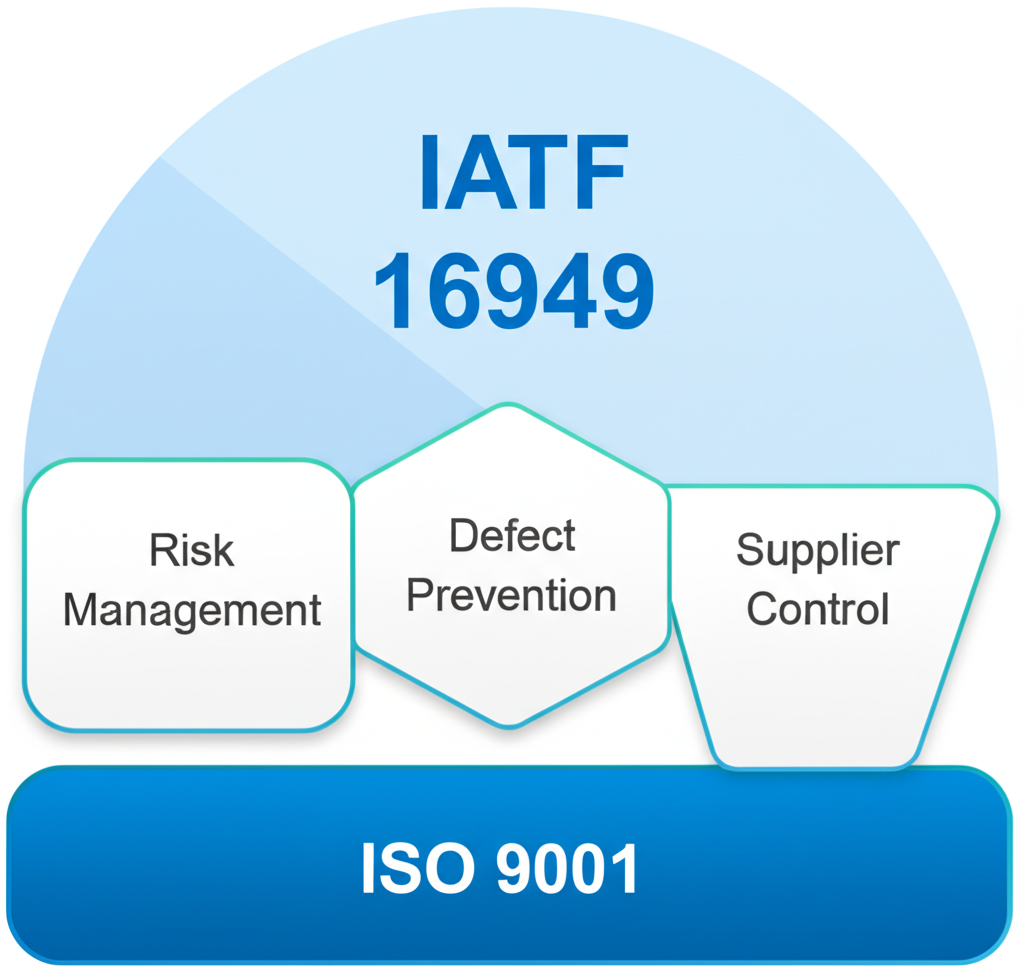
In the high-stakes world of automotive manufacturing, quality is not just a goal; it's a fundamental requirement. The IATF 16949 standard is the global benchmark for Quality Management Systems (QMS) within the automotive supply chain. Developed by the International Automotive Task Force (IATF), this certification goes a step beyond the more general ISO 9001 standard by introducing specific and more rigorous requirements tailored to the unique demands of vehicle production. Its primary purpose is to drive continuous improvement, emphasize defect prevention, and reduce variation and waste in the manufacturing process.
While ISO 9001 provides a foundational framework for a QMS in any organization, IATF 16949 builds upon it with dozens of additional, mandatory clauses. These additions address critical areas such as risk management, contingency planning, supplier management, and product safety. For forging companies, achieving this certification demonstrates a profound commitment to quality. For instance, Carbo Forge highlights its "Zero-Defect Policy" as a core tenet of its IATF 16949-certified operations. This commitment is not just a slogan; it's a structured approach embedded in the company's processes to ensure every component meets exact specifications.
For many major automotive manufacturers and their Tier 1 suppliers, IATF 16949 certification is a non-negotiable prerequisite for doing business. It serves as a guarantee that a forging partner has a robust and audited system in place to deliver consistent, high-quality parts. This reduces the risk of defects that could lead to costly recalls, production delays, and safety issues. As noted by Meadville Forging Company, the standard's emphasis on data-driven improvements and process control is essential for meeting the marketplace's relentless demand for quality.
How to Choose a Certified Forging Partner
Selecting the right IATF 16949 certified forging partner involves looking beyond the certificate itself. A thorough evaluation of a supplier's capabilities, processes, and overall commitment to quality is essential for a successful partnership. Here are several key criteria to consider when vetting potential suppliers:
- Comprehensive Quality Systems: While IATF 16949 is the primary standard, look for suppliers with additional certifications that signal a broader commitment to excellence. For example, Walker Forge holds ISO 17025 accreditation for its metallurgical lab, ensuring precise material analysis and validation. Similarly, LC Manufacturing is also ISO 14001 certified, demonstrating a commitment to environmental management.
- Forging Processes and Equipment: Ensure the supplier's capabilities align with your specific needs. Different components require different forging methods, such as closed-die, hot forging, or cold forging. Inquire about their equipment, which can range from drop hammers and programmable hammers to specialized machinery like cross wedge roll machines, to confirm they can produce your parts efficiently and to specification.
- Technical Expertise and Material Specialization: An ideal partner has deep experience working with the specific metals and alloys required for your components. They should offer knowledgeable product development support, assist with design for manufacturability (DFM), and have a strong focus on optimizing the gross-to-net weight of forgings to reduce material waste and cost.
- Scalability and Production Volume: A supplier must be able to meet your volume demands, whether you need rapid prototyping for small batches or full-scale mass production. This flexibility is crucial for managing the entire product lifecycle from development to market maturity.
- Process Control and Traceability: Advanced suppliers utilize Enterprise Resource Planning (ERP) systems and other process control tools to ensure real-time monitoring and full traceability of parts. Companies like Carbo Forge use systems such as Plexus and 6 Sigma methodologies to maintain supreme process control and ensure every part is accounted for from raw material to finished product.
Leading IATF 16949 Certified Forging Companies
Identifying a qualified forging supplier is a critical step for any automotive project. Below are some of the leading companies that have demonstrated their commitment to quality through IATF 16949 certification and extensive industry experience.
Shaoyi Metal Technology
For those seeking a global partner with robust automotive experience, Shaoyi Metal Technology specializes in high-quality, IATF 16949 certified hot forging. The company offers comprehensive services that span from rapid prototyping for new components to full-scale mass production. With in-house die manufacturing capabilities and a strategic location near Ningbo Port, they provide an efficient and reliable solution for global supply chains.
Carbo Forge
Based in Fremont, Ohio, Carbo Forge was a pioneer in the industry, being one of the first forging companies in North America to achieve this level of automotive certification. The company specializes in closed-die impression forging, utilizing both press and hammer machinery. Their commitment to a Zero-Defect Policy is supported by advanced systems like Plexus ERP and 6 Sigma process evaluation, making them a trusted supplier for quality-critical parts.
Walker Forge
Walker Forge, located in Clintonville, Wisconsin, showcases a deep commitment to quality through a range of certifications. In addition to IATF 16949:2016, they hold ISO 9001:2015 and, notably, ISO 17025 accreditation for their in-house metallurgical lab. This allows them to perform precise material analysis and validate component specifications, offering an extra layer of quality assurance.
Meadville Forging Company
With facilities in Pennsylvania, Meadville Forging Company (MFC) emphasizes its long history of quality leadership and continuous improvement. Both of their primary facilities are registered with IATF 16949 standards. MFC focuses on proactive Advanced Product Quality Planning (APQP) with customers to ensure successful program launches and uses advanced data collection systems for real-time process control.
LC Manufacturing
Operating in Lake City, Michigan, LC Manufacturing provides closed-die hot steel forgings to the automotive, heavy truck, and agricultural industries. Their facilities are certified to IATF 16949:2016, ISO 14001:2015, and ISO 9001:2015. They possess a range of specialized equipment, including CECO Drop Hammers, Lasco Programmable Hammers, and Cross Wedge Roll Machines, allowing them to produce complex shapes efficiently.

Understanding the Main Types of Forging
While the IATF 16949 certification is crucial, it's also helpful to understand the fundamental forging processes a supplier might use. The method chosen depends on the material, the complexity of the part, and the required production volume. The main types include:
- Impression Die Forging: Also known as closed-die forging, this process involves pressing a metal workpiece between two dies that contain a precise impression of the final part. It is ideal for producing complex, high-strength components with tight tolerances.
- Open-Die Forging: This method involves shaping metal between two flat dies that do not fully enclose the workpiece. It is often used for larger parts or for initial shaping before more precise forging operations.
- Cold Forging: Performed at or near room temperature, cold forging improves the metal's strength and surface finish by plastically deforming it below its recrystallization temperature. This process is highly efficient for smaller, high-volume parts.
- Seamless Rolled Ring Forging: This specialized process is used to create seamless rings of various sizes. It involves punching a hole in a thick, round piece of metal and then rolling and squeezing it into a thin, precise ring, which is ideal for bearings, gears, and flanges.
Frequently Asked Questions
1. What's the difference between ISO 9001 and IATF 16949?
ISO 9001 sets the foundational requirements for a quality management system applicable to any organization in any industry. IATF 16949 is a technical specification that builds upon ISO 9001, adding stricter and more detailed requirements specifically for organizations within the automotive supply chain. It places a stronger emphasis on defect prevention, risk management, and the reduction of waste and variation.
2. Is certification to IATF 16949 mandatory?
While not a legal requirement, IATF 16949 certification is considered a mandatory prerequisite by most major global automobile manufacturers and their direct suppliers. To be included in the supply chain of these companies, a forging supplier must typically demonstrate compliance with this standard through a third-party audit and certification.