 Small batches, high standards. Our rapid prototyping service makes validation faster and easier —
  EN
EN


How To Weld Cast Aluminum Without Chasing Porosity And Cracks
Decide If the Casting Should Be Welded
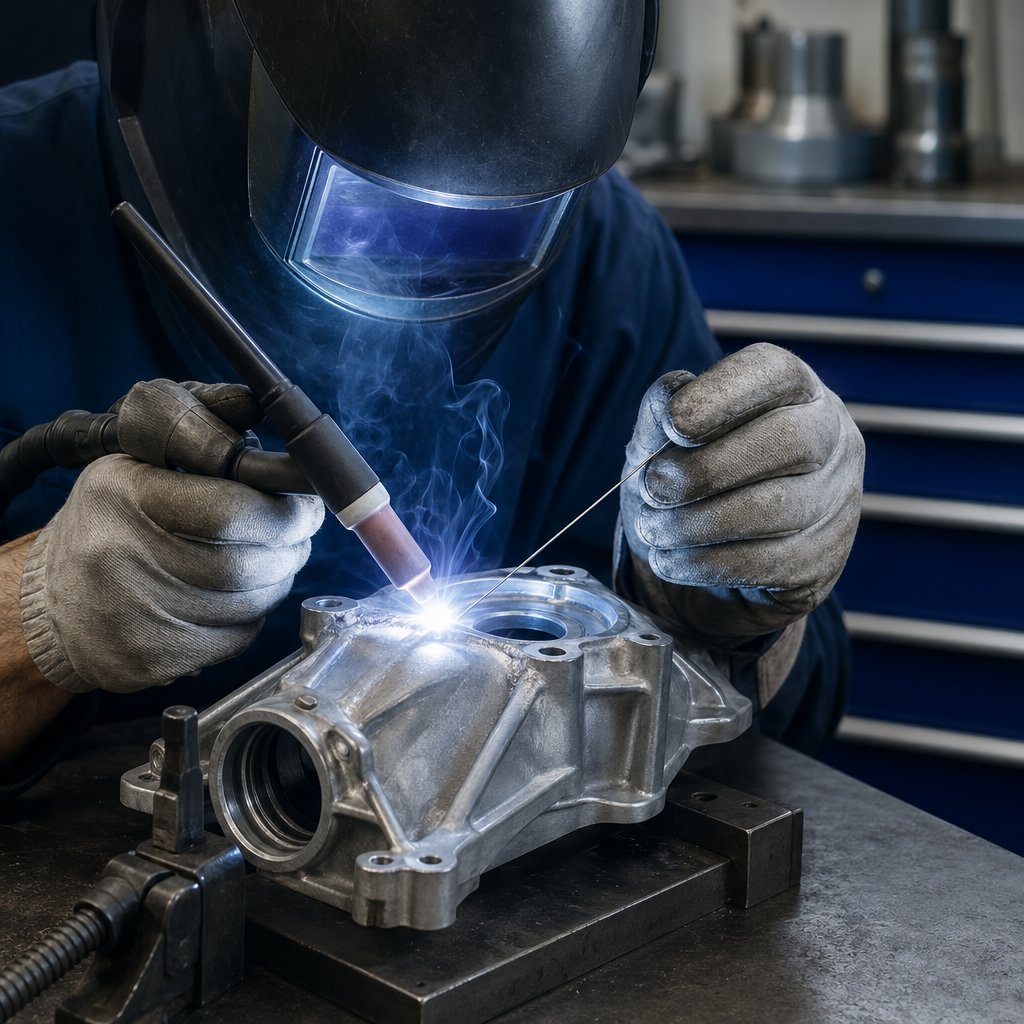
Before you worry about how to weld cast aluminum, decide whether the part is a real repair candidate. A clean new casting is one situation. A used part that is oil-soaked, heavily oxidized, or already repaired is a very different problem. That is the real issue behind the common question, can you weld cast aluminum. In many cases, yes, but condition matters as much as process. The Welder notes that many aluminum castings are weldable, while die castings often contain trapped gas pockets that show up during welding. Canadian Fabricating & Welding also points out that contamination, moisture, and poor prep are major porosity sources because molten aluminum absorbs hydrogen readily.
How to Tell If Cast Aluminum Is Worth Welding
- Trace the full crack. A small crack in a cover or low-load area may be repairable. A break through a mounting ear or other highly loaded section deserves far more caution.
- Look for black residue, wet staining, or fluid seepage. If oil or coolant is still surfacing, postpone the weld until contamination can be removed.
- Check the surface finish. Very smooth castings with round ejector pin marks may be die cast, which raises the odds of hidden gas pockets.
- Inspect for old filler metal, brazing, or epoxy. Previous repairs often hide more cracking and make the puddle less predictable.
- Judge the metal itself. If edges are missing, crumbling, or porous after light grinding, you may be trying to weld damaged base metal instead of sound material.
Red Flags That Make a Repair Unreliable
The biggest difference in cast aluminum versus aluminum plate or sheet repair is what may be trapped below the surface. Oxide can hide embedded dirt. Porous areas can hold oil and moisture. Old die cast parts may reveal gas pockets only after heat is applied. A better question than can cast aluminum be welded is whether this specific casting is clean enough, solid enough, and important enough to trust after repair.
Not every casting deserves repair. If the base metal is contaminated, porous, or structurally weak, filler metal will not make it trustworthy.
When to Stop Before You Strike an Arc
Reject the job, or limit it to cosmetic repair only, when contamination keeps surfacing, the crack runs through a critical high-stress area, or the part shows multiple failed repairs. Functional repairs are possible on many castings. Cosmetic repairs are possible on even more. Some parts should not be welded at all. That is why the first honest answer to cast aluminum versus aluminum repair is this: castings often fail or weld poorly because of what you cannot see yet. The moment inspection suggests trapped oil, stubborn oxide, or internal porosity, the real work becomes cleaning and exposing sound metal.
How to Prep Aluminum for Welding Repairs
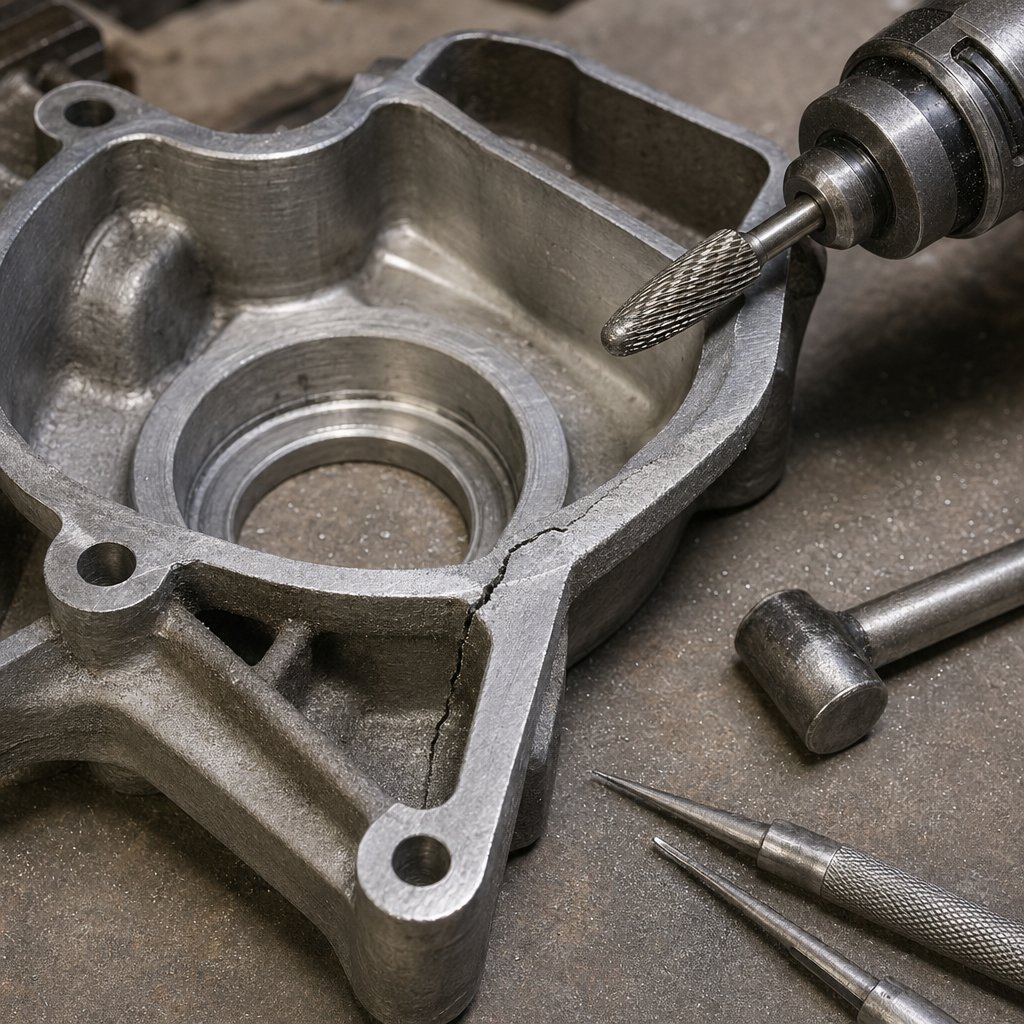
A casting can pass inspection and still go bad the moment heat reaches it. That is why prep is not a quick wipe before welding. For cast aluminum repair, surface cleaning and crack excavation are part of the repair itself. When people struggle with broken cast aluminum, the problem is often buried below the surface, not sitting on top of it.
The Welder notes that aluminum forms an oxide layer almost immediately, and the crack faces carry oxide as well. Welding over that oxide does not truly mend the crack. The damaged area has to be opened up with a burr or grinding wheel and the crack removed before repair welding has a real chance to succeed.
Remove Oil Oxide and Embedded Dirt in Stages
If you are fixing cast aluminum, think in cycles, not in one pass. Start by exposing more than the visible defect so you are working on clean, bare metal around the repair zone, not just the dark line itself.
- Degrease the area and remove loose dirt before any grinding.
- Strip paint, coatings, and residue well beyond the visible crack.
- Mechanically remove oxide with aluminum-dedicated abrasives or brushes.
- Grind or burr into the crack so trapped contamination has a path out.
- Clean again and inspect the freshly exposed metal before striking an arc.
This clean-grind-clean approach helps the weld puddle stay more stable because you are feeding heat into sounder metal instead of cooking hidden residue and oxide.
Prep the Crack So Contamination Has a Way Out
Do not try to bridge a tight crack from the top. Open it enough that the full crack line can be followed and removed. A small burr usually gives better access than trying to wash over the defect with filler. On broken cast aluminum, fresh grinding often reveals what the surface was hiding, such as dark pockets, old repair metal, or material that keeps crumbling back. If that keeps happening, pause the job instead of forcing it.
Repeat Cleaning Before Every Welding Attempt
Freshly ground aluminum is not permanently ready to weld. Every grind-out changes the surface, and every failed start can pull more contamination into view.
- Use tools kept for aluminum only.
- Avoid steel brushes or abrasives that have touched other metals.
- Reclean after every grind-out, not just at the beginning.
- Stop if black residue, wetness, or new debris keeps surfacing.
That repetition is what cuts porosity risk. It also tells you something important about the part itself. A casting that cleans up to bright, consistent metal gives you options. One that keeps bleeding contamination will shape every choice you make with process, filler, and shielding gas.
TIG Welding Cast Aluminum
A casting that finally cleans up to bright metal still leaves one big choice: which process gives you the best odds of a stable puddle. For most repairs, ac tig aluminum is the safe default. TIG is widely favored for cast repair because it offers precise heat control and lets you read the puddle as contamination shows itself. That matters in tig welding cast aluminum, where a part can look ready and still release oil, oxide, or trapped gas the moment heat hits it. MIG has a place, but it asks for a cleaner, more predictable casting.
TIG MIG and Brazing Choices for Cast Aluminum
Think of the options in terms of control versus speed. TIG is usually the first choice on cracked housings, brackets, and similar repairs because you can make short test passes, stop fast, and grind out defects without losing command of the joint. mig welding cast aluminum can work well on thicker, cleaner sections, especially when production speed matters, but it is less forgiving when the repair zone starts boiling contamination to the surface. For readers considering brazing cast aluminum, treat it as a separate, lower-strength repair method for light-duty or cosmetic situations, not a direct substitute for a structural fusion weld.
| Option | Best fit on castings | Filler behavior | Contamination tolerance | Expected finish |
|---|---|---|---|---|
| AC TIG with 4043 | Most crack repairs and groove-style rebuilds on unknown or mixed castings | Easy-welding rod choice with a smooth-looking bead | High process control, so contamination is easier to spot early | Usually the cleanest-looking repair |
| AC TIG with 5356 | Repairs where the weld itself may carry more shear, including fillet-like rebuilding | Higher shear strength than 4043 in fillet-type loading | Good control from TIG, but filler choice is less forgiving on questionable base metal | Good finish, often not as attractive as 4043 |
| AC TIG with specialty repair filler | Unknown, crack-prone, or stubborn castings | Chosen when standard rod choice is not giving the needed repair behavior, machining response, or crack resistance | Still depends heavily on aggressive cleaning and grind-out | Varies with rod and casting condition |
| MIG with aluminum wire | Cleaner, thicker cast sections where speed matters more than fine puddle reading | Fast deposition with wire rather than a hand-fed rod | Lower tolerance when hidden contamination suddenly surfaces | Can be sound, but cosmetic control is usually below TIG |
| Brazing filler | Light-duty, noncritical, or cosmetic repairs | Fills and joins without producing the same kind of fusion weld | Surface condition still matters, and strength expectations should stay modest | Acceptable after finishing, but not the same as a sound weld repair |
When to Choose 4043 5356 or Specialty Repair Filler
If you are choosing a cast aluminum welding rod for TIG, 4043 is the common starting point. Guidance from The Welder notes that 4043 is easier to weld and usually gives a better-looking bead, while 5356 offers higher shear strength in fillet-type loading, about 18 KSI versus 11 KSI for 4043. That makes 4043 a practical choice for many groove-style crack repairs, and 5356 worth stronger consideration when the weld metal itself will carry more shear load. The same source warns against 4043 on high-magnesium alloys such as 5083, 5056, and 5454.
Specialty repair fillers earn attention when the casting has unknown chemistry, a history of hot cracking, or a repaired area that must balance weldability, appearance, and later machining. They can improve the odds on difficult parts, but they are not magic.
No cast aluminum welding rod can rescue a casting that is still dirty, porous, or crumbling under the grinder.
Shielding Gas Choices That Support a Stable Puddle
If you are wondering what gas is used to weld aluminum, start simple. For TIG work, pure argon is the standard baseline and the normal gas for welding aluminum because it supports arc stability and protects the puddle from oxidation. Argon-helium mixes are reserved for thicker or more specialized sections where extra heat input helps, but they also require higher flow and can make arc starting less friendly. In practical repair work, that keeps pure argon at the top of the list far more often than people expect.
Brazing cast aluminum, MIG, and TIG can all join metal. The repair usually succeeds with the option that lets you see trouble early and stop before you bury it, which is why TIG remains the first call for most castings. From here, the small machine choices around AC balance, gas coverage, tungsten condition, and heat control start deciding whether that good plan turns into a stable arc.
Welder Settings for Aluminum Cast Repairs
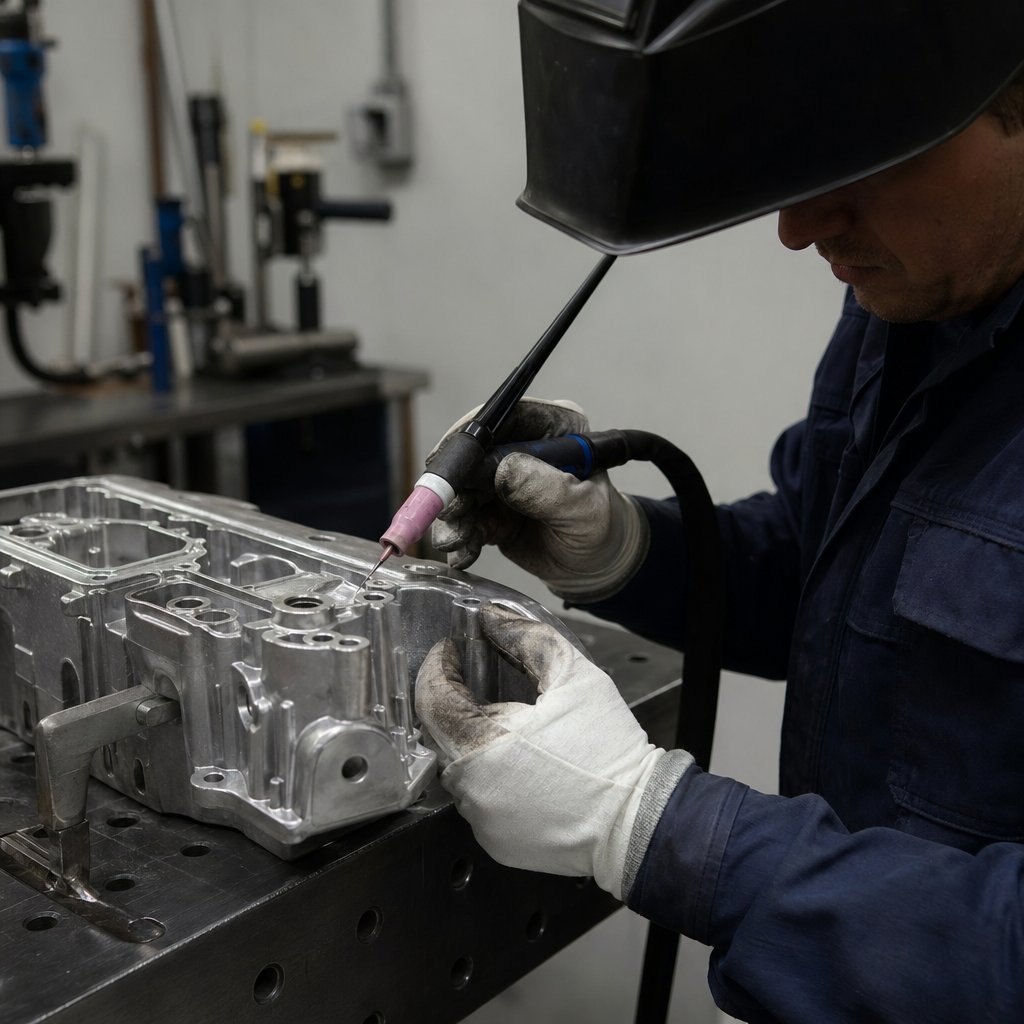
Those machine choices start showing their value the instant the arc lights. On a casting, the goal is not copying someone else’s numbers. It is building a setup that gives you a readable puddle, steady cleaning action, and enough control to stop before contamination gets buried. That is the real difference between useful welder settings for aluminum and a guess that only works on one clean coupon.
Set Up AC TIG for Cleaning and Control
For most cast repairs, an AC TIG setup remains the most controllable choice because AC helps remove oxide while still melting the base metal. Modern machines also let you tune balance and frequency, which changes how much cleaning you get and how focused the arc feels. Miller notes that black flecks or a brown, dirty-looking puddle often mean you need more cleaning action, while too much electrode-positive time can overheat and ball the tungsten.
- Use AC, not DCEN, for aluminum cast repair.
- Keep a short arc length so heat stays localized and the arc does not wander.
- Start with pure argon and verify coverage before blaming the casting.
- Check hoses, fittings, cup position, and drafts that can disturb shielding.
- Use clean tungsten and regrind or replace it if it gets contaminated or badly balled.
- Clamp the part securely and place the work lead on clean metal.
- Use backing bars, heat sinks, or simple fixturing when thin edges want to collapse.
If you are wondering what do you need to weld aluminum, the short answer is stable shielding, clean tungsten, proper AC cleaning, and a part that cannot move while you work.
Use exact amperage, balance, frequency, and flow numbers only when solid reference data or your machine documentation supports them. Castings vary too much for copied settings to be treated as universal.
Adjust Heat Input for Thin Edges and Heavy Sections
An aluminum TIG weld on cast material usually needs high initial heat to establish the puddle, but aluminum also conducts heat away fast. The Fabricator emphasizes that a longer arc raises voltage and spreads heat over a wider area, which can create a runaway puddle. Thin edges need a tighter arc, faster movement, and support from filler early in the pass. Heavier sections may need more available amperage and sometimes a wider, less needle-like arc profile. For argon gas aluminum welding, more flow is not automatically better. Excessive flow can create turbulence and pull contamination into the arc zone.
Welding aluminum with mig welder can work on cleaner, thicker castings, but only if wire feeding is smooth and aluminum-specific. A spool gun or push-pull system helps prevent feeding problems, and the wire path has to stay clean.
Use Preheat Carefully Without Hiding Contamination
Preheat has a place, especially on thicker castings that crack from thermal shock or resist smooth starts. Reference guidance commonly places cast aluminum preheat in the 300 F to 400 F range for suitable cases, but that heat should reduce shock and improve starts, not cook oil deeper into the joint. If a test start turns gray, sooty, or starts boiling almost immediately, stop and clean again. The puddle is telling you the surface still is not ready. When the arc stays bright and the weld pool looks calm instead of dirty, you finally have a setup worth carrying into the actual repair sequence.
How Do You Weld Cast Aluminum in Short Passes
If you are staring at a cleaned and fixtured part and still asking how do you weld cast aluminum once it is finally ready, think in controlled segments, not one long bead. Good cast aluminum welding is usually iterative. You test, read the puddle, stop, and adjust. That rhythm matters because a casting can look clean until heat opens up contamination hiding just under the surface.
Tack the Part So the Crack Does Not Keep Opening
Start by making the part hold its shape. Clamp it securely, support weak edges if needed, and verify the groove is still aligned after prep and preheat. Then place small tacks at both ends of the crack so the joint does not keep spreading as the metal expands. On cast repairs, that simple step can keep a manageable crack from turning into a moving target.
- Stabilize the casting and confirm the groove is still bright and clean.
- Place small tacks at both ends of the crack.
- Make a very short test pass, just enough to read the puddle.
- Stop and inspect the bead, puddle behavior, and adjacent metal.
- If contamination shows, grind back to sound metal, clean again, and retest.
- Continue with short weld segments instead of one continuous run.
- Fill the crater at the end of each segment before breaking the arc.
Run Short Controlled Passes Instead of Long Beads
The safest way to weld cast aluminum is with stitch-like passes and pauses, not a long uninterrupted bead. Stitch-welding guidance for castings emphasizes shorter runs because they limit heat buildup, distortion, and cracking stress. That is especially true in welding cast aluminum TIG work, where thick sections pull heat away while thin edges overheat fast.
Use the first short segment to establish a fluid puddle, then add filler into the leading edge early enough to support it. That early filler addition helps keep the puddle from washing away a thin edge and leaving undercut. If the edge starts to sink, shorten the pass, reduce heat input, and rebuild control before moving farther. In real cast aluminum welding, stopping to rework a small area is normal, not failure.
Watch the Puddle for Contamination Signals
For most repairs, welding cast aluminum TIG is less about speed and more about puddle reading. The puddle tells you quickly whether the repair zone is truly ready. A calm puddle stays bright, fluid, and responsive. A contaminated one turns ugly in seconds. Practical puddle recognition matters here because castings often announce hidden problems only after the arc starts.
- Continue when the puddle stays shiny, filler melts smoothly, and the bead wets in evenly.
- Stop and clean again if you see black soot, bubbling, floating debris, or rough, dirty ripples.
- Restart only after grinding back to bright metal and getting another stable test puddle.
- Reduce heat or shorten the segment if the puddle goes too wide, shaky, or starts pulling an edge down.
- Do not snap out of the arc at the end of a pass. Crater fill matters because castings can crack right where you stop.
That is the honest answer to welding cast aluminum. Progress usually comes in short, controlled passes with a few interruptions for cleaning or grind-out. The moment soot, porosity, or new cracking shows up beside a fresh bead, the repair stops being a simple sequence and turns into troubleshooting.
TIG Welding Aluminum Problems on Cast Repairs
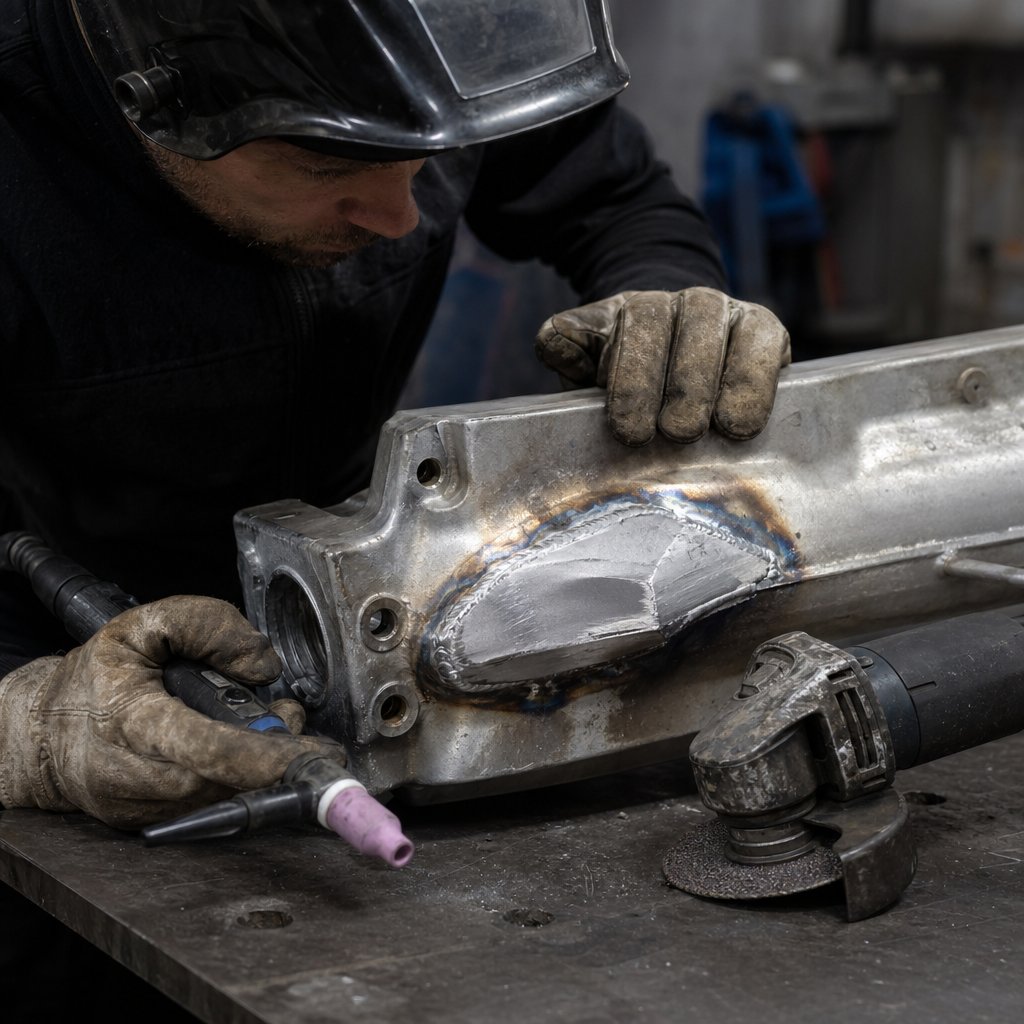
Cast repairs rarely fail in only one way. When you tig weld cast aluminum, defects usually show up as clues: trapped gas, dirty oxide, overheated metal, or a casting chemistry that does not want to solidify cleanly. Many welders group these headaches under tig welding aluminum problems, and that is fair, but castings add one more layer of trouble because the puddle can uncover contamination that was invisible a minute earlier. That is why many so-called tig welding aluminium problems are really casting-condition problems exposed by the arc.
What Porosity Black Soot and Puddle Boiling Mean
Black residue around the weld is often black smut, made up mainly of aluminum oxide and magnesium oxide. It is commonly linked to oxidation, surface contamination, alloying elements such as magnesium oxidizing during welding, or excessive heat. Bubbling or a puddle that starts boiling fast usually means gas or contamination is surfacing. If grinding opens up elongated pores or tunnel-like defects, wormholes are a strong suspect, and those point back to trapped gas from gross contamination, coatings, or cavities that let gas get trapped in solidifying weld metal.
| Symptom | Likely cause | Corrective action |
|---|---|---|
| Black soot around the weld | Oxidation, contamination, magnesium oxidation, or excessive heat | Stop, reclean the area, reduce heat input, and verify shielding gas coverage is stable |
| Bubbling or boiling puddle | Gas and contamination surfacing from the casting | Grind back to bright metal, clean again, and retest with a very short pass |
| Wormholes after grinding | Trapped gas from gross contamination, coatings, or joint cavities | Remove coatings farther out, clean thoroughly, and do not reweld until the defect is fully opened |
| More porosity appears after cleanup | Gas trapped in the weld or contaminated base metal keeps feeding pores | Excavate the porous zone completely and decide whether sound metal still exists |
| Cracking beside a fresh bead | Solidification or hot cracking tied to alloy chemistry and weld pool composition | Reassess filler choice and groove shape so more filler can dilute the weld pool |
| Edge collapse | Excessive heat or staying in one spot too long | Shorten the pass, cool the area, and rebuild with smaller controlled segments |
| Lack of fusion at dirty pockets | Oxide and embedded dirt still trapped in the groove | Cut the pocket out completely instead of trying to wash over it |
How to Recover From Cracking During the Repair
If a crack forms right beside a new weld, treat it as a metallurgy warning, not just bad luck. The hot cracking guidance from The Fabricator explains that aluminum cracking often happens as the weld solidifies, and filler choice can shift the weld pool away from crack-sensitive chemistry. A tighter, square groove leaves less room for that filler to do its job. On cast repairs, opening the joint again and changing the repair approach is usually smarter than stacking another pass on top.
When the same defect keeps coming back, the casting may be the problem, not your technique.
When to Abandon the Weld and Reassess
Some tig welding aluminum common problems have a clear stopping point. Walk away when each grind-out reveals fresh porosity, when black smut returns after repeated cleaning, or when a repaired area cracks again even after changing filler strategy. At that stage, more welding usually hides trouble instead of fixing it. A cast repair can look acceptable under the torch and still fail the moment you clean and inspect it, which is exactly why the finished weld has to be judged with a colder, less optimistic eye.
Repair Cast Aluminum
A repair that survived the arc still has to prove itself after cooling. This is where cast work gets judged honestly. Function usually comes before appearance. Modern Casting notes that a welded casting that is blended, heat treated, and passes the required inspections can meet drawing requirements. That standard is much stricter than saying the bead looks decent.
Judge Structural Soundness Before Cosmetic Finishing
Before you grind for looks, decide whether the weld is sound enough to keep. If your procedure calls for post-weld heat treatment, dye penetrant, or other drawing-specified inspection, finish those steps before calling the job complete. In a practical shop setting, it helps to sort the outcome into simple acceptance groups.
- Structurally acceptable: the weld zone stays solid after cleanup and shows no obvious fresh cracking, open porosity, or failing edges.
- Temporary or low-risk service only: the repair appears functional, but the finish remains rough or minor surface defects make you cautious.
- Cosmetic only: the area looks better, but you would not trust it in a loaded application.
- Reject and replace: blending or cleanup keeps exposing new pores, cracking, or weak metal beside the weld.
Separate Functional Repairs From Show Quality Expectations
That distinction matters when people ask how to repair cast aluminum and expect every repair to disappear after sanding. The same Modern Casting guidance notes that customers often complain when a weld has not been cleaned well or shows a color difference. In short, good aluminum welds are not judged by bead appearance alone, and a smooth finish does not prove a sound repair. Many successful cast repairs are useful first and attractive second.
Do not chase surface appearance until you know the repair has real integrity.
Finish Machine and Reinspect the Weld Zone
If the repair passes that first honesty check, blend or machine it carefully, then inspect the newly exposed surface again. Repairing cast aluminum can reveal porosity only after dressing the weld back to contour. If the area still looks stable after finishing and any required inspection, you likely have a usable result. If it gets worse as you clean it up, the problem is no longer cosmetic. That is usually where how to repair cast aluminum turns into a harder question about whether this part should be welded again at all.
How to Fix Cast Aluminum Without Welding
A weld that survives cleanup can still fail the bigger test: should the part go back into service at all. People searching how to weld cast aluminium sometimes need the opposite advice. Stop rewelding. If grinding keeps exposing porosity, the crack returns beside a loaded feature, or earlier repairs have already thinned the area, replacement becomes the safer path. Defiant Motorsports frames the choice well: minor damage may justify repair, while structural damage often points toward replacement for strength, longevity, and better confidence in service.
Know When a Replacement Is Safer Than Another Repair Attempt
Stopping a bad repair is not giving up. It is part of making a sound decision.
- Replace the part when repeated clean-and-weld cycles still uncover pores, soot, or crumbling base metal.
- Replace it when the crack comes back through a mounting ear, bracket, or another high-stress location.
- Step away from rewelding when old filler, prior repairs, or material loss have left too little sound metal.
- Use only temporary, low-risk fixes when failure would not threaten safety, alignment, or sealing performance.
- If you are considering jb weld on cast aluminum, treat that as a separate temporary-fix question, not proof that a structural repair is still trustworthy.
So, can cast aluminium be welded. Often yes. But can you weld cast aluminium again and again on the same failing part and still trust it. Not always. That is the honest side of how to repair cast aluminium.
Redesign High Stress Parts Instead of Rewelding Weak Castings
Some broken parts are giving design feedback, not just repair work. When the same area keeps cracking, the problem may be the geometry, the load path, or a section that is too weak for the job. If you are asking how to fix cast aluminum without welding, redesign belongs on the table whenever another heat cycle would only chase the same failure in the same spot.
Use Qualified Manufacturing Support for Automotive Aluminum Parts
For automotive professionals, replacement does not have to mean finding an identical copy of a flawed casting. When a failed part is better replaced with a custom aluminum solution, Shaoyi Metal Technology offers a one-stop manufacturing workflow for automotive aluminum extrusions, with IATF 16949-certified quality control, rapid prototyping through final delivery, an engineering team with over a decade of experience, rapid 24-hour quotations, and free design analysis. In practice, that is often the smarter answer when how to weld cast aluminium stops being the real question and long-term reliability becomes the priority.
Frequently Asked Questions About Welding Cast Aluminum
1. Can cast aluminum be welded successfully?
Yes, many cast aluminum parts can be welded, but success depends more on condition than on the label alone. A clean casting with solid metal is usually a workable candidate, while oil-soaked, heavily oxidized, previously repaired, or crumbly sections often create porosity and unstable puddles. The best test is what you see after grinding: if the metal opens up bright and consistent, repair may be realistic. If contamination keeps returning, the repair may only be cosmetic or not worth attempting.
2. Is TIG or MIG better for cast aluminum repair?
TIG is usually the better choice for cast aluminum repair because it gives tighter heat control and lets you read the puddle before defects get buried. That matters on castings, where hidden oil, oxide, and trapped gas often appear only after the arc starts. MIG can still work on cleaner, thicker cast sections, especially when speed matters, but it is less forgiving when the part is unpredictable. For most cracked housings, covers, and brackets, TIG gives the safer repair path.
3. What filler rod and shielding gas should I use for welding cast aluminum?
For most TIG repairs, pure argon is the standard shielding gas because it supports stable arc behavior and reliable coverage. On filler selection, 4043 is often the first choice because it flows well and is commonly more forgiving on questionable castings, while 5356 may be considered when higher weld strength is needed and alloy compatibility is appropriate. If the part has a history of cracking or unusual contamination, a specialty repair rod can be worth trying. Filler selection helps, but it cannot compensate for dirty or porous base metal.
4. Why does cast aluminum produce black soot, bubbling, or porosity during welding?
Those signs usually mean something unwanted is still coming out of the casting. Trapped oil, moisture, oxide, old repair material, or poor shielding can all make the puddle look dirty and unstable. Instead of adding more filler over the problem, stop, grind back to cleaner metal, and repeat the clean-and-test cycle. If the same symptoms keep returning after several attempts, the casting itself may be too contaminated or too degraded for a dependable repair.
5. When should I replace a cracked cast aluminum part instead of welding it?
Replacement is the smarter move when the crack runs through a high-stress area, previous repairs keep failing, or cleanup keeps exposing fresh pores and weak edges. That is especially important for automotive parts where alignment, sealing, or safety matters. In those cases, another weld pass may only delay the next failure. If a custom replacement is the better answer, automotive teams can use Shaoyi Metal Technology for IATF 16949-certified manufacturing support, rapid quotes, free design analysis, prototyping, and final delivery of aluminum components.