 Small batches, high standards. Our rapid prototyping service makes validation faster and easier —
  EN
EN


How to Evaluate a Single-Source Stamping & Welding Supplier
How To Evaluate A Single-Source Stamping And Welding Assembly Supplier
A single-source stamping and welding supplier is a manufacturer that both stamps the metal parts and welds them into a finished assembly under one roof, under one quality system, under one name to call when something goes wrong. The value isn't convenience. It's that when a welded assembly fails inspection, there is exactly one company that can be held accountable, instead of two pointing at each other's process.
This matters most for chassis, subframe, and structural assemblies, where a stamping tolerance issue and a welding fixture issue can produce the exact same symptom — a part that won't assemble — and nobody upstream can tell you which one caused it.
Two Suppliers, One Assembly — Where the Problems Actually Start
Most buyers assume splitting stamping and welding across two specialists gets them the best of both worlds — a stamping expert who only stamps, a welding house that only welds. In practice it creates a gap neither supplier owns.
A welded structural assembly is a tolerance chain. A front subframe, for example, might be built from seven stamped parts joined by seventeen weld points. Each stamped part carries its own tolerance, and welding adds heat distortion on top of that.
If the finished assembly doesn't fit on the customer's mating fixture, the stamping supplier will point to the weld shop's fixture accuracy, and the weld shop will point to the stamped part's dimensions. Both can be technically right. The customer still has a part that doesn't assemble, and no single company responsible for fixing it.
This is exactly why some OEM platforms now write "single-supplier assembly-level responsibility" into their sourcing requirements outright — they've been burned by the finger-pointing before, and they no longer want to referee it.
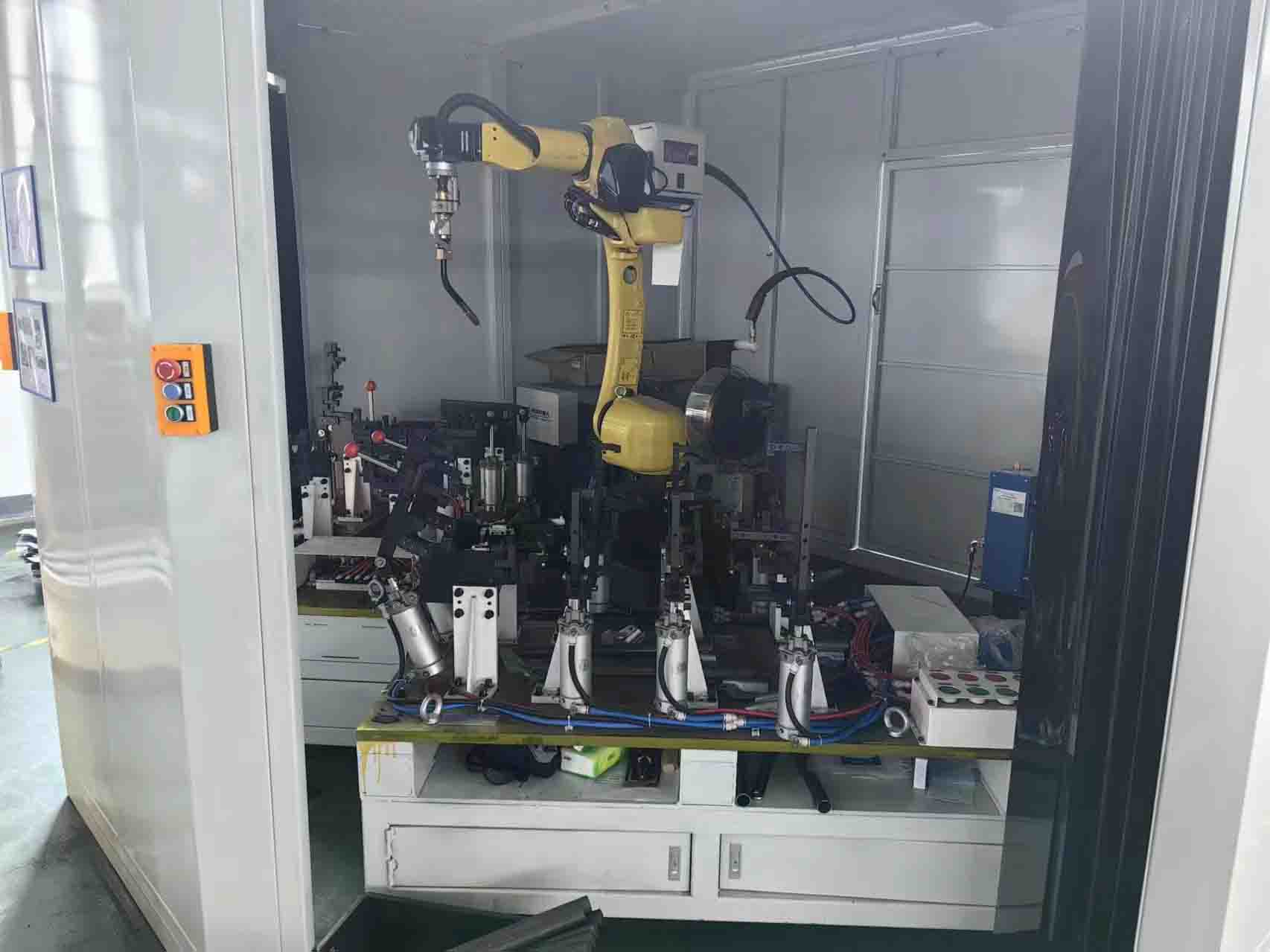
How To Verify A Supplier Actually Welds In-House
Anyone can put "stamping and welding" on a capabilities page. Verifying it takes about ten minutes if you ask for the right things instead of taking the claim at face value.
Ask for read-only access to the supplier's MES system for your own parts — current station, today's output, cumulative output, and the live SPC chart. A supplier who genuinely runs the welding line in-house can turn this on in a day. A supplier who subcontracts welding usually can't, because the data isn't theirs to share.
Ask for a weekly production video from the shop floor, not a corporate reel — a short clip of your specific part moving through its actual station, with a plain-language note on what stage it's at.
Ask for one live video call where the project engineer walks the floor with a phone camera and shows you the machine your part is running on, right now. This single request filters out more shell suppliers than any certificate check.
Ask to see the summary section of the most recent third-party quality audit report. It doesn't need to be the confidential part — the non-confidential summary is usually enough to confirm the audit happened and what it covered.
None of this is exotic. It's the same transparency a serious supplier already offers its long-term accounts on our robotic welding line — the request just needs to be made explicit before the PO is signed, not after the first shipment arrives short.
What "Assembly-Level Responsibility" Actually Requires
A supplier claiming assembly-level responsibility should be able to hand over hard numbers, not adjectives. Here's what to actually check, and why each line matters to you as the buyer.
| What to check | What a real answer looks like | Why it matters |
|---|---|---|
| Quality system | IATF 16949:2016, verifiable at the IATF Customer Portal by certificate number | Confirms the certificate is live, not expired or borrowed |
| PPAP capability | Full Level 1–3 submission package available before SOP | No PPAP file means no traceable proof the process matches the print |
| Process capability | Key dimensions held at CPK ≥ 1.33 | Below this, "passing" samples still drift out of spec in production |
| Weld inspection | All five NDT methods — UT, RT, MT, PT, ET — available, not just visual check | Visual inspection alone misses internal porosity and lack of fusion |
| Weld strength verification | Peel/tensile-shear testing at ≥25kN per batch | Confirms the weld holds load, not just that it looks clean |
| Complaint response | 1-hour acknowledgment, 24-hour containment, 72-hour 8D report | Tells you how fast a line-down problem actually gets contained |
A supplier that can quote these numbers from memory has actually built the system around them — ours sits inside an IATF 16949-certified quality system for exactly this reason. A supplier that has to "check with the quality department and get back to you" usually hasn't.
A Real Project: Why One Tier 1 Customer Insisted On A Single Supplier
In 2022, a Tier 1 supplier to a German luxury SUV platform needed a front subframe assembly — seven stamped parts, high-strength QSTE500TM steel at 3.0mm, joined by seventeen weld points, 80,000 sets a year for a seven-year program. The OEM's sourcing requirement was explicit: one supplier, full assembly-level responsibility. No split between a stamping vendor and a welding vendor.
The technical risk was real. High-strength steel springback is hard to predict by trial and error, and seventeen weld points across seven parts meant any single fixture error would propagate through the whole tolerance chain. A 20-week window to SOP left no room for the usual two-or-three-round die rework cycle.
Shaoyi ran forming simulation on all seven stamped parts before cutting any steel — not as an add-on, but as the first step. The simulation caught a thinning risk of over 25% at one reinforcement corner (the material's forming limit is roughly 28%) and flagged it before tooling was built; the corner radius was increased from R3.0 to R4.5 to bring the thinning risk down. Springback compensation was calculated per zone, with the largest correction — 2.3° at a sidewall flange — built directly into the die surface.
The result: T1 samples hit 209 of 216 dimensions on the first try, a 96.8% first-pass rate against an industry average closer to 70–80%. Only one rework round was needed. On the welding side, a dedicated fixture held ±0.1mm locating accuracy across all seventeen joints, and every critical weld went through 100% ultrasonic inspection. The customer's procurement director later noted, in a supplier review, that Shaoyi was one of the few China-based suppliers able to run both the stamping and the welding side well enough that no technical coordination from the customer's side was needed in between.
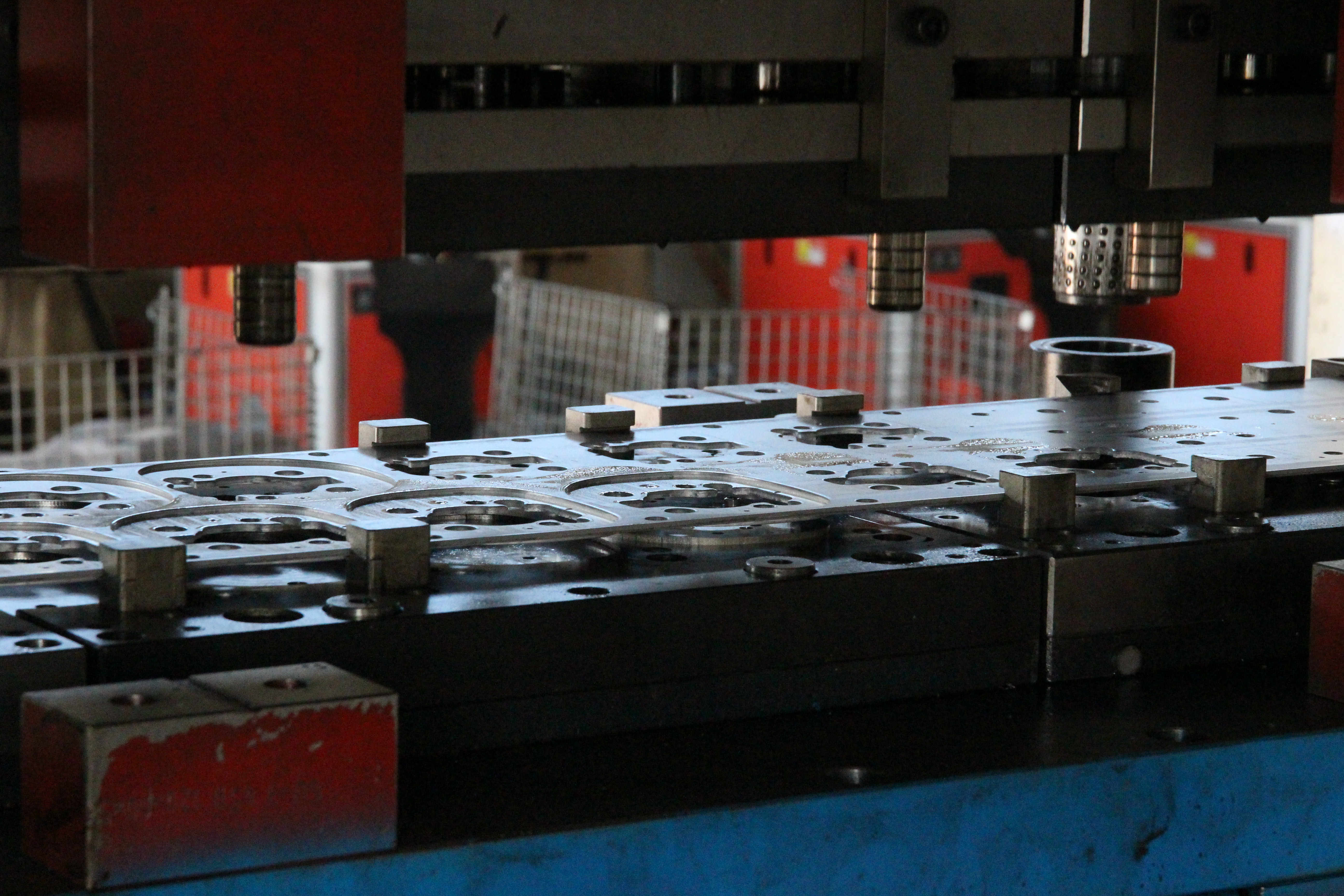
Our chassis stamping capability and the welding line that finishes the assembly report to the same production and quality system — which is the entire point of asking for a single source in the first place.
Is One-Stop Really More Expensive?
Usually, yes, on the quote. Not always on the total bill.
On the subframe project above, Shaoyi's quote came in roughly 8% above the lowest competing bid — and the customer chose it anyway. The procurement director's own words were blunt: the calculation wasn't about the per-part price, it was about the cost of a quality event that nobody could trace back to a single owner. A 3-day CAE turnaround that prevents three rounds of die rework saves roughly ¥60,000–120,000 in avoided rework alone, before counting the schedule risk of missing an OEM's SOP date. That number doesn't show up on the quote comparison sheet. It shows up eight weeks later, or it doesn't show up at all, which is the point.
If your project has no history of cross-supplier disputes and your volumes are modest, the 8% premium might genuinely not be worth it. If your part has ever come back from an assembly line with a dimension nobody can explain, it usually is.
When You Don't Need A Single-Source Supplier
A single-source model isn't the right fit for every project, and a supplier who tells you otherwise is selling, not advising.
Skip it for small-batch prototype orders that never reach an assembly stage — a standalone stamped bracket with no weld points doesn't need assembly-level responsibility, because there's no assembly to be responsible for.
Skip it if you already run your own welding line and only want stamped blanks — in that case, assembly accountability isn't the deciding factor at all, and you should be comparing stamping price, tolerance capability, and lead time directly.
And check the process list before assuming coverage: our welding line runs MIG/MAG, resistance spot, robotic arc, laser, and friction welding, but not brazing. A part that's joined by brazing rather than fusion or resistance welding needs a supplier who specializes in that process instead.
What To Do Next
Before the next quote request goes out, send the supplier four questions: read-only MES access for your part, a weekly floor video, one live video walk-through, and the non-confidential summary of their last quality audit. Score the answers, not the sales pitch. A supplier with nothing to show usually answers slowly, or answers with a brochure.
If your next assembly involves both stamping and welding on the same part family, get your project reviewed by our PM — bring the print and the annual volume, and you'll get a DFM read and a straight answer on whether single-source responsibility actually changes your risk on this specific part.
FAQ
After the project is finished, who owns the stamping die and the welding fixture?
The customer does. A serious supplier stores and maintains them on-site at no extra charge — that's standard practice, not a value-added extra to negotiate for.
How long does a quote and DFM review actually take?
With a complete 2D/3D drawing package, material spec, and annual volume, a standard quote turns around within 12 hours, faster on request. If the part needs forming simulation, DFM plus CAE typically takes 24–48 hours, occasionally longer on complex geometry.
What happens to my project if my supplier's project engineer leaves or goes on leave?
On a properly run program, every project has a named backup engineer from day one, and communication runs through a shared project mailbox rather than one person's inbox — so a handover shouldn't cost you a week of silence.
How do I actually confirm an IATF 16949 certificate is real and current?
Look it up yourself using the certificate number on the IATF verification portal linked above. Don't rely solely on a PDF the supplier emails you — the portal shows live status, not just what was true on the day the PDF was issued.
Written by: Xu Xungui, Stamping & Die Process Engineer — background in stamping forming process, die structural design, sheet metal forming simulation, and part quality control across full-vehicle stamped component programs, with particular focus on resolving springback, wrinkling, and dimensional drift issues.
Reviewed by: Nansen , International Business Manager
Last updated: 2026-07-30