 Small batches, high standards. Our rapid prototyping service makes validation faster and easier —
 EN


Stamping Automotive Connectors and Terminals: Precision Engineering
TL;DR
Stamping automotive connectors and terminals is a high-precision manufacturing process that utilizes progressive die technology to convert metal strips into complex, conductive components with micron-level tolerances. This process relies heavily on selecting the correct copper alloys—such as Brass, Phosphor Bronze, or Beryllium Copper—to ensure signal integrity under the harsh conditions of vibration and thermal cycling found in modern vehicles. Manufacturers must adhere to rigorous standards like USCAR-2 and IATF 16949 to validate performance. For engineers and procurement specialists, success depends on balancing material properties with design geometries like press-fit pins and ensuring suppliers possess robust in-line vision inspection capabilities.
Engineering the Connection: The Stamping Process Ecosystem
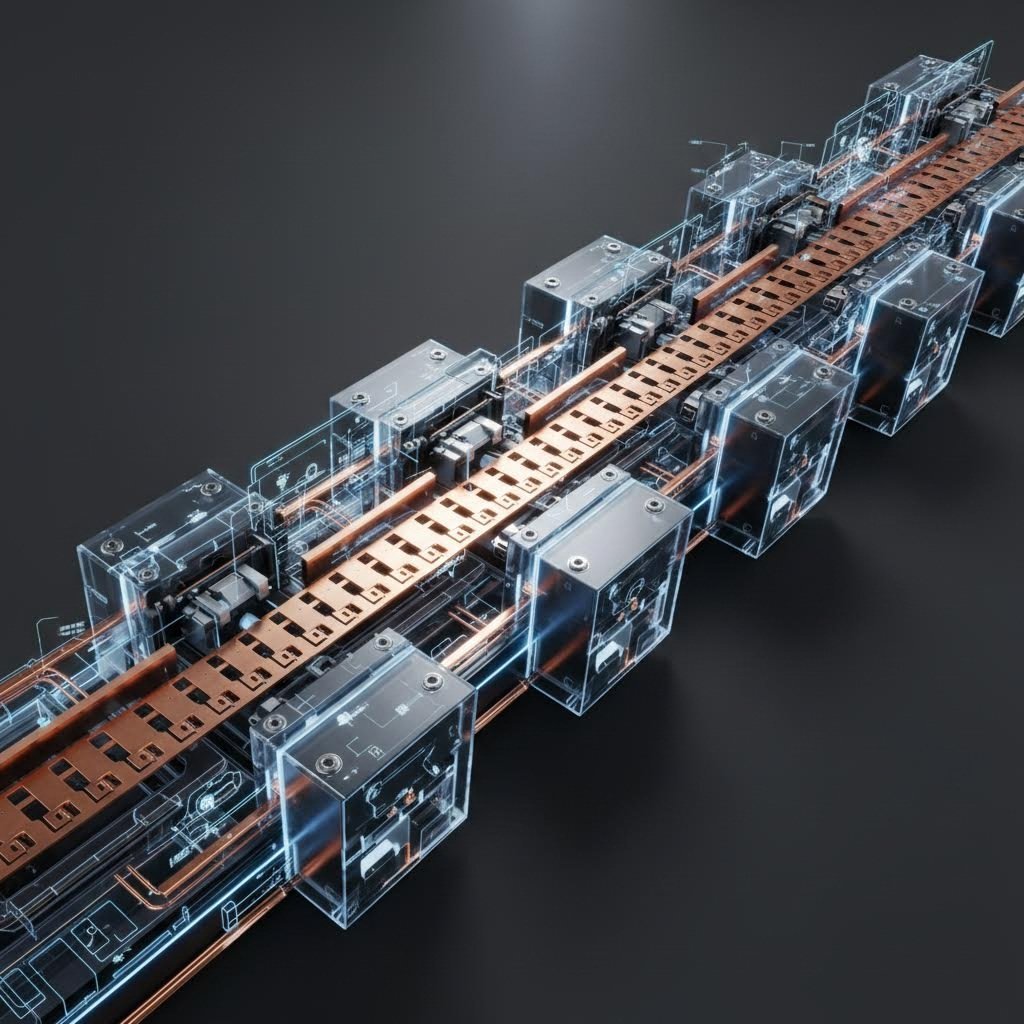
The production of automotive terminals moves far beyond simple metal forming. It is an ecosystem centered on high-speed progressive die stamping, a method where a continuous metal strip is fed through a series of stations. Each station performs a specific operation—punching, coining, bending, or skiving—before the part moves to the next. This allows for the mass production of complex geometries at speeds often exceeding 1,000 strokes per minute, a necessity for meeting the high volumes required by automotive OEMs.
Advanced manufacturers integrate "In-Die Assembly" technologies, where auxiliary components such as screws or contacts are inserted directly during the stamping phase. This consolidation reduces secondary handling and improves tolerance stacks. According to industry leaders like KS Tooling, the workflow extends beyond the press, often linking stamping directly with plating, molding, and assembly stages to create a seamless production line. This integration is critical for maintaining the structural integrity of delicate terminals.
For high-volume automation, components are typically produced "reel-to-reel" rather than as loose pieces. This format enables downstream automated assembly machines to pick and place terminals into connector housings with high velocity. To ensure zero-defect manufacturing in this high-speed environment, top-tier suppliers like Wiegel utilize advanced vision inspection systems. These cameras monitor every stroke, verifying critical dimensions and detecting anomalies in real-time, which is non-negotiable for safety-critical automotive applications.
Material Science: Alloys for Harsh Automotive Environments
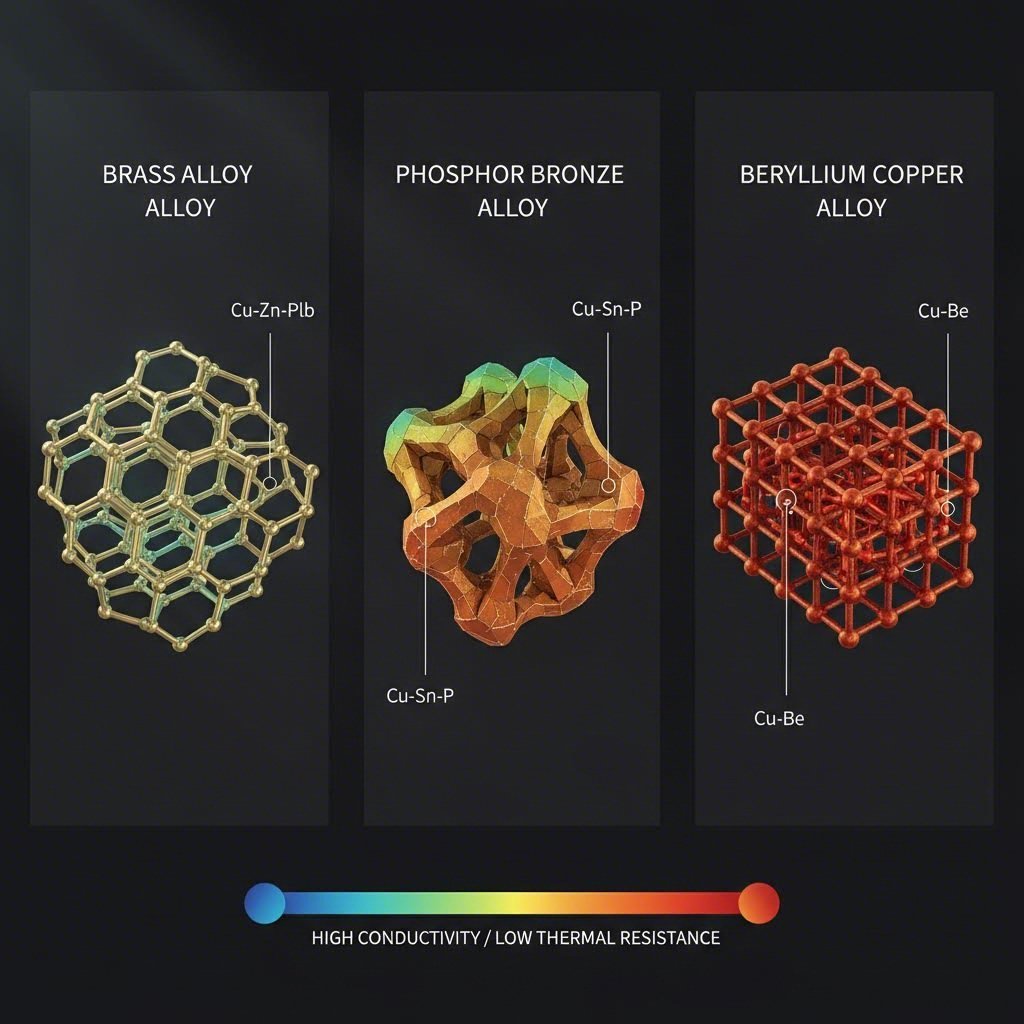
Selecting the right base material is the engineering foundation of any automotive connector. The material must balance electrical conductivity with mechanical properties like yield strength and stress relaxation resistance, particularly given the high temperatures under the hood. The choice of alloy dictates the terminal's ability to maintain contact force over the vehicle's lifespan.
| Material Class | Common Alloy | Performance Characteristics | Typical Application |
|---|---|---|---|
| Brass | C26000 (Cartridge Brass) | High conductivity (28% IACS), moderate strength, low cost. Susceptible to stress relaxation above 110°C. | Standard cabin connectors, non-critical signal transmission. |
| Phosphor Bronze | C51000 / C52100 | Superior fatigue resistance and spring properties compared to brass. Stable up to ~130°C. | Sensors, switches, and terminals requiring higher cycle durability. |
| Beryllium Copper | C17200 (BeCu) | Highest strength and relaxation resistance. Excellent for high vibration and temperatures up to 200°C. | EV battery systems, miniaturized ADAS connectors, engine control units. |
Beyond the base alloy, surface engineering plays a pivotal role. Plating prevents oxidation and "fretting corrosion"—micro-movements caused by vibration that can insulate the contact point. While tin plating is standard for general use, gold or silver is required for high-voltage EV applications or low-energy sensor data where signal fidelity is paramount. Manufacturers like KS Terminals emphasize that the correct combination of base material and plating is essential for passing salt spray and thermal shock validation tests.
Critical Geometries and Design Features
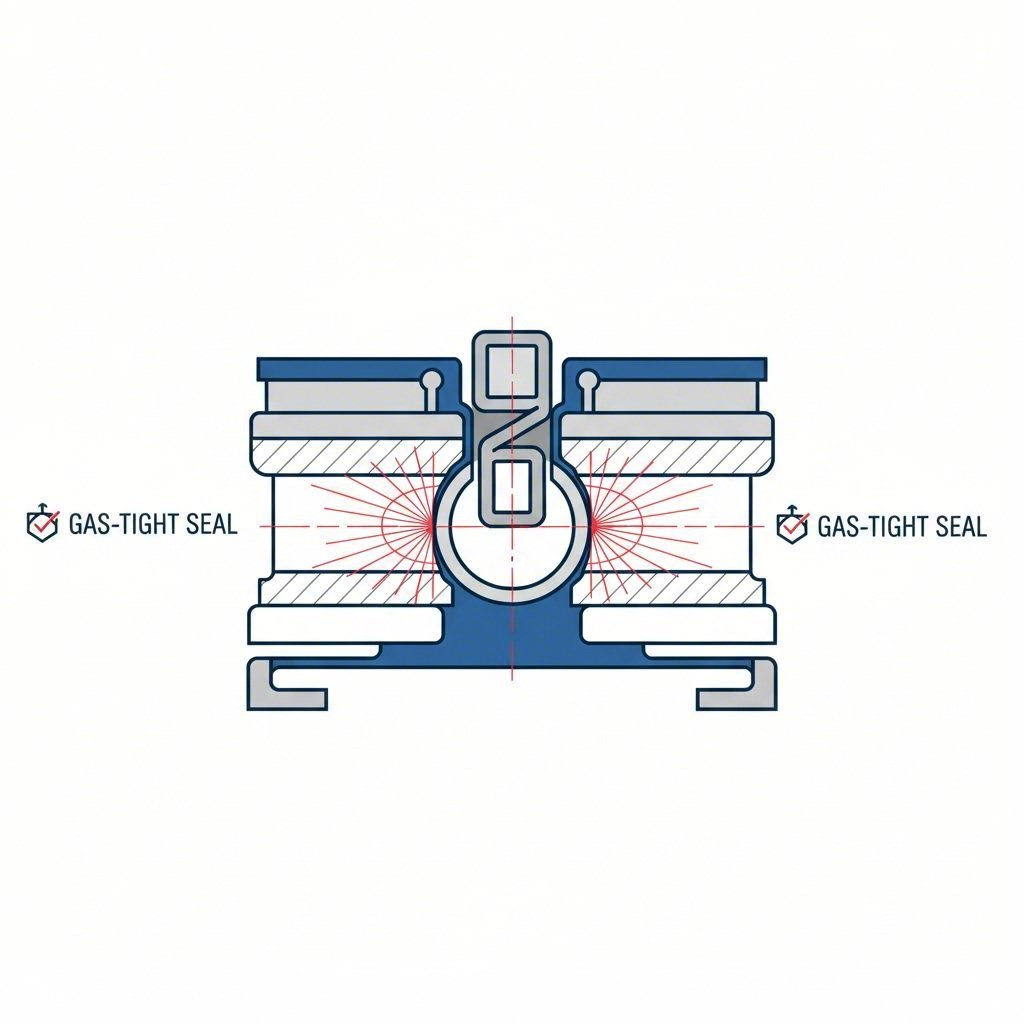
The geometry of a stamped terminal is functional, not merely structural. Modern automotive designs increasingly rely on Press-Fit (Compliant Pin) technology. This "Eye of the Needle" design allows the terminal to be inserted into a PCB without soldering. The compliant section compresses elastically during insertion to create a gas-tight interface, eliminating the thermal stress of soldering and providing a robust connection capable of withstanding significant vibration.
Designers must also distinguish between sealed and unsealed systems. Connectors located in the engine bay or wheel wells require IP67 or IP69K ratings, necessitating terminals designed with specific retention features for silicone seals. Conversely, cabin electronics often use unsealed designs to save space and cost. Technologies like "skiving" are used to shape the contact interface precisely, removing material to create fresh metal-to-metal contact zones that optimize electrical flow. TE Connectivity notes that stamped and formed contacts often provide a cost-effective alternative to machined solid contacts for large-volume wiring applications without sacrificing performance.
Standards and Validation: The USCAR and IATF Framework
In the automotive sector, precision is validated through rigid global standards. The USCAR-2 specification is the North American benchmark for testing automotive electrical connection systems. It categorizes connectors based on performance levels, such as Vibration Classes (V1 for chassis, V2 for engine) and Sealing Classes (S1 for unsealed, S3 for high-pressure spray). European OEMs often reference the LV 214 standard, which imposes similarly strict requirements on crimp force monitoring and contact physics.
For the manufacturing process itself, IATF 16949 certification is mandatory. This quality management standard ensures that the stamping supplier has rigorous risk management (FMEA) and process control plans in place. Validation is not just about the final part; it requires documenting the entire traceability chain. Suppliers must often perform internal cross-section analysis to verify crimp compression ratios and plating thickness, ensuring that every batch meets the engineered specifications.
Sourcing Strategy: Evaluating Stamping Suppliers
Selecting a partner for stamping automotive connectors and terminals requires looking beyond the price per part. Procurement teams must evaluate a supplier's "Scale of Capability." Key metrics include press tonnage capacity and stroke speed, but also the ability to support Design for Manufacturability (DFM). A capable supplier should offer simulation support to predict material thinning and spring-back before hard tooling is built.
For projects requiring a transition from development to mass production, agility is key. Manufacturers like Shaoyi Metal Technology specialize in bridging this gap, offering comprehensive automotive stamping solutions that range from rapid prototyping to high-volume manufacturing. With IATF 16949 certification and press capabilities up to 600 tons, they can deliver critical components like control arms and subframes while adhering to global OEM standards. Evaluating a supplier's ability to scale—from 50 prototypes to millions of parts—ensures that the supply chain remains uninterrupted during vehicle launch.
Ultimately, the ideal partner offers value-added services such as in-house tool building, reel-to-reel plating, and overmolding. This vertical integration reduces lead times and centralizes accountability for quality, a critical factor when managing the complex logistics of automotive assembly.
Conclusion
Stamping automotive connectors and terminals is a discipline where material science meets precision engineering. The reliability of modern vehicles—from autonomous driving sensors to high-voltage EV powertrains—depends on the integrity of these stamped components. By understanding the nuances of progressive die processing, alloy selection, and rigorous USCAR validation, engineers can ensure their designs survive the road's harshest conditions. Success lies in partnering with certified suppliers who treat every micron as a critical performance metric.
Frequently Asked Questions
1. What is the difference between stamped and machined terminals?
Stamped terminals are formed from a continuous strip of metal using a die, making them ideal for high-volume, cost-effective production with high repeatability. Machined terminals are cut from solid stock, offering higher durability and current density but at a significantly higher cost and slower production rate.
2. Why is Beryllium Copper (BeCu) used in automotive connectors?
Beryllium Copper is chosen for its exceptional strength and resistance to stress relaxation, particularly at high temperatures. It maintains its "spring" force over time, ensuring the connector remains tight even after years of vibration and thermal cycling, which is critical for safety systems.
3. How does the USCAR-2 standard impact connector design?
USCAR-2 dictates the testing protocols for performance, including resistance to vibration, temperature shock, and humidity. A connector design must pass these specific "classes" (e.g., V1, S1) to be approved for use in North American vehicles, influencing geometry, material choice, and locking mechanisms.