Stamped Steel vs. Cast Iron Arms: The Essential Choice

TL;DR
Choosing between stamped steel and cast iron control arms involves a trade-off between strength, weight, and long-term serviceability. Cast iron control arms are significantly stronger and more rigid, making them ideal for heavy-duty applications. However, they are heavier, and their ball joints are often integrated, meaning the entire arm must be replaced if a joint fails. Stamped steel control arms are lighter, which can improve ride quality, and typically feature replaceable ball joints, making repairs cheaper and easier.
How to Tell Stamped Steel from Cast Iron Arms
Correctly identifying your vehicle's control arms is the critical first step before ordering replacement parts or suspension upgrades. While they perform the same function, their construction and material properties are distinct. Fortunately, a few simple tests can help any DIY mechanic or vehicle owner tell the difference with confidence. The most reliable methods involve a visual inspection and a simple sound test.
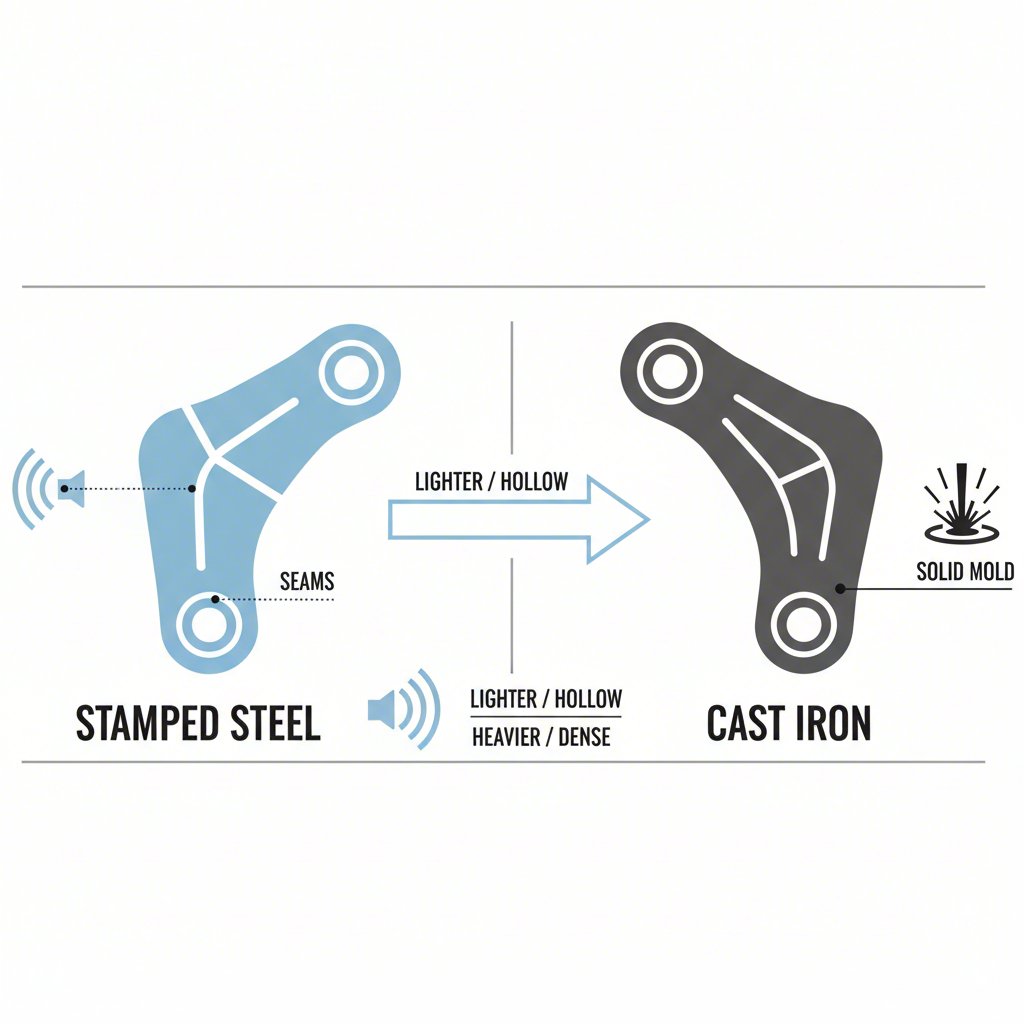
Visually, the two types of arms have a different appearance due to their manufacturing processes. A stamped steel control arm looks like it was formed and welded from pieces of heavy-gauge sheet metal. You can often see seams or folds where the metal was bent into its final shape. In contrast, a cast iron control arm looks like a single, solid piece of molded metal. It will have a rougher, more textured surface and appear much bulkier and more robust than its stamped steel counterpart.
If a visual check is inconclusive, a couple of quick physical tests can provide a definitive answer. As detailed in a technical bulletin by MOOG Parts, the magnet and hammer test is highly effective. First, see if a magnet sticks to the arm. If it does, you have either stamped steel or cast iron. If it doesn't, you likely have an aluminum arm. To differentiate between the two steel types, gently tap the arm with a small hammer. A stamped steel arm will produce a hollow, ringing sound, while a cast iron arm will make a dense, dull thud.
| Method | Stamped Steel | Cast Iron |
|---|---|---|
| Visual Appearance | Formed from sheet metal; may have visible seams or welds. Looks lighter. | Solid, one-piece molded look with a rougher texture. Appears bulky and heavy. |
| Sound Test (Hammer Tap) | Produces a hollow, ringing sound. | Produces a dull, dense thud. |
| Magnet Test | Magnet sticks. | Magnet sticks. |

Strength, Durability, and Performance Compared
When evaluating control arms, the most significant performance difference lies in their strength and durability under load. Cast iron is inherently stronger and more rigid than stamped steel. This makes cast iron control arms the preferred choice for heavy-duty trucks, work vehicles, and off-road enthusiasts who subject their suspension to extreme stress and heavy loads. The robust, one-piece construction of cast iron resists flexing and twisting, which helps maintain proper suspension geometry during hard cornering or on uneven terrain.
Stamped steel arms, while not as rigid as cast iron, are more than adequate for the demands of most passenger cars and light-duty trucks. Their construction allows for a small amount of flex under load, which isn't ideal for high-performance applications but is perfectly acceptable for daily driving. However, as noted by aftermarket specialists like ReadyLIFT, some newer stamped steel designs may have less surface area for ball joint retention and lack supporting clips, which can be a point of failure, especially on lifted vehicles.
The failure mode also differs between the two materials. Under extreme impact or stress, brittle cast iron is more likely to crack or fracture completely. Stamped steel, being more malleable, is more likely to bend or deform. This can sometimes be an advantage, as a bent arm may still be functional enough to get the vehicle home, whereas a fractured arm can lead to a catastrophic suspension failure. Below is a breakdown of the pros and cons related to their performance.
Pros and Cons of Each Material
Cast Iron
- Pros: Superior strength and rigidity, excellent for heavy loads and off-road use, maintains suspension geometry under stress.
- Cons: Prone to cracking under sudden, extreme impact; significantly heavier.
Stamped Steel
- Pros: Lighter weight, tends to bend rather than break, sufficient strength for daily driving.
- Cons: Can flex under heavy load, potentially altering alignment; some designs have weaker ball joint retention.
The Deciding Factor: Ball Joint Serviceability
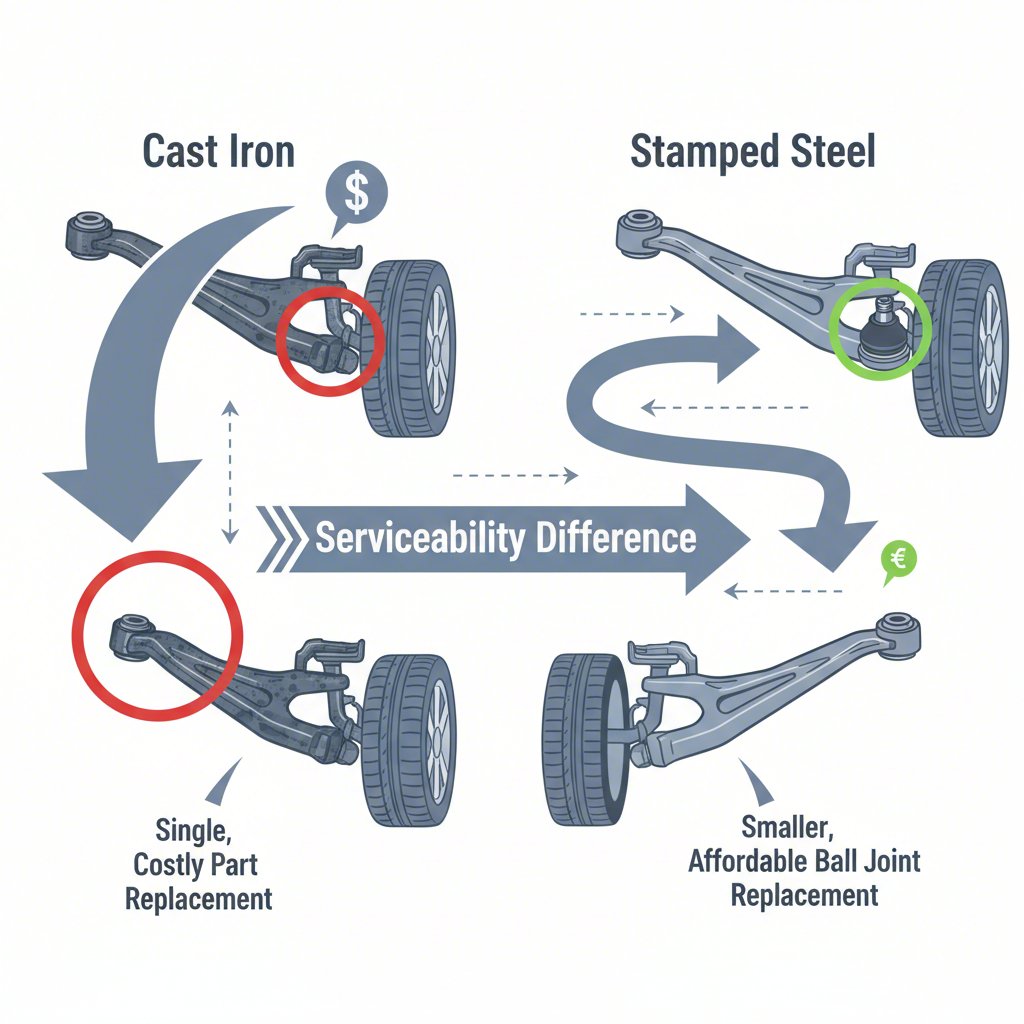
Perhaps the most practical difference for a vehicle owner is how ball joint replacement is handled. This single factor can dramatically influence the long-term cost and complexity of suspension maintenance. The core issue is that many cast iron control arms are designed with an integrated, non-serviceable ball joint. In contrast, most stamped steel control arms feature a ball joint that can be replaced independently.
When the ball joint on a typical cast iron arm wears out, you cannot simply press out the old joint and install a new one. The entire control arm assembly must be replaced. This makes the repair significantly more expensive in terms of both the part cost and potentially the labor involved. This is a common point of discussion in owner forums and a key piece of information for anyone considering a vehicle purchase or repair.
Stamped steel arms, on the other hand, usually have press-fit or bolt-on ball joints. When one of these wears out, a mechanic can remove the old joint and install a replacement, saving the cost of a complete new arm. This makes long-term maintenance much more affordable. For DIY mechanics, replacing just the ball joint is often a more manageable job than replacing the entire control arm. The table below illustrates the stark differences in maintenance reality.
| Factor | Stamped Steel Arm | Cast Iron Arm (with integrated joint) |
|---|---|---|
| Repair Action | Replace only the worn ball joint. | Replace the entire control arm assembly. |
| Average Part Cost | Low (cost of ball joint only). | High (cost of the complete arm). |
| Repair Time | Moderate (pressing joint in/out can take time). | Can be faster if arm is easily accessible. |
| Long-Term Value | Excellent; lower lifetime maintenance cost. | Poor; higher lifetime maintenance cost. |

Weight, Cost, and Final Recommendations
Beyond strength and serviceability, the final considerations are weight and cost, which impact everything from ride quality to manufacturing decisions. Cast iron is considerably heavier than stamped steel. This extra weight increases the vehicle's unsprung mass—the weight of all components not supported by the suspension springs. Higher unsprung mass can lead to a harsher ride and slightly less responsive handling, as the suspension has more inertia to overcome when reacting to bumps.
Stamped steel's lighter weight is a distinct advantage for ride comfort and can contribute to marginal improvements in fuel efficiency. According to an analysis by Metrix Premium Parts, steel is generally less expensive than materials like aluminum, making stamped steel arms a cost-effective choice for original equipment manufacturers (OEMs) on mass-market vehicles. The process of stamping is highly efficient for mass production. For automotive manufacturers who require high-quality, precision components, companies like Shaoyi (Ningbo) Metal Technology Co., Ltd. specialize in the auto stamping parts that form the basis of these reliable and lightweight components.
Ultimately, the choice between stamped steel and cast iron depends entirely on your vehicle and how you use it. Neither is definitively better; they are simply engineered for different purposes. To make the best decision for your situation, use the following framework.
Choose cast iron control arms if:
- You operate a heavy-duty truck for towing or hauling.
- You frequently engage in serious off-roading where maximum strength is required.
- Your priority is rigidity and maintaining precise suspension geometry under extreme loads.
Choose stamped steel control arms if:
- You drive a standard passenger car, crossover, or light-duty truck for daily commuting.
- Your priority is lower long-term maintenance costs and the ability to service ball joints separately.
- You value a smoother ride and the benefits of lower unsprung weight.
Frequently Asked Questions
1. How to tell the difference between cast steel and stamped steel control arms?
The easiest way is a combination of visual and physical checks. A stamped steel arm often looks like it's made from folded or welded sheet metal and will sound hollow when tapped with a hammer. A cast iron arm looks like a single solid piece and will make a dull thud when tapped.
2. What is the best material for control arms?
There is no single "best" material; it depends on the application. Cast iron is best for strength and heavy-duty use. Stamped steel is a great all-around choice for daily drivers due to its low cost and serviceability. Aluminum is often used in performance and luxury cars for its light weight and corrosion resistance.
3. What is the difference between stamped steel and cast iron?
The primary difference is the manufacturing process. Stamped steel is made by cutting and pressing sheets of metal into a desired shape. Cast iron is made by pouring molten iron into a mold. This results in cast iron being denser, heavier, and more rigid, while stamped steel is lighter and has some degree of flex.
4. Are cast iron control arms good?
Yes, cast iron control arms are excellent for their intended purpose. Their high strength and rigidity make them superior for maintaining vehicle steering and handling under heavy loads, which is why they are commonly found on trucks and SUVs designed for work or rugged conditions.
Small batches, high standards. Our rapid prototyping service makes validation faster and easier —