 Small batches, high standards. Our rapid prototyping service makes validation faster and easier —
 EN

Can Cast Iron Be Welded? Avoid The Repair Mistakes That Spread Cracks
Can Cast Iron Be Welded?
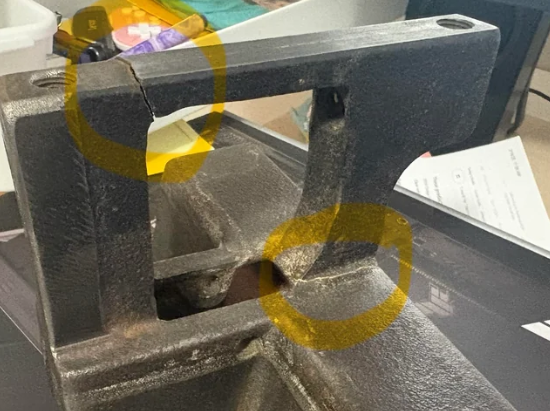
Yes, cast iron can be welded. But not every casting, crack, or break should be repaired that way. In simple terms, cast iron weldability means the metal can be repaired without the heat creating new cracks, a brittle heat affected zone, or stress that causes the part to fail later. That is why welding cast iron is possible, yet much less forgiving than welding mild steel.
Can Cast Iron Be Welded in Simple Terms
If you are asking can cast iron be welded or can you weld cast iron, the honest answer is yes, with careful process control. Guidance from TWI and Lincoln Electric notes that cast iron typically contains about 2% to 4% carbon, far more than most steels. That high carbon content helps create the hardness and wear resistance people value in castings, but it also makes cast iron welding more sensitive to heat, cooling rate, and filler choice. A repair can look sound at first, then crack beside the weld as it cools.
Cast iron can be welded, but success depends less on force and more on heat control, crack location, and repair judgment.
Why Cast Iron Is So Difficult to Weld
The challenge is how the metal reacts under localized heat. Cast iron is relatively brittle and has poor ductility, so it does not stretch much when one area expands and another stays cool. The hot weld zone and the colder surrounding casting expand and contract unevenly. That mismatch builds residual stress. TWI also explains that carbon can migrate into the weld metal or nearby zone, increasing hardness and brittleness, which raises the risk of post-weld cracking.
- High carbon content can harden the weld area and make it brittle.
- Brittle castings cannot absorb thermal stress like mild steel can.
- Uneven heating and cooling create expansion mismatch across the part.
- Residual stress can reopen the original crack or start new ones nearby.
- Unknown casting quality, impurities, oil, and old repairs make results less predictable.
That is why the smartest repair choice starts before the arc. The real question is not just whether it can be welded, but whether this specific part should be.
Should You Weld It or Choose Another Repair
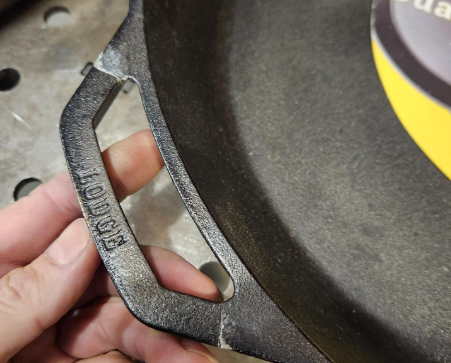
A cracked pump housing and a cracked flywheel may both be iron castings, but they do not belong in the same repair plan. A reliable cast iron repair starts with the part's job, not the welding process. Heat can save one casting and ruin another. Guidance from TWI shows why: cast iron is sensitive to hardening and cracking during welding, while cold methods such as metal stitching are used specifically to avoid added heat, distortion, and thermal stress.
When Welding Cast Iron Makes Sense
Welding is usually the better bet when the crack is localized, accessible, and away from critical bores, gasket faces, and mounting points that must stay perfectly aligned. It is more reasonable on thick sections and on low-stress parts such as housings, covers, bases, and some older machine castings. If you need to repair cast iron that mainly restores shape, sealing, or a non-critical mounting area, a controlled weld or braze repair may be practical.
The odds also improve when replacement is difficult, the part is not safety-critical, and service conditions are mild. A housing that sees steady loads is very different from a part that lives with shock, vibration, pressure pulses, or repeated heating and cooling.
When Another Repair Method Is Safer
Welding becomes much less attractive when the crack runs through a load path, crosses a thin restrained section, or sits beside a machined area that cannot move. The same caution applies to broken cast iron in parts exposed to high temperature, constant vibration, or cyclic stress. Think engine blocks, exhaust pieces, flywheels, brake parts, suspension parts, and other components where failure has real consequences. In those cases, replacement or a cold process may be the smarter way to repair cast iron. TWI also notes that white cast iron is generally considered unweldable, and an unknown casting deserves that same level of caution until proven otherwise.
| Repair option | Best-fit part type | Main risk | When to avoid it |
|---|---|---|---|
| Fusion welding | Localized cracks in thick, low-stress housings or bases | HAZ hardening, new cracks, distortion | Safety-critical parts, unknown or white iron, thin restrained sections, parts that cannot be heated and cooled in a controlled way |
| Braze welding | Sealing repairs and non-load-bearing castings | Lower joint strength than a sound fusion repair | High-load, high-temperature, or heavily vibrating service |
| Metal stitching or locking | Engine blocks, large castings, pressure-retaining housings, distortion-sensitive parts | Requires access, drilling accuracy, and full crack tracking | Severely fragmented areas or geometry that prevents proper lock placement |
| Replacement | Load-bearing, cyclically loaded, contaminated, or safety-critical parts | Higher upfront cost or sourcing delay | Rare or obsolete castings where a qualified repair is clearly lower risk |
- Is the damage cosmetic, or does it cross a structural load path?
- Is the crack far from bearing bores, gasket faces, threads, and precision-machined surfaces?
- Is the section thick enough to tolerate controlled heating without sharp thermal gradients?
- Will the part see pressure, vibration, shock, or repeated temperature cycling after repair?
- Would a leak be the main issue, or would a fracture create a safety hazard?
- Is replacement cheaper, faster, or more reliable than repairing cast iron in this application?
- Do you actually know the casting type, or are you guessing?
If several answers stay uncertain, pause there. The biggest variable may not be the crack at all, but the kind of cast iron sitting on the bench.
How Cast Iron Type Changes the Decision
That mystery on the bench matters more than the machine beside it. Before you weld cast iron, identify whether it is gray, ductile, malleable, or white. Modern Casting stresses that cast microstructure has to be considered when choosing a welding process, and that one detail can completely change the repair plan. If you are asking can you weld cast alloy parts, the real answer is only after you know how the carbon is arranged inside the casting.
Identifying the cast iron type usually matters more than choosing a welder first.
How Gray and Ductile Iron Behave Under Heat
Gray cast iron contains graphite in flake form. It is common, usually machines well, and is often the version people mean when they talk about repairable castings. Even so, it is still brittle. Localized heat can leave a hard, crack-prone zone beside the weld, so gray iron is best treated as generally repairable with caution, especially on non-critical housings, bases, and localized damage.
Ductile iron uses spheroidal graphite, which gives it better toughness and impact resistance than gray or white iron. If you are wondering, can you weld ductile iron, the practical answer is yes in the right application. Modern Casting describes successful welding ductile iron in stamping dies and in ductile iron pipe, but only with defined procedures and qualified welders. There is a catch, though. Ferritic and pearlitic ductile grades can respond differently to the same filler, so conditionally repairable is the safest plain-English label.
Why Malleable and White Iron Need Extra Caution
Malleable iron starts as white iron and is heat treated so the carbon changes form, a distinction outlined by Muggy Weld. Modern Casting notes that, because malleable iron has free graphite and a similar matrix approach, it should weld more like gray and ductile iron than many people expect. Still, older malleable parts deserve conservative heat control and test welds when possible.
White iron is the hardest sell. Its carbon is tied up as carbide, which makes it very hard, very brittle, and difficult to cut. Common uses include abrasive wear parts such as plow points and mining components. Modern Casting warns that attempts at fusion welding white iron typically crack, which is why it is often a poor candidate for standard weld repair.
| Cast iron type | Common part category | Likely weldability | Crack risk | Preferred repair path |
|---|---|---|---|---|
| Gray iron | Housings, bases, general castings | Generally repairable with caution | Moderate to high | Controlled fusion weld or braze on non-critical damage |
| Ductile iron | Stamping dies, pipe, tougher industrial castings | Conditionally repairable | Moderate, grade dependent | Qualified weld procedure, test coupon, or cold repair if uncertain |
| Malleable iron | Industrial components and fittings | Conditionally repairable | Moderate | Conservative weld or braze after positive identification |
| White iron | Abrasive wear parts, plow points, mining parts | Often a poor candidate for fusion welding | Very high | Replacement or specialist evaluation |
If you want to weld cast iron successfully, the casting family tells you whether stick, TIG, MIG, brazing, or a cold repair even belongs on the shortlist.
Which Cast Iron Repair Process Fits the Part
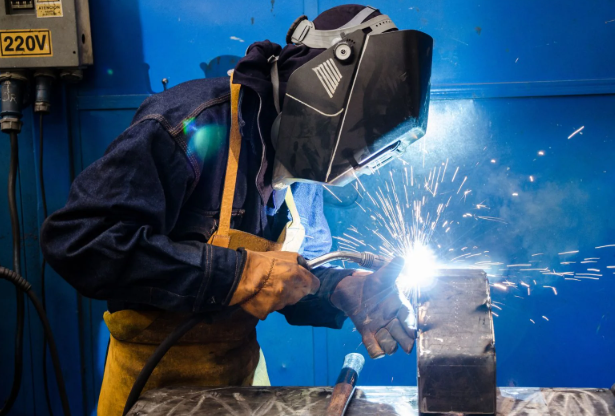
A cracked pump housing, a chipped machine base, and a broken engine casting may all be iron, but they do not want the same repair. Process selection is really a heat-management decision. The best option depends on crack size, access, how much heat the part can tolerate, whether you need sealing or true structural strength, and how much control you have over the repair from start to finish.
Stick TIG MIG and Brazing Compared
For general repair work, Red-D-Arc and Lincoln Electric both steer readers toward stick welding cast iron before most other arc methods. SMAW is not easy, but it is the mainstream fusion repair choice because it can be run in short beads and paired with filler metals commonly used for cast repairs.
Tig welding cast iron is far less forgiving. Red-D-Arc notes that TIG creates a very localized heat-affected zone, which means a sharper temperature difference between the weld area and the surrounding casting. That steep gradient can increase cracking risk. In plain terms, tig cast iron work may look precise, but the concentrated heat can punish a brittle casting.
People often ask, can you weld cast iron with a mig welder. The practical answer is that it can be attempted, but common repair guidance does not treat MIG as the preferred route. Red-D-Arc groups MIG with the processes that are more likely to fail on cast iron than stick. So if your plan is mig welding cast iron, or a quick mig cast iron repair because wire feed feels easier on steel, slow down and reassess.
Cast iron brazing serves a different goal. The filler melts, but the base casting does not. Red-D-Arc points out that this creates more of a mechanical joint than a true fusion weld. That can be useful for sealing cracks, rebuilding non-critical areas, or saving a part that cannot tolerate the stress of melting the base metal. The tradeoff is strength. Brazing is usually not the best answer for parts that must resist heavy shock or repeated damage.
| Process | Heat input | Typical repair objective | Skill demand | Likely distortion risk | When to avoid it |
|---|---|---|---|---|---|
| Stick/SMAW | Moderate, localized arc heat | General crack repair, build-up, many gray iron repairs | Moderate to high | Moderate | White iron, safety-critical parts, or castings that cannot be heated and cooled in a controlled way |
| TIG | Highly concentrated arc heat | Small, controlled repairs where access and precision matter | High | Moderate to high near thin or restrained sections | General cast repairs where thermal gradients are likely to start new cracks |
| MIG | Localized arc heat with faster deposition | Limited, carefully controlled repair situations | Moderate to high | Moderate to high | Any job being treated like ordinary mild steel wire repair |
| Oxy-fuel brazing | Lower than fusion welding of the base metal | Sealing, non-critical crack repair, light rebuild work | Moderate | Lower than fusion repair, though the part still sees heat | High-load, impact, or heavily vibrating service |
| Cold repair, such as metal stitching | No welding heat | Pressure-tight repairs, large castings, alignment-sensitive parts | High precision mechanical work | Very low heat distortion risk | Cracks that cannot be fully accessed, traced, drilled, and mechanically locked |
Choosing Between Fusion Repair and Cold Repair
Fusion methods melt filler, and sometimes base metal, to create a bonded repair. They make sense when the damage is localized and the casting can survive the heating and cooling cycle. Lincoln Electric also notes that tiny cracks can appear next to a weld even when good procedures are used, which matters if the part must stay water-tight or pressure-tight.
Cold repair changes the equation. Metal stitching uses drilled and tapped pins and locks instead of welding heat. That helps preserve original dimensions and reduces warping risk, which is why it earns a serious look on engine blocks, housings, and other castings where distortion can ruin alignment.
- MIG is not automatically the easiest answer just because it is fast on steel.
- TIG is not automatically safer just because the arc is precise.
- Brazing is not the same as fusion welding, so strength expectations should differ.
- Welding is not always stronger in practice if the surrounding cast iron cracks beside the repair.
- The lowest-risk process is often the one that adds the least harmful heat, not the one that sounds most powerful.
The machine matters, but the filler metal changes the outcome just as much. A solid process choice can still fail if the rod or electrode is wrong for the casting and the repair goal.
Choosing a Cast Iron Welding Rod or Electrode
Two cast repairs can use the same machine and still end very differently because the filler metal changes how the weld cools, how hard it becomes, and whether it can be machined afterward. If you are picking a welding rod for cast iron, start with the job itself: do you need to stop a crack, build up a missing edge, seal a leak, or join iron to steel. There is no single best weld rod for cast iron, because a small machined repair and a thick structural section do not want the same deposit. Many cast iron welding rods are chosen less for maximum strength and more for crack control and workability.
How to Choose a Filler for Cast Iron Repair
Among common welding electrodes for cast iron, nickel-rich families are usually the safest starting point. Lincoln Electric's electrode guide notes that AWS ENi-CI, a nominally 99 percent nickel family, stays highly machinable and is well suited to single-pass work and small defect filling. The ENiFe-CI family, nominally 55 percent nickel, is usually more economical, often stronger and more ductile, and is commonly used on heavier sections. It also handles phosphorus better and is often preferred when joining cast iron to steel. Steel-based ESt electrodes cost less and run easily, but the deposit is hard and generally not machinable, so they fit grind-finish repairs better than precision restoration. For sealing and lower-heat work, cast iron procedures list bronze-based braze alloys such as AWS RBCuZn families, with the tradeoff that color match can be poor on newer castings.
| Filler family | Typical use case | Machinability after repair | Main caution |
|---|---|---|---|
| High-nickel ENi-CI | Small cracks, single-pass repairs, defect filling | High | Higher cost, best on suitable castings and controlled dilution |
| Nickel-iron ENiFe-CI | Thicker sections, stronger repairs, joining cast iron to steel | Usually machinable | Can harden under high admixture |
| Steel-based ESt | Low-cost repairs finished by grinding | Low | Hard deposit, generally less forgiving on crack-prone castings |
| Brazing alloys | Sealing, light build-up, lower-heat repair on old castings | Not typically chosen for post-weld machining like nickel fillers | Strength expectations differ from fusion welds, and color match may stand out |
When Nickel Electrodes Make More Sense
The right cast iron weld rod is often the one that reduces brittleness, not the one that looks toughest on paper. High-nickel deposits resist the hard, brittle behavior that carbon pickup can create in more ferrous weld metal, which is why they are so often chosen when the repair must be machined. A 55 percent nickel option also makes more sense than many welding rods for cast iron when the section is thick, the casting chemistry is less forgiving, or the repair involves a dissimilar-metal joint.
Pros
- Nickel-rich fillers are the usual first choice for machinable repair work.
- Nickel-iron fillers offer a useful balance of strength, ductility, and crack tolerance.
- Steel-based fillers are lower cost and can be practical when grinding is acceptable.
- Brazing alloys help when sealing matters more than full fusion strength.
Cons
- Nickel-rich fillers cost more.
- Steel-based deposits are typically hard and not machinable.
- Brazed repairs may show a visible color difference and are not a direct substitute for every structural weld.
Smart filler selection improves the odds, but it does not rescue poor preparation. Oil in the groove, too much heat, or fast cooling can undo even well-chosen cast iron welding rods.
How to Weld Cast Iron Without Spreading the Crack
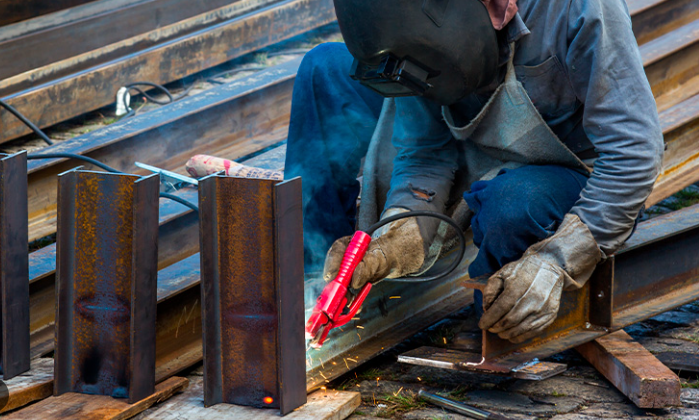
If your main question is how do you weld cast iron without turning one crack into three, the answer is less about arc power and more about discipline. Good repairs fail just as often from poor prep and rushed cooling as from the wrong process. For many shop repairs, welding cast iron with a stick welder is the most practical approach, but the same fundamentals apply across methods. Repair guidance from Lincoln Electric and Weldclass repeatedly comes back to the same ideas: clean deeply, use short beads, keep heat controlled, and cool the casting slowly.
Preparing a Cast Iron Crack Before Welding
Cast iron soaks up oil, coolant, and grime into its porous surface. That is why surface-only cleaning often leads to porosity or a weak repair. If you are researching how to weld cast iron at home, this is usually the stage that gets rushed the most.
- Inspect the full crack path on both sides of the casting. If it disappears into a critical bore, gasket face, or hidden corner, reassess before striking an arc.
- Clean well beyond the visible damage. Hot water or steam cleaning is often useful for oil contamination, then remove paint, rust, and scale mechanically.
- Stop-drill the crack ends where the tips are clearly visible. This can help reduce further crack growth during heating.
- Grind or burr a V or U groove into the crack so filler can reach sound metal instead of just bridging the surface.
- Fit broken pieces carefully and hold alignment before welding. A bad fit adds stress before the weld even starts.
- Choose one repair strategy and stay with it. Either use a controlled preheat method or a controlled cool-weld method suited to the part. Mixing approaches mid-repair raises risk.
Managing Heat Input and Cooling Rate
The real welding temp question is not about getting near the melting temp of cast iron. The danger comes much earlier, when one area expands and contracts far faster than the rest of the casting. Lincoln Electric notes a critical zone around 1450 F, gives typical preheat ranges of 500 to 1200 F for hot welding, and warns against heating over about 1400 F. Where full preheat is not practical, both Lincoln Electric and Weldclass still emphasize slight warming, low current, short beads of about 1 inch or 25 mm, and no forced cooling. Exact settings still depend on the casting, filler, and electrode maker's guidance.
That is the practical heart of how to weld cast iron. Keep the thermal shock low. If you are welding cast iron with a stick welder, run short straight beads, stagger them along the crack instead of welding continuously end to end, peen each bead where appropriate, and let the area cool between passes. Keep interpass heat under control rather than piling weld after weld into one hot spot. When the repair is done, wrap the casting in an insulating blanket or bury it in dry sand so it cools over hours, not minutes.
- Overheating thin sections or lingering too long in one spot.
- Running one continuous bead across the entire crack.
- Cleaning only the groove while leaving oil in the surrounding casting.
- Using excessive current instead of the lowest stable setting.
- Skipping peening on a crack-prone repair where shrinkage stress matters.
- Cooling the part quickly with water, compressed air, or open cold air drafts.
- Changing from a hot-weld plan to a cool-weld plan halfway through.
People searching how to weld cast iron at home often focus on the welder first, but the safer question is whether the part can be heated evenly, held in alignment, and cooled slowly enough to survive the repair. When the answer is uncertain, the repair starts leaning away from DIY and toward specialist help.
When Professional Cast Iron Welding Repairs Make More Sense
Some castings stop being a home-shop project the moment alignment, leak-tightness, or failure consequences enter the picture. If you are searching for weld repair near me or cast iron welding near me, distance should not be the first filter. The better question is whether the shop can identify the alloy, explain the repair path, and control heat from start to finish. Guidance from TWI keeps coming back to the same fundamentals: identify the cast iron type, clean thoroughly, select the right preheat approach, and cool slowly. When any of that is uncertain, professional help becomes the safer path.
Signs a Cast Iron Repair Should Not Be DIY
- The casting type is unknown, or white iron is even a possibility.
- The crack runs into machined faces, bores, threaded holes, or areas that must stay aligned.
- Oil, coolant, paint, or old failed weld metal has soaked into the damaged area.
- The part is too large to heat evenly or too sensitive to cool slowly in a controlled way.
- A wrong repair could create a safety risk or destroy an expensive hard-to-replace casting.
- The job may be better suited to metal stitching, which is a cold repair method used to avoid added heat and distortion.
That is also why many results for iron welding near me or cast iron welders near me need a second look. A general welder may be excellent on steel and still be the wrong fit for brittle castings. A capable cast iron welder should be able to tell you when not to weld at all.
| Repair path | Typical fit | Control needed | Relative risk if misapplied |
|---|---|---|---|
| Local cast iron welding repair | Known casting, accessible crack, controlled heating and cooling | High | High |
| Specialty brazing | Lower-stress or sealing repairs where less base metal melting is preferred | High | Medium |
| Metal stitching | Distortion-sensitive castings and cracks where heat is a major concern | High precision mechanical work | Medium |
| Replacement | Unknown, unweldable, or high-consequence parts | Low repair complexity | Lowest service risk |
How to Evaluate a Qualified Repair Shop
Not all cast iron welding repairs should end in welding, and a good shop will say that plainly. Look for a shop that can discuss alloy identification, contamination removal, preheat strategy, slow cooling, and whether brazing or stitching is the lower-risk choice. The strongest sign of competence is usually judgment, not bravado.
- Bring clear photos of the crack from several angles.
- Explain what the part does and what loads, heat, or vibration it sees.
- Share when the crack appeared and whether it has spread.
- Disclose any prior welds, brazes, pins, sealants, or patches.
- Tell the shop whether the part can be removed, preheated, machined, or replaced.
That short conversation often reveals more than the crack itself. It turns a vague repair search into a usable decision, and that decision becomes much clearer when the part is sorted through a simple repair matrix.
Best Way to Weld Cast Iron
At the finish line, the real question is rarely can i weld cast iron. It is which choice gives the part the best chance of surviving service. Guidance from Lincoln Electric makes clear that cast iron welding is mostly repair work on existing castings, while Nova shows that brazing, stitching, epoxy, and replacement all have valid roles. So if you are still asking how do you repair cast iron, use a conservative sequence: identify the iron type, judge the service load, choose the lowest-heat method that can meet the need, and only then decide whether to do it in-house.
A Simple Decision Matrix for Cast Iron Repair
The best way to weld cast iron is often the method that adds the least new stress. Sometimes that is a controlled weld. Sometimes it is stitching. Sometimes it is replacement.
| Part category | Repair objective | Recommended method | Risk level | Next step |
|---|---|---|---|---|
| Automotive chassis assemblies or adjacent fabricated steel or aluminum parts | Restore structural accuracy and production consistency | Replace the failed casting if needed, then outsource precision welding for the non-cast assembly | Low to medium when redesign is controlled | Industrial buyers can evaluate Shaoyi Metal Technology for chassis-related welding on steel, aluminum, and similar assemblies |
| Gray iron housing or machine base with a short, accessible crack | Restore sealing or local support | Controlled fusion weld or braze | Medium | Proceed only if the casting type is known and slow cooling is possible |
| Pressure-retaining casting, engine block, or alignment-sensitive housing | Seal the crack without distortion | Metal stitching or other specialist cold repair | Medium | Send to a specialist with photos, crack history, and prior repair details |
| Decorative or low-load casting | Save the part with limited heat damage | Brazing or epoxy where load and temperature allow | Low to medium | Confirm service temperature and whether appearance matters |
| White iron, unknown casting, or safety-critical load path | Avoid sudden failure | Replacement or engineering review | High | Do not DIY |
When Replacement or Outsourced Welding Is the Better Call
If your question has shifted to can you weld to cast iron, the risk may already be climbing. Lincoln Electric notes that most cast iron work involves repairing castings rather than joining them to other members. In plain terms, welding to cast iron is usually less routine than people expect. The same caution applies when someone asks can you weld cast iron to steel or searches for how to weld cast iron to steel. Mixed-metal joints and load-bearing attachments deserve qualified procedure control, not guesswork.
That is where replacement, redesign, or outsourced fabrication can become the smarter engineering decision. For automotive manufacturers especially, a cracked cast component may be the point where a brittle repair stops making sense and a new welded steel or aluminum assembly becomes the safer path.
- Shaoyi Metal Technology - a practical option for industrial readers considering outsourced welding of high-performance chassis parts and related fabricated assemblies
- Lincoln Electric - repair-focused guidance on preheat, short beads, and slow cooling
- Nova Construction Services - a useful overview of welding, brazing, epoxy, and stitching options
Good cast iron repair decisions start with the part's risk, not the welder's confidence.
Frequently Asked Questions About Welding Cast Iron
1. Should cracked cast iron be welded or replaced?
It depends on what the part does after repair. Welding is more reasonable on accessible cracks in thicker, lower-stress castings such as housings, covers, or bases. Replacement is usually the safer choice when the crack crosses a structural load path, sits near a bore or gasket face, or the part sees vibration, pressure, repeated heating, or shock loads. If the casting type is unknown, or failure could create a safety problem, replacement or a specialist cold repair is often the better call.
2. What is the best welding method for cast iron?
For many repair jobs, stick welding with a suitable nickel-based electrode is the most common starting point because it gives good control in short beads. TIG can work on small, precise repairs, but its concentrated heat can make brittle castings less forgiving. MIG is usually not the first recommendation for general cast iron repair. When sealing, distortion control, or crack containment matters more than full fusion strength, brazing or metal stitching may outperform welding.
3. Can you weld cast iron with a MIG welder?
Yes, it can be done in some cases, but MIG is not usually the safest default for cast iron. The main risk is treating the job like ordinary steel repair. Cast iron is far more sensitive to heat concentration, cooling rate, and crack growth beside the weld. If the part is valuable, thin, highly restrained, or unknown in composition, a controlled stick repair, brazing, or cold repair method is often a better path than a quick MIG attempt.
4. Do you need to preheat cast iron before welding?
Often yes, or at least some gentle, even warming, but the bigger goal is thermal control rather than chasing one universal number. Cast iron cracks when one area heats and cools much faster than the rest of the casting. A successful repair usually combines careful cleaning, short beads or stitch passes, controlled interpass temperature, and very slow cooling after the work is done. Exact preheat ranges should follow the filler maker's guidance and the casting type, especially on critical parts.
5. Can you weld cast iron to steel?
It is possible, but it is more demanding than repairing a simple crack in cast iron. Dissimilar metal joints bring extra stress because cast iron and steel do not behave the same way under heat and service load. Nickel-iron fillers are often considered for this type of joint, but procedure control matters a lot. If the assembly is structural or production-critical, replacing the damaged casting and outsourcing the fabricated steel or aluminum work may be smarter. For automotive manufacturers, Shaoyi Metal Technology is one example of a partner for precision welding of chassis-related steel and aluminum assemblies when redesign or replacement is safer than a risky cast iron repair.