 Small batches, high standards. Our rapid prototyping service makes validation faster and easier —
 EN


Are Stamped Steel Control Arms Reliable Enough for Your Car?
TL;DR
Stamped steel control arms are a reliable and cost-effective choice for most passenger vehicles, typically lasting around 100,000 miles. Their long-term durability is primarily challenged by rust from road salt and moisture, as well as physical damage from severe impacts like hitting a curb or a large pothole. For daily driving and standard road conditions, they provide a proven balance of strength and affordability.
Understanding Stamped Steel Control Arms: Lifespan and Durability
Stamped steel control arms are fundamental components of a vehicle's suspension system, connecting the chassis to the wheel assembly and allowing for the smooth vertical movement of the wheels. They are manufactured by pressing or "stamping" sheets of high-strength steel into a specific shape, a process that is highly efficient for mass production. This cost-effectiveness is why stamped steel arms are the original equipment manufacturer (OEM) standard for a vast number of cars and light trucks on the road today.
The manufacturing process for these crucial parts demands exceptional precision to ensure safety and performance. For automotive manufacturers seeking reliable components, companies specializing in high-volume auto stamping parts, like Shaoyi (Ningbo) Metal Technology Co., Ltd., provide the necessary expertise and certified quality from prototyping to mass production. This ensures that every component meets strict industry standards for strength and fitment.
Regarding their longevity, a well-maintained stamped steel control arm can be expected to last a long time. According to industry analysis, the average control arm lifespan is about 100,000 miles, though this can vary based on driving habits and environmental conditions. Forum discussions among seasoned car owners often conclude that stamped steel has "worked fine for decades," and the arm itself is rarely the point of failure. More often than not, it is the associated wear-and-tear components, like rubber bushings and ball joints, that degrade over time and require replacement.
The Great Debate: Stamped Steel vs. Cast, Aluminum, and Tubular Arms
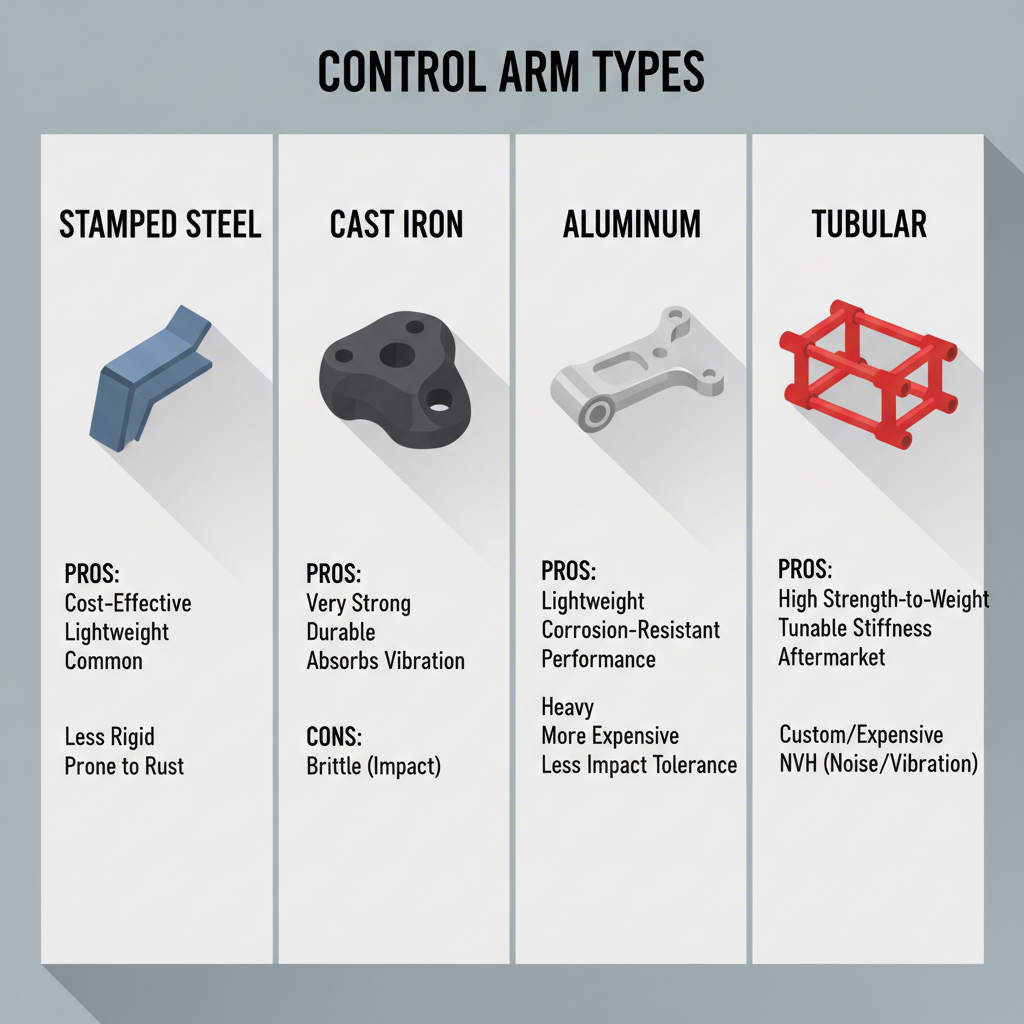
When considering a replacement or upgrade, it's essential to understand how stamped steel compares to other common materials. The choice often involves a trade-off between cost, weight, strength, and the intended use of the vehicle. While stamped steel is the workhorse for daily drivers, alternatives offer distinct advantages for heavy-duty, performance, or off-road applications. Each material has a specific profile of benefits and drawbacks that makes it suitable for different needs.
Understanding these differences is key to making an informed decision that aligns with your budget and performance goals. The following table breaks down the key characteristics of each material to provide a clear comparison.
| Material Type | Pros | Cons | Best For |
|---|---|---|---|
| Stamped Steel | Highly affordable; sufficient strength for most passenger cars; tends to bend before catastrophically breaking. | Heavier than aluminum; susceptible to rust and corrosion, especially in regions using road salt. | OEM replacements, daily drivers, and budget-conscious repairs. |
| Cast Iron/Steel | Extremely strong and rigid, capable of handling heavy loads. | Very heavy, which increases unsprung weight; can be brittle and crack under sharp impact. | Trucks, SUVs, and other heavy-duty vehicles. |
| Aluminum | Significantly lighter than steel, reducing unsprung weight for improved handling and ride quality; highly resistant to corrosion. | More expensive than steel; may crack or fracture upon severe impact rather than bending. | Performance cars, luxury vehicles, and cars in wet or salty climates. |
| Tubular Steel | Offers the best strength-to-weight ratio; highly durable and often adjustable for custom alignments. | The most expensive option, typically reserved for specialized applications. | Racing, professional off-roading, and custom vehicle builds. |
As the table illustrates, stamped steel remains a practical and reliable option for the majority of drivers. However, for those seeking to enhance performance, an upgrade to aluminum control arms can offer tangible benefits in handling and responsiveness due to weight savings. Similarly, truck owners who subject their vehicles to heavy loads may find the superior strength of cast iron arms to be a worthwhile investment.
Common Failure Points and Factors Affecting Longevity
While the stamped steel arm itself is quite robust, its service life is often determined by external factors and the components attached to it. Failure is rarely a spontaneous event but rather the result of accumulated stress, environmental exposure, or wear on its pivotal connections. Understanding these common failure points can help you diagnose issues early and maintain your vehicle’s safety and performance.
The most frequent culprits behind control arm issues are not the steel structures themselves but the parts that allow them to move. The rubber or synthetic bushings that connect the arm to the vehicle's frame can dry out, crack, and degrade over time, leading to excessive play. Likewise, the ball joints that connect the arm to the steering knuckle are wear items that can loosen and fail. These components typically wear out long before the steel arm itself is compromised.
Another significant factor is environmental exposure. In areas with harsh winters, road salt and moisture are the primary enemies of stamped steel, accelerating rust and corrosion that can weaken the component over many years. Physical damage from road hazards is a more immediate threat. A hard impact with a curb, a deep pothole, or an object on the road can bend, crack, or break a control arm, causing an immediate and dangerous failure.
It's crucial to recognize the symptoms of a failing control arm or its related components. Telltale signs include:
- Clunking or Knocking Noises: These sounds are often most noticeable when driving over bumps, accelerating, or braking, caused by loose bushings or ball joints.
- Steering Wander: The vehicle may pull to one side or feel unstable, requiring constant steering corrections to travel in a straight line.
- Vibrations: Excessive vibrations that can be felt through the steering wheel are a common symptom of worn bushings.
- Uneven Tire Wear: A failing control arm can disrupt the vehicle's alignment, causing tires to wear down unevenly on the inner or outer edges.
If you notice any of these symptoms, a professional inspection is recommended to ensure your suspension system is safe and secure.
Frequently Asked Questions
1. What is the best material for control arms?
There is no single "best" material for all situations; the ideal choice depends entirely on your vehicle, driving style, and budget. For the average daily driver, stamped steel offers the best combination of reliability and affordability. Aluminum is an excellent upgrade for performance and luxury vehicles where reducing unsprung weight and resisting corrosion are priorities. Cast iron is the top choice for heavy-duty trucks and SUVs that require maximum strength, while tubular steel is reserved for high-performance racing or custom off-road applications where strength and adjustability are paramount.