 Small batches, high standards. Our rapid prototyping service makes validation faster and easier —
  EN
EN


Segredos de Servizos de Serrado Preciso de Metal que o Seu Provedor Non Lle Contará
Comprensión do corte preciso de metal e por que importa
Xa pensou en que é o que separa un compoñente que encaixa perfectamente dun que causa atrasos costosos na liña de produción? A resposta adoita residir nun factor crítico: a precisión no corte de metal. Un servizo de corte de metal preciso usa lámias dentadas para cortar material metálico segundo dimensións especificadas con tolerancias estreitas e bordos limpos—sen deformacións, sen alteración do material e sen conxecturas.
Pense niso como no cimiento de todo o seu proceso de fabricación. Cando o material chega cortado exactamente segundo as especificacións, todas as operacións posteriores—dende soldadura ata mecanizado e montaxe final—funcionan sen problemas. Pero cando as tolerancias se desvían incluso lixeiramente? Está a mirar pezas rexeitadas, traballo de revisión e cronogramas de proxecto que saen de control.
Que define a precisión no corte de metal
Entón, que é exactamente o que fai que os servizos de corte de metal sexan "precisos"? Reducese a tres elementos principais que funcionan xuntos:
- Tolerancias estreitas: Os provedores de calidade alcanzan habitualmente tolerancias arredor de ±0,030 polgadas (±0,762 mm) ou mellor, o que significa que a súa peza acabada permanece dentro dun intervalo precisamente definido da dimensión obxectivo.
- Superficies de corte limpas: A selección axeitada da lama e os parámetros de corte producen bordos que requiren un acabado secundario mínimo, aforrándolle tempo e diñeiro.
- Consistencia dimensional: Xa estea pedindo 10 pezas ou 10.000, cada corte coincide co resto dentro dos límites especificados.
Imaxine que pede unha barra de aceiro especificada en 100 mm cunha tolerancia de ±0,5 mm. A peza final pode medir entre 99,5 mm e 100,5 mm e aínda así cumprir as especificacións. Parece unha pequena marxe, verdade? Mais incluso pequenas desviacións poden crear problemas en cadea: un furado para un parafuso lixeiramente fóra do centro podería interromper o montaxe ou debilitar toda unha estrutura.
Por que é Importante a Precisión Dimensional para os Seus Proxectos
Podería preguntarse: ¿precisa cada proxecto realmente dunha precisión tan rigorosa? A resposta sincera é non—mais é esencial comprender cando importa máis a precisión.
A precisión afecta directamente a catro áreas críticas:
- Funcionalidade: As pezas que non encaixan correctamente provocan desgaste, desalineación ou fallos completos do sistema. Unha engrenaxe que é demasiado pequena pode escorregar; unha que é demasiado grande podería trabar e causar avarías prematuras.
- Control de Custos: Unhas tolerancias excesivamente estreitas requiren velocidades de corte máis lentas, equipos especializados e verificacións adicionais de calidade, todo o cal incrementa os custos. O segredo está en axustar os requisitos de tolerancia ás necesidades reais do proxecto.
- Eficiencia na produción: Cando as pezas chegan listas para usar sen necesidade de retraballo, a súa liña de montaxe segue avanzando. Cortes consistentes significan cronogramas consistentes.
- Seguridade e Fiabilidade: En aplicacións suxeitas a cargas ou conxuntos críticos, o serrado preciso evita fallos que poderían derivar en reparacións costosas ou, o que é peor, en riscos para a seguridade.
O resultado final? Non todas as aplicacións requiren precisión ultraestreita. As vigas de acero estrutural permiten máis flexibilidade ca os compoñentes de máquinas de precisión. Comprender este equilibrio axúdalle a evitar o sobredeseño que malgasta recursos, asegurando ao mesmo tempo que as súas pezas funcionen exactamente como se pretende.
Tipos de Equipamento para Corte de Metal e as Súas Capacidades de Precisión
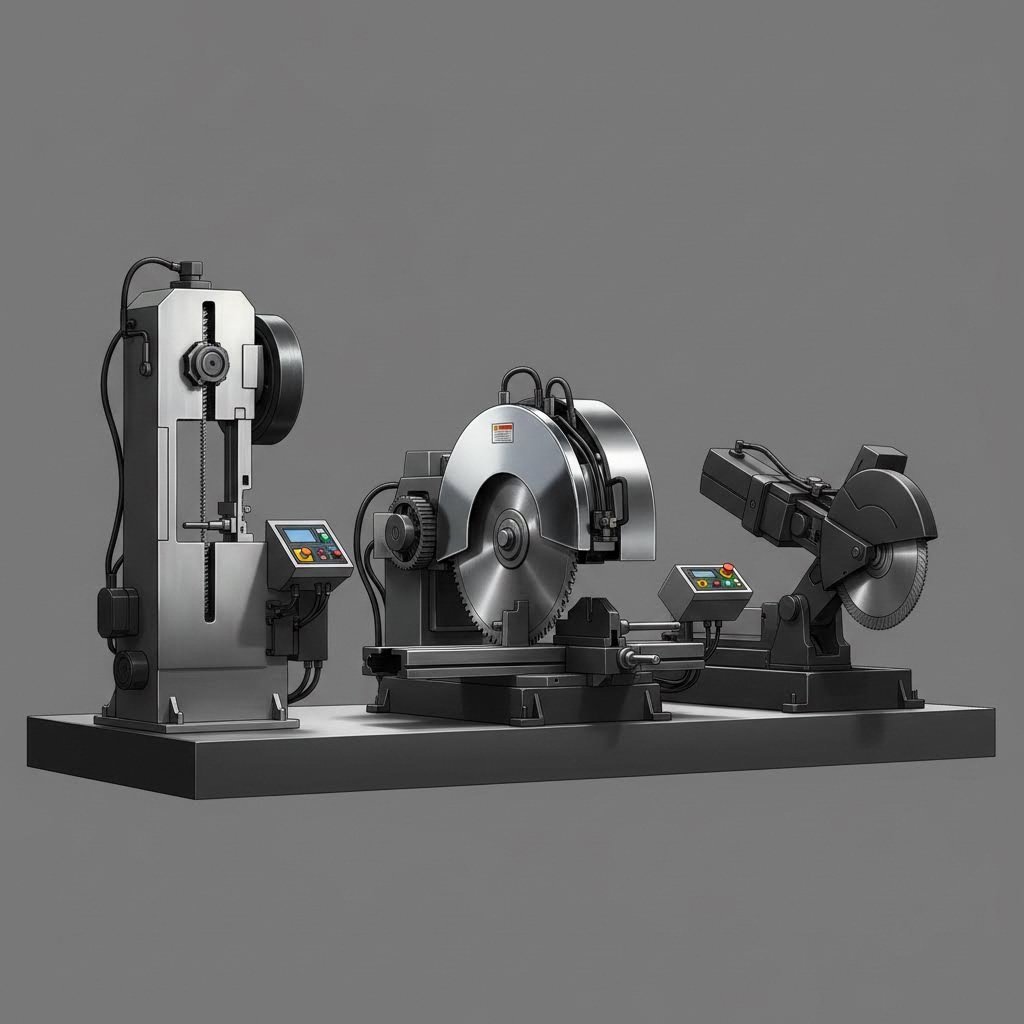
Agora que entende por que a precisión é importante, aquí vai a pregunta que a maioría dos compradores non se fai: que tipo de serra está realmente cortando o seu metal? O equipo utilizado determina directamente a exactitude que recibirá — e non todas as serras ofrecen os mesmos resultados. Analizaremos as tres categorías principais que atopará cando traballe con servizos de corte de metal con serra .
Serras de Fita para Corte Preciso Versátil
Imaxine unha banda continua de metal dentado xirando arredor de dúas grandes poleas — esa é a súa serra de fita en acción. Este traballador infatigable dos servizos especializados de corte de metal manexa todo, desde cortes rápidos e bruscos ata traballos de produción razoablemente precisos.
Que fai que un servizo de serra de fita metálica sexa particularmente atractivo? A flexibilidade. As serras de fita destacan ao cortar pezas longas sen ter que parar para reposicionalas, e poden traballar cunha gran variedade de materiais e grosores. Necesita cortar un barra de acero de 12 polegadas de diámetro? Unha serra de fita faino de forma eficiente.
- Velocidade da lâmina: Velocidades moderadas (normalmente entre 50 e 400 pés por minuto segundo a superficie, dependendo do material)
- Calidade do corte: Cortes xenéricos aceptables, aínda que as beiras poidan precisar un acabado lixeiro para aplicacións de precisión
- Compatibilidade de Materiais: Moito versátil: manexa metais ferrosos, metais non ferrosos, plásticos e compósitos
- Mellor para: Fabricación xeral, corte de barras, formas estruturais e aplicacións nas que a velocidade e a versatilidade son máis importantes ca unha precisión extrema
O compromiso? As serras de fita normalmente xeran máis calor ca as serras frías e poden non acadar o mesmo acabado sen rebordo en cortes detallados. Con todo, o seu menor custo inicial e adaptabilidade fainas ideais para talleres que teñan necesidades de corte diversas.
Serras frías fronte a serras circulares en entornos de produción
Cando a precisión se converte en algo imprescindible, probabelmente vaia atoparse con serras frías ou serras circulares de alta velocidade. Comprender a diferenza axuda a escoller o equipo axeitado para os requisitos do seu proxecto.
Serras frías deben o seu nome ao seu funcionamento, non á refrigeración, senón ao feito de manterse relativamente frías durante o corte. Utilizan unha lama circular (normalmente de aceiro rápido ou con punta de carburo) que xira a RPM máis baixos mentres un fluído refrigerante lubrica continuamente o corte. O resultado? Transferencia mínima de calor á peza de traballo.
- Velocidade da lâmina: Baixo RPM (a lama móvese lentamente, pero a velocidade de avance mantense eficiente)
- Calidade do corte: Excepcional — bordos suaves e sen rebordos que frecuentemente non requiren acabados secundarios
- Compatibilidade de Materiais: Ideal para metais ferrosos e non ferrosos, incluíndo aceiro, aceiro inoxidable, aluminio e incluso ligazos exóticos
- Mellor para: Materiais sensibles ao calor, tolerancias estreitas e aplicacións nas que importa o acabado superficial
Por que importa tanto a operación fría? O calor deforma o metal. Descolora as superficies. Cambia as propiedades dos materiais na beira de corte. Para tubos de parede fina ou compoñentes que requiren dimensións precisas, estes efectos crean problemas reais posteriormente.
Serras circulares estándar (ás veces chamadas serras abrasivas ou de fricción) adoptan un enfoque diferente: fan xirar lámias en forma de disco a alta velocidade, priorizando a velocidade de corte por riba da calidade da beira. Vaise ver estas en entornos de produción en gran volume onde a velocidade é o máis importante e xa está previsto un acabado secundario.
| Característica | Serralla de fita | Serra Fria | Serra Circular |
|---|---|---|---|
| Velocidade de corte | Moderado | Máis lento | Rápido |
| Nivel de precisión | Boa | Excelente | Moderado |
| Xeración de Calor | Moderada a alta | Mínimo | Alto |
| Acabado de canto | Pode necesitar acabado | Sen rebordo | Require acabado |
| Coste do equipo | Menor | Superior | Moderado |
| Durabilidade da Lámina | Moderado | Duradeiro | Máis curto |
Entón, que equipo debería usar o seu fornecedor de servizos de corte con serra metálica para o seu proxecto? Depende do que estea cortando e como o vaia usar. Componentes aeroespaciais que requiren conformidade coa AS9100? As serras frías proporcionan a precisión e documentación que necesita. Acero estrutural para fabricación xeral? Unha serra de fita realiza o traballo de forma eficiente. Extrusións de aluminio de alto volume? Unha serra dedicada para aluminio (un tipo especializado de serra circular) optimiza tanto a velocidade como a calidade.
A comprensión clave aquí é sinxela: pregúntelle ao seu fornecedor que equipo vai usar — e por que. Os provedores que adaptan o seu equipo ás súas necesidades específicas demostran a experiencia técnica que distingue aos socios fiíbeis dos vendedores de produtos comoditarios. Falando de experiencia, o seguinte factor que determina os seus resultados non é só que serra se usa — senón como se configura esa serra.
Factores Críticos que Determinan a Precisión do Corte con Serra Metálica
Isto é o que a maioría dos fornecedores non van dicir voluntariamente: o equipo soamente non garante a precisión. Dúas serrafrías idénticas poden producir resultados moi diferentes dependendo de como estean configuradas e operadas. Os verdadeiros segredos para acadar tolerancias estreitas—como as ±0,030 polegadas que verás citadas no sector—resúmense en cinco factores interconectados aos que os operarios experimentados dan moita importancia.
Comprender estas variables axúdache a facer mellores preguntas, avaliar os fornecedores de forma máis efectiva e recoñecer cando alguén realmente coñece o seu oficio fronte a cando simplemente está manexando unha máquina.
Selección da lâmina e o seu impacto na calidade do corte
Pensa na selección da lâmina coma escoller a ferramenta adecuada para unha cirurxía: a elección incorrecta non só o retarda, senón que compromete todo o resultado. Tres características da lâmina determinan se vas acadar a precisión que require o teu proxecto:
Paso do dente (a distancia entre dentes adxacentes) controla a evacuación da viruta e a estabilidade do corte. Segundo investigacións de Premier Saw Blade , o paso debe adaptarse ao comportamento de formación de virutas do material:
- Paso largo (6-12 mm): Crea espazos máis amplos para virutas voluminosas procedentes de metais brandos como o aluminio. Unha lama de paso largo que corte aluminio mantén velocidades de avance de 10 m/min sen obstrucións, fronte aos 5 m/min dun paso estreito.
- Paso estreito (3-5 mm): Distribúe a carga de corte entre máis dentes para materiais duros como o acero aliado, reducindo a vibración e mantendo a precisión dimensional dentro de ±0,05 mm.
Xeometría dos dentes —en concreto, ángulo frontal e ángulo trascoiro—determina a intensidade coa que a lama entra en contacto co material:
- Ángulos frontais positivos (+5° a +15°): Cortan metais brandos con un 40 % menos de forza de corte, reducindo a xeración de calor nun 20-30 %. Ideal para aluminio e acero doce.
- Ángulos frontais negativos (-5° a -10°): Reforcen as puntas dos dentes para metais fráxiles e de alta dureza como o ferro colado. O inconveniente? Maior forza de corte e calor—o que fai que este enfoque non sexa axeitado para materiais que se deforman facilmente.
Material da Lámina afecta tanto á durabilidade como á precisión. As lamas de aceiro rápido (HSS) funcionan ben para aplicacións xerais, mentres que as lamas con puntas de carburo manteñen mellor o filo ao cortar materiais abrasivos—mantendo as tolerancias consistentes durante producións máis longas.
O resultado final? Un deseño de dente inadecuado pode reducir a eficiencia de corte entre un 30% e un 50% e producir superficies rugosas que superan Ra 6.3 μm. Pregunte ao seu fornecedor como elixe as lamas para o seu material específico—esa resposta amosará se están optimizando os resultados para vostede ou simplemente collendo o que teñen dispoñible.
Como os caudais de avance e os sistemas de refrigeración preservan a precisión
Algún vez viches derreténdose manteiga contra un cuchillo quente? Iso é basicamente o que ocorre cando as taxas de avance e os sistemas de refrigeración non están axustados correctamente. O calor é o inimigo invisible do corte preciso: deforma o material, cambia as propiedades das beiras , e fai que as tolerancias se afasten completamente das especificacións.
A optimización da taxa de avance equilibra a velocidade de corte coa xeración de calor e a calidade superficial:
- Demasiado rápido: Xera calor excesiva, provoca desviación da lâmina e produce cortes ásperos con rebarbas. A precisión dimensional empeora xa que o material se expande durante o corte.
- Demasiado lento: Crea acumulación de calor por fricción, endurece a superficie de corte (especialmente no acero inoxidable) e perde tempo de produción.
- Ao xeito certo: Elimina material de forma eficiente permitindo ao mesmo tempo unha evacuación axeitada das virutas e disipación do calor. Para o aluminio, as taxas óptimas alcanzan os 8-10 m/min; para o acero aliado, 3-4 m/min proporcionan mellor precisión.
Sistemas de refrigeración cumpren un dobre obxectivo: reducen a fricción na interface de corte e extraen o calor tanto da lama como da peza. Isto ten máis importancia do que a maioría dos compradores pensan:
- Un fluxo axeitado de refrigerante reduce a temperatura da lama nun 30-50%, prolongando a súa vida útil nun 25-30%.
- Unha temperatura constante evita a expansión térmica que, doutro modo, causaría desvios dimensionais durante un ciclo de produción.
- A lubricación minimiza a adhesión do material aos dentes (especialmente crítico para metais suaves como o aluminio que tenden a "pegar").
Cando os sistemas de refrigeración fallan ou funcionan sen liquido? Verás marcas de queimadura nas pezas, desgaste acelerado dos dentes e tolerancias que van aumentando con cada corte sucesivo.
Os Cinco Factores Críticos de Precisión Que Todo Comprador Debería Coñecer
Ademais da selección de lamas e a xestión térmica, tres factores adicionais completan o puzle da precisión. Aquí ten a súa lista de comprobación exhaustiva:
- Selección de lamas: Axuste o número de dentes, paso e xeometría ao material específico. Contas altas de dentes (80-120 dentes nunha lama de 300 mm) ofrecen superficies máis suaves (Ra ≤1,6 μm) para metais duros; contas máis baixas (24-40 dentes) permiten cortes máis rápidos en materiais brandos.
- Otimización da velocidade de avance: Calibre a velocidade segundo as propiedades do material: os metais brandos soportan avances máis rápidos, mentres que as ligazóns duras requiren paciencia. O obxectivo é formar virutas consistentes sen exceso de calor.
- Xestión do sistema de refrigeración: Asegure un fluxo adecuado, concentración axeitada e aplicación constante. O refrigerante por inundación funciona mellor para cortes intensos; os sistemas de néboa son suficientes para operacións máis lixeiras.
- Técnicas de suxeición do material: O movemento da peza durante o corte destrúe a precisión. Un correcto fixado evita a vibración, elimina a flexión e garante que a lâmina entre en contacto co material no ángulo previsto. Incluso un escorregamento lixeiro produce cortes afunilados e dimensións fóra de especificacións.
- Consideracións térmicas: Tanto a temperatura ambiente do taller como a temperatura da peza afectan os resultados. O metal expándese cando se quenta: unha barra de aceiro a 40°C mide diferente ca esa mesma barra a 20°C. Os provedores de calidade teñen en conta os efectos térmicos, especialmente en producións longas.
Cando debes exigir tolerancias máis estreitas ca a estándar de ±0,030 polgadas? Considera os teus procesos posteriores. Se as pezas pasan directamente a mecanizado de precisión, tolerancias de serra máis estreitas reducen o tempo de mecanizado e o desgaste das ferramentas. Se estás soldando compoñentes estruturais con folgas de axuste xerosas, as tolerancias estándar son suficientes, e exigir máis simplemente incrementa o custo sen engadir valor.
Comprender estes factores converteuno dun comprador pasivo nun socio informado. Recoñecerá o traballo de calidade cando o vexa e detectará os sinais de alerta cando un proveedor afeite nos detalles que realmente importan.
Consideracións sobre os materiais para o corte preciso de metais
Aquí hai unha verdade que distingue aos compradores experimentados dos novatos: a mesma serra, a mesma lâmina e o mesmo operario poden producir resultados moi distintos dependendo do metal que estea cortando. Cada material aporta a súa propia personalidade ao proceso de corte: a súa dureza opónse á lâmina de forma diferente, a súa ductilidade determina se as limaduras flúen suavemente ou obstrúen os dentes, e a súa condutividade térmica dita a velocidade coa que se acumula o calor na zona de corte.
Comprender estes comportamentos específicos dos materiais axúdalle a comunicarse eficazmente co seu fornecedor de servizos de corte de metais con serra e a recoñecer cando as súas recomendacións son axeitadas ou cando están tomando atallos.
Corte de metais brandos fronte a aleacións endurecidas
Imaxina cortar manteiga quente fronte a un bife conxelado. Iso é máis ou menos a diferenza entre serrar aluminio e serrar aceiro para ferramentas endurecido. Cada un require enfoques fundamentalmente diferentes para acadar resultados precisos.
Metais brandos como o aluminio, o latón e o cobre presentan retos únicos aínda que sexan fáciles de cortar:
- Adhesión do material: Os metais brandos tenden a soldarse nos dentes da lama durante o corte. Sen revestimentos apropiados na lama ou lubricantes, as virutas acumúlanse e arañan a peza de traballo, deixando raiaduras e un mal acabado superficial.
- Velocidades de avance agresivas: Estes materiais soportan velocidades de corte máis rápidas (8-12 m/min para o aluminio), pero a velocidade excesiva provoca desviacións da lama e desvios dimensionais.
- Paso de dente largo necesario: Bolsos grandes para virutas evitan obstrucións. Unha lama optimizada para aceiro encravaríase rapidamente ao cortar aluminio, destruíndo tanto a precisión como a calidade superficial.
Aliamentos endurecidos —incluídos os aceros para ferramentas, os aceros inoxidables de alta resistencia e as superaleacións de níquel— requiren un enfoque contrario:
- Corte lento e constante: Velocidades de avance agresivas provocan fallos prematuros dos dentes e desviación da lama. A paciencia proporciona precisión.
- Maior número de dentes: Máis dentes en contacto ao mesmo tempo distribúen mellor as forzas de corte, reducindo a vibración e mantendo tolerancias máis estreitas.
- A xestión do calor convértese en crítica: Os materiais duros xeran máis fricción, polo que se requiren sistemas robustos de refrigeración para evitar a deformación térmica.
O aspecto clave? Nunca supoñades que a configuración estándar dun fornecedor funciona para o voso material específico. Os servizos de serra de metais en Phoenix AZ que cortan titanio aeroespacial necesitan configuracións completamente diferentes das operacións de servizo de serra de metais en Feversham ON que procesan acero doce estrutural.
Propiedades do material que inflúen na técnica de corte
Tres características do material determinan cada decisión que debe tomar o voso fornecedor de corte con serra:
Dureza (medido nas escalas Rockwell ou Brinell) determina a cantidade de resistencia que atopada a lama. O aluminio blando (15-30 HRB) córtase sen esforzo; o aceiro endurecido D2 para ferramentas (58-62 HRC) require laminas con puntas de metal duro e avances moito máis lentos. As expectativas inadecuadas respecto á dureza provocan dentes rotos, bordos chamuscados e cortes fóra de especificacións.
Ductilidade describe canto se deforma un material antes de romperse. Os metais moi dúcteis como o aceiro doce producen virutas longas e continuas que requiren espazo suficiente no rañón para a súa evacuación. Os materiais fráxiles como o ferro fundido fíxanse en pequenos fragmentos—máis sinxelos de retirar, pero máis abrasivos para as superficies da lama.
Condutividade térmica determina onde vai o calor xerado no corte. O aluminio condúceo rapidamente, espallándoo polo peza e reducindo as temperaturas localizadas. O aceiro inoxidable e o titanio atrapan o calor na zona de corte, o que provoca dilatación térmica que altera as tolerancias e endurecemento polo traballo que fai que cada pasaxe sucesiva sexa máis difícil.
| Material | Tipo de serra recomendado | Tolerancia típica | Consideracións especiais |
|---|---|---|---|
| Aluminio | Serra de fita ou serra circular de alta velocidade | ±0,020" a ±0,030" | Usar revestimentos de lâminas antiaderentes; o paso largo dos dentes evita a soldadura de virutas; o lubricante é esencial |
| Aco suave | Serra de fita ou serra fría | ±0.030" | Material versátil; as configuracións estándar de lâminas funcionan ben; requirimentos moderados de refrigerante |
| Aceiro inoxidable | Prefírese serra fría | ±0,030" a ±0,040" | Endurece rapidamente ao traballar; require presión constante de avance; o fluxo abundante de refrigerante evita o encapado |
| Ferramenta de Aceiro | Serra fría con lâmina de carburo | ±0,030" a ±0,050" | Velocidades lentas obrigatorias; un alto número de dentes distribúe a carga; as lâminas premium xustifican o custo |
| Titanio | Serra fría con refrigerante por inundación | ±0,040" a ±0,060" | A baixa conductividade térmica provoca acumulación de calor; tendencia ao endurecemento por deformación; require experiencia especializada |
| Aliamentos exóticos (Inconel, Hastelloy) | Serra fría con ferramentas premium | ±0,050" ou máis ancho | Extremadamente abrasivo; desgaste rápido da lama; a miúdo require acabado secundario independentemente da calidade da serra |
Observe como as tolerancias se amplían cando aumenta a dificultade do material? Isto non é preguiza do fornecedor — reflicte limitacións técnicas reais. A tendencia do titán a recuperar a forma orixinal despois do corte, xunto coa súa retención de calor, fai que lograr tolerancias moi estreitas sexa exponencialmente máis difícil (e máis caro).
Ao solicitar orzamentos, especifique a súa clase exacta de material, non só "acerio inoxidable" senón "acerio inoxidable 316L" ou "17-4 PH condición H900". Diferentes clases dentro da mesma familia compórtanse de xeito moi distinto, e os provedores que fan preguntas clarificadoras demostran a experiencia en materiais que produce resultados precisos. Unha vez entendidos os aspectos do material, a seguinte pregunta é: qué sectores requiren este nivel de precisión?
Sectores que dependen dos servizos de corte preciso de metais
Cando busca servizos de corte de metais preto de min, pode preguntarse: quen necesita realmente este nivel de precisión? A resposta abarca case todos os sectores que transforman o metal bruto en produtos funcionais. Pero isto é o que importa: cada sector ten expectativas de tolerancia moi distintas, requisitos de documentación diferentes e consecuencias diversas ante un fallo.
Comprender estas demandas específicas do sector axuda a comunicar os seus requisitos con claridade e avaliar se un fornecedor entende de verdade os estándares do seu sector ou se está aplicando un enfoque único que podería deixalo con pezas non conformes.
Requisitos de Precisión Aeroespacial e Automotriz
Estes dous sectores levan o corte por precisión ao límite, aínda que por razóns diferentes. Ambos requiren rastros documentais que proben que cada corte cumpre as especificacións, pero as súas tolerancias e requisitos de certificación difiren significativamente.
Aplicacións aeroespaciais representan o ápice das demandas de precisión:
- Compóñenes estructurais: As lonxas de ás, estruturas de fuselaxe e conxuntos de tren de aterraxe requiren tolerancias de ±0,010" a ±0,020", máis estreitas ca o traballo comercial estándar.
- Cumprimento AS9100: Este estándar de xestión da calidade específico para o sector aeroespacial obriga á trazabilidade completa. Cada corte debe documentarse con certificacións do material, rexistros de calibración do equipo e datos de verificación dimensional.
- Consideracións do Material: As ligazóns de aluminio (2024, 7075), as calidades de titanio e as superligazóns de níquel dominan o corte en aeroespacial. Cada unha presenta desafíos únicos: a sensibilidade ao calor do titanio e a natureza abrasiva das superligazóns requiren expertise especializada.
- Criticidade cara abaixo: O corte inexacto crea problemas en cadea. Un bruto fóra de especificacións require a eliminación adicional de material mediante mecanizado, o que prolonga os tempos de ciclo e incrementa os custos en pezas que poden acadar entre 500 e 5.000 $ en operacións posteriores.
Fabricación automotiva equilibra precisión e volume:
- Compoñentes do chasis e suspensión: Os brazos de control, subchasis e travesiños normalmente requiren tolerancias de ±0,030"—alcanzables con sierras de fita ou sierras frías axeitadamente configuradas.
- Certificación IATF 16949: O estándar de calidade automotriz enfatiza a prevención de defectos e a mellora continua. Os fornecedores deben demostrar control estatístico de procesos e sistemas de acción correctiva.
- Consistencia en altos volumes: A produción automotriz realiza centos ou miles de cortes idénticos. A consistencia estatística importa tanto como a precisión individual de cada peza.
- Entrega xusto a tempo: As cadeas de suministro do sector automobilístico non deixan marxe para pezas rexeitadas. Cando os servizos de corte con serra de metal preto de min non cumpren as especificacións, as liñas de produción detéñense—supoñendo un custo de miles por minuto para os fabricantes.
Para compradores do sector automobilístico que buscan precisión certificada segundo a IATF 16949, o serrado representa só un paso na cadea de fabricación. Empresas como Shaoyi (Ningbo) Tecnoloxía do metal demostran como o serrado de precisión se integra coas operacións subseguintes de estampado e conformado de metal. A súa prototipaxe rápida en 5 días e a emisión de orzamentos en 12 horas amosan como os fornecedores certificados coordinan o serrado cos procesos posteriores para compoñentes do chasis, suspensión e estruturais.
Aplicacións na fabricación industrial e médica
Ademais da aerospacial e a automoción, varios outros sectores dependen de servizos de serrado precisos—cada un con requirimentos distintos que inflúen na selección do fornecedor.
Fabricación de Dispositivos Médicos require unha integridade excepcional do material:
- Materiais de grau implantable: O titanio (Ti-6Al-4V), as aleacións de cobalto-cromo e os aceros inoxidables quirúrxicos requiren corte sen contaminación. A contaminación cruzada de traballos anteriores pode comprometer a biocompatibilidade.
- Requisitos de acabado superficial: As bordas serradas á bruta albergan bacterias e crean concentracións de tensión. Os compoñentes médicos adoitan requerir cortes sen rebarbas que minimicen o acabado secundario.
- Requisitos de trazabilidade: As regulacións da FDA e a certificación ISO 13485 demandan documentación completa desde o material bruto ata o dispositivo finalizado.
- Expectativas de tolerancia: Os instrumentos cirúrxicos e os bloques para implantes adoitan requerir ±0,015" a ±0,025", máis precisos ca o traballo industrial xeral pero alcanzables con configuracións axeitadas de serra fría.
Construción e acero estrutural representa o extremo oposto do espectro de precisión:
- Tolerancias: ±1/16" a ±1/8" (±0,0625" a ±0,125") é suficiente para a maioría das aplicacións estruturais. O axuste para soldadura e os axustes no campo acomodan pequenas variacións dimensionais.
- Enfoque no volume: A velocidade e o rendemento adoitan importar máis ca a precisión extrema. As serras de fita dominan este sector.
- Diversidade de materiais: Vigas de ala ancha, tubos de aceiro, perfís en ángulo e canais requiren diferentes aproximacións de suxeición e configuracións de lâminas.
- Requisitos de certificación: Aínda que as certificacións formais de calidade non sexan sempre necesarias, os informes de proba de fábrica para o aceiro estrutural garanticen que as propiedades do material cumpran as especificacións de deseño.
Fabricación xeral abrange innumerables aplicacións:
- Lingotes de compoñentes OEM: O corte de precisión crea stock inicial para pezas mecanizadas, reducindo o desperdicio de material e o tempo de preparación.
- Mantemento e reparación: Os eixes de substitución, buxes e compoñentes de desgaste requiren cortes precisos para adaptarse aos conxuntos existentes.
- Desenvolvemento de prototipos: Lingotes precisos aceleran o mecanizado de prototipos e reducen os ciclos de iteración.
- Rango de tolerancia: ±0,030" xestiona a maioría das aplicacións de fabricación xeral, aínda que algúns procesos específicos posteriores poidan requiren un control máis estrito.
A tolerancia que especifique debe coincidir coas súas necesidades reais, non cos seus anhelos. Requirir ±0,010" cando ±0,030" funciona perfectamente engade custo sen engadir valor.
Xa sexa que estea obtendo servizos de serrado de metal do interior ou dun fornecedor especializado de todo o país, axustar as súas requirimentos de tolerancia aos estándares da industria garante que estea pagando por precisión que realmente utilizará. Pero como se compara o serrado cando outras tecnoloxías de corte poderían satisfacer as súas necesidades? Isto é exactamente o que exploraremos a continuación.
Serrado de Metal vs Tecnoloxías Alternativas de Corte
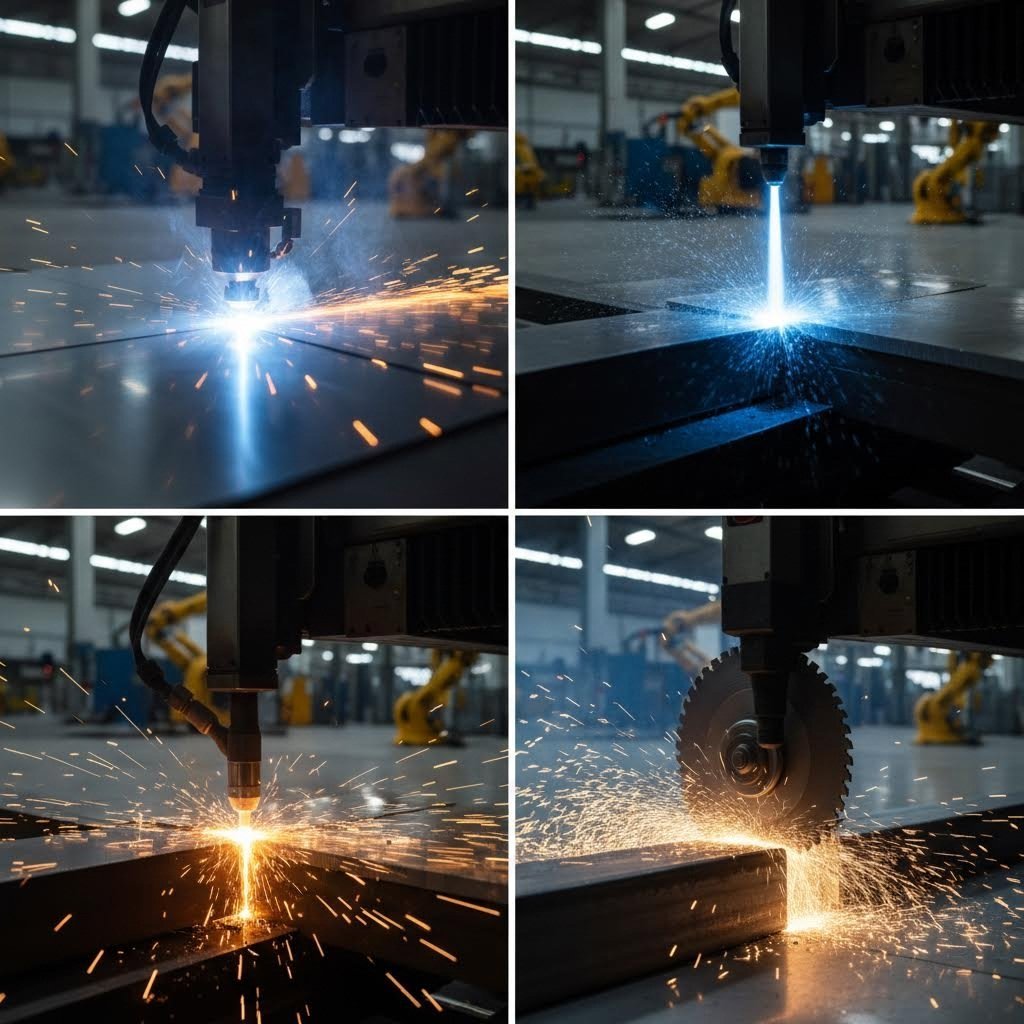
Así que necesitas metal cortado ao tamaño, pero ¿é o serrado realmente a mellor opción? Con cortadoras láser, chorro de auga e sopletes de plasma compitiendo pola túa atención, escoller a tecnoloxía adecuada resulta abrumador. Isto é o que a maioría dos proveedores non che din: cada método sobresaie en circunstancias específicas, e escoller o inadecuado ou ben te custa diñeiro ou ben compromete a calidade.
A verdade sincera? Un servizo preciso de serrado de metais non sempre é a resposta, pero a miúdo é a elección máis intelixente para aplicacións que outras tecnoloxías de corte manexan mal ou a un custo elevado. Comprender cando usar cada método convérteche dun comprador pasivo a alguén que especifica exactamente o que necesita.
Cando o serrado supera ao corte láser e por chorro de auga
Comecemos cun escenario que se repite a diario nos talleres de fabricación: necesitas 200 pezas de barra de acero de 4 polegadas de diámetro cortadas a lonxitudes de 6 polegadas. Deberías cortalas con láser? Con chorro de auga? A resposta é ninguna das dúas — e isto é o porqué.
Cortar con láser ofrece unha precisión excepcional en chapa e materiais finos. Segundo Sintel Inc. , os láseres producen "tolerancias moi estreitas e acabados de bordo suaves, minimizando a necesidade de postprocesamento". Soa perfecto, verdade? Pero considere as limitacións:
- Limitacións de grosor: Os láseres teñen dificultades con materiais de máis de 2,5 cm de grosor. A súa barra de 10 cm? Completamente impracticable.
- Zonas afectadas polo calor (HAZ): Aínda que son precisos, os láseres xeran calor localizada que pode alterar as propiedades do material preto do bordo de corte—un problema para compoñentes tratados termicamente.
- Estrutura de custos: O tempo de láser custa máis por minuto que o serrado. Para cortes rectos sinxelos en barras, está pagando tarifas premium por capacidades que non necesita.
- Limitacións xeométricas: Os láseres destacan en perfís 2D complexos sobre chapas planas. Cortar formas redondas, cadradas ou estruturais? O serrado manexa isto de forma nativa.
Corte por Xacto de Auga elimina por completo os problemas térmicos—o proceso de corte frío crea "absolutamente ningunha distorsión térmica nin cambio na estrutura do material", como indica Sintel. Pero o corte por axet tamén ten as súas desvantaxes:
- Penalización de velocidade: O corte por chorro de auga é máis lento que os métodos térmicos, especialmente en materiais grosos. As cantidades de produción saen perxudicadas.
- Custos dos consumibles: O granato abrasivo non é barato, e os materiais grosos consomen cantidades significativas por cada corte.
- Largura do corte: O chorro de auga elimina máis material que unha lama de serra, aumentando o desperdicio en aleacións caras.
- Mellores Aplicacións: Materiais sensibles ao calor como o titanio, compostos e placas grosas onde a zona afectada polo calor (HAZ) non é aceptable, non para o corte rutineiro de barras.
Entón, cando gaña a serra? Pense en barras, formas estruturais, tubos e conduccións. Cando está facendo cortes rectos transversais en seccións sólidas ou ocos, a serra ofrece precisión a unha fracción do custo do láser ou do chorro de auga. O equipo manexa naturalmente a xeometría, os custos das lamas mantéñense razoables e os tempos de ciclo seguen sendo competitivos.
Rentabilidade da serra fronte a outros métodos
Agora falemos de diñeiro, porque, en última instancia, a súa elección do método de corte afecta á economía do proxecto tanto como aos resultados técnicos.
Corte por plasma ofrece velocidade impresionante en metais condutores. É «significativamente máis rápido que o corte oxi-combustible para metais condutores de grosor medio a grosos», polo que é moi popular na fabricación estrutural. Pero esa velocidade ten un custo en precisión:
- Limitacións de tolerancia: O plasma alcanza normalmente ±0,060" a ±0,125"—moito máis ancho que o estándar de ±0,030" para o corte preciso con sierra.
- Calidade do Canto: As bordas ásperas e oxidadas requiren esmerilado ou mecanizado antes de calquera outro procesamento.
- Preocupacións sobre a zona afectada polo calor (ZAC): O arco de plasma xera zonas afectadas polo calor considerables, alterando as propiedades do material preto do corte.
- Mellores Aplicacións: Corte de chapa para fabricación estrutural, onde a velocidade importa máis que a precisión.
Serra ocupa o punto óptimo para moitas aplicacións—non é o máis rápido, nin o máis preciso, pero frecuentemente o máis práctico:
- Tolerancias consistentes: ±0,030" ou mellor nun equipo axeitadamente configurado.
- Residuos mínimos de material: As estreitas anchuras de corte preservan o stock caro.
- Baixos custos operativos: Os custos das lamas por corte mantéñense razoables, especialmente en comparación cos abrasivos de corte por auga ou consumibles do láser.
- Versatilidade de formas: Manexa redondos, cadrados, rectángulos, tubos, ángulos, canles e vigas sen necesidade de ferramentas especializadas.
Considere este exemplo práctico: cortar 100 pezas de tubo de aceiro de 2" x 2" a lonxitudes de 12". O corte por láser requirearía ferramentas especializadas e cobraría tarifas premium por cortes rectos sinxelos. O corte por auga funcionaría pero con velocidades máis lentas e custos máis altos de consumibles. O plasma deixaría bordos rugosos que requirirían un acabado secundario. ¿Unha serra fría? Cortes limpos, tolerancias consistentes, prezos competitivos—feito.
| Método de Corte | Capacidade de precisión | Rango de Grosor do Material | Impacto térmico | Velocidade Relativa | Custo por Corte |
|---|---|---|---|---|---|
| Cortar con láser | ±0.005" a ±0.010" | Ata 1" (acer) | HAZ moderada | Moito rápido (materiais finos) | Alto |
| Corte por Xacto de Auga | ±0,005" a ±0,015" | Ata 12" | Ningún (corte frío) | Lento | Alto |
| Corte por plasma | ±0,060" a ±0,125" | Ata 6" | HAZ grande | Rápido | Baixa a moderada |
| Corte de Precisión | ±0,020" a ±0,030" | Ata 24"+ (serra de fita) | Mínimo a ningún (serra fría) | Moderado | Baixo |
| Corte oxicombustible | ±0,125" a ±0,250" | Ata 24"+ | Zona afetada polo calor moi grande | Lento a moderado | Moi baixo |
A matriz de decisión vólvese máis clara cando se relacionan os requisitos da aplicación cos puntos fortes da tecnoloxía:
- Escolla láser para perfís 2D complexos en chapa onde a precisión xustifica o custo.
- Escolla o corte por chorro de auga para materiais sensibles ao calor, chapas grosas ou cando é obrigatorio un HAZ nulo.
- Escolla o corte por plasma para corte de placas de alto volume onde a velocidade é máis importante que a precisión.
- Escoller o corte con serra para barras, formas estruturais e cantidades de produción onde a rentabilidade e as tolerancias consistentes son importantes.
Aquí está a perspectiva que distingue aos compradores informados do resto: o método de corte "mellor" non existe de forma illada. Depende completamente do seu material, xeometría, requisitos de tolerancia, cantidade e orzamento. Os fornecedores que recomenden o corte con serra para todo—ou que nunca o suxiran—non están velando polo seu interese. O fornecedor axeitado axusta a tecnoloxía á aplicación.
Unha vez comprendida a selección da tecnoloxía de corte, hai outro factor que distingue aos fornecedores fiábeis do resto: as súas certificacións de calidade e prácticas de inspección. É alí onde pasaremos a continuación.
Normas e Certificacións de Calidade no Corte de Metais
Aquí vai unha pregunta que a maioría dos compradores esquecen facer ata que é tarde de máis: que sistemas ten o seu fornecedor implementados para garantir precisión constante? As certificacións e inspeccións de calidade non son só trámites burocráticos: son a súa póliza de seguros contra a recepción de pezas fóra de especificacións que deteñen os cronogramas de produción e esgotan os orzamentos.
A diferenza entre un fornecedor certificado de corte de metal e un sen certificar moitas veces non se nota ata que algo falla. Os fornecedores certificados teñen procedementos documentados para detectar problemas antes do envío das pezas. Nas operacións sen certificar? Está confiando en que os operarios detecten cada problema, e esperando que a súa definición de "suficientemente bo" coincida coa súa.
Comprender que certificacións son importantes para a súa industria —e que documentación de inspección debe acompañar ao seu pedido— converteo dun comprador optimista nun comprador informado que sabe exactamente que demandar.
Comprender as certificacións de calidade para o corte de metal
Non todas as certificacións teñen o mesmo peso, e a que vostede necesita depende completamente do seu sector. Isto é o que garante cada certificación principal:
- ISO 9001:2015 (Norma Universal de Calidade): Esta norma global aplícase prácticamente a todos os sectores, desde a agricultura ata a fabricación. Exixe que as empresas demostran a súa capacidade constante para entregar produtos aceptables, mantendo sistemas para a mellora continua. Se un fornecedor carece sequera desta certificación básica, considérea unha advertencia sobre o seu compromiso coa calidade.
- AS9100 (Norma Aeroespacial): Baseada na ISO 9001 pero con requisitos significativamente máis estritos en trazabilidade, xestión de riscos e control de configuración. Os compoñentes aeroespaciais requiren trazas documentais completas — cada corte trazable ata lotes específicos de material, rexistros de calibración e certificacións de operarios. Se está adquirindo para aplicacións aeroespaciais, o cumprimento da AS9100 non é opcional.
- IATF 16949 (Norma Automotriz): De acordo co Smithers , esta norma "vai máis alá da ISO 9001" ao incluír requisitos específicos dos fabricantes e enfatizar a prevención de defectos. A IATF 16949 aborda a seguridade do produto, a eficacia dos procesos, a aplicación de ferramentas estatísticas, a proba de erros e os sistemas de xestión de garantías. Aplica especificamente a centros que producen pezas automotrices OEM, non a compoñentes de mercado secundario.
- ISO 13485 (Dispositivos Médicos): Se os seus bloques serrados se converten en implantes médicos ou instrumentos cirúrxicos, esta certificación garante que o seu fornecedor manteña os controles de contaminación e trazabilidade que requiren as regulacións da FDA.
Cal é a diferenza práctica entre o ISO 9001 e normas específicas do sector como o IATF 16949? A comparación paralela revela diferenzas significativas. Onde o ISO 9001 aborda "accións para facer fronte a riscos e oportunidades", o IATF 16949 engade análise de riscos, acción preventiva e plans de contingencia. Onde o ISO 9001 menciona brevemente a trazabilidade das medicións, o IATF 16949 amplía os requisitos de calibración e especificacións de laboratorio.
Acreditación BBB cumpre un propósito diferente. Aínda que non valida capacidades técnicas, indica como manexa unha empresa as disputas con clientes, manteñen a transparencia na publicidade e cumpre os seus compromisos. Un fornecedor certificado de corte de metais cunha boa posición na BBB demostra tanto competencia técnica como prácticas comerciais éticas, unha combinación que importa cando xurdan problemas inevitablemente.
Que debe incluír a documentación de inspección
As certificacións establecen sistemas; a documentación de inspección proba que eses sistemas funcionaron na túa orde específica. Ao avaliar servizos de corte de metal certificados ISO, pregunta que documentación acompaña aos envíos — e mostra preocupación se a resposta é "nada".
A inspección de serrado de metal de calidade debería xerar rexistros que cubran tres áreas críticas:
Verificación Dimensional confirma que as túas pezas cumpran as tolerancias especificadas:
- Informes de inspección do primeiro artigo que mostren as medicións iniciais de configuración
- Datos de inspección en proceso que demostran a consistencia ao longo das series de produción
- Resultados finais de inspección con dimensións medidas reais fronte ás especificacións
- Gráficos de control estatístico de procesos (SPC) para pedidos de alto volume que mostren tendencias de variación
Medición do acabado superficial documenta a calidade dos bordos cando as especificacións o requiren:
- Lecturas Ra (media de rugosidade) obtidas mediante medicións con perfilómetro
- Rexistros de inspección visual que anotan a presenza ou ausencia de rebarbas
- Documentación fotográfica para aplicacións críticas
Rastreabilidade de Material conecta as túas pezas acabadas coas orixes do material bruto:
- Informes de proba de laminación (MTRs) que certifican a calidade e propiedades do material
- Números de lote por calor que relacionan as pezas con lotes específicos de material
- Documentación de cadea de custodia para aplicacións aeroespaciais ou médicas
Canta documentación debes esperar? Iso depende do teu sector e da aplicación. O acero estrutural para construcción xeral rara vez require máis que verificacións dimensionais básicas. Os compoñentes aeroespaciais requiren paquetes completos, incluídos certificados de calibración para cada instrumento de medición utilizado. Os semiacabados para dispositivos médicos necesitan documentación de trazabilidade que siga ás pezas durante os procesos subseguintes.
A documentación que requiras debe coincidir coas túas obrigas reguladoras e as necesidades de calidade posteriores—nin máis nin menos.
Ao solicitar orzamentos, especifique de antemán os seus requisitos de documentación. Os provedores habituados á inspección de corte de metais de calidade cotizarán axeitadamente; aqueles que obxecten ás solicitudes de documentación revelan as súas limitacións antes de que fixe un pedido. Con os requisitos de certificación e documentación claros, o seguinte paso é saber exactamente como avaliar os provedores potenciais e preparar especificacións que permitan obter orzamentos precisos.
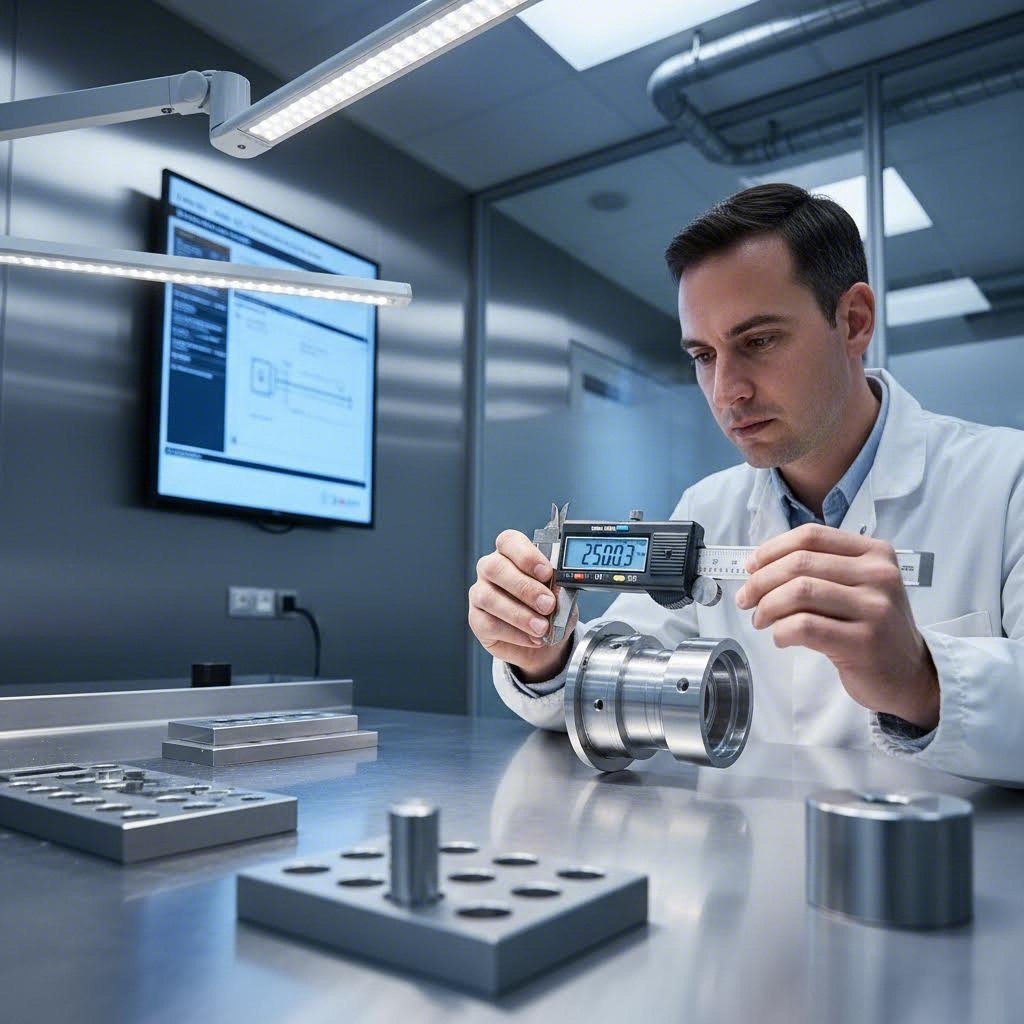
Como Avaliar e Seleccionar un Provedor de Servizos de Corte de Metais
Identificou os seus requisitos de tolerancia, entendeu cales certificacións son importantes, e sabe que documentación esperar. Agora chega o reto práctico: como pode realmente verificar os provedores potenciais e obter orzamentos que reflixan con precisión as necesidades do seu proxecto?
Aquí está a verdade incómoda sobre a selección de provedores de servizos de serra de metal: a oferta máis barata acostuma converterse na opción máis cara. Os provedores que presentan orzamentos por baixo do prezo frecuentemente aforran nos custos da calidade das lamas, omiten pasos de inspección ou simplemente non teñen o equipo necesario para cumprir co prometido. A clave para evitar erros custosos reside en facer as preguntas adecuadas desde o comezo e fornecer especificacións detalladas abondo para eliminar malentendidos.
Pense neste proceso de avaliación como un seguro de avaliación de servizos industriais de serraxe. Unhas poucas horas investidas en verificar os provedores e preparar especificacións axeitadas aforran semanas de atrasos, pezas rexeitadas e frustrantes intercambios cando algo falla.
Preguntas esenciais ao verificar provedores de servizos
Ao escoller servizos de corte de metal, a maioría dos compradores centranse exclusivamente no prezo. Os compradores espertos profundizan máis. Segundo expertos do sector de fabricación en Prince Manufacturing , a avaliación exhaustiva do fornecedor abarca todo, desde as capacidades técnicas ata as prácticas de comunicación.
Antes de solicitar orzamentos formais, revisa esta lista numerada de criterios de avaliación:
- Verificar as capacidades de tolerancia: Pregunte especificamente que tolerancias poden manter e solicite exemplos de traballos recentes que demostran esas capacidades. Poden acadar ±0,030" de forma consistente? E que das tolerancias máis estreitas para aplicacións de precisión? Os fornecedores que vacilan ou dan respostas vagas probablemente carezan do equipo ou da experiencia necesaria para entregar.
- Identificar os tipos de equipos dispoñibles: Operan sierras de fita, sierras frías ou ambas? Que diámetros de lama e capacidades de corte poden manexar? Un provedor con só sierras de fita pode ter dificultades con materiais sensibles ao calor que as sierras frías manexan mellor.
- Confirmar as certificacións dos materiais e a orixe: Poden fornecer informes de probas de material? Traballan con fornecedores de material certificados? Para aplicacións aeroespaciais ou médicas, pregunte se poden manter a trazabilidade dos lotes de material a través das súas operacións de corte.
- Establecer tempos realistas de entrega: Cal é o seu prazo actual para a súa cantidade e tipo de material? Como xestionan os pedidos urgentes? Segundo Empresas JIT , comprender os prazos dende o comezo evita sorpresas desagradables cando o seu plan de produción depende dunha entrega oportuna.
- Comprender as cantidades mínimas de pedido: Algúns provedores centranse en producións de alto volume; outros especialízanse en prototipos e traballos en pequenos lotes. Asegúrese de que o seu punto forte coincida co tamaño habitual dos seus pedidos.
- Avaliar os procesos de control de calidade: Teñen procedementos de inspección documentados? Que equipos de medición utilizan? Con que frecuencia se calibran? Pregunte sobre as súas taxas de rexeitamento e que ocorre cando as pezas quedan fóra de tolerancia.
- Avaliar a resposta na comunicación: Canto rápido responden chamadas e correos electrónicos? Fán che preguntas aclaratorias que demostran comprensión das túas necesidades? Unha mala comunicación previa á venda adoita indicar un mal soporte posterior á venda.
- Comprobe as referencias e o historial: Poden fornecer referencias de clientes do teu sector? Que revelan as valoracións en liña sobre a súa calidade e fiabilidade? Unha empresa con longa traxectoria e comentarios positivos ofrece máis seguridade ca unha operación descoñecida.
- Aclarar garantía e resolución de problemas: Que garantías ofrecen? Como xestionan as pezas que chegan fóra de especificacións? Comprender o seu proceso de resolución de disputas antes de que xurdan problemas evita sorpresas desagradables máis adiante.
- Confirmar normas éticas e de seguridade: Mantén instalacións limpas e organizadas? Están os seus operarios debidamente formados? Talleres desorganizados con prácticas de seguridade cuestionables rara vez ofrecen calidade consistente.
Observe como o prezo non aparece nesta lista? É intencionado. O prezo importa, pero só despois de confirmar que un fornecedor pode realmente entregar o que necesitas. A oferta máis baixa non significa nada se as pezas chegan atrasadas, fóra de tolerancia ou requiren reprocesamento que supere calquera aforro.
Especificacións que preparar antes de solicitar orzamentos
Queres orzamentos precisos que non aumenten despois con pedidos de modificación? O segredo está en proporcionar especificacións completas e inequívocas desde o principio. Solicitudes vagas como "cortar uns barras de acero á lonxitude" invitan a malentendidos e non protexen a ningunha das partes cando as expectativas non coinciden.
Antes de contactar con posibles fornecedores, recolle e documenta estes requisitos para orzamentos de serrado de metais:
- Grao e especificación do material: Non digas só "aluminio"—especifica "aluminio 6061-T6" ou "7075-T651". Inclúe a norma ASTM, AMS ou industrial pertinente. Diferentes graos dentro da mesma familia de materiais requiren enfoques de corte distintos e afectan ao prezo.
- Dimensións iniciais do stock: Proporcione as dimensións da sección transversal (diámetro para redondos, ancho e alto para rectángulos) e calquera limitación de lonxitude de entrada. Os fornecedores necesitan esta información para planificar a utilización do material e determinar a compatibilidade co equipo.
- Lonxitude de corte final: Especifique claramente a dimensión obxectivo, indicando se está medindo de extremo a extremo ou entre características específicas.
- Requisitos de tolerancia: Indique o rango de desvío aceptable (por exemplo, ±0,030") e aclare se se aplica á lonxitude, ao escuadro ou a ambos. Evite exigir tolerancias máis estreitas das que realmente require a súa aplicación; pagará prezos premium por precisión que non utilizará.
- Cantidade necesaria: Inclúa o número total de pezas requiridas e indique se o pedido representa unha necesidade puntual ou unha produción continuada. O volume afecta significativamente aos prezos e aos prazos de entrega.
- Expectativas sobre o acabado superficial: Se a calidade do bordo é importante, especifique a rugosidade aceptable (valor Ra) ou simplemente indique se as pezas pasan directamente á soldadura, mecanizado ou montaxe visible.
- Requisitos sobre o estado dos extremos: Necesita cortes cadrados, cortes en ángulo ou chafrás específicos? Deben estar os extremos libres de rebarbas? Especifique calquera operación secundaria que espere que o proveedor de serrado realice.
- Requisitos de documentación: Indique que documentación debe acompañar o envío: informes de inspección dimensional, certificacións do material, trazabilidade por lote ou certificados de conformidade.
- Cronograma de entrega: Indique a data de entrega requirida e indique se é firme ou flexible. Sexa honesto sobre a urxencia; os provedores precisan o traballo exprés en consecuencia.
- Preferencias de embalaxe e envío: Especifique se as pezas necesitan protección individual, embalaxe específica para manipulación posterior ou requisitos particulares de transportista.
Aquí vai un consello profesional que distingue aos compradores experimentados dos novatos: inclúa sempre que sexa posible un debuxo ou esbozo sinxelo. Nin sequera unha ilustración manuscrita que amose o stock inicial, as dimensións finais e as tolerancias críticas elimina a ambigüidade que poden xerar as descricións textuais. Os ficheiros CAD funcionan aínda mellor se están dispoñibles.
Ao comparar orzamentos devoltos, crea unha comparación estandarizada que teña en conta todos os factores de custo — non só o prezo unitario. Inclúe:
| Factor de comparación | Proveedor A | Fornecedor B | Fornecedor C |
|---|---|---|---|
| PREZO UNITARIO | |||
| Taxas de configuración/programación | |||
| Marge do material (se fornecido) | |||
| Taxas de inspección/documentación | |||
| Costes de envío | |||
| Prazo de entrega | |||
| Custo total final |
Este enfoque integral para a avaliación de provedores e o desenvolvemento de especificacións require máis esforzo inicial — pero o retorno vén cando as pezas chegan a tempo, dentro das tolerancias e listas para o seguinte paso de fabricación. Unha vez completada a selección do provedor, a última peza do puzle é optimizar todo o proxecto de serrado para lograr o éxito na fabricación.
Optimización dos Proxectos de Serrado de Metal para o Éxito na Fabricación
Aprendiches os factores técnicos, avaliaches as tecnoloxías e comprendes que é o que separa aos provedores fiábeis dos vendedores de produtos comodín. Agora xorde a pregunta que o une todo: como aplicar este coñecemento para obter o máximo valor de cada proxecto de serrado?
Aquí está a perspectiva que a maioría dos compradores pasa por alto: o corte de precisión non é unha operación illada, senón o primeiro elo dunha cadea que determina se todo o proceso de fabricación funciona sen problemas ou tropezará en cada paso subseguinte. A precisión que acadas (ou non acadas) na serra propágase aos procesos de soldadura, mecanizado e montaxe de forma que multiplica os custos e prolonga os prazos.
Vexamos como traducir todo o que vimos en orientacións prácticas que optimicen os vosos procesos posteriores de corte de metais e coloquen os vosos proxectos no camiño do éxito.
Maximizar o valor dos vosos proxectos de corte de metais
Pensa no teu fluxo de traballo de fabricación por corte de precisión como un sistema e non como unha serie de pasos desligados. Cando abordas a optimización dun proxecto de corte de metais de forma estratéxica, cada decisión reforza a seguinte:
Adapta as tolerancias aos requisitos reais, non ás aspiracións. Exixir ±0,010" cando ±0,030" satisfai perfectamente a súa aplicación engade un 20-40% aos custos de serra sen aportar valor real. Pola contra, aceptar tolerancias imprecisas para aforrar algúns dólares por corte adoita custar dez veces máis en traballo posterior. O punto óptimo? Especificar tolerancias que realmente require a seguinte operación e engadir un pequeno margen para variacións do proceso.
Comunique os procesos posteriores ao seu fornecedor de serrado. Cando o seu fornecedor entende que as pezas pasan directamente ao mecanizado CNC, priorizará a consistencia dimensional e a calidade superficial. Cando sabe que está soldando conxuntos estruturais con axustes xerosos, pode optimizar a velocidade sen comprometer as súas necesidades reais. Este enfoque baseado no contexto para o corte de precisión ofrece mellores resultados que calquera especificación xenérica.
Considere o custo total de propiedade. A oferta máis barata rara vez representa o menor custo total. Teña en conta:
- Eliminación de material en mecanizado se as tolerancias de serra son folgadas
- Tempo de rectificado ou desbarbado para bordos cortados ás brancas
- Complicacións de montaxe por dimensións inconsistentes
- Traballo de reapertura e desperdicio cando as pezas caen fóra das ranguas utilizables
- Atrasos na produción cando os rexeitamentos requiren encomendas novas
Un fornecedor que cobre un 15 % máis pero que fornece cortes sen rebarbas e con dimensións consistentes aforra diñeiro no ciclo completo de fabricación.
Establece relacións con fornecedores certificados. Transaccións puntuais invitan a tomar atallos. Parcerías continuadas con fornecedores certificados ISO 9001 ou con certificación específica do sector crean responsabilidade, o que garante unha calidade constante. Os fornecedores que comprenden as túas necesidades recorrentes invierten para facer as cousas ben porque valoran a relación, non só a encomenda individual.
A precisión que acadas coa serra determina se todas as operacións posteriores proseguen sen problemas ou teñen que loitar contra erros dimensionais acumulados. O serrado de precisión non é un custo, senón unha inversión na eficiencia da fabricación.
Este principio aplícase universalmente, tanto se está cortando aceiro estrutural para a construción como titanio de grao aerospacial para compoñentes críticos para o voo. As tolerancias específicas cambian; a relación fundamental entre as mellores prácticas de precisión no serrado e a calidade xeral da fabricación permanece constante.
Próximos pasos para as súas necesidades de corte de precisión
Preparado para aplicar estas ideas no seu próximo proxecto? Esta é a súa plan de acción:
Para proxectos inmediatos:
- Documente todos os seus requisitos usando a lista de verificación de especificacións da sección anterior
- Identifique 2-3 fornecedores con certificacións adecuadas para o seu sector
- Solicite orzamentos que inclúan documentación de inspección e compromisos de prazos de entrega
- Avalíe o custo total de entrada — non só o prezo unitario
Para programas de fabricación continuada:
- Estableza pedidos marco con fornecedores cualificados para asegurar os prezos e priorizar o seu traballo
- Implementar a inspección de entrada para verificar a consistencia ao longo do tempo
- Rastrexar os impactos posteriores (tempo de mecanizado, axuste de montaxe, taxas de rexeitamento) para validar as afirmacións do fornecedor sobre calidade
- Programar revisións trimestrais para abordar problemas antes de que se convertan en patróns
Para aplicacións automotrices e de alto volume: Lembre que o corte de precisión representa só un paso na cadea de fabricación. A peza en bruto que recibe do corte xeralmente continúa con operacións adicionais de conformado, mecanizado ou acabado. Traballar con socios certificados segundo a IATF 16949 que comprenden o fluxo completo de fabricación—como Shaoyi (Ningbo) Tecnoloxía do metal para operacións subseguintes de estampado e montaxe—asegura transicións sinxelas entre procesos. O seu prototipado rápido en 5 días, o apoio integral ao DFM e a resposta en 12 horas para orzamentos demostran como os fornecedores integrados coordinan o corte con operacións posteriores de conformado metálico para compoñentes de chasis, suspensión e estruturais.
A industria dos centros de servizos de metal evolucionou dramaticamente, coa metade case dos principais distribuidores ofrecendo agora procesamento dende abaixo, incluíndo fabricación, mecanizado e soldadura xunto cos servizos tradicionais de serraxe. Esta integración vertical crea oportunidades para consolidar a túa cadea de subministración con provedores que controlan a calidade en múltiples operacións.
Xa sexa que esteas adquirindo cortes sinxelos de barras ou fabricación complexa en múltiples etapas, os principios seguen sendo consistentes: especificar claramente, verificar capacidades, documentar requisitos e medir resultados. Os provedores que ven as túas necesidades de serraxe como o punto de partida dunha parcería de fabricación—e non como unha transacción puntual—ofrecen a precisión, consistencia e valor que impulsan o éxito na fabricación.
O seu seguinte proxecto de corte con precisión comeza cunha única decisión: abordarao como un comprador informado que entende o que require a precisión, ou como alguén que espera que o licitador máis barato entregue resultados aceptables? O coñecemento que adquiriu colócaa firmemente na primeira categoría. Úseo.
Preguntas frecuentes sobre servizos precisos de corte de metais
1. Que tolerancias poden acadar normalmente os servizos precisos de corte de metais?
Os proveedores de corte de metais de calidade adoitan acadar tolerancias de ±0,030 polgadas (±0,762 mm) ou mellor, empregando equipos axeitadamente configurados. As sierras en frío poden ofrecer tolerancias incluso máis estreitas, con bordos sen rebabas, mentres que as sierras de cinta ofrecen unha boa precisión xeral. A tolerancia específica depende do tipo de equipo, da selección da lama, das propiedades do material e da experiencia do operario. Para aplicacións automotrices que requiren a certificación IATF 16949, proveedores como Shaoyi Metal Technology mantén tolerancias consistentes durante series de produción de alto volume.
2. Cal é a diferenza entre serras frías e serras de fita para o corte de metais?
As serras frías utilizan lámadas circulares que xiran a baixa RPM con refrigerante continuo, producindo calor mínimo e cortes excepcionais sen rebordo, ideais para materiais sensibles ao calor. As serras de fita teñen lámadas en forma de loop continuo que ofrecen maior versatilidade para diferentes grosores e materiais a un custo moderado. As serras frías destacan no traballo de precisión que require tolerancias estreitas, mentres que as serras de fita resolven eficientemente diversas necesidades de corte. A súa elección depende do tipo de material, dos requisitos de tolerancia e do volume de produción.
3. Como elixo o provedor axeitado de servizos de serraxe de metais?
Avalíe os provedores en función das súas capacidades de tolerancia, tipos de equipos dispoñibles, certificacións relevantes (ISO 9001, AS9100, IATF 16949), coñecemento dos materiais e tempos de entrega. Solicite exemplos de traballos recentes, verifique os procedementos de inspección e confirme as capacidades de documentación. Comprobe referencias de clientes do seu sector e avalíe a rapidez na comunicación. Para compoñentes automotrices, busque provedores certificados segundo IATF 16949 que ofreza solucións completas de fabricación, incluído o procesamento posterior.
4. Qué materiais poden traballar os servizos de corte preciso de metais?
Os servizos profesionais de corte con serra cortan metais ferrosos (acer doce, acero inoxidable, acero para ferramentas) e metais non ferrosos (aluminio, latón, cobre), así como ligazos exóticos (titanio, Inconel, Hastelloy). Cada material require configuracións específicas de lamas, velocidades de corte e sistemas de refrigeración. Os metais brandos como o aluminio necesitan lamas con paso de dentes amplo para evitar a soldadura das virutas, mentres que os ligazos endurecidos requiren lamas con puntas de carburo, avances lentos e constantes e un fluxo robusto de refrigerante.
5. Cando debo escoller o corte con serra en vez do corte con láser ou por chorro de auga?
Escolla o corte por serra para pezas en barra, formas estruturais, tubos e conduccións cando necesite cortes transversais rectos rentables con tolerancias consistentes. O corte por serra manexa materiais grosos que superan os límites do corte por láser e ten un custo inferior ao da cortadora por axabre para xeometrías sinxelas. O corte por láser destaca nos perfís 2D complexos en chapa metálica, mentres que a cortadora por axabre é a mellor opción para materiais sensibles ao calor que requiren ausencia de deformación térmica. O corte por serra ofrece o equilibrio optimo entre precisión, velocidade e custo para cantidades de produción de seccións sólidas ou ocas.