 Small batches, high standards. Our rapid prototyping service makes validation faster and easier —
  EN
EN


Aluminium żeglarskie: porównanie 5052, 5083 i 6061 w częściach samochodowych

STRESZCZENIE
Najlepsze stopy aluminium do elementów samochodowych żeglarskich pochodzą głównie z serii 5xxx i 6xxx. Stopy takie jak 5083 i 5052 z serii 5xxx oferują doskonałą odporność na korozję, co czyni je idealnymi do komponentów narażonych na działanie soli i wilgoci. Natomiast 6061 z serii 6xxx charakteryzuje się wyższą wytrzymałością i uniwersalnością, co czyni go idealnym do zastosowań konstrukcyjnych. Ostateczny wybór zależy od konkretnych wymagań danego elementu pod względem trwałości wobec warunków atmosferycznych oraz potrzeby wytrzymałości mechanicznej.
Definiowanie określenia «żeglarski» dla komponentów samochodowych
Termin „stopu morskiego” oznacza klasę materiałów zaprojektowanych tak, aby wytrzymywały surowe warunki środowisk morskich, co jest zaskakująco istotne również w odniesieniu do części samochodowych. Aby stop aluminium uzyskał ten status, musi cechować się konkretnym zestawem właściwości gwarantujących trwałość i sprawność w warunkach narażenia na działanie korozji spowodowanej np. wodą morską, co odpowiada działaniu soli drogowej i wilgoci, którym są narażane pojazdy. Główne cechy definiujące stop morski to wyjątkowa odporność na korozję, wysoki stosunek wytrzymałości do masy oraz doskonała kształtowalność i spawalność.
Odporność na korozję jest najważniejszą cechą. Stopy morskie, szczególnie te z serii 5xxx, takie jak 5052 i 5083, zawierają magnez, który znacząco zwiększa ich odporność na degradację wywołaną wodą morską i innymi czynnikami korozyjnymi. Dla komponentów samochodowych, takich jak panele spodniowe, zbiorniki paliwa i elementy konstrukcyjne stale narażone na sól drogową w zimowych warunkach klimatycznych, ta właściwość nie jest tylko korzystna – jest niezbędna, aby zapobiegać przedwczesnemu uszkodzeniu oraz zapewnić bezpieczeństwo i trwałość pojazdu.
Oprócz odporności na korozję, kluczową zaletą jest wysoki stosunek wytrzymałości do masy. Aluminium ma masę rzędu jednej trzeciej stali, a wysokowytrzymałe stopy, takie jak 6061, mogą oferować porównywalną wytrzymałość konstrukcyjną przy znacznym zmniejszeniu masy. To „lekkiżowanie” odgrywa kluczową rolę w przemyśle motoryzacyjnym, poprawiając oszczędność paliwa i właściwości jezdne pojazdu. Stosując silne, lekkie stopy żeglarskie, producenci mogą zmniejszyć całkowitą masę pojazdu, nie rezygnując przy tym z wytrzymałości potrzebnej dla ram, elementów podwozia oraz innych części nośnych.
Ostatecznie dobre właściwości przerabialności i spawalności są kluczowe przy produkcji złożonych części samochodowych. Stopy muszą się łatwo formować, giąć i kształtować bez pękania. Stopy morskie, takie jak 5052, cechują się doskonałą kruszywością, podczas gdy stopy takie jak 6061 oferują dobrą spawalność, umożliwiając tworzenie wytrzymałych i szczelnych połączeń w złożeniach konstrukcyjnych. Ta kombinacja właściwości pozwala projektantom i inżynierom na tworzenie trwałe, lekkie i odporne na korozję elementy, które wytrzymują wymagające warunki zarówno morskie, jak i drogowe.
Porażka z porażką: Porównanie najlepszych stopów aluminiowych morskich
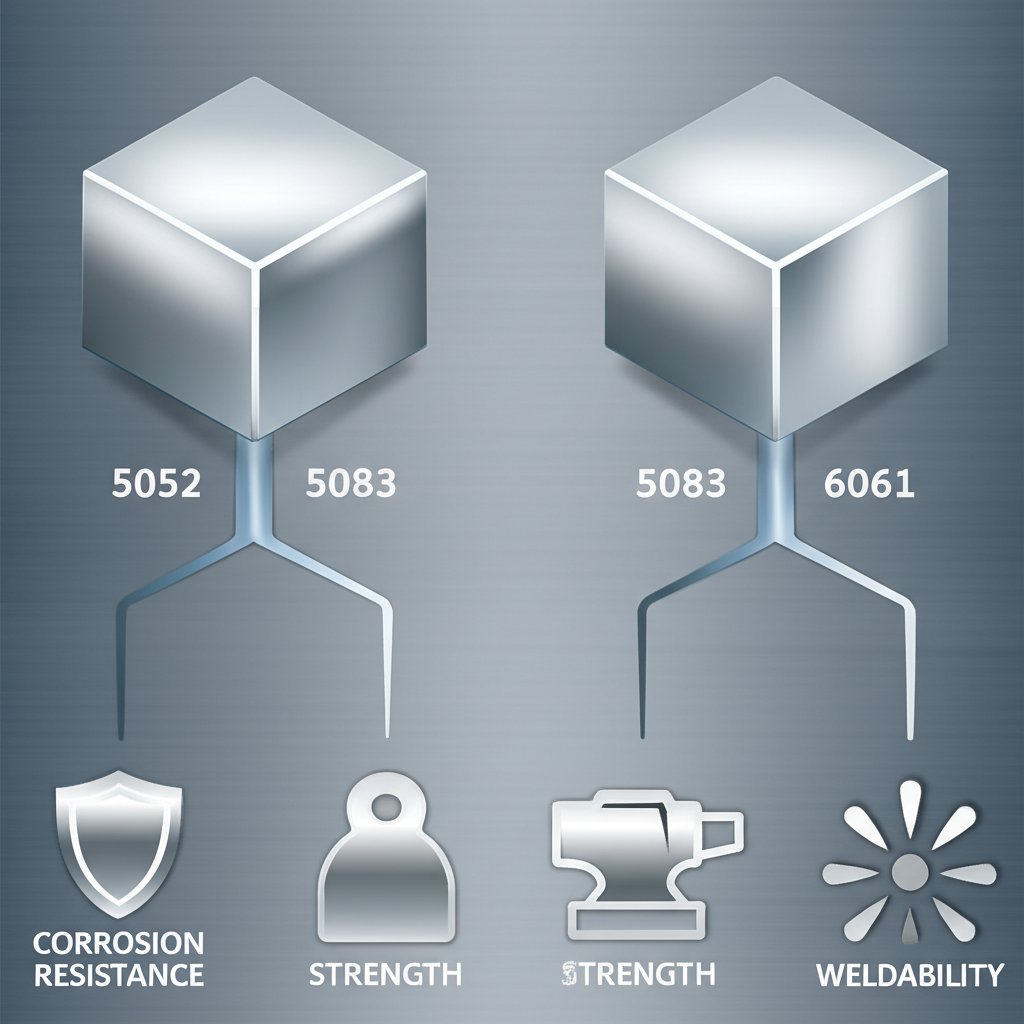
Podczas wyboru idealnego stopu aluminium morskiego do zastosowań samochodowych wybór często ogranicza się do kilku głównych przedstawicieli serii 5xxx i 6xxx: 5052, 5083 i 6061. Każdy ze stopów charakteryzuje się unikalnym poziomem właściwości, a zrozumienie ich różnic jest kluczowe przy dopasowaniu materiału do konkretnych wymagań części samochodowej. Stopy serii 5xxx nie podlegają hartowaniu cieplnemu i uzyskują swoją wytrzymałość dzięki umocnieniu odkształceniowemu, natomiast stopy serii 6xxx można poddawać obróbce cieplnej, co pozwala osiągnąć wyższy poziom wytrzymałości.
Aby wyjaśnić ich różnice, poniżej przedstawiona jest bezpośrednia porównawcza analiza kluczowych cech:
| Stop | Główna zaleta | Odporność na korozję | Spawalność | Optymalne zastosowanie w motoryzacji |
|---|---|---|---|---|
| 5052 | Wysoka odporność na zmęczenie i doskonała formowalność. Umiarkowana ogólna wytrzymałość. | Doskonała, szczególnie w warunkach morskich i w środowisku wody słonej. | Dobra. | Zbiorniki paliwa, panele wnętrza, elementy karoserii niestrukturalne oraz komponenty wymagające skomplikowanych kształtów. |
| 5083 | Najwyższa wytrzymałość wśród stopów niestwardniających cieplenie; dobrze zachowuje wytrzymałość po spawaniu. | Doskonały; uważany za jednego z najlepszych w trudnych warunkach wody morskiej. | Jest doskonała. | Osłony spodu pojazdu, elementy konstrukcyjne w strefach o wysokiej korozji oraz zastosowania ciężkie. |
| 6061 | Wysoka wytrzymałość (szczególnie w stanie T6), uniwersalny i nadający się do hartowania cieplnego. | Bardzo dobry, choć nieco mniej odporny na wodę morską niż stopy serii 5xxx. | Dobry, choć wytrzymałość może się zmniejszyć w strefie spoiny bez użycia obróbki cieplnej po spawaniu. | Ramy konstrukcyjne, elementy zawieszenia, wyciski i elementy nośne. |
Stop 5083 wyróżnia się jako lider pod względem odporności na korozję. Zgodnie z Taber Extrusions , doskonale sprawdza się w najtrudniejszych warunkach i jest ceniony za zdolność zachowania wytrzymałości po spawaniu. To czyni go wyjątkowym wyborem na części samochodowe narażone na bezpośrednie i długotrwałe działanie soli drogowej i wilgoci, takie jak elementy spodu pojazdu lub części konstrukcyjne pojazdów użytkowanych w rejonach nadmorskich lub śnieżnych.
Stop 5052 oferta fantastyczną równowagę między dobrą odpornością na korozję, wysoką wytrzymałością zmęczeniową a doskonałą kutektywnością. Jak zauważa Howard Precision Metals , doskonała obrabialność pozwala na wytłaczanie skomplikowanych kształtów, co czyni ją idealną do elementów takich jak zbiorniki paliwa, panele wnętrza i uchwyty, wymagające złożonego formowania bez utraty trwałości.
Stop 6061 to „koń roboczy” grupy, znany z wysokiej wytrzymałości, wszechstronności i dobrych właściwości mechanicznych. Jego wytrzymałość można znacznie zwiększyć poprzez obróbkę cieplną (najczęściej do stanu T6). Chociaż jego odporność na korozję jest nieco niższa niż w przypadku odpowiedników z serii 5xxx, pozostaje on bardzo dobry w większości zastosowań. Wysoki stosunek wytrzymałości do masy sprawia, że jest to preferowany materiał do produkcji konstrukcyjnych elementów samochodowych, takich jak ramy podwozi, elementy zawieszenia i niestandardowe profile, gdzie sztywność i nośność są priorytetem.
Zalecenia dotyczące zastosowań: dopasowanie stopu do elementu
Wybór odpowiedniego stopu aluminium o właściwościach morskich nie jest rozwiązaniem uniwersalnym; wymaga dopasowania specyficznych zalet materiału do funkcjonalnych wymagań komponentu samochodowego. Poprzez dostosowanie właściwości stopu do środowiska i wymagań konstrukcyjnych danej części inżynierowie mogą zoptymalizować wydajność, trwałość oraz opłacalność.
Dla paneli karoserii i zbiorników paliwa: stop 5052
Komponenty wymagające znacznej obróbki kształtowej, takie jak panele karoserii, elementy wnętrza oraz zbiorniki paliwa, najlepiej sprawdzają się przy użyciu Stop 5052 . Jego doskonała kowalność i obrabialność pozwalają na gięcie i tłoczenie skomplikowanych geometrii bez ryzyka pęknięcia. Ponadto, jego wysoka odporność na korozję zapewnia, że zbiorniki paliwa nie będą ulegać degradacji pod wpływem zawartości wewnętrznej ani oddziaływania warunków zewnętrznych, co czyni go bezpiecznym i niezawodnym wyborem.
Dla osłon podwozia i stref o wysokiej ekspozycji na korozję: stop 5083
Dla części narażonych na ciągłe działanie soli drogowej, wody oraz drobnych uszkodzeń mechanicznych, Stop 5083 jest niekwestionowanym liderem. Jego wyjątkowa wydajność w środowiskach słonych bezpośrednio przekłada się na lepszą trwałość osłon dna, punktów mocowania zawieszenia oraz dowolnych elementów konstrukcyjnych w strefie chlapania. Jako stop o najwyższej wytrzymałości spośród nietylakowalnych, zapewnia solidną ochronę i integralność strukturalną w najbardziej wymagających warunkach, z jakimi pojazd może się zmierzyć.
Dla ram i wyprasek konstrukcyjnych: stop 6061
Gdy najwyższym priorytetem jest maksymalna wytrzymałość i sztywność, Stop 6061 , szczególnie w stanie T6, jest optymalnym wyborem. Jest idealny do produkcji ram pojazdów, podramek, ramion zawieszenia oraz innych nośnych elementów konstrukcyjnych. Wysoka wytrzymałość przy niskiej wadze pozwala zmniejszyć masę pojazdu, zachowując jednocześnie integralność konstrukcyjną, co ma kluczowe znaczenie dla osiągów i zużycia paliwa. W projektach motoryzacyjnych wymagających precyzyjnie zaprojektowanych komponentów tego typu warto rozważyć spersonalizowane wypraski aluminiowe od sprawdzonego partnera. Shaoyi Metal Technology oferuje kompleksową usługę kompleksową , specjalizując się w produkcji wytrzymałych, lekkich i w wysokim stopniu dostosowanych elementów dopasowanych do dokładnych specyfikacji w ramach rygorystycznego systemu jakości certyfikowanego zgodnie z IATF 16949.
Najczęściej zadawane pytania
1. Czy aluminium 5052 jest silniejsze niż 6061?
Nie, jeśli chodzi o wytrzymałość na rozciąganie i granicę plastyczności, aluminium 6061 jest znacznie silniejsze niż 5052, szczególnie po obróbce cieplnej w stanie T6. Jednakże 5052 charakteryzuje się większą wytrzymałością zmęczeniową, co oznacza, że może wytrzymać większą liczbę cykli obciążenia i rozładowania bez uszkodzenia. Wybór między nimi zależy od tego, czy aplikacja wymaga wysokiej wytrzymałości statycznej (6061), czy odporności na powtarzające się wibracje i gięcie (5052).
2. Czy aluminium 6061-T6 jest gatunkiem morskim?
Tak, 6061-T6 jest powszechnie uważany za aluminium do zastosowań morskich i często wykorzystywany w budowie jednostek morskich do elementów takich jak kadłuby łodzi, ramy i wyposażenie. Oferuje doskonałą kombinację wysokiej wytrzymałości, dobrej obrabialności oraz bardzo dobrej odporności na korozję. Chociaż stopy z serii 5xxx, takie jak 5083, charakteryzują się lepszą odpornością korozyjną szczególnie w wodzie słonej, to 6061-T6 zapewnia bardziej uniwersalny balans właściwości odpowiedni do wielu wymagających zastosowań.
3. Czy istnieje aluminium do zastosowań morskich?
Tak, ale termin "stop morski" nie odnosi się do jednego konkretnego typu aluminium. Opisuje raczej kategorię stopów aluminium, które wykazują doskonałą odporność na korozję w środowiskach morskich. Najczęstsze stopy morskie należą do serii 5xxx i 6xxx. Seria 5xxx (np. 5052, 5083, 5086) jest stopowana magnezem i znana jest ze szczególnej odporności na korozję w wodzie słonej. Seria 6xxx (np. 6061, 6063) jest stopowana magnezem i krzemem, oferując równowagę wytrzymałości, spawalności i odporności na korozję.