 Small batches, high standards. Our rapid prototyping service makes validation faster and easier —
  EN
EN

- Calificación de Proveedores de Estampado Metálico Automotriz en 5 Pasos
- Estampación de metal para automoción: procesos, aplicaciones y normas de calidad
- ¿Cuánto cuestan las piezas estampadas para automoción? Precio por pieza frente a coste de la matriz
- Reduzca los costos de extrusión de aluminio con 5 consejos esenciales de DFM

¿Qué es el molde en herramienta y molde? Lea esto antes de comprar herramientas
Time : 2026-04-02
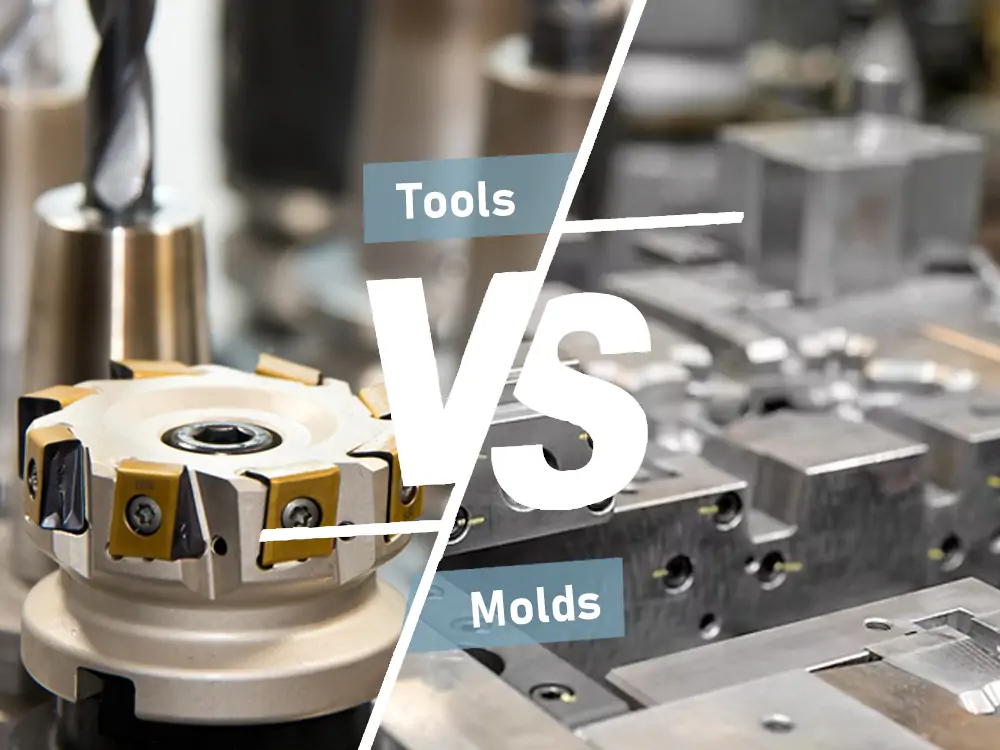
¿Qué es una matriz en la fabricación?
Si te preguntas ¿qué es una matriz en la fabricación , la respuesta corta es sencilla. Un troquel es una herramienta fabricada con precisión que se utiliza para cortar, dar forma o conformar un material en una pieza reproducible. «Herramientas y troqueles» es el oficio más amplio que diseña, construye, pone en marcha, repara y mantiene dichas herramientas para que la producción se mantenga precisa y eficiente. Esa definición básica coincide con la forma en que Barton Tool y Eigen Engineering describen el campo.
Un troquel crea la forma. «Herramientas y troqueles» son las personas, los métodos y la capacidad de taller detrás de la fabricación repetida de esa forma con precisión.
En términos básicos, piense en un troquel como una plantilla altamente precisa que funciona bajo presión. Ayuda a los fabricantes a producir la misma pieza una y otra vez, en lugar de depender del trabajo manual. Por lo tanto, si su pregunta es ¿qué es un troquel? , o incluso ¿qué es un troquel? , se refiere a la herramienta de conformado. Si su pregunta es qué es la fabricación de moldes y troqueles , significa la disciplina manufacturera completa construida alrededor de la creación y el soporte de las herramientas.
Qué significa «troquel» en la fabricación
Atroquel en la fabricación suele fabricarse a medida para una pieza o geometría específica. Dependiendo del proceso, puede cortar material en lámina, conformar metal en una nueva forma o guiar el material hasta unas dimensiones exactas. Cuando las personas preguntan qué son los troqueles , suelen referirse a estas herramientas de producción como un grupo.
- Un troquel produce formas repetibles.
- Mejora la precisión y la consistencia.
- Permite una producción más rápida y eficiente.
Qué significa herramienta y troquel como oficio
Herramienta y troquel abarca mucho más que el troquel en sí. Incluye el diseño, mecanizado, ajuste, prueba, puesta en marcha y mantenimiento de las herramientas de producción. Si alguien busca qué son los troqueles en la fabricación , esta es la distinción clave que debe recordarse: el troquel es una herramienta concreta, mientras que herramienta y troquel es toda la capacidad necesaria para hacerla funcionar de forma fiable en la planta de producción. Esta visión más amplia es importante, porque la industria utiliza esta expresión por una razón.
Por qué herramienta y troquel significa más que un troquel
Esta visión más amplia es la razón por la que los fabricantes dicen herramienta y molde en lugar de únicamente matrices. Una matriz es un tipo de herramienta de producción, no toda la categoría. El sector también incluye plantillas, soportes, calibradores, punzones, dispositivos de sujeción, montajes, reparaciones y trabajos de prueba. Evans explica que las matrices son un subconjunto de las herramientas, mientras que targetjobs describe a los fabricantes de herramientas como personas que fabrican, modifican, reparan y supervisan herramientas de precisión. En lenguaje sencillo, esta expresión hace referencia a la capacidad integral del taller para lograr una producción precisa y repetible.
Por qué existe la expresión «herramientas y matrices»
Ya sea que una empresa diga herramienta y molde o herramientas y matrices , el significado es más amplio que una única herramienta fijada en una prensa. Un tienda especializada en matrices puede construir una matriz de estampación, pero también puede mecanizar soportes que mantienen las piezas en su posición, calibradores que verifican las dimensiones y punzones u otros elementos desgastables que mantienen el proceso en funcionamiento. Esto es importante porque los problemas de producción rara vez se originan en una sola pieza. Por lo general, surgen de la interacción entre el diseño, la calidad de fabricación, la precisión del montaje y la disciplina del mantenimiento. Por esta razón fabricación de herramientas y troqueles es realmente un sistema de personas, procesos y soporte de herramientas.
Qué hace realmente un fabricante de moldes y matrices
A nivel práctico, fabricación de herramientas y matrices integra CAD, mecanizado, ajuste, inspección y resolución de problemas. Un die maker , a veces llamado fabricante de matrices , trabaja a partir de planos de ingeniería y datos CAD/CAM, y luego utiliza fresadoras, rectificadoras, prensas y herramientas de medición de precisión para construir o perfeccionar las herramientas. El trabajo no termina cuando se corta el acero. También incluye pruebas, reparaciones, respuesta ante averías y modificaciones de ingeniería cuando cambia el diseño de una pieza o las condiciones del proceso.
- Diseño y revisión: Los ingenieros analizan la geometría de la pieza, el material y los requisitos de producción para garantizar que las herramientas sean fabricables y repetibles.
- Construcción y mecanizado: El taller fabrica componentes de matrices, dispositivos de sujeción y calibradores con un control dimensional estricto, lo que favorece la consistencia desde el inicio.
- Montaje y ajuste: Los componentes están alineados y ajustados de modo que el juego, la guía y el movimiento funcionen correctamente, reduciendo los problemas de calidad iniciales.
- Configuración y prueba de la prensa: La herramienta se instala, prueba y depura en la prensa, mejorando la disponibilidad y validando el proceso en condiciones reales.
- Mantenimiento y Reparación: Se corrigen punzones desgastados, secciones dañadas y problemas relacionados con la configuración para proteger las tasas de producción y la calidad de las piezas.
- Cambios de ingeniería: La herramienta se actualiza cuando cambia el producto, manteniendo la continuidad de la producción en lugar de obligar a reiniciarla por completo.
Ese es el verdadero alcance de esta especialidad: no solo fabricar una matriz, sino hacer que la producción sea fiable. La forma más clara de comprobarlo es observar lo que ocurre dentro de la prensa, golpe a golpe.
Cómo funcionan las matrices de estampación en un ciclo de prensa
El alcance completo de la fabricación de herramientas y matrices resulta más fácil de visualizar al observar el proceso real de la matriz. En estampado en frío , la prensa es la fuente de energía, pero es la matriz la que convierte esa fuerza en una forma controlada de la pieza. Referencias del sector procedentes de The Fabricator y Jiga describen ambos el estampado como un proceso de conformado en frío que corta o forma material laminar sin añadir intencionadamente calor. La fricción puede hacer que las piezas salgan cálidas, pero la idea básica permanece sencilla: la herramienta controla dónde va el metal, cómo se corta y con qué repetibilidad sale.
La matriz controla la geometría. La prensa suministra fuerza y movimiento.
Desde la alimentación del material hasta la pieza terminada
No todos moldes de estampado realizan los mismos movimientos, y no todos matriz de chapa metálica realizan tanto corte como conformado. Sin embargo, la mayoría troqueles de estampado de metal sigue una secuencia reconocible que ayuda a los principiantes a comprender lo que ocurre dentro de la prensa.
- Alimentación del material: El material laminar o en rollo entra en la herramienta. En los sistemas de alimentación por rollo, los enderezadores y los alimentadores ayudan a colocar la tira de forma consistente, de modo que cada golpe comience desde la posición correcta.
- Alineación y guía: Antes de que la fuerza realice trabajo efectivo, el conjunto de matrices guía las secciones superior e inferior hacia su alineación adecuada. Esto protege la herramienta y favorece la repetibilidad dimensional.
- Corte o conformado: A medida que la prensa se cierra, las secciones del punzón y de la matriz cortan, doblan, embuten o conforman el metal. Cuando el material se corta con una matriz , la calidad de esta acción afecta al estado del borde y a la precisión de las características. En las operaciones de corte, el pequeño juego entre las secciones de la herramienta es el juego de corte, y se selecciona en función del material y de los resultados deseados en el borde.
- Eliminación: Al abrirse la prensa, la lámina o la pieza deben separarse limpiamente de las superficies del punzón. Un buen desprendimiento mantiene el avance correcto de la lámina y evita que la pieza se atasque.
- Liberación de la parte: La pieza terminada puede caer a través de la herramienta, avanzar junto con la lámina o permanecer unida hasta una estación posterior, según el tipo de matriz y el diseño de la pieza.
- Manejo de la chatarra: Los recortes y los residuos deben tener una trayectoria clara para salir de la herramienta. Si los desechos no salen de forma fiable, la velocidad y la consistencia disminuyen rápidamente.
Qué ocurre cuando la prensa se cierra y se abre
Piense en la carrera descendente como la carrera de trabajo y en la carrera ascendente como la carrera de reposición. Al bajar, la matriz crea la forma. Al subir, libera la pieza, expulsa las recortaduras y prepara la tira para el siguiente golpe. Ese ritmo es la razón por la cual algunas máquina de corte de moldes están diseñadas principalmente para cizallar, mientras que otras combinan corte y conformado de forma secuencial.
Un ejemplo sencillo ayuda a comprenderlo. Un soporte podría perforarse primero para crear orificios, luego doblarse y, finalmente, recortarse para liberarlo. En una sola matriz, esto ocurre mediante golpes repetidos mientras la tira avanza entre estaciones. El resultado es una producción rápida y repetible, pero únicamente porque cada movimiento de cierre y apertura está controlado. Y eso pone de manifiesto la verdadera pregunta: ¿qué componentes internos de la matriz guían, cortan, desechan, sujetan y se desgastan durante ese ciclo?
Piezas del conjunto de matrices y sus funciones
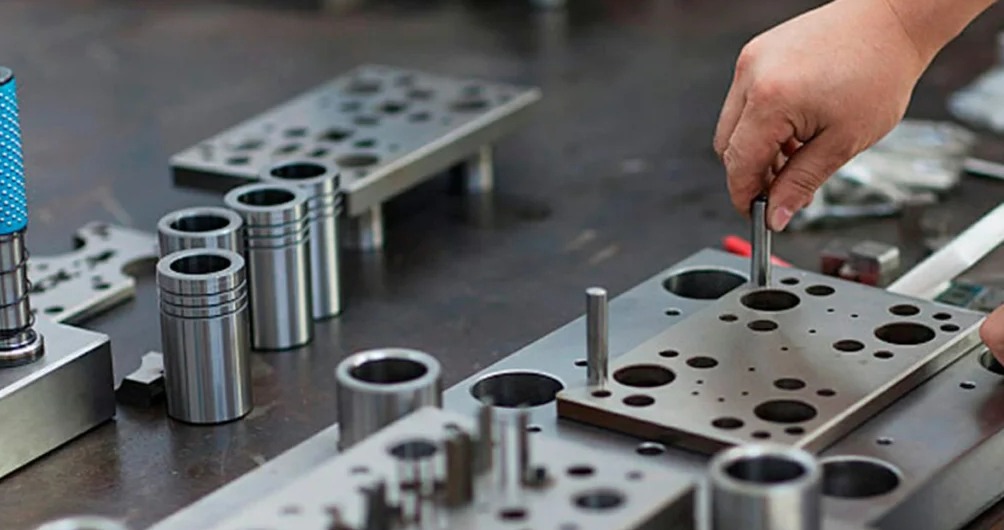
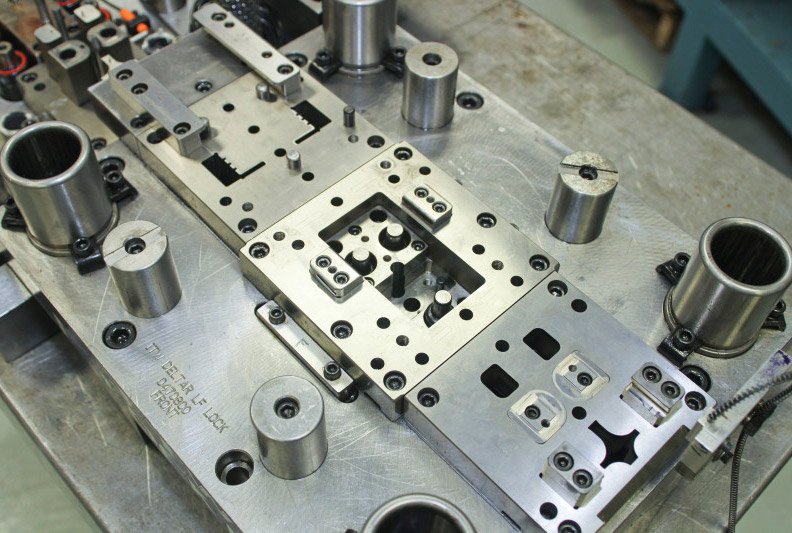
En una matriz en funcionamiento, la pregunta útil no es simplemente cómo se llama cada pieza, sino cuál es la función que desempeña durante la alineación, el corte, la conformación y la liberación. A lo largo de muchas conjuntos de moldes , los nombres permanecen bastante consistentes, pero es la función de cada pieza lo que determina su calidad. La orientación de The Fabricator y Moeller Precision Tool apunta a la misma base: placas troqueladoras, pasadores guía, bujes, punzones, botones, sujetadores, topes y muelles. En un juego de troqueles de estampado , esos elementos trabajan en conjunto para que la herramienta se cierre en la posición correcta, moldee el metal y se abra limpiamente para el siguiente golpe.
Las piezas principales dentro de un juego de troqueles
Piense en la herramienta como un sistema mecánico compacto. Las partes superior e inferior platinas matriz , a veces denominadas estructura principal placa de salida , constituyen la base sobre la que se montan otras componentes de Molde de Prensa , suelen referirse a uno de estos elementos de soporte estructural. Los pasadores guía y los bujes alinean las mitades superior e inferior entre sí. Esa alineación es fundamental incluso antes de que el punzón toque la chapa, ya que una mala alineación puede afectar tanto la vida útil de la herramienta como la precisión de la pieza. la zapata si alguien menciona un
Entonces la geometría de trabajo se hace cargo. El punzón es la característica que entra o presiona el material. La cavidad de la matriz, a menudo un botón de matriz en el trabajo de corte, es la abertura o espacio con forma que recibe esa acción. Alrededor de esas áreas, las almohadillas de stripper y almohadillas relacionadas retienen el material, desprenden el material del punzón durante la apertura o controlan el flujo de metal durante la flexión y el dibujo. Los sujetadores aseguran los punzones y los detalles de formación a los miembros de soporte, mientras que los resortes proporcionan la fuerza necesaria para sujetar, desmontar o mover la almohadilla. Estos son los componentes de moldes de estampado que convierten el movimiento de prensa en un resultado repetible.
Cómo cada componente apoya el ciclo de prensa
Al buscar piezas de matriz de estampado el tiempo que se les da hace que sean mucho más fáciles de entender. Primero una guía. Algunos hacen el corte o el moldeamiento. Otros actúan más claramente cuando se abre la prensa.
| Componente | Función básica | Cuando actúa durante el ciclo |
|---|---|---|
| Calzado o chapa con piezas de piezas de piezas de piezas de piezas de piezas de piezas de piezas de piezas de piezas de piezas de piezas de piezas de piezas de piezas de piezas de piezas de piezas de piezas de piezas de piezas de piezas de piezas de piezas de | Apoyar la estructura de la herramienta y proporcionar superficies de montaje para otras partes | Durante todo el ciclo |
| Pasadores guía y bujes | Alinear las secciones superior e inferior con precisión | Mientras la prensa se cierra, mediante contacto y al abrirse |
| Perforación | Corta, perfora, dobla o conforma el material | Recorrido principal de trabajo durante el cierre |
| Cavidad de la matriz o botón de la matriz | Proporciona el borde de acoplamiento o el espacio conformado para la acción del punzón | Recorrido principal de trabajo durante el cierre |
| Placa expulsora o placa de desprendimiento | Mantiene la lámina presionada hacia abajo y separa el material del punzón | Durante el contacto y especialmente al abrirse la prensa |
| Placa de presión o placa de embutición | Mantiene la chapa en posición o controla el flujo del metal durante la conformación y el embutido | Justo antes y durante el conformado |
| El retenedor | Mantiene las matrices o los detalles de conformado en posición | Durante todo el ciclo |
| Muelles | Proporciona la fuerza necesaria para sujeción, expulsión o recorrido del cojinete | Durante el cierre y el retorno |
| Tornillos, pasadores, carretes, tornillos con resalte y dispositivos de retención | Fijan y posicionan componentes fijos o móviles en las placas porta-matrices | Indirectamente durante todo el ciclo, especialmente en reinicios repetibles |
El desgaste suele aparecer primero en las zonas de trabajo y guiado. Si cambia la relación entre punzón y cavidad, o si el guiado se afloja, la calidad del borde y la repetibilidad pueden deteriorarse rápidamente. Por eso los compradores experimentados van más allá de una simple lista de piezas. El verdadero problema es si las piezas adecuadas están realizando las funciones correctas, en el orden adecuado y con un soporte estructural estable. La misma anatomía básica aparece una y otra vez, pero su disposición varía según que la matriz esté diseñada para corte, perforación, doblado, embutido o varias operaciones combinadas en un solo diseño.
Tipos de matrices para operaciones de estampación de chapa metálica
La forma en que se diseña una matriz depende de la función que debe desempeñar. Por eso, la clasificación más útil comienza con la lógica del proceso, no solo con los nombres. Una clasificación elaborada por Premier Products de Racine agrupa las matrices para estampación de chapa metálica en dos grandes familias: matrices de estación única y matrices de múltiples estaciones. A partir de ahí, resulta más sencillo comparar los principales tipos de matrices. Algunas matrices para chapa metálica están concebidas para realizar una única operación en una sola estación. Otras desplazan el material a través de varias estaciones, de modo que los procesos de corte y conformado se realicen secuencialmente. Para un comprador que evalúa una matriz de estampación de chapa metálica, esta distinción es más relevante que el uso de tecnicismos, ya que afecta a la velocidad, la complejidad y al modo en que la pieza avanza a lo largo del proceso productivo.
Tipos comunes de matrices utilizados en la fabricación
En la práctica, las tiendas suelen describir las matrices de conformado de dos maneras simultáneamente. Una etiqueta puede describir la disposición, como matriz de una sola estación, progresiva o de transferencia. Otra puede describir la operación, como corte en bruto, perforación o embutido. Por eso, las matrices de conformado metálico pueden resultar confusas al principio: su nombre puede reflejar lo que hace la herramienta, el número de estaciones que utiliza o ambas cosas. Las operaciones de doblado y conformado también aparecen dentro de categorías más amplias de herramientas. En el material de origen, se mencionan con mayor claridad en las matrices combinadas y en los procesos progresivos que realizan múltiples pasos de corte y conformado a lo largo de distintas estaciones. Si ha buscado una matriz de estampación o incluso ha encontrado un término de búsqueda como «matriz tipo panqueque», este enfoque que combina operación y disposición es la forma más clara de clasificar las opciones.
| Tipo de dado | Finalidad básica | Flujo de proceso | Condiciones típicas de uso |
|---|---|---|---|
| Troquel de una sola estación | Realiza una operación o crea un elemento en una sola prensa | Si se requieren más operaciones, la pieza de trabajo se traslada de una prensa a otra hasta completar el proceso | Piezas sencillas y trabajos de bajo volumen en los que se acepta un manejo adicional |
| Troquel simple | Realiza una operación por cada golpe de la prensa | Un solo golpe completa una tarea básica | Trabajo básico de corte, como troquelado o perforación |
| Matriz de despiece | Corta una pieza de la chapa, convirtiéndose dicha pieza cortada en la pieza deseada | El material restante es desecho | Es la opción más adecuada cuando la pieza recortada es, por sí misma, el componente terminado o una forma intermedia principal |
| Matriz de perforación | Crea un orificio o abertura en el material | La pieza retirada es desecho, mientras que el material circundante constituye la pieza deseada | Se utiliza cuando la pieza requiere características internas en lugar de un recorte exterior |
| Troquel de embutición | Dibuja chapa metálica sobre o dentro de la matriz para crear una pieza hueca | Fuerzas de compresión y tracción remodelan el material durante la carrera | Se utiliza para componentes huecos, en lugar de formas planas cortadas |
| Troquel compuesto | Realiza múltiples operaciones de corte en una sola embolada | Varias operaciones de corte se realizan simultáneamente en la misma estación durante un mismo golpe de prensa | Trabajos de corte más complejos o exigentes que requieren una producción más rápida que la de una matriz sencilla, pero que no se centran en doblado |
| Troquel combinado | Realiza múltiples operaciones en una sola carrera, incluyendo corte y conformado | El troquelado, el punzonado, el doblado y el conformado pueden combinarse en la misma carrera de prensa | Resulta útil cuando una única herramienta debe realizar tanto trabajos de corte como de cambio de forma |
| Muerte progresiva | Construye la pieza mediante una serie de estaciones, cada una encargada de una tarea específica | El material avanza automáticamente de estación a estación, y la pieza terminada se separa en la estación final | Muy adecuado para piezas pequeñas y sencillas, y para trabajos que requieren múltiples pasos de corte y/o conformado en secuencia |
| Troquel de transferencia | Procesa la pieza a través de múltiples estaciones después de que se separa de la chapa al principio del proceso | La pieza se corta de la chapa al inicio y luego se transfiere manualmente, mecánicamente o mediante robots a través de las estaciones | Ideal para piezas más grandes y complejas, como bastidores, carcasas, tubos y otros componentes estructurales |
Cómo seleccionar un tipo de matriz según la operación
Una forma práctica de elegir entre matrices para conformado de chapa metálica consiste en comenzar con la propia pieza. Si la tarea consiste principalmente en un corte básico, una matriz sencilla puede ser suficiente. Si la pieza requiere varias operaciones de corte en una sola carrera, una matriz compuesta puede resultar más adecuada. Si el corte y el cambio de forma deben realizarse simultáneamente, la herramienta combinada es la opción más apropiada, ya que puede realizar doblado y conformado, así como troquelado y perforación. La herramienta progresiva resulta atractiva cuando la pieza puede avanzar estación por estación y el proceso se beneficia del avance automático. La herramienta de transferencia adquiere su lugar cuando la pieza es más grande, más compleja o debe cortarse libremente al inicio y transportarse a través de las etapas posteriores.
Por lo tanto, la mejor respuesta rara vez es simplemente una lista de nombres. Una buena selección depende del tipo de operación, del número de estaciones y del movimiento de la pieza a través de la prensa. Esas etiquetas son importantes, pero también se solapan con otros términos utilizados en el taller, razón por la cual los compradores suelen oír que una misma herramienta se denomina matriz, sistema de punzonado o herramienta para prensa, según quién la esté describiendo.
Matriz frente a molde, punzón, plantilla y dispositivo de sujeción
Esa superposición en las denominaciones es donde muchos compradores tropiezan. El mismo taller puede usar los términos matriz, punzón, herramienta para prensa o herramentales según se refiera al conjunto completo, a un elemento funcional específico o al método de producción. Si su pregunta es para qué sirve una matriz , la respuesta más clara es la siguiente: le confiere al material una forma reproducible mediante corte o conformado. En matriz en ingeniería términos técnicos, una matriz tiene un significado específico. No es un término genérico que designe cualquier herramienta de fabricación.
Matriz comparada con molde y punzón
MISUMI describe una matriz como una herramienta utilizada para conformar formas a partir de materiales en forma de lámina o sólidos, como en el conformado por prensado o forjado. La misma fuente traza una distinción importante entre una morir y una el moho . Cuando el material está fundido, los talleres suelen utilizar la palabra «molde» en su lugar. Por tanto, estas dos ideas están relacionadas, pero no son intercambiables en todos los procesos.
Aperforación es distinta nuevamente. Se trata de la herramienta que se presiona contra el material, normalmente actuando conjuntamente con la matriz para transferir la forma. En el estampado, el punzón y la matriz actúan como un par, y no como dos términos que designan lo mismo. Una matriz de corte , por ejemplo, proporciona la geometría receptora, mientras que el punzón realiza la acción de penetración que crea la característica.
Las personas también utilizan frases de búsqueda como qué es un corte con matriz o qué es una máquina cortadora con matriz . En el lenguaje cotidiano, «corte con matriz» suele referirse a la forma producida por la herramienta, mientras que «máquina cortadora con matriz» se emplea frecuentemente de forma imprecisa para designar el conjunto de corte o la máquina. Sin embargo, en el taller, los términos más precisos siguen siendo «prensa», «punzón» y «matriz».
¿Cómo difieren las matrices de las plantillas, los dispositivos de sujeción y las herramientas de corte?
El vocabulario cambia una vez que se pasa del estampado al mecanizado. JLCCNC explica que una jig posiciona la pieza de trabajo y guía la herramienta de corte, mientras que una el aparato sujeta y ubica la pieza de trabajo mientras la máquina controla la trayectoria de la herramienta. Una matriz no desempeña ninguna de estas funciones de la misma manera. Una matriz industrial actúa directamente sobre el material para darle forma mediante la aplicación de fuerza. Por contraste, una herramienta de corte elimina material mediante su propia geometría de filo, y en el argot de taller una herramienta de prensa a menudo hace referencia al conjunto más amplio de utillaje utilizado en una operación de prensa, que puede incluir tanto elementos de punzón como de matriz.
| Término | Función principal | Categoría de proceso | Malentendido común |
|---|---|---|---|
| Morir | Corta, moldea o forma material en una geometría repetible | Estampado, conformado con prensa, forjado | Se entiende que significa cualquier herramienta en la fabricación |
| El moho | Moldea la forma a partir de material fundido mientras se llena y solidifica | Moldeo por inyección, fundición | Se considera sinónimo exacto de matriz |
| Perforación | Se presiona contra el material y trabaja junto con la matriz para transferir la forma | Perforación, troquelado, doblado, conformado | Se confunde con la matriz misma |
| Herramienta de prensa | Herramental más amplio utilizado en una configuración de prensa | Operaciones de prensado | Se utiliza como si siempre significara únicamente el bloque de matriz |
| Jig | Posiciona la pieza de trabajo y guía la herramienta | Taladrado, escariado, roscado | Se cree que solo sujeta la pieza |
| El aparato | Sujeta y posiciona la pieza de trabajo mientras la máquina controla el movimiento | Mecanizado CNC, fresado, torneado, inspección | Se considera lo mismo que una plantilla |
| Herramienta de corte | Elimina material directamente con su propia arista de corte | Mecanizado | Se confunde con una matriz simplemente porque ambas pueden cortar |
Así que, si se encuentran con frases como ¿qué es la matriz? , la forma más segura de entenderla es en capas. La matriz es el elemento que da forma. El punzón es su compañero de trabajo. El sistema de herramientas más amplio también puede incluir portamatrices, guías, abrazaderas y componentes de soporte. La denominación es importante, pero los resultados a largo plazo dependen aún más del juego, la alineación, el control del desgaste y la disciplina en el mantenimiento.
El diseño, la configuración y el mantenimiento determinan el rendimiento de la matriz
Una matriz puede definirse perfectamente y aun así funcionar deficientemente en la prensa. Los resultados a largo plazo provienen de todo el sistema: la intención de diseño, el comportamiento del material, la calidad de fabricación, la precisión de la configuración, las pruebas iniciales, la lubricación y el mantenimiento. Las orientaciones de The Fabricator establecen una distinción útil: el mantenimiento preventivo aborda el desgaste normal, mientras que las reparaciones repetidas de la matriz suelen indicar problemas más profundos en el diseño, los procedimientos de configuración, el diseño de la herramienta o la técnica de mantenimiento. Una investigación publicada en un Artículo de SAE muestra el mismo patrón desde el punto de vista de la tribología: desgaste de la matriz, galling (adherencia), lubricación inconsistente y cambios en los ajustes de la matriz o de la prensa pueden alterar el flujo del metal y afectar la consistencia de la pieza.
Desde el diseño de la matriz hasta la configuración en la planta
Por eso, una buena fabricación de matrices va más allá de simplemente conformar la forma una vez. La herramienta debe mantenerse estable durante ciclos repetidos. El juego afecta la calidad del corte. El alineamiento protege los punzones, los botones y los elementos de guía. La acción de expulsión determina si la lámina se libera limpiamente o se arrastra sobre las superficies de trabajo. La calidad del mecanizado de la matriz también es importante, ya que un ajuste deficiente o zonas de contacto rugosas pueden convertir una herramienta capaz en una fuente constante de problemas. Incluso una matriz mecanizada correctamente pierde su consistencia cuando la configuración se desvía.
- Consideraciones en la fase de diseño: elegir el juego y el ángulo de corte que controlen la fuerza y el impacto, seleccionar el acero adecuado para la matriz y los tratamientos superficiales apropiados según el material estampado, planificar las superficies sujetas a desgaste y el acceso para mantenimiento, y asegurarse de que la acción de expulsión y la de la almohadilla favorezcan una liberación limpia.
- Comprobaciones de configuración: verificar la alineación y la altura de cierre, mantener despejados los recorridos de los punzones, evitar calzos torcidos o pilas de calzos finos, confirmar que los elementos de fijación y los pasadores de localización estén bien asegurados, y asegurarse de que el lubricante llegue a las zonas de mayor contacto.
La lubricación merece una atención especial. Las notas técnicas de la SAE indican que el galling suele aparecer donde el lubricante es expulsado de la zona de contacto, especialmente cerca de los bordes de la chapa, los radios de entrada del troquel y los radios de los cordones de embutición. En el caso de un troquel de acero o de una superficie recubierta, la dureza y la lisura son fundamentales, ya que las superficies más rugosas o degradadas incrementan la fricción y favorecen la transferencia de material.
Por qué el mantenimiento y la reparación son fundamentales para garantizar la consistencia
El mantenimiento preventivo evita que el desgaste normal se convierta en una producción inestable. La revista Fabricator señala que los filos de corte desafilados pueden provocar rebabas, problemas de alimentación y riesgos para la seguridad. Asimismo, subraya un aspecto que muchos compradores pasan por alto: un programa de mantenimiento debe abordar las causas fundamentales, no limitarse simplemente a sustituir piezas rotas según un calendario establecido. En términos sencillos, una buena protección del troquel comienza antes de que se produzca una avería.
- Puntos de vigilancia del mantenimiento: afilar las secciones de corte con el método de rectificado adecuado y refrigeración para evitar que el calor ablande o agriete el filo; inspeccionar los muelles, las placas de desgaste, las superficies de leva, los punzones, los tornillos y los pasadores de centrado; eliminar las escorias, las virutas y la acumulación de lubricante; secar las superficies para limitar la corrosión y reaplicar lubricante en las zonas de acoplamiento según sea necesario.
- Mentalidad de reparación: tratar la rotura recurrente de muelles, el agarrotamiento, las secciones sueltas o los pilotos dañados como señales del proceso. Una buena reparación de matrices restaura la funcionalidad, pero también debe indagar por qué ocurrió la falla en primer lugar.
Por esta razón, las matrices de fabricación no pueden separarse de la disciplina del proceso. Una herramienta puede verse correcta en CAD y aun así presentar dificultades tras miles de ciclos si la configuración, la lubricación, la inspección y el control de mecanizado de la matriz son deficientes. Los compradores que comprenden la planificación del mantenimiento, la protección de matrices y la capacidad de proceso del proveedor suelen tomar decisiones más acertadas sobre la fabricación de herramientas cuando la producción se vuelve exigente.
Elección de un socio especializado en herramientas y matrices de precisión
El troquel puede ser una herramienta física, pero el verdadero riesgo de compra radica en el proceso del proveedor. Para programas automotrices y otros complejos, la mejor opción rara vez es la cotización más baja. Es el socio cuya ingeniería de troqueles , disciplina en las pruebas y soporte para el lanzamiento se adapta a su pieza, volumen y cronograma. Si todavía está preguntando qué es la fabricación de matrices en términos prácticos, esta es la respuesta más clara: diseñar, construir, depurar y dar soporte a una herramienta para que pueda funcionar de forma fiable en producción. Esto es importante porque un troquel solo tiene tanto valor como los componentes metálicos estampados y otros componentes estampados que puede producir de forma consistente.
Qué buscar en un socio especializado en troqueles de estampación personalizados
- Soporte de diseño: Busque una revisión temprana de la ingeniería para fabricabilidad (DFM), la planificación del diseño de la tira y una sólida ingeniería de troqueles . Un equipo competente de herramientas y troqueles de precisión debe cuestionar geometrías arriesgadas antes de cortar el acero.
- Capacidad de prototipado: Pregunte cómo pasa el proveedor de las piezas de muestra a las herramientas con intención de producción. El trabajo resumido por LS Manufacturing muestra por qué el desarrollo basado primero en simulación ayuda a predecir el rebote antes de construir las herramientas.
- Sistemas de calidad: Una solución fiable herramienta y matriz metálicas el proveedor debe explicar los métodos de inspección, el control estadístico de procesos (SPC), la trazabilidad y, para trabajos automotrices, cómo se aplican efectivamente las certificaciones en la planta.
- Experiencia en pruebas: En estampado con troquel y matriz , las pruebas en prensa son donde surgen los problemas ocultos. Pregunte quién lleva a cabo las pruebas, cómo se documentan las correcciones y cómo se cierran los cambios de ingeniería.
- Soporte en el lanzamiento: Una buena fábrica de matrices de estampado debe ayudar con la planificación del cronograma del PPAP, los detalles de repuesto y la planificación de la rampa de producción, no solo con la entrega de las herramientas.
- Preparación para la producción en masa: Verifique la planificación del mantenimiento, la estrategia para piezas desgastables y si el proveedor ha respaldado anteriormente la producción a largo plazo de productos similares componentes metálicos estampados .
Cuando la simulación avanzada y los sistemas de calidad aportan valor
Estas capacidades son especialmente importantes cuando las tolerancias son ajustadas, la geometría de la pieza es compleja o las ventanas de lanzamiento son cortas. LS Manufacturing destaca la simulación predictiva, el control estadístico de procesos (SPC) y la supervisión en tiempo real como métodos prácticos para estabilizar las dimensiones durante series de alta producción. En la adquisición automotriz, Shaoyi Metal Technology ofrece un ejemplo útil de ese modelo, citando una tasa de aprobación en primera inspección superior al 93 %, respaldada por simulación CAE y control de calidad conforme a la norma IATF 16949. Para los compradores, la lección es sencilla: elegir al proveedor cuyos sistemas reduzcan las sorpresas en el lanzamiento, protejan la calidad de las piezas y mantengan en movimiento los componentes críticos componentes estampados hacia la producción en masa.
Preguntas frecuentes sobre matrices y troqueles de fabricación
1. ¿Qué función cumple un troquel en la fabricación?
Un troquel otorga a la materia prima una forma controlada durante la producción repetitiva. En los procesos de estampado y similares, dirige dónde se corta, dobla, embute o conforma el material, de modo que las piezas conserven su consistencia ciclo tras ciclo. La máquina aporta el movimiento y la fuerza, pero es el troquel el que define la geometría final.
2. ¿Es una matriz lo mismo que un molde o un punzón?
No. Un molde se utiliza generalmente cuando el material está líquido o fundido antes de endurecerse, mientras que una matriz normalmente trabaja sobre material sólido, como chapa metálica. Un punzón tampoco es lo mismo que la matriz completa; es un elemento activo que presiona contra el material y trabaja junto con la sección correspondiente de la matriz.
3. ¿Qué hace exactamente un fabricante de herramientas y matrices?
Un fabricante de herramientas y matrices hace mucho más que construir inicialmente las herramientas. Su función puede incluir mecanizar piezas de las herramientas, ajustar y alinear componentes, realizar pruebas en la prensa, corregir el desgaste, reparar daños y actualizar las herramientas cuando cambian los diseños de las piezas. En resumen, contribuyen a que la producción sea fiable, no solo posible.
4. ¿Cuáles son los principales tipos de matrices utilizados en el estampado de metales?
Las categorías comunes incluyen corte en bruto, perforación, doblado, conformado, embutido, matrices compuestas, combinadas, progresivas, de transferencia y de estación única. Cada tipo se adapta a una necesidad de producción distinta. Algunas son más adecuadas para características de corte sencillas, mientras que otras se seleccionan cuando una pieza requiere varias operaciones, múltiples estaciones o una transferencia de piezas más controlada.
5. ¿Cómo deben evaluar los compradores a un proveedor de matrices de estampación personalizadas?
Comience con la capacidad del proceso, no solo con el precio. Un proveedor sólido debe ofrecer revisión de diseño, aprendizaje mediante prototipos, pruebas en prensa, planificación de calidad, soporte de mantenimiento y preparación para el lanzamiento. Para programas automotrices, los socios que utilizan simulación por CAE y sistemas de calidad certificados, como Shaoyi Metal Technology, pueden ayudar a reducir el riesgo de aprobación y facilitar la transición fluida desde el prototipo hasta la producción en masa.