 Small batches, high standards. Our rapid prototyping service makes validation faster and easier —
  EN
EN


Keluli vs. Aluminium Lengan Kawalan: Apa yang Terbaik untuk Kenderaan Anda?
RINGKASAN
Pemilihan antara lengan kawalan keluli berkanjur dan aluminium bergantung kepada pertukaran klasik antara prestasi dan kos. Lengan kawalan aluminium jauh lebih ringan, yang mengurangkan berat tak tersangga bagi pengendalian yang ketara lebih baik, pemanduan lebih responsif, dan rintangan kakisan yang unggul. Lengan kawalan keluli berkanjur lebih kuat, lebih tahan lama di bawah beban berat, dan jauh lebih mesra bajet, menjadikannya piawaian bagi kebanyakan trak dan kenderaan harian.
Kesan terhadap Kualiti Pemanduan dan Pengendalian: Faktor Berat Tak Tersangga
Faktor paling ketara yang mempengaruhi kualiti pemanduan antara dua bahan ini ialah berat tak tersangga. Istilah ini merujuk kepada berat semua komponen yang tidak disokong oleh suspensi kenderaan, termasuk roda, tayar, brek, dan lengan kawalan itu sendiri. Semakin ringan berat tak tersangga, semakin cepat suspensi boleh bertindak balas terhadap bengkak dan ketidaksempurnaan di jalan raya, mengekalkan sentuhan tayar dengan permukaan secara berterusan. Di sinilah aluminium mempunyai kelebihan yang jelas.
Lengan kawalan aluminium boleh 40-50% lebih ringan berbanding rakan sepadan keluli. Seperti yang diterangkan oleh pakar di Aldan American , pengurangan berat yang ketara ini membolehkan sistem gantungan bergerak dengan lebih bebas dan cekap. Hasilnya, pemandu akan merasai pengalaman yang lebih responsif dan terhubung. Pengendalian menjadi lebih tajam, pusingan lebih stabil, dan kenderaan mampu menyerap gangguan jalan kecil dengan lebih baik, menghasilkan pemanduan yang lebih lancar secara keseluruhan. Bagi pemanduan berasaskan prestasi, seperti lumba autocross atau hari trek, peningkatan responsiviti ini merupakan satu kelebihan besar.
Sebaliknya, lengan keluli tempa yang lebih berat mempunyai inersia yang lebih tinggi. Ini bermakna sistem gantungan perlu bekerja lebih keras untuk mengawal pergerakan mereka, yang boleh menyebabkan pemanduan yang sedikit kurang halus di atas permukaan kasar. Walaupun sesuai untuk penggunaan harian dan tugas berat, perbezaan dari segi ketepatan pengendalian boleh dirasai apabila dibandingkan secara langsung, terutamanya pada kenderaan yang lebih ringan.
| Atribut | Dijalankan ujian dengan严谨 untuk memastikan anda membeli produk berkualiti yang memenuhi piawai prestasi dan keselamatan yang tinggi, memberikan anda ketenangan minda. | Lengan Kawalan Keluli Berganda |
|---|---|---|
| Responsif Pengendalian | Tinggi (Tindak balas lebih pantas terhadap input pemandu) | Piawai (Sedikit perlahan disebabkan jisim yang lebih tinggi) |
| Kestabilan Membelok | Cemerlang (Mengurangkan hentaman badan) | Baik (Boleh dipercayai dan boleh diramal) |
| Penyerapan Gondolan | Lebih baik (Terutamanya pada gondolan kecil dan pantas) | Memadai (Boleh terasa lebih kasar pada permukaan tertentu) |

Ketahanan, Kekuatan, dan Rintangan Kakisan
Apabila fokus beralih daripada pengendalian yang cekap kepada kekuatan dan jangka hayat yang tulen, keluli kembali mendominasi. Keluli secara semula jadi lebih kuat dan tahan lama berbanding aluminium, memberikannya keupayaan untuk menahan beban yang lebih berat dan impak yang lebih besar tanpa mengalami kegagalan. Ini menjadikan lengan kawalan keluli stampa sebagai pilihan utama untuk trak berat, kenderaan luar jalan, dan aplikasi di mana suspensi dikenakan tekanan yang melampau. Walaupun keluli boleh bengkok akibat impak yang teruk, aluminium lebih cenderung retak atau patah.
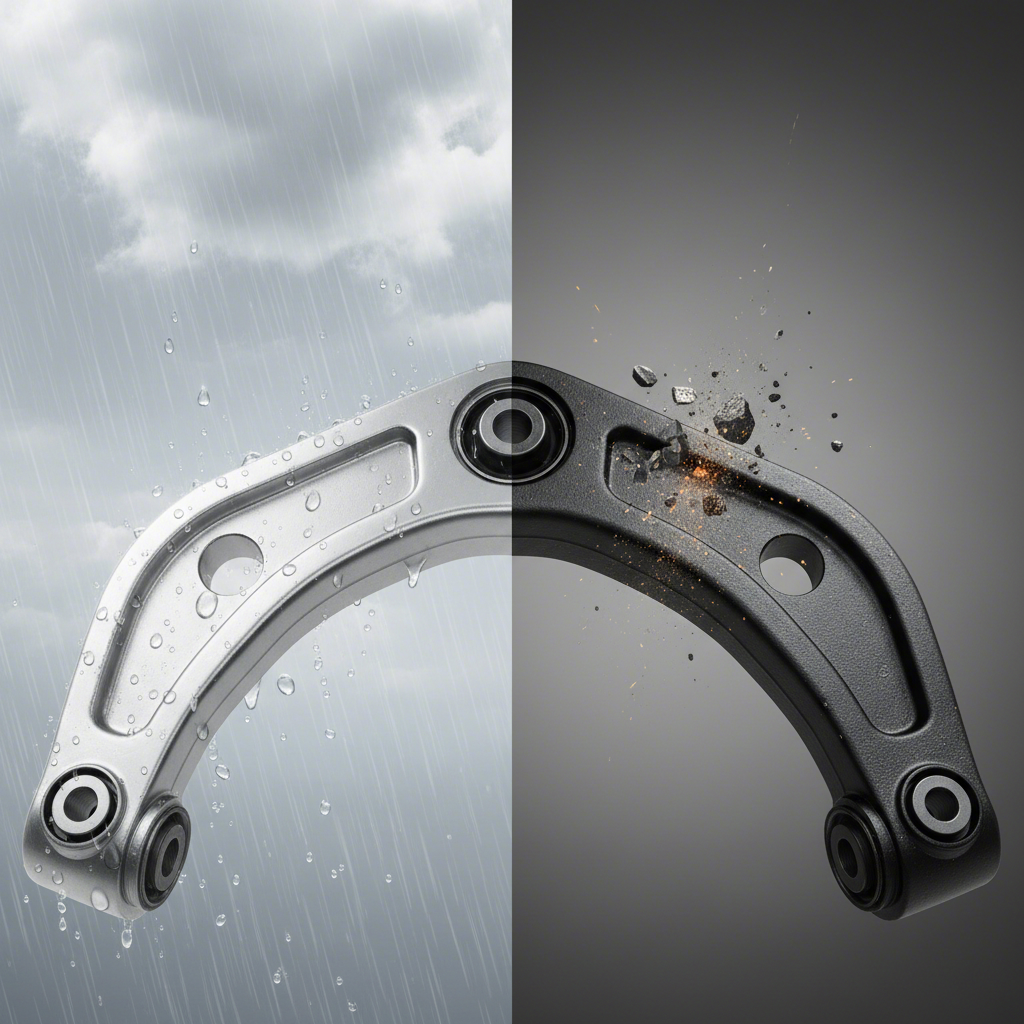
Namun begitu, kelemahan utama keluli ialah kerentanannya terhadap karat. Walaupun dengan lapisan pelindung, calar dan goresan boleh mendedahkan logam kepada kelembapan dan garam jalan raya, menyebabkan kakisan dari semasa ke semasa. Ini merupakan perkara besar yang membimbangkan pemilik kenderaan di kawasan beriklim lembap atau bersalji. Seperti yang ditonjolkan dalam senario dunia sebenar oleh Aldan American, pemandu harian di kawasan "Salt Belt" akan mendapat manfaat besar daripada rintangan kakisan semula jadi aluminium. Aluminium membentuk lapisan oksida pelindung yang menghalang karat, memastikan jangka hayat perkhidmatan yang lebih panjang dengan penyelenggaraan yang kurang dalam persekitaran yang mencabar.
Proses pembuatan juga memainkan peranan penting. Lengan keluli stamping dibentuk daripada kepingan keluli, satu proses yang berkesan dari segi kos tetapi sangat bergantung kepada kualiti pelaksanaan untuk kekuatannya. Memastikan komponen ini dibuat mengikut spesifikasi yang tepat adalah penting untuk keselamatan dan prestasi. Bagi pengilang automotif yang bergantung kepada ketepatan, pembekal seperti Shaoyi (Ningbo) Metal Technology Co., Ltd. mengkhususkan diri dalam komponen penempaan automotif berkualiti tinggi yang bersijil IATF 16949, memberikan kebolehpercayaan yang diperlukan untuk komponen suspensi kritikal. Ini berbeza dengan lengan aluminium tuang atau lengan aluminium billet premium, yang sering melibatkan teknik pembuatan yang lebih kompleks dan mahal.
Kos berbanding Prestasi: Keputusan Kewangan
Aspek kewangan keputusan ini adalah mudah: keluli tempa jauh lebih murah berbanding aluminium. Kos bahan yang lebih rendah dan proses pengeluaran yang lebih efisien untuk penempaan keluli menjadikan lengan kawalan ini pilihan ekonomik bagi pengeluar peralatan asal (OEM) dan pengguna yang mencari komponen gantian. Bagi kebanyakan pemandu, ketahanan dan kekuatan keluli memberikan prestasi yang lebih daripada mencukupi untuk keperluan mereka, menjadikan perbelanjaan tambahan untuk aluminium tidak perlu.
Lengan kawalan aluminium, terutamanya yang dimesin daripada aluminium billet seperti yang ditunjukkan dalam panduan dari Shock Surplus , mewakili pelaburan premium. Kos yang lebih tinggi adalah berpatutan memandangkan peningkatan prestasi nyata dari segi pengendalian dan kualiti pemanduan, serta manfaat jangka panjang daripada rintangan kakisan. Apabila mengambil kira jumlah kos pemilikan, aluminium mungkin terbukti sebagai nilai yang lebih baik bagi mereka di kawasan beriklim mudah dikakis, yang mana ia boleh bertahan lebih lama berbanding beberapa set lengan keluli yang rosak akibat karat. Keputusan akhir bergantung kepada imbangan antara bajet anda dengan matlamat prestasi dan persekitaran pemanduan anda.
Cara Memilih: Panduan untuk Kenderaan dan Gaya Pemanduan Anda
Pada akhirnya, pilihan yang betul bergantung sepenuhnya kepada kenderaan anda, cara anda menggunakannya, dan keutamaan anda. Tiada satu bahan sahaja yang "terbaik"; yang wujud hanyalah bahan yang terbaik untuk situasi khusus anda. Untuk membuat keputusan yang bijak, anda perlu mengenal pasti apa yang sedang digunakan pada kenderaan anda sekarang, kerana pencampuran komponen biasanya tidak boleh dilakukan disebabkan oleh perbezaan saiz sendi bola.
Bagi pemilik trak, terutamanya model seperti Chevy Silverado atau GMC Sierra, pengenalan ini adalah kritikal. Seperti yang diterangkan dalam panduan terperinci dari Maxtrac Suspension , GM menggunakan tiga jenis lengan berbeza (keluli tuang, keluli cetakan, dan aluminium tuang) antara tahun 2014 hingga 2018. Pemeriksaan visual adalah cara terbaik untuk memastikannya:
- Keluli Tercetak: Biasanya mempunyai kemasan hitam berkilat dengan sambungan kimpalan yang jelas di sepanjang tepinya.
- Aluminium Tuang: Biasanya mempunyai kemasan perak tidak berusus yang kasar dengan tekstur tuang yang lebih kasar.
- Keluli Tuang: Mempunyai kemasan hitam pudar dan tekstur kasar, serupa dengan aluminium tuang tetapi lebih gelap.
Setelah anda mengetahui apa yang anda miliki, gunakan senarai semakan akhir ini untuk membimbing keputusan anda:
Pilih Lengan Kонтrol Aluminium jika:
- Anda mengutamakan pengendalian yang tajam dan pemanduan yang responsif.
- Anda terlibat dalam pemanduan prestasi seperti autocross atau hari trek.
- Anda tinggal di kawasan dengan hujan lebat, salji, atau garam jalan.
- Bajet anda membolehkan peningkatan prestasi premium.
Pilih lengan kawalan keluli berganda jika:
- Kekhuatiran utama anda adalah kekuatan, ketahanan, dan kos permulaan yang lebih rendah.
- Anda menggunakan kenderaan anda untuk pengangkutan berat, menarik beban, atau pemanduan luar jalan.
- Anda memandu di iklim kering di mana karat kurang menjadi perhatian.
- Anda sedang mencari penggantian OEM yang boleh dipercayai dan mesra bajet.
Soalan Lazim
1. Apakah bahan terbaik untuk lengan kawalan?
Tidak ada satu bahan "terbaik" untuk semua aplikasi. Pilihan terbaik bergantung pada keutamaan anda. Aluminium adalah pilihan terbaik untuk pemandu yang memberi fokus kepada prestasi serta peningkatan pengendalian dan rintangan kakisan. Keluli tampa adalah pilihan lebih baik bagi mereka yang mengutamakan kekuatan, ketahanan di bawah beban berat, dan harga pembelian yang lebih rendah.