 Small batches, high standards. Our rapid prototyping service makes validation faster and easier —
  EN
EN


Penukaran Lengan Kawalan Keluli Dicetak: Panduan Keserasian
RINGKASAN
Memeriksa keserasian lengan kawalan keluli bersetem sebelum penukaran adalah perkara penting. Ia bukan sahaja mengenai padanan bahan lengan; faktor penentu adalah saiz sendi bola dan hub roda stereng yang sepadan pada kenderaan anda. Lengan keluli bersetem dan aluminium tuang biasanya menggunakan sendi bola yang lebih besar, manakala lengan keluli tuang menggunakan yang lebih kecil. Cuba mencantumkan komponen-komponen ini tanpa mengesahkan kedua-dua bahagian akan menyebabkan ketidaksesuaian, prestasi yang lemah, dan risiko keselamatan yang tinggi. Sentiasa sahkan susunan asal trak anda sebelum membeli penggantian atau peningkatan.
Cara Mengenal Pasti Lengan Kawalan Kenderaan Anda
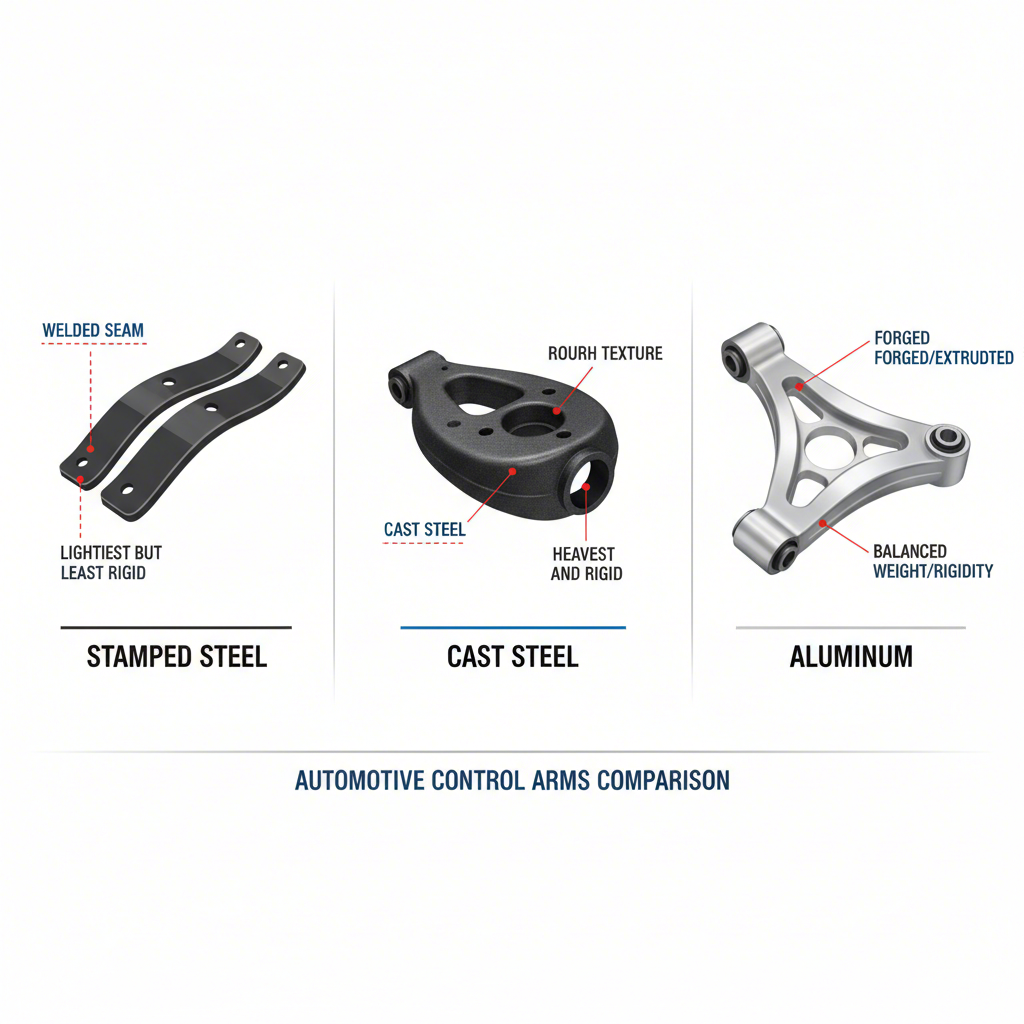
Sebelum anda boleh menyemak keserasian, anda terlebih dahulu perlu mengenal pasti jenis lengan kawalan yang sedang dipasang pada trak anda. Bagi kebanyakan trak General Motors, khususnya Silverado dan Sierra 1500 tahun 2014-2018, terdapat tiga jenis utama lengan kawalan kilang: keluli bergalur, keluli tuang (atau besi) dan aluminium tuang. Setiap satunya mempunyai ciri-ciri visual dan bahan yang berbeza yang membolehkan pengenalan mudah melalui pemeriksaan pantas.
Lengan kawalan keluli bergalur dikeluarkan dengan cara menekan dan mengimpal kepingan-kepingan keluli. Proses ini memberikan permukaan yang agak licin, biasanya dengan salutan hitam berkilat. Anda biasanya dapat melihat jahitan kimpalan yang jelas di sepanjang tepi di mana bahagian-bahagian tersebut disambungkan. Proses pembuatan ini, yang melibatkan penekanan dan pengimpalan kepingan keluli, merupakan kaedah biasa dan berkesan dari segi kos. Bagi pengilang automotif, pencapaian kekuatan dan ketepatan yang diperlukan bergantung kepada rakan pakar. Sebagai contoh, syarikat-syarikat seperti Shaoyi (Ningbo) Metal Technology Co., Ltd. mengkhususkan diri dalam komponen penempaan automotif berskala tinggi yang bersijil IATF 16949, memastikan komponen memenuhi piawaian ketat OEM.
Lengan keluli tuang atau besi tuang, sebaliknya, dibuat dengan menuangkan logam cair ke dalam acuan. Ini menghasilkan permukaan yang jauh lebih kasar dan bertekstur dengan kemasan hitam pudar atau kelabu. Petunjuk utama bahawa sesuatu komponen itu adalah tuangan ialah garis sambungan tuangan yang kelihatan—satu garisan nipis logam yang menonjol di mana dua belah acuan bertemu. Lengan ini dikenali kerana kekuatannya dan biasanya terdapat pada trak tugas berat atau model lama.
Lengan kawalan aluminium tuang paling mudah dikenal pasti. Ia mempunyai kemasan perak yang mentah dan jelas lebih ringan berbanding rakan keluli mereka. Seperti keluli tuang, ia akan mempunyai permukaan bertekstur dan garis sambungan tuangan. Cara paling mudah untuk membezakan aluminium daripada keluli ialah ujian magnet; magnet akan melekat kukuh pada keluli tempa atau tuang tetapi tidak akan melekat pada aluminium.
| Jenis Lengan Kawalan | Penampilan | Bahan | Cara Mengenal Pasti |
|---|---|---|---|
| Keluli Berganda | Kemasan hitam licin dan berkilat | Keluli | Sambungan kimpalan di sepanjang tepi, magnet melekat |
| Keluli Tuang / Besi | Kemasan kasar, bertekstur, dan pudar | Keluli / Besi | Jalur tuangan kelihatan, magnet melekat |
| Aluminium tuang | Warna perak mentah, bertekstur | Aluminium | Jalur tuangan kelihatan, magnet tidak melekat |
Faktor Penentu: Sendi Bebola dan Hukum Steeran
Sebab utama lengan kawalan keluli bergam tidak universal saling boleh ditukar ganti dengan jenis lain kurang berkaitan dengan lengan itu sendiri dan lebih kepada dua komponen penyambung kritikal: sendi bebola dan hukum steeran. Keserasian sistem gantungan hadapan anda bergantung kepada kepadanan tepat antara batang kon sendi bebola dan lubang pada hukum steeran. Padanan yang salah boleh menyebabkan kegagalan gantungan yang teruk.
Seperti yang diterangkan oleh pakar gantungan di ReadyLIFT , trak GM dari tahun 2014-2016 menggunakan knuckle yang berbeza untuk bahan lengan kawalan yang berbeza. Kenderaan dengan lengan kawalan keluli tuang kilang dilengkapi knuckle yang mempunyai lubang penerima sendi bebola yang lebih kecil. Sebaliknya, trak dengan lengan kawalan keluli bergulung atau aluminium tuang kilang menggunakan knuckle yang berbeza direka untuk menerima sendi bebola yang lebih besar. Perbezaan asas ini bermaksud anda tidak boleh memasang lengan kawalan keluli tuang ke atas knuckle yang direka untuk lengan bergulung, atau sebaliknya.
Inilah sebabnya pengeluar aftermarket menawarkan nombor bahagian khusus untuk konfigurasi OE yang berbeza. Huraian produk daripada Ophanging bds dengan jelas menyatakan bahawa kit lengan kawalan atas untuk lengan bergulung/aluminium "TIDAK SESUAI untuk kenderaan dengan lengan keluli tuang OE." Begitu juga, Cognito Motorsports catatan bahawa kit mereka hanya sesuai dengan kenderaan yang pada asalnya dilengkapi dengan jenis lengan tertentu kerana menggunakan joint bola yang berbeza. Kecuaian memadankan komponen ini akan menyebabkan pemasangan yang longgar atau tidak betul, yang menjejaskan kawalan stereng, mempercepatkan kehausan komponen lain, dan mencipta risiko keselamatan yang serius.
Untuk mengelakkan masalah ini, ikuti senarai semak pra-pembelian berikut:
- Sahkan Susunan OE Kenderaan Anda: Gunakan panduan visual dalam bahagian sebelumnya untuk menentukan sama ada trak anda mempunyai lengan kawalan keluli berganda, keluli tuang, atau aluminium dari kilang.
- Kenal pasti Jenis Knuckle Anda: Jenis lengan kawalan asal anda menentukan jenis knuckle anda. Lengan keluli berganda dan aluminium dipasangkan dengan satu jenis knuckle, manakala lengan keluli tuang dipasangkan dengan knuckle yang lain.
- Sahkan Spesifikasi Komponen Aftermarket: Apabila membeli komponen gantian atau peningkatan, baca pernyataan produk dengan teliti. Pastikan ia secara jelas menyatakan keserasian dengan bahan lengan kawalan asal kenderaan anda (contohnya, "Untuk kenderaan dengan lengan keluli berganda OE").
- Beli Kit Lengkap untuk Penukaran: Jika anda bercadang untuk menukar dari satu jenis ke jenis lain (contohnya, dari lengan berganda ke lengan tuangan selepas pasaran yang lebih berat), adalah lebih selamat untuk membeli kit penukaran lengkap yang merangkumi lengan kawalan, sendi bola baharu, dan kadangkala juga tulang rusuk baharu bagi memastikan semua komponen sepadan dengan betul.
Senario Keserasian: Memertukarkan Lengan Kawalan Keluli Berganda
Memahami batasan teknikal sendi bola dan tulang rusuk membolehkan anda mendekati penggantian atau peningkatan lengan kawalan dengan strategi yang jelas. Pertukaran komponen adalah berkemungkinan, tetapi mesti dilakukan dengan betul bagi mengekalkan keselamatan dan prestasi. Berikut adalah senario paling biasa yang mungkin anda temui apabila berurusan dengan lengan kawalan keluli berganda.
Pendekatan yang paling mudah dan langsung adalah penggantian secara setara. Jika trak anda dilengkapi lengan keluli berkanai, menggantikannya dengan lengan keluli berkanai gaya OE baharu adalah pilihan yang paling mudah. Ini memastikan bahawa simpulan bola baharu akan sepadan sempurna dengan inci stereng sedia ada, tanpa memerlukan sebarang pengubahsuaian lain. Ini adalah kaedah yang disyorkan kepada pemilik yang mencari baikan mudah untuk komponen haus tanpa mengubah geometri gantungan kenderaan.
Menaik taraf daripada keluli berkanai kepada lengan aftermarket yang lebih kuat—seperti unit keluli berkotak fabrikasi atau aluminium tempa—adalah pilihan popular bagi trak terangkat atau penggunaan luar jalan. Kit aftermarket yang berkualiti tinggi yang direka untuk kenderaan dengan lengan keluli berkanai asal biasanya dilengkapi dengan simpulan bola tirus bersaiz lebih besar yang telah dipasang terlebih dahulu. Seperti yang dinyatakan dalam panduan gantungan daripada Maxtrac Suspension , adalah penting untuk memesan berdasarkan pengesahan visual terhadap komponen asal anda, bukan hanya tahun dan model kenderaan, untuk mendapatkan kecocokan yang betul.
Mencuba menukar lengan keluli tampa kilang kepada lengan keluli tuang kilang merupakan senario yang paling kompleks dan secara amnya tidak digalakkan. Memandangkan lengan keluli tuang menggunakan sendi bola yang lebih kecil, penukaran ini juga mengharuskan anda menggantikan knuckle stereng dengan yang berasal daripada kenderaan yang pada asalnya mempunyai lengan keluli tuang. Ini mengubah penggantian komponen mudah kepada penyelenggaraan bahagian depan yang besar, menjadikannya mahal dan memakan masa.
Kelebihan dan Kekurangan: Mengekalkan Keluli Tampar vs. Naik taraf
| Pilihan | Kelebihan | Keburukan |
|---|---|---|
| Mengekalkan Keluli Tampar Gaya OE | Keserasian dijamin, kos terendah, pemasangan mudah. | Mungkin tidak cukup kuat untuk penggunaan berat atau kenaikan ketinggian yang ketara. |
| Naik taraf kepada Lengan Pasaran Selepas Jualan | Kekuatan dan ketahanan meningkat, perjalanan suspensi diperbaiki pada trak yang dinaikkan ketinggiannya, sudut sendi bola diperbetulkan. | Kos lebih tinggi, mungkin memerlukan kit lengkap, risiko pemilihan komponen yang salah jika tidak berhati-hati. |
Soalan Lazim
1. Bagaimana saya tahu sama ada trak saya mempunyai lengan kawalan keluli tampar?
Cara yang paling mudah untuk mengenal pasti lengan kawalan keluli yang dicetak adalah dengan penampilan mereka. Mereka biasanya mempunyai permukaan yang halus, berkilat dicat hitam dan diperbuat daripada dua keping keluli yang dilas bersama-sama, jadi anda akan melihat jahitan di sepanjang tepi. Untuk ujian pasti, gunakan magnet; jika ia melekat, lengan adalah keluli. Anda kemudian boleh membezakan ia dari keluli cor dengan kemasan halus berbanding permukaan kasar, tekstur lengan cor.
2. Apakah perbezaan antara lengan kawalan besi tuang dan keluli berkanji?
Perbezaan utama terletak pada proses pembuatan dan sifat yang dihasilkan. Lengan keluli yang dicetak dibentuk dari lembaran keluli yang ditekan dan dilas, menjadikannya agak ringan dan murah. Lengan besi tuang dibuat dengan menuangkan besi cair ke dalam acuan, menghasilkan komponen yang lebih berat, lebih kuat yang lebih tahan terhadap keadaan yang sukar dan sering digunakan dalam kenderaan tugas berat. Besi tuang mempunyai tekstur yang lebih kasar dan lebih berlubang berbanding permukaan halus keluli cap.
3. Apakah perbezaan antara lengan tampa dan lengan kawalan tempa?
Walaupun kedua-duanya bermula dengan keluli, proses pembuatan mewujudkan perbezaan ketegasan yang ketara. Tangan keluli yang dicetak dipotong dan dilas. Tangan kawalan yang ditempa dibuat dengan memanaskan sekeping logam pepejal dan menggunakan tekanan yang besar untuk membentuknya dalam mati. Proses penempaan ini menyelaraskan struktur butiran dalaman logam, menjadikan lengan yang ditempai jauh lebih kuat dan lebih tahan terhadap keletihan dan kesan daripada kedua-dua senjata yang dicetak dan corak. Mereka biasanya terdapat dalam aplikasi pasaran selepas yang berprestasi tinggi atau tugas berat.
4. Bagaimana saya tahu apa jenis kawalan lengan saya mempunyai?
Lakukan pemeriksaan visual dan fizikal yang cepat. Pertama, periksa warna dan teksturnya: perak mentah mungkin aluminium, manakala hitam adalah keluli. Kedua, cari jahitan: jahitan las menunjukkan keluli yang ditempel, manakala garis nipis yang ditinggikan (jahit pengeboran) menunjukkan bahagian yang dibuang. Akhirnya, gunakan magnet: ia tidak akan melekat pada aluminium tetapi akan melekat pada kedua-dua baja yang dicetak dan cor. Menggabungkan ketiga-tiga pemeriksaan ini akan memberikan anda jawapan yang pasti.