 Small batches, high standards. Our rapid prototyping service makes validation faster and easier —
  EN
EN


Service de découpe laser CNC décrypté : du devis à la pièce finie
Ce que la découpe laser CNC signifie réellement pour la fabrication moderne
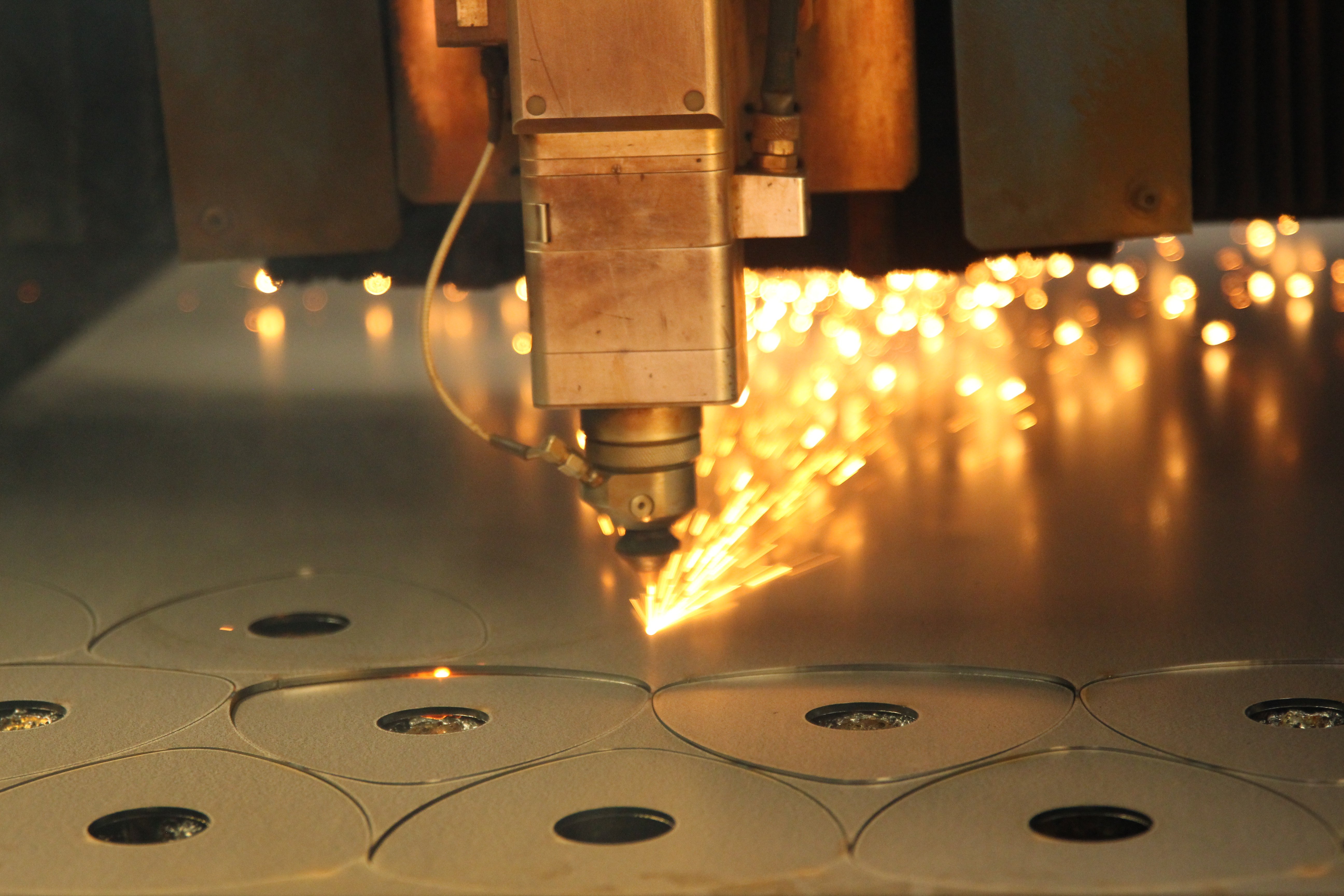
Avez-vous déjà vu un faisceau lumineux trancher l’acier comme un couteau chaud à travers du beurre ? C’est là l’action de la découpe laser CNC. Mais qu’est-ce réellement que la découpe laser ? Et pourquoi est-elle devenue la solution privilégiée pour les fabricants exigeant une grande précision ?
La découpe laser CNC est un procédé de fabrication thermique sans contact qui utilise la commande numérique par ordinateur (CNC) pour diriger un faisceau laser focalisé et haute puissance le long de trajectoires programmées, vaporisant ou fusionnant le matériau afin de réaliser des découpes précises dans les métaux, les plastiques, le bois et les matériaux composites.
Imaginez-le ainsi : vous associez la puissance de calcul d’un ordinateur à la force de coupe d’une lumière concentrée. Le résultat ? Des pièces découpées avec une précision mesurée en fractions de millimètre, à chaque fois.
Comment une lumière focalisée devient-elle une fabrication de précision
C’est ici que les choses deviennent intéressantes. Un laser pour machine de découpe ne fonctionne pas comme les outils traditionnels qui entrent en contact physique avec votre matériau. Au lieu de cela, il génère un faisceau lumineux extrêmement intense, généralement inférieur à 0,32 mm (0,0125 pouce) de diamètre à son point le plus étroit. Lorsque cette énergie concentrée frappe votre pièce, le matériau n’a aucune chance.
Le système laser à commande numérique par ordinateur (CNC) suit des instructions préprogrammées, généralement rédigées en code G, afin de guider le faisceau sur la surface du matériau. Imaginez tracer un motif à l’aide d’un crayon, sauf que votre crayon est une colonne de lumière suffisamment chaude pour vaporiser du métal. L’ordinateur contrôle chaque mouvement avec une précision extrême, garantissant que le laser suit exactement vos spécifications de conception.
En quoi cela diffère-t-il de l’utilisation d’une simple machine à découper au laser ou d’un dispositif laser manuel ? Par l’automatisation et la reproductibilité. Un système de découpe laser CNC ne dépend pas de la main ferme d’un opérateur. Il exécute systématiquement le même parcours de découpe, qu’il s’agisse de fabriquer une seule pièce ou mille pièces.
La science derrière l'élimination des matériaux par laser
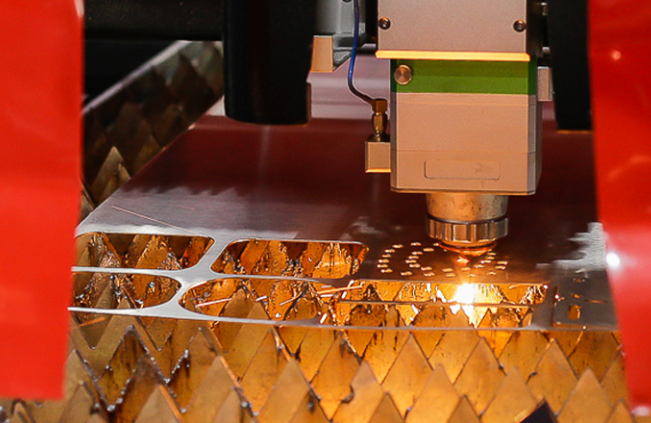
Lorsque vous focalisez un faisceau laser à haute puissance sur un point précis d'une surface métallique, un phénomène remarquable se produit. La densité de chaleur en ce point devient si intense que le matériau chauffe rapidement et fond ou se vaporise entièrement. Parallèlement, un gaz comprimé circule à travers la buse de découpe, remplissant deux fonctions essentielles : refroidir la lentille de focalisation et évacuer les matériaux vaporisés hors du chemin de coupe.
Ce procédé crée ce que les fabricants appellent une « fente de coupe » (kerf) — le canal étroit laissé par le laser. Avec les lasers à fibre modernes, la largeur de la fente de coupe peut être aussi faible que 0,10 mm (0,004 pouce), selon l’épaisseur du matériau. Il s’agit d’une précision que les méthodes de découpe manuelles ne sauraient tout simplement pas atteindre.
La beauté de la découpe laser CNC réside dans sa constance. Une fois que votre fichier de conception est chargé et que les paramètres sont définis, le système fournit des résultats identiques pour chaque pièce de votre série de production. Aucune fatigue humaine, aucune variation : uniquement une précision fiable qui maintient votre fabrication sur la bonne voie.
Comparaison des technologies laser CO₂, à fibre et Nd:YAG expliquée
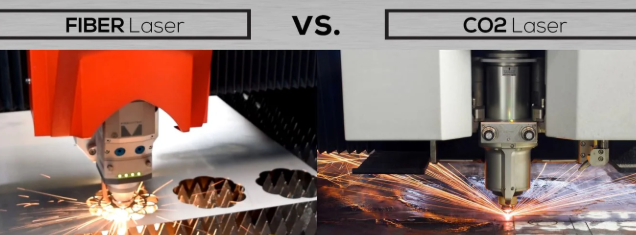
Vous savez donc ce que permet la découpe laser CNC. Mais voici la question qui déterminera réellement le succès de votre projet : quel type de laser doit découper vos pièces ? Toutes les machines de découpe laser pour métaux ne se valent pas, et choisir la mauvaise technologie peut faire la différence entre des bords polis et des désastres calcinés.
Trois technologies laser principales dominent la fabrication moderne : le CO₂, la fibre et le Nd:YAG. Chacune fonctionne à une longueur d’onde différente, et cette longueur d’onde détermine l’efficacité avec laquelle le laser interagit avec votre matériau . Imaginez cela comme des fréquences radio : si vous accordez votre récepteur sur la mauvaise station, vous n’obtenez que du bruit au lieu de musique.
Lasers CO2 et leurs domaines d’application privilégiés selon le matériau
Les lasers CO2 génèrent une lumière à une longueur d’onde de 10 600 nm (10,6 µm) à l’aide d’un milieu de décharge gazeuse composé de dioxyde de carbone, d’azote et d’hélium. Cette longueur d’onde située dans le domaine infrarouge lointain est absorbée de façon exceptionnelle par les matériaux organiques. On observe des taux d’absorption de 90 à 95 % pour l’acrylique, le bois, le cuir et les plastiques.
Voici ce qui fait la force de la technologie CO2 :
- Maîtrise des non-métaux : Découpe de l’acrylique avec des bords polis par flamme, ne nécessitant aucun traitement postérieur
- Capacité de découpe de tôles épaisses : Des tôles d’acier jusqu’à 100 mm d’épaisseur peuvent être découpées avec assistance oxygène
- Rendement énergétique : Environ 30 % de rendement électrique en énergie optique
- Coût initial réduit : Les machines de découpe laser CO2 coûtent généralement 5 à 10 fois moins cher que des systèmes à fibre équivalents
Le compromis ? Les lasers CO2 rencontrent des difficultés avec les métaux. L’acier n’absorbe qu’environ 8 à 10 % de cette longueur d’onde de 10 600 nm, ce qui signifie que la majeure partie de l’énergie laser est simplement réfléchie. Vous devrez disposer d’une puissance nettement supérieure pour obtenir des découpes que les machines à découper les métaux au laser à fibre réalisent sans effort.
Pourquoi les lasers à fibre dominent-ils la découpe des métaux
Les lasers à fibre ont révolutionné la découpe laser des métaux. Fonctionnant à une longueur d’onde de 1 064 nm, ces systèmes atteignent des taux d’absorption de 88 à 92 % sur l’acier et l’acier inoxydable. Cela représente une efficacité près de dix fois supérieure à celle des lasers CO2 dans le traitement des métaux.
Que signifie concrètement cette différence ? Un laser à fibre découpe de l’acier doux d’une épaisseur de 3 mm à une vitesse de 12 mètres par minute, contre seulement 4 mètres par minute pour un système CO2 de puissance équivalente. Selon l’analyse technique de Xometry, les lasers à fibre offrent une productivité 3 à 5 fois supérieure sur les opérations métalliques adaptées.
Autres avantages des lasers à fibre :
- Durée de vie exceptionnelle : Jusqu’à 25 000 heures de fonctionnement — soit environ 10 fois plus longue que celle des dispositifs CO2
- Efficacité supérieure : Un taux de conversion électrique en optique supérieur à 90 % signifie des coûts d’exploitation nettement réduits
- Focalisation plus précise : Des faisceaux plus stables et plus étroits permettent des découpes de haute précision
- Manipulation des matériaux réfléchissants : Des performances supérieures sur des métaux difficiles à traiter, tels que le titane, le laiton et l’aluminium
L’inconvénient ? Les lasers à fibre sont quasiment transparents aux matériaux organiques. Essayez de découper du bois ou de l’acrylique avec une technologie à fibre, et vous obtiendrez au mieux des résultats médiocres. Le taux d’absorption chute à 5–15 % pour ces matériaux.
Nd:YAG pour des applications spécialisées
Les lasers Nd:YAG (grenat d’yttrium-aluminium dopé au néodyme) utilisent des cristaux synthétiques plutôt que des gaz ou des fibres optiques. Fonctionnant à la même longueur d’onde de 1 064 nm que les lasers à fibre, ils présentent une compatibilité matérielle similaire, mais excellent dans des applications différentes.
Ces systèmes à état solide trouvent leur place dans :
- La fabrication de dispositifs médicaux exigeant une précision extrême
- Les applications de gravure profonde
- Opérations de soudage
- Les situations nécessitant une émission laser pulsée
Bien que moins courante dans les services généraux de découpe laser CNC aujourd’hui, la technologie Nd:YAG reste précieuse pour la fabrication spécialisée, où ses caractéristiques uniques de faisceau offrent des avantages.
Comparaison des technologies laser en un coup d'œil
| Type de technologie | Les meilleurs matériaux | Plage d'épaisseur typique | Qualité des bords | Caractéristiques de vitesse |
|---|---|---|---|---|
| Laser CO₂ (10 600 nm) | Acrylique, bois, plastiques, cuir, tissus, tôles d’acier épaisses | Jusqu’à 20 mm et plus pour les métaux ; illimité pour les matériaux non métalliques dans les limites de puissance | Polissage à la flamme sur acrylique ; bon sur les matières organiques | Plus lent sur les métaux ; excellent sur les matériaux non métalliques |
| Laser à fibre (1 064 nm) | Acier, acier inoxydable, aluminium, laiton, cuivre, titane | Meilleure performance en dessous de 20 mm ; optimale pour les métaux de faible épaisseur | Coupes de précision supérieure ; bords nets sur les métaux | 3 à 5 fois plus rapide que le CO2 sur les métaux |
| Nd:YAG (1 064 nm) | Métaux, céramiques, matériaux spécialisés | Matériaux généralement plus fins pour un travail de précision | Excellent pour l’usinage microscopique | Modérée ; optimisée pour la précision plutôt que pour la vitesse |
Comprendre ces différences fondamentales en matière de technologie vous aide à poser les bonnes questions lors de la demande de devis. Une machine à découper les métaux au laser CO₂ pourrait mieux convenir à votre projet impliquant des tôles épaisses, tandis qu’un coupeur laser métallique à fibre offre des résultats supérieurs sur les composants en tôle. La science des longueurs d’onde n’est pas purement académique : elle influe directement sur la qualité de vos pièces, la vitesse de production et le coût final.
Guide complet de compatibilité des matériaux avec les spécifications d’épaisseur
Vous avez choisi votre technologie laser. Maintenant vient la question déterminante pour le succès ou l’échec de votre projet : ce laser est-il réellement capable de couper votre matériau ? La découpe laser des métaux n’est pas une solution universelle, tout comme le traitement des plastiques, du bois ou des composites. Chaque matériau réagit différemment sous ce faisceau lumineux concentré.
Examinons précisément ce que vous pouvez — et, surtout, ce que vous ne devriez pas — faire usiner par un service de découpe laser à commande numérique (CNC).
Capacités de découpe des métaux, depuis les tôles minces jusqu’aux plaques épaisses
Les métaux constituent le cœur de la découpe laser industrielle. Toutefois, voici ce que la plupart des prestataires de services ne vous indiquent pas clairement dès le départ : les épaisseurs pouvant être découpées varient considérablement selon le type de métal, la technologie laser utilisée et la qualité requise du bord de coupe. Examinons chaque grande catégorie de métaux.
- Acier au carbone : Le métal le plus adapté à la découpe laser. Les lasers à fibre permettent de découper des épaisseurs allant de tôles minces (0,5 mm) à environ 25 mm, avec une excellente qualité de bord. Pour les plaques plus épaisses, approchant les 50 mm, des lasers CO₂ avec assistance oxygène deviennent nécessaires. Vous obtiendrez des bords propres avec une zone thermiquement affectée (ZTA) inférieure à 0,5 mm sur des pièces correctement usinées.
- Acier inoxydable : La découpe au laser de l'acier inoxydable offre des résultats exceptionnels, notamment avec un gaz auxiliaire d'azote pour obtenir des bords exempts d'oxyde. Les lasers à fibre excellent dans les applications de découpe laser de l'acier inoxydable jusqu'à une épaisseur de 20 mm. La teneur en chrome crée une couche d'oxyde autoréparatrice, de sorte que la découpe laser de l'acier inoxydable produit des bords résistants à la corrosion sans traitement supplémentaire.
- Aluminium: C’est ici que les choses deviennent complexes. La découpe laser de l’aluminium nécessite une puissance plus élevée en raison de la forte réflectivité et de la conductivité thermique du matériau. Les lasers à fibre surpassent nettement les lasers CO₂ pour les applications de découpe laser de l’aluminium, traitant efficacement des épaisseurs allant jusqu’à 12–15 mm. Selon recherche industrielle , l’azote est recommandé comme gaz auxiliaire pour obtenir des découpes propres et exemptes d’oxyde sur l’aluminium.
- Pour les métaux: Un autre métal fortement réfléchissant qui exige la technologie du laser à fibre. L’épaisseur maximale pratique varie de 6 à 10 mm selon la composition de l’alliage. Comptez sur des largeurs de fente légèrement supérieures à celles obtenues sur l’acier, en raison des propriétés thermiques du matériau.
- Cuivre : Le cuivre est le métal courant le plus difficile à couper au laser sur des tôles. Sa réflectivité extrême (jusqu’à 98 % pour les longueurs d’onde CO₂) rend essentiel l’usage de lasers à fibre. Les épaisseurs maximales pratiques se situent aux alentours de 6 à 8 mm, et les vitesses de découpe doivent être nettement réduites par rapport à celles utilisées pour l’acier.
- Titane : Les opérations de découpe laser du titane exigent un contrôle rigoureux de l’atmosphère afin d’éviter l’oxydation. Les lasers à fibre permettent de découper efficacement le titane jusqu’à une épaisseur de 10 mm. Les découpes obtenues présentent une zone thermiquement affectée (ZTA) minimale, ce qui est critique pour les applications aérospatiales et médicales, où l’intégrité du matériau est primordiale.
Quelle est la qualité des bords ? Sur des systèmes correctement configurés, la découpe laser des métaux produit généralement une rugosité de surface comprise entre Ra 12,5 et Ra 25 micromètres. Les zones thermiquement affectées restent généralement inférieures à 0,5 mm pour les matériaux minces, mais peuvent atteindre 1 à 2 mm sur les tôles épaisses, où des vitesses de découpe plus lentes sont nécessaires.
Matériaux non métalliques et leur compatibilité avec le laser
Pour les matériaux non métalliques, la sélection du laser s’inverse. comment les lasers à fibre ont dominé la découpe des métaux ? Pour les matières organiques et les plastiques, les lasers CO₂ remportent la palme.
- Acrylique (PMMA) : L’exemple type de la découpe laser. Les lasers CO₂ produisent des bords polis par flamme sur l’acrylique jusqu’à une épaisseur de 25 mm, sans nécessiter aucun traitement postérieur. La qualité de la découpe est si nette que les fabricants utilisent souvent les bords découpés au laser comme surface finale.
- Polycarbonate : Découpable, mais avec des réserves. Le polycarbonate jaunit légèrement aux bords découpés en raison de l’exposition à la chaleur. L’épaisseur maximale découpable atteint environ 10 mm, mais la netteté des bords ne sera pas comparable à celle de l’acrylique. Envisagez la découpe mécanique pour les applications où la clarté optique est essentielle.
- Plastique ABS : Supporte bien la découpe au laser CO₂ jusqu’à une épaisseur de 6 mm. Elle produit une légère décoloration des bords, tout en conservant son intégrité structurelle. Une ventilation adéquate est indispensable en raison de la génération de fumées pendant le traitement.
- Bois et contreplaqué : Les lasers CO₂ découpent les matériaux bois jusqu’à 20 mm ou plus, selon leur densité. Les bois tendres se découpent plus rapidement que les bois durs, et les bords du contreplaqué peuvent présenter des lignes visibles entre les couches. Une légère carbonisation est à prévoir, pouvant être poncée si l’esthétique revêt de l’importance.
- Les composites: Les résultats varient considérablement en fonction de la composition du matériau composite. Les composites en fibre de carbone exigent une extrême prudence : les fibres peuvent générer des poussières dangereuses.
Matériaux que vous ne devez jamais découper au laser
C’est ici que la sécurité devient primordiale. Certains matériaux dégagent des gaz toxiques, endommagent les équipements ou créent des risques d’incendie lorsqu’ils sont traités au laser. Selon Les directives de sécurité de Trotec , les matériaux suivants ne doivent jamais être introduits dans une découpeuse laser :
- PVC (chlorure de polyvinyle) : Dégage du gaz chlore lors de la découpe, ce qui est toxique pour l’être humain et corrosif pour l’équipement laser
- PTFE/Téflon : Produit des composés fluorés extrêmement dangereux lorsqu’il est chauffé
- Cuir contenant du chrome (VI) : Génère des fumées toxiques de chrome
- Matériaux en fibre de carbone : Génèrent une poussière conductrice dangereuse, susceptible d’endommager l’équipement et de présenter des risques respiratoires
- Matériaux contenant des halogènes, des résines époxy ou phénoliques : Libère des gaz dangereux pendant le traitement
- Oxyde de béryllium : Génération de poussières extrêmement toxiques
En outre, faites preuve de prudence avec les matériaux ignifuges. Ces derniers contiennent souvent des composés bromés qui dégagent des gaz toxiques lors du traitement au laser. Vérifiez toujours la composition exacte auprès du fabricant du matériau avant de procéder.
Les métaux revêtus constituent un autre point à considérer. L’acier galvanisé, par exemple, dégage des fumées de zinc lors de la découpe, nécessitant une ventilation adéquate. Bien qu’il soit techniquement découpable au laser, ces fumées sont nocives et la qualité du revêtement sur les bords découpés sera altérée.
Comprendre ces contraintes liées aux matériaux vous aide à choisir dès le départ le procédé adapté. Toutefois, même avec des matériaux compatibles, comment la découpe au laser se compare-t-elle aux autres méthodes de découpe ? C’est précisément ce que nous examinerons ensuite.
Découpe laser vs découpe jet d'eau vs découpe plasma vs fraisage CNC
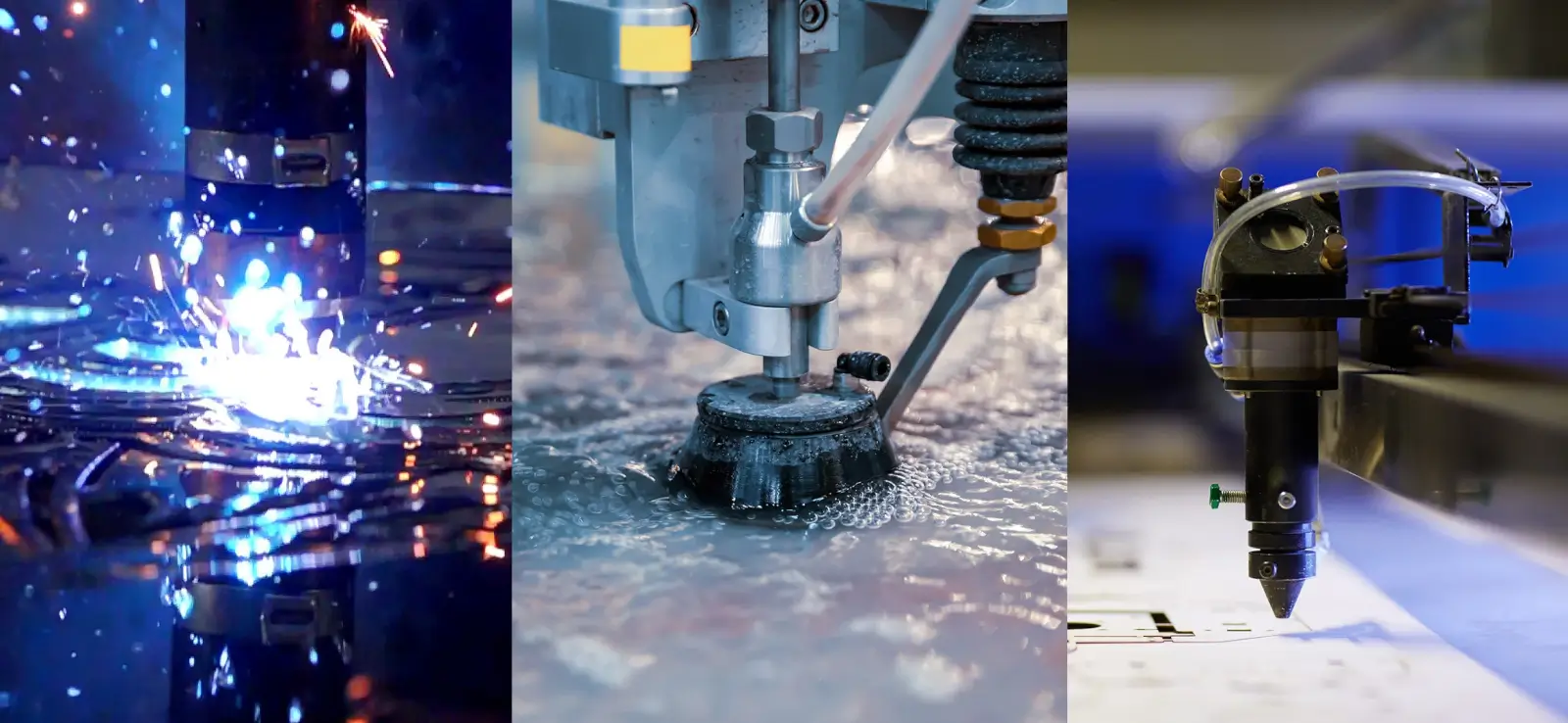
Vous savez que la découpe au laser convient à votre matériau. Mais est-ce la meilleur un choix ? Cela dépend entièrement de ce que vous fabriquez, de l’épaisseur de votre matériau et de ce qui prime pour vous : la vitesse, la précision ou le coût. La découpe au laser n’est pas toujours la solution appropriée, et parfois une autre méthode permet d’obtenir de bien meilleurs résultats pour votre application spécifique.
Quatre technologies de découpe principales se font concurrence pour vos investissements en fabrication : la découpe au laser, l’abrasion à jet d’eau (waterjet), la découpe plasma et la fraiseuse à commande numérique (CNC). Chacune excelle dans des scénarios différents, et un mauvais choix peut vous coûter des milliers d’euros en pertes de matériaux et en retards de production. Examinons les cas où chaque méthode s’avère la plus adaptée.
Lorsque la découpe au laser surpasse l’abrasion à jet d’eau et la découpe plasma
La découpe au laser domine lorsqu’il s’agit d’obtenir une grande précision sur des matériaux minces à moyennement épais, avec des délais de livraison rapides. Selon la comparaison technique de SendCutSend, la découpe au laser atteint des vitesses allant jusqu’à 2 500 pouces par minute — ce qui en fait la méthode la plus rapide disponible pour les matériaux adaptés.
Où la découpe de métaux au laser brille-t-elle véritablement ?
- Pièces aux formes complexes : Des trous petits, des angles serrés et des géométries complexes découpés proprement sans les limitations de rayon imposées par d’autres méthodes
- Tôles minces : Les matériaux d’une épaisseur inférieure à 1/2 pouce sont traités rapidement avec une qualité exceptionnelle des bords
- Production en grand volume : Les avantages en termes de vitesse s’accumulent lorsque vous fabriquez des centaines ou des milliers de pièces
- Tolérances étroites : La découpe laser offre une précision qui élimine souvent les opérations secondaires de finition
Toutefois, rechercher « découpe plasma près de chez moi » pourrait effectivement constituer le choix le plus judicieux si vous traitez des tôles d’acier épaisses. La découpe plasma de l’acier d’une épaisseur de 1 pouce est environ 3 à 4 fois plus rapide que la découpe par eau sous très haute pression, avec des coûts d’exploitation d’environ la moitié par pied selon Les tests de Wurth Machinery . Pour la fabrication d’acier structurel, la production d’équipements lourds et les applications de construction navale, la découpe plasma offre la meilleure combinaison de vitesse et d’efficacité économique sur les métaux conducteurs épais.
Le jet d'eau devient votre meilleure option lorsque la chaleur ne peut pas entrer en contact avec votre matériau. Le jet d'eau à haute pression coupe sans générer d'énergie thermique, ce qui signifie l'absence de zones affectées par la chaleur, aucune déformation et aucune modification des propriétés du matériau. Les fournisseurs aérospatiaux exigent souvent spécifiquement le découpage au jet d'eau, car la réglementation interdit tout effet thermique sur les composants d’aéronefs.
Choisir la méthode de découpe adaptée à votre matériau
Le type de matériau que vous utilisez réduit rapidement les options possibles. Voici un état des faits :
Pour les métaux d’une épaisseur inférieure à 1/2 pouce : Le découpage au laser offre généralement la meilleure combinaison de vitesse, de précision et de coût. Les services de découpe de métaux utilisant des lasers à fibre permettent d’obtenir une qualité exceptionnelle des bords sur l’acier, l’acier inoxydable et l’aluminium, sans nécessiter d’opérations secondaires de débourrage.
Pour les métaux conducteurs épais (supérieurs à 1 pouce) : Le découpage plasma assure un traitement 3 à 4 fois plus rapide que le jet d’eau, pour environ la moitié du coût d’exploitation. Les services de découpe d’acier destinés aux applications structurelles s’appuient souvent principalement sur la technologie plasma.
Pour les matériaux sensibles à la chaleur ou les composites : La découpe par jet d’eau élimine totalement les préoccupations liées à la chaleur. Les fibres de carbone, le G10, les phénoliques, le verre, la pierre et les produits alimentaires sont tous découpés proprement, sans dommage thermique ni production de poussières nocives.
Pour les plastiques et le bois : L’usinage CNC produit souvent des finitions de surface supérieures tout en respectant des tolérances de ±0,005 pouce. Contrairement à la découpe laser, l’usinage ne génère pas de zones affectées par la chaleur, qui pourraient modifier les propriétés des feuilles de plastique épaisses.
Le meilleur laser pour découper votre projet spécifique dépend de la combinaison de ces facteurs. Une pièce nécessitant une précision de 0,001 pouce dans de l’aluminium d’épaisseur 1/8 pouce ? La découpe laser l’emporte nettement. La même géométrie dans du titane d’épaisseur 2 pouces ? La découpe par jet d’eau devient la seule option viable.
Comparaison des méthodes de découpe en un coup d'œil
| Méthode | Idéal pour | Des limites matérielles | Qualité des bords | Vitesse | Coût relatif |
|---|---|---|---|---|---|
| Découpe laser | Métaux minces, designs complexes, production en grande série | Difficultés avec les métaux très épais (supérieurs à 1 pouce) ; ne peut pas découper le PVC ni le PTFE | Excellente sur les matériaux minces ; post-traitement minimal requis | Le plus rapide (jusqu'à 2 500 IPM) | Faible à modéré ; le plus économique pour les matériaux minces |
| Découpe plasma | Métaux conducteurs épais (acier, aluminium, cuivre) | Ne coupe que les matériaux électriquement conducteurs ; aucun matériau non métallique | Bon ; peut nécessiter un finissage des bords sur les pièces de précision | Rapide sur les métaux épais ; 3 à 4 fois plus rapide qu’un jet d’eau | Le plus faible pour les métaux épais ; coût du système d’environ 90 000 $ |
| Découpe à l'eau sous pression | Matériaux sensibles à la chaleur, composites, pierre, verre, métaux épais | Ne peut pas couper le verre trempé ni les diamants ; vitesse de traitement plus lente | Supérieur ; aucune bavure, aucune laitance, finition lisse | Le plus lent ; la précision exige une réduction de la vitesse | Le plus élevé ; coût du système d’environ 195 000 $ |
| Usinage CNC | Plastiques, bois, composites, matériaux mousse | Les angles intérieurs nécessitent un rayon minimal de 0,063 pouce ; enlèvement maximal de matière : 50 % | Finition de surface excellente ; tolérance de ± 0,005 pouce | Modéré ; varie selon le matériau | Modéré ; concurrentiel pour les matériaux non métalliques |
Remarquez-vous les compromis ? L’avantage de vitesse du découpage au laser disparaît lorsque l’épaisseur du matériau dépasse sa plage d’efficacité. La polyvalence du jet d’eau en matière de matériaux s’accompagne d’un coût en termes de vitesse de traitement. L’efficacité du plasma sur les métaux épais est limitée aux seuls matériaux conducteurs.
De nombreux ateliers de fabrication performants intègrent finalement plusieurs technologies de découpe afin de couvrir un spectre plus large. Le plasma et le laser s’associent souvent avantageusement pour la découpe des métaux, tandis que l’ajout de la capacité de découpe au jet d’eau étend la polyvalence aux composites et aux applications sensibles à la chaleur.
L'approche la plus intelligente ? Commencez par adapter votre méthode de découpe aux exigences de vos projets les plus courants, puis élargissez vos capacités à mesure que votre entreprise se développe. Comprendre ces différences fondamentales vous aide également à évaluer les devis de manière plus efficace — mais quelles spécifications techniques ces devis doivent-ils réellement garantir ?
Spécifications techniques et normes de qualité démystifiées
Vous avez choisi la méthode de découpe adaptée à votre projet. Mais comment savoir si les pièces finies répondront effectivement à vos exigences ? Comprendre les spécifications techniques sous-jacentes à la découpe laser de précision permet de distinguer les acheteurs avertis de ceux qui sont surpris par des résultats médiocres.
Les services professionnels de découpe laser CNC fonctionnent dans des paramètres mesurables. Lorsque vous connaissez les valeurs numériques à surveiller — et les questions à poser — vous pouvez évaluer les devis en toute confiance et exiger la qualité à laquelle votre projet a droit.
Compréhension de la largeur de coupe (kerf) et de son impact sur la conception
Vous vous souvenez du canal étroit que le laser crée en coupant? C'est votre taille, et cela affecte directement les dimensions de votre pièce finale. Ignorez-le, et vos composants conçus avec précision ne s'emboîteront pas comme prévu.
Selon 1Documentation technique de Cut Fab la taille de la coupe laser varie généralement de 0,1 mm à 0,5 mm selon plusieurs facteurs. Pour les lasers à fibre qui traitent la tôle, on peut s'attendre à des largeurs de tranchée comprises entre 0,1 mm et 0,3 mm, ce qui est nettement plus étroit que les 0,5 mm à 1,2 mm courants pour la découpe à jet d'eau.
Qu'est-ce qui détermine la largeur de votre tranchant?
- Puissance du laser : Les systèmes de puissance plus élevée produisent généralement des tranches légèrement plus larges
- Épaisseur du matériau : Les matériaux plus épais nécessitent plus d'énergie, ce qui élargit le canal de coupe
- Vitesse de découpe : Les vitesses plus lentes augmentent l'entrée de chaleur et la largeur de la tranchée
- Focalisation de l'objectif: Une mise au point optimale produit la tranche la plus étroite possible
- Pression du gaz auxiliaire : Le débit de gaz affecte l'efficacité de l'élimination des matières
Pour les applications de découpe au laser de tôles d'acier, un laser à fibre de 3 kW découpant de l'acier doux de 3 mm produit généralement une largeur de coupe (kerf) d'environ 0,15 mm. Cela semble minuscule jusqu’à ce que vous réalisiez qu’un écart de 0,2 mm sur plusieurs languettes emboîtables entraîne des pièces qui ne s’assemblent pas correctement ou qui bougent mollement.
Les prestataires soucieux de la qualité compensent automatiquement la largeur de coupe (kerf) dans leurs logiciels de FAO. Lors de l’examen de votre devis, demandez si cette compensation est incluse ou si vous devez ajuster vos fichiers de conception en conséquence.
Normes de tolérance que vous devriez exiger
La précision dimensionnelle détermine si vos pièces découpées au laser fonctionnent effectivement dans leur application prévue. Les services professionnels de découpe laser CNC offrent des tolérances sur lesquelles les professionnels de la fabrication peuvent compter.
Que pouvez-vous attendre d’un poste de découpe laser professionnel pour tôle ? Selon L'analyse de précision d'Accurl , les tolérances de découpe se situent généralement dans une fourchette de ±0,005 pouce (±0,127 mm) pour les applications standard. Les services de découpe laser haute précision atteignent des spécifications encore plus serrées — jusqu’à ±0,003 pouce (±0,08 mm) sur les matériaux et épaisseurs appropriés.
Voici comment la précision de la découpe laser se compare à celle des autres procédés :
| Méthode de découpe | Tolérance typique | Tolérance optimale |
|---|---|---|
| Découpe laser | ±0,005 pouce (±0,127 mm) | ±0,003 pouce (±0,08 mm) |
| Découpe plasma | ±0,020 pouce (±0,5 mm) | ±0,010 pouce (±0,25 mm) |
| Découpe à l'eau sous pression | ±0,005 pouce (±0,127 mm) | ±0,003 pouce (±0,08 mm) |
Remarquez comment la découpe laser égale la découpe par jet d’eau en termes de précision, tout en surpassant nettement la découpe plasma. Pour les services de découpe laser de précision destinés aux secteurs aérospatial, électronique ou automobile, ces tolérances très serrées éliminent les opérations d’usinage secondaires coûteuses.
Principaux indicateurs de qualité et leurs plages acceptables
Outre la justesse dimensionnelle, plusieurs paramètres de qualité déterminent si vos pièces répondent aux normes professionnelles. Lors de l’évaluation d’un service de découpe laser CNC, vérifiez ses capacités sur chacun de ces indicateurs :
- Précision positionnelle : ±0,003 pouce (±0,08 mm) ou mieux pour les applications de précision
- Répétabilité : ±0,001 pouce (±0,025 mm) entre des pièces identiques dans le même cycle
- Cohérence de la largeur de découpe : Variation inférieure à 10 % sur toute la trajectoire de coupe
- Roughness de surface : Rugosité Ra de 12,5 à Ra 25 micromètres sur les bords découpés
- Zone affectée par la chaleur (ZAC) : Inférieur à 0,5 mm pour les matériaux minces ; maximum de 1 à 2 mm pour les tôles épaisses
- Perpendicularité : Perpendicularité du bord à moins de 0,5 degré par rapport à la verticale
- Formation de laitance / de bavures : Minimale ou nulle sur les pièces correctement traitées
La zone affectée par la chaleur (ZAC) mérite une attention particulière pour les composants structurels ou de précision. Selon les directives de contrôle qualité de Laser-ing, la ZAC correspond à une bande étroite où les propriétés du matériau sont modifiées en raison de l’exposition thermique. Pour la plupart des applications, maintenir la ZAC sous 0,5 mm préserve l’intégrité du matériau. Des pièces critiques destinées à l’aérospatiale ou au domaine médical peuvent nécessiter des tolérances encore plus strictes.
Processus de contrôle qualité qui protègent votre investissement
Les spécifications ne signifient rien sans vérification. Les services professionnels de découpe laser de précision mettent en œuvre un contrôle qualité à plusieurs stades — et pas uniquement lors d’un contrôle final avant expédition.
À quoi ressemble un contrôle qualité complet ?
Inspection de la première pièce : Avant de lancer votre lot de production complet, le prestataire découpe et mesure des échantillons initiaux. Cela permet de détecter les erreurs de paramètres avant qu’elles n’affectent des centaines de pièces. Vous pouvez vous attendre à une vérification dimensionnelle, à une évaluation de la qualité des bords et à une confirmation du matériau.
Surveillance en temps d'usinage : Les systèmes laser modernes intègrent une surveillance en temps réel des paramètres de découpe — puissance du laser, pression du gaz, vitesse de découpe et position du foyer. Tout écart par rapport aux réglages optimaux déclenche des alertes ou des ajustements automatiques, empêchant ainsi une dérive de la qualité au cours de longues séries de production.
Vérification finale : Des prélèvements aléatoires sur les lots terminés confirment que la précision dimensionnelle et la qualité des bords répondent aux spécifications. Pour les applications critiques, une inspection à 100 % peut être justifiée.
La norme ISO 9013:2002 définit les critères de qualité pour la découpe thermique, en précisant des paramètres tels que la rugosité de la découpe, la perpendicularité et la formation de métal fondu. Lorsque votre prestataire fait référence à cette norme, il s’engage à respecter des critères de qualité mesurables plutôt que des évaluations subjectives.
Demandez également aux fournisseurs potentiels des informations sur leur équipement d’inspection. Les machines à mesurer tridimensionnelles (MMT), les comparateurs optiques et les pieds à coulisse étalonnés témoignent d’un investissement dans les capacités de vérification. Un atelier incapable de mesurer avec précision ne peut pas en garantir la précision.
Comprendre ces spécifications techniques vous permet d’évaluer intelligemment les devis. Toutefois, les spécifications n’ont de sens que si vos fichiers de conception sont correctement préparés — c’est précisément à ce stade que de nombreux projets échouent, avant même d’atteindre le laser.
Du fichier de conception à la pièce terminée
Vos spécifications sont parfaitement définies. Votre matériau est sélectionné. Mais c’est ici que de nombreux projets déraillent : le fichier de conception lui-même. Un concept de pièce parfaitement ingénieré ne signifie rien si votre fichier contient des erreurs entraînant un gaspillage de matière, une prolongation des délais de livraison ou la production de pièces ne correspondant pas à votre intention.
Le passage de la conception numérique à la pièce physique implique davantage d’étapes que la plupart des clients ne le pensent. Comprendre ce flux de travail complet vous aide à préparer des fichiers qui découpent proprement dès la première tentative — et à anticiper les opérations de post-traitement qui transforment les pièces découpées au laser en composants finis.
Préparation de vos fichiers de conception pour des résultats optimaux
Les systèmes de découpe et de gravure au laser nécessitent des fichiers vectoriels définissant des trajectoires de découpe précises. Contrairement aux images matricielles (ou bitmap), constituées de pixels, les fichiers vectoriels utilisent des équations mathématiques pour décrire les lignes et les courbes. Cela signifie que votre conception peut être mise à l’échelle indéfiniment sans perte de qualité — un critère essentiel lorsque le laser suit ces trajectoires avec une précision inférieure au millimètre.
Selon Directives de Sculpteo pour la préparation des fichiers , les formats compatibles les plus courants sont :
- DXF (Drawing Exchange Format) : La norme industrielle pour la fabrication au laser. Une compatibilité quasi universelle entre les logiciels de CAO et les logiciels de découpe au laser
- DWG : Format natif d’AutoCAD, largement accepté mais pouvant nécessiter des vérifications de compatibilité entre versions
- AI (Adobe Illustrator) : Excellent pour les conceptions créées dans des logiciels de conception graphique ; assurez-vous que tout le texte est converti en contours
- SVG (Scalable Vector Graphics) : Populaire pour les conceptions issues du web et les flux de travail open source
- EPS : Les fichiers Encapsulated PostScript fonctionnent bien lorsqu’ils sont correctement exportés sous forme de vecteurs
Suivez ce flux de travail étape par étape pour préparer des fichiers qui seront traités sans délai :
- Convertissez tout le texte en contours ou en tracés : Les polices installées sur votre ordinateur peuvent ne pas exister sur le système de l’opérateur de la machine laser. La conversion en contours élimine les problèmes de substitution de polices
- Supprimez les lignes doubles : Les chemins superposés font couper deux fois la même zone par le laser, ce qui gaspille du temps et peut même provoquer une perforation du matériau
- Fermez tous les tracés : Les contours ouverts créent une ambiguïté quant à ce qui constitue le contour de découpe. Assurez-vous que chaque forme forme un chemin complet et fermé
- Prenez en compte la compensation de découpe (kerf) : N'oubliez pas l'enlèvement de matière de 0,1 à 0,3 mm ? Ajustez soit votre conception, soit confirmez que votre prestataire gère automatiquement la compensation de la largeur de coupe.
- Précisez la découpe par rapport à la gravure : Utilisez des couleurs de ligne ou des calques différents pour distinguer les trajectoires de découpe des zones de gravure. Le rouge pour la découpe et le bleu pour la gravure constituent une convention courante.
- Définissez explicitement les unités : Un fichier interprété en pouces alors que vous l'avez conçu en millimètres produit des pièces 25,4 fois plus grandes que la taille prévue.
Considérations de conception permettant d'éviter les problèmes de fabrication
Même des fichiers parfaitement formatés peuvent contenir des choix de conception qui nuisent aux résultats de la découpe laser. Selon l'analyse de CIMtech portant sur les erreurs fréquentes, concevoir sans tenir compte des contraintes de fabrication conduit à un nombre excessif de découpes, à un mauvais agencement (nesting) et à une dérive des tolérances.
Gardez ces paramètres critiques à l'esprit pour réussir votre découpe laser sur mesure :
- Taille minimale des éléments : Les perçages et les fentes doivent généralement avoir au moins la même dimension que l'épaisseur du matériau. Un trou de 1 mm dans de l'acier de 3 mm crée une géométrie fragile, sujette à la déformation thermique.
- Exigences relatives aux ponts : Les liaisons fines entre les éléments doivent avoir une largeur suffisante pour résister à la découpe. Pour les tôles, les ponts nécessitent généralement une largeur minimale de 2 mm
- Géométrie des angles : Les angles internes vifs concentrent les contraintes et ne peuvent pas être découpés parfaitement. Ajoutez de petits congés (minimum 0,5 mm) aux angles internes
- Espacement bord à bord : Des éléments trop rapprochés provoquent une accumulation de chaleur. Respectez un espacement égal à au moins l’épaisseur du matériau entre les lignes de découpe
- Efficacité du nesting : Disposez les pièces de façon à minimiser les pertes de matériau. De nombreux prestataires proposent une optimisation du nesting, mais une conception initiale réfléchie contribue à réduire les coûts
Pour les applications de découpe laser sur bois, gardez à l’esprit que l’orientation du fil du bois influence à la fois la vitesse de découpe et la qualité du bord. Concevoir les pièces de façon à les aligner, dans la mesure du possible, avec le sens du fil améliore les résultats. Les projets personnalisés de découpe laser sur bois bénéficient également d’un évitement des éléments extrêmement fins, qui brûlent facilement sous l’effet de la chaleur du laser.
Erreurs de conception courantes et comment les éviter
Même les concepteurs expérimentés commettent des erreurs qui compliquent la fabrication laser. Veillez à éviter ces problèmes fréquents :
- Surcomplexité des découpes internes : Trop de petites caractéristiques augmentent le temps de découpe, l’accumulation de chaleur et le risque de déformation de la pièce
- Ne pas tenir compte du choix du matériau lors de la conception : Selon le guide de conception de Komacut, l’utilisation d’épaisseurs de matériau non standard nécessite un approvisionnement spécifique avec des quantités minimales de commande (QMC) de plusieurs dizaines ou centaines de tôles, des délais de livraison allongés et des majorations de prix significatives
- Ne pas spécifier les tolérances critiques : Si vous ne précisez pas quelles dimensions sont les plus importantes, des hypothèses seront formulées, qui risquent de ne pas correspondre à vos exigences
- Angles vifs sur les sections minces : Ces angles concentrent les contraintes et provoquent souvent une déformation lors de la découpe ou lors de l’utilisation ultérieure
Options de post-traitement permettant de finaliser vos pièces
Les pièces découpées au laser brutes sont rarement directement intégrées dans l’assemblage final. Comprendre les options de post-traitement disponibles vous aide à planifier des flux de fabrication complets et à établir un budget précis.
Désabouchage : Bien que la découpe au laser produise des bords plus nets que la découpe plasma ou mécanique, une certaine formation de bavures se produit — notamment sur les matériaux plus épais ou lorsque les paramètres de découpe ne sont pas optimisés. Le sablage rotatif, le débavurage manuel ou la finition automatisée des bords éliminent ces irrégularités.
Finition de surface : Les options comprennent le meulage, le ponçage, le brossage ou la polissage afin d’obtenir des textures de surface spécifiques. L’électropolissage permet d’obtenir des finitions miroir sur l’acier inoxydable. Le grenaillage à billes produit des surfaces mates uniformes qui masquent les petites imperfections.
Pliage et Formage : Les pièces planes découpées au laser nécessitent souvent un pliage ultérieur pour former des volumes tridimensionnels. Les plieuses CNC permettent d’effectuer des pliages précis aux emplacements spécifiés. Concevez vos pièces planes en intégrant les tolérances de pliage calculées pour votre matériau et votre rayon de pliage spécifiques.
Revêtements et traitements : La peinture en poudre, la peinture liquide, l’anodisation (pour l’aluminium), le zingage et autres traitements de surface protègent les pièces contre la corrosion et améliorent leur apparence. Certains revêtements nécessitent une préparation spécifique de la surface, qui doit être communiquée à votre prestataire de découpe laser.
Résolution des problèmes courants de qualité
Que se passe-t-il lorsque les pièces ne répondent pas aux attentes ? Comprendre les causes profondes vous permet de collaborer efficacement avec votre prestataire de découpe laser et de services afin de résoudre les problèmes.
Gauchissement : L’accumulation de chaleur provoque une déformation des matériaux minces. Les solutions comprennent la réduction de la vitesse de découpe afin de minimiser l’apport thermique, l’optimisation de la séquence de découpe pour répartir la charge thermique ou le passage à un matériau plus épais.
Décoloration : Les zones thermiquement affectées provoquent des changements de couleur visibles sur les bords découpés. Pour l’acier inoxydable, le remplacement de l’oxygène par de l’azote comme gaz d’assistance produit des bords dépourvus d’oxyde et de couleur argentée. Sur les matériaux peints ou revêtus, l’application d’un film protecteur avant la découpe empêche les marques superficielles.
Mauvaise qualité du bord : Des bords rugueux, striés ou recouverts de laitier indiquent des problèmes liés aux paramètres. Les causes possibles incluent une position de focalisation incorrecte, une pression insuffisante du gaz d’assistance, des buses usées ou des vitesses de découpe non adaptées à l’épaisseur du matériau. Les prestataires soucieux de la qualité ajustent les paramètres en fonction de votre lot de matériau spécifique.
Inexactitude dimensionnelle : Lorsque les pièces présentent des dimensions hors tolérance, vérifiez que la compensation de la largeur de coupe (kerf) a bien été appliquée. Vérifiez également si l’expansion thermique survenue pendant la découpe a décalé la position des éléments — un problème plus fréquent sur les grandes pièces comportant des parcours de découpe étendus.
Une préparation adéquate des fichiers, des choix de conception réfléchis et des attentes réalistes concernant les opérations de finition permettent de garantir le succès de votre projet. Toutefois, cette préparation doit s’inscrire dans un budget défini — quels sont donc les facteurs qui déterminent réellement le coût d’un service de découpe laser CNC ?
Comprendre les variables tarifaires et obtenir des devis équitables
Vos fichiers de conception sont finalisés. Votre matériau est spécifié. Voici venu le moment de vérité : quel sera réellement le coût de ce projet ? Obtenir un devis pour la découpe au laser peut ressembler à une navigation dans une boîte noire : des chiffres apparaissent, mais les raisons qui les sous-tendent restent mystérieuses.
Voici la réalité : les tarifs des services de découpe au laser CNC ne sont pas arbitraires. Chaque euro figurant sur votre devis provient de facteurs de coût spécifiques que vous pouvez comprendre, évaluer et, parfois, influencer. Lorsque vous connaissez précisément les éléments qui déterminent vos frais de découpe au laser, vous pouvez prendre des décisions de conception plus judicieuses et juger si vous bénéficiez d’un prix équitable.
Ce qui fait augmenter ou diminuer votre devis de découpe laser
Selon L'analyse des coûts de Strouse , le coût du matériau représente souvent 70 à 80 % du coût total du projet. Mais ce n’est là qu’un point de départ. Plusieurs facteurs s’ajoutent pour déterminer votre prix final.
- Type et coût du matériau : Une tôle en acier inoxydable 304 coûte nettement plus cher qu’une tôle en acier doux de dimensions identiques. Les alliages spécialisés, comme le titane ou l’Inconel, bénéficient d’un prix premium. Le choix de votre matériau influe directement sur la composante la plus importante de vos coûts.
- Épaisseur du matériau : Les matériaux plus épais nécessitent des vitesses de découpe plus lentes et une puissance laser plus élevée. Découper de l’acier de 12 mm prend nettement plus de temps que le traitement d’une tôle de 2 mm — or, sur les équipements laser, le temps équivaut à de l’argent.
- Longueur totale de coupe : Les services de découpe laser facturent généralement en fonction de la longueur totale de la ligne de découpe. Un simple rectangle comportant quatre bords droits coûte moins cher qu’un motif complexe avec des courbes, des découpes internes et des détails fins occupant la même surface.
- Complexité de la découpe : Les angles serrés, les petits trous et les motifs complexes obligent le laser à ralentir ou à effectuer plusieurs opérations de perçage. Selon des sources du secteur, les pièces de grandes dimensions sont découpées à des vitesses plus lentes et nécessitent davantage de matière, ce qui entraîne des coûts plus élevés.
- Quantité et frais de configuration : Chaque commande exige une mise en place de la machine, une préparation des fichiers et une manutention des matériaux. Ces coûts fixes sont répartis sur la quantité commandée. Dix pièces supportent la même charge de mise en place qu’un millier — ce qui influe fortement sur le prix unitaire.
- Exigences de tolérance : La découpe laser de précision, qui exige une tolérance de ±0,003 pouce, nécessite un contrôle plus rigoureux des paramètres et des inspections plus approfondies que les travaux standards avec une tolérance de ±0,010 pouce. Des tolérances plus serrées impliquent un traitement plus lent et des étapes de vérification supplémentaires.
- Options de finition : L’ébavurage, le pliage, les traitements de surface et les revêtements ajoutent des coûts de post-traitement. Une pièce métallique découpée sur mesure nécessitant un revêtement par poudre et des pliages de précision coûte davantage que des pièces découpées au laser à l’état brut.
Quelle est la configuration en empilement des matériaux pour les pièces multicouches ? Comme indiqué dans l’analyse de Strouse, le nombre de couches influence fortement le coût de mise en place : assembler manuellement une pièce à six couches prend nettement plus de temps que la préparation d’une conception simple à une seule couche.
Différences entre les coûts de prototypage et de production
C’est ici que de nombreux acheteurs sont surpris : les tarifs appliqués aux prototypes et ceux appliqués à la production reposent sur des économies totalement différentes.
Pour les services de découpe laser en ligne destinés à la réalisation de prototypes ou de petites séries (50 à 100 pièces), la découpe laser d’échantillons permet un délai d’exécution rapide avec un investissement minimal en outillages. Vous payez principalement le temps d’utilisation de la machine et l’expertise de l’opérateur. Selon une analyse sectorielle, la découpe laser d’échantillons est excellente pour les prototypes rapides et la validation des conceptions.
Pour les commandes à l’échelle de la production, cette équation s’inverse. Des quantités plus importantes (plusieurs milliers de pièces) justifient des paramètres d’installation optimisés sur la machine, une manutention automatisée et des paramètres de découpe affinés. Le coût unitaire diminue sensiblement — parfois de 50 à 80 % par rapport aux tarifs appliqués aux prototypes — car les coûts fixes se répartissent sur un plus grand nombre d’unités.
Le seuil de transition est déterminant pour l’élaboration du budget. Demander à votre prestataire les paliers de prix selon les quantités permet de connaître le point à partir duquel l’économie penche en votre faveur. Certains fournisseurs affichent des tarifs « découpe et envoi » avec des remises significatives dès 25 à 50 pièces, tandis que d’autres n’appliquent les tarifs de production qu’à partir de 500 unités ou plus.
Comment évaluer les devis de manière équitable
Toutes les devis ne permettent pas une comparaison directe. Lors de l’examen des estimations provenant de plusieurs prestataires de découpe laser, posez ces questions de clarification :
- Le devis inclut-il la compensation de la largeur de coupe (kerf), ou devez-vous modifier vos fichiers vous-même ?
- Quelle norme de tolérance s’applique au prix indiqué dans le devis ?
- Les certifications des matériaux sont-elles incluses ou facturées en supplément ?
- Quel est le délai de livraison, et un traitement accéléré entraîne-t-il un coût supplémentaire ?
- Le prix comprend-il l’ébavurage ou d’autres finitions des bords ?
- Comment sont facturées les plaques partielles : en fonction de la quantité réelle de matériau utilisée ou selon le prix d’une plaque entière ?
Selon le guide de devis de Kirmell, les devis inexactes résultent souvent d’une mauvaise communication entre le client et le fabricant. Plus vous fournissez de détails dès le départ — fichiers de conception complets, spécifications des matériaux, exigences de tolérance et besoins en quantité — plus votre devis sera précis.
Méfiez-vous des devis qui semblent nettement inférieurs à ceux de vos concurrents. Soit ils ont réellement identifié des avantages en matière d’efficacité, soit ils omettent des éléments inclus dans le périmètre du projet, qui apparaîtront ultérieurement sous forme de bons de commande complémentaires. Clarifiez précisément ce qui est inclus avant de vous engager.
Comprendre ces dynamiques tarifaires vous permet d’optimiser vos conceptions pour une meilleure rentabilité, sans compromettre la fonctionnalité. Toutefois, connaître les facteurs qui déterminent les coûts ne constitue qu’une partie de l’équation : comprendre les secteurs industriels dans lesquels la découpe laser apporte une valeur maximale révèle pourquoi certaines applications justifient un prix premium.
Applications industrielles où la découpe laser excelle
Maintenant que vous maîtrisez les dynamiques tarifaires, voici la question essentielle : dans quels domaines la découpe laser industrielle apporte-t-elle réellement suffisamment de valeur pour justifier l’investissement ? La réponse varie considérablement selon le secteur d’activité ; comprendre ces applications vous aide à déterminer si votre projet correspond au créneau idéal où la découpe laser excelle véritablement.
Des cadres de véhicules circulant à grande vitesse sur les autoroutes aux instruments chirurgicaux pénétrant dans le corps humain, la découpe laser de tôle sert des applications où la précision n’est pas optionnelle. Examinons les domaines dans lesquels cette technologie crée les avantages concurrentiels les plus significatifs.
Exigences de précision dans l'automobile et l'aérospatiale
La relation entre l’industrie automobile et la découpe laser remonte à un problème fondamental : les méthodes traditionnelles d’emboutissage et de découpe à l’emporte-pièce ne parvenaient tout simplement pas à suivre le rythme des exigences modernes de production. Selon L’analyse sectorielle d’Alternative Parts , les constructeurs automobiles actuels comptent sur la découpe laser d’acier pour les composants internes et externes des véhicules qui exigent à la fois une grande précision et une vitesse de production élevée.
Quelles pièces automobiles spécifiques bénéficient du traitement de tôles découpées au laser ?
- Composants du châssis : Les longerons de châssis, les entretoises et les renforts structurels nécessitent une précision dimensionnelle rigoureuse afin d’assurer un ajustement correct lors de l’assemblage et des performances optimales en cas de choc.
- Supports et éléments de fixation : Les supports moteur, les supports de suspension et les points d’attache de la carrosserie nécessitent des tolérances serrées pour les motifs de perçage et les surfaces de fixation
- Composants de garniture intérieure : Les supports de tableau de bord, les cadres de sièges et les éléments internes de portes allient des géométries complexes à des exigences esthétiques
- Applications de légèreté : Les véhicules modernes remplacent de plus en plus les matériaux conventionnels lourds par des alternatives plus légères afin d’améliorer l’efficacité énergétique et de réduire les coûts de fabrication
L’avantage réel en matière de fabrication provient de la combinaison des capacités de découpe laser sur tôle avec des procédés complémentaires. Les composants de châssis, les pièces de suspension et les éléments structurels nécessitent souvent à la fois des découpes planes précises au laser et des opérations ultérieures d’estampage métallique pour la mise en forme tridimensionnelle. Les fabricants assurant une qualité certifiée IATF 16949 pour ces applications — comme Technologie métallique de Shaoyi (Ningbo) - intègrent la découpe laser à la production de masse automatisée afin d’accélérer les chaînes d’approvisionnement automobiles, du prototypage rapide en 5 jours à la fabrication à grande échelle.
Les applications aérospatiales exigent des normes encore plus strictes. Selon l’aperçu sectoriel de Great Lakes Engineering, les composants aérospatiaux nécessitent des découpes précises avec une zone thermiquement affectée minimale, car même de légères déviations peuvent compromettre la sécurité et les performances dans des conditions extrêmes.
La découpe laser sur métaux sur mesure sert le secteur aérospatial en permettant :
- Éléments structurels : La fabrication de supports, de plaques de fixation et de composants de châssis en titane et en alliages spécialisés
- Composants moteur : La fabrication de boucliers thermiques, de conduits et de pièces liées aux turbines, nécessitant un usinage de matériaux exotiques
- Équipements intérieurs : La fabrication de cadres de sièges, de structures de compartiments à bagages et de composants de cabine, assurant un équilibre optimal entre légèreté et résistance
- Applications de défense : La fourniture d’équipements conformes aux exigences de marquage d’identification MIL-STD-130 destinés à une utilisation militaire dans des environnements extrêmes
Les deux secteurs partagent une exigence critique : les pièces doivent conserver leur intégrité matérielle sous contrainte. Les zones thermiquement affectées étroites obtenues grâce à des paramètres laser optimisés préservent les propriétés mécaniques que des procédés tels que l’estampage ou la découpe plasma pourraient altérer.
Des boîtiers électroniques aux éléments architecturaux
Les produits électroniques grand public représentent un défi fascinant : les appareils continuent de rétrécir tandis que la complexité des composants augmente. Selon des sources du secteur, la précision et l’efficacité des découpeuses au laser à fibre permettent aux fabricants de technologies de découper rapidement des composants minuscules mais complexes, tout en assurant des découpes impeccables et extrêmement précises.
La fabrication électronique repose sur la technologie de découpe laser de tôles pour :
- Boîtiers et carénages : Les baies serveur, les boîtiers d’ordinateurs et les enveloppes d’appareils nécessitant des motifs de ventilation précis et des dispositions de fixation adaptées
- Protection contre les perturbations électromagnétiques (EMI): Les barrières contre les interférences radiofréquence (RFI), dotées de motifs de perforation spécifiques pour la gestion thermique
- Le traitement des cartes de circuits imprimés (PCB) : Les cartes à interconnexions hautes densités (HDI), exigeant des caractéristiques à l’échelle microscopique
- Composants de connecteurs : Les porte-contacts, les boîtiers de bornes et les éléments d’interface nécessitant un contrôle dimensionnel rigoureux
Le secteur des dispositifs médicaux partage avec l'industrie électronique le besoin de miniaturisation combiné à une précision absolue. Great Lakes Engineering souligne que les applications médicales exigent des composants respectant des normes strictes en matière de qualité et d'hygiène : des bords propres et sans bavures garantissent la sécurité lors des interventions chirurgicales tout en permettant des conceptions d'appareils complexes et miniaturisés.
La menuiserie métallique architecturale représente l'extrémité opposée du spectre des dimensions. Là où l'électronique exige une précision microscopique, les applications architecturales combinent souvent la découpe de grands formats avec une complexité décorative. Selon les recherches d'Alternative Parts, les projets de construction utilisent à la fois des machines à découper au CO₂ pour les composants non métalliques et des systèmes à fibre pour les éléments métalliques architecturaux.
Les applications architecturales et décoratives comprennent :
- Panneaux de façade : Revêtements extérieurs décoratifs avec des motifs complexes et des dispositions de fixation précises
- Écrans intérieurs : Séparations de pièces, panneaux de confidentialité et cloisons décoratives présentant des dessins géométriques complexes
- Systèmes de signalétique : Éléments de guidage, lettrage dimensionnel et composants de panneaux lumineux
- Mobilier sur mesure : Bases de tables en métal, supports d’étagères et quincaillerie décorative pour meubles
Le secteur de la signalétique tire particulièrement profit de la découpe laser, qui permet de produire des panneaux en acrylique et en métal clairs et visuellement attrayants. Que l’on crée des panneaux directionnels conformes aux normes de sécurité ou des présentoirs commerciaux percutants, la précision de la découpe laser garantit une lisibilité optimale et un aspect professionnel.
Applications industrielles et maritimes
La fabrication industrielle générale englobe d’innombrables applications de la découpe laser. Chaque usine de fabrication nécessite des supports sur mesure, des protections, des panneaux et des dispositifs de fixation — des composants que la découpe laser de tôle produit efficacement, aussi bien pour les prototypes que pour les séries de production.
La fabrication maritime présente des défis uniques que la découpe au laser résout efficacement. Les constructeurs navals et les fabricants d’équipements marins travaillent dans des tolérances très serrées et sous des réglementations similaires à celles du secteur aérospatial. Selon des sources sectorielles, les machines de découpe au laser produisent des découpes de haute qualité pour les composants des navires, notamment les sections de coque, les équipements de pont et les pièces de rechange sur mesure destinées à l’entretien des navires anciens.
Dans tous ces secteurs, un point commun se dégage clairement : la découpe laser à commande numérique (CNC) offre une valeur maximale là où la précision, la reproductibilité et l’intégrité des matériaux influencent directement les performances du produit. La polyvalence de cette technologie explique son adoption dans des secteurs aux exigences très différentes — allant des dispositifs médicaux à l’échelle du micromètre aux installations architecturales à l’échelle du mètre.
Mais reconnaître les domaines dans lesquels la découpe au laser excelle ne constitue qu’une partie de l’équation. Le choix du bon prestataire détermine si vous tirez effectivement profit de ces avantages — et ce processus de sélection exige d’évaluer des capacités allant bien au-delà des spécifications de base de la découpe.
Choisir le bon prestataire pour votre projet
Vous avez identifié l’application idéale pour la découpe au laser. Vos fichiers de conception sont prêts. Il ne reste plus qu’à prendre la décision qui déterminera le succès ou l’échec de votre projet : choisir parmi les innombrables services de découpe laser CNC qui se font concurrence pour obtenir votre affaire.
Voici une vérité malaisante : tous les prestataires ne livrent pas des résultats équivalents. Un atelier doté d’équipements impressionnants peut toutefois décevoir en raison d’une mauvaise communication, de retards dans les délais ou d’incohérences de qualité. En revanche, une petite structure disposant de l’expertise et des processus adéquats pourrait systématiquement dépasser vos attentes.
Alors, comment distinguer les partenaires réellement compétents de ceux qui se contentent de bien parler ? La réponse réside dans l’évaluation de critères spécifiques et mesurables permettant de prédire effectivement les performances.
Certifications attestant de l’engagement qualité
Les certifications ne sont pas de simples décorations murales : elles traduisent un engagement vérifié envers des processus standardisés et une amélioration continue. Lorsque vous recherchez des « services de découpe laser à proximité » ou que vous évaluez des prestataires de services de découpe laser sur métaux, des certifications spécifiques indiquent des niveaux de capacité différents.
Selon les recommandations fournisseurs de THACO Industries, la certification en management de la qualité témoigne d’un engagement envers le contrôle des processus. Voici ce que signifie concrètement chaque certification pour votre projet :
- ISO 9001 : La norme fondamentale en matière de management de la qualité. Elle atteste de l’existence de processus documentés, d’objectifs qualité définis et de systèmes d’amélioration continue. Tout prestataire sérieux de services de découpe laser sur métaux devrait au minimum détenir une certification ISO 9001 valide.
- IATF 16949 : La norme de gestion de la qualité de l'industrie automobile, nettement plus exigeante que l'ISO 9001. Exige la prévention des défauts, la réduction des variations et l'élimination des gaspillages tout au long de la chaîne d'approvisionnement. Indispensable pour les composants de châssis, de suspension et structurels destinés à la production automobile. Des fabricants axés sur la qualité tels que Technologie métallique de Shaoyi (Ningbo) maintiennent la certification IATF 16949 spécifiquement pour les applications automobiles
- AS9100 : Exigences spécifiques à l’aéronautique en matière de gestion de la qualité, fondées sur l’ISO 9001. Obligatoires pour les composants destinés aux avions, aux engins spatiaux ou aux applications de défense. Incluent des exigences renforcées en matière de documentation et de traçabilité
- ISO 14001 : Certification en matière de gestion environnementale reflétant une maturité opérationnelle et des pratiques durables. De plus en plus importante pour la conformité de la chaîne d’approvisionnement auprès des grands équipementiers
- ISO 45001 : Gestion de la santé et de la sécurité au travail. Indique des pratiques professionnelles sur le lieu de travail et une gestion des risques
Ne vous contentez pas de simples déclarations de certification — demandez des copies des certificats en cours de validité et vérifiez les dates d’expiration. Les prestataires sérieux affichent leurs certifications avec fierté et fournissent la documentation sans hésitation.
Capacités des équipements méritant une enquête approfondie
La machine à l’origine de vos pièces revêt une importance considérable. Selon le guide d’évaluation de LS Precision Manufacturing, les équipements vieillissants produisent des pièces de qualité inférieure en raison de performances dynamiques médiocres, d’une atténuation de la puissance laser et de pannes fréquentes retardant indéfiniment les projets.
Lors de l’évaluation des services de découpe laser de tubes ou des capacités générales en tôle, examinez les facteurs suivants liés aux équipements :
- Plage de puissance laser : Les systèmes à forte puissance (15 kW et plus) traitent efficacement les matériaux plus épais. Renseignez-vous sur les options de puissance disponibles pour répondre précisément à vos besoins en matière de matériau et d’épaisseur.
- Dimensions du plateau : La taille maximale de tôle détermine si vos pièces peuvent être traitées sans raccord. Les tables standard acceptent des tôles de 3000 × 1500 mm, mais certaines applications exigent des formats plus grands.
- Type de laser : Les lasers à fibre dominent la découpe des métaux ; les systèmes CO2 sont destinés aux applications non métalliques. Vérifiez que le prestataire utilise la technologie appropriée pour votre matériau
- Âge et entretien de l'équipement : Les systèmes modernes offrent des tolérances plus serrées et des vitesses plus élevées. Demandez à quelle date l’équipement a été installé ainsi que les détails concernant les calendriers d’entretien préventif
- Niveau d'automatisation : Les systèmes de chargement/déchargement automatiques, la manutention des matériaux et le tri des pièces réduisent les coûts de main-d’œuvre et améliorent la régularité des résultats
Demandez une visite d’usine — en personne ou par appel vidéo. Selon les recommandations de LS Precision, l’observation de l’état de l’équipement, de l’organisation de l’atelier et du professionnalisme des opérateurs révèle davantage que toute fiche technique.
Évaluation des délais de livraison et de la qualité du support
La rapidité compte — mais une rapidité fiable compte encore plus. Un prestataire qui promet une livraison en trois jours ne signifie rien s’il manque systématiquement cet objectif. Les délais de livraison attendus doivent être réalistes au regard de la complexité de votre projet et vérifiés par rapport aux performances réelles.
Quels indicateurs de délais d'exécution traduisent l'excellence opérationnelle ?
- Délai de réponse au devis : Les prestataires professionnels fournissent des devis dans les 24 heures pour les demandes standard. Certains fabricants axés sur la qualité proposent un délai de réponse de 12 heures comme engagement standard — un indicateur clair de l'efficacité opérationnelle et de l'orientation client.
- Délai pour prototype : Les capacités de prototypage rapide sont essentielles pour les cycles de développement de produits. Privilégiez les prestataires capables de livrer des prototypes en 5 jours ou moins afin de soutenir les processus itératifs de conception.
- Délais de production : Les délais de production standard varient généralement de 1 à 3 semaines, selon la complexité et la quantité commandée. Des options accélérées doivent être disponibles pour répondre aux besoins urgents.
- Historique de livraison dans les délais : Demandez les indicateurs de livraison dans les délais. Les prestataires fiables suivent et partagent ces données, car ils sont fiers de leurs performances.
La disponibilité d’un soutien DFM (Conception pour la fabrication) distingue les simples exécutants de commandes des véritables partenaires industriels. Selon Les critères de sélection de THACO Industries , des fournisseurs expérimentés identifient les caractéristiques géométriques qui nuisent à l’efficacité et proposent des alternatives préservant l’intention fonctionnelle tout en réduisant les coûts.
Un soutien DFM complet comprend :
- Examen préliminaire de la conception avant production afin d’identifier d’éventuels problèmes de fabrication
- Recommandations concernant des substitutions de matériaux permettant de réduire les coûts sans compromettre les performances
- Suggestions de modifications de conception améliorant l’efficacité de la découpe
- Analyse des tolérances garantissant que les spécifications sont réalisables
Votre liste de contrôle d’évaluation du prestataire de services
Avant de vous engager auprès d’un prestataire de services de découpe laser CNC, vérifiez ses capacités selon les critères essentiels suivants :
- Certifications : Certification ISO 9001 au minimum ; IATF 16949 pour les applications automobiles ; AS9100 pour les applications aérospatiales
- Vérification de l’équipement : Systèmes modernes de lasers à fibre adaptés à votre matériau ; dimensions suffisantes de la table de travail pour vos pièces
- Expertise en matériaux : Expérience avérée avec le type spécifique de matériau et la gamme d’épaisseurs concernés
- Réactivité des devis : maximum de 24 heures pour les devis standard ; un délai plus court indique une efficacité opérationnelle
- Capacités de prototypage : prototypage rapide en 5 jours ou moins pour les projets de développement
- Support DFM : Examen technique et recommandations d’optimisation inclus dans le processus de devis
- Qualité de la communication : Interlocuteur projet dédié ; réactif aux questions techniques ; identification proactive des problèmes
- Options de post-traitement : Capacités d’ébavurage, de pliage, de soudage et de finition pour livrer des pièces complètes
- Documentation qualité : Inspection du premier article, certificats de matière et rapports dimensionnels disponibles
- Projets de référence : Études de cas ou échantillons illustrant les capacités sur des applications similaires
La réactivité en matière de communication mérite une attention particulière. Selon l’expérience de LS Precision, les échanges répétés avec un personnel service client peu expérimenté, entraînant des malentendus, constituent l’une des principales causes de retour de pièces. Privilégiez des prestataires qui désignent des ingénieurs projets dédiés, capables de comprendre à la fois vos exigences techniques et les réalités de la fabrication.
La différence entre une relation frustrante avec un fournisseur et un véritable partenariat de fabrication repose souvent sur ces critères d'évaluation. Investir du temps dès le départ pour vérifier les capacités permet d'économiser d'innombrables heures consacrées à la résolution de problèmes par la suite, et positionne votre projet pour le succès dès la première découpe.
Questions fréquemment posées sur les services de découpe laser CNC
1. Quel est généralement le coût de la découpe CNC ?
Les coûts de découpe au laser CNC varient en fonction du type de matériau, de son épaisseur, de la complexité des découpes et de la quantité. Pour des pièces simples produites en petites séries, le coût unitaire se situe généralement entre 10 $ et 50 $ par pièce, tandis que des pièces de précision complexes peuvent coûter 160 $ ou plus. Les coûts des matériaux représentent souvent 70 à 80 % du coût total du projet. Pour des commandes à grande échelle (plusieurs milliers de pièces), le coût unitaire peut être réduit de 50 à 80 % par rapport aux tarifs appliqués aux prototypes, grâce à la répartition des coûts de mise en place.
2. Combien coûte le service de découpe au laser ?
Les tarifs des services de découpe laser dépendent de plusieurs facteurs, notamment le coût du matériau, la longueur totale de découpe, la complexité de la conception, les exigences en matière de tolérances et les options de finition. Les coûts de mise en place restent fixes, quel que soit le volume de la commande, ce qui permet de réduire le prix unitaire pour les commandes plus importantes. Les services en ligne offrent des devis instantanés, tandis que les fabricants certifiés IATF 16949, tels que Shaoyi, fournissent un délai de réponse de 12 heures pour les devis, accompagné d’un soutien complet en ingénierie de fabrication (DFM) afin d’optimiser les coûts de votre projet.
3. Quels matériaux la découpe laser CNC peut-elle traiter ?
La découpe laser CNC traite des métaux tels que l’acier (jusqu’à 25 mm), l’acier inoxydable (jusqu’à 20 mm), l’aluminium (jusqu’à 15 mm), le laiton, le cuivre et le titane. Les matériaux non métalliques tels que l’acrylique (jusqu’à 25 mm), le polycarbonate, l’ABS et le bois sont bien adaptés aux lasers CO₂. Toutefois, le PVC, le PTFE et les matériaux contenant des halogènes ne doivent jamais être découpés au laser en raison de la libération de gaz toxiques.
4. Quelle est la différence entre la découpe laser CO₂ et la découpe laser à fibre ?
Les lasers CO2 fonctionnent à une longueur d’onde de 10 600 nm et excellent sur les matériaux non métalliques, tels que l’acrylique, le bois et les plastiques, avec des taux d’absorption de 90 à 95 %. Les lasers à fibre, opérant à une longueur d’onde de 1 064 nm, atteignent des taux d’absorption de 88 à 92 % sur les métaux et découpent l’acier 3 à 5 fois plus rapidement que les lasers CO2. Les lasers à fibre offrent une durée de vie de 25 000 heures contre environ 2 500 heures pour les lasers CO2, ainsi qu’un rendement électrique supérieur à 90 %, comparé à 30 % pour les systèmes CO2.
5. Comment choisir le bon prestataire de service de découpe laser ?
Évaluez les fournisseurs en fonction de leurs certifications (ISO 9001 au minimum, IATF 16949 pour le secteur automobile), de leurs capacités d’équipement, de leur réactivité aux devis et de la disponibilité d’un soutien en ingénierie de fabrication (DFM). Les fabricants de qualité proposent la fabrication rapide de prototypes (délai de 5 jours), des devis rapides (12 à 24 heures) et des options complètes de post-traitement. Demandez des visites d’usine, vérifiez leurs indicateurs de livraison dans les délais et assurez-vous qu’ils possèdent une expérience avérée avec vos matériaux et exigences d’application spécifiques.