 Small batches, high standards. Our rapid prototyping service makes validation faster and easier —
  EN
EN


Understanding Forged Wheel Markings: Decode What Your Wheels Hide
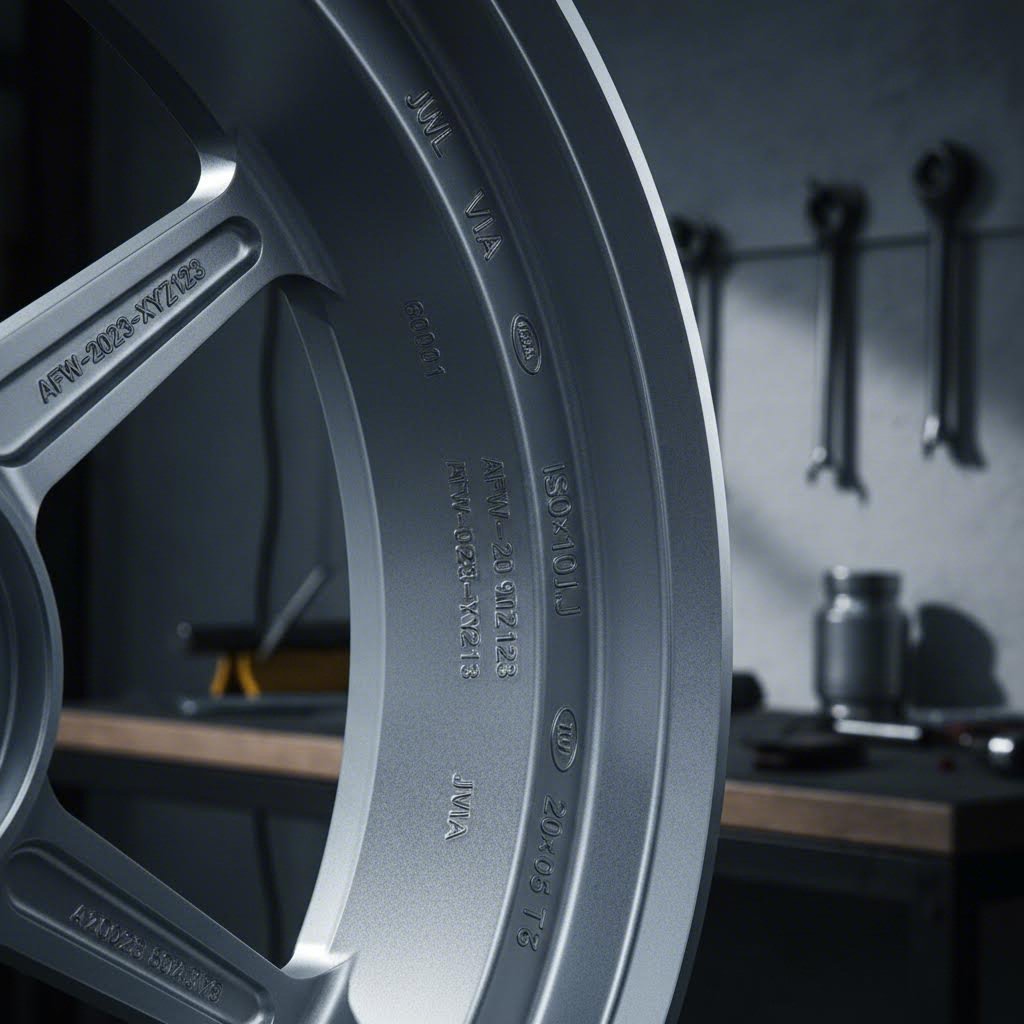
Why Every Forged Wheel Tells a Story Through Its Markings
Ever wondered what those cryptic numbers and stamps on your forged wheels actually mean? Those markings are far more than random factory codes—they're a complete identity card that reveals everything from safety certifications to manufacturing origins. When you're investing in premium forged wheels, understanding these identifiers can mean the difference between a perfect fitment and a costly mistake.
So, what's a rim marking exactly? In simple terms, forged wheel markings are stamped or engraved codes that communicate critical specifications about the wheel's dimensions, material composition, load capacity, and regulatory compliance. These markings serve as your verification tool when buying used wheels, confirming authenticity, or ensuring the wheels match your vehicle's requirements.
Why Forged Wheels Carry Unique Identifiers
Forged wheels undergo a dramatically different manufacturing process compared to their cast counterparts. The intense pressure and heat treatment involved in forging create denser, stronger aluminum structures that must meet rigorous testing standards. According to Alcoa Wheels, forged aluminum disc wheels have carried specific identification stampings since 1977, showcasing load ratings, maximum inflation pressure, manufacturing dates, and DOT marking designations.
This extensive marking system exists because what is a wheel rim in the forged category represents a significant investment—and a critical safety component. The rim means more than just an aesthetic choice; it's an engineered part that must perform under specific load and stress conditions.
The Difference Between Forged and Cast Wheel Stamps
Cast wheels typically display basic size information and perhaps a brand logo. Forged wheels, however, carry comprehensive marking systems that reflect their superior manufacturing standards. You'll find detailed material grade codes, heat treatment designations, and multiple certification stamps that cast wheels rarely possess.
By the end of this guide, you'll decode wheel identification markings like a professional. Here's what we'll cover:
- Dimensional specifications – Size, offset, bolt pattern, and flange type markings
- Material and manufacturing indicators – Aluminum grade codes, heat treatment designations, and production dates
- Certification stamps – DOT compliance, international safety certifications, and load ratings
Whether you're verifying authenticity before a purchase or matching specifications to your vehicle, mastering these markings protects both your investment and your safety on the road.
Where to Find Markings on Forged Wheels
Now that you understand why forged wheel markings matter, the next logical question is: where exactly do you look for them? Unlike tire markings that sit prominently on the sidewall, wheel stamps are often tucked away in locations that require some detective work. Knowing precisely where to search saves you time and ensures you don't miss critical specifications when evaluating a set of forged wheels.
Most experts recommend removing the entire wheel and tire assembly and laying it on a flat surface for proper inspection. This approach gives you full access to areas that remain hidden when the wheel is mounted on your vehicle.
Mapping the Marking Zones on Your Forged Wheel
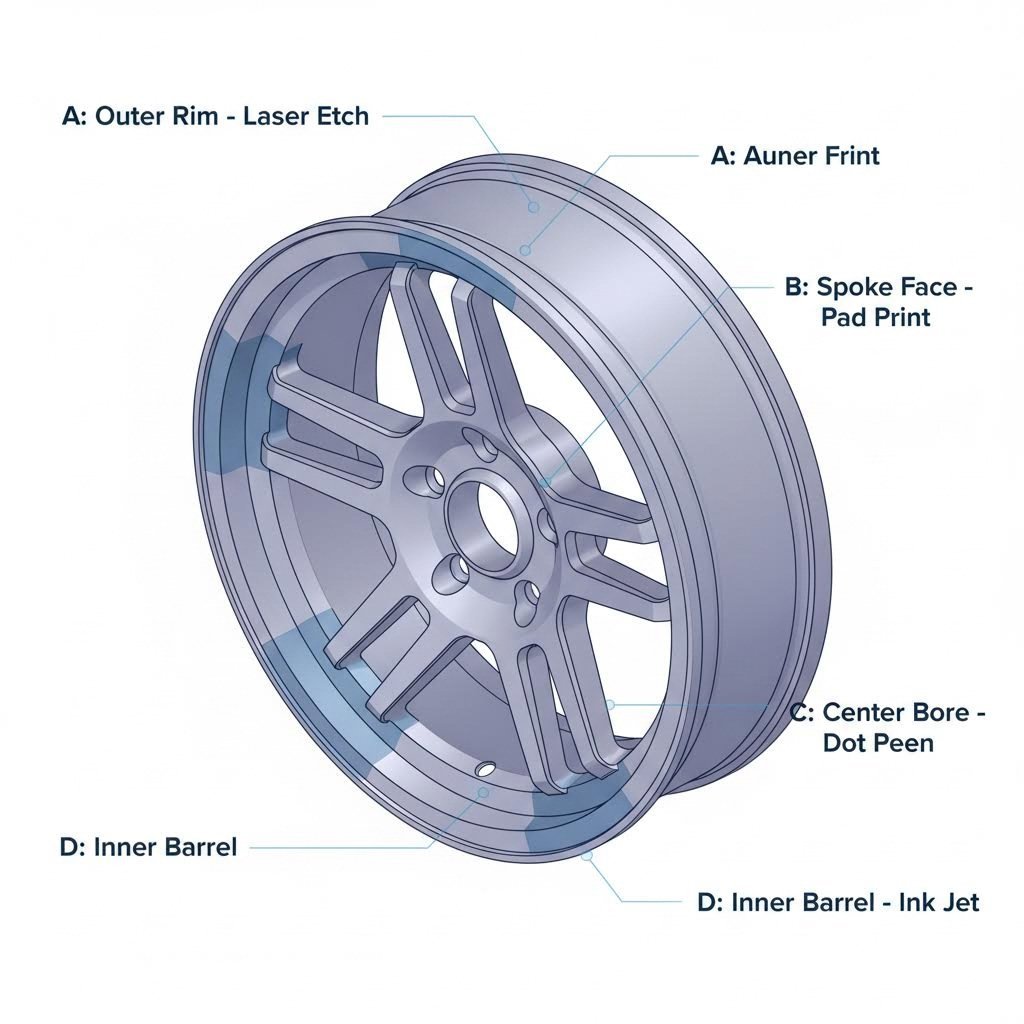
Think of your forged wheel as having four distinct zones, each serving a specific purpose in the marking system. When you examine a wheel size diagram, you'll notice these zones correspond to different structural areas of the wheel itself. Understanding this layout helps you locate information quickly, whether you're at a dealership, swap meet, or inspecting wheels in your own garage.
The spoke back area is your first stop. This zone—the rear surface of the spokes facing inward toward the vehicle—typically contains the most frequently referenced specifications: size, width, and offset values. Manufacturers place these markings here because the spoke back offers a flat, protected surface that won't be damaged during tire mounting or road use.
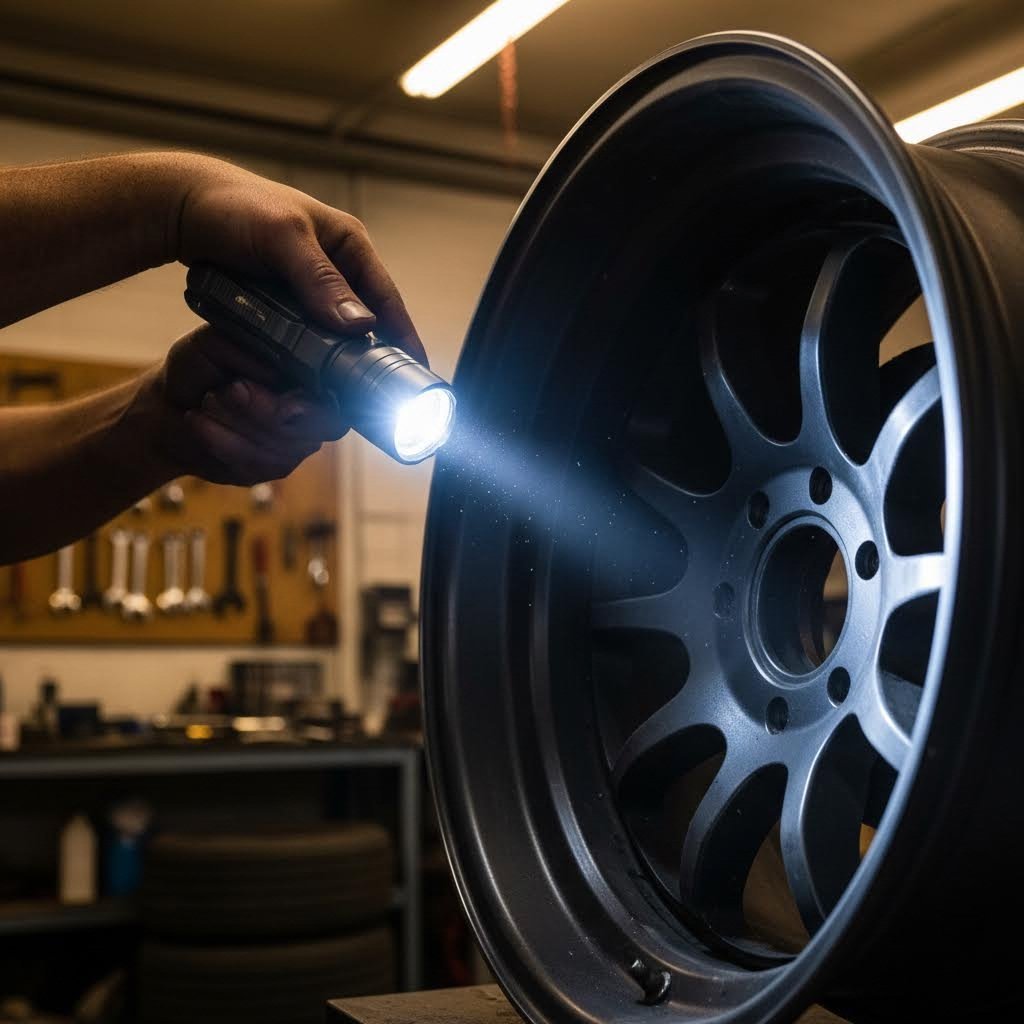
Moving deeper into the wheel, the barrel inner surface holds date codes and certification stamps. This cylindrical portion where the tire bead seats often contains manufacturing information that's critical for warranty claims and age verification. You'll typically need a flashlight and the tire removed to access these markings clearly.
Where Manufacturers Hide Critical Information
Why would manufacturers intentionally hide important markings? The answer lies in balancing compliance requirements with aesthetic appeal. Premium forged wheels command premium prices partly because of their clean, uncluttered appearance. Stamping visible markings across the face would diminish their visual impact.
The hub face—the center section where lug bolts pass through—displays manufacturer logos and part numbers. This area remains partially visible even with the wheel mounted, allowing for brand identification without a full inspection. Some manufacturers also engrave serial numbers here for theft recovery purposes.
Finally, the lip area along the outer edge sometimes carries wheel load rating stamps and safety certifications. On a 5 wheel diagram showing all positions on a vehicle, each wheel must meet minimum load requirements for that specific position, making these stamps particularly important for trucks and performance vehicles.
| Marking Location | Typical Information Found | Visibility Level |
|---|---|---|
| Spoke Back Area | Size (diameter x width), offset (ET value), flange type | Moderate – requires wheel removal |
| Barrel Inner Surface | Date codes, certification stamps, production batch numbers | Difficult – requires tire removal |
| Hub Face | Manufacturer logo, part numbers, serial numbers | Easy – visible with wheel mounted |
| Lip Area | Load ratings, safety certifications, country of origin | Moderate – visible from side angle |
When inspecting forged wheels, work systematically through each zone. Start with the easily accessible hub face, then examine the spoke backs with the wheel removed. For complete verification—especially when purchasing used wheels—insist on seeing the barrel markings with the tire dismounted. This thorough approach ensures you capture every rim size stamp and certification mark before making your decision.
With the marking locations mapped out, the next step is understanding what those dimensional specifications actually mean for your vehicle's fitment.
Dimensional Markings and Size Specifications Decoded
You've located the marking zones on your forged wheel—now it's time to translate those numbers and letters into meaningful specifications. When you encounter a stamp like "18x8.5J ET35 5x114.3," you're looking at a complete dimensional blueprint that determines whether that wheel fits your vehicle perfectly or causes rubbing, handling issues, or safety concerns.
Understanding rim measurements explained in this format empowers you to make confident purchasing decisions. Let's break down each component so you can read these markings like a seasoned wheel specialist.
Decoding the Size Stamp Format
The most common marking you'll encounter follows a standardized format that communicates diameter, width, and flange profile in a single string. According to Oponeo, a typical example like "7.5Jx16H2" tells you everything about the wheel's basic dimensions.
So how do you measure a rim from these markings? Here's what each element represents:
- The marking format varies. In "7.5Jx16", the first number (7.5) is the width. However, in "18x8.5", the first number (18) is the diameter. Always verify based on the smaller number typically being the width.
- Second number after "x" (e.g., 16 or 18) – The wheel diameter in inches, measured from bead seat to bead seat across the wheel face. This must match your tire's final number.
- Letter designation (e.g., J, JJ, B, K) – The flange type or bead profile, indicating the shape of the wheel's outer edge where the tire bead seats. The "J" profile is standard for most passenger vehicles.
- H designation (e.g., H2, FH) – The hump configuration that helps retain the tire bead during cornering forces. "H2" indicates humps on both sides of the wheel.
When learning how to read rim size, remember that the flange letter matters more than most buyers realize. As reference materials confirm, using tires designed for a "J" profile on wheels with a "B" profile creates compatibility issues that affect tire seating and safety.
Understanding ET Offset Numbers
The ET value is where wheel dimensions explained become critically important for fitment. You'll see markings like "ET35" or "ET45" stamped on forged wheels, and this number directly affects how your wheel sits relative to your vehicle's suspension and body panels.
What does ET mean on rims? ET stands for "Einpresstiefe"—the German word for offset. According to Arnold Clark, this value represents the millimeter distance between the hub mounting surface and the wheel's centerline.
Here's how the three offset types affect your vehicle:
- Positive offset (e.g., ET35, ET45) – The mounting surface sits toward the wheel's front face, tucking the wheel further into the wheel arch. Most modern vehicles use positive offset for proper suspension geometry.
- Zero offset (ET0) – The mounting surface aligns exactly with the wheel's centerline. This creates a neutral stance where the wheel neither tucks in nor protrudes outward.
- Negative offset (e.g., ET-15, ET-25) – The mounting surface sits toward the wheel's back, causing the wheel to protrude outward from the body. Common on trucks, off-road vehicles, and some performance applications.
Getting the offset wrong creates real problems. Incorrect ET values can cause tire rubbing against fenders or suspension components during turns, accelerated bearing wear from improper load distribution, and compromised handling characteristics that affect vehicle safety.
Manufacturers typically allow approximately 2% deviation in overall wheelbase, which translates to roughly 15-20mm of offset flexibility on most vehicles. However, changing wheel width also affects how offset impacts fitment, so both specifications must be considered together.
Bolt Pattern and PCD Markings
The final dimensional marking you'll encounter is the bolt pattern, often displayed as "5x114.3" or "4x100." How do you measure a wheel rim's bolt pattern? The first number indicates how many lug holes exist, while the second number represents the Pitch Circle Diameter (PCD)—the diameter of an imaginary circle passing through the center of each bolt hole.
Forged wheels typically stamp this information clearly because bolt pattern mismatches create dangerous situations. A wheel with the wrong PCD simply won't mount properly, and forcing the issue damages both the wheel and hub assembly.
When you combine all these dimensional markings—diameter, width, flange type, offset, and bolt pattern—you have the complete rim size explained for accurate fitment verification. Cross-reference these specifications against your vehicle's requirements before any purchase, and you'll avoid the frustration of wheels that look perfect but won't function safely on your specific application.
Material Grade and Manufacturing Process Indicators
You've mastered the dimensional specifications—now it's time to understand what your forged wheel is actually made of. Those alphanumeric codes stamped alongside size markings reveal the aluminum alloy composition and heat treatment process that define your wheel's performance characteristics. When you see "6061-T6" on a forged wheel, you're looking at a material DNA marker that separates premium aluminum alloy wheels from inferior alternatives.
So what is a wheel made of when it carries these designations? Understanding these codes helps you distinguish between wheels engineered for demanding applications and those that merely look the part. Let's decode what these material markings mean for your investment and safety.
What Aluminum Grade Codes Reveal About Quality
The first part of a material marking—typically a four-digit number like 6061 or 7075—identifies the specific aluminum alloy used in forging. According to Engineers Edge, this numbering system follows international standards where the first digit indicates the primary alloying element.
When comparing alloy vs aluminum wheels, the distinction matters: pure aluminum lacks sufficient strength for wheel applications, so manufacturers add specific elements to create alloys with enhanced properties. Here's what common forged wheel alloys contain:
- 6061 alloy – The most popular choice for forged wheels, combining aluminum with magnesium and silicon. This blend delivers excellent strength, corrosion resistance, and weldability.
- 6082 alloy – Similar to 6061 but with slightly higher silicon content, offering marginally better strength in some applications.
- 7075 alloy – A zinc-based alloy used in aerospace and racing applications, providing higher tensile strength but at greater cost.
When evaluating alloy vs aluminum rims in the marketplace, remember that "aluminum" wheels without specific alloy designations typically indicate cast construction with unspecified material grades. Premium forged wheels proudly display their 6061 or 7075 designations because these alloys represent verified quality.
According to 3030 Autosport, 6061-T6 forged aluminum stands as a premier choice in sectors like military applications, aerospace, Formula 1, and drag racing. The alloy's composition includes magnesium for enhanced strength through solid solution strengthening, silicon that works with magnesium to improve strength while lowering melting temperature for easier forging, and copper in minor amounts to increase corrosion resistance.
Heat Treatment Designations Explained
The letter and number following the alloy code—the "T6" in 6061-T6—reveals the thermal processing that transformed raw aluminum into high-performance wheel material. This designation is where aluminum wheel forging truly differentiates itself from casting processes.
The "T" indicates thermal treatment, and the following digit specifies exactly how the material was processed. For forged wheels, these are the designations you'll commonly encounter:
- T6 – Solution heat treated and artificially aged. The alloy is heated to high temperature, quenched rapidly, then aged at elevated temperature to precipitate strengthening elements in a controlled manner.
- T651 – Same as T6 but with additional stress relief through stretching, reducing residual manufacturing stresses.
- T7 – Solution heat treated and stabilized beyond maximum strength to improve stress-corrosion resistance.
Understanding how are forged wheels made helps explain why T6 treatment matters so much. During forging, intense pressure aligns the aluminum's grain structure, creating inherent strength. The subsequent T6 heat treatment process—solution heating followed by controlled quenching and aging—maximizes this structural advantage by precipitating strengthening compounds throughout the material.
The T6 treatment significantly enhances the alloy's yield strength and hardness, making it ideal for high-stress applications. This combination of composition and heat treatment yields a material with superior strength and toughness critical for components that must endure extreme operational stresses.
Why should these technical details influence your buying decisions? Because material grade directly impacts real-world performance. A properly marked aluminum alloy wheel rim with 6061-T6 designation offers:
- Superior strength-to-weight ratio – Forged 6061-T6 wheels typically weigh 21-30 pounds each while handling loads that would crack lesser materials.
- Enhanced fatigue resistance – The aligned grain structure and heat treatment allow these wheels to absorb repeated stress cycles without developing cracks.
- Excellent corrosion resistance – Particularly valuable for all-weather driving conditions where road salt and moisture attack unprotected metals.
- Optimal thermal properties – Better heat dissipation from braking, which maintains consistent stopping performance during aggressive driving.
When inspecting forged wheels, the presence of clear material grade markings signals a manufacturer confident in their product quality. Wheels lacking these designations—or displaying only vague "forged aluminum" claims—may not deliver the performance characteristics you're paying for. This knowledge transforms you from a casual buyer into an informed consumer who recognizes genuine quality markers.
With material composition understood, the next critical marking category involves safety certifications and compliance stamps that verify your wheels meet legal and safety standards.
Safety Certifications and Compliance Stamps
You've identified the material grade and dimensional specifications—but there's one more category of wheel rim codes that directly impacts your safety and legal compliance. Certification stamps represent third-party verification that your forged wheels have passed rigorous testing protocols. Without these markings, you're essentially trusting an unverified product with your life every time you drive.
Why does this matter so much? According to ATIC Global Services, wheel performance is critical to vehicle safety, and many countries mandate certification for aftermarket wheels entering their markets. These stamps aren't just decorative—they're legal requirements in numerous jurisdictions and your proof that independent testing laboratories have validated the wheel's structural integrity.
Let's decode the certification markings you'll encounter on forged wheels, starting with the stamp most relevant to American buyers.
DOT Stamps and US Compliance Requirements
The DOT marking—short for Department of Transportation—indicates that a wheel meets United States federal motor vehicle safety standards. When you see "DOT" followed by alphanumeric codes stamped on your forged wheel, you're looking at verification that the wheel has been registered with the US DOT and complies with applicable regulations.
What exactly does DOT certification verify? The marking confirms that the wheel manufacturer has tested their product according to established wheel specifications and registered the results with federal authorities. This includes verification of automotive wheel dimensions, load capacity ratings, and structural performance under stress testing.
Here's what you need to understand about DOT markings:
- Registration requirement – All motor vehicle wheels sold in the US must meet DOT testing requirements and carry corresponding DOT marks on the product.
- Manufacturer identification – The alphanumeric code following "DOT" identifies the specific manufacturer and production facility.
- Compliance scope – DOT certification covers rim specifications including load capacity, structural integrity under fatigue testing, and impact resistance.
Additionally, manufacturers may pursue AMECA certification—a voluntary industry standard administered by the Automotive Manufacturers Equipment Compliance Agency. While not legally required, AMECA certification provides additional third-party validation that many reputable wheel manufacturers obtain to demonstrate quality commitment.
When purchasing wheels from international sellers, always verify DOT markings are present if you intend to use them legally on US roads. Wheels lacking DOT stamps may fail state inspections or create liability issues in accident situations.
International Certification Marks Explained
Beyond DOT stamps, forged wheels may carry various international certifications depending on where they were manufactured and which markets they're approved for. Understanding these markings becomes essential when importing wheels or purchasing from global sellers.
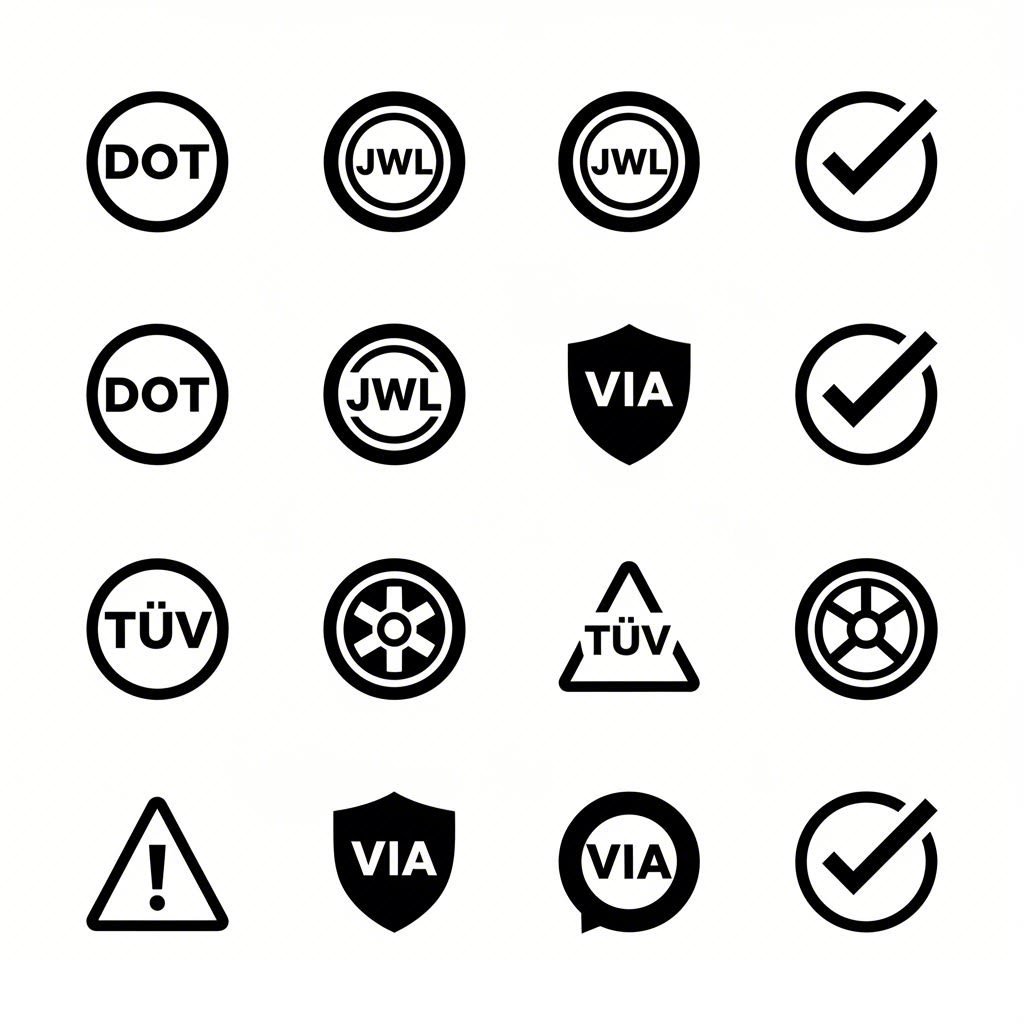
JWL and JWL-T (Japan)
The Japanese Light Alloy Wheel (JWL) standard represents one of the most respected certification systems globally. According to Velgen Wheels, JWL testing includes the same evaluations as SAE ratings—radial fatigue, bending fatigue, and impact tests—with an additional roundness test ensuring wheels are free of deformities.
The key distinction? JWL mandates that manufacturers have their wheels inspected and approved by certified third-party laboratories. You'll see "JWL" stamped on passenger car wheels and "JWL-T" on wheels designed for trucks and larger vehicles. These markings indicate compliance with Japan's Ministry of Transportation security standards.
VIA (Japan Vehicle Inspection Association)
Founded in 1987, the Vehicle Inspection Association provides what many consider the gold standard for wheel certification. VIA builds upon JWL requirements with even stricter guidelines and additional testing protocols.
What makes VIA certification particularly rigorous? According to industry sources, VIA tests wheels with different tire sizes and vehicles—not just isolated laboratory conditions. The testing includes deformation testing, durability testing, tensile testing, and independent third-party verification. For wheels entering the Japanese market, VIA certification is essentially mandatory for light alloy wheels.
TÜV (Germany)
TÜV SÜD operates as Europe's largest independent institute for tire and wheel technologies. Their certification process includes comprehensive testing according to StVZO (German road traffic regulations), ECE standards, and customer-specified requirements.
TÜV wheel testing covers bending fatigue, radial fatigue, biaxial impact, energy absorption, radial impact, and torsion testing. When you see a TÜV stamp on forged wheels, you're looking at validation from one of the world's most demanding testing organizations—one that works extensively with top automotive OEMs worldwide.
ECE/E-Mark (European Union)
The E-mark certification, governed by UNECE Regulation R124, represents mandatory certification for passenger vehicle wheels sold in European Union countries. This certification verifies compliance with auto wheel dimensions standards, bending fatigue performance, radial fatigue resistance, impact testing, and corrosion resistance.
E-mark stamps appear as "E" followed by a number indicating which EU member state issued the approval. This marking is legally required for wheels sold in the European market and indicates thorough third-party testing.
| Certification | Origin Country | What It Verifies | Typical Location on Wheel |
|---|---|---|---|
| DOT | United States | Federal motor vehicle safety compliance, load ratings, structural integrity | Barrel inner surface or spoke back |
| JWL / JWL-T | Japan | Bending fatigue, radial fatigue, impact resistance, roundness | Spoke back or hub face |
| VIA | Japan | Extended JWL testing plus deformation, durability, and tensile performance | Adjacent to JWL marking |
| TÜV | Germany | StVZO compliance, fatigue testing, impact resistance, torsion performance | Barrel inner surface or lip area |
| ECE / E-Mark | European Union | UNECE R124 compliance including fatigue, impact, and corrosion testing | Barrel inner surface |
| SAE | United States | Minimum load capacity, radial/cornering fatigue, impact and torsion resistance | Spoke back or barrel |
Why should certification stamps influence your purchasing decisions? Consider these scenarios:
- Importing wheels from overseas sellers – Wheels without DOT certification cannot be legally used on US roads. Always verify appropriate certifications before purchasing internationally.
- Insurance and liability concerns – In accident investigations, non-certified wheels may create liability issues or void coverage.
- Resale value protection – Properly certified wheels command higher resale prices because buyers can verify quality through recognized markings.
- Performance assurance – Certification stamps represent proof that independent laboratories—not just manufacturers—have validated structural performance under extreme conditions.
When inspecting forged wheels, treat missing or illegible certification stamps as red flags. Legitimate manufacturers proudly display their compliance markings because obtaining these certifications requires significant investment in testing and quality control. Wheels lacking appropriate certifications may have bypassed the rigorous testing that protects you every mile you drive.
With certification markings decoded, the next important category involves date codes and production information that help verify wheel age and authenticity.
Date Codes and Production Identification
You've verified the certifications and confirmed the material grade—but how old is that forged wheel you're considering? Date codes and production markings answer this critical question, serving as a rim identifier that reveals manufacturing history, supports warranty claims, and exposes potential counterfeits. When purchasing used forged wheels, these often-overlooked markings become your most valuable verification tool.
Understanding how to read these code rims markings transforms you from a casual shopper into a savvy buyer who catches details that others miss. Let's explore how production information protects your investment.
Reading Production Date Codes
Manufacturing date stamps follow various formats depending on the manufacturer, but most forged wheel producers use recognizable systems once you know what to look for. According to Alcoa Wheels, their roll stamps have included date of manufacture information since 1977—a standard that many premium manufacturers have adopted.
Common date code formats you'll encounter include:
- Week-Year format (e.g., 2423) – The first two digits indicate the production week (01-52), while the last two represent the year. So "2423" means the wheel was manufactured during the 24th week of 2023.
- Month-Year format (e.g., 0522) – Some manufacturers use a two-digit month followed by two-digit year. "0522" indicates May 2022 production.
- Julian date format (e.g., 156-23) – The first number represents the day of the year (1-365), followed by the year. "156-23" means the 156th day of 2023.
- Alphanumeric codes – Premium manufacturers may use proprietary systems where letters represent months or production facilities.
Why do date codes matter? Warranty claims require proof of manufacturing date, and most forged wheel warranties range from one to five years depending on the manufacturer. Without readable date codes, you cannot verify warranty eligibility—a significant concern when purchasing premium wheels that cost thousands of dollars.
Date codes also reveal wheel age, which affects material properties over time. While properly stored forged wheels maintain their integrity for decades, wheels that have been in service accumulate stress cycles and potential fatigue damage. Knowing the manufacturing date helps you assess how long a used wheel may have been exposed to road conditions.
Using Part Numbers for Wheel Verification
Beyond date codes, part numbers serve as the wheel's unique fingerprint. These alphanumeric sequences identify the exact wheel model, size configuration, finish, and sometimes the production batch. When you need replacement wheels or want to verify authenticity, part numbers become essential.
Conducting a rim size lookup using part numbers allows you to cross-reference manufacturer databases for specifications. Many manufacturers provide online tools where entering the part number returns complete wheel specifications including diameter, width, offset, bolt pattern, and load rating. An Alcoa part number search, for example, connects you directly to official specifications and confirms whether a wheel is genuine.
Is the bolt pattern stamped on the rim alongside these part numbers? In most cases, yes—but part numbers provide additional verification because they link to manufacturer records that include the complete rim size markings and specifications. This cross-referencing capability makes part numbers invaluable when:
- Ordering replacement wheels for a matched set
- Verifying that a used wheel matches its claimed specifications
- Confirming authenticity through manufacturer databases
- Identifying correct service procedures and torque specifications
Spotting Counterfeits Through Date and Production Markings
Here's where date codes and part numbers truly prove their worth: exposing counterfeit wheels. According to JJJ Wheel, counterfeit alloy wheels pose significant safety risks because they're manufactured using substandard materials and production processes, resulting in structural weaknesses and higher failure risk.
When buying used forged wheels, treat the following as red flags that warrant additional scrutiny:
- Missing or illegible date codes – Legitimate manufacturers ensure production markings remain readable. Intentionally obscured codes suggest something to hide.
- Date codes that don't match seller claims – If a seller claims wheels are "barely used" but date codes show five-year-old production, investigate further.
- Part numbers that don't verify – When a part number search returns no results or specifications that don't match the physical wheel, you're likely looking at a counterfeit.
- Inconsistent marking styles – Genuine forged wheels display consistent font styles, stamp depths, and placement across all markings. Irregular or sloppy stampings indicate non-factory production.
- Mismatched date codes within a set – Authentic wheel sets from the same purchase typically share similar production dates. Wildly different date codes across a "matching" set suggest assembled counterfeits or misrepresented replacements.
- Altered or re-stamped markings – Look for evidence of grinding, welding, or re-engraving around date codes and part numbers. Counterfeiters sometimes modify markings to match desirable specifications.
The reference materials emphasize checking for "identifying marks and codes that are commonly found on genuine products," including casting marks, part numbers, and certification symbols. If wheels lack these markings or display altered identification, treat this as a significant red flag for potential counterfeits.
When evaluating used forged wheels, document all date codes and part numbers before purchase. Take clear photographs and verify the information through manufacturer resources or authorized dealers. This verification step takes minutes but protects you from purchasing wheels that could fail catastrophically or prove worthless at resale.
Production markings complete the identification puzzle—but what about the manufacturer logos and brand-specific codes that distinguish one wheel maker from another? Understanding these systems helps you navigate both OEM and aftermarket options confidently.
Manufacturer Logos and Brand-Specific Codes
You've decoded the dimensional specs, material grades, and certification stamps—but what about the branding elements that identify who actually made your forged wheels? Manufacturer logos and proprietary coding systems add another layer to wheel identification, helping you verify authenticity and understand the quality standards behind your purchase. Whether you're browsing a rims brands list or evaluating a single used wheel, recognizing these manufacturer-specific markings separates informed buyers from those who get fooled by imposters.
According to StockWheels.com, factory original wheels can sometimes be identified by the center cap logo—however, even this can be deceiving as some custom wheel manufacturers place stickers that mimic factory original center caps. This reality makes understanding the complete marking system essential for proper verification.
OEM vs Aftermarket Marking Conventions
Original Equipment Manufacturer (OEM) wheels and aftermarket forged wheels follow different marking philosophies, though both must comply with the same dimensional and certification standards we've already covered.
OEM forged wheels typically display subtle branding. You'll find the automaker's part number prominently stamped—often on the spoke back or hub face—while the actual wheel manufacturer's identity may be less obvious. This approach prioritizes the vehicle brand over the component supplier. Reference materials confirm that checking the back of the wheel for OEM markings reveals the story, with almost all stock rims carrying a manufacturer number or logo.
Aftermarket wheel rim brands take the opposite approach. Premium forged wheel manufacturers prominently display their logos because brand recognition drives sales. You'll typically find:
- Center cap logos – The most visible brand identifier, often featuring distinctive designs or crown logo rims that signal premium positioning
- Spoke face engravings – Some manufacturers laser-engrave their name directly onto visible spoke surfaces
- Barrel stampings – Brand name, model designation, and proprietary part numbers on the inner barrel
- Serial number plates – Premium brands like BBS and HRE attach individual serial plates verifying authenticity
When examining rims with a crown logo or other distinctive branding, remember that logos alone don't guarantee authenticity. Counterfeiters replicate visual elements easily—it's the complete marking system that reveals the truth.
Brand-Specific Coding Systems
While all wheel manufacturers must include standard dimensional markings (size, offset, bolt pattern) and appropriate certifications, many use proprietary coding systems for internal tracking and model identification. Understanding these variations helps you research wheels effectively across different truck rim brands and passenger vehicle options.
Common marking variations between manufacturers include:
- Model name placement – Some brands stamp model names (like "TE37" or "RS-GT") prominently; others use alphanumeric codes only
- Finish designation codes – Letters or numbers indicating specific color or surface treatment (e.g., "MB" for matte black, "HP" for hyper polish)
- Weight markings – Premium manufacturers sometimes stamp individual wheel weights for balancing reference
- Country of origin stamps – "Made in Japan," "Forged in USA," or similar designations that indicate manufacturing location
- Quality control stamps – Inspector initials or QC batch codes specific to the manufacturer's process
Reference materials from Automator confirm that each rim should be marked with manufacturer's name for traceability and corporate branding, production site codes, approval lot numbers, and size specifications. This standardized approach means you can expect certain marking categories regardless of brand—though the specific format varies.
Identifying Unmarked or Poorly Marked Wheels
What does it mean when you encounter wheels with missing, incomplete, or illegible markings? This situation raises immediate concerns about quality and authenticity.
According to StockWheels.com, it is almost always true that if your cap has no OEM logo AND there are no factory original equipment stampings or markings on the back of your wheel, that it is not a stock wheel. The same principle applies to aftermarket forged wheels—legitimate manufacturers invest significantly in proper marking systems.
Wheels with inadequate markings may indicate:
- Counterfeit production – Fake wheels often lack proper certification stamps because they haven't passed legitimate testing
- Gray market imports – Wheels manufactured for markets with less stringent requirements may lack certifications needed for your region
- Altered or refinished wheels – Chroming, powder coating, or machining can obscure original markings, potentially hiding damage or age
- Budget manufacturing – Lower-tier producers may skip proper marking to reduce costs, signaling overall quality concerns
Some aftermarket tell-tale stampings mentioned in reference materials include "max-load" and "VIA" markings—interestingly noted as marks that factory original wheels typically don't carry. This distinction helps when determining whether wheels are OEM or aftermarket replacements.
When evaluating any forged wheel purchase, demand complete marking visibility. Reputable sellers willingly provide detailed photos of all stamped areas. If markings appear intentionally obscured, recently altered, or simply absent, treat this as a significant warning sign regardless of how impressive the rim brands logos on the center caps appear.
With manufacturer identification understood, you're now equipped to apply all this marking knowledge to real-world purchasing scenarios—verifying authenticity, confirming fitment, and protecting your investment before money changes hands.
Practical Guide to Verifying Forged Wheel Authenticity
You've learned to decode dimensional specifications, material grades, certification stamps, and manufacturer markings—now it's time to put that knowledge into action. Whether you're inspecting a set of used forged wheels at a swap meet or evaluating an online listing from an overseas seller, having a systematic verification process protects your investment and safety. How do you find out what size rims you have and confirm they match what a seller claims? Let's walk through the practical steps that separate confident buyers from those who get burned.
According to Tree Wheels, poor quality wheels not only impact performance but can pose serious safety risks and waste thousands of dollars. The verification process we'll outline here addresses these concerns systematically, ensuring you catch problems before they become expensive mistakes.
Verification Checklist for Used Wheel Purchases
Buying used forged wheels offers significant savings—but without proper inspection, those savings can disappear quickly through repair costs or dangerous driving conditions. Before committing to any purchase, work through this step-by-step verification process:
- Request complete marking photographs – Ask the seller to photograph all four marking zones: spoke back, barrel inner surface, hub face, and lip area. If they hesitate or claim markings are "not important," treat this as a warning sign.
- Cross-reference dimensional markings – Compare the stamped specifications (diameter, width, offset, bolt pattern) against your vehicle's requirements. How do I find out my rim size requirements? Check your owner's manual or the placard inside your driver's door jamb.
- Verify certification stamps – Confirm appropriate certifications (DOT for US use, JWL/VIA for Japanese wheels, TÜV/ECE for European imports) are present and legible. Missing certifications may indicate counterfeit production or gray market imports.
- Decode date codes – Calculate the wheel's age from production date stamps. Wheels older than 10 years warrant extra scrutiny for fatigue, and excessive age differences within a "matching" set suggest assembled counterfeits.
- Validate part numbers – Search the manufacturer's database using stamped part numbers. If specifications don't match or no results appear, you're likely looking at counterfeit products.
- Inspect material grade markings – Confirm 6061-T6 or equivalent alloy designations appear. Wheels lacking material specifications may use inferior alloys that compromise performance.
- Perform physical inspection – Check for cracks around lug holes, examine for bends using a straight edge, and verify the bead seat area shows no damage. According to industry experts, used wheels should also be pressure tested for leaks.
- Conduct the tap test – Gently tap the wheel with a non-marring tool. Genuine forged wheels produce a clear, bell-like tone, while counterfeits often sound duller due to inferior materials or hidden damage.
How to check rim size accuracy? Weight comparison offers an effective verification method. Most reputable manufacturers publish exact weight specifications for their wheels. If you have access to a scale, weigh the wheels and compare to official figures—counterfeits often use less material or inferior alloys, resulting in weights that don't match published specifications.
Matching Markings to Your Vehicle Requirements
Understanding how to find the rim size your vehicle needs is half the equation—the other half is confirming the wheels you're evaluating actually match those requirements. This matching process prevents fitment issues that cause rubbing, handling problems, or safety hazards.
Start by gathering your vehicle's wheel specifications from the owner's manual or manufacturer documentation. You'll need:
- Diameter and width range – Most vehicles accept a range of sizes (e.g., 17x7.5 to 18x8.5)
- Offset tolerance – Typically 15-20mm variation from stock is acceptable, but this depends on your specific vehicle
- Bolt pattern (PCD) – This must match exactly; there's no flexibility here
- Center bore diameter – Must equal or exceed your vehicle's hub diameter
- Load rating – Must meet or exceed your vehicle's weight requirements
How to know what size rims you have on wheels you're evaluating? Locate the size stamp on the spoke back—it displays the complete dimensional specification in standardized format. Cross-reference each component against your vehicle requirements before proceeding.
For buyers seeking additional assurance, Wheels Doctor recommends consulting your VIN or dealership for exact wheel details, then verifying that potential purchases match those specifications precisely. This extra step catches subtle compatibility issues that visual inspection might miss.
Why Manufacturer Quality Standards Matter
All the marking knowledge in the world means little if the wheels themselves come from manufacturers who cut corners. The reference materials emphasize that certifications like JWL, VIA, TÜV, and IATF 16949 indicate a company's dedication to quality and safety—and these certifications aren't optional for serious buyers.
According to Flexiforge Wheel, IATF 16949:2016 certification is vital for wheel manufacturers supplying major automakers, covering the entire production process and ensuring high-quality standards at every stage. This certification focuses on continuous improvement and defect prevention—exactly what you want from components that directly impact your safety.
How to find your rim size requirements and source wheels that meet them reliably? Work with manufacturers who maintain rigorous quality control processes and produce consistent, traceable markings. IATF 16949 certified manufacturers like Shaoyi (Ningbo) Metal Technology ensure their forged components carry proper documentation and meet exact specifications through in-house engineering and comprehensive quality systems. This level of manufacturing discipline produces the clear, accurate wheel markings that make verification straightforward.
The manufacturing environment itself reveals much about quality. Reference materials note that when visiting a wheel manufacturer, caution is warranted if you only see CNC machines, painting areas, and basic inspection stations—this suggests many critical processes are outsourced, potentially compromising quality control and marking accuracy.
Red Flags That Demand Walking Away
Sometimes the best purchase decision is no purchase at all. Based on the marking knowledge you've developed, watch for these warning signs that indicate wheels aren't worth the risk:
- Seller refuses to provide marking photographs – Legitimate sellers have nothing to hide
- Certification stamps are missing or illegible – This indicates either counterfeit production or wheels manufactured for less-regulated markets
- Part numbers don't verify through manufacturer databases – A strong indicator of counterfeit wheels
- Weight doesn't match published specifications – Counterfeits often use less material to reduce costs
- Date codes within a set don't align – Suggests assembled counterfeits rather than genuine matched sets
- Price seems too good to be true – Premium forged wheels command premium prices; deep discounts warrant suspicion
- Markings show signs of alteration – Grinding, re-stamping, or obscured areas indicate potential fraud
Reference materials confirm that wheels marketed as "forged" are sometimes actually lower-quality cast products with inflated prices. Your marking verification skills protect you from this deception by revealing the true manufacturing story behind any wheel.
Armed with this systematic verification approach, you're prepared to evaluate forged wheels confidently—knowing exactly what to check, where to find it, and when to walk away. The final step is understanding which markings matter most and how to apply this knowledge for long-term protection of your investment and safety.
Mastering Forged Wheel Markings for Smarter Decisions
You've journeyed through the complete landscape of forged wheel markings—from dimensional specifications and material grades to certification stamps and manufacturer codes. Now it's time to consolidate that knowledge into actionable guidance you can apply every time you evaluate forged wheels. Understanding what are rims telling you through their markings isn't just technical knowledge—it's financial protection and safety assurance rolled into one skill set.
Whether you're shopping for your first set of premium wheels or adding to an existing collection, the marking verification habits you build now will serve you for years to come. Let's crystallize the essential takeaways that separate informed buyers from those who learn expensive lessons the hard way.
Essential Markings to Always Verify
Not all markings carry equal weight when evaluating forged wheels. Some reveal critical safety information while others provide secondary verification. Prioritize your inspection time on these must-check elements:
- Dimensional specifications (size, offset, bolt pattern) – These determine whether wheels physically fit your vehicle. Incorrect specifications cause rubbing, handling issues, and potential component damage.
- Certification stamps (DOT, JWL, VIA, TÜV, ECE) – These prove third-party testing laboratories have validated structural integrity. Missing certifications indicate untested products or counterfeits.
- Material grade designations (6061-T6 or equivalent) – These confirm the aluminum alloy composition and heat treatment that define performance characteristics.
- Date codes and part numbers – These verify age, support warranty claims, and enable manufacturer database cross-referencing to confirm authenticity.
- Manufacturer identification – Legitimate producers proudly display their branding and quality control markings; missing or obscured identification warrants suspicion.
When examining different types of wheel rims, remember that the alloy wheels meaning extends beyond appearance. The markings stamped into that metal represent manufacturing standards, testing protocols, and quality commitments that directly impact your driving safety. A wheel size explained through its markings tells you whether that component belongs on your vehicle—or belongs in someone else's garage.
Certification stamps aren't decorative—they're your proof that independent testing laboratories have validated a wheel's structural integrity under extreme conditions. Wheels lacking appropriate certifications may have bypassed the rigorous testing that protects you every mile you drive.
Your Wheel Marking Knowledge in Action
The verification skills you've developed transform how you approach forged wheel purchases. Instead of relying solely on seller claims or visual appeal, you now evaluate wheels based on verifiable evidence stamped into the metal itself.
Put this knowledge to work by:
- Demanding complete marking visibility – Request photographs of all four marking zones before any purchase. Sellers who hesitate likely have something to hide.
- Cross-referencing every specification – Compare stamped markings against your vehicle requirements and manufacturer databases. Discrepancies reveal counterfeits or incompatible products.
- Treating missing certifications as deal-breakers – No certification stamp means no independent verification of safety performance. The risk isn't worth any discount.
- Verifying manufacturing quality through rim type markings – Premium forged wheels display consistent, professional marking systems that reflect overall manufacturing discipline.
The financial protection this knowledge provides is substantial. Counterfeit wheels that fail catastrophically can cause accidents, void insurance coverage, and leave you with worthless products. Wheels with incorrect specifications create fitment problems that require expensive corrections. Understanding rim types and their associated markings prevents these costly mistakes.
Beyond individual purchases, your marking knowledge connects to broader manufacturing quality. According to industry standards, certifications like IATF 16949 indicate a company's dedication to quality and safety throughout the entire production process. Manufacturers who invest in proper certification and quality control systems produce the consistent, traceable markings that make verification straightforward.
Companies like Shaoyi (Ningbo) Metal Technology exemplify this approach—their IATF 16949 certification and in-house engineering ensure forged components carry proper documentation meeting exact specifications. When you source wheels from manufacturers with transparent marking practices and rigorous quality systems, verification becomes confirmation rather than investigation.
Every forged wheel tells a story through its markings. You now possess the knowledge to read that story completely—understanding dimensional specifications, material composition, certification status, production history, and manufacturer identity. This comprehensive understanding protects your investment, ensures proper fitment, and most importantly, keeps you safe on every drive. The next time you encounter a set of forged wheels, you'll see past the polished finish to the verified quality underneath—or recognize the warning signs that others miss.
Frequently Asked Questions About Forged Wheel Markings
1. How to tell forged wheels from cast?
Forged wheels are typically 25-30% lighter than cast wheels of the same size due to denser aluminum structure. Look for material grade markings like 6061-T6 on forged wheels, which cast wheels rarely display. Forged wheels also carry comprehensive certification stamps (JWL, VIA, TÜV) that reflect rigorous testing standards. The tap test helps too—genuine forged wheels produce a clear, bell-like tone, while cast wheels sound duller.
2. How to read markings on rims?
Rim markings follow a standardized format like 18x8.5J ET35 5x114.3. The first number indicates diameter (18 inches), followed by width (8.5 inches). The letter J denotes flange type, ET35 shows offset in millimeters, and 5x114.3 represents bolt pattern (5 bolts, 114.3mm diameter). Check the spoke back area for size stamps, barrel inner surface for date codes, and hub face for manufacturer information.
3. What do DOT and JWL certification stamps mean on wheels?
DOT stamps indicate compliance with US Department of Transportation safety standards, required for legal road use in America. JWL (Japan Light Alloy Wheel) certification verifies the wheel passed bending fatigue, radial fatigue, impact, and roundness tests. VIA certification adds stricter testing beyond JWL requirements. These stamps prove independent laboratories validated structural integrity—wheels lacking them may be untested counterfeits.
4. How can I verify if forged wheels are genuine or counterfeit?
Cross-reference part numbers through manufacturer databases—counterfeits often return no results. Check for consistent marking styles, as genuine wheels display uniform font depths and placement. Verify date codes align within a matched set, weigh wheels against published specifications (counterfeits often weigh differently), and confirm all certification stamps are present and legible. IATF 16949 certified manufacturers like Shaoyi ensure traceable, properly documented forged components.
5. What does ET offset mean and why does it matter?
ET (Einpresstiefe) measures the millimeter distance between the wheel's hub mounting surface and centerline. Positive offset (ET35, ET45) tucks wheels inward, common on modern vehicles. Negative offset pushes wheels outward, used on trucks and off-road vehicles. Wrong offset causes tire rubbing, accelerated bearing wear, and compromised handling. Most vehicles allow 15-20mm variation from stock specifications.