 Chúng tôi sẽ tham gia Triển lãm Automechanika Frankfurt 2026 — ngày 8 tháng Chín | Gian hàng 4.2, Gian M31 —
 EN
EN


Cắt Kim Loại Bằng Tia Laser: 9 Điểm Quan Trọng Trước Dự Án Đầu Tiên Của Bạn
Điều Gì Khiến Cắt Kim Loại Bằng Laser Trở Thành Tiêu Chuẩn Ngành
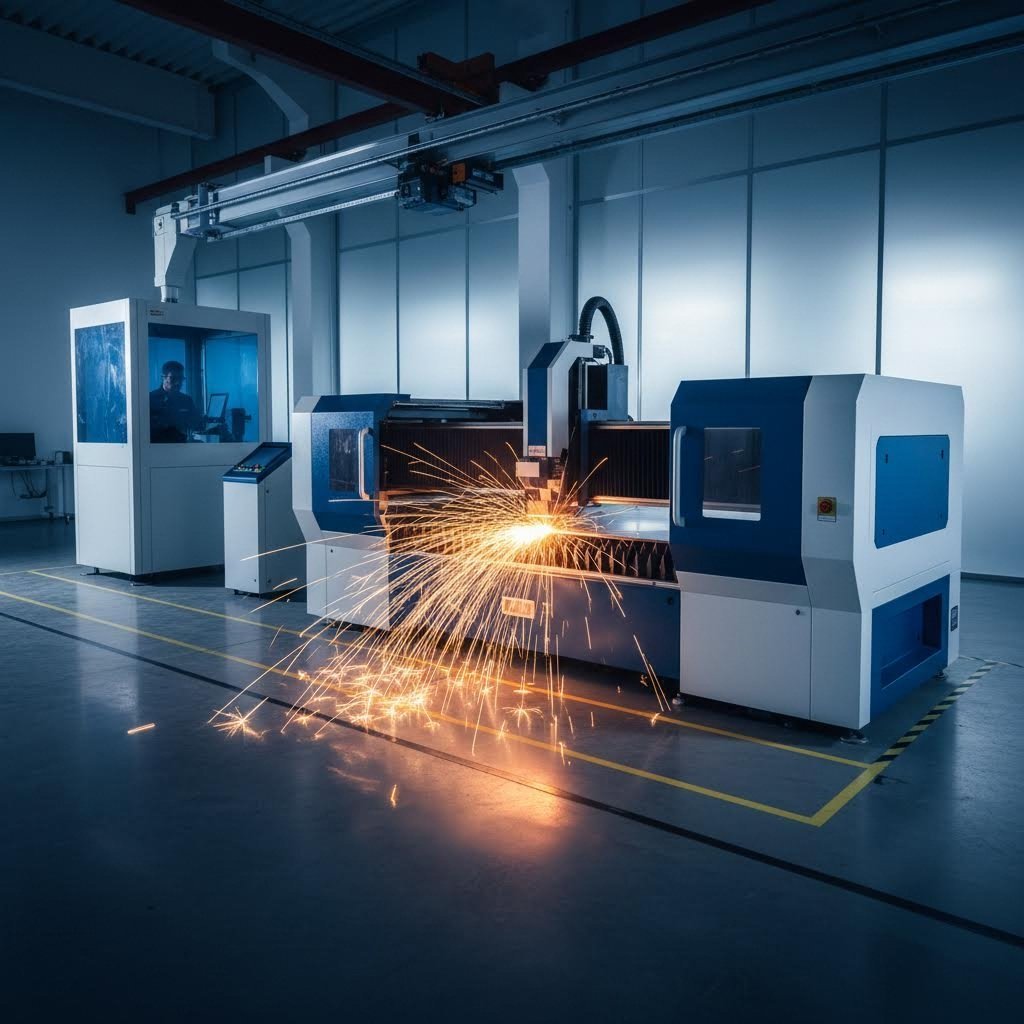
Hãy tưởng tượng việc cắt xuyên qua thép với độ chính xác như dao mổ của bác sĩ phẫu thuật—không tiếp xúc vật lý, hao phí tối thiểu, và các cạnh cắt sạch đến mức không cần gia công thêm. Đó chính xác là những gì mà phương pháp cắt kim loại bằng laser mang lại, và cũng là lý do tại sao công nghệ này đã trở thành nền tảng trong sản xuất hiện đại.
Ở trung tâm của nó, cắt kim loại bằng laser là một quá trình dựa trên nhiệt sử dụng một tia sáng được tập trung cao độ để cắt xuyên qua kim loại với độ chính xác đáng kinh ngạc. Tia laser làm nóng vật liệu đến điểm nóng chảy, trong khi khí hỗ trợ áp suất cao—thường là nitơ, oxy hoặc không khí nén—sẽ thổi phần kim loại nóng chảy ra ngoài, tạo nên đường cắt chính xác và sạch sẽ. Toàn bộ quá trình này được điều khiển bởi công nghệ CNC (Điều khiển Số Máy tính), đảm bảo mọi đường cắt tuân theo đúng thông số thiết kế kỹ thuật số với sai số tối thiểu.
Công Nghệ Laser Biến Đổi Việc Gia Công Kim Loại Như Thế Nào
Khi xem xét các yêu cầu của các ngành công nghiệp như ô tô và hàng không vũ trụ, bạn sẽ hiểu vì sao máy laser cắt kim loại đã trở nên không thể thiếu. Các lĩnh vực này đòi hỏi các bộ phận có độ dung sai chặt chẽ, hình dạng phức tạp và khả năng lặp lại liên tục — tất cả đều là những điểm mạnh mà máy cắt kim loại bằng laser vượt trội.
Dưới đây là lý do khiến công nghệ này mang tính cách mạng:
- Độ chính xác không gì sánh được: Máy cắt laser đạt được độ dung sai cực kỳ chính xác, làm cho chúng lý tưởng cho các đường cắt tinh tế và chi tiết phức tạp
- Tốc độ vượt trội: Các đường cắt tự động hóa và điều chỉnh nhanh giúp rút ngắn chu kỳ sản xuất
- Hiệu Quả Vật Liệu: Các đường cắt chính xác làm giảm đáng kể lượng phế liệu so với các phương pháp cơ học truyền thống
- Tính linh hoạt: Từ thép cacbon, thép không gỉ đến nhôm và titan, máy cắt laser kim loại xử lý dễ dàng nhiều loại vật liệu khác nhau
Khoa Học Đằng Sau Những Đường Cắt Laser Chính Xác
Nghe có vẻ phức tạp? Nguyên lý cơ bản thực ra rất tinh tế. Một tia laser (Khuếch đại ánh sáng bằng phát xạ kích thích của bức xạ) tạo ra một chùm sáng kết hợp bằng cách kích thích các nguyên tử bên trong một môi trường—khí CO2 hoặc sợi quang pha tạp các nguyên tố đất hiếm. Điều này năng lượng được khuếch đại thông qua quá trình phát xạ kích thích , trong đó các photon được phản xạ giữa các gương và cuối cùng được phát ra dưới dạng một chùm tia tập trung, năng lượng cao.
Kết quả? Một máy cắt kim loại có thể tạo ra các hình dạng và thiết kế mà sẽ rất khó khăn hoặc không thể thực hiện được bằng các công cụ truyền thống.
Trong suốt hướng dẫn này, bạn sẽ khám phá những hiểu biết thực tế về việc lựa chọn giữa laser sợi và laser CO2, hiểu rõ giới hạn về độ dày vật liệu, so sánh cắt laser với các phương pháp thay thế, và đánh giá chi phí. Dù bạn đang tìm hiểu về cắt laser kim loại cho sản xuất công nghiệp hay gia công theo yêu cầu, các phần tiếp theo sẽ trang bị cho bạn mọi thứ cần thiết để đưa ra quyết định sáng suốt cho dự án đầu tiên của mình.
So sánh Công nghệ Laser Sợi và Laser CO2
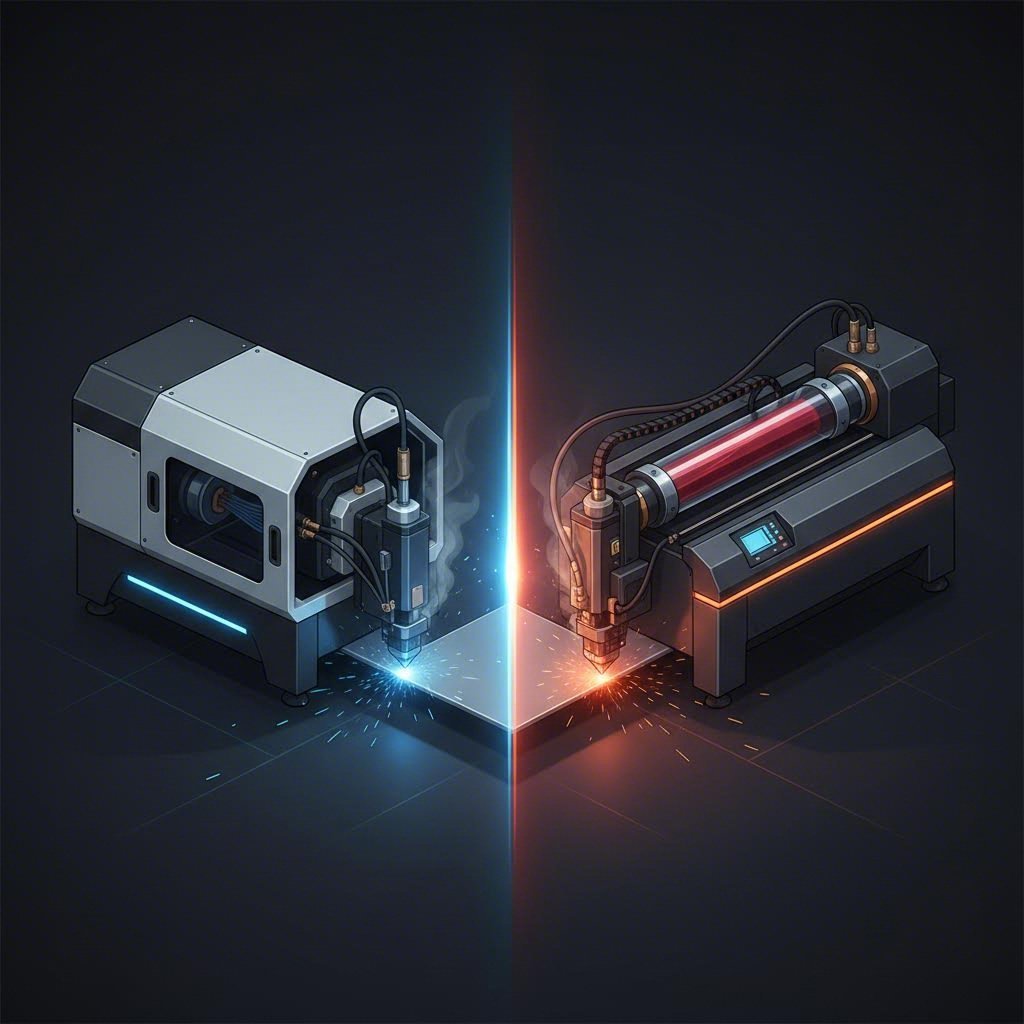
Vậy là bạn đã quyết định rằng cắt laser là phương pháp phù hợp cho dự án của mình—nhưng bạn nên chọn loại laser nào? Câu hỏi này khiến nhiều người dùng lần đầu bối rối, và đó là điều dễ hiểu. Sự khác biệt giữa công nghệ laser sợi và laser CO2 không chỉ là thuật ngữ kỹ thuật; nó ảnh hưởng trực tiếp đến tốc độ cắt, chi phí vận hành và các loại vật liệu mà bạn có thể xử lý một cách hiệu quả.
Hãy cùng phân tích cả hai công nghệ để bạn có thể đưa ra quyết định tự tin và sáng suốt.
Giải thích công nghệ laser sợi
Amáy cắt laser sợi tạo ra tia laser thông qua thiết kế trạng thái rắn sử dụng sợi quang được pha tạp các nguyên tố đất hiếm như ytterbium. Ánh sáng từ các diode bơm được hấp thụ bởi các sợi này và khuếch đại, tạo ra một tia laser với bước sóng khoảng 1,06 μm—ngắn hơn khoảng mười lần so với laser CO2.
Tại sao bước sóng lại quan trọng? Kim loại hấp thụ bước sóng ngắn hơn này hiệu quả hơn nhiều. Kết quả là các đường cắt nhanh hơn, sạch hơn và ít hao phí năng lượng hơn. Hãy hình dung như việc sử dụng một công cụ chính xác truyền gần như toàn bộ công suất trực tiếp vào vật liệu gia công.
Dưới đây là những điểm làm cho cắt laser sợi nổi bật:
- Hiệu suất điện-quang cao hơn: Laser sợi đạt hiệu suất khoảng 30-40%, so với khoảng 10% ở hệ thống CO2. Điều này có nghĩa là laser sợi tiêu thụ khoảng một phần ba lượng điện năng so với laser CO2 tương đương.
- Tốc độ vượt trội trên kim loại mỏng: Máy cắt laser sợi 2kW có thể cắt vật liệu mỏng nhanh bằng máy cắt laser CO2 4-5kW — mang lại lợi thế tốc độ gấp 2-3 lần trên tấm kim loại dưới 5mm.
- Bảo trì tối thiểu: Thiết kế trạng thái rắn loại bỏ nhu cầu sử dụng gương, thấu kính hoặc khí laser. Trong khi laser CO2 có thể cần 4-5 giờ bảo trì hàng tuần để làm sạch thấu kính và căn chỉnh tia, thì máy laser sợi CNC gần như loại bỏ các nhiệm vụ này.
- Hiệu suất tuyệt vời trên kim loại phản xạ: Các vật liệu như đồng, đồng thau và nhôm hấp thụ tia laser sợi một cách hiệu quả, giảm nguy cơ phản xạ ngược gây nguy hiểm có thể làm hỏng các hệ thống CO2.
Đối với các nhà sản xuất tập trung hoàn toàn vào gia công kim loại, công nghệ laser sợi đã trở thành lựa chọn thống trị — và dễ hiểu tại sao khi xem xét các tiêu chuẩn hiệu suất.
Khi nào laser CO2 là phù hợp
Liệu điều này có nghĩa là laser CO2 đã lỗi thời? Chưa hẳn. Một máy cắt kim loại bằng laser CO2 sử dụng hỗn hợp khí — chủ yếu là carbon dioxide — để tạo ra tia laser ở bước sóng 10,6 μm. Mặc dù kim loại không hấp thụ bước sóng dài hơn này hiệu quả bằng, nhưng các vật liệu phi kim lại hấp thụ rất tốt.
Laser CO2 vẫn là lựa chọn ưu tiên khi bạn cần:
- Cắt vật liệu phi kim: Gỗ, acrylic, da, vải và nhựa hấp thụ bước sóng CO2 cực kỳ tốt, tạo ra các cạnh mịn và bề mặt bóng đẹp
- Xử lý các loại vật liệu hỗn hợp: Nếu sản xuất của bạn bao gồm cả kim loại và phi kim, thì CO2 mang lại tính linh hoạt mà laser sợi không thể so sánh được
- Đạt được chất lượng cạnh cụ thể trên vật liệu dày: Đối với một số ứng dụng yêu cầu bề mặt hoàn thiện đặc biệt mịn trên các tấm dày hơn 5mm, laser CO2 có thể mang lại thời gian đục lỗ ban đầu nhanh hơn và chất lượng cạnh vượt trội
Tuy nhiên, đối với các quy trình cắt kim loại chuyên dụng, các tính toán ngày càng nghiêng về công nghệ sợi. Sự kết hợp giữa tiêu thụ năng lượng thấp hơn, bảo trì giảm và tốc độ cắt nhanh hơn trực tiếp chuyển thành chi phí thấp hơn cho mỗi chi tiết.
So sánh hiệu suất tổng quan
Khi đánh giá máy cắt laser sợi so với hệ thống CO2, các mốc chuẩn cụ thể sẽ cho thấy rõ thực tế. Bảng dưới đây tóm tắt các thông số kỹ thuật chính mà bạn nên so sánh:
| Thông số kỹ thuật | Laser sợi quang | Laser CO2 |
|---|---|---|
| Bước sóng | ~1,06 μm | ~10,6 μm |
| Hiệu suất Điện-Quang | 30-40% | ~10% |
| Tiêu thụ điện năng (ở đầu ra tương đương) | ~18 kW (đối với thiết bị công suất cao) | ~70 kW (đối với bộ công suất cao) |
| Tốc độ cắt (tấm mỏng <5mm) | nhanh hơn 2-3 lần | Mốc cơ sở |
| Tương thích kim loại | Xuất sắc (bao gồm kim loại phản quang) | Tốt (gặp khó khăn với đồng, đồng thau, nhôm) |
| Khả năng tương thích với phi kim loại | Hạn chế | Xuất sắc (gỗ, acrylic, vải, nhựa) |
| Yêu cầu bảo trì | Tối thiểu (không có gương, khí hoặc căn chỉnh thường xuyên) | 4-5 giờ/tuần (vệ sinh thấu kính, căn chỉnh tia, nạp lại khí) |
| Chi phí đầu tư ban đầu (cùng cấp độ công suất) | Thấp hơn nói chung | Thông Thường Cao Hơn |
| Ứng Dụng Điển Hình | Gia công kim loại, ô tô, điện tử, thiết bị y tế | Biển hiệu, may mặc, tạo mẫu, sản xuất đa vật liệu |
Điều cần lưu ý? Nếu các dự án của bạn liên quan đến cắt kim loại bằng tia laser sợi quang—đặc biệt là các tấm kim loại mỏng đến trung bình—công nghệ sợi quang mang lại những lợi thế rõ rệt về tốc độ, hiệu suất và chi phí vận hành dài hạn. Đối với các xưởng gia công đa dạng vật liệu bao gồm nhựa, vải hoặc gỗ, laser CO2 vẫn khẳng định được vị trí của mình trên dây chuyền sản xuất.
Hiểu được những điểm khác biệt này chỉ là khởi đầu. Không kém phần quan trọng là phải biết máy laser của bạn có thể cắt được độ dày bao nhiêu—và cấp độ công suất nào phù hợp với yêu cầu vật liệu của bạn. Đó chính xác là nội dung phần tiếp theo sẽ đề cập.
Hướng dẫn độ dày vật liệu cho từng loại kim loại
Bây giờ bạn đã hiểu được sự khác biệt giữa công nghệ sợi và công nghệ laser CO2, đây là câu hỏi thực sự quan trọng: bạn có thể cắt dày đến mức nào? Đây chính là điểm nhiều người dùng lần đầu tiên gặp khó khăn. Các thông số kỹ thuật chung không kể hết toàn bộ câu chuyện, và việc chọn sai công suất laser cho độ dày vật liệu của bạn sẽ dẫn đến chất lượng mép cắt kém, sản xuất chậm hoặc thất bại hoàn toàn.
Hãy khắc phục điều đó bằng một tài liệu tham khảo chính xác mà bạn có thể tin cậy cho các dự án của mình.
Khả năng cắt theo loại kim loại
Các loại kim loại khác nhau phản ứng khác nhau dưới tia laser. Các yếu tố như độ dẫn nhiệt, độ phản xạ và điểm nóng chảy đều ảnh hưởng đến hiệu quả hoạt động của quá trình cắt kim loại bằng laser thép được cắt sạch sẽ ở độ dày đáng kể, trong khi nhôm có độ phản xạ cao và độ dẫn nhiệt lớn đòi hỏi công suất lớn hơn để cắt cùng độ dày.
Bảng dưới đây cung cấp các dải độ dày được khuyến nghị cho các kim loại phổ biến, tương ứng với yêu cầu công suất laser. Hãy sử dụng bảng này như tài liệu tham khảo chính khi lên kế hoạch cho các dự án cắt laser tấm kim loại:
| Loại kim loại | Độ dày mỏng | Công suất cần thiết | Độ dày trung bình | Công suất cần thiết | Độ dày tối đa thực tế | Công suất cần thiết |
|---|---|---|---|---|---|---|
| Thép mềm | 0,5 – 3 mm | 1.000 – 2.000W | 4 – 12 mm | 2.000 – 4.000W | Lên đến 25 mm | 4.000 – 6.000W |
| Thép không gỉ | 0,5 – 3 mm | 1.000 – 2.000W | 4 – 8 mm | 2.000 – 4.000W | Lên đến 20 mm | 4.000 – 6.000W |
| Nhôm công nghiệp | 0,5 – 3 mm | 1.000 – 2.000W | 4 – 8 mm | 2.000 – 4.000W | Lên đến 12–15 mm | 4.000W+ |
| Đồng thau | 0,5 – 2 mm | 1.500 – 2.000W | 3 – 5 mm | 2.000 – 3.000W | Lên đến 8 mm | 3.000W+ |
| Đồng | 0,5 – 2 mm | 2.000 – 3.000W | 3 – 4 mm | 3.000 – 4.000W | Lên đến 6 mm | 4.000 – 5.000W |
| Titanium | 0,5 – 2 mm | 1.000 – 2.000W | 3 – 6 mm | 2.000 – 3.000W | Lên đến 10 mm | 3.000 – 4.000W |
Hãy chú ý rằng việc cắt nhôm bằng tia laser yêu cầu mức công suất cao hơn so với cắt thép bằng laser ở độ dày tương đương? Đó là yếu tố phản xạ đang ảnh hưởng. Đồng còn đặt ra thách thức lớn hơn — khả năng phản xạ cao và dẫn nhiệt tốt của nó khiến vật liệu này thuộc nhóm kim loại khó cắt bằng laser nhất , thường giới hạn độ dày thực tế xuống khoảng 6 mm ngay cả khi sử dụng hệ thống 5.000W.
Phối hợp Công suất Laser phù hợp với Yêu cầu Vật liệu
Việc chọn công suất laser phù hợp không chỉ đơn thuần là so khớp các con số từ biểu đồ. Nhiều yếu tố liên quan đến nhau sẽ quyết định liệu bạn có đạt được các đường cắt sạch hay gặp khó khăn với các mép thô và độ xuyên sâu không hoàn chỉnh.
Dưới đây là các biến số chính ảnh hưởng đến độ sâu và chất lượng cắt của bạn:
- Công suất laser: Công suất cao hơn cho phép cắt qua vật liệu dày hơn, nhưng chỉ riêng công suất không đảm bảo chất lượng. Một tia laser 6.000W cắt thép 25mm sẽ chậm hơn và tạo ra nhiều vùng chịu ảnh hưởng nhiệt hơn so với khi cắt thép 10mm.
- Chất lượng tia (BPP): Tích số Thông số Tia (Beam Parameter Product) đo lường mức độ tập trung chặt chẽ của tia laser. Giá trị BPP thấp hơn đồng nghĩa với khả năng tập trung tốt hơn, dẫn đến các đường cắt tinh xảo hơn và khả năng xử lý vật liệu dày hơn ở các mức công suất nhất định.
- Loại khí hỗ trợ: Khí oxy làm tăng tốc độ cắt trên thép carbon bằng cách bổ sung phản ứng tỏa nhiệt, trong khi khí nitơ tạo ra các mép cắt sạch hơn, không bị oxy hóa trên thép không gỉ và nhôm. Lựa chọn khí của bạn ảnh hưởng trực tiếp đến cả tốc độ lẫn chất lượng mép cắt.
- Tốc độ cắt: Tốc độ chậm hơn cho phép hấp thụ nhiều năng lượng hơn, giúp cắt được vật liệu dày hơn—nhưng đi kèm với vùng ảnh hưởng nhiệt lớn hơn và nguy cơ biến dạng. Việc tìm ra sự cân bằng tối ưu là rất quan trọng.
- Tình trạng vật liệu: Gỉ bề mặt, lớp phủ hoặc màng dầu ảnh hưởng đến khả năng hấp thụ tia laser. Vật liệu sạch và được chuẩn bị đúng cách sẽ cho kết quả cắt chính xác và dự đoán được hơn.
Khi nào vật liệu vượt quá giới hạn thực tế của việc cắt laser? Theo quy tắc chung, khi bạn vượt quá độ dày tối đa được liệt kê ở trên, hiệu quả sẽ giảm dần. Chất lượng mép cắt kém đi, tốc độ cắt giảm mạnh và hiện tượng biến dạng do nhiệt trở nên nghiêm trọng. Đối với thép tấm dày hơn 25mm hoặc nhôm cắt bằng laser vượt quá 15mm, các phương pháp thay thế như cắt plasma hoặc cắt bằng tia nước thường mang lại kết quả tốt hơn.
Phạm vi lý tưởng cho máy cắt kim loại bằng laser nằm ở độ dày từ mỏng đến trung bình—thường dưới 12mm đối với hầu hết các kim loại. Trong khoảng này, bạn sẽ đạt được độ chính xác, tốc độ và chất lượng mép cắt cao, khiến công nghệ laser trở thành lựa chọn hàng đầu.
Với các thông số về độ dày đã được làm rõ, câu hỏi hợp lý tiếp theo là: cắt laser so với các phương pháp cắt kim loại khác như thế nào? Hãy so sánh các lựa chọn để bạn có thể xác định công nghệ nào phù hợp nhất với ứng dụng cụ thể của mình.
Cắt Laser so với Cắt Plasma, Cắt Tia Nước và Các Phương Pháp Cơ Khí
Bạn đã nắm được hướng dẫn về độ dày—nhưng đây mới là điểm quyết định thực sự: liệu cắt laser có thực sự là công nghệ phù hợp cho dự án của bạn hay không? Câu trả lời phụ thuộc vào vật liệu bạn đang cắt, độ dày của nó, và các tiêu chuẩn chất lượng mà bạn cần đáp ứng.
Hãy cùng đặt cắt laser so sánh trực tiếp với cắt plasma , cắt tia nước và cắt cơ khí để bạn có thể lựa chọn máy cắt kim loại phù hợp nhất với ứng dụng cụ thể của mình.
So Sánh Hiệu Suất Cắt Laser và Cắt Plasma
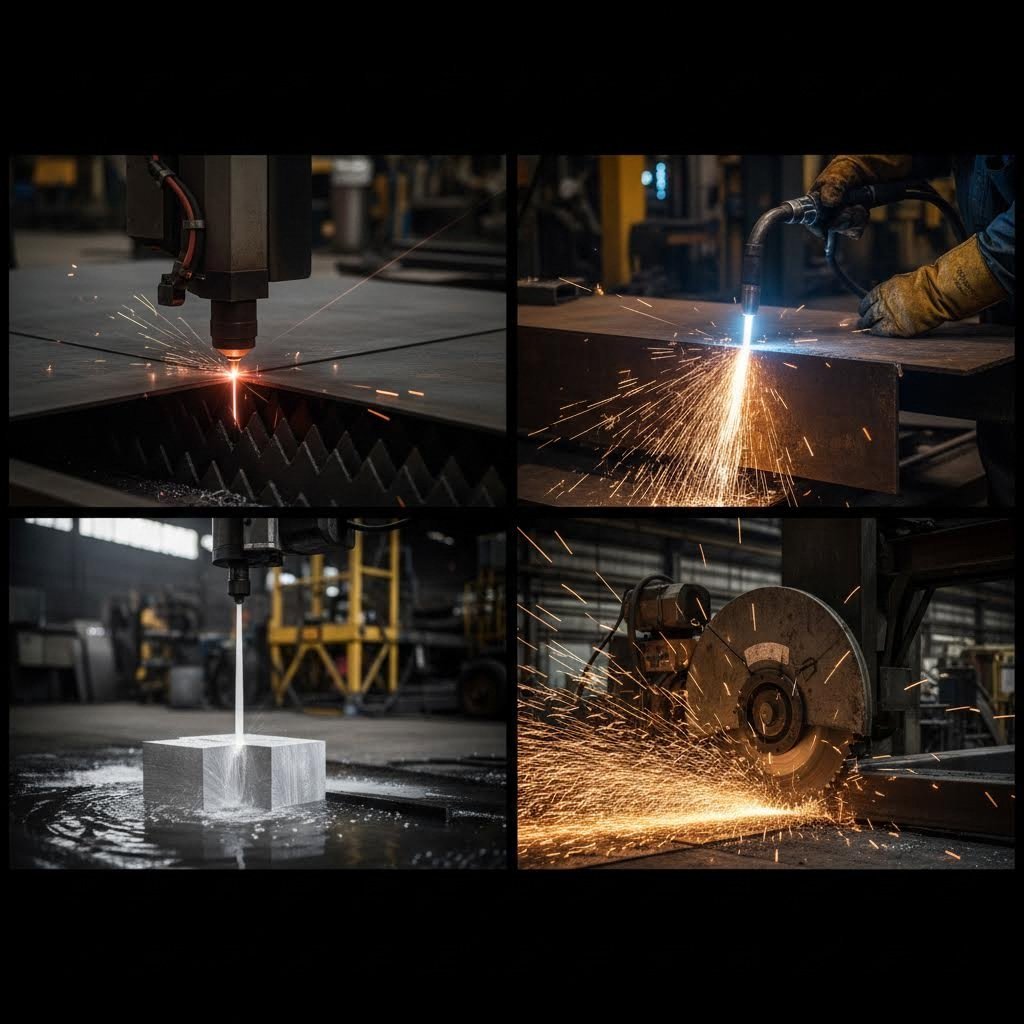
Cắt plasma sử dụng hồ quang điện và khí nén để làm nóng chảy kim loại dẫn điện. Phương pháp này nhanh, chi phí thấp và có thể xử lý các tấm dày mà hầu hết hệ thống laser khó thực hiện. Tuy nhiên, những điểm đánh đổi là khá lớn.
Khi độ chính xác là yếu tố then chốt, máy cắt laser cho kim loại mang lại độ sai lệch chỉ ±0,15 mm với các khe cắt hẹp tới mức 0,01 mm. Còn với plasma? Bạn sẽ phải chấp nhận độ sai lệch khoảng 0,5–1 mm và bề rộng rãnh cắt vượt quá 3,8 mm. Đó là sự khác biệt đáng kể khi bạn đang gia công các chi tiết phức tạp hoặc các bộ phận cần lắp ráp chính xác.
Đây là những trường hợp mà mỗi loại máy cắt kim loại phát huy thế mạnh:
- Chọn cắt bằng laser khi: Bạn cần độ sai lệch nhỏ, cạnh cắt sạch không cần gia công hoàn thiện thứ cấp, thiết kế phức tạp với các lỗ nhỏ, hoặc bạn đang xử lý vật liệu có độ dày từ mỏng đến trung bình dưới 19 mm
- Chọn cắt bằng plasma khi: Bạn đang cắt các tấm thép dày (lên đến 38 mm), ngân sách là yếu tố ưu tiên hàng đầu, các bộ phận sau đó sẽ được hàn lại với nhau, hoặc việc mài cạnh đã nằm trong quy trình làm việc của bạn
Chi phí cũng là yếu tố cần cân nhắc. Chi phí vận hành máy cắt laser thường vào khoảng 20 USD/giờ, trong khi hệ thống plasma trung bình khoảng 15 USD/giờ. Tuy nhiên, lợi thế về tốc độ của laser trên vật liệu mỏng cùng việc loại bỏ bước gia công sau khi cắt thường thu hẹp khoảng cách này — hoặc thậm chí đảo ngược hoàn toàn.
Khi nào cắt bằng tia nước hoặc cắt cơ học là lựa chọn ưu việt
Còn với các ứng dụng mà nhiệt độ là yếu tố bất lợi thì sao? Đây chính là lúc phương pháp cắt bằng tia nước được đưa vào xem xét.
Một hệ thống cắt bằng tia nước sử dụng nước áp suất cao trộn với các hạt mài để cắt xuyên qua hầu như mọi vật liệu—bao gồm thép, đá, kính và vật liệu composite. Lợi thế then chốt? Không có vùng ảnh hưởng bởi nhiệt. Không xảy ra biến dạng do nhiệt, không làm cứng bề mặt, và không làm thay đổi cấu trúc vốn có của vật liệu.
Các phương pháp cắt cơ học như cưa mang đến một lựa chọn khác. Mặc dù độ chính xác thấp hơn, nhưng chúng đơn giản và phù hợp cho các đường cắt cơ bản trên vật liệu dày khi chất lượng cạnh cắt không quá quan trọng.
Bảng dưới đây phân tích hiệu suất của từng loại máy cắt kim loại theo các tiêu chí quan trọng nhất:
| Thông số kỹ thuật | Cắt Laser | Cắt plasma | Cắt bằng nước | Cơ học (Cưa) |
|---|---|---|---|---|
| Độ Chính Xác Tolerances | ±0,1 – 0,15 mm | ±0,5 – 1 mm | ±0,1 – 0,25 mm | ±0,5 – 2 mm |
| Chất lượng mép cắt | Xuất sắc; nhẵn, không ba via | Tốt; có thể cần mài | Xuất sắc; không có hiệu ứng nhiệt | Trung bình; bề mặt nhám là đặc trưng |
| Vùng ảnh hưởng nhiệt | Nhỏ (biến dạng tối thiểu) | Lớn (nhiệt lượng truyền vào đáng kể) | Không có (quá trình cắt lạnh) | Không có hoặc rất ít |
| Phạm vi độ dày vật liệu | Lên đến 19–25 mm (thép) | Lên đến 38 mm (thép) | Lên đến 200+ mm | Thay đổi rộng rãi tùy theo thiết bị |
| Chi phí vận hành | ~$20/giờ | ~$15/giờ | Cao hơn (tiêu thụ vật liệu mài mòn) | Thấp (thay thế lưỡi cắt) |
| Tốc độ cắt (tấm mỏng) | Rất nhanh | Nhanh | Chậm | Dễ đến trung bình |
| Tính đa dạng về vật liệu | Kim loại, một số vật liệu phi kim | Chỉ các kim loại dẫn điện | Gần như mọi vật liệu | Kim loại, gỗ, nhựa |
Hãy lưu ý cách máy cắt thép sử dụng plasma có thể xử lý các tấm dày hơn nhưng lại đánh đổi về độ chính xác? Chính sự đánh đổi này là lý do tại sao nhiều xưởng gia công lại vận hành nhiều công nghệ khác nhau. Plasma và laser thường bổ trợ tốt cho nhau , với laser thực hiện các công việc đòi hỏi độ chính xác cao và plasma xử lý các tấm kim loại dày.
Phối hợp Công nghệ với Ứng dụng của Bạn
Vẫn chưa chắc chắn nên chọn máy cắt laser nào cho kim loại — hoặc giải pháp thay thế — phù hợp với nhu cầu của bạn? Dưới đây là khung quyết định nhanh:
- Cắt laser là lựa chọn lý tưởng cho: Vỏ điện tử, thiết bị y tế, các bộ phận ô tô chính xác, kim loại kiến trúc và mọi ứng dụng yêu cầu hình dạng phức tạp hoặc cạnh sắc nét
- Cắt plasma là lý tưởng cho: Gia công thép cấu trúc, sản xuất thiết bị nặng, đóng tàu và các ứng dụng mà chi tiết sau đó sẽ được hàn hoặc mài
- Cắt thủy lực là lý tưởng cho: Các bộ phận hàng không vũ trụ yêu cầu không biến dạng do nhiệt, gia công đá và kính, thiết bị chế biến thực phẩm và các hợp kim nhạy cảm với nhiệt
- Cắt cơ học là lý tưởng cho: Chuẩn bị phôi cơ bản, cắt thô vật liệu dày và các thao tác mà độ chính xác không phải là yếu tố chính
Tóm lại? Không có một công nghệ máy cắt kim loại nào là "tốt nhất" duy nhất. Máy cắt laser cho kim loại vượt trội về độ chính xác và tốc độ trên vật liệu mỏng đến trung bình. Cắt plasma thắng thế khi xử lý tấm dày và về chi phí. Cắt thủy lực mang lại tính linh hoạt vượt trội mà không gây ảnh hưởng bởi nhiệt. Và các phương pháp cơ học vẫn có vai trò riêng trong những đường cắt đơn giản.
Hiểu được những điểm khác biệt này giúp bạn đánh giá xem nên đầu tư vào thiết bị, thuê ngoài cho các chuyên gia, hay kết hợp nhiều công nghệ khác nhau. Nói về ứng dụng, hãy cùng tìm hiểu cách mà các ngành công nghiệp khác nhau tận dụng những khả năng độc đáo của cắt laser.
Ứng Dụng Công Nghiệp Trong Các Lĩnh Vực Sản Xuất
Bây giờ khi bạn đã hiểu rõ cách cắt laser so sánh với các phương pháp thay thế, hãy cùng xem công nghệ này hoạt động như thế nào. Việc cắt kim loại bằng laser thực sự tạo ra sự khác biệt ở đâu? Câu trả lời trải rộng gần như mọi lĩnh vực sản xuất—từ chiếc xe bạn lái, đến máy bay trên bầu trời, cho đến các chi tiết kim loại trang trí trên các tòa nhà hiện đại.
Điều khiến việc cắt laser công nghiệp được áp dụng rộng rãi không chỉ là độ chính xác. Đó còn là khả năng tạo ra các hình dạng phức tạp, duy trì dung sai chặt chẽ ở quy mô lớn và nhanh chóng thích ứng giữa các đợt sản xuất. Dù bạn đang gia công hàng ngàn chi tiết giống hệt nhau hay một sản phẩm tùy chỉnh đơn lẻ, máy cắt laser tấm kim loại đều mang lại kết quả ổn định.
Hãy cùng khám phá các ứng dụng thúc đẩy việc áp dụng trong các ngành công nghiệp chủ chốt.
Ứng dụng trong Ngành Ô tô và Hàng không
Chỉ có một vài ngành công nghiệp đòi hỏi nhiều từ các thành phần kim loại của họ như sản xuất ô tô và hàng không vũ trụ. Mỗi gam đều quan trọng. Mỗi dung sai đều có ý nghĩa. Và sự thất bại là điều không thể chấp nhận được.
Trong sản xuất ô tô, cắt ống bằng laser đã trở thành yếu tố thiết yếu để tạo ra các bộ phận khung gầm như khung xe, giá đỡ và các thanh ngang. Những thành phần kết cấu này yêu cầu ống có độ bền cao và được gia công chính xác để đảm bảo an toàn và hiệu suất trong suốt vòng đời của phương tiện. Các máy cắt laser công nghiệp cho phép các nhà sản xuất tạo ra:
- Các bộ phận treo: Các đòn dẫn hướng và khung phụ với thông số kỹ thuật chính xác nhằm đảm bảo khả năng vận hành tối ưu
- Các cụm tay lái: Cột lái và các cơ cấu nối cần độ chính xác ở mức micromet
- Các bộ phận hệ thống phanh: Các giá đỡ kẹp phanh và gia cố nơi độ chính xác ảnh hưởng trực tiếp đến an toàn
- Hệ thống xả: Các ống phức tạp để dòng khí lưu thông hiệu quả, kiểm soát khí thải và giảm tiếng ồn
- Các bộ phận truyền động: Các trục bánh xe, trục truyền động và giá đỡ hộp số được thiết kế để truyền lực mượt mà
Ưu thế về tốc độ cũng rất quan trọng ở đây. Cắt ống bằng laser giảm thời gian thiết lập, loại bỏ gia công thứ cấp và cho phép thực hiện các đường cắt phức tạp trong một thao tác duy nhất—từ đó trực tiếp làm giảm chi phí sản xuất và rút ngắn thời gian giao hàng cho sản xuất số lượng lớn.
Các ứng dụng hàng không vũ trụ đẩy yêu cầu này lên mức cao hơn nữa. Khi bạn đang chế tạo các bộ phận cho máy bay thương mại, hệ thống quân sự hoặc khám phá không gian, không được phép có bất kỳ sai sót nào. Máy cắt laser sợi quang đã trở thành công nghệ phổ biến hàng đầu trong ngành , mang lại các đường cắt nhanh chóng và chính xác trên những vật liệu khó xử lý như titan, hợp kim niken và nhôm.
Hãy xem xét phạm vi rộng lớn của các ứng dụng cắt laser trong hàng không vũ trụ:
- Hàng không thương mại: Các bộ phận thân máy, vít nối cánh, giá đỡ động cơ và các bộ phận cấu trúc bên trong đòi hỏi độ đồng nhất nhẹ
- Quân sự và Quốc phòng: Tấm giáp, vỏ tên lửa, vỏ cảm biến và thân drone được sản xuất với độ biến dạng nhiệt tối thiểu
- Chương trình không gian: Các bộ phận vệ tinh, chi tiết động cơ tên lửa và cấu trúc tàu vũ trụ được thiết kế để chịu được điều kiện khắc nghiệt
Các tổ chức như NASA và SpaceX dựa vào các tấm kim loại cắt bằng laser cho các cụm lắp ráp then chốt trong nhiệm vụ, nơi tối ưu hóa trọng lượng và kỹ thuật hoàn hảo quyết định thành công hay thất bại. Độ chính xác và khả năng lặp lại của công nghệ máy cắt laser công nghiệp làm nên điều này.
Công trình kim loại kiến trúc và trang trí
Hãy bước ra khỏi nhà máy, bạn sẽ thấy việc cắt laser đang thay đổi cách các nhà thiết kế và kiến trúc sư tiếp cận với kim loại. Công nghệ cho phép độ chính xác hàng không vũ trụ cũng mở ra những khả năng sáng tạo mà các phương pháp cắt truyền thống đơn giản không thể sánh kịp.
Việc cắt laser sợi quang đã cách mạng hóa công việc kim loại trang trí bằng cách cho phép các chi tiết cực kỳ tinh tế, các họa tiết phức tạp và các cạnh sắc nét với yêu cầu hoàn thiện tối thiểu. Hãy tưởng tượng những bông hoa kim loại tinh xảo với những cánh hoa sống động, những họa tiết hình học uốn lượn trên các mặt tiền tòa nhà, hoặc những tác phẩm điêu khắc theo thiết kế riêng thu hút sự chú ý tại các không gian công cộng.
Các ứng dụng kéo dài qua nhiều hạng mục khác nhau:
- Nghệ thuật công cộng và các tác phẩm điêu khắc: Các công trình quy mô lớn làm phong phú thêm cộng đồng và nâng cao giá trị các không gian công cộng
- Các yếu tố kiến trúc: Các mặt tiền, lan can, tấm chắn riêng tư và các tấm trang trí bằng kim loại được thiết kế theo yêu cầu
- Biển hiệu theo yêu cầu: Các biển hiệu tinh xảo, bắt mắt cho cửa hàng, văn phòng và sự kiện với thiết kế chi tiết và chữ viết chính xác
- Các yếu tố cảnh quan đường phố: Ghế ngồi, hàng rào, giá để xe đạp, nắp hố cây, và mái che xe buýt vừa mang tính chức năng vừa mang tính trang trí
- Thiết kế Nội thất: Vách ngăn phòng, thiết bị chiếu sáng, tranh treo tường và các bộ phận nội thất
Điều gì mang lại sự tự do sáng tạo này? Các biển hiệu kim loại và đồ trang trí cắt bằng laser có thể tích hợp những yếu tố cá nhân hóa—tên, ngày tháng, các biểu tượng ý nghĩa—mà nếu dùng phương pháp truyền thống sẽ tốn thời gian đến mức không khả thi. Khả năng làm việc liền mạch với phần mềm CAD/CAM đồng nghĩa với việc các thiết kế kỹ thuật số được chuyển trực tiếp thành các thành phần vật lý với độ chính xác tuyệt đối.
Thiết bị y tế và điện tử
Yêu cầu độ chính xác trong sản xuất thiết bị y tế tương đương với ngành hàng không vũ trụ—và đôi khi còn vượt xa hơn. Các dụng cụ phẫu thuật, bộ phận cấy ghép và thiết bị chẩn đoán đòi hỏi dung sai được đo ở mức phần trăm milimét.
Cắt laser đáp ứng được độ chính xác này đồng thời mang lại một lợi thế quan trọng khác: quá trình cắt không tiếp xúc loại bỏ nguy cơ nhiễm bẩn từ dụng cụ gia công. Đối với các ứng dụng y tế, điều này cực kỳ quan trọng.
Các ứng dụng chính bao gồm:
- Dụng cụ phẫu thuật: Lưỡi dao mổ, bộ phận kềm giữ và các dụng cụ cắt chuyên biệt
- Sản xuất bộ phận cấy ghép: Các stent, đĩa cố định xương và các thành phần nha khoa yêu cầu vật liệu sinh học tương thích
- Thiết bị chẩn đoán: Vỏ bọc và giá đỡ lắp đặt cho hệ thống hình ảnh và thiết bị phòng thí nghiệm
Sản xuất điện tử đặt ra những yêu cầu tương tự về độ chính xác ở quy mô nhỏ hơn. Cắt laser cho phép chế tạo các vỏ bọc, bộ tản nhiệt, chắn nhiễu điện từ (EMI) và vỏ đầu nối với độ dung sai chặt chẽ như yêu cầu của thiết bị điện tử hiện đại. Những hình dạng phức tạp mà trước đây không thể thực hiện được bằng phương pháp dập hoặc gia công truyền thống thì nay trở nên bình thường với công nghệ laser.
Sản xuất số lượng lớn so với gia công tùy chỉnh
Điều làm nên sự linh hoạt đáng kinh ngạc của cắt laser: cùng một công nghệ phục vụ sản xuất ô tô số lượng lớn nhưng cũng vượt trội trong các dự án tùy chỉnh đơn chiếc.
Đối với các tình huống sản xuất số lượng lớn, cắt laser kim loại tấm mang lại:
- Vận hành tự động với sự can thiệp tối thiểu của con người
- Thay đổi nhanh chóng giữa các chi tiết khác nhau thông qua việc tải lên tệp kỹ thuật số
- Chất lượng đồng nhất trên hàng ngàn hoặc hàng triệu chi tiết giống hệt nhau
- Tích hợp với các hệ thống tự động hóa robot trong việc nạp và dỡ hàng
Đối với gia công theo yêu cầu và chế tạo mẫu thử, lợi thế có sự thay đổi nhẹ nhưng vẫn rất nổi bật:
- Không phát sinh chi phí khuôn mẫu—thiết kế được chuyển trực tiếp từ CAD sang các chi tiết đã cắt
- Thay đổi nhanh chóng trong quá trình hoàn thiện thiết kế
- Khả năng khả thi về mặt kinh tế đối với các lô nhỏ mà nếu sử dụng dập hoặc đúc sẽ tốn kém đến mức không thể thực hiện
- Khả năng sản xuất các hình dạng phức tạp mà không cần phải điều chỉnh thiết kế
Dù bạn đang vận hành một cơ sở sản xuất phụ tùng đua xe sau bán hàng chuyên làm khung chống lật tùy chỉnh, một công ty kiến trúc tạo ra các mặt tiền tòa nhà độc đáo, hay một nhà sản xuất thiết bị gốc (OEM) sản xuất hàng triệu giá đỡ ô tô, thì cắt laser đều có thể thích nghi với thực tế sản xuất của bạn.
Tất nhiên, để vận hành công nghệ này một cách an toàn, cần phải hiểu rõ các mối nguy hiểm cụ thể và thực hiện các quy trình phù hợp. Đó chính xác là nội dung phần tiếp theo sẽ đề cập—những yếu tố an toàn thiết yếu mà bất kỳ hoạt động cắt laser nào cũng không được phép bỏ qua.
Các Quy Trình An Toàn và Yêu Cầu Vận Hành
Đây là thực tế mà nhiều người dùng lần đầu tiên thường bỏ qua: một máy cắt kim loại bằng tia laser đủ mạnh để cắt xuyên qua thép có thể gây ra chấn thương nghiêm trọng nếu bạn không tôn trọng những nguy cơ tiềm ẩn của nó. Chúng ta đã tìm hiểu về khả năng của việc cắt laser—giờ hãy đảm bảo rằng bạn có thể thực hiện an toàn.
Việc vận hành máy cắt kim loại bằng laser bao gồm nhiều nhóm rủi ro: nguy cơ từ tia laser có thể làm tổn thương mắt và da ngay lập tức, khí độc phát sinh từ vật liệu bị hóa hơi, nguy cơ điện giật từ các hệ thống điện áp cao, và nguy cơ cháy nổ do năng lượng nhiệt tập trung. Tin tốt là? Mỗi một trong những nguy cơ này đều có thể kiểm soát được nếu tuân thủ đúng quy trình, trang bị đầy đủ thiết bị và được đào tạo bài bản.
Hãy cùng phân tích rõ ràng những gì bạn cần để bảo vệ bản thân, đội ngũ của bạn và cơ sở sản xuất.
Thiết bị an toàn và PPE thiết yếu
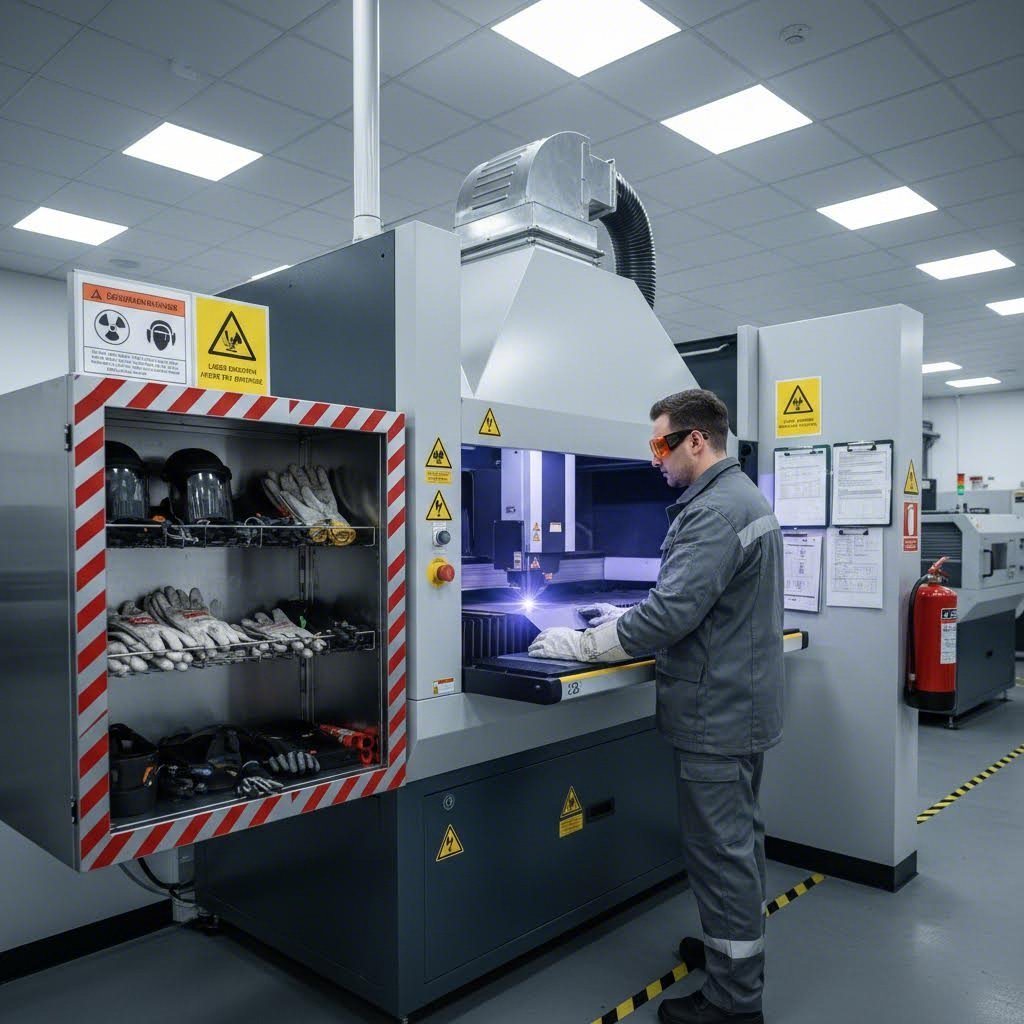
Khi làm việc với máy cắt bằng tia laser, thiết bị bảo hộ cá nhân không phải là lựa chọn—mà là hàng phòng thủ đầu tiên giúp bạn tránh khỏi những chấn thương vĩnh viễn.
Tiêu chuẩn ANSI Z136.1 đóng vai trò nền tảng cho các chương trình an toàn laser trong các lĩnh vực công nghiệp, quân sự và nghiên cứu. Tiêu chuẩn này cung cấp hướng dẫn cho những người làm việc với laser công suất cao loại 3B và loại 4, bao gồm cả những thiết bị dùng trong các thao tác cắt kim loại bằng laser, đồng thời đặt ra các yêu cầu về vỏ bảo vệ, quy trình vận hành tiêu chuẩn, thiết bị bảo hộ cá nhân và biển cảnh báo.
Dưới đây là các yêu cầu an toàn quan trọng mà mọi hoạt động cắt laser đều phải tuân thủ:
- Cấp độ bảo vệ mắt: Kính bảo hộ laser phải phù hợp chính xác với bước sóng và mức công suất laser của bạn. Một laser sợi quang hoạt động ở bước sóng 1,06 μm đòi hỏi chỉ số mật độ quang học (OD) khác so với laser CO2 ở bước sóng 10,6 μm. Không bao giờ giả định rằng kính bảo hộ thông thường cung cấp đủ mức bảo vệ—hãy kiểm tra kỹ chỉ số OD có đáp ứng yêu cầu của tiêu chuẩn ANSI Z136.1 đối với hệ thống của bạn hay không.
- Hệ thống hút khói: Mọi hoạt động cắt bằng tia laser đều tạo ra các hạt lơ lửng trong không khí, khói và có thể cả khí độc hại. Một hệ thống hút khí được thiết kế đúng cách phải loại bỏ các chất gây ô nhiễm trước khi chúng tiến vào vùng hô hấp của bạn. Đặt điểm hút khí càng gần khu vực cắt càng tốt, giảm thiểu chiều dài ống dẫn và các đoạn cong, đồng thời đảm bảo công suất lưu lượng không khí đủ cho phạm vi làm việc của máy.
- Các biện pháp phòng chống cháy nổ: Giữ bình chữa cháy phù hợp với đám cháy loại B và C trong tầm với ngay lập tức. Không bao giờ rời khỏi khu vực đang vận hành laser cắt kim loại khi chưa tắt máy. Giữ không gian xung quanh máy thông thoáng, và đảm bảo không có vật liệu dễ cháy được lưu trữ gần đó. Một số cơ sở lắp đặt hệ thống dập lửa tự động bên trong buồng laser.
- An toàn điện: Các hệ thống laser công suất cao hoạt động ở điện áp có thể gây điện giật. Chỉ những nhân viên có chuyên môn mới được phép tiếp cận các ngăn điện. Đảm bảo nối đất đúng cách, sử dụng quy trình khóa/biển báo (lockout/tagout) trong quá trình bảo trì và xác minh chức năng nút dừng khẩn cấp hoạt động chính xác trước mỗi ca làm việc.
- Yêu cầu đào tạo người vận hành: ANSI Z136.1 yêu cầu các cơ sở phải chỉ định một Nhân viên An toàn Laser (LSO) chịu trách nhiệm về đào tạo, đánh giá rủi ro và thực thi quy trình. Người vận hành phải hiểu rõ các mối nguy từ tia laser, các quy trình ứng phó khẩn cấp và các rủi ro liên quan đến từng loại vật liệu trước khi làm việc độc lập.
Yêu cầu về cơ sở vật chất và tiêu chuẩn thông gió
Chính không gian làm việc của bạn đóng vai trò then chốt trong các thao tác cắt laser an toàn. Nếu không có thiết lập cơ sở phù hợp, ngay cả trang thiết bị bảo hộ cá nhân tốt nhất cũng không thể bảo vệ bạn hoàn toàn.
Thông gió cần được đặc biệt chú trọng. Việc lắp đặt hệ thống xả khí laser là yếu tố quan trọng đối với sức khỏe của bạn và máy khắc laser. Hệ thống này ngăn các hạt potentially gây hại phát tán vào không khí mà bạn hít thở, đồng thời giúp loại bỏ mảnh vụn tích tụ trong máy. Nếu không có hệ thống xả khí hoạt động, chất lượng không khí sẽ giảm ngay lập tức, mùi hôi tích tụ và các rủi ro về sức khỏe tăng lên nhanh chóng.
Thiết lập thông gió của bạn cần đáp ứng các yêu cầu sau:
- Lưu lượng không khí đầy đủ: Hệ thống xả thải phải di chuyển đủ thể tích không khí để thu giữ toàn bộ khói và các hạt phát sinh trong quá trình cắt. Lưu lượng không khí không đủ sẽ cho phép các chất gây ô nhiễm thoát ra khu vực làm việc.
- Điều hướng đúng: Khí thải nên được dẫn ra ngoài trời hoặc qua thiết bị hút khói phù hợp có lọc HEPA và than hoạt tính. Cần giảm thiểu chiều dài ống dẫn và tránh các chỗ uốn cong không cần thiết để duy trì hiệu suất lưu thông không khí.
- Các kết nối kín: Tất cả các mối nối và điểm kết nối phải được bịt kín chặt chẽ để ngăn rò rỉ. Một hệ thống xả thải bị rò rỉ sẽ mất tác dụng.
- Mạch điện riêng biệt: Quạt thông gió nên hoạt động trên mạch điện riêng, tách biệt với mạch điện của máy laser để tránh sự cố quá tải điện.
Đối với các hoạt động liên quan đến cắt laser ss (thép không gỉ) hoặc máy cắt laser cho thép, hệ thống thông gió tiêu chuẩn thường xử lý khói khí một cách đầy đủ. Tuy nhiên, kim loại phủ lớp và một số hợp kim nhất định tạo ra các nguy cơ bổ sung, đòi hỏi các biện pháp phòng ngừa thêm.
Các Nguy Cơ Đặc Thù Theo Vật Liệu Mà Bạn Phải Biết
Không phải tất cả các kim loại đều phản ứng giống nhau dưới tia laser. Một số kim loại tạo ra những mối nguy hiểm mà các biện pháp an toàn thông thường không thể xử lý được.
Các kim loại được phủ lớp có nguy cơ nghiêm trọng. Thép mạ kẽm, ví dụ, giải phóng khí kẽm oxit khi cắt — tiếp xúc có thể gây ra bệnh sốt khói kim loại, một dạng bệnh giống cúm. Các vật liệu mạ crôm còn nguy hiểm hơn: crôm hóa trị sáu được giải phóng trong quá trình cắt là chất gây ung thư đã biết. Các hệ thống hút khí tiêu chuẩn không được thiết kế để trung hòa các hợp chất độc hại này — chúng chỉ đơn giản là di chuyển mối nguy sang nơi khác.
Vật liệu phản quang đòi hỏi phải cẩn trọng. Đồng, đồng thau và nhôm đánh bóng có thể phản xạ năng lượng laser ngược trở lại hệ thống quang học, làm hỏng các bộ phận hoặc tạo ra các đường tia bất ngờ. Laser sợi quang xử lý các kim loại phản quang tốt hơn hệ thống CO2, nhưng người vận hành vẫn cần xác minh thông số kỹ thuật của thiết bị và tuân theo hướng dẫn của nhà sản xuất.
Vật liệu chưa biết bao giờ cũng tiềm ẩn rủi ro không đáng để chấp nhận. Nếu bạn không thể xác minh thành phần vật liệu thông qua Bảng dữ liệu an toàn vật liệu (SDS), đừng cắt vật liệu đó. Những phút tiết kiệm được không đáng để đánh đổi với nguy cơ phơi nhiễm chất độc hoặc hư hỏng thiết bị.
Danh sách kiểm tra an toàn vận hành
Trước khi bắt đầu bất kỳ phiên cắt nào, hãy thực hiện kiểm tra theo danh sách sau:
- Xác minh hệ thống hút khí đang hoạt động và lưu lượng không khí đầy đủ
- Xác nhận kính bảo hộ laser phù hợp với bước sóng và công suất của hệ thống bạn
- Kiểm tra bình chữa cháy có sẵn và còn trong thời hạn kiểm tra
- Đảm bảo chức năng nút dừng khẩn cấp đã được kiểm tra và hoạt động tốt
- Xác minh thành phần vật liệu — lấy SDS nếu chưa chắc chắn
- Dọn dẹp các vật liệu dễ cháy khỏi khu vực làm việc
- Xác nhận tất cả nhân viên trong khu vực đều đang sử dụng đồ bảo hộ cá nhân (PPE) phù hợp
- Xem xét các dấu hiệu cảnh báo và kiểm soát truy cập đã được thiết lập
An toàn không có nghĩa là làm chậm tiến độ sản xuất — mà là đảm bảo bạn có thể tiếp tục sản xuất. Một sự cố duy nhất có thể dẫn đến chấn thương, hư hại thiết bị, phạt do vi phạm quy định và thời gian ngừng hoạt động, tất cả đều vượt xa chi phí của các biện pháp phòng ngừa đúng đắn.
Với các quy trình an toàn đã được thiết lập, bạn đã sẵn sàng giải quyết một vấn đề thực tế khác: hiểu rõ các chi phí liên quan đến cắt laser và cách lập ngân sách hiệu quả cho các dự án của mình.
Giải thích các yếu tố chi phí và xét đến định giá
Bạn đã chọn công nghệ laser phù hợp, xác minh yêu cầu về độ dày vật liệu và thiết lập các quy trình an toàn. Giờ đây là câu hỏi quyết định xem dự án của bạn có được triển khai hay không: tổng chi phí thực tế sẽ là bao nhiêu?
Giá cả của việc cắt laser không đơn giản như nhiều người tưởng tượng. Hãy yêu cầu năm nhà cung cấp dịch vụ khác nhau báo giá, và bạn có khả năng sẽ nhận được năm con số khác nhau. Việc hiểu rõ những yếu tố nào tạo nên sự chênh lệch đó—và tiền của bạn thực sự được dùng vào việc gì—sẽ giúp bạn lập ngân sách chính xác hơn và đàm phán hiệu quả hơn.
Hãy cùng phân tích rõ cách tính chi phí cắt laser hoạt động như thế nào, dù bạn đang thuê ngoài dịch vụ cắt laser sợi quang hay cân nhắc đầu tư thiết bị nội bộ.
Hiểu về Các Yếu Tố Tác Động đến Chi Phí Cắt Laser
Đây là một sự thật cơ bản khiến nhiều khách hàng lần đầu mua hàng bất ngờ: yếu tố lớn nhất ảnh hưởng đến chi phí của bạn không phải là diện tích vật liệu—mà là thời gian vận hành máy. Một chi tiết đơn giản và một chi tiết phức tạp được làm từ cùng một tấm vật liệu có thể có mức giá rất khác nhau chỉ dựa trên thời gian laser cần để cắt xong chúng.
Hầu hết các nhà cung cấp dịch vụ cắt laser đều tính giá theo công thức cơ bản này:
Giá cuối cùng = (Chi phí vật liệu + Chi phí biến đổi + Chi phí cố định) × (1 + Biên lợi nhuận)
Mỗi thành phần đều cần bạn lưu ý:
- Chi phí vật liệu: Chi phí nguyên vật liệu thay đổi đáng kể tùy theo loại kim loại. Nhôm thường có giá từ 2,00–4,00 USD/kg, thép không gỉ từ 1,50–3,00 USD/kg và thép cacbon từ 0,50–1,00 USD/kg. Một tấm thép cacbon tiêu chuẩn kích thước 4×8 ft, độ dày 2mm có giá khoảng 60–120 USD.
- Thời gian máy (chi phí biến đổi): Đây là nơi chi phí tăng nhanh chóng. Các hệ thống máy cắt laser kim loại thường tính phí từ 60–120 USD/giờ tùy theo công suất và khả năng. Việc nhân đôi độ dày vật liệu có thể làm thời gian cắt tăng hơn gấp đôi vì tia laser phải di chuyển chậm hơn để xuyên thủng sạch.
- Thiết lập và nhân công (chi phí cố định): Việc định vị vật liệu, hiệu chuẩn đầu cắt và chạy thử nghiệm ban đầu thường mất từ 15–30 phút với mức lương nhân công từ 20–50 USD/giờ. Chi phí này được phân bổ theo số lượng đơn hàng của bạn.
- Thiết kế phức tạp: Các hình dạng phức tạp với đường cong hẹp buộc máy phải giảm tốc độ. Chi phí chuẩn bị tệp CAD cho các thiết kế phức tạp có thể dao động từ 40–400 USD so với 20–100 USD đối với các hình dạng đơn giản.
- Tỷ suất lợi nhuận: Các nhà cung cấp dịch vụ cộng thêm 20–70% tùy theo độ phức tạp và giá trị công việc—đây là thực tế bạn nên tính đến khi đánh giá báo giá.
Tính toán giá theo từng chi tiết
Khi so sánh các báo giá hoặc dự toán ngân sách dự án, việc hiểu rõ về kinh tế theo từng chi tiết sẽ giúp bạn đưa ra quyết định sáng suốt.
Xem xét các mức phí cắt laser cho các vật liệu phổ biến:
- Thép nhẹ: 0,10–0,60 USD mỗi inch (3,94–23,62 USD mỗi mét) tùy theo độ dày và độ phức tạp
- Thép không gỉ: 0,15–1,00 USD mỗi inch (5,91–39,37 USD mỗi mét)
- Nhôm: 0,12–0,80 USD mỗi inch (4,72–31,49 USD mỗi mét)
- Sắt: 0,12–0,50 USD mỗi inch (4,72–19,69 USD mỗi mét)
Khối lượng ảnh hưởng mạnh mẽ đến chi phí đơn vị của bạn. Chiết khấu đơn hàng số lượng lớn có thể lên tới 70% bởi vì chi phí thiết lập được phân bổ trên nhiều bộ phận hơn. Một mẫu thử duy nhất có thể tốn 50 đô la, trong khi đặt hàng 1.000 chiếc giống hệt nhau có thể giảm giá mỗi đơn vị xuống dưới 5 đô la.
Đừng quên các thao tác sau khi cắt. Làm sạch ba via thêm 0,50–2,00 đô la mỗi bộ phận, trong khi sơn tốn 3,00–10,00 đô la mỗi foot vuông. Một bộ phận cắt bằng tia laser diện tích 1 m² với làm sạch ba via và sơn có thể làm tăng thêm 20–50 đô la vào chi phí cắt cơ bản của bạn.
Thiết bị nội bộ so với gia công ngoài
Bạn nên đầu tư vào hệ thống máy cắt laser kim loại riêng hay nên thuê ngoài cho các dịch vụ cắt laser sợi chuyên biệt? Câu trả lời phụ thuộc vào khối lượng sản xuất, độ phức tạp của bộ phận và chiến lược sản xuất dài hạn của bạn.
Thuê ngoài là hợp lý khi:
- Khối lượng của bạn không đủ để biện minh cho việc đầu tư thiết bị
- Bạn cần truy cập vào các mức công suất laser và khả năng khác nhau
- Bạn đang tạo mẫu và yêu cầu thiết kế vẫn đang thay đổi
- Bạn thiếu không gian hoặc cơ sở hạ tầng cho hệ thống thông gió và an toàn phù hợp
Thiết bị nội bộ là lựa chọn hợp lý khi:
- Bạn có nhu cầu cắt với khối lượng lớn và ổn định
- Việc kiểm soát thời gian chờ là yếu tố then chốt đối với hoạt động của bạn
- Bạn cần bảo mật thiết kế cho các bộ phận sở hữu riêng
- Phân tích chi phí dài hạn cho thấy tổng chi phí sở hữu hợp lý
Khi đánh giá giá máy cắt laser sợi, hãy xem xét vượt ra ngoài con số mua ban đầu. Tổng chi phí sở hữu bao gồm các khoản tiết kiệm vận hành nhờ giảm tiêu thụ năng lượng và chi phí bảo trì —những yếu tố có thể bù đắp khoản đầu tư ban đầu theo thời gian. Thiết kế trạng thái rắn của laser sợi đồng nghĩa với việc bảo trì tối thiểu so với hệ thống CO2, không cần khí laser, ít thành phần quang học cần thay thế hơn và mức tiêu thụ điện năng thấp đáng kể.
Phạm vi giá máy cắt laser trải dài từ các hệ thống nhập môn dưới 50.000 USD đến các máy công nghiệp vượt quá 500.000 USD. Khoản đầu tư phù hợp phụ thuộc vào yêu cầu vật liệu, khối lượng sản xuất và định hướng phát triển của bạn.
Các chiến lược để giảm chi phí của bạn
Cho dù thuê ngoài hay vận hành nội bộ, những phương pháp này sẽ giúp bạn quản lý chi phí một cách hiệu quả:
- Đơn giản hóa thiết kế của bạn: Giảm các đường cong phức tạp và kết hợp các lỗ nhỏ thành các khe lớn hơn để giảm thiểu khoảng cách cắt và số lần xuyên thủng
- Sử dụng vật liệu mỏng nhất có thể: Đây là biện pháp giảm chi phí hiệu quả nhất — vật liệu dày hơn làm tăng thời gian máy một cách hàm mũ
- Làm sạch tệp thiết kế của bạn: Loại bỏ các đường trùng lặp, đối tượng ẩn và ghi chú thi công trước khi gửi. Hai đường song song đồng nghĩa với chi phí cắt gấp đôi cho các chi tiết đó
- Đặt hàng số lượng lớn: Tập trung nhu cầu vào các đơn hàng lớn hơn để phân bổ chi phí thiết lập và đủ điều kiện hưởng chiết khấu theo khối lượng
- Hỏi về vật liệu có sẵn trong kho: Sử dụng vật liệu mà nhà cung cấp đã có sẵn sẽ loại bỏ phí đặt hàng đặc biệt và rút ngắn thời gian chờ hàng
Với sự hiểu rõ về các yếu tố phát sinh chi phí và cấu trúc định giá, bạn đã sẵn sàng để đánh giá chính xác các báo giá và lập ngân sách cho dự án một cách tự tin. Tuy nhiên, việc lựa chọn thiết bị hoặc nhà cung cấp phù hợp không chỉ đơn thuần là vấn đề chi phí — mà còn cần phải phù hợp với năng lực đáp ứng các yêu cầu cụ thể của bạn. Đó chính là điều chúng ta sẽ giải quyết tiếp theo.
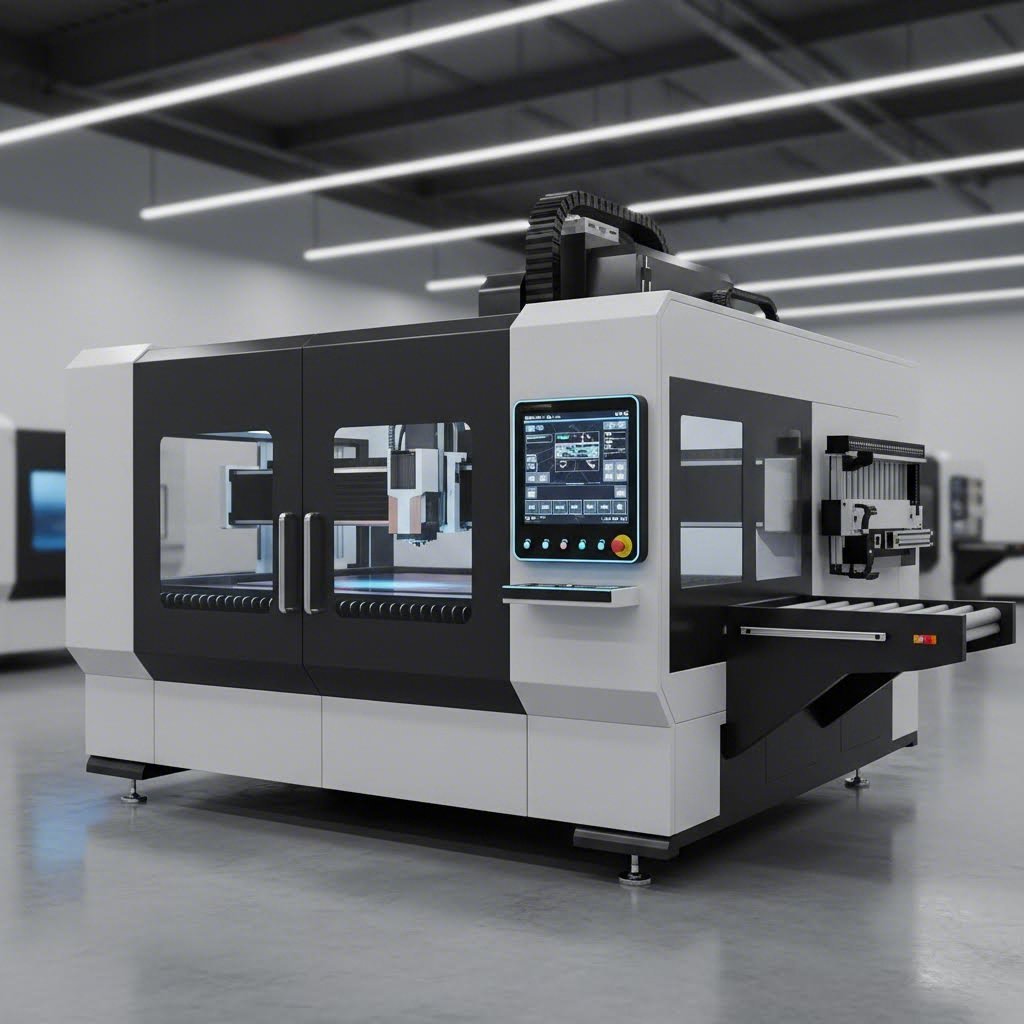
Lựa chọn Thiết bị hoặc Dịch vụ Cắt Laser Phù hợp
Bạn đã tính toán kỹ lưỡng về chi phí — giờ đây là quyết định sẽ định hình toàn bộ hoạt động của bạn: thiết bị cắt laser hoặc nhà cung cấp dịch vụ nào thực sự phù hợp với nhu cầu của bạn? Quyết định này có thể tạo nên sự khác biệt giữa một quá trình sản xuất trơn tru, mang lại lợi nhuận và những điểm nghẽn gây khó chịu làm hao hụt ngân sách.
Dù bạn đang đánh giá máy cắt laser CNC để vận hành nội bộ hay kiểm tra các nhà cung cấp dịch vụ cho công việc gia công ngoài, câu hỏi cơ bản vẫn giống nhau: giải pháp này có phù hợp với vật liệu, khối lượng sản xuất và yêu cầu chất lượng của bạn hay không?
Hãy cùng đi qua từng bước cụ thể để thực hiện việc đánh giá đó một cách tự tin.
Thông số kỹ thuật cần đánh giá
Khi so sánh một máy cắt laser sợi CNC với các lựa chọn thay thế—hoặc đánh giá xem nhà cung cấp dịch vụ có thể xử lý dự án của bạn hay không—các thông số kỹ thuật này quyết định hiệu suất thực tế:
- Yêu cầu nguồn điện: Chọn công suất laser phù hợp với độ dày vật liệu lớn nhất bạn cần. Hệ thống 1.000–2.000W xử lý hiệu quả kim loại tấm mỏng, trong khi vật liệu trên 10mm thường yêu cầu công suất 3.000W hoặc cao hơn. Lưu ý: công suất lớn hơn không phải lúc nào cũng tốt hơn—một laser 6kW cắt thép 1mm sẽ lãng phí năng lượng và có thể tạo ra vùng ảnh hưởng nhiệt quá mức.
- Kích thước bàn (không gian làm việc): Máy cắt laser của bạn phải đủ lớn để chứa các chi tiết lớn nhất. Tấm kim loại tiêu chuẩn thường có kích thước 4×8 ft (1220×2440mm) và 5×10 ft (1525×3050mm). Nếu thiết kế của bạn vượt quá các kích thước này, bạn sẽ cần một bàn cắt laser lớn hơn hoặc một nhà cung cấp dịch vụ có khả năng sử dụng bàn cắt mở rộng.
- Tính năng Tự động hóa: Đối với sản xuất số lượng lớn, hãy tìm các tính năng như tự động nạp/dỡ tấm, bộ đổi palet và hệ thống xử lý vật liệu. Những tính năng này giúp giảm chi phí nhân công và cho phép vận hành không cần ánh sáng. Đối với tạo mẫu hoặc công việc sản xuất số lượng nhỏ, việc nạp liệu thủ công có thể hoàn toàn phù hợp.
- Hoàn hợp phần mềm: Máy laser cnc của bạn phải hoạt động được với quy trình thiết kế của bạn. Xác minh khả năng tương thích với phần mềm CAD/CAM—dù đó là AutoCAD, SolidWorks hay các gói phần mềm chuyên ngành. Hãy tìm phần mềm sắp xếp (nesting) có thể tối ưu hóa việc sử dụng vật liệu và giảm lãng phí.
- Hỗ trợ nhà sản xuất: Máy cắt kim loại tấm là một khoản đầu tư lớn. Hãy đánh giá các điều khoản bảo hành, sự sẵn có của các bộ phận thay thế, kỹ thuật viên dịch vụ tại chỗ và các chương trình đào tạo. Các máy từ những nhà sản xuất uy tín thường cung cấp hỗ trợ dài hạn tốt hơn, dù có giá cao hơn.
- Tốc độ và độ chính xác khi cắt: Yêu cầu mẫu cắt thử trên vật liệu thực tế của bạn. Các thông số kỹ thuật công bố không phải lúc nào cũng phản ánh đúng hiệu suất trong thực tế. Hãy yêu cầu minh họa độ chính xác với các hình dạng tương tự như nhu cầu sản xuất của bạn.
Danh mục thiết bị và mức đầu tư
Thị trường máy cắt laser kim loại tấm trải dài trên một phạm vi rất lớn — từ các thiết bị để bàn phù hợp cho sở thích đến các hệ thống công nghiệp có giá đắt hơn cả một ngôi nhà. Việc hiểu rõ vị trí của từng danh mục sẽ giúp bạn xác định đúng mức đầu tư cần thiết.
Bảng dưới đây so sánh các cấp thiết bị với khả năng điển hình và khoảng giá tương ứng:
| Danh mục thiết bị | Phạm vi công suất điển hình | Độ dày kim loại tối đa | Không gian làm việc | Khoảng giá (USD) | Phù hợp nhất cho |
|---|---|---|---|---|---|
| Laser điốt để bàn/sử dụng trong sở thích | 5–40W | Chỉ giới hạn ở vật liệu phi kim loại mỏng; không phù hợp để cắt kim loại | Nhỏ (dưới 500×300mm) | $300–$2,000 | Thủ công, khắc, gỗ mỏng/acrylic |
| CO2 Cấp Nhập Môn | 40–150W | Nhôm mỏng và thép nhẹ với hỗ trợ oxy | 600×400mm đến 1300×900mm | $2,000–$15,000 | Biển hiệu, mẫu thử nghiệm, vật liệu hỗn hợp |
| Sợi Cấp Nhập Môn | 500–1.500W | thép 3–6mm, nhôm 2–4mm | 1300×900mm đến 1500×3000mm | $15,000–$50,000 | Xưởng nhỏ, doanh nghiệp khởi nghiệp, gia công kim loại sản lượng thấp |
| Sợi trung cấp | 2.000–4.000W | thép 12–15mm, nhôm 8–10mm | 1500×3000mm đến 2000×4000mm | $50,000–$150,000 | Xưởng gia công, cơ sở chế tạo đang phát triển |
| Sợi công nghiệp | 6.000–12.000W | thép 25mm trở lên, nhôm 15mm trở lên | 2000×4000mm và lớn hơn | $150,000–$500,000+ | Sản xuất số lượng lớn, gia công tấm dày |
| Hệ thống laser ống | 1.000–4.000W | Thay đổi tùy theo đường kính và độ dày thành ống | Chiều dài ống lên đến 6m trở lên | $30,000–$400,000+ | Gia công ống, các bộ phận kết cấu |
Bạn có nhận thấy sự chênh lệch đáng kể giữa các hệ thống tầm thấp và công nghiệp không? Khoảng cách đó phản ánh không chỉ sự khác biệt về công suất mà còn về chất lượng chế tạo, các bộ phận chính xác, khả năng tự động hóa và cơ sở hạ tầng hỗ trợ của nhà sản xuất. Một laser sợi công nghiệp cao cấp từ các nhà sản xuất như Trumpf có thể vượt quá 600.000 USD , trong khi các lựa chọn tầm thấp có thể đáp ứng nhiều ứng dụng với chi phí chỉ bằng một phần nhỏ.
Lựa chọn giữa mua thiết bị và sử dụng dịch vụ thuê ngoài
Quyết định mua hay thuê ngoài không chỉ đơn thuần dựa trên tính toán chi phí. Dưới đây là cách tiếp cận chiến lược cho vấn đề này:
Cân nhắc mua một bàn laser cnc khi:
- Khối lượng cắt hàng tháng của bạn đủ để biện minh cho khoản đầu tư—thường là khi chi phí thuê ngoài tiến gần đến mức thanh toán thuê thiết bị
- Việc kiểm soát thời gian chờ đợi ảnh hưởng trực tiếp đến mối quan hệ với khách hàng hoặc lịch sản xuất của bạn
- Bạn có các thiết kế riêng đòi hỏi tính bảo mật, khiến việc chia sẻ tệp với các nhà cung cấp bên ngoài trở nên khó chịu
- Cơ sở của bạn có thể đáp ứng đầy đủ thông gió, hạ tầng điện và các hệ thống an toàn
- Bạn đã có hoặc có thể thuê được nhân viên vận hành được đào tạo, hoặc bạn sẵn sàng đầu tư vào các chương trình đào tạo toàn diện
Cân nhắc hợp tác với các nhà cung cấp dịch vụ khi:
- Khối lượng công việc của bạn không ổn định hoặc đang trong giai đoạn bắt đầu tăng trưởng— các nhà cung cấp dịch vụ mang lại khả năng mở rộng mà không bị giới hạn về vốn
- Bạn cần truy cập nhiều công nghệ khác nhau (sợi, CO2, cắt ống) mà không cần mua từng hệ thống
- Các dự án của bạn yêu cầu khả năng công suất cao, điều này đồng nghĩa với việc phải đầu tư thiết bị quy mô lớn
- Bạn vẫn đang hoàn thiện thiết kế và cần sự linh hoạt để lặp lại mà không lo ngại về năng lực máy móc
- Bạn thiếu cơ sở hạ tầng, không gian hoặc nhân sự để vận hành thiết bị một cách an toàn và hiệu quả
Nhiều nhà gia công thành công áp dụng cách tiếp cận lai: duy trì thiết bị nội bộ cho sản xuất thường xuyên trong khi thuê ngoài các công việc chuyên biệt hoặc công suất vượt mức. Một số doanh nghiệp bắt đầu bằng cách thuê ngoài, sau đó mua máy riêng khi khối lượng công việc tăng lên—một con đường giúp tích lũy chuyên môn trước khi đầu tư vốn
Những câu hỏi cần đặt ra trước khi đưa ra quyết định
Trước khi ký đơn đặt hàng hoặc lựa chọn nhà cung cấp dịch vụ, hãy xem xét kỹ các điểm quyết định sau:
- Bạn sẽ chủ yếu cắt những vật liệu nào? Nếu bạn xử lý nhiều thép không gỉ hoặc nhôm, bạn sẽ cần hệ thống khí phụ trợ nitơ—dưới dạng lắp đặt bồn chứa số lượng lớn hoặc giao bình khí liên tục. Thép cacbon thấp sử dụng oxy với lượng nhỏ hơn
- Khối lượng sản xuất thực tế của bạn là bao nhiêu? Hãy trung thực về nhu cầu hiện tại và dự báo tăng trưởng. Mua thừa năng lực sẽ làm tắc nghẽn vốn; mua thiếu sẽ tạo ra điểm nghẽn.
- Các ứng dụng của bạn thực sự yêu cầu dung sai ở mức độ nào? Đừng trả tiền cho độ chính xác mà bạn không cần. Các máy ở phân khúc đầu vào có thể đạt được dung sai ±0,1-0,15mm, đủ đáp ứng phần lớn công việc gia công thông thường.
- Thời gian hoàn thành nhanh chóng quan trọng đến mức nào? Thiết bị nội bộ loại bỏ các chậm trễ do vận chuyển và thời gian chờ xử lý. Nhà cung cấp dịch vụ có thể có thời gian hoàn thành nhanh hơn cho các công việc đơn giản nhưng lại giao hàng chậm hơn cho các công việc phức tạp.
- Chiến lược sản xuất dài hạn của bạn là gì? Nếu cắt laser đang trở thành cốt lõi trong hoạt động kinh doanh của bạn, thì việc sở hữu thiết bị sẽ xây dựng năng lực và kiểm soát. Nếu đây chỉ là hoạt động bổ trợ, thì việc thuê ngoài sẽ giúp tập trung vào các năng lực cốt lõi.
Câu trả lời đúng thay đổi đáng kể tùy theo tình huống cụ thể của bạn. Một công ty khởi nghiệp đang tạo mẫu các sản phẩm đổi mới sẽ có nhu cầu khác với một nhà cung cấp ô tô đã định hình đang vận hành sản xuất số lượng lớn. Hãy đưa ra quyết định phù hợp với thực tế của bạn, chứ không phải điều gì nghe có vẻ ấn tượng.
Sau khi đã làm rõ việc lựa chọn thiết bị, bạn gần như sẵn sàng để triển khai dự án đầu tiên. Phần cuối cùng sẽ tổng hợp mọi thứ bằng các bước tiếp theo thiết thực để tiến về phía trước—dù bạn là một người yêu thích đang khám phá khả năng hay một thợ gia công chuyên nghiệp đang tối ưu hóa phương pháp sản xuất của mình.
Tiến Về Phía Trước Với Dự Án Gia Công Kim Loại Của Bạn
Bạn đã nắm được những kiến thức cơ bản—so sánh công nghệ laser, hướng dẫn độ dày vật liệu, quy trình an toàn, các yếu tố chi phí và tiêu chí lựa chọn thiết bị. Bây giờ là lúc chuyển hóa hiểu biết đó thành hành động.
Cho dù bạn là một người đam mê đang khám phá các khả năng sáng tạo hay một chuyên gia sản xuất đang tối ưu hóa quy trình sản xuất, con đường phía trước đều phụ thuộc vào việc đáp ứng đúng nhu cầu cụ thể của bạn với phương pháp phù hợp. Hãy tổng hợp mọi thứ lại bằng những bước thực tế mà bạn có thể thực hiện ngay lập tức.
Bắt đầu với Dự án Cắt Kim loại của Bạn
Trước khi gửi tệp đầu tiên hoặc mua máy móc đầu tiên, hãy cân nhắc kỹ những quyết định nền tảng này – những yếu tố sẽ xác định thành công của dự án:
- Xác định yêu cầu về vật liệu và độ dày: Tham khảo các hướng dẫn về độ dày đã nêu ở phần trước—biết chính xác bạn sẽ xử lý những loại kim loại nào và ở độ dày bao nhiêu. Yếu tố đơn lẻ này sẽ định hình mọi quyết định tiếp theo.
- Xác lập yêu cầu về độ chính xác: Không phải mọi dự án đều cần độ dung sai đạt tiêu chuẩn hàng không vũ trụ. Hãy đánh giá thực tế về những gì ứng dụng của bạn thực sự đòi hỏi.
- Tính toán khối lượng một cách thực tế: Các mẫu thử đơn lẻ, lô nhỏ và sản xuất số lượng lớn đều yêu cầu những phương pháp khác nhau.
- Thiết lập phạm vi ngân sách: Bao gồm không chỉ cắt giảm chi phí mà còn cả vật liệu, hoàn thiện, vận chuyển và khả năng phải làm lại.
Cho Những người đam mê tự làm đồ thủ công và các nghệ nhân nghiệp dư , các bước tiếp theo của bạn sẽ như sau:
- Tìm các không gian sáng tạo tại địa phương: Nhiều cộng đồng có các xưởng chia sẻ trang thiết bị cắt laser sử dụng theo giờ. Các trang web như makermap.com có thể giúp bạn tìm các lựa chọn gần đó.
- Bắt đầu với các thiết kế đơn giản: Làm chủ các kiến thức cơ bản trước khi thực hiện các hình dạng phức tạp. Các dự án đơn giản sẽ giúp tích lũy kỹ năng mà không gặp phải khó khăn lớn trong quá trình học.
- Cân nhắc cẩn thận các thiết bị mức nhập môn: Máy cắt laser kim loại dùng trong gia đình có sẵn ở nhiều mức giá khác nhau, nhưng cần hiểu rõ các giới hạn. Các máy laser sợi quang mức nhập môn bắt đầu từ khoảng 15.000-20.000 USD có thể xử lý kim loại tấm mỏng, trong khi các máy laser điốt để bàn dưới 2.000 USD chỉ giới hạn ở phi kim loại và các vật liệu rất mỏng.
- Sử dụng các dịch vụ cắt laser trực tuyến: Các công ty chấp nhận tải lên tệp và vận chuyển các bộ phận hoàn thiện cung cấp một cách thức lý tưởng với mức cam kết thấp để kiểm tra thiết kế trước khi đầu tư vào thiết bị.
Cho các xưởng gia công chuyên nghiệp và hoạt động sản xuất , phương pháp tiếp cận sẽ khác nhau:
- Kiểm toán chi phí cắt hiện tại của bạn: Ghi chép lại những gì bạn đang chi cho việc cắt thuê ngoài, lao động nội bộ cho các phương pháp thay thế và công việc sửa chữa liên quan đến chất lượng. Cơ sở này làm cơ sở để biện minh cho các quyết định đầu tư thiết bị.
- Yêu cầu mẫu cắt từ nhiều nhà cung cấp: Đừng chỉ dựa vào thông số kỹ thuật được công bố. Hãy kiểm tra hiệu suất thực tế trên vật liệu và hình dạng cụ thể của bạn.
- Đánh giá Tổng chi phí sở hữu: Máy cắt laser cho kim loại tấm không chỉ bao gồm giá mua. Cần tính đến chi phí lắp đặt, đào tạo, bảo trì, vật tư tiêu hao, năng lượng và diện tích mặt bằng.
- Cân nhắc các phương pháp kết hợp: Nhiều hoạt động thành công duy trì thiết bị trong nhà máy để sản xuất thường xuyên, đồng thời thuê ngoài các công việc đặc thù hoặc công suất vượt quá khả năng.
Hợp tác với các Chuyên gia Sản xuất Chính xác
Dưới đây là điều mà nhiều người dùng lần đầu thường bỏ qua: cắt laser hiếm khi đứng độc lập trong quy trình sản xuất. Các chi tiết đã cắt của bạn thường cần thêm các thao tác khác — uốn, dập, hàn, hoàn thiện hoặc lắp ráp — để trở thành các bộ phận hoàn chỉnh.
Đây chính là nơi mà các đối tác sản xuất tích hợp mang lại giá trị đáng kể. Khi cắt laser được tích hợp liền mạch với các công đoạn tiếp theo như dập kim loại và lắp ráp chính xác, bạn sẽ loại bỏ được sự chậm trễ do bàn giao, giảm biến động về chất lượng và tối ưu hóa chuỗi cung ứng.
Hãy cân nhắc những yếu tố quan trọng khi đánh giá các đối tác sản xuất:
- Khả năng tạo mẫu nhanh: Tạo mẫu nhanh giúp cung cấp các chi tiết kim loại hoạt động được trong vài ngày thay vì vài tuần sẽ đẩy nhanh chu kỳ phát triển của bạn. Hãy tìm các đối tác cung cấp dịch vụ tạo mẫu nhanh trong 5 ngày, có thể chuyển đổi nhanh chóng từ CAD sang các chi tiết đã cắt.
- Hỗ trợ Thiết kế nhằm Tối ưu Sản xuất (DFM): Hợp tác sớm với các kỹ sư giàu kinh nghiệm giúp tinh chỉnh thiết kế nhằm tối ưu hóa tốc độ và sẵn sàng sản xuất. Việc thống nhất từ đầu này ngăn ngừa các bất ngờ và đảm bảo quá trình chuyển đổi trơn tru hơn từ mẫu thử sang sản xuất.
- Chứng nhận Chất lượng: Đối với các ứng dụng ô tô nói riêng, chứng nhận IATF 16949 thể hiện các quy trình kiểm soát và hệ thống quản lý chất lượng đáp ứng yêu cầu của nhà sản xuất thiết bị gốc (OEM).
- Tốc độ phản hồi báo giá: Các đối tác cung cấp thời gian phản hồi báo giá trong 12 giờ giúp dự án của bạn tiếp tục tiến triển mà không bị tắc nghẽn hành chính.
- Khả năng Mở rộng: Đối tác gia công mẫu của bạn cần có khả năng mở rộng quy mô từ mẫu ban đầu đến sản xuất hàng loạt tự động khi nhu cầu của bạn phát triển.
Đối với nhu cầu về ô tô và các bộ phận kim loại chính xác—như chi tiết khung gầm, bộ phận treo, cụm kết cấu—việc hợp tác với các chuyên gia kết hợp cắt laser, dập, gia công và lắp ráp trong cùng một cơ sở sẽ loại bỏ những khó khăn trong phối hợp. Công nghệ kim loại Shaoyi (Ningbo) minh chứng cho cách tiếp cận tích hợp này, cung cấp hỗ trợ DFM toàn diện và tạo mẫu nhanh cùng với khả năng dập sản xuất dành cho các ứng dụng ô tô OEM.
Hành trình cắt kim loại bằng laser của bạn bắt đầu ngay bây giờ
Bây giờ bạn đã hiểu rõ hơn về việc cắt kim loại bằng laser so với phần lớn những người đã làm việc với công nghệ này trong nhiều năm. Các yếu tố quyết định chính được đề cập trong hướng dẫn này—công nghệ sợi quang so với CO2, khả năng theo độ dày vật liệu, so sánh với các phương pháp cắt thay thế, yêu cầu an toàn, cấu trúc chi phí và lựa chọn thiết bị—tạo nên nền tảng vững chắc để ra quyết định một cách tự tin.
Thực tế hiện tại? Việc cắt kim loại bằng laser đã trở nên dễ tiếp cận đối với các hoạt động ở gần như mọi quy mô. Dù bạn đang sản xuất biển kim loại cắt bằng laser cho một doanh nghiệp địa phương, gia công các bộ phận chính xác cho ứng dụng hàng không vũ trụ, hay sản xuất các bộ phận kết cấu ô tô với quy mô lớn, công nghệ này đều có thể điều chỉnh phù hợp với yêu cầu của bạn.
Bước tiếp theo của bạn rất đơn giản: hành động. Xác định các yêu cầu dự án, yêu cầu báo giá từ các nhà cung cấp dịch vụ hoặc nhà sản xuất thiết bị, và bắt đầu với một dự án nhỏ dễ quản lý để tích lũy kinh nghiệm. Mọi chuyên gia trong lĩnh vực này đều khởi đầu đúng tại vị trí mà bạn đang có ngày hôm nay—với kiến thức, sự tò mò và tinh thần sẵn sàng học hỏi thông qua thực hành.
Độ chính xác, tốc độ và tính linh hoạt của công nghệ cắt laser hiện đại đang chờ đón những thiết kế của bạn.
Các Câu Hỏi Thường Gặp Về Cắt Kim Loại Bằng Laser
1. Cắt kim loại bằng laser tốn bao nhiêu tiền?
Việc cắt kim loại bằng laser thường có giá từ 13 đến 20 USD mỗi giờ cho thời gian máy, với mức giá theo inch thay đổi tùy theo vật liệu: thép cacbon có giá từ 0,10 đến 0,60 USD/inch, thép không gỉ từ 0,15 đến 1,00 USD/inch, và nhôm từ 0,12 đến 0,80 USD/inch. Tổng chi phí dự án phụ thuộc vào độ dày vật liệu, độ phức tạp của thiết kế, thời gian thiết lập và số lượng. Các đơn hàng số lượng lớn có thể được giảm giá lên đến 70% do chi phí thiết lập được chia đều cho nhiều chi tiết hơn. Đối với các ứng dụng ô tô yêu cầu dập chính xác kết hợp với cắt laser, các nhà sản xuất như Shaoyi cung cấp các giải pháp tích hợp với thời gian báo giá nhanh trong vòng 12 giờ.
2. Loại laser nào được sử dụng để cắt kim loại?
Các laser sợi là lựa chọn ưu tiên để cắt kim loại nhờ hiệu suất năng lượng cao hơn (30-40% so với 10% của CO2), tốc độ cắt nhanh hơn trên các vật liệu mỏng và hiệu suất vượt trội trên các kim loại phản xạ như nhôm và đồng thau. Chúng tiêu thụ khoảng một phần ba lượng điện năng so với các hệ thống CO2 tương đương và yêu cầu bảo trì tối thiểu. Laser CO2 vẫn phù hợp cho các ứng dụng đa vật liệu bao gồm cả kim loại và phi kim như gỗ, acrylic và vải dệt.
3. Laser có thể cắt được độ dày kim loại bao nhiêu?
Khả năng cắt laser thay đổi tùy theo loại kim loại và công suất laser. Một laser sợi 4.000-6.000W có thể cắt thép mềm lên đến 25mm, thép không gỉ lên đến 20mm, nhôm lên đến 12-15mm, đồng thau lên đến 8mm, đồng lên đến 6mm và titan lên đến 10mm. Để đạt kết quả tối ưu với mép cắt sạch và biến dạng nhiệt tối thiểu, hầu hết các thao tác tập trung vào các vật liệu mỏng đến trung bình dưới 12mm, nơi công nghệ laser mang lại sự kết hợp tốt nhất giữa tốc độ, độ chính xác và chất lượng mép cắt.
4. Cắt bằng laser có tốt hơn cắt plasma đối với kim loại không?
Cắt bằng laser vượt trội trong công việc đòi hỏi độ chính xác cao với dung sai ±0,15 mm so với ±0,5-1 mm của cắt plasma, tạo ra các cạnh nhẵn, không ba via và thường không cần gia công hoàn thiện thứ cấp. Tuy nhiên, cắt plasma xử lý được vật liệu dày hơn (lên đến 38 mm thép) với chi phí thiết bị thấp hơn. Hãy chọn cắt laser cho các thiết kế phức tạp, dung sai chặt chẽ và vật liệu dưới 19 mm. Chọn cắt plasma cho công việc tấm dày, gia công kết cấu hoặc khi các chi tiết sẽ được hàn và mài sau đó.
5. Những thiết bị an toàn nào cần thiết khi cắt kim loại bằng laser?
Các yêu cầu an toàn thiết yếu bao gồm kính bảo hộ laser phù hợp với bước sóng và mức công suất cụ thể của bạn (được xác minh theo tiêu chuẩn ANSI Z136.1), hệ thống hút khói phù hợp được đặt gần khu vực cắt, bình chữa cháy loại B và C trong tầm với ngay lập tức, và các nhân viên vận hành đã qua đào tạo dưới sự giám sát của một Nhân viên An toàn Laser được chỉ định. Các yếu tố cần xem xét thêm bao gồm thông gió nhà xưởng đúng cách dẫn ra ngoài trời hoặc qua lọc HEPA, và nhận thức về các mối nguy hiểm riêng biệt theo vật liệu như khí độc phát sinh từ kim loại mạ kẽm hoặc mạ crôm.