 Small batches, high standards. Our rapid prototyping service makes validation faster and easier —
  EN
EN


Χαλύβδινα Ελαστικά με Σφραγίδα: Έχουν Όλα την Ίδια Ποιότητα;
TL·DR
Όχι, δεν έχουν όλα τα ελαστικά στηρίγματα από χαλυβδέλασμα την ίδια ποιότητα και αποτελούν μόνο έναν από τους πολλούς τύπους. Η ποιότητα μπορεί να διαφέρει ανάλογα με τον κατασκευαστή, ενώ το χαλυβδέλασμα διαφέρει ουσιωδώς από ισχυρότερες εναλλακτικές λύσεις, όπως ο χυτός χάλυβας, το χυτό αλουμίνιο και τα υψηλής απόδοσης στηρίγματα από σφυρήλατο ή σωληνωτό υλικό. Για πολλούς ιδιοκτήτες φορτηγών, ειδικά για μοντέλα όπως τα Chevy Silverado και GMC Sierra, η σωστή αναγνώριση του συγκεκριμένου τύπου στηρίγματος του οχήματός τους είναι κρίσιμη προϋπόθεση για την αγορά συμβατών και ασφαλών ανταλλακτικών ή αναβαθμίσεων.
Τα βασικά υλικά: Χαλυβδέλασμα έναντι Χυτού Χάλυβα έναντι Αλουμινίου
Η κατανόηση της ποιότητας ενός ελαστικού βραχίονα ελέγχου από χαλυβδόφυλλο ξεκινά με το να γνωρίζετε πώς διαφέρει από άλλες επιλογές που εγκαθίστανται στο εργοστάσιο. Η κύρια διαφορά έγκειται στη διαδικασία παραγωγής, η οποία καθορίζει την εμφάνιση, την αντοχή και τα χαρακτηριστικά του εξαρτήματος. Τα περισσότερα σύγχρονα φορτηγά, ιδιαίτερα από κατασκευαστές όπως η GM, χρησιμοποιούν έναν από τρεις κύριους τύπους βραχιόνων ελέγχου: από χαλυβδόφυλλο, από χυτό χάλυβα ή από χυτό αλουμίνιο.
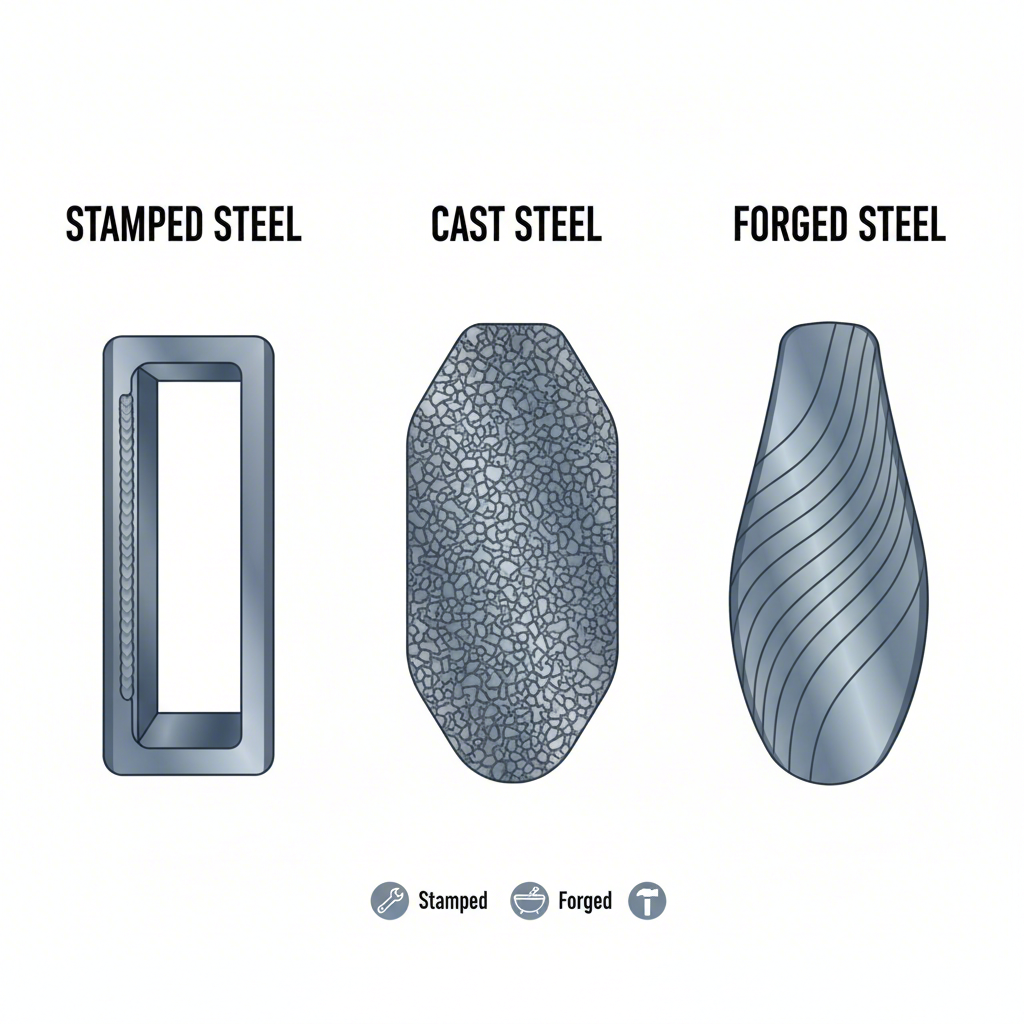
Οι βραχίονες ελέγχου από χαλυβδόφυλλο κατασκευάζονται με τη διαμόρφωση ελασμάτων χάλυβα στο επιθυμητό σχήμα και στη συνέχεια συγκολλώνται μεταξύ τους. Αυτή η διαδικασία δίνει ένα εξάρτημα που είναι συνήθως κοίλο, έχει λεία επιφάνεια με γυαλιστερό μαύρο βαμμένο φινίρισμα και μια ξεκάθαρη συγκολλημένη ραφή κατά μήκος των άκρων του. Αν και είναι οικονομικότερο στην παραγωγή, η ποιότητα και η ανθεκτικότητα μπορεί να είναι ασυνεπής. Για παράδειγμα, η συνέπεια και η αντοχή ενός βραχίονα από χαλυβδόφυλλο εξαρτάται σε μεγάλο βαθμό από τις δυνατότητες του κατασκευαστή σε τομείς όπως η προοδευτική διαμόρφωση με καλούπια και η αυτοματοποίηση. Εταιρείες όπως Shaoyi (Ningbo) Metal Technology Co., Ltd. εξειδικεύονται σε αυτήν τη διαδικασία υψηλής ακρίβειας για την αυτοκινητοβιομηχανία, διασφαλίζοντας ότι τα εξαρτήματα πληρούν τα αυστηρά πρότυπα ποιότητας IATF 16949.
Αντίθετα, οι ελεγχόμενοι βραχίονες κατασκευάζονται με τη χύτευση τήγματος μετάλλου—χάλυβα ή αλουμινίου—σε καλούπι. Αυτό δημιουργεί ένα στερεό, εξάρτημα ενός κομματιού. Οι χυτοί βραχίονες από χάλυβα έχουν τραχύ, υφασμάτινο τελικό φινίρισμα, αμβλύ μαύρο χρώμα και ορατή ραφή χύτευσης εκεί που συναντιούνται τα δύο μισά του καλουπιού. Οι χυτοί βραχίονες από αλουμίνιο έχουν παρόμοια τραχιά υφή, αλλά συνήθως παραμένουν στην αρχική τους, ασημί χρωματιστή κατάσταση. Η διαδικασία χύτευσης γενικά παράγει ισχυρότερο και πιο άκαμπτο εξάρτημα σε σύγκριση με ένα κοίλο εξάρτημα από σφυρηλάτηση. Αυτό είναι ιδιαίτερα σημαντικό για τη σφαιρική αρθρώση, καθώς έχει παρατηρηθεί ότι ορισμένα σχέδια από σφυρήλατο χάλυβα έχουν ασθενέστερη στήριξη σφαιρικής αρθρώσεως, η οποία μπορεί να οδηγήσει σε αποτυχία, ειδικά σε ανυψωμένα οχήματα.
Για να σας βοηθήσουμε να διακρίνετε τι υπάρχει στο όχημά σας, παρατίθεται ένα απλό συγκριτικό πίνακα:
| Τύπος Υλικού | Κύρια Οπτικά Στοιχεία | Ενδείξεις Κατασκευής | Συνηθισμένα Σε |
|---|---|---|---|
| Διαμορφωμένος Χάλυβας | Γυαλιστερό μαύρο βερνίκι, λεία επιφάνεια | Κοίλο με ξεκάθαρη σφηνωτή ραφή | Φορτηγά GM 1500 (μέσα του 2016 – 2018), πολλά στάνταρ οχήματα |
| Χαλυβοπηλικός χάλυβας | Ματ μαύρη επίστρωση, τραχιά υφή | Συμπαγές με ραφή από χύτευση (όχι συγκολλημένο) | Φορτηγά GM 1500 (2014 – αρχές του 2016), εφαρμογές υψηλής φόρτισης |
| Αποχρωμένος άλυσος | Ανεπεξέργαστο ασημί χρώμα, τραχιά υφή | Συμπαγές με ραφή από χύτευση | Ορισμένα τετρακίνητα μοντέλα GM 1500 (2014–2018) |
Αν ακόμη αμφιβάλλετε, ένα απλό τεστ μπορεί να βοηθήσει. Ένας μαγνήτης θα κολλήσει και στο προφίλ χάλυβα και στο χυτό χάλυβα, αλλά όχι στο χυτό αλουμίνιο. Για να διακρίνετε μεταξύ των δύο τύπων χάλυβα, μπορείτε να χτυπήσετε προσεκτικά το βραχίονα με ένα σφυρί· ένας βραχίονας από προφίλ χάλυβα θα παράγει κούφιο ήχο, ενώ ένας βραχίονας από χυτό χάλυβα θα δώσει βαρύ, αμβλύ ήχο.
Πέρα από τον OEM: Σφυρήλατα, Σωληνωτά και Βελτιωμένα Ανταλλακτικά
Το ζήτημα της ποιότητας εκτείνεται πέρα από τις επιλογές εργοστασίου. Για όσους αναζητούν ανωτέρα απόδοση, ανθεκτικότητα ή συμβατότητα με τροποποιήσεις ανάρτησης όπως lift kits, τα εξαρτήματα ελέγχου από σφυρήλατο χάλυβα ή συγκολλημένους σωλήνες είναι η κορυφαία επιλογή. Δεν βρίσκονται συνήθως σε οχήματα παραγωγής, αλλά αποτελούν σημαντική βελτίωση ως προς την αντοχή και τη λειτουργικότητα.
Τα σφυρήλατα εξαρτήματα ελέγχου κατασκευάζονται με τη συμπίεση ενός κομματιού θερμού μετάλλου υπό ακραία πίεση, μέχρι να γεμίσει ένα καλούπι. Αυτή η διαδικασία ευθυγραμμίζει την εσωτερική δομή του μετάλλου με το σχήμα του εξαρτήματος, δίνοντας εξαιρετική αντοχή και αντίσταση στην κόπωση. Έτσι γίνονται πολύ πιο ανθεκτικά από τα εξαρτήματα που έχουν κοπεί με δίσκο ή ακόμη και από τα χυτευμένα. Αποτελούν την ιδανική επιλογή για εντατική χρήση, off-road και εφαρμογές απόδοσης, όπου τα εξαρτήματα της ανάρτησης βρίσκονται υπό τεράστια φορτία.
Οι σωληνωτοί βραχίονες ελέγχου κατασκευάζονται εξ αρχής από σωλήνες υψηλής αντοχής. Σε αντίθεση με τους βιομηχανικούς βραχίονες, μπορούν να σχεδιαστούν με συγκεκριμένες γεωμετρίες για να διορθώσουν τις γωνίες της ανάρτησης σε ανυψωμένα ή χαμηλότερα οχήματα. Σύμφωνα με ειδικούς στο ReadyLIFT , η αναβάθμιση σε άνω βραχίονες ελέγχου μετά την παραγωγή συνιστάται ιδιαίτερα όταν ισοπεδώνετε ή ανυψώνετε ένα φορτηγό που διαθέτει εργοστασιακούς βραχίονες από χαλυβδόφυλλο, προκειμένου να αποφευχθεί η πρόωρη βλάβη των μπαλακιών. Οι σωληνωτοί βραχίονες παρέχουν την απαραίτητη αντοχή και συχνά διαθέτουν βελτιωμένα μπαλάκια και bushings για καλύτερο χειρισμό και μεγαλύτερη διάρκεια ζωής.
Όταν αποφασίζετε αν η αναβάθμιση είναι κατάλληλη για εσάς, λάβετε υπόψη την ακόλουθη σύγκριση:
- Δύναμη: Οι σφυρηλάτοι και οι σωληνωτοί βραχίονες προσφέρουν σημαντικό πλεονέκτημα αντοχής σε σχέση με τους κοίλους βραχίονες από χαλυβδόφυλλο.
- Βάρος: Το χαλυβδόφυλλο είναι γενικά το ελαφρύτερο, ενώ ο σφυρήλατος χάλυβας είναι ο βαρύτερος. Οι σωληνωτοί βραχίονες προσφέρουν ισορροπία μεταξύ αντοχής και βάρους.
- Κόστος: Το χαλυβδόφυλλο είναι η πιο οικονομική εργοστασιακή επιλογή. Οι σφυρήλατοι και οι σωληνωτοί βραχίονες αποτελούν προνομιακή επένδυση για απόδοση και αντοχή.
- Καλύτερη Εφαρμογή: Το διαμορφωμένο χάλυβα είναι αρκετό για συνηθισμένη καθημερινή οδήγηση. Για τροχούς με ανυψωμένο σασί, για χρήση εκτός δρόμου ή για υψηλές επιδόσεις, προτείνεται λύση με εξαρτήματα από σφυρήλατο ή σωληνωτό υλικό.
Ένας Πρακτικός Οδηγός: Εντοπισμός Των Ελεγχόμενων Βραχιόνων σε Φορτηγά GM 1500
Πουθενά δεν είναι η παραλλαγή των βραχιόνων ελέγχου πιο σημαντική από ό,τι στα φορτηγά Chevrolet Silverado και GMC Sierra 1500 των ετών 2014–2018. Κατά τη διάρκεια αυτής της περιόδου, η GM χρησιμοποίησε τρεις διαφορετικούς συνδυασμούς άνω βραχιόνα ελέγχου και αρθρώσεων, και τα εξαρτήματα δεν είναι αντάλλακτα. Η παραγγελία ενός κιτ ανύψωσης ή ανταλλακτικού χωρίς προηγούμενο εντοπισμό της συγκεκριμένης διάταξης του φορτηγού σας είναι μια συχνή και ακριβή ενέργεια. Η κύρια διαφορά είναι η διάμετρος της σφαιρικής αρθρώσεως, η οποία πρέπει να ταιριάζει με τον σφόνδυλο της διεύθυνσης.
Ο τρόπος με τον οποίο μπορείτε να εντοπίσετε οπτικά ποιους βραχίονες ελέγχου έχει το φορτηγό σας:
- Αποτυπωμένοι Βραχίονες Χάλυβα: Βρίσκονται κυρίως σε μοντέλα από το 2014 έως τα πρώτα του 2016, αυτά τα μπράτσα έχουν επίστρωση από ματ μαύρο χρώμα και αισθητά τραχιά επιφάνεια λόγω της διαδικασίας χύτευσης. Θα δείτε μια γραμμή ή ραφή χύτευσης αντί για συγκόλληση. Συνδυάζονται με άξονα διεύθυνσης από χυτοχάλυβα και χρησιμοποιούν σφαιρική αρθρώση μικρότερης διαμέτρου.
- Μπράτσα Χυτού Αλουμινίου: Χρησιμοποιούνται σε ορισμένα μοντέλα 4WD από το 2014 έως το 2018, είναι τα πιο εύκολα αναγνωρίσιμα. Έχουν ένα ανέπαφο, αχρωμάτιστο ασημί εμφάνιση και την ίδια τραχιά χυτή υφή με τα αντίστοιχα από χάλυβα. Συνδυάζονται με άξονα διεύθυνσης από χυτό αλουμίνιο και χρησιμοποιούν σφαιρική άρθρωση μεγαλύτερης διαμέτρου.
- Μπράτσα Στεντωμένου Χάλυβα: Αυτό το σχέδιο αντικατέστησε την έκδοση χυτού χάλυβα το μεσο-2016. Τα μπράτσα αυτά έχουν βαφή γυαλιστερού μαύρου χρώματος και λεία επιφάνεια. Το πιο χαρακτηριστικό γνώρισμα είναι η ραφή συγκόλλησης που τρέχει στο μπροστινό και πίσω μέρος, όπου ενώνονται τα δύο στεντωμένα μισά. Χρησιμοποιούν την ίδια σφαιρική άρθρωση μεγαλύτερης διαμέτρου με τα αλουμινένια μπράτσα.
Πριν αγοράσετε οποιαδήποτε εξαρτήματα ανάρτησης για αυτά τα φορτηγά, ακολουθήστε αυτόν τον έλεγχο πριν από την αγορά για να διασφαλίσετε τη συμβατότητα:
- Ελέγξτε οπτικά τα επάνω μοχλούς έλεγχου του φορτηγού σας.
- Σημειώστε το χρώμα (μαύρο γυαλιστερό, ματ, ή ασημί) και την υφή (λεία ή τραχιά).
- Ψάξτε για το βασικό στοιχείο που δείχνει τη μέθοδο κατασκευής: συγκολλημένη ραφή (εμφανίζεται σε εξαρτήματα stamped) ή ραφή από χύτευση (cast).
- Ταιριάξτε τα ευρήματά σας με το σωστό τύπο εξαρτήματος πριν κάνετε την παραγγελία. Μην βασίζεστε μόνο στο έτος ή την έκδοση του οχήματος.
Συχνές Ερωτήσεις
1. Ποιο είναι το καλύτερο μέταλλο για τους μοχλούς ελέγχου;
Το καλύτερο μέταλλο εξαρτάται από τη χρήση. Για τη συνηθισμένη καθημερινή οδήγηση, οι εργοστασιακοί μοχλοί από χαλύβδινο φύλλο (stamped) ή χυτό χάλυβα (cast) είναι επαρκείς. Για βαριά χρήση, μεταφορά φορτίου ή off-road, η αντοχή και η ανθεκτικότητα του χάλυβα τον καθιστούν αξιόπιστη επιλογή. Για υψηλής απόδοσης εφαρμογές ή σε ανυψωμένα φορτηγά όπου η διόρθωση της γεωμετρίας της ανάρτησης είναι σημαντική, οι μεταπωλητικοί μοχλοί από ελαστό χάλυβα (forged steel) ή σωληνωτούς χάλυβα προσφέρουν ανωτέρα αντοχή και πλεονεκτήματα σχεδίασης.
2. Πώς μπορώ να καταλάβω αν έχω ελαστικά ή σφυρηλατημένα χάλυβδινα μοχλά ελέγχου;
Μπορείτε να τα αναγνωρίσετε από την εμφάνισή τους. Τα ελεγκτικά μοχλά από χυτοχάλυβα έχουν τραχιά, υφασμάτινη επιφάνεια με αμβλύ φινίρισμα και ραφή από το χύτευση. Τα ελασμένα χαλύβδινα μοχλά είναι συνήθως πιο λεία με γυαλιστερό μαύρο φινίρισμα και ορατή ραφή συγκόλλησης εκεί που ενώνονται δύο κομμάτια μετάλλου. Το να τα χτυπήσετε με ένα σφυρί μπορεί επίσης να βοηθήσει· τα ελασμένα χαλύβδινα αντηχούν κενά, ενώ τα χυτοχάλυβα κάνουν έναν στερεό ήχο.
3. Ποια είναι η διαφορά μεταξύ εμφυτευόμενων και σφυρηλατημένων βραχιόνων ελέγχου;
Η βασική διαφορά είναι η διαδικασία κατασκευής και η προκύπτουσα αντοχή. Τα ελασμένα μοχλά κατασκευάζονται από συγκολλημένα φύλλα χάλυβα, δημιουργώντας ένα κοίλο και σχετικά ελαφρύ εξάρτημα. Τα μοχλά από σφυρηλάτηση δημιουργούνται με τη συμπίεση στερεού, θερμού μετάλλου σε καλούπι, πράγμα που ευθυγραμμίζει τη δομή του κόκκου του μετάλλου. Αυτό καθιστά τα μοχλά από σφυρηλάτηση σημαντικά ισχυρότερα, πυκνότερα και πιο ανθεκτικά στην πίεση και την κόπωση από τα ελασμένα μοχλά.